Not all fights end with a dramatic knockout or a clear winner in boxing. Sometimes, it’s left to the judges, and that’s where things get interesting. Enter the “split decision”, a verdict that often sparks as much debate as the match itself.
When fighters go the distance, it’s up to the scorecards to settle the score. But what happens when the judges don’t quite see eye to eye? Suddenly, fans are on their feet, corners are holding their breath and controversy is in the air.
Split decisions are more than just numbers on a card—they can make or break careers, ignite rivalries, and leave crowds stunned. But what exactly does a split decision mean? And why does it stir so much drama in the ring?
Types of decisions
Not every boxing match ends with a dramatic knockout. More often than not, it’s the judges who hold the final word after twelve hard-fought rounds. And this is where the different types of decisions come into play—each carrying its own weight.
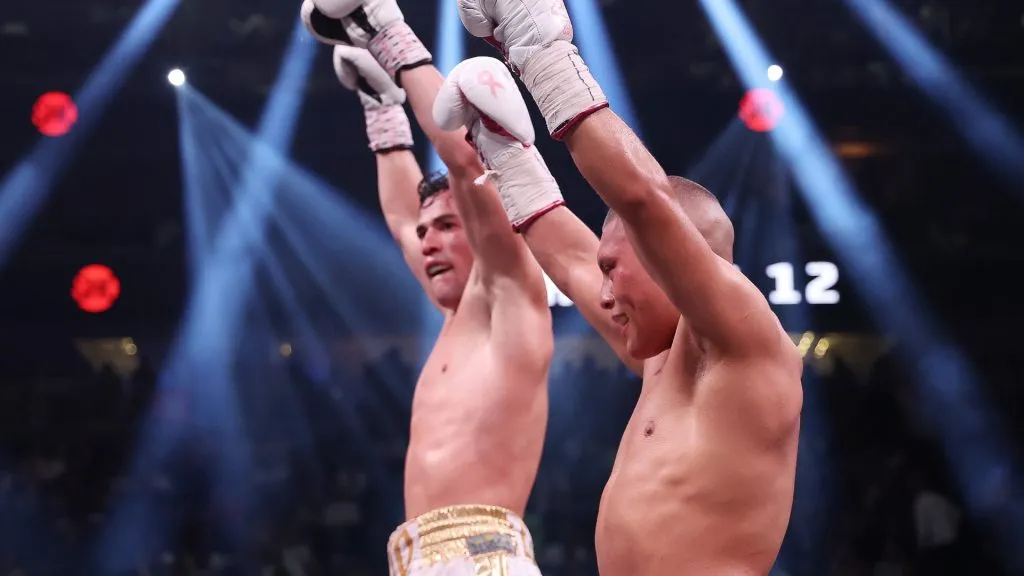
Isaac Cruz and Giovanni Cabrera react following the WBA World Lightweight Title Eliminator & WBC Silver & WBO Latino Title bout at T-Mobile Arena on July 29, 2023. (Source: Al Bello/Getty Images)
The most straightforward is the unanimous decision, where all three judges agree on the winner. Then there’s the majority decision, where two judges pick one fighter and the third calls it a draw.
But it’s the split decision that tends to raise eyebrows: two judges side with one fighter, while the third gives the nod to the other. Suddenly, what was a fight becomes a conversation about interpretation.
Judges use the 10-point must system, scoring each round based on clean punches, effective aggression, defense, and ring generalship. Still, even with guidelines in place, subjectivity creeps in—what one judge sees as dominance, another might call caution.
As explained by BoxingBase, these scoring differences are not just part of the sport—they’re often the very spark that keeps fans talking long after the final bell.
Examples
A fight’s outcome isn’t always written on the canvas—it’s written on paper. Official scorecards, signed by the judges, carry the weight of a fighter’s future. And in split decisions, those cards can ignite controversy.
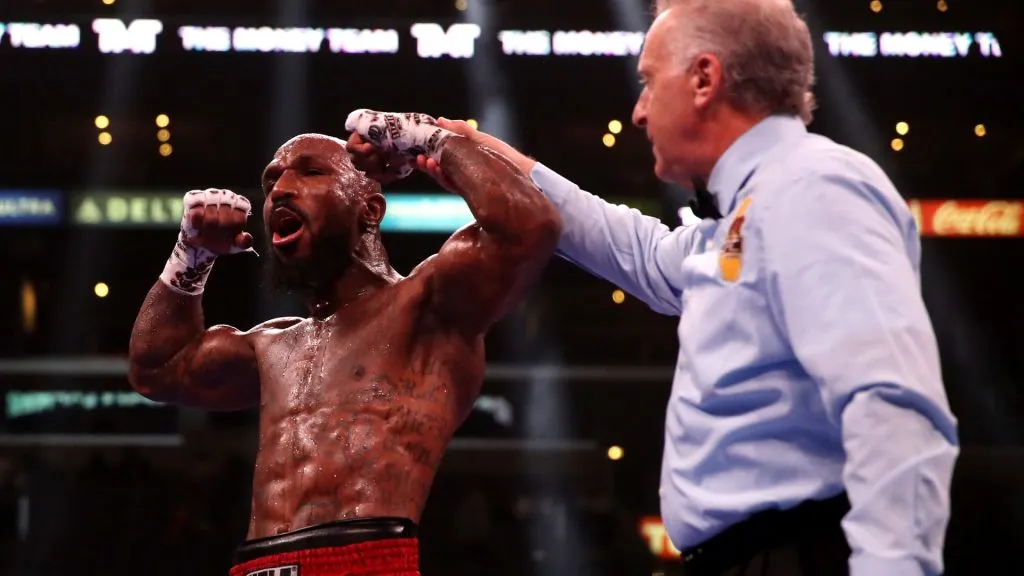
Vaughn Alexander (L) celebrates his split decision win against Luis Arias after their super welterweight bout at Staples Center on December 05, 2021. (Source: Katelyn Mulcahy/Getty Images)
A striking example came in 2022, when Josh Taylor edged out Jack Catterall via split decision. Taylor won with scores of 114–111 and 113–112, while the third judge had it 113–112 for Catterall. The twist? Statistics showed Catterall out-landed Taylor in 11 out of 12 rounds.
Despite the numbers, the verdict stood—and backlash followed. The British Boxing Board of Control launched an investigation, questioning not only the result, but the judging system itself.
It became clear that split decisions aren’t just about close fights; they reflect how vulnerable the sport is to interpretation and how vital those three sets of eyes truly are.
Scorecard impact
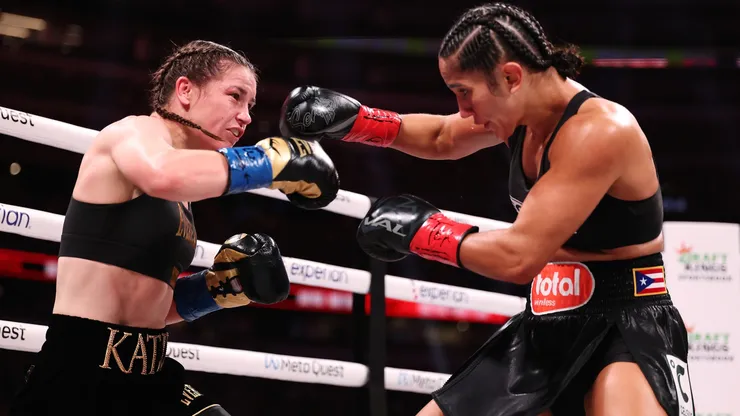
A split decision doesn’t end when the gloves come off. In fact, that’s often when the real storm begins. Just look at the electric 2022 showdown between Katie Taylor and Amanda Serrano.
Taylor retained her titles, but the decision—two judges in her favor, one for Serrano—sparked a whirlwind of debate. Many fans and pundits called it too close to call, and some insisted a draw would have been the fairest outcome. Twitter lit up, headlines followed, and talk of a rematch was immediate.
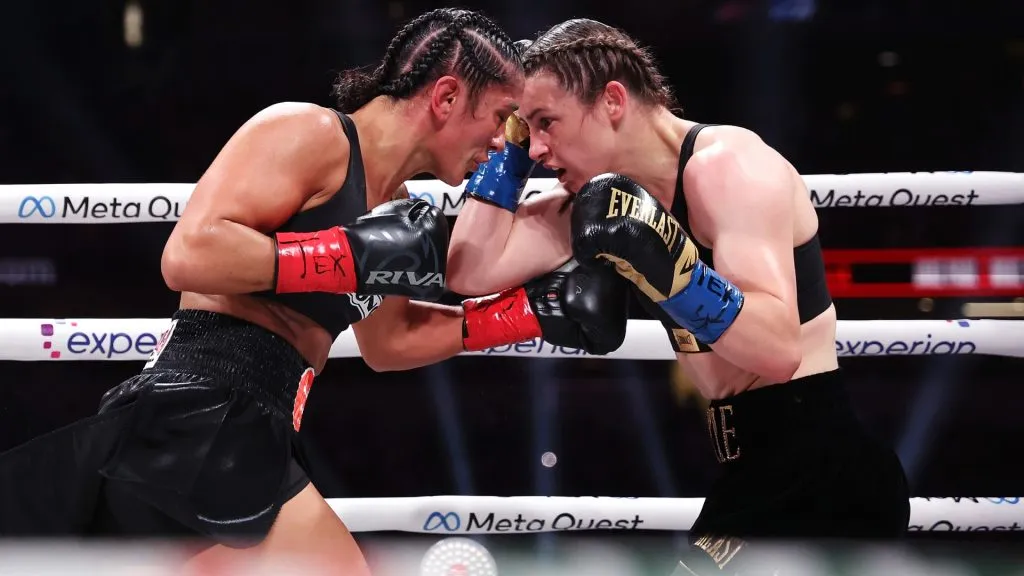
Katie Taylor and Amanda Serrano fight during LIVE On Netflix: Jake Paul vs. Mike Tyson at AT&T Stadium on November 15, 2024. (Source: Sarah Stier/Getty Images for Netflix © 2024)
Public reaction to split decisions reveals just how invested the world is in the outcome—not just for the sport, but for the narratives that surround it. Fighters have seen careers reshaped, rivalries deepened, and legacies altered by these judgments. A split decision is never just a line in a record—it’s often the beginning of a much louder conversation.
Reactions
When a split decision is announced, the real drama often spills outside the ring. The arena might erupt in boos, cheers, or stunned silence—depending on whose hand is raised. Fans take to social media in waves, fighters vent in post-fight interviews, and analysts dissect the scorecards round by round.
In the Taylor vs. Serrano bout at Madison Square Garden, the split decision that crowned Taylor the victor didn’t just end a fight—it lit a fuse. Within minutes, Twitter was flooded with fans debating who really deserved the win, with many calling for an immediate rematch.
This isn’t rare. Fighters on the losing end of split decisions often feel robbed, and some even suggest systemic bias or flawed judging. Promoters, meanwhile, might see opportunity in controversy: after all, a debated outcome can sell a sequel.
For audiences, a split decision turns a fight into a flashpoint—something to argue about, remember, and revisit. In boxing, it’s not just the punches thrown that matter, but how they’re seen—and who’s keeping score.