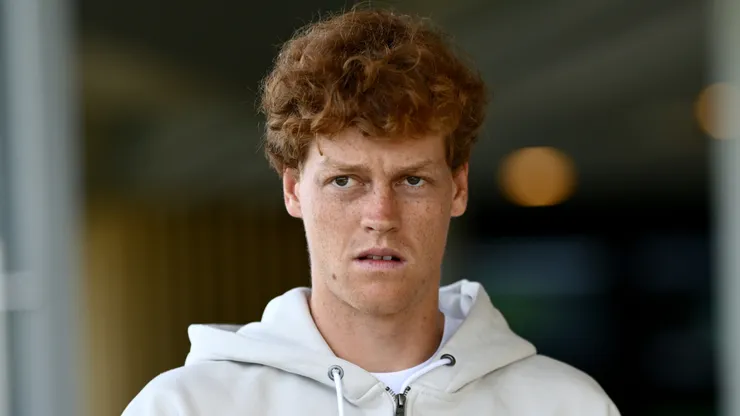
Jannik Sinner, one of the top-ranked players in the world, recently broke his silence about the doping controversy that temporarily sidelined him earlier in 2024. The 23-year-old Italian tested positive for a small trace of Clostebol during an anti-doping test in March but was ultimately cleared of wrongdoing after an extensive investigation.
Although Sinner was suspended for three months by the World Anti-Doping Agency (WADA), he was exonerated following the Olympics, after evidence surfaced showing the banned substance entered his system through accidental contamination.
The World No. 1 addressed the issue in a press conference following his victory over Australia’s Aleksandar Vukic in the second round of Wimbledon, where he reflected on the difficult episode and how he managed to clear his name.
Sinner emphasized that his financial resources played a key role in building a successful legal defense. “I was able to hire a highly respected lawyer because I have money that others don’t have—and that I’ve earned through my own achievements. I went through the same process as other players in similar situations. I didn’t receive any special treatment,” Sinner stated.
The question arose from a Polish journalist working on a story about Kamil Majchrzak, a player who faced a longer suspension under similar circumstances. Sinner acknowledged that while the system is supposed to treat everyone equally, those with better resources can navigate it more effectively.
“Maybe my defense was more effective because I have the best people around me,” he explained. “The ITIA takes the same time to respond to everyone. I know there have been controversial decisions in the past, but my case was reviewed several times and my innocence was always proven”.
Sinner dismissed suggestions of favoritism due to his elite status but did admit that without the financial means he has now, his defense might not have been as successful.
“If something like this happened to me when I was 18, I probably wouldn’t have been able to defend myself like I did now—because I didn’t have the money to build a strong team back then,” he added. “If creating a fund to help less fortunate players is possible, I’d be happy to support it. But that’s not the issue here. I proved my innocence”. The Italian is now preparing for his third-round Wimbledon match against Spain’s Pedro Martínez.
Sinner on players’ support during the suspension
Sinner also spoke previously during a press conference at the Rome Masters 1000 about how fellow players responded to his suspension and how he coped with the fallout.
“Tennis is an individual sport—everyone plays for themselves,” he said. “At the start of the suspension, I leaned on my team and my friends. I got some surprising messages from certain players, but from others, I heard nothing. That’s normal. Everyone wants to win, and I’ll see them on court again soon”.
Sinner also explained how he came to terms with accepting an agreement with WADA. “I’m personally happy that the suspension didn’t overlap with any Grand Slam,” he admitted. “At first, I didn’t want to settle, but it was an all-or-nothing situation. It wasn’t easy to accept the deal because I knew the truth. But sometimes you have to take the best option at the worst time—and I’m just glad it’s all over”.