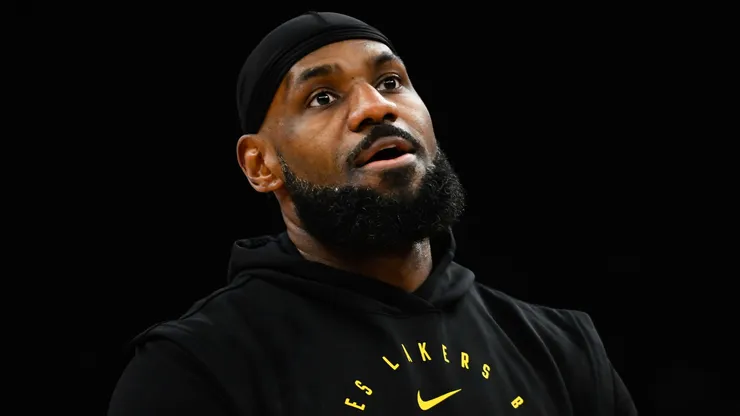
The NBA has undergone a seismic stylistic shift over the past two decades. While critics often point to the Golden State Warriors dynasty as the moment the game truly changed — with its barrage of threes and pace-and-space dominance — Los Angeles Lakers superstar LeBron James believes the transformation began much earlier. In a preview of the second episode of his Mind the Game podcast, James credits Steve Nash and the mid-2000s Phoenix Suns with planting the seeds of today’s modern game.
“When I came into the league, it was the two bigs. One guy would handle the ball, then you had your two wings,” James said. “Probably up until about 2008 or 2009, you started to see more players handling the ball, but you still had the same two-bigs setup.”
“Then you [Nash] went to Phoenix and changed the whole thing. Two bigs? No. One big. I need one rim roller or one guy that can sprint down the floor and beat everybody. If you’re down there, we kick it ahead to you. If not, you come set the drag screen and we’re going to spread the game out.”
LeBron went on to explain how those ideas later shaped his Miami Heat squads, with Chris Bosh playing center in small-ball lineups — a look that has become a staple in today’s NBA. “We adapted that in Miami when Bosh became the five. We see what the game is now. It’s almost five-out — everyone’s shooting threes,” James added. “In every offseason, I’ve wanted to be adaptable and keep a growth mindset so I could evolve with the game. That way, I could always stay productive, no matter what the game calls for.”

Steve Nash #13 of the Phoenix Suns during a game against the San Antonio Spurs on March 27, 2012.
The pick-and-roll blueprint
At the core of Phoenix’s offensive revolution was the electric pick-and-roll duo of Steve Nash and Amar’e Stoudemire. Their timing, precision, and athleticism were nearly unmatched — turning a foundational basketball play into a nightly spectacle. What made it groundbreaking wasn’t the play itself, but the speed, frequency, and fluidity with which it was executed.
Rather than rely on halfcourt sets to slowly unfold, Phoenix deployed drag screens in early transition, catching defenses flat-footed. With Nash orchestrating from the top, the Suns led the league in both pace and offensive rating, fully embracing Mike D’Antoni’s “Seven Seconds or Less” philosophy.
The birth of modern small-ball
More than just tempo and pick-and-rolls, the Suns reimagined how lineups should look — long before “positionless basketball” became mainstream. Phoenix regularly trotted out units with just one true big, allowing forwards like Shawn Marion and Boris Diaw to play multiple positions and stretch the floor. Amar’e Stoudemire often operated as the sole interior presence, flanked by wings and guards who could shoot, pass, and run the floor.
This early version of “small-ball” wasn’t just about going smaller — it was about being more dynamic. It demanded that big men guard in space, that wings act as playmakers, and that everyone on the court be a threat from beyond the arc. In many ways, the Suns laid the foundation for the modern NBA long before the Warriors began rewriting the record books.