
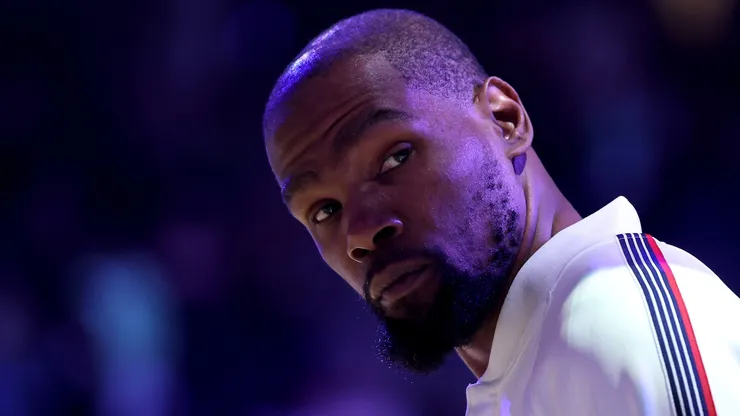
Kevin Durant has never been one to hold back his thoughts, especially when it comes to addressing criticism from fans. Now with the Houston Rockets, the former league MVP is once again making headlines—this time by calling out the unrealistic expectations placed on NBA players regarding game participation.
Durant, who has staged one of the most remarkable comebacks in recent memory after a torn Achilles in 2019, remains one of the league’s most dominant forwards. Despite his age and mileage, the Rockets’ newest star continues to resemble his peak form. But while Durant’s level of play is impressive, it’s his off-court comments that are stirring the latest debate.
In a recent exchange on X, formerly known as Twitter, Durant responded to criticism about players sitting out games more frequently in the modern NBA. Fans have long voiced frustration over the decline in full 82-game seasons by star players. Durant, however, offered a pointed explanation for the shift.
“The game’s faster nowadays, more running, more stress on your ligaments. It’s called evolution. The fans of the NBA have yet to grasp that concept,” Durant wrote.
His comments highlight a growing reality in the league. The NBA’s current pace emphasizes transition offense, floor spacing, and constant movement. This style demands more explosive effort from players, increasing the risk of non-contact injuries such as hamstring strains and Achilles tears. As Durant suggests, it’s a different physical burden than what players faced in previous decades.
Recent seasons have seen injuries sideline some of the league’s top stars at critical moments. Indiana Pacers guard Tyrese Haliburton and Boston Celtics forward Jayson Tatum both suffered injuries late last season that altered their teams’ postseason trajectories. For many around the league, these examples underscore the toll of today’s faster, more grueling style of play.
That context makes Durant’s longevity—and that of peers like LeBron James, Stephen Curry, and James Harden—even more remarkable. Well into their 30s, these players continue to perform at an elite level, navigating not only the physical challenges of age but also the demands of a game that evolves faster than ever.