Filled with global heavyweights, the Club World Cup’s group stage often delivers razor-thin margins. With so much at stake, the difference between advancing and going home isn’t always as simple as who wins the most matches.
Ties in the standings are more common than one might think, especially when clubs from different confederations bring contrasting strategies. When points are level, the race to the knockout stage takes on a whole new layer of complexity.
From goal differences to disciplinary records, the rules that decide group positions are far from arbitrary. They’re designed to reward precision, performance, and even fair play in FIFA’s most competitive club tournament.
1. Group points: The foundational filter
In the group stage, teams earn three points for a win, one for a draw and zero for a loss. This simple tally sets the initial rankings at the end of the phase. Only when two or more teams finish with the same number of points do the tiebreak criteria come into effect.
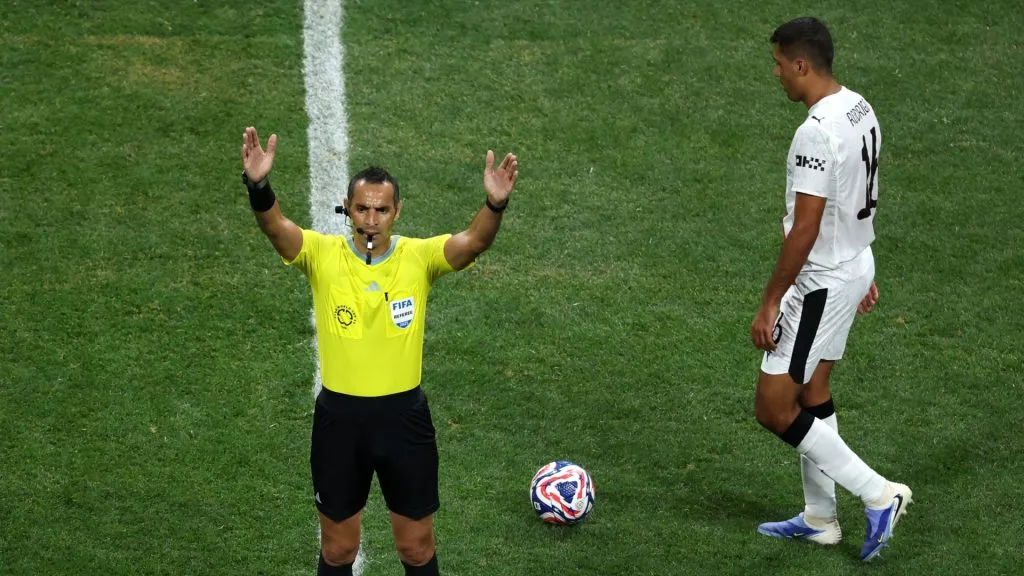
Referee Mustapha Ghorbal calls full time during the FIFA Club World Cup 2025 group G match between Manchester City FC and Al Ain FC on June 22, 2025. (Source: Kevin C. Cox/Getty Images)
This first step is essential because it triggers the detailed system designed to separate the closely matched teams and clearly identify which groups remain contested.
2. Head-to-head points: Direct results lead the way
If teams are tied on points, the first tiebreak looks exclusively at the matches played between the tied teams. For example, if Inter Miami and Palmeiras both have four points, the result of their direct encounter decides who ranks higher.
This rule, similar to what UEFA uses in the Champions League, puts a premium on direct competition between the teams involved rather than overall group performance.
3. Head-to-head goal difference: The mini-league margin
When teams remain tied on head-to-head points, the next step is to analyze the goal difference from those specific matches among the tied clubs. Imagine Botafogo, Atlético Mineiro and PSG all ending the group stage level on points; FIFA creates a “mini-league” table using only their head-to-head results, and the team with the best goal difference in these games gains the advantage.
4. Head-to-head goals scored: Rewarding attacking play
If a tie still persists, the number of goals scored in the head-to-head matches comes into play. This criterion rewards the team that was more effective and offensive in these direct duels. It encourages aggressive, attacking soccer in the most crucial clashes, ensuring that teams fight for goals when facing their closest rivals.
5. Overall goal difference: Evaluating group-wide performance
If teams are still level after all the head-to-head criteria, FIFA looks at the overall goal difference across all group matches. This measures how well a team performed throughout the entire group stage by subtracting goals conceded from goals scored. It rewards consistent defensive and offensive strength over multiple games.
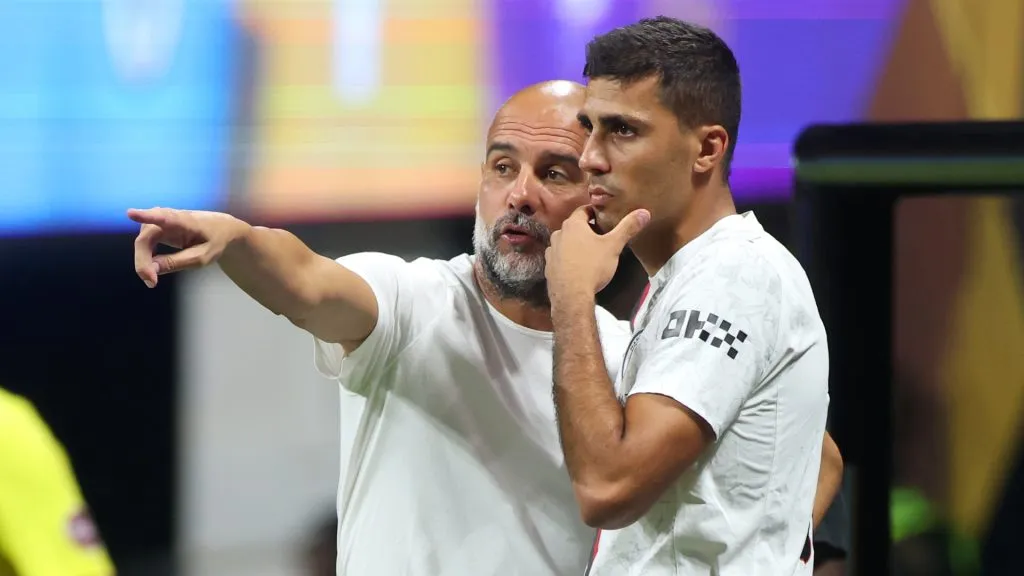
Pep Guardiola, Head Coach of Manchester City, gives Rodri #16 instructions during the FIFA Club World Cup 2025 group G match between Manchester City FC and Al Ain FC on June 22. (Source: Alex Grimm/Getty Images)
6. Overall goals scored: Offensive ambition rewarded
Should teams remain tied after considering overall goal difference, the total goals scored in all group matches become the deciding factor. This rule incentivizes teams to maintain an attacking mindset throughout the tournament, pushing to score as many goals as possible rather than settling for cautious results.
7. Disciplinary points: Fair play makes the cut
If all statistical measures fail to separate the teams, disciplinary records are reviewed. FIFA assigns negative points for cards received: –1 point for a yellow card, –3 for an indirect red (second yellow), –4 for a direct red and –5 if a player receives a yellow and then a direct red. The team with the better fair play record—meaning fewer penalty points—earns the higher rank.
8. Drawing of lots: The final decider
In the extremely rare case that all previous criteria fail to break the tie—including performance and fair play—the decision comes down to chance. FIFA conducts a random draw, literally pulling team names out of a hat, to decide which club advances. While this is a last-resort solution, it underscores just how tight competition can get in elite tournaments.
Why this order matters
FIFA’s tiebreak system emphasizes direct competition first, valuing head-to-head results above overall statistics. It reflects the idea that performances in direct matchups are the best indicators of superiority. Additionally, the system rewards offensive play and good discipline, making every moment and every decision on the pitch count toward advancement.