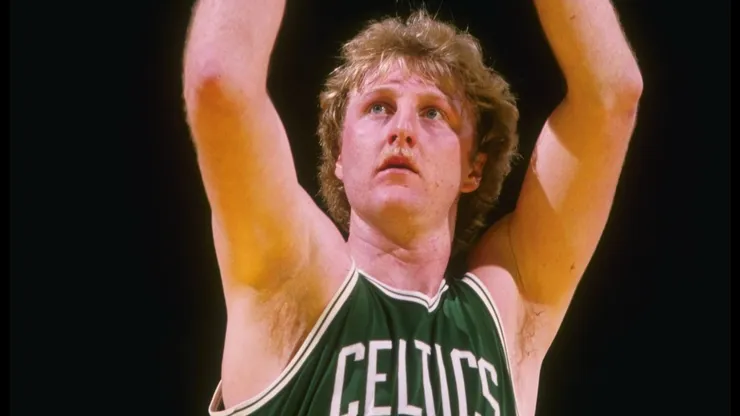
The Boston Celtics legend Larry Bird wasn’t flashy. He didn’t rely on athleticism or vertical leaps to make his mark on the game. What made him truly elite was his simplicity—a style that stripped the game down to its core fundamentals. Bird approached basketball with the cold logic of a master technician, choosing substance over spectacle every single night.
Throughout his Hall of Fame career with the Boston Celtics, Bird shunned the flashiness that began to define the NBA in the 1980s. While players around the league leaned into highlight-reel dunks and in-your-face swagger, Bird kept his game grounded. He rarely dunked, yet remained devastatingly effective. Critics called him unathletic, but that label missed the point. Bird was methodical, clinical, and relentless. And that’s why he remains one of the greatest shooters in NBA history.
Former Detroit Pistons forward and three-time NBA champion John Salley offered insight into what it was like to face Bird at his peak. “People would say stuff about him not being athletic,” Salley recalled. “I’d be like — I don’t think they’re playing the same guy I’m playing. He was quick to get around you, quick to talk smack, and quick to put two points in your face.” For Salley, Bird’s decision not to dunk wasn’t a limitation—it was a choice rooted in efficiency. “Why jump to dunk when the goal is simply to put the ball in the basket?” he added.
In an era dominated by explosive finishers like Julius Erving, Dominique Wilkins, and Michael Jordan, Bird’s refusal to rely on raw athleticism made him stand out. Yet opponents quickly learned that his restraint was never a weakness. It was part of a deliberate strategy. Bird controlled the pace of a game, dictated possessions, and found ways to win without ever playing above the rim.
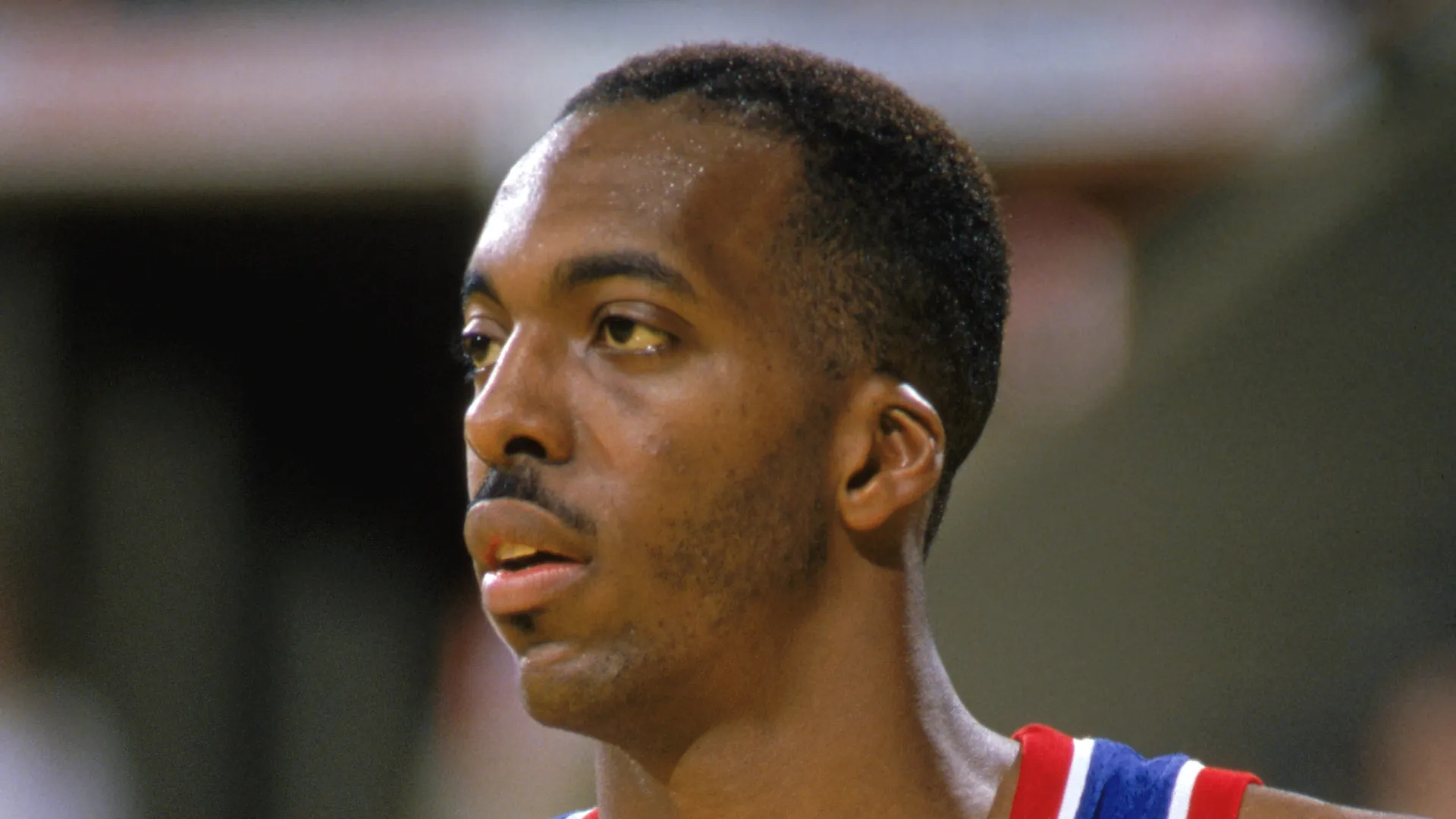
John Salley #22 of the Detroit Pistons looks on in a game during the 1989-1990 NBA season.
Bird vs Salley: A rivalry built in the playoffs
The rivalry between the Celtics and Pistons in the late 1980s produced some of the most intense basketball the Eastern Conference has ever seen. At the center of those showdowns were Bird and Salley, representing two contrasting forces in the NBA. Boston leaned on Bird’s brilliance and championship pedigree, while Detroit countered with youth, athleticism, and the defensive tenacity of the “Bad Boys.”
Their head-to-head clashes reflected those contrasts. Bird was the thinking man’s assassin—deadly from mid-range, unshakably poised, and always one step ahead. Salley, by contrast, brought a modern mix of length and agility, thriving in the Pistons’ bruising, physical system. The 1987 Eastern Conference Finals became an iconic series, with Boston edging out Detroit in seven games. Bird’s legendary steal and assist to Dennis Johnson in Game 5 became an instant part of NBA folklore.
Detroit would get its revenge the following year, knocking out the Celtics in 1988 and eventually capturing back-to-back championships in 1989 and 1990. By then, Bird was slowed by injury and age, no longer able to single-handedly carry Boston through the playoffs. Yet the mutual respect between him and Salley endured. The Pistons had finally become the dominant force in the East, but Bird’s presence still loomed large over every matchup.
In the years since, Salley has continued to praise Bird’s brilliance—particularly his mind for the game. He’s recounted how Bird would talk trash, predict exactly what he’d do, and then execute it flawlessly. “There was no stopping him,” Salley once said. “You could only hope to slow him down.” Their rivalry was fierce, but the admiration was real. And today, their matchups remain etched into NBA history—reminders of an era when intelligence, toughness, and execution were everything.