
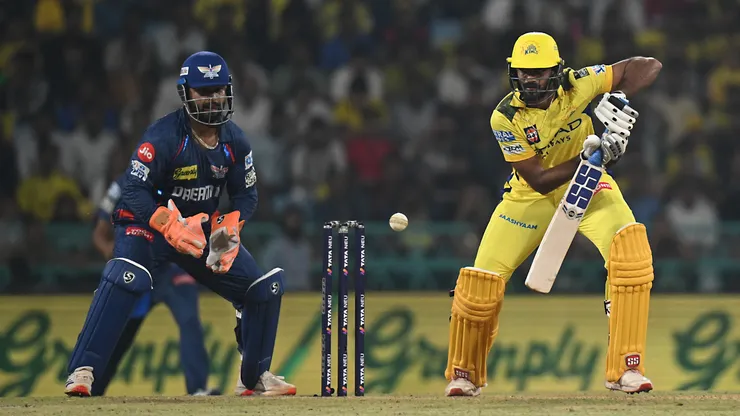
Cricket isn’t just a sport — it’s a rhythm, a strategy and a story told in numbers. While the players battle it out on the field, the scoreboard quietly captures every twist and turn with runs, wickets, and overs as its language.
Understanding that language is key to truly appreciating the game. Each run chased, every wicket lost and the pacing of overs can change the course of a match in moments, often more dramatically than meets the eye.
This scoring system, deeply rooted in tradition yet always adapting, adds a layer of tension and excitement to every delivery. Here’s a closer look at how cricket keeps score — and why those numbers matter more than you might think.
Runs
Runs are the fundamental unit of scoring. Batsmen accumulate runs by hitting the ball and running between the wickets, or by sending the ball to the boundary. A ball reaching the boundary after touching the ground scores four runs; if it crosses the boundary in the air, it’s six runs.
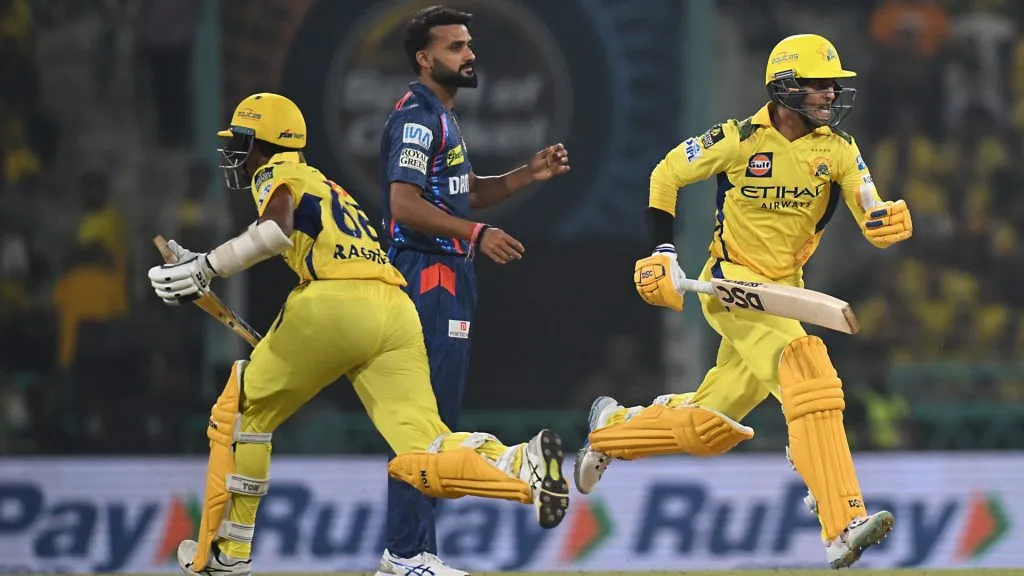
Akash Deep of Lucknow Super Giants watches as Rachin Ravindra and Shaik Rasheed of Chennai Super Kings run between the wickets during the 2025 IPL. (Source: Prakash Singh/Getty Images)
Beyond these, batsmen can score multiple runs by running between the wickets, capitalizing on gaps in the field. The total number of runs for the innings is equal to the sums of the individual batsmen’s scores and the extras.
Wickets
A wicket signifies the dismissal of a batsman and is a critical event in the game. There are various ways a batsman can be dismissed, including being bowled, caught, or run out. Each wicket taken by the fielding team brings them closer to ending the batting team’s innings.
In a standard match, each team has ten wickets per innings. The loss of wickets not only reduces the batting team’s ability to score runs but also shifts the momentum in favor of the fielding side.
Overs
An over consists of six legal deliveries bowled from one end of a cricket pitch to the player batting at the other end, almost always by a single bowler. After six deliveries, the umpire calls ‘over’; the fielding team switches ends, and a different bowler is selected to bowl from the opposite end.
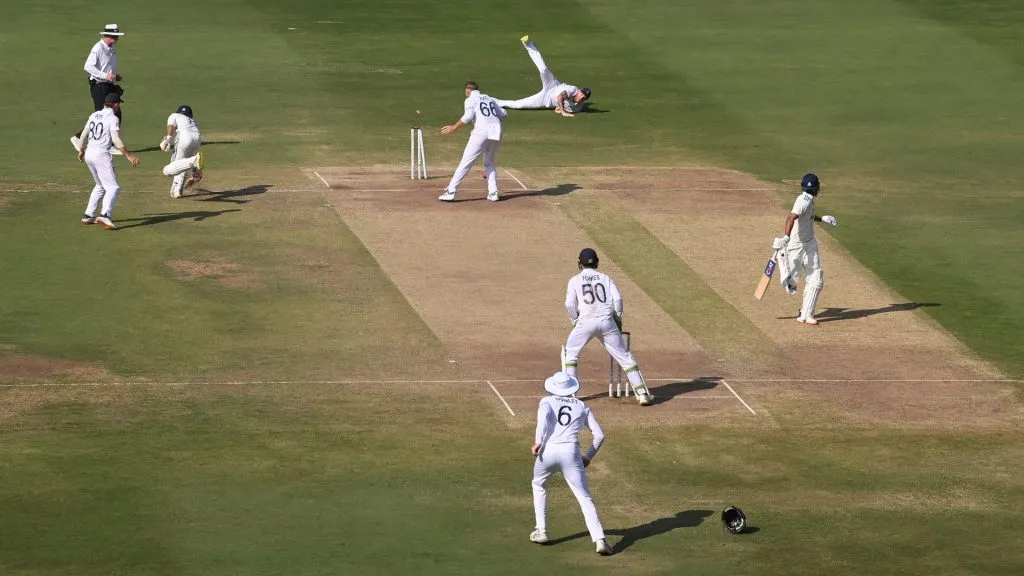
England captain Ben Stokes throws the ball to run out India batsman Ravindra Jadeja as bowler Joe Root looks on during day four of the 1st Test Match between India and England in 2024. (Source: Stu Forster/Getty Images)
Overs structure the game, influencing strategies and pacing for both teams. In limited-overs formats, such as One Day Internationals (ODIs) and Twenty20s (T20s), the number of overs per innings is fixed, adding a layer of strategic depth to how teams approach batting and bowling.
Extras and strike rotation
Extras are runs awarded to the batting team due to errors by the fielding team, such as no-balls, wides, byes and leg byes. These runs don’t count towards a batsman’s personal score but add to the team’s total.
Strike rotation, achieved by batsmen running odd numbers of runs, ensures both players face different bowlers, adding a layer of strategy. Effective strike rotation can disrupt a bowler’s rhythm and prevent them from settling into a consistent line and length, thereby creating scoring opportunities.