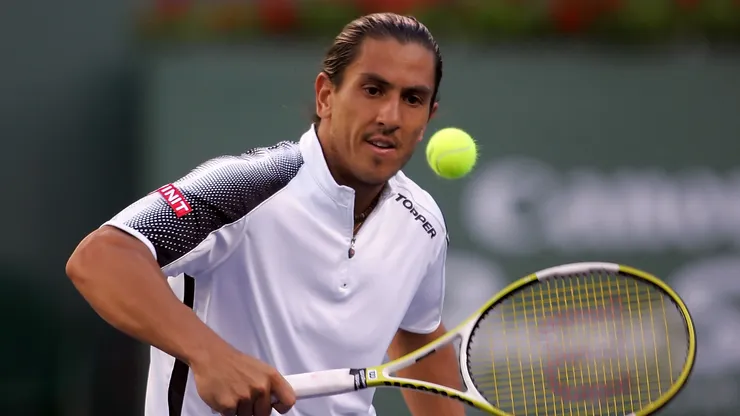
Indian Wells was one of Roger Federer’s favorite tournaments, where the Swiss star won five titles and recorded a tournament-best 66 victories among male players. However, it was also the site of one of his biggest upsets. In 2007, Argentine Guillermo Cañas, making his comeback from a doping suspension, ended Federer’s 41-match winning streak with a stunning victory. The Swiss star was eight wins away from Bjorn Borg’s record of 49 consecutive wins.
For most, this feat was extraordinary. But for Cañas, who was born on November 25, 1977, in La Matanza, Argentina, it was a challenge he was prepared to face. Like many athletes from his region, Cañas faced difficulties breaking into the professional circuit. He started playing at the age of four with his father at the Club Bomberos in Ramos Mejía.
By 1995, he took his first steps as a professional, overcoming financial and logistical hurdles with the support of those around him. His breakthrough came in 1999 when he reached his first ATP final in Orlando and defeated then-world No. 5 Tim Henman at the US Open.
Career highlights
Though injuries delayed his rise, Cañas solidified himself as a top competitor from 2001 onward. A wrist injury had dropped him to No. 231 in the rankings, but he fought back, finishing No. 15 and earning the ATP Comeback Player of the Year award.
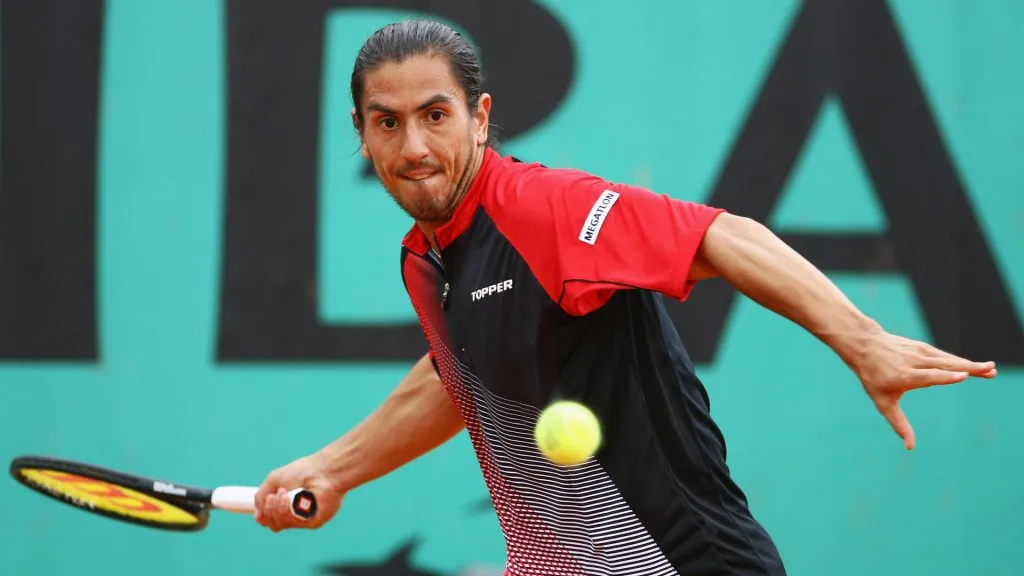
Guillermo Cañas (Julian Finney/Getty Images)
The peak of his career came in 2002 when he won the Toronto Masters, defeating rising star Andy Roddick in the final. He was the first Argentine man to win a Masters Series event. In total, Cañas won seven ATP titles, achieved a career-high ranking of No. 8 in 2005, and finished four seasons inside the Top 15. He also reached the quarterfinals at Roland Garros and the fourth round at both Wimbledon and the Australian Open.
The doping suspension
In May 2005, just before the Rome Masters, Cañas was informed of a positive doping test from the Acapulco tournament. The test detected hydrochlorothiazide, a diuretic that does not enhance performance but can mask other substances. Ranked No. 10 at the time, he was suspended for two years, forced to return $276,070 in prize money, and lost 525 singles points.
However, Cañas argued that tournament staff gave him the medication with ATP approval. His legal appeal at the Court of Sport Arbitration (CAS) was successful, as it was ruled that he had not sought an unfair advantage. His suspension was reduced to 15 months, and he returned on September 11, 2006.
The unforgettable 2007 run and his two victories over Federer
Weeks after returning, Cañas made headlines worldwide by defeating Federer twice in consecutive Masters 1000 tournaments—Indian Wells and Miami, in a 16-day span. At the time, only Rafael Nadal had been a consistent challenge to Federer.
In Indian Wells, Cañas capitalized on Federer’s mistakes. His win was a surprise, not only because Federer was at his peak, but also because Cañas had lost in the qualifiers and entered the tournament as a lucky loser.
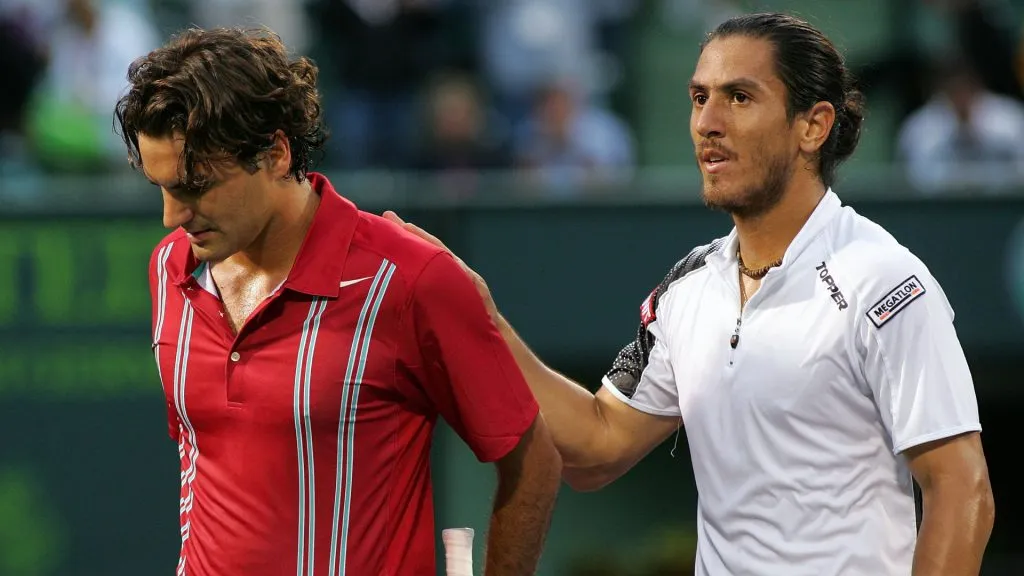
Roger Federer and Guillermo Cañas at the 2007 Miami Open (Matthew Stockman/Getty Images)
“It’s like a dream. To beat two weeks in a row the No. 1 of the world is amazing,” he told the New York Times, after beating him in Miami. However, he also acknowledged that after fighting to return to tennis, he came back “very motivated.”
Though he never beat Federer again, he retired with a balanced 3-3 record against the Swiss legend. Notably, during his 2002 Toronto Masters title run, he also defeated Federer in the first round.
A respected coach and a new chapter
After retiring in 2010, Cañas transitioned to coaching, working with players like Teymuraz Gabashvili, Nicolas Jarry, Jelena Jankovic, and Svetlana Kuznetsova. He became known for emphasizing mental resilience and recovery.
Now settled in Miami with his wife, Brazilian model Fabiana Semprebom, and their children, Juan and Liz, Cañas founded the Cañas Tennis Academy at Crandon Park. His academy has expanded to seven locations, including one in Argentina. While he has stepped away from high-performance coaching, he remains active in tennis through private lessons.