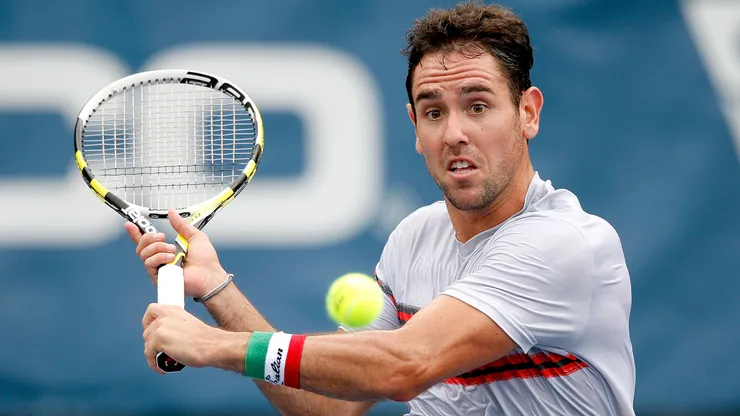
In recent years, professional tennis has been shaken by several high-profile doping cases. The most recent involved Jannik Sinner and Iga Swiatek, who both served relatively short suspensions, sparking comparisons to the harsher treatment received by players such as Simona Halep. One of the most severe punishments in the sport’s history, however, was handed down to Wayne Odesnik, a South African-born player who represented the United States.
Born on November 21, 1985, in Johannesburg, Odesnik moved to the U.S. during his youth and pursued a professional career beginning in 2004. By 2006, he had captured his first Futures titles and started appearing in higher-level events. A year later, he earned one of the biggest wins of his career by defeating Ivan Ljubicic at the Canadian Masters 1000 before falling in the second round.
Despite that breakthrough, Odesnik spent much of his career on the Challenger circuit. In 2010, he began working with former Argentine pro Guillermo Cañas, who had just retired from the tour. But his career trajectory soon became defined not by achievements, but by two doping violations and a historic suspension that remains in place — effectively ending his professional career.
First doping case in 2010
Between 2007 and 2010, Wayne Odesnik put together modest results on the ATP Tour. He reached a career-high ranking of No. 77, played in the Houston final, and made his deepest Grand Slam run at Roland Garros in 2008, advancing to the third round.
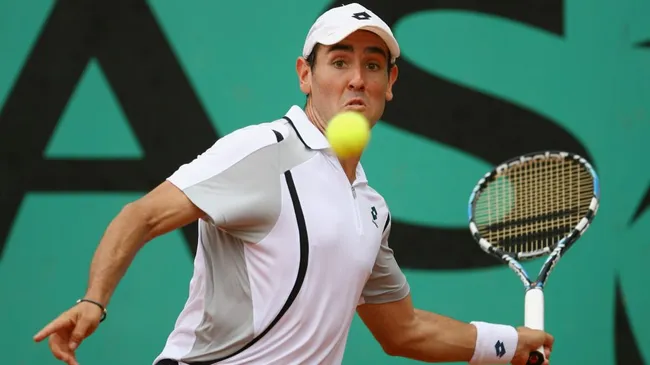
Wayne Odesnik plays a forehand against Guillermo Canas during the 2008 Roland Garros. (Julian Finney/Getty Images)
But in 2010, Odesnik made headlines for reasons off the court. He pleaded guilty to attempting to bring human growth hormone into Australia, though he continued to deny ever using the substance. The ATP initially handed him a two-year suspension, which was later reduced to one year.
Repeat offense and historic suspension
Odesnik returned to the tour in 2011 but failed to deliver significant results in the following seasons. His career effectively ended in 2015, when he was handed a 15-year suspension after testing positive for performance-enhancing drugs a second time.
According to the ITF, Odesnik tested positive on multiple occasions between December 2014 and January 2015, with steroids among the substances detected. The suspension barred him from competition until January 30, 2030. By the time the ban expires, Odesnik will be 45 years old.
Andy Murray’s harsh criticism
The lengthy ban sparked a strong reaction from former World No.1 Andy Murray, who spoke after reaching the quarterfinals of the BNP Paribas Open in Indian Wells in 2015.
“Goodbye Wayne, good riddance. It’s good for tennis to get him off the tour. We don’t want those things in our sport. I can’t understand how he could do it again. What’s sad is hearing ‘Oh, I’ve learned from my mistakes, blah, blah, blah.’ Clearly he was taking something and gaining an advantage. Cheaters make everyone else look bad,” Murray bluntly said.
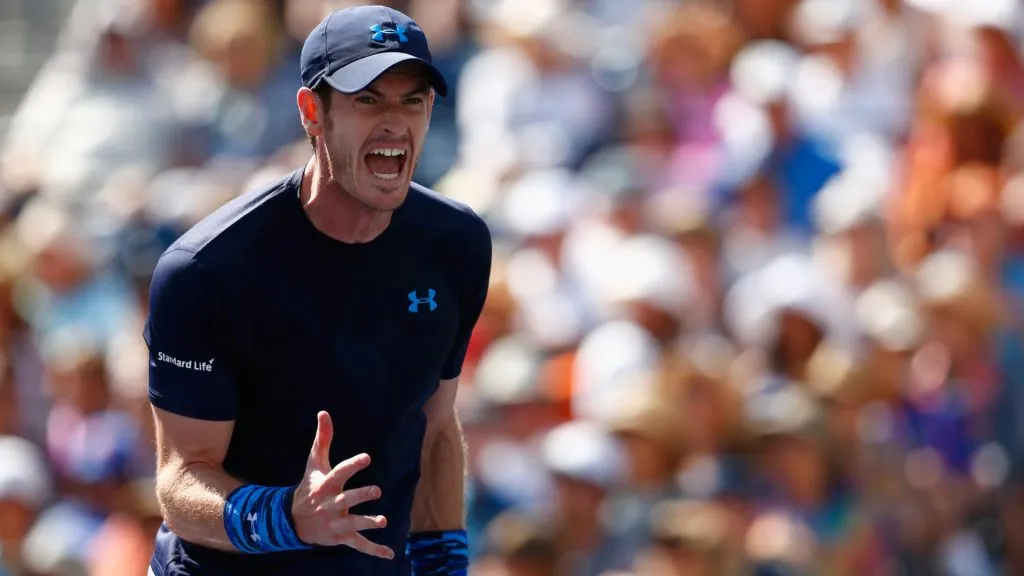
Andy Murray of Great Britain reacts in his match against Feliciano Lopez of Spain during the 2015 BNP Paribas Open tennis at the Indian Wells. (Julian Finney/Getty Images)
He added: “At least in recent years, there’s been progress with stricter anti-doping tests. Of course it’s no fun to be woken up at six in the morning for a test, but if it gets people that are cheating out of the sport when they are doing it, then I’m all for that”.
Life after tennis
After his suspension, Odesnik shifted away from professional tennis. Forced into early retirement at 30, he pursued a career in real estate. His private Instagram bio references his involvement with “NextGen Real Estate Group,” while his LinkedIn profile describes him as a Texas-based real estate agent working in residential and commercial properties, property management, and investment consulting.