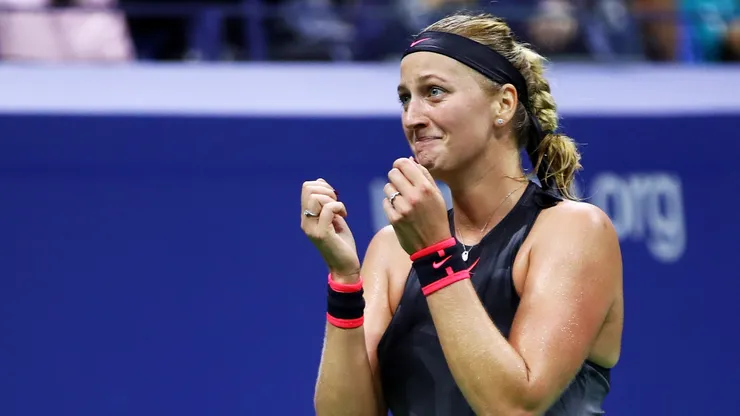
For tennis fans, Petra Kvitova has been a familiar name for almost two decades. Known for her aggressive left-handed shots and mental toughness, the Czech player has built a career that includes two Grand Slam titles, a stint as World No. 2 in the WTA Rankings, and a bronze medal at the Olympics. But in 2016, Kvitova’s path took an unexpected and traumatic turn when she was attacked in her own home, seriously injuring her hand.
Kvitova, who was born in 1990, first began to draw attention while competing on the junior circuit in the Czech Republic, coached by her father Jiri Kvita. Until her potential caught the eye of scout Jaroslav Balaz. “It was a difficult time when I was around 15. I was in puberty, I played just with my father in Fulnek – it was probably just too much being with my father 24 hours and also still together at home, on the tennis court,” Kvitova told BBC Sport in 2019.
Her rise in the pro ranks was swift. In 2009, she made a breakthrough by defeating then-world No. 1 Dinara Safina at the US Open. By 2010, she reached the Wimbledon semifinals. The following year, she won her first Grand Slam at Wimbledon, beating Maria Sharapova in the final.
With that win, she became the first player born in the 1990s to win a major and ended the year by winning the WTA Championships and helping the Czech Republic claim the Fed Cup. In 2014, she repeated as Wimbledon champion and in 2016, she added a bronze medal to her cabinet at the Rio Olympics. As the year came to a close, she seemed poised for more, until the incident changed everything.
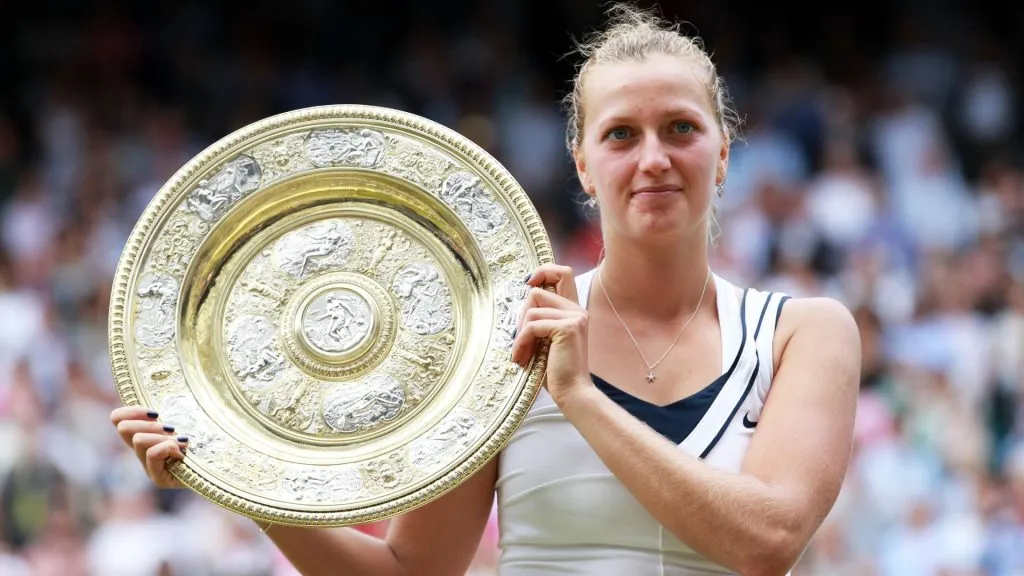
Petra Kvitova won Wimbledon twice (Getty Images)
Robbery, home invasion and her hand injury
On the morning of 20 December 2016, Kvitova’s life took a drastic turn. She let a man posing as a boiler repair worker into her apartment in Prostejov. While her back was turned, he held a knife to her throat. As she tried to defend herself, the nerves in her left thumb and index finger (her playing hand) were severed. The cuts were so deep that her index finger was barely attached by the skin.
“He asked me to turn on the hot water tap and at that moment I had a knife against my neck. I grabbed it with both hands,” Kvitova recounted in her court testimony (via BBC). “I held the blade with my left hand. I snatched it away, I fell on the floor and there was blood everywhere.”
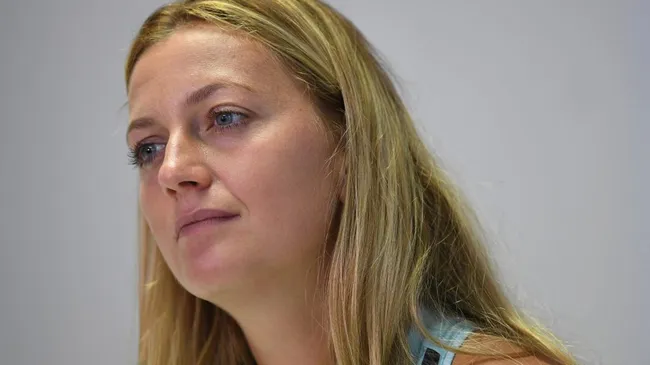
Petra Kvitova in 2017 (Getty Images)
Kvitova told her attacker she needed to go to the hospital and gave him 10,000 crowns—about half the average Czech monthly wage—before he left. “She was crying and said she had been badly cut, that someone had attacked her, she’s covered in blood and what should she do,“ Miroslav Cernosek, her business manager, recalled in a BBC interview in 2019.
She was rushed to surgery by Cernosek’s driver, after hand surgeon Radek Kebrle was contacted. Doctors were not optimistic: Kvitova had less than a 10% chance of playing tennis again. She underwent extensive surgery and began a long recovery process.
In 2018, Czech police arrested a man in connection with the attack, later identified as Radim Zondra. He was sentenced to eight years in prison, with the sentence later increased to 11 years on appeal.
Comeback to Tour
Despite the initial prognosis, Kvitova returned to the tour just five months later, after an intense rehabilitation. She played her first match at the French Open in May 2017 and went on to reach the second round at both the French Open and Wimbledon that year. She reached the quarterfinals at the US Open but had fallen out of the WTA Top 20.
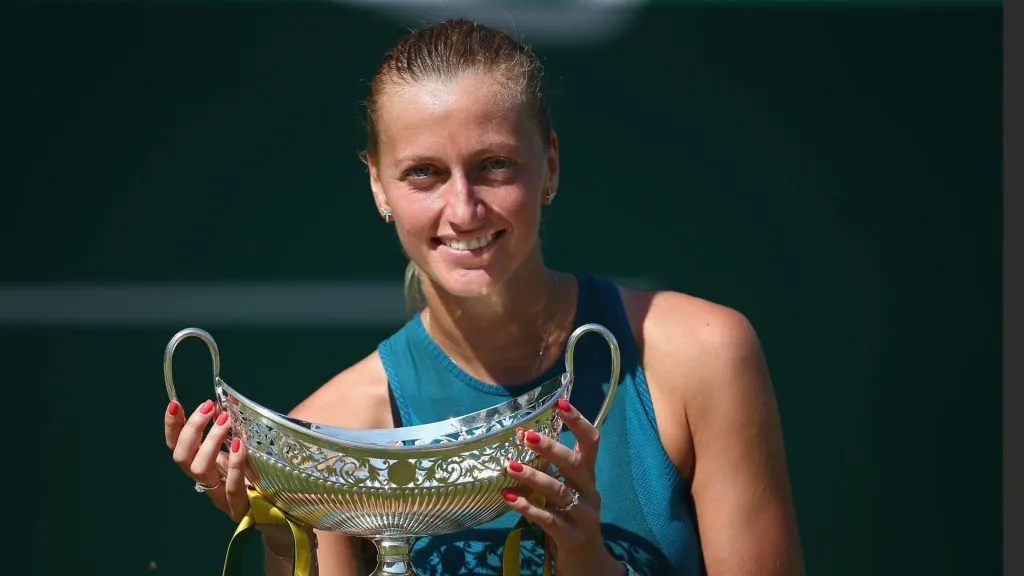
Kvitova’s comeback gained momentum in 2018, when she won five titles, including Dubai and Madrid, and returned to the Top 5. She also helped the Czech Republic secure another Fed Cup title. In 2019, she reached her first Grand Slam final in almost five years, finishing as runner-up to Naomi Osaka at the Australian Open.
“The bad thing of course is my trust in people, especially men, has got worse,” Kvitova told the BBC. “Sometimes I do have those flashbacks when I am somewhere alone or something is happening around me. Sometimes I’m scared of course about the people around, still looking back behind me what is happening there and sometimes I’m walking too fast to be in a safe place. It’s changed my perspective – sometimes I’m just really appreciating that I’m alive.”
Coming back from maternity and retirement
Since then, Kvitova also started her family life. In 2021, it was reported that she was in a relationship with her coach, Jiri Vanek. They got engaged in 2022 and married a year later. In January 2024, Kvitova announced her pregnancy, and in July 2024, she gave birth to their son, Petr.
She returned to the WTA tour following her maternity leave. While she is out of the Top 500, she got her first win since her return to the tour in Rome. It’s her only win in six matches this year.
Retirement
Kvitova has announced she will retire after the 2025 US Open on social media, after accepting a wildcard for Wimbledon. “As [with] all phases in life, there comes a day that it is time for a new chapter, and that time for me has come now,” Kvitova wrote in a statement. “I therefore wanted to share with you that 2025 is my last season on tour as a professional.
“I am excited and very much looking forward to soak in the beauty of playing The Championships, Wimbledon one more time, a place that holds the most cherished memories in my career for me. And while I am not entirely sure yet what my hardcourt swing in the US will look like, I am intending to finish my active playing career at the US Open in New York later this summer.”
While Kvitová is saying goodbye to tennis, her career will always stand as an example of resilience and hard work, a champion who never gave up, even in the most dire circumstances.