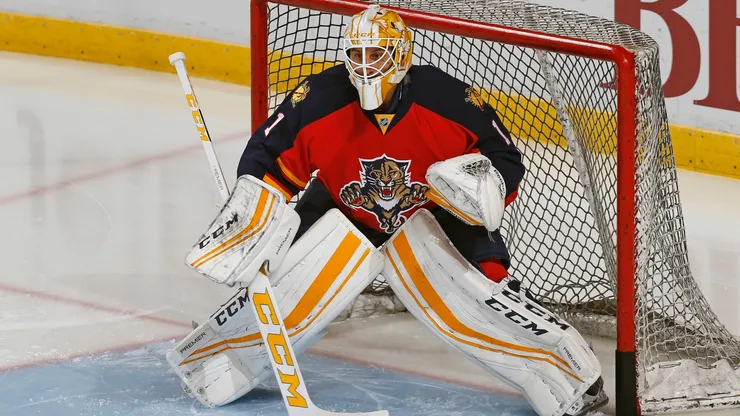
An NHL season can drift into familiar rhythms, yet every so often a goaltender bends the pattern. The crease becomes a pressure chamber, and the ones standing in it turn routine nights into quiet showcases of endurance.
What began as a stretch of heavy workloads soon took on a different shape, as save totals climbed past expectations. Game after game, the busiest netminders held their ground, reshaping the pace of play without a hint of theatrics.
By the season’s midpoint, the numbers hinted at something rarer: a campaign defined not by explosive scoring, but by the stillness forged under fire. In that narrow space between chaos and control, record-breaking performances quietly gathered force.
Gump Worsley – New York Rangers | 1955-56 season
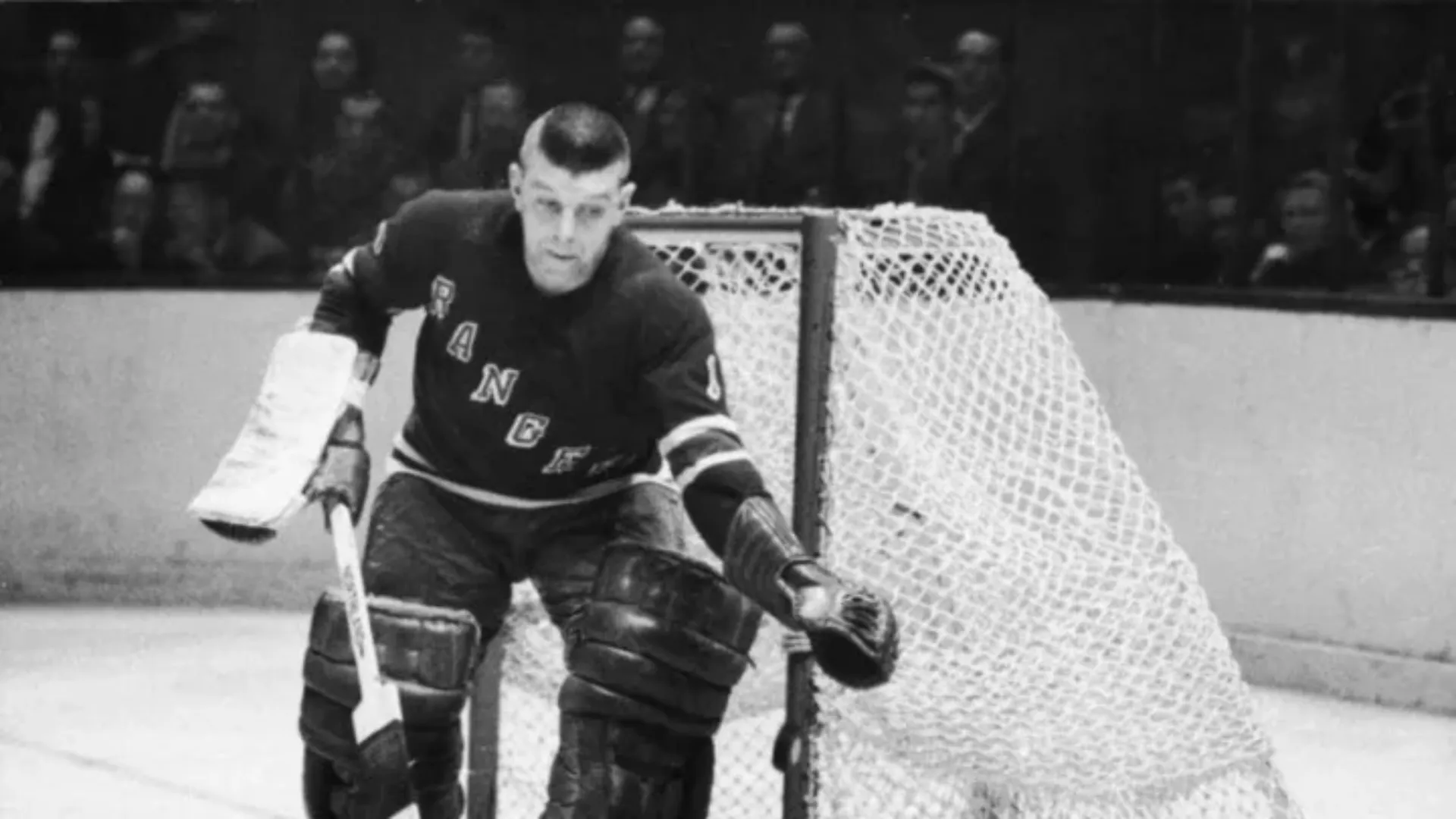
Gump Worsley (Source: Blue Line Station)
In an era where most goalies dreamt of a steady tenure within the “Original Six”, Lorne “Gump” Worsley‘s reality was drastically different. The 1955-56 New York Rangers were not exactly a defensive fortress; they were, in fact, an open invitation for opponents to take their best shot.
Without modern protection, and lacking the luxury of a consistent backup, he became a hero of resilience. That season, the diminutive goalie with the big personality shouldered an epic workload, facing 2,574 shots and recording an astonishing 2,376 saves, an NHL record that remains virtually untouchable today, given the modern emphasis on rotation and load management.
Imagine standing in the net for all 70 games and seeing 92.3% of those 2,574 shots crash into your chest, glove, or pad. He didn’t just stop the puck; he single-handedly kept a Rangers team afloat that otherwise would have sunk without trace.
His ability to devour shots earned him a nomination for the Hart Memorial Trophy as the league’s most valuable player—a testament that even in defeat (the team finished in fourth place), individual brilliance can rewrite the record books.
Gump Worsley – New York Rangers | 1962-63 season
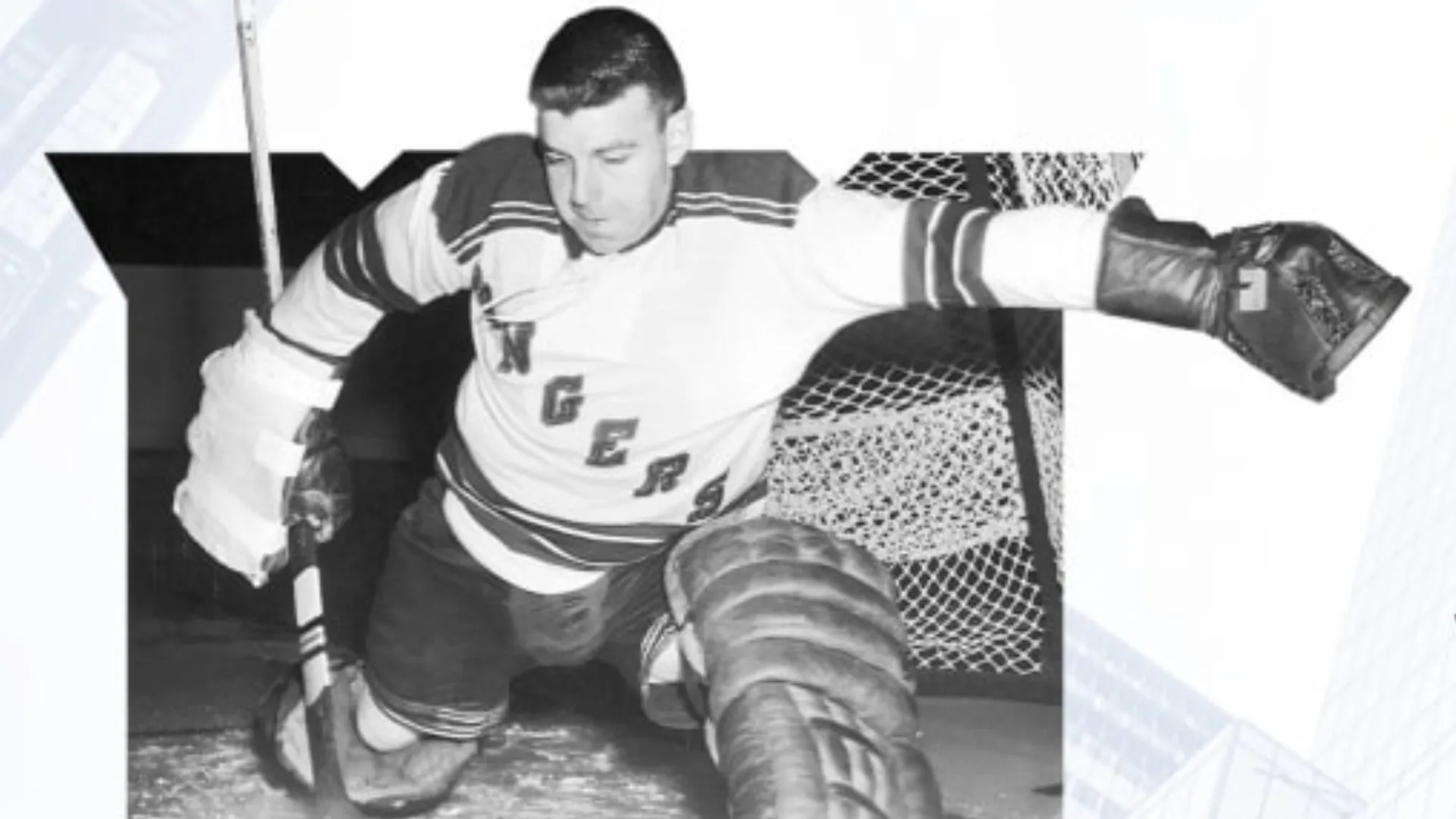
Gump Worsley (Source: NHL)
Seven seasons after his initial feat, Worsley proved that his save record was not a fluke, but the painful norm for the Rangers’ starting goalie in the early 60s. The 1962-63 campaign was a déjà vu of the intensity he had previously experienced. Despite a marginal decrease in games played, his raw workload remained nearly identical: 2,306 saves.
What is most remarkable about this second personal record is that it occurred on a team that, once again, failed to qualify for the playoffs, finishing second to last in the league.
This total, the second-highest recorded up to that point in league history, underscores the harsh reality of the defensively weak teams of the pre-expansion era. He was the proverbial firefighter, rushing into the inferno with a thimble of water.
His save total stands as an epitaph to sheer bravery; an unwavering commitment despite the constant bombardment that characterized much of his time in New York.
Roberto Luongo – Florida Panthers | 2003-04 season

Roberto Luongo (Source: Joel Auerbach/Getty Images)
We jump forward almost four decades, and the net no longer feels quite so lonely. In the 2003-04 season, the NHL was a 30-team league, with a much different pace and shot pressure. Yet, in the uncertain landscape of the Florida Panthers, a young Roberto Luongo was constructing one of the most underrated but statistically brutal seasons in modern history.
He played an exhausting total of 73 games, allowing him to accumulate 2,303 saves on 2,475 shots faced. Unlike Worsley’s records, which stemmed from necessity in the ‘Original Six,’ his achievement came with staggering efficiency: a save percentage of .931, a mark that placed him in the absolute elite of the league, even above that season’s Vezina winner, Martin Brodeur.
His effort was the very definition of a standstill guardian: a titanic athletic display on a team that finished last in the Southeast Division. His Vezina Trophy candidacy, despite his team missing the playoffs, was a clear recognition that his Wall of Ice was the only thing preventing total disaster in Sunrise, Florida.
Roberto Luongo – Florida Panthers | 2005-06 Season

Roberto Luongo (Source: Eliot J. Schechter/Getty Images)
Following the lockout that cancelled the 2004-05 season, hockey returned with rules that favored offense, yet Luongo’s job in Florida remained just as relentless. In 2005-06, “Bobby Lou” was not just in the net, but he was the absolute leader in minutes played, setting a franchise record by appearing in 75 games.
The result was a monumental tally of 2,275 saves which, while slightly lower than his previous peak, cemented his reputation as a goaltender capable of absorbing an inhuman workload with a high level of efficiency.
The Panthers once again missed the post-season, but Luongo consolidated two consecutive record-level save seasons, a feat demonstrating his ability to be the defensive epicenter, season after season, regardless of his team’s fragility. This total is a testament to his durability in the speed-oriented ‘New NHL.’
Eddie Johnston – Boston Bruins | 1963-64 Season
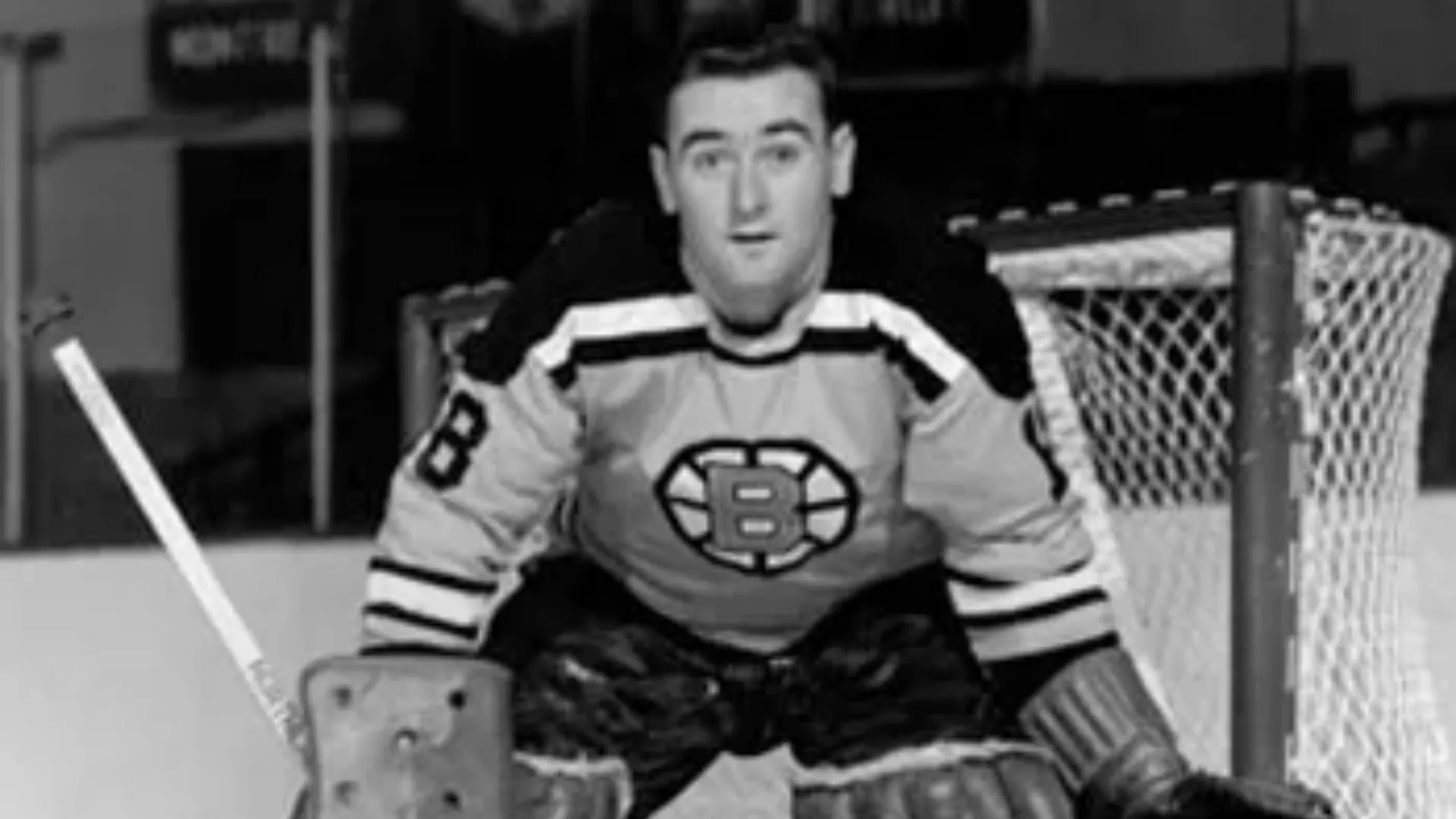
Eddie Johnston (Source: Third String Goalie)
The story of Eddie Johnston in 1963-64 is both epic and melancholic. This save total is significant not just for the number, but for the context: He became the last NHL goaltender to play every single minute of his team’s entire regular season, participating in all 70 games for the Boston Bruins.
Imagine the fatigue. There was no break, not a single minute to rest the mind or body. The Boston team was, sadly, the bottom-dweller of the league. He was relentlessly bombarded, facing 2,454 shots to register 2,243 saves with a respectable .914 save percentage, despite the Bruins only managing 18 wins.
His record is not just an impressive figure; it is a monument to the extinction of a species of goaltenders. Today, with load management, back-to-backs, and faster hockey, Johnston’s achievement is a true relic of a past where the goalie was, quite literally, the only man standing.
Jacques Plante – New York Rangers | 1963-64 Season
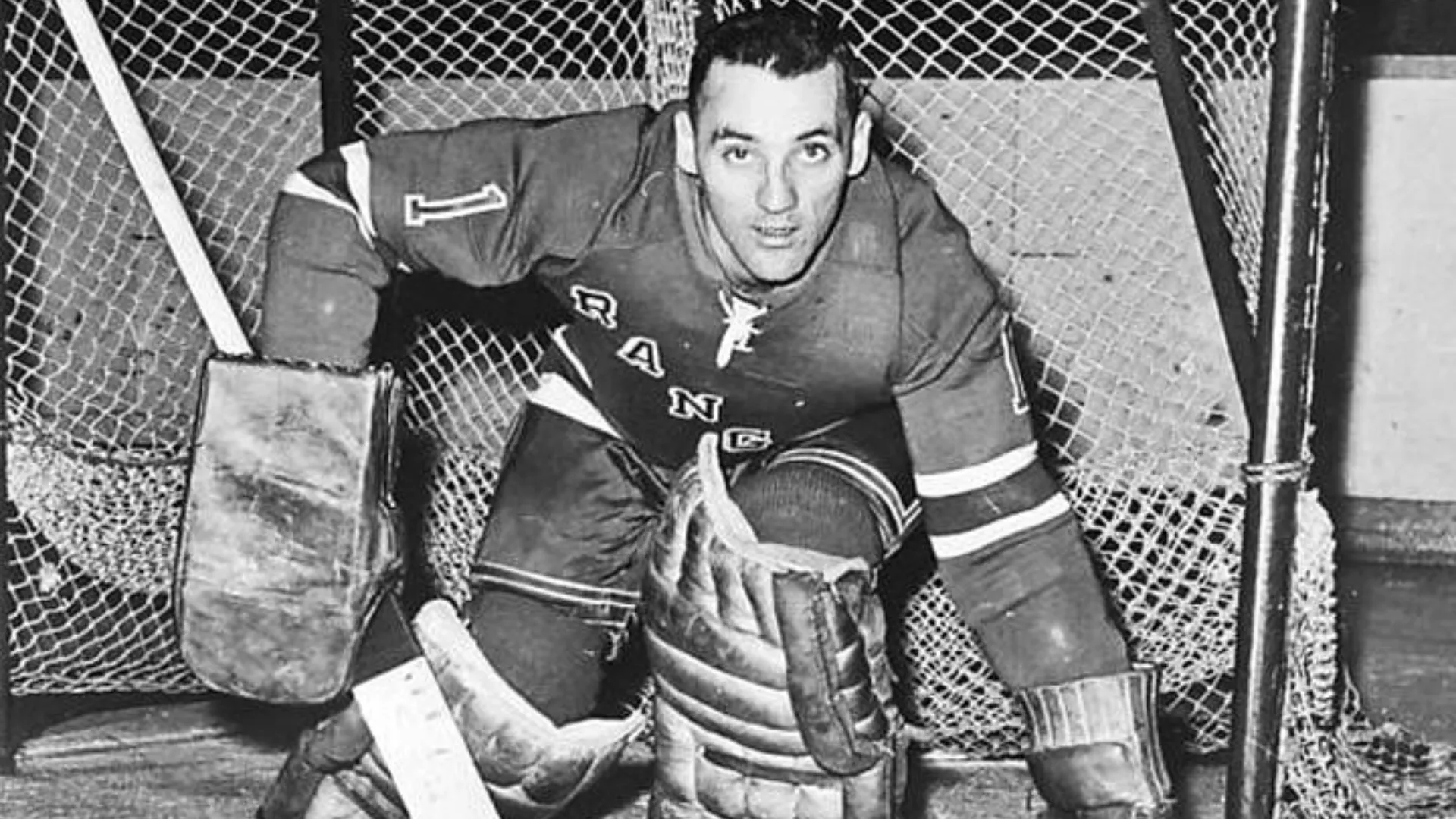
Jacques Plante (Source: The Hockey Writers)
The 1963-64 season was famously the year of goaltending overwork, and the New York Rangers were a primary contributor to that trend. While they were not the worst defensive unit, they were consistently testing the limits of their netminders.
Enter Jacques Plante, the legendary pioneer of the face mask, brought in near the twilight of his career. At 35, and having already accumulated multiple Stanley Cups and Vezina trophies, Plante was supposed to be the steadying force, but he ended up being the workhorse.
He appeared in 89% of the team’s games, racking up a grueling 2,224 saves. What sets this total apart is that, for a player renowned for his puck-handling and revolutionary style of play, this season was less about artistry and more about grinding durability. He faced down 2,416 shots for an impressive .920 SV%.
This monumental save total is a testament to his sheer athleticism even in his advanced years; he adapted his innovative approach to simply survive the constant siege laid against a rebuilding Rangers squad. It shows that even the most celebrated goaltenders could not escape the necessity of absorbing shot after shot in that demanding era.
Felix Potvin – Toronto Maple Leafs | 1996-97 Season
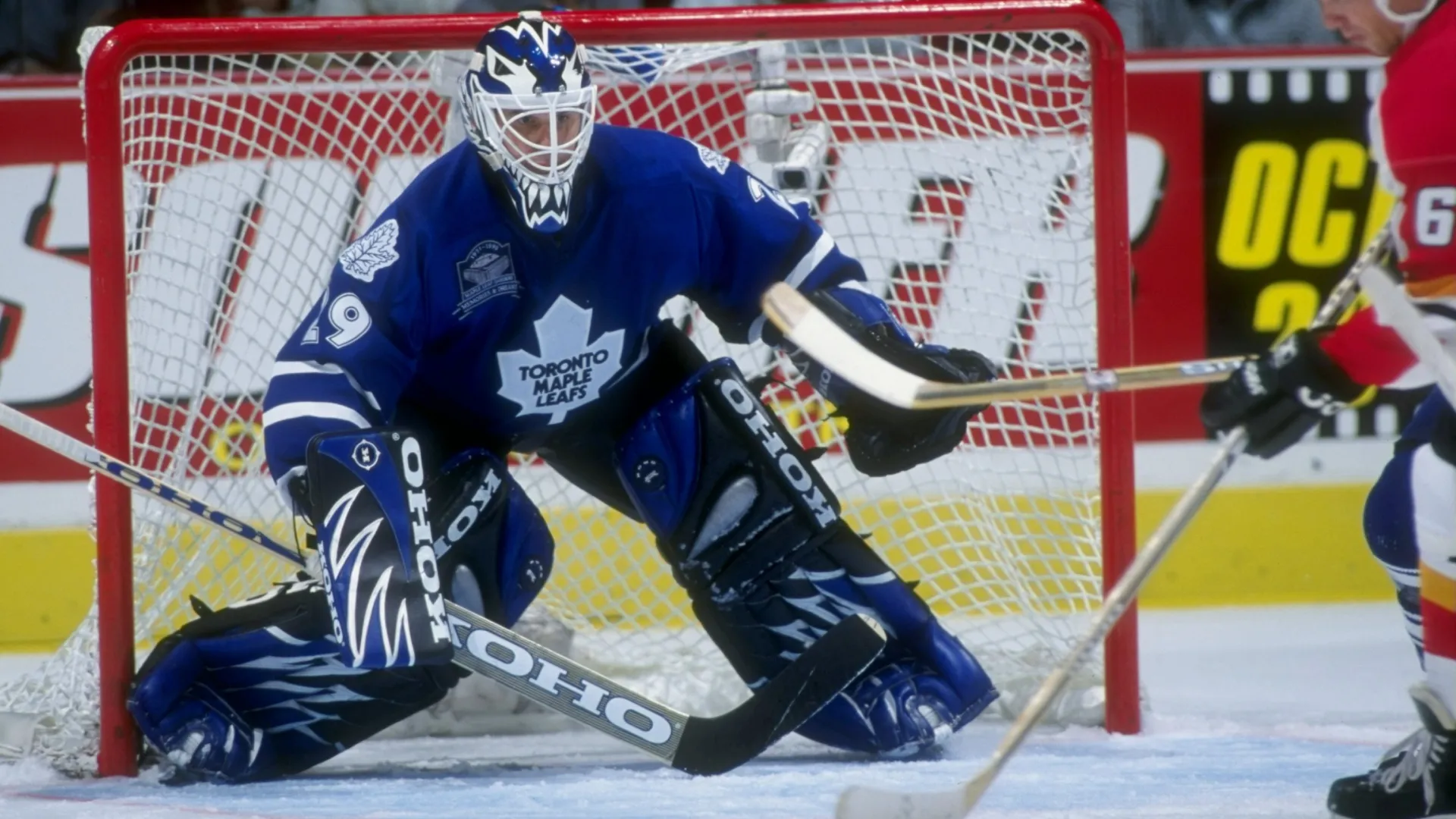
Felix Potvin (Source: Ian Tomlinson /Allsport)
Fast-forward to the late 1990s, where the goalies are bigger, the equipment is bulkier, and the save totals are still reaching dizzying heights. Felix “The Cat” Potvin, known for his acrobatic style and butterfly prowess, was the undisputed backbone of the Toronto Maple Leafs during the 1996-97 season.
Unlike the defensive collapses of the 50s and 60s, the Leafs were competitive but demanded extreme commitment from their star keeper. He played 74 games—nearly 90% of the schedule—a massive workload for the modern era, resulting in 2,214 saves. What elevates this performance is the pressure: the Leafs were battling for a playoff spot, and every one of the 2,424 shots he faced mattered immensely.
His total is a clear marker of the transition between eras; it proves that even with evolving defensive systems and greater efficiency, elite goaltenders could still be leaned upon to carry a franchise single-handedly through an entire 82-game campaign.
Cam Ward – Carolina Hurricanes | 2010-11 Season
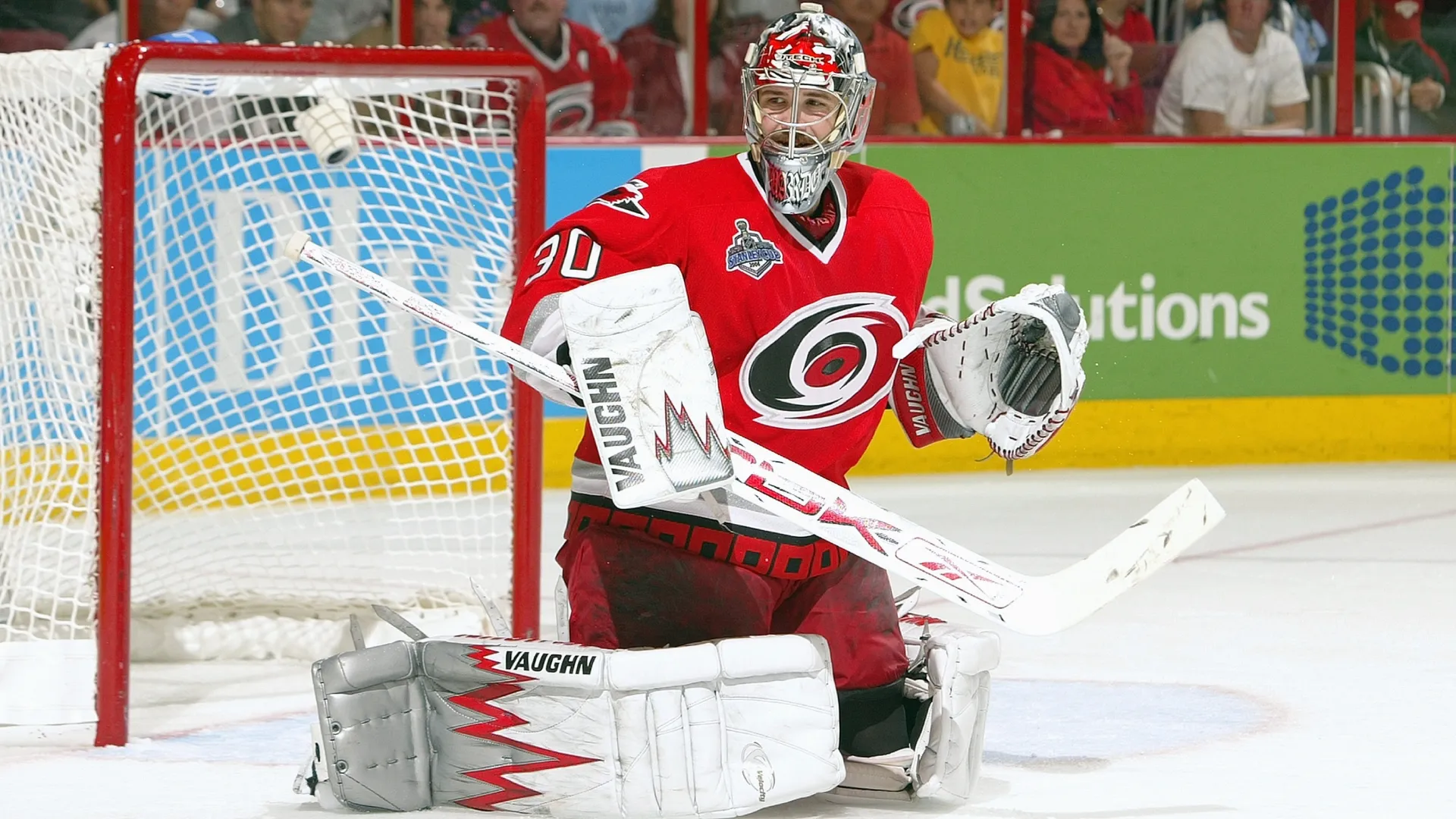
Cam Ward (Source: Elsa/Getty Images)
The 2010-11 season represents perhaps the last time an NHL goaltender might realistically crack the top-ten list of single-season saves, given the current trend toward platooning and load management. Cam Ward, the Carolina Hurricanes’ former Playoff hero, was the picture of reliance that year. The Hurricanes were a high-event team—exciting to watch, but prone to defensive lapses—and Ward was the necessary anchor.
He played a whopping 74 games, logging over 4,300 minutes, and faced a staggering 2,386 shots, making 2,191 saves. This is a modern-day marathon, especially notable as it occurred after the 2005 rule changes intended to increase scoring, making a goalie’s job inherently harder.
This save total is less about a completely porous defense and more about the sheer volume of high-pace action in the post-lockout NHL. Ward’s effort was not just about stopping pucks; it was about maintaining consistency and mental fortitude night after night, culminating in a strong .923 SV% and demonstrating the physical toll required of an elite goaltender in the modern era.
Marc Denis – Columbus Blue Jackets | 2002-03 Season
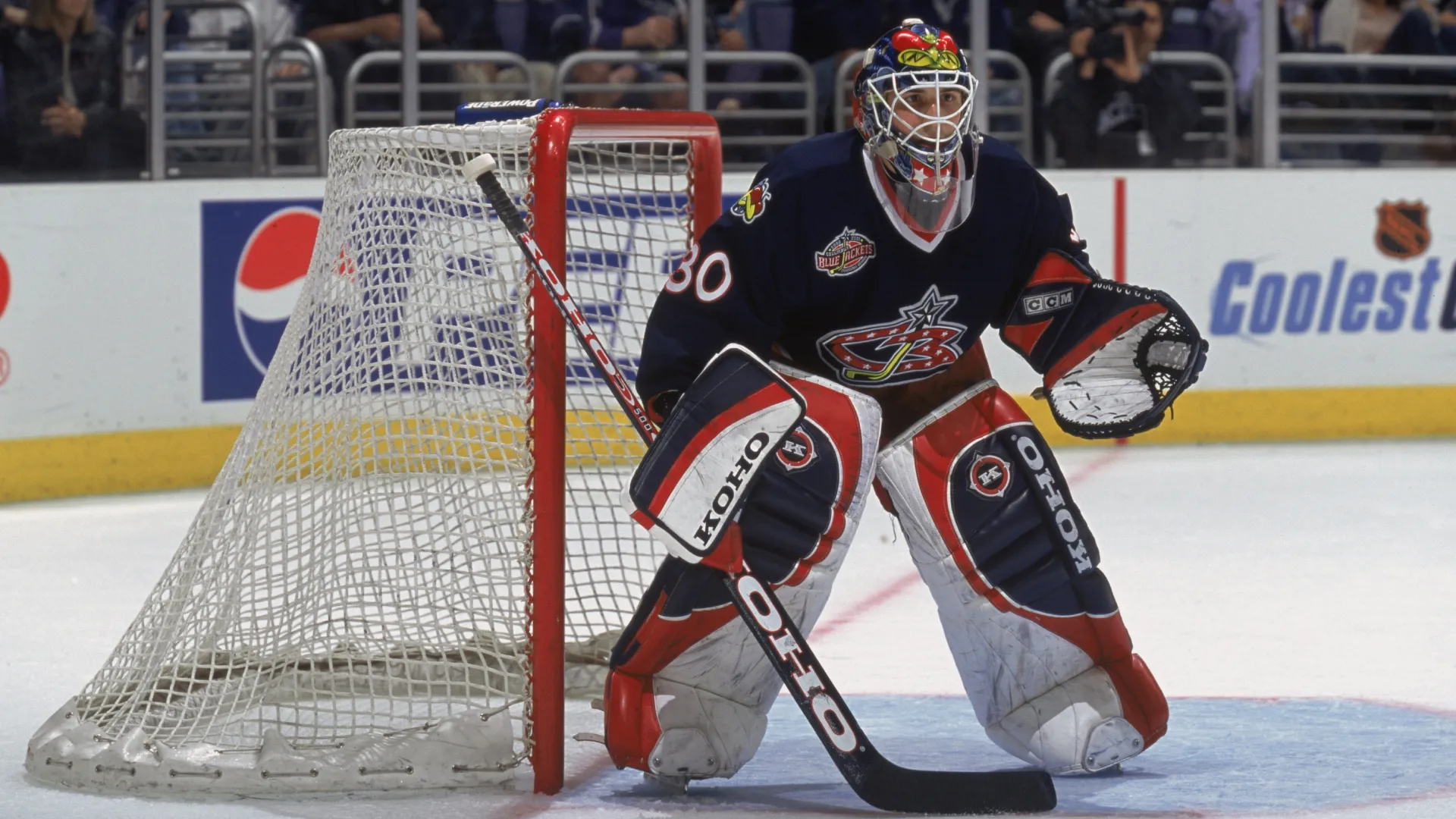
Marc Denis (Source: Harry How/Getty Images/NHLI)
In the nascent stages of the Columbus Blue Jackets franchise, finding stability was an ongoing struggle, but they had a clear number one in Marc Denis. The 2002-03 season was the definition of an expansion-era grinder’s campaign: lots of shots, lots of saves, and minimal team success. He was the undeniable bright spot, a symbol of resilience for a struggling club.
He made 2,172 saves after appearing in an incredible 77 games—the highest number of appearances among all goalies on this list. He faced 2,367 shots, meaning he saw an average of over 30 shots per game for nearly the entire season.
For the Blue Jackets, he was not just a goalie; he was the de facto defensive system. His high save total in a relatively short-lived NHL career stands as a clear record of the pressure placed upon goalies in newly formed, defensively challenged teams. He truly earned his paycheck by facing an avalanche of rubber and managing to post a competitive .916 SV% despite the odds.
Curtis Joseph – St. Louis Blues | 1993-94 Season
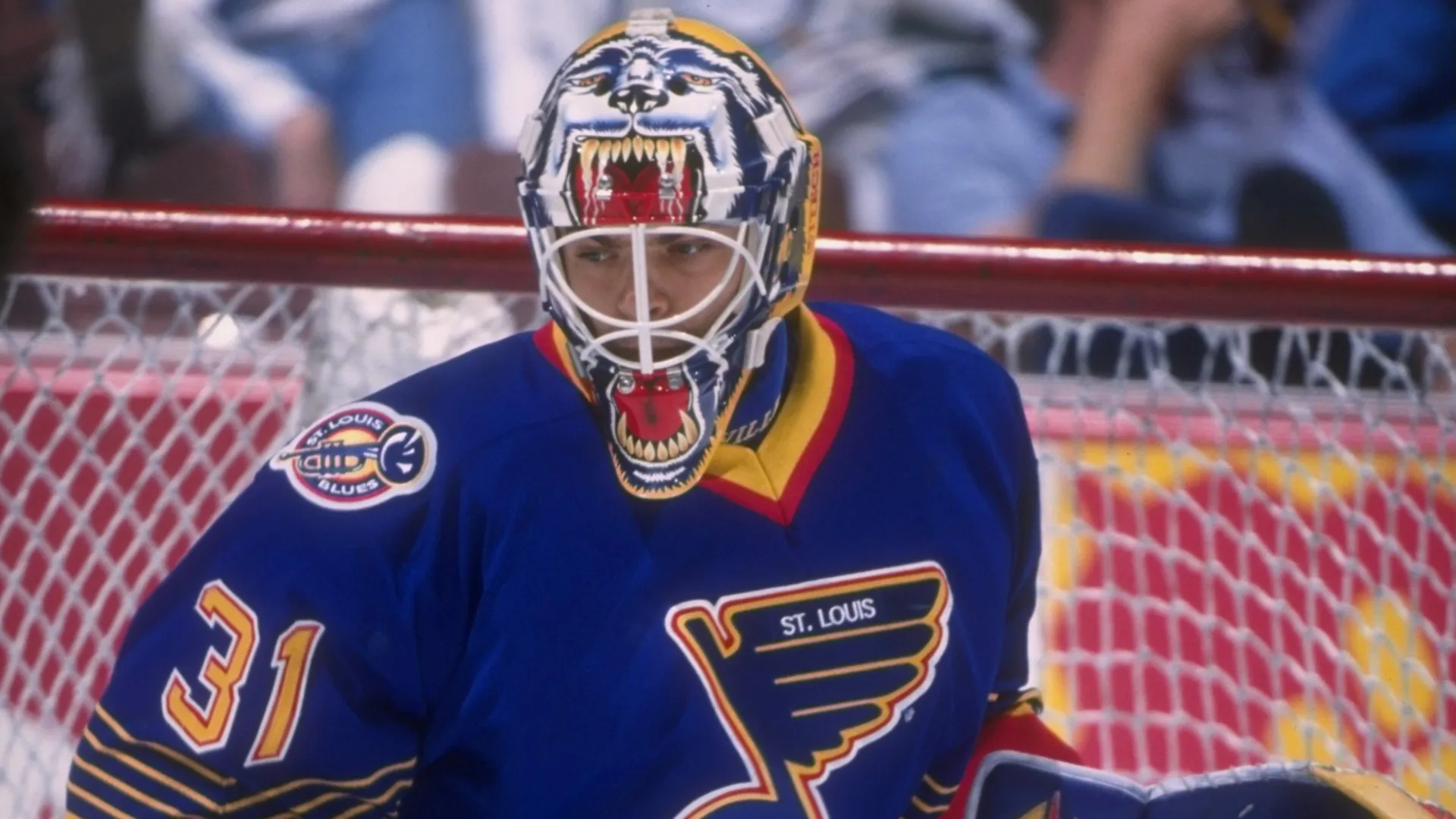
Curtis Joseph (Source: Al Bello /Allsport)
Curtis Joseph, or “Cujo,” was known for his competitive fire and athletic, scrambling style. His time with the St. Louis Blues in the mid-90s saw him truly emerge as a star, especially during the 1993-94 season, which was defined by a massive workload. St. Louis was a team in transition, leaning heavily on the goaltending prowess of Joseph.
Playing 71 games, he recorded a massive total of 2,169 saves. Crucially, this total came in the Western Conference during an offensive peak in the NHL, where players like Wayne Gretzky and Brett Hull were still dominating. He faced 2,387 shots with a solid .914 SV%.
His performance isn’t just a statistical anomaly; it highlights the mental toughness required to maintain a high level of save efficiency while being bombarded in a high-scoring league.
His inclusion here captures the spirit of the 90s goalie: incredibly athletic, fiercely competitive, and absolutely essential to his team’s success, even if it meant absorbing hundreds of extra shots.
Tony Esposito – Chicago Blackhawks | 1976-77 Season
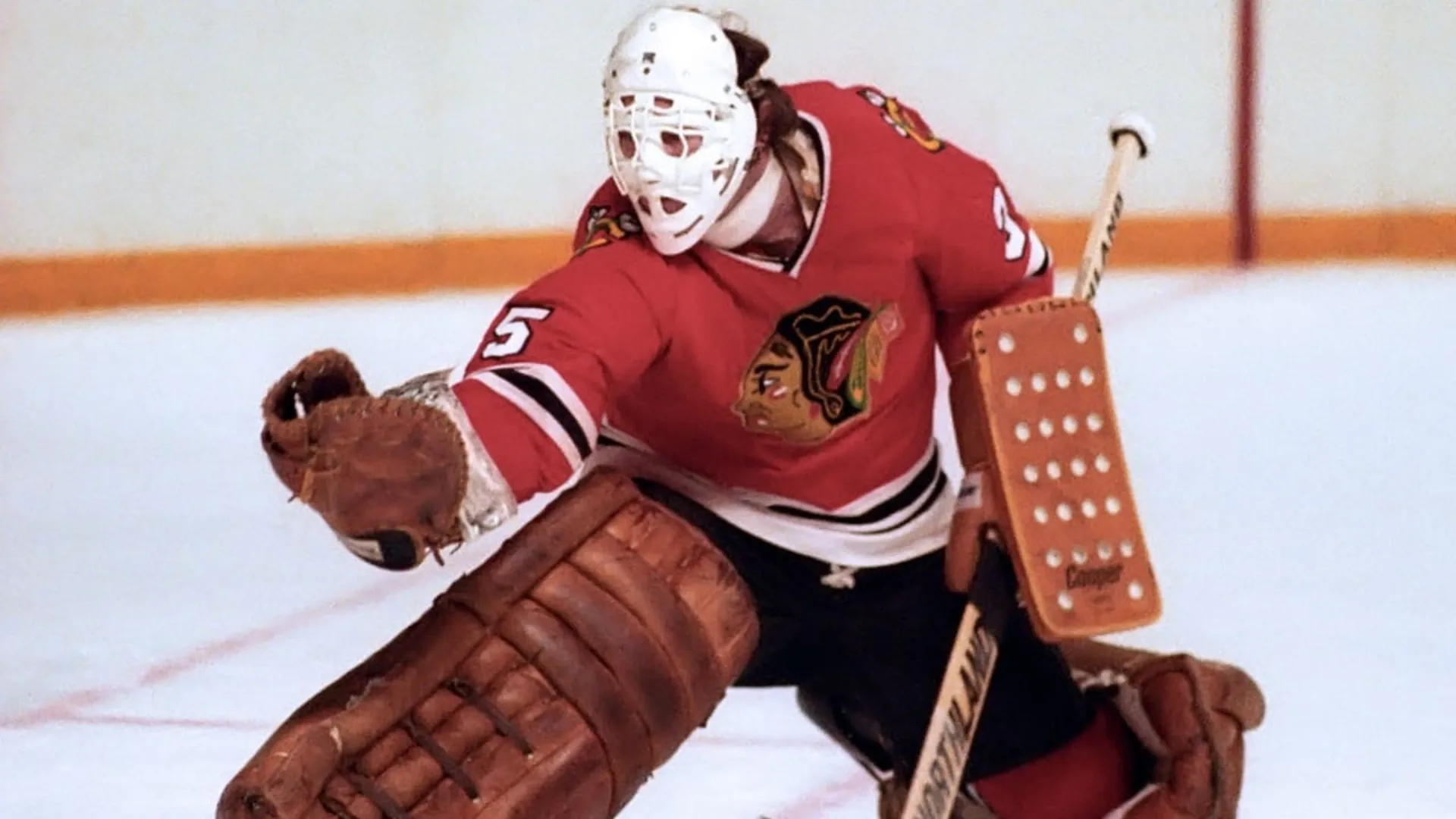
Tony Esposito (Source: NHL)
By the 1976-77 season, Tony Esposito had already cemented his legacy as one of the greatest Chicago Blackhawks of all time, known for his acrobatic style and his pivotal role in modernizing the butterfly save.
However, this season proved to be a grueling challenge, showcasing the enduring commitment required even of Hall of Fame talent. The Blackhawks of the mid-70s were defensively vulnerable, putting immense pressure on their primary netminder.
He played 69 games and tallied a monumental 2,119 saves on 2,335 shots. This total is remarkable because it occurred well into the post-expansion era, after the league had already seen numerous high-volume seasons.
For a Vezina winner and perennial All-Star, this wasn’t a season of dominating defense; it was a testament to his sheer durability and skill under duress. Tony O’s total here is a snapshot of an icon maintaining world-class performance despite the chaos around him, illustrating that even generational talents can be forced into a “season of standstill” by their team’s circumstances.
Bill Ranford – Edmonton Oilers | 1993-94 Season
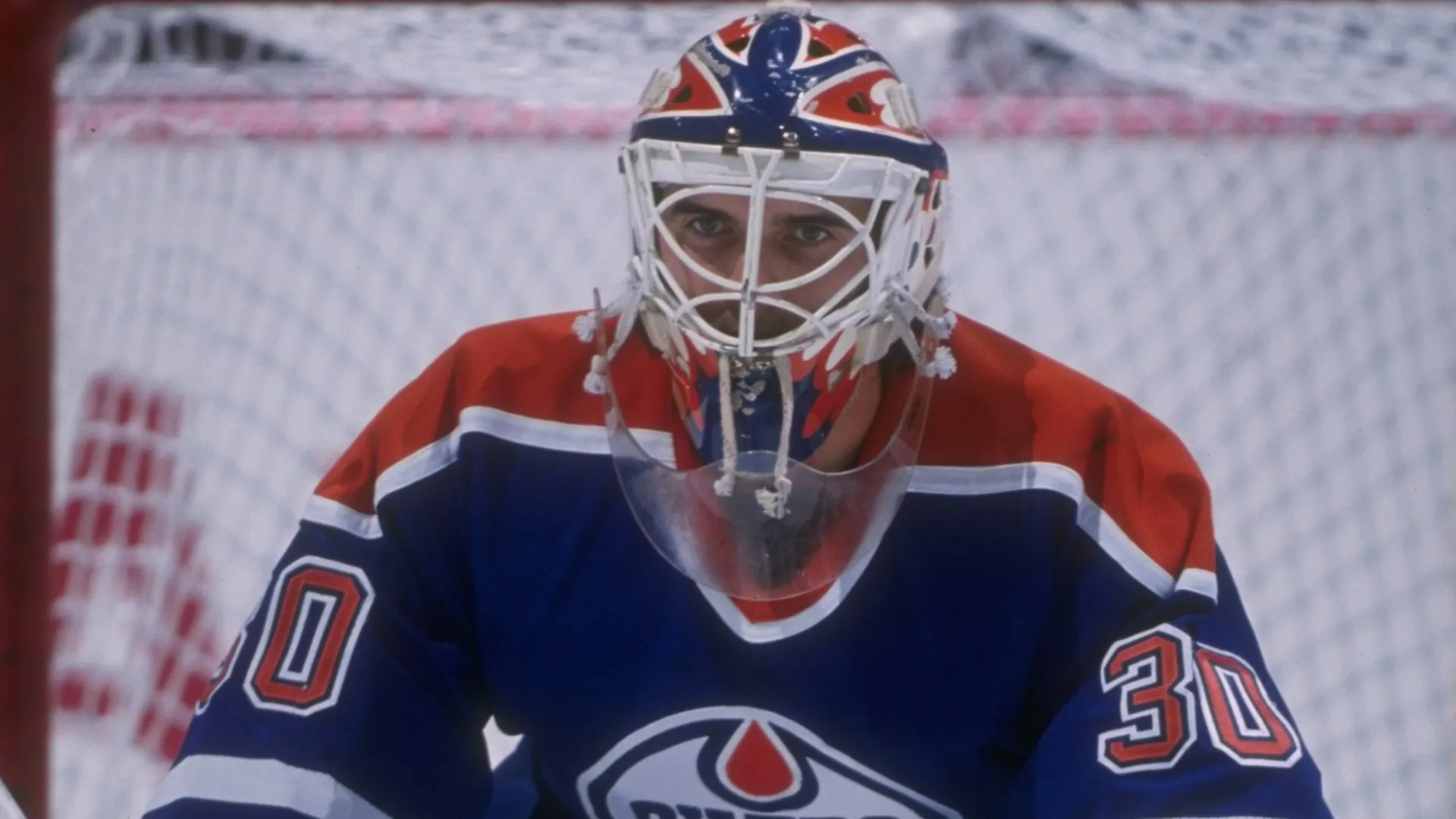
Bill Ranford (Source: Al Bello /Allsport)
The early 1990s saw the Edmonton Oilers grappling with the harsh reality of life after the Gretzky/Messier dynasty. The 1993-94 season placed a massive workload on Bill Ranford, the lone Stanley Cup winner remaining from their 1990 triumph. He was the definition of a workhorse for a team desperately trying to rebuild.
He played 73 games and recorded an exhausting 2,089 saves. This performance is highly significant because, unlike the early era’s records, his total came in a league with increasingly sophisticated power-plays and shot generation.
He didn’t just stand there; he battled, facing 2,305 shots for a respectable .906 SV%. His total of saves is a historical marker of the transition period for the Oilers—no longer dominating, but surviving on the heroic, high-volume efforts of their goaltender.
Gump Worsley – New York Rangers | 1956-57 Season
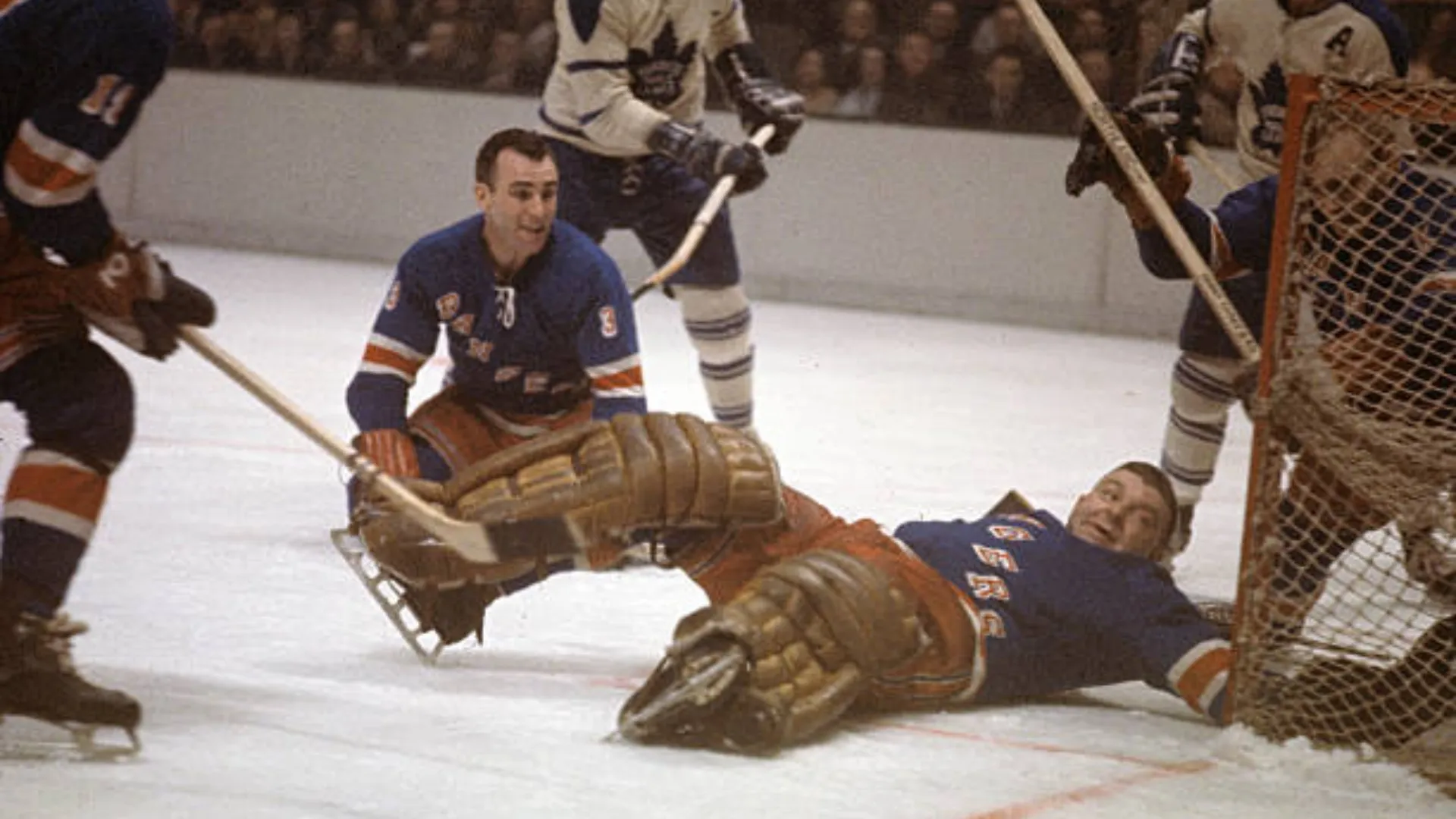
Gump Worsley (Source: BlueCollarBlueShirts.com)
It bears repeating: Gump Worsley was the epitome of the overworked goaltender in the mid-1950s. The 1956-57 season saw the New York Rangers continuing their reliance on their tireless netminder, pushing him to his limit for the third year in a row. Following his back-to-back record-setting seasons, he once again eclipsed the 2,000-save threshold, totaling 2,057 saves.
This save total is statistically remarkable for its consistency and endurance. To hit this massive mark three years running, in an era of minimal protective equipment and no backups, speaks less about single-season heroics and more about an unyielding state of emergency in the Rangers’ defensive zone.
He played the full 70-game schedule, facing 2,279 shots. His career is truly a document of the maximum physical and mental toll placed on a goaltender in the Original Six era—a relentless, sustained bombardment that few goalies in history have ever matched.
Craig Anderson – Colorado Avalanche | 2009-10 Season

Craig Anderson (Source: Jeff Gross/Getty Images)
The 2009-10 season for the Colorado Avalanche marks one of the most unexpected surges in save volume in the recent NHL history. Craig Anderson, in his first full season as a number-one goalie, became an instant workhorse. The Avalanche were a surprising playoff team, but their success was often built on the spectacular, high-volume saves of their new netminder.
He played 71 games and recorded 2,047 saves on 2,242 shots. This effort is notable because it occurred during the height of the cap era, where teams theoretically had more defensive balance.
However, the Avalanche’s high-tempo, opportunistic offense often exposed their defense, forcing him to act as the ultimate failsafe. His save total illustrates the modern load management challenge—a single goalie being relied upon to lift a rebuilding team to post-season relevance.
Gary Smith – Oakland Seals | 1969-70 Season
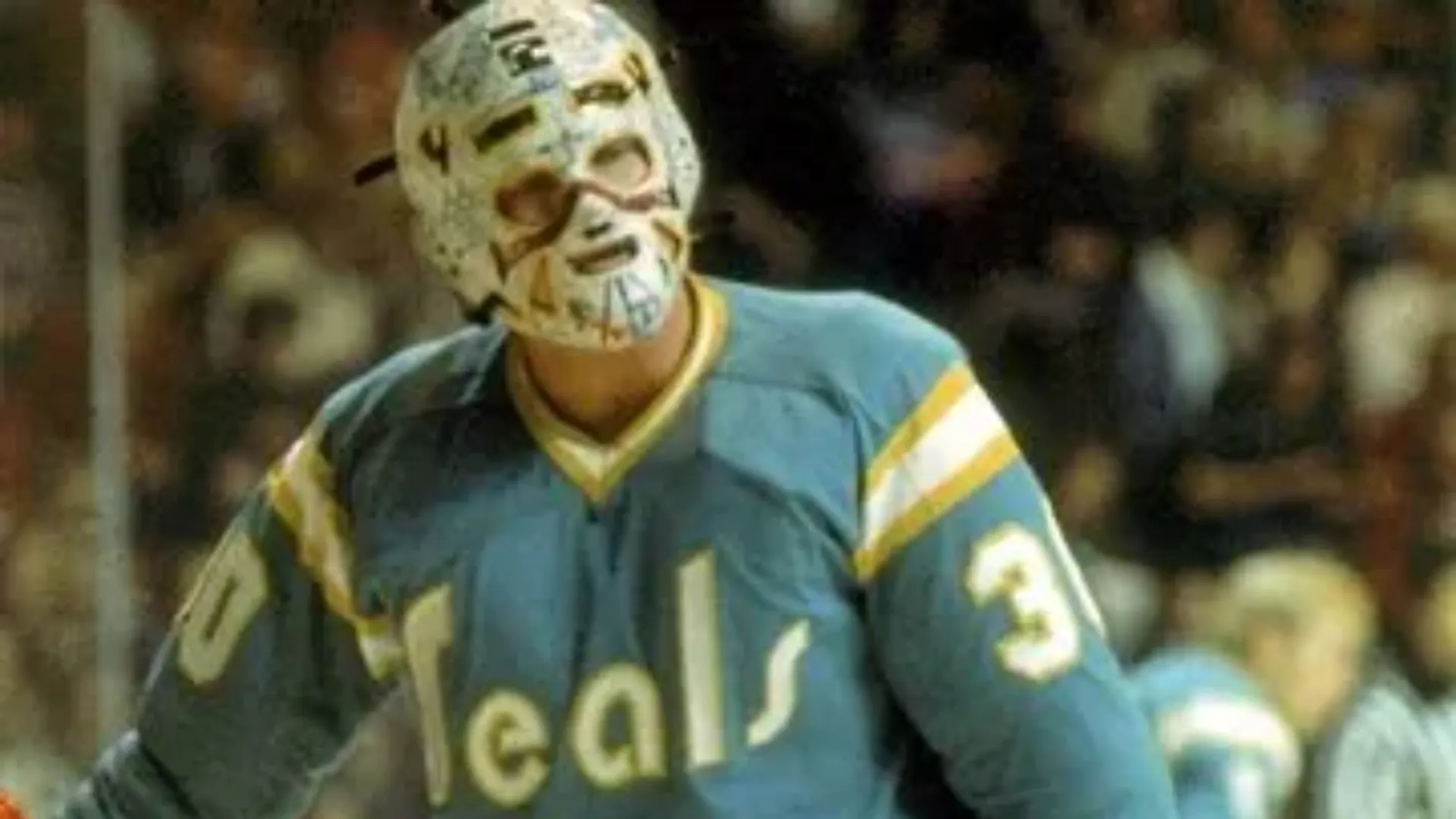
Gary Smith (Source: Golden Seals Hockey)
The story of the Oakland Seals (later California Golden Seals) is one of the NHL’s most challenging expansion tales, and no one bore that burden more directly than their goaltender, Gary Smith. Known as “Suitcase” Smith for his frequent travels, his 1969-70 season in the net was a grueling, high-volume affair.
He played 61 games and racked up 2,035 saves. While his number of games is lower than others on this list, the intensity of the shots faced—2,244 shots—is what truly defines this entry. As a team mired in losses and defensive struggles, he faced an average of over 36 shots per game.
His save total is the definitive evidence of the expansion goalie’s fate: being constantly peppered with shots in a league where the talent gap was vast. His resilience in the Seals’ net is less about winning and more about maintaining a competitive spirit and preventing total embarrassment for a franchise fighting for its existence.
| Player | Team | Saves | Season |
| Gump Worsley | New York Rangers | 2376 | 1955-56 |
| Gump Worsley | New York Rangers | 2306 | 1962-63 |
| Roberto Luongo | Florida Panthers | 2303 | 2003-04 |
| Roberto Luongo | Florida Panthers | 2275 | 2005-06 |
| Eddie Johnston | Boston Bruins | 2243 | 1963-64 |
| Jacques Plante | New York Rangers | 2224 | 1963-64 |
| Felix Potvin | Toronto Maple Leafs | 2214 | 1955-56 |
| Cam Ward | Carolina Hurricanes | 2191 | 2010-11 |
| Marc Denis | Columbus Blue Jackets | 2172 | 2002-03 |
| Curtis Joseph | St. Louis Blues | 2169 | 1993-94 |
| Tony Esposito | Chicago Blackhawks | 2119 | 1976-77 |
| Bill Ranford | Edmonton Oilers | 2089 | 1993-94 |
| Gump Worsley | New York Rangers | 2057 | 1956-57 |
| Craig Anderson | Colorado Avalanche | 2047 | 2009-10 |
| Gary Smith | Oakland Seals | 2035 | 1969-70 |
| Tomas Vokoun | Florida Panthers | 2033 | 2007-08 |
| Frederik Andersen | Toronto Maple Leafs | 2029 | 2017-18 |
| Glenn Hall | Chicago Blackhawks | 2026 | 1960-61 |
| Dominik Hasek | Buffalo Sabres | 2024 | 1996-97 |
| Martin Brodeur | New Jersey Devils | 2011 | 2006-07 |