
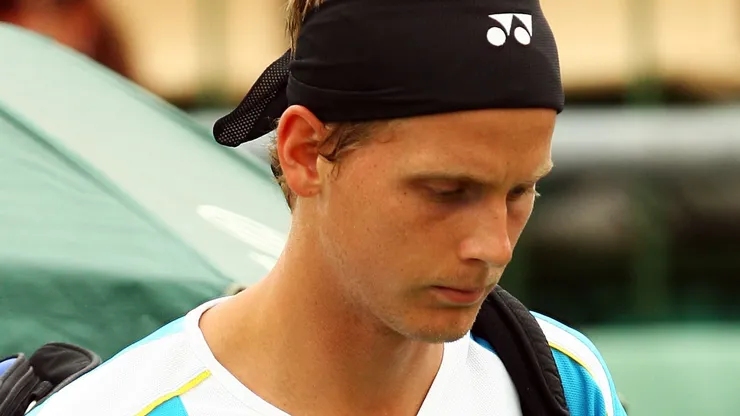
Becoming a great tennis player requires talent, mental strength, and, of course, a bit of luck. Many talented players reach the highest levels but fall just as quickly. Joachim Johansson, formerly known as ‘Pim Pim,’ broke into the Top 9 of the rankings, defeated a young Rafael Nadal, and stunned Andy Roddick, but he was never able to achieve greater success.
Born in Lund, Sweden, Johansson turned professional in 2000. He struggled for good results in the first three years, before having his breakthrough season in 2004. He won his first title at the Kroger St. Jude, defeating en route James Blake, Mardy Fish and German Nicolas Kiefer.
That same year, he reached the US Open semifinals, having the biggest win of his career over defending champion, Andy Roddick, in five sets in the quarterfinals. However, in the semis, he was beaten by Lleyton Hewitt. Curiously, at the time Johansson was dating Lleyton’s sister, Jaslyn Hewitt.
In 2005, he won two more titles, achieving his career-high singles ranking of world No. 9. In the Australian Open, he reached the fourth round, losing to Andre Agassi in four sets, but surprising him by setting a record (shattered by John Isner in 2010) of 51 aces in a match.
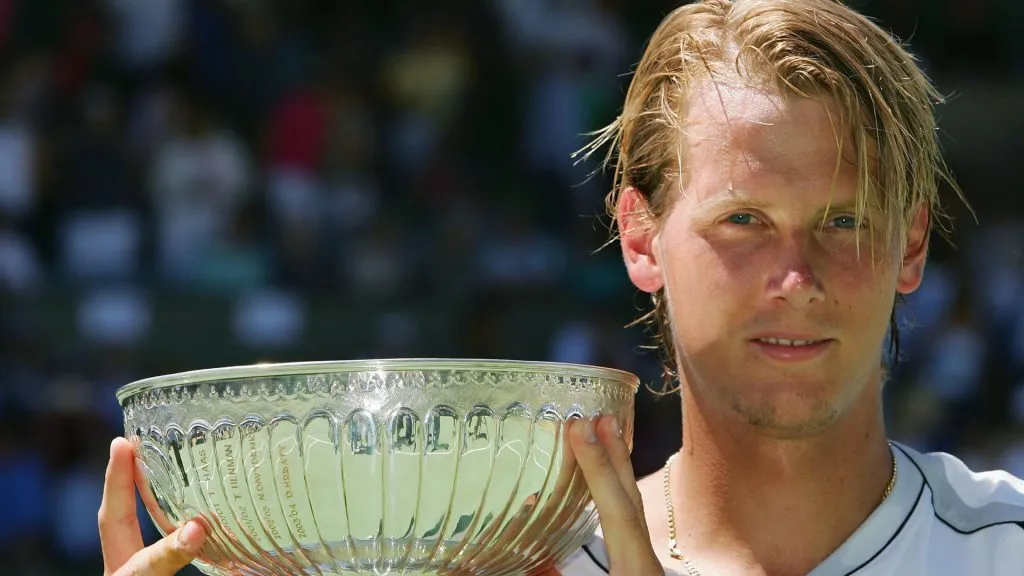
Johanson won the Next Generation Men’s Hardcourts in 2005 (Robert Cianflone/Getty Images)
“There’s a lot of sort of guesswork involved when you’ve never played somebody,” Agassi said prior to the match, according to Tennis Magazine. “But he has one of the biggest serves and one of the biggest forehands in the game, there’s no question about that.” However, despite his good technique, Johansson struggled with injuries.
Shoulder injury, comeback and victory over Nadal
In 2005, at 23 years old, after recording his only back-to-back wins at Wimbledon, he underwent shoulder surgery in July, forcing him out for the rest of the year. After rehabilitation, he came back to tour in 2006 with a world ranking of No. 254 to play San Jose, before suffering another injury which made him skip Indian Wells and Miami.
He hit rock bottom at No. 1,171, he had a second comeback in July of that same year with a great run at the Stockholm Open. There he stunned the top seed and then world No. 2, Rafael Nadal, in straight sets in the second round. Johansson recorded 17 aces, and called it his “greatest win ever,” according to Tennis Channel. In Madrid, he also recorded wins over wins over Juan Martin del Potro, and Nikolay Davydenko (then No. 5).
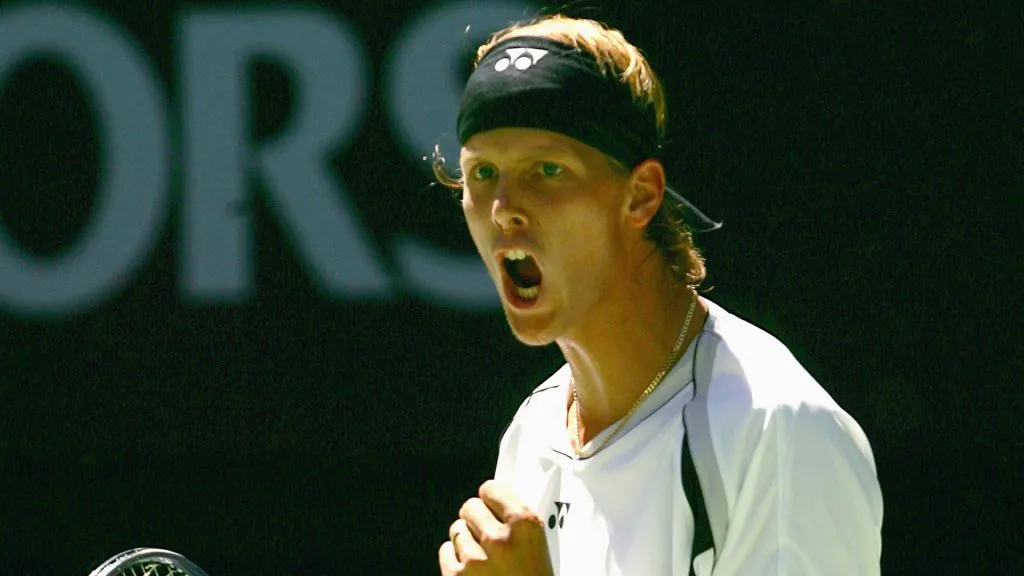
Johansson had the record for most aces in a match before John Isner broke it (Ryan Pierse/Getty Images)
This second return was also short lived as Johansson played just two tournaments before he underwent surgery on his right shoulder, again. He made his return in the Davis Cup tie against the United States, losing his singles match to Andy Roddick.
First, second and third retirement
According to Tennis Channel, Johansson said there was “no option” but to retire in early 2008. After all, he hadn’t played his best tennis or been anywhere close to full fitness since he was just 22.
Over the next two years, Johansson occasionally surfaced to pull off upsets against players like Hewitt and Juan Monaco. However, his struggles continued, and he ultimately retired in 2011, seemingly for good.
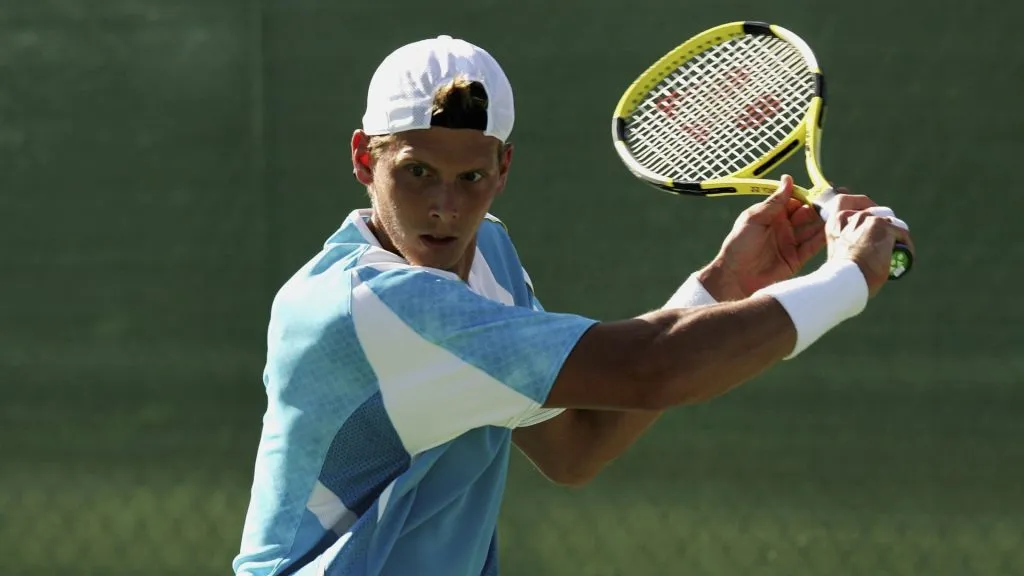
Johansson suffered many injuries during his career (Mark Dadswell/Getty Images)
In an interview published in Swedish daily Svenska Dagbladet, he said he was fit and injury-free, but he was no longer passionate about the sport: “I realized that I’m done with this (type of) life.”
Despite that, he made yet another comeback attempt in 2013, earning a spot in the Stockholm Open—fittingly. He defeated Alejandro Falla in the first round of the main draw before falling to Milos Raonic. It would be the final match for the man of many comebacks.