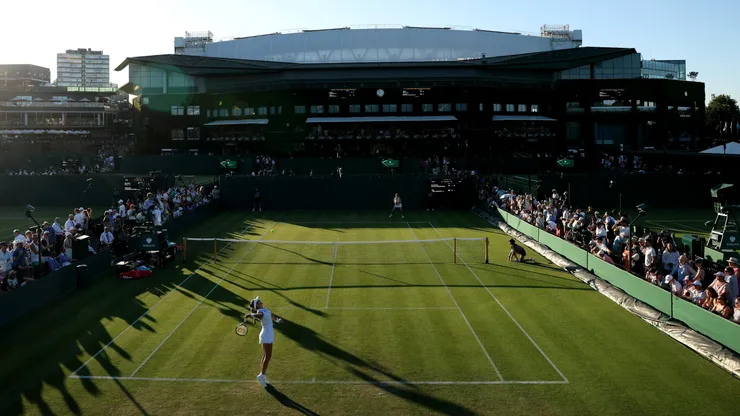
Wimbledon is unlike any other Grand Slam tournament. In addition to being played on grass and enforcing an all-white dress code, the tournament is the only one of the four majors where night sessions have a limited time.
Initially, the tournament would conclude all matches at sunset since the grounds lacked roofs and lights on the courts, preventing play from continuing into the night.
However, when they updated the Centre Court with the roof and spotlights in 2009, Merton Council introduced the new rule aiming to “balance the consideration of local residents with the scale of an international tennis event that takes place in a residential area,” according to a previous statement from the All England Club.
So, due to the rule, Wimbledon stops play an hour before midnight almost without fail. However, officials also take into consideration allowing players to play a few minutes past the mark if a match is almost ending.
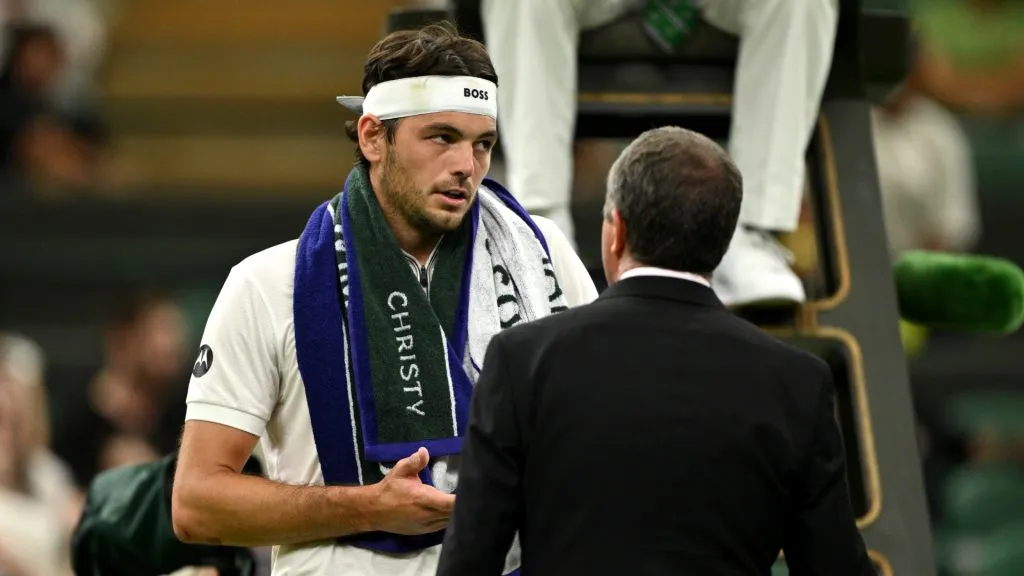
Taylor Fritz discusses with officials over curfew (Mike Hewitt/Getty Images)
But the rule also takes spectators into consideration. It ensures that fans can still access London’s subway system, known as the Tube, which ceases operations at midnight local time on weekdays.
What time is the Wimbledon curfew?
According to the regulations, matches are required to end by 11 pm BST (6 pm ET). Historically, there have been instances where matches extended over this time limit, such as the 2018 semi-final between Novak Djokovic and Rafael Nadal, which was paused after the third set. This particular match, having started at 8 pm, illustrates that the timing rule has been enforced but also occasionally adjusted depending on the circumstances.
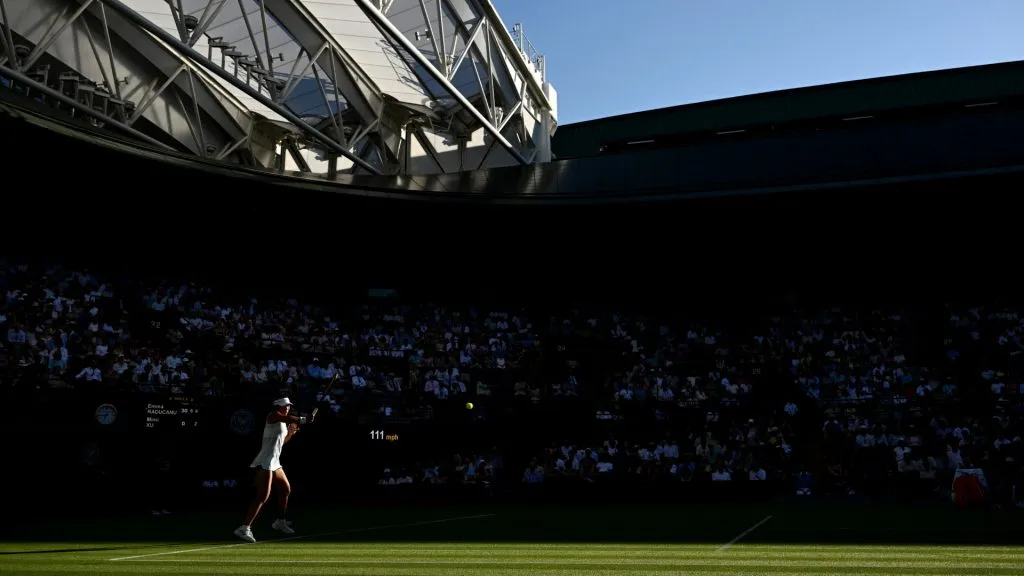
Mimi Xu of Great Britain plays a forehand against Emma Raducanu at Centre Court (Mike Hewitt/Getty Images)
This year, the implementation of this rule has shown some variations. For example, Alexander Zverev’s match on Centre Court was stopped after two sets. In a more contentious decision, Taylor Fritz’s first-round match against Giovanni Mpetshi Perricard was suspended with 42 minutes and one set remaining, which sparked discussions.
Why don’t they start play earlier?
Since 2021, the opening time has been adjusted to 1:30 p.m., half an hour later than in previous years, while Court No. 1 begins at 1 p.m. This change aims to offer spectators ample time to enjoy various parts of the event, such as watching matches on outside courts and indulging in traditional Wimbledon treats like strawberries and cream.
The later start time also provides the grass courts with additional recovery time, essential given the removal of the middle-Sunday break. Wimbledon CEO Sally Bolton noted that this schedule is also favorable for broadcasters, as it aligns matches with times when TV audiences are more likely to tune in.