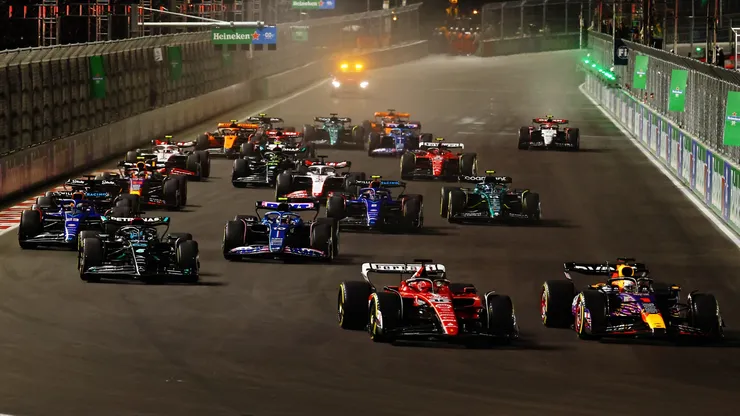
While most eyes in Formula 1 are fixed on the drivers, another race unfolds quietly in the background. It’s strategic, relentless and just as vital: the fight for the Constructors’ Championship.
Behind every podium finish lies a team of hundreds—engineers, strategists and mechanics—working in perfect sync. This is not just about speed; it’s about precision, innovation and consistency over a grueling season.
So what exactly is at stake for the teams? More than just trophies. From prestige to prize money and future dominance, the Constructors’ battle may be the most important story you’re not watching—until now.
Point allocation
The Constructors’ Championship is determined by the accumulation of points earned by both drivers of each team throughout the season. Points are awarded based on race finishes, with the top ten positions earning points as follows: 25 for first place, 18 for second, 15 for third, then 12, 10, 8, 6, 4, 2 and 1 point for tenth place.
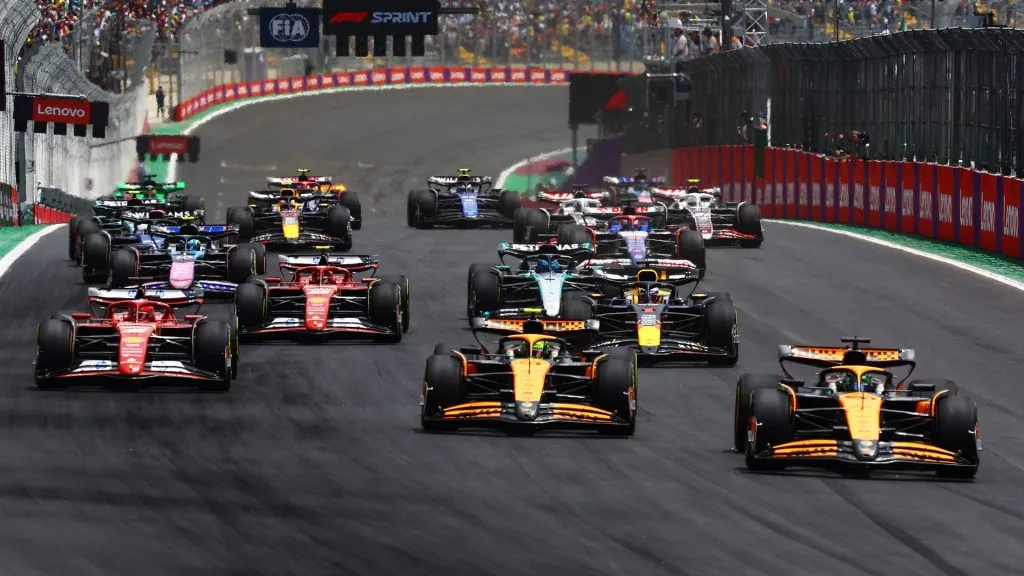
Oscar Piastri, Lando Norris and the rest of the field into turn one at the start during the Sprint ahead of the F1 Grand Prix of Brazil in 2024. (Source: Mark Thompson/Getty Images)
An additional point is granted to the driver who sets the fastest lap, provided they finish within the top ten. This structure means a team can earn a maximum of 44 points in a single race weekend if both drivers finish first and second, with one securing the fastest lap.
Strategic importance
While the spotlight often shines on the drivers, the Constructors’ Championship is a testament to a team’s overall performance, encompassing engineering excellence, strategic acumen and consistent execution.
Teams must balance development, reliability and race strategy to ensure both cars perform optimally across diverse circuits and conditions. This holistic approach underscores the importance of teamwork and innovation in securing the championship title.
Prize money
The Constructors’ Championship significantly influences the distribution of Formula 1’s prize money, which is derived from the sport’s commercial revenues. In 2023, the total prize fund was estimated at $1.6 billion.
The championship-winning team received approximately 14% of this pot, equating to around $140 million. Subsequent positions received decreasing percentages, with the tenth-placed team earning about 6% or $60 million.
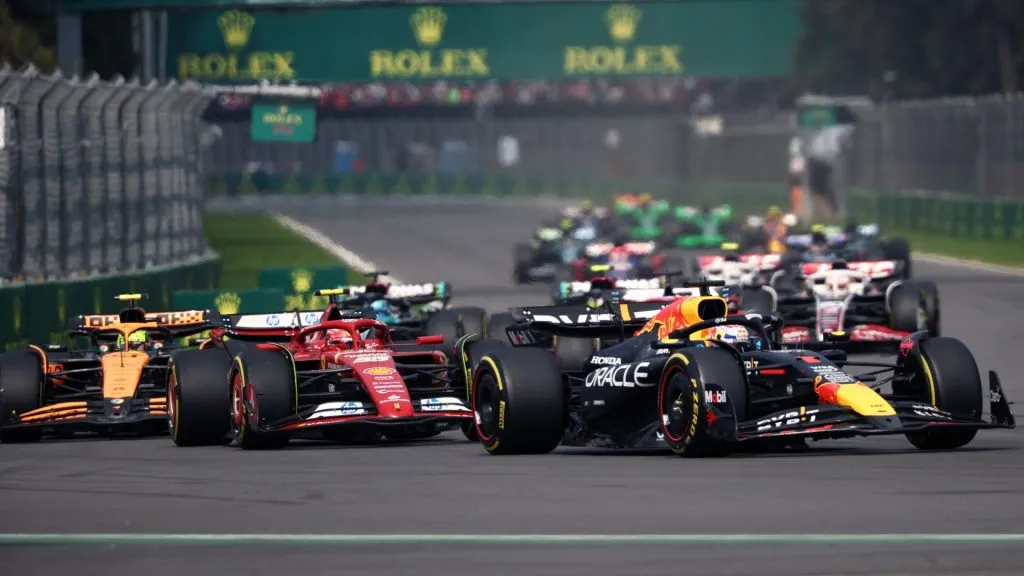
Max Verstappen, Carlos Sainz and Lando Norris at the start during the F1 Grand Prix of Mexico in 2024. (Source: Jared C. Tilton/Getty Images)
Additionally, certain teams receive historical bonuses; for instance, Ferrari is believed to receive an extra 5% due to its longstanding presence in the sport, according to Racing News 365 and The Independent.
Recent champions
In the past decade, the Constructors’ Championship has been dominated by powerhouses—each era marked by engineering brilliance, flawless execution and a touch of ruthless consistency.
From 2014 to 2020, Mercedes-AMG Petronas F1 Team carved out one of the sport’s most dominant dynasties. Spearheaded by the technical genius of Toto Wolff and the relentless pace of Lewis Hamilton (alongside Nico Rosberg, then Valtteri Bottas), Mercedes secured seven consecutive Constructors’ titles, redefining what consistency means in Formula 1.
That run came to an end in 2021 when Red Bull Racing, led by team principal Christian Horner and powered by the rise of Max Verstappen, began to shift the balance. After narrowly losing the 2021 Constructors’ battle to Mercedes, Red Bull responded emphatically.
In 2022 and 2023, Red Bull clinched back-to-back titles, with Verstappen and Sergio Pérez delivering points like clockwork, and the RB18 and RB19 proving nearly untouchable in terms of race pace and reliability.
Then came 2024, a season that reshuffled the deck. McLaren, a team steeped in history but long out of the championship conversation, made a stunning return to the top. Fueled by aerodynamic upgrades mid-season and the rise of a sharp young duo—Lando Norris and Oscar Piastri—McLaren overcame Ferrari in a dramatic late-season surge.