
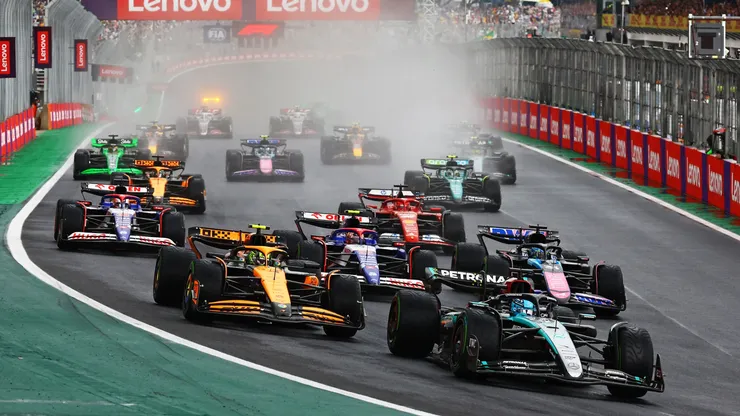
Formula 1 qualifying has become a spectacle in its own right, setting the stage for Sunday’s race with tension, strategy and high-speed drama. Far from a simple time trial, it’s a complex battle for position across three distinct phases.
The format—divided into Q1, Q2 and Q3—demands precision under pressure, with eliminations at every stage. What unfolds in these sessions often defines the narrative of a Grand Prix weekend before the race has even begun.
Adding a new layer to the weekend is the Sprint format, a shorter race that reshapes the stakes. With points, pride and grid positions on the line, it has quickly become a pivotal feature in the evolving F1 calendar.
Q1, Q2, Q3 explained
F1 qualifying is more than a dash for pole — it’s a multi-phase battle against time and rivals. In Q1 (18 minutes), all drivers compete, with the slowest five eliminated. Q2 (15 minutes) trims the field to 10, and Q3 (12 minutes) determines the top grid spots.
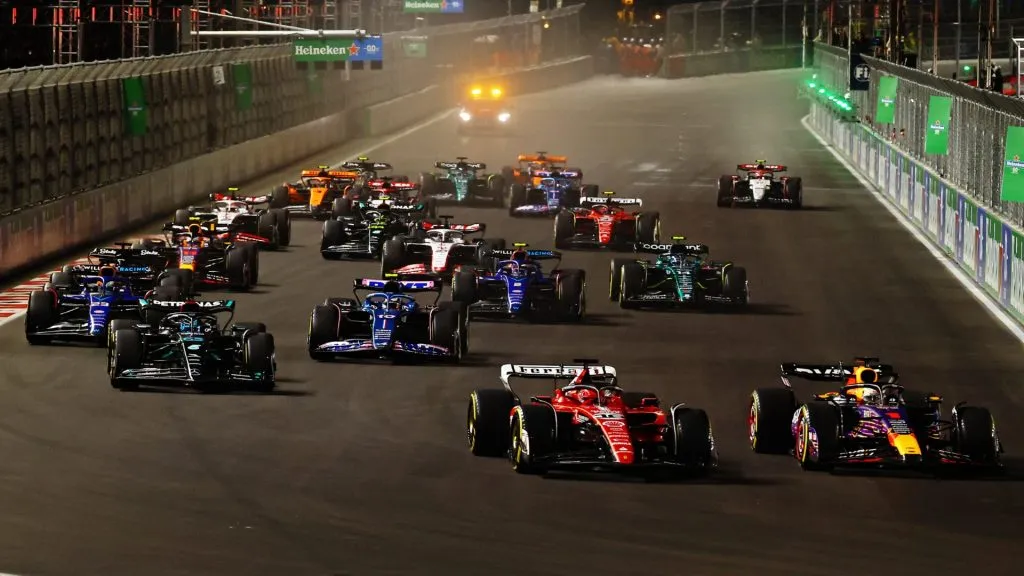
Max Verstappen of the Netherlands driving the (1) Oracle Red Bull Racing RB19 leads Charles Leclerc of Monaco driving the (16) Ferrari SF-23 at turn one during the F1 Grand Prix of Las Vegas in 2023. (Source: Mark Thompson/Getty Images)
Each round intensifies the pressure. Teams juggle tire strategy, traffic and track evolution. A single misstep — mistimed run or traffic snarl — can cost a prime starting spot. It’s calculated chaos with pole position as the prize.
Sprint qualifying
The Sprint format, launched in 2021, adds a twist to select race weekends. Instead of just qualifying on Saturday, drivers now face a short race — around 100km — where points and pride are up for grabs. It’s fast, intense, and often unpredictable.
Unlike the main Grand Prix, Sprint races don’t require pit stops. Points are awarded to the top eight, and the result often determines the starting grid for Sunday’s race. With six Sprints scheduled for 2025, it’s now a crucial part of the season.
Parc fermé rules
Once qualifying begins, F1 cars are placed under parc fermé conditions, meaning teams can’t make major setup changes. This rule preserves fairness, preventing last-minute tweaks that could give one team an edge before the race.
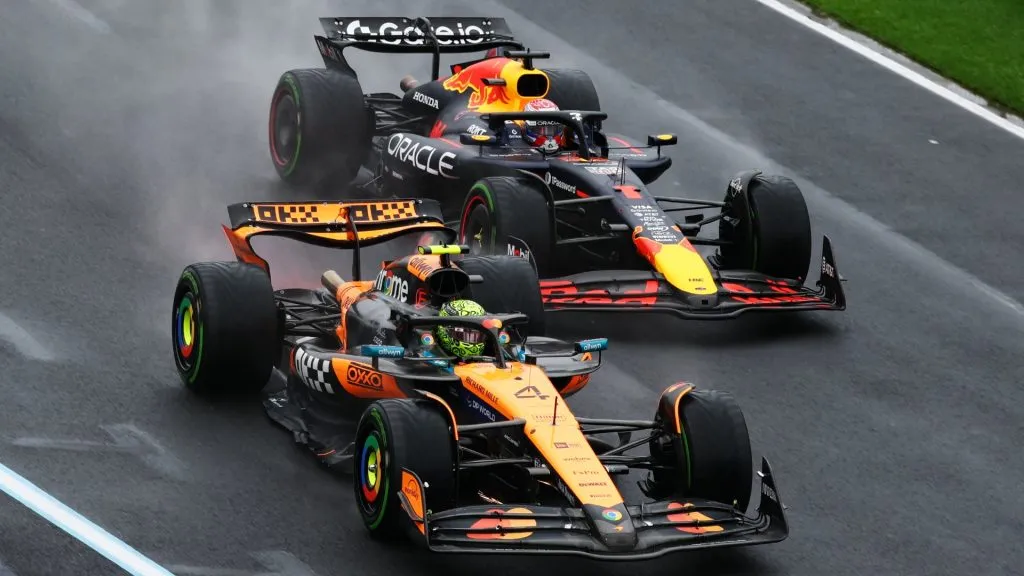
Lando Norris of Great Britain driving the (4) McLaren MCL39 Mercedes leads Max Verstappen of the Netherlands driving the (1) Oracle Red Bull Racing RB21 during the F1 Grand Prix of Australia in 2025. (Source: Clive Rose/Getty Images)
Only minor adjustments are allowed, like front wing angles or tire pressures. Any unauthorized changes mean penalties, usually starting from the pit lane. It’s a rule that keeps teams honest and setups consistent from Saturday to Sunday.
Tire usage
Tires in F1 are more than just rubber — they’re strategic weapons. Each weekend, teams get 13 sets of slicks (soft, medium, hard), plus intermediates and full wets for rain. Tire choice can define a race — or ruin it.
In qualifying, softs dominate for grip. But during the race, drivers must use at least two compounds, usually mixing strategy with tire wear and pit stops. Choosing when to switch can be the difference between victory and defeat.