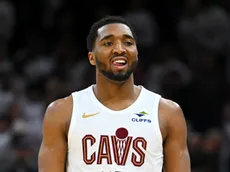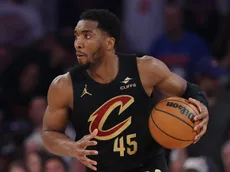
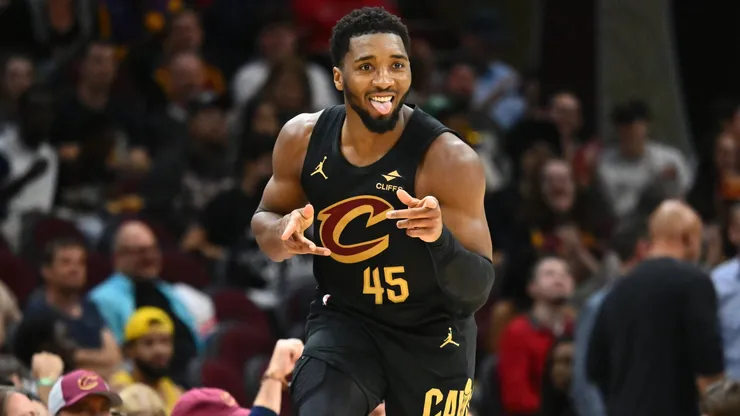
When Cleveland Cavaliers star Donovan Mitchell revealed his all-time NBA starting five, the names themselves weren’t surprising—but the configuration said everything about how the modern game is viewed by its current stars.
“Steph at the one. Kobe at the two. MJ at the three. Bron at the four… KD at the five,” Mitchell said on the New Heights podcast with NFL stars Jason and Travis Kelce. “I’m playing 2025 basketball. I’m not really going traditional. I’m going small ball.”
That last sentence is the key. Because Mitchell’s list isn’t just about greatness—it’s about evolution.
Generational vision: Skill over size
Mitchell’s lineup speaks directly to today’s basketball ethos: fluid, fast, and fueled by skill. Gone are the rigid positions of the past. In their place? Five players who can all dribble, pass, shoot, and guard multiple spots.
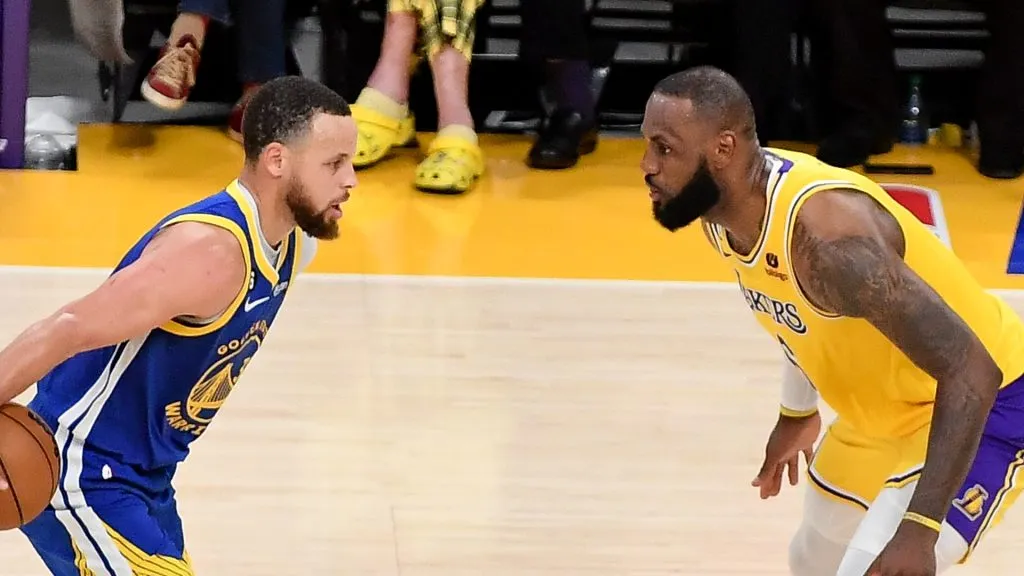
Stephen Curry #30 of the Golden State Warriors dribbles the ball against LeBron James #6 of the Los Angeles Lakers during Game Four of the Western Conference Semi-Finals of the 2023 NBA Playoffs
Putting Kevin Durant at the five would’ve been unthinkable in the ‘90s or early 2000s. Today, it’s visionary. It’s the kind of basketball being played at the highest levels: small-ball lineups, perimeter-oriented spacing, and stretch bigs who are just as dangerous 28 feet from the rim as they are in the paint.
Curry, Kobe, Jordan, LeBron, and Durant aren’t just legends—they’re the prototypes for how basketball is played now. Their athleticism, shot creation, and defensive versatility make them perfect for a game defined by tempo and spacing. Mitchell’s choices reflect how today’s stars view dominance: not just by stats or accolades, but by adaptability and impact across all areas of the floor.
Omissions and meaning: Rewriting the legacy lens
But just as revealing as who is on the list is who isn’t. No Shaquille O’Neal. No Kareem Abdul-Jabbar. No Magic Johnson.
These aren’t just greats—they’re foundational icons. For decades, any all-time five felt incomplete without a dominant big man or Magic orchestrating the offense. But Mitchell’s exclusion of traditional giants underscores how even elite players are rethinking the NBA game’s hierarchy.
Mitchell isn’t disrespecting the legends—he’s reflecting how the function of greatness has changed. A 7’2” center who couldn’t stretch the floor or switch defensively doesn’t offer the same versatility in today’s game. Likewise, Magic’s brilliance as a playmaker is undeniable, but in a pace-and-space era where every player needs to be a scoring threat, Mitchell opts for Curry’s gravity and shooting instead.
His picks suggest a reevaluation of what it means to be dominant. It’s no longer just about resume—it’s about fit, flexibility, and how a player’s skills translate across eras.