

Wilt Chamberlain is widely regarded as one of the greatest players in NBA history, and a true icon of the Los Angeles Lakers. Some even place him atop the all-time rankings. That debate often circles back to comparisons with Michael Jordan. But there was a moment when Chamberlain openly criticized Jordan, suggesting that league rules were altered to benefit him rather than challenge him.
During the 1997 NBA All-Star Game luncheon, an unforgettable exchange reportedly took place between Chamberlain and Jordan. As the story goes, Wilt leaned in and delivered a pointed comment that has echoed through basketball history.
“Just remember, Michael, when you played, they changed the rules of basketball to make it easier for you to dominate. When I played, they changed the rules to make it harder for me,” Chamberlain said.
Wilt wasn’t exaggerating. The NBA literally modified rules to curb his dominance. In 1964, the league widened the lane from 12 feet to 16 feet — a change widely known as the “Wilt Rule.” This forced Chamberlain farther from the basket, limiting his ability to camp near the rim and score at will.
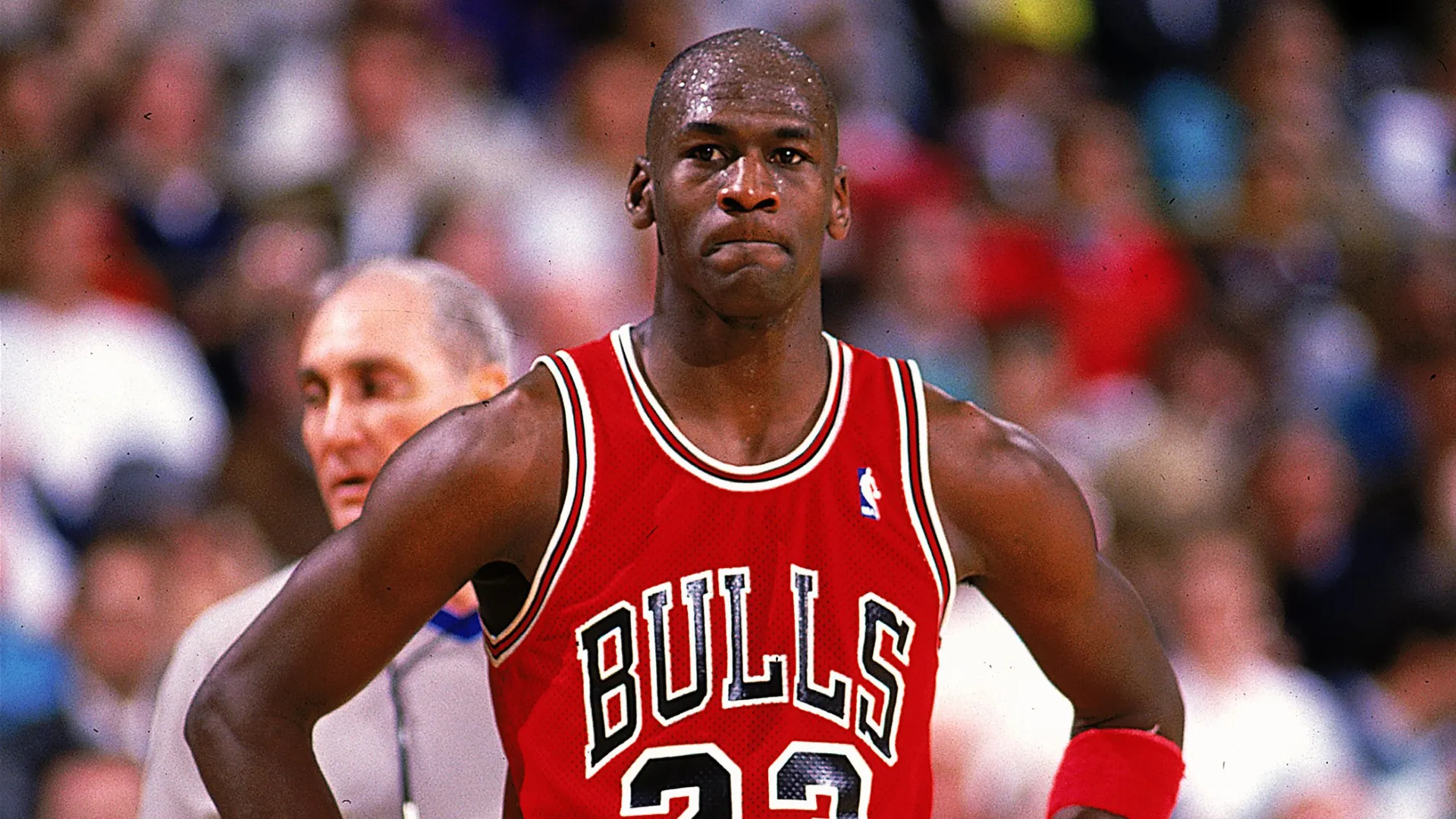
Michael Jordan #23 of the Chicago Bulls looks on during the game.
That wasn’t all. The league began enforcing offensive goaltending more strictly, targeting Wilt’s unique ability to tip in shots above the cylinder. Additionally, the NBA altered the inbounding rule to prevent him from jumping over defenders, catching inbounds passes mid-air, and dunking them before anyone could react.
Now compare that to the Jordan era. In the late ’80s and early ’90s, the NBA began tightening its enforcement of hand-checking on the perimeter. This gave guards like Jordan more space to operate and reduced the physical resistance from defenders.
By the mid-1990s, hand-checking was nearly eliminated above the free-throw line, opening up isolation scoring even more. Defensive rules also changed in Jordan‘s favor — illegal defense restrictions meant that defenders couldn’t play zone or roam too far from their assignment. The result? Pure one-on-one matchups, tailor-made for an elite scorer like Jordan.
While both eras presented unique challenges, Chamberlain’s claim remains a compelling talking point in the never-ending debate over who truly faced the tougher road to greatness.