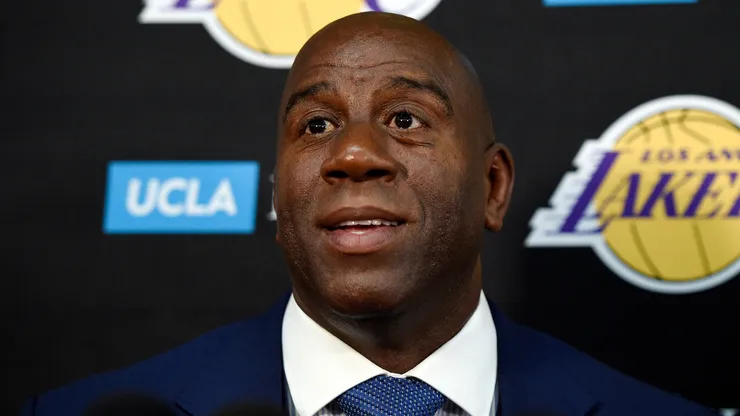
Since his triumphant entry into the NBA in 1979, Earvin “Magic” Johnson has not only left an indelible mark on the court, but has also managed to turn his name into a global brand, beloved by thousands of fans around the world.
With his unmistakable smile and skills that transformed the Los Angeles Lakers into a legendary team, the star was much more than just a basketball player: he became a cultural phenomenon.
But what happens when a sports icon decides to cross the line between the court and the business world? The result is a fortune that goes far beyond the $40 million he earned during his playing career…
What is Magic Johnson’s net worth?
Earvin “Magic” Johnson is not only one of basketball’s most iconic figures but also a visionary entrepreneur who has built a financial empire, amassing his current net worth of $1.6 billion, according to Forbes.
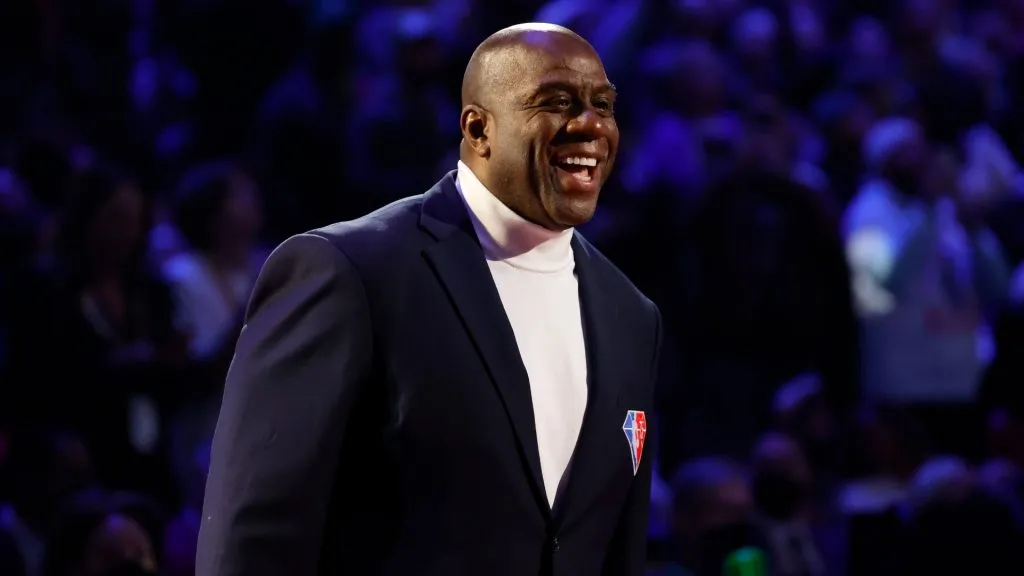
Earvin “Magic” Johnson reacts after being introduced as part of the NBA 75th Anniversary Team during the 2022 NBA All-Star Game. (Source: Tim Nwachukwu/Getty Images)
His career began as a star player for the Michigan State Spartans, with whom he won the 1979 NCAA championship. He was later selected as the first overall pick in that year’s NBA Draft by the Los Angeles Lakers.
During his time in the NBA, he signed a groundbreaking contract in 1981, a 25-year deal worth $25 million. This not only secured his tenure with the Lakers but also underscored his value as an athlete in the league.
Throughout his NBA career, Johnson earned approximately $40 million from salaries and endorsements—a remarkable figure at the time, though now only a small fraction of his fortune.
His entrepreneurial vision became evident even before his official retirement from basketball in 1991. That same year, he founded Magic Johnson Enterprises, a conglomerate that today is valued at an estimated $700 million.
Magic Johnson’s investments
One of Magic Johnson’s first ventures into business was the creation of Magic Johnson Theaters, a chain of cinemas aimed at urban communities that lacked similar services.
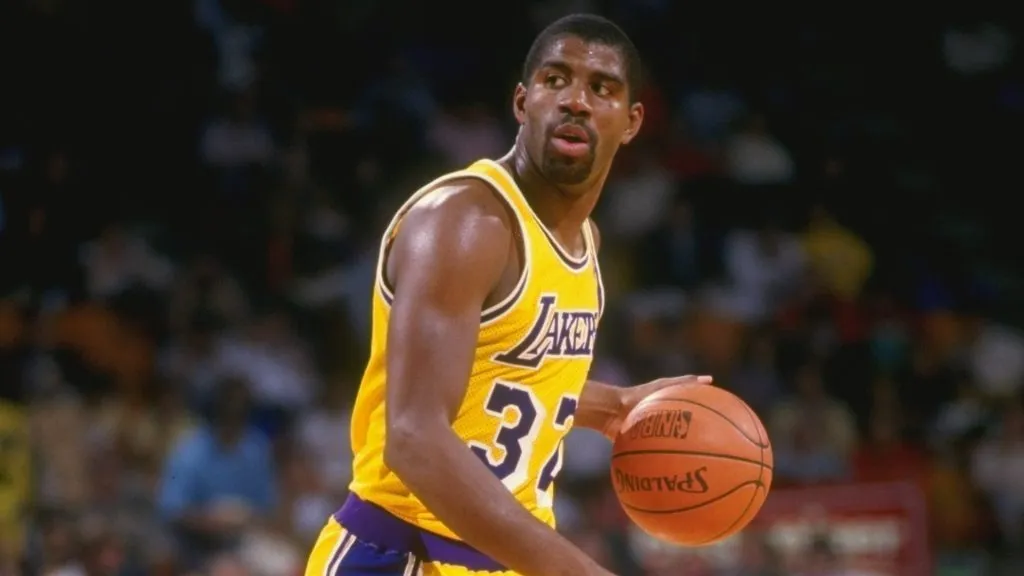
Guard Magic Johnson of the Los Angeles Lakers dribbles the ball during a game at the Great Western Forum in 1987. (Source: Stephen Dunn /Allsport)
In 1995, he took a step further by partnering with Starbucks, obtaining the license to operate 125 stores. This venture was not only a commercial success but also a demonstration of how diversity could be addressed in business.
In 2010, he sold his stake in Starbucks for $100 million, solidifying his ability to generate significant profits through strategic decisions, further adding to his wealth.
Another area where Johnson made his mark was real estate. Through the Canyon-Johnson Urban Fund, a co-founded initiative, he invested in real estate developments focused on revitalizing urban areas.
This fund has raised over $1 billion and has financed significant projects across various U.S. cities. Additionally, he expanded into the fitness industry through a collaboration with 24 Hour Fitness.
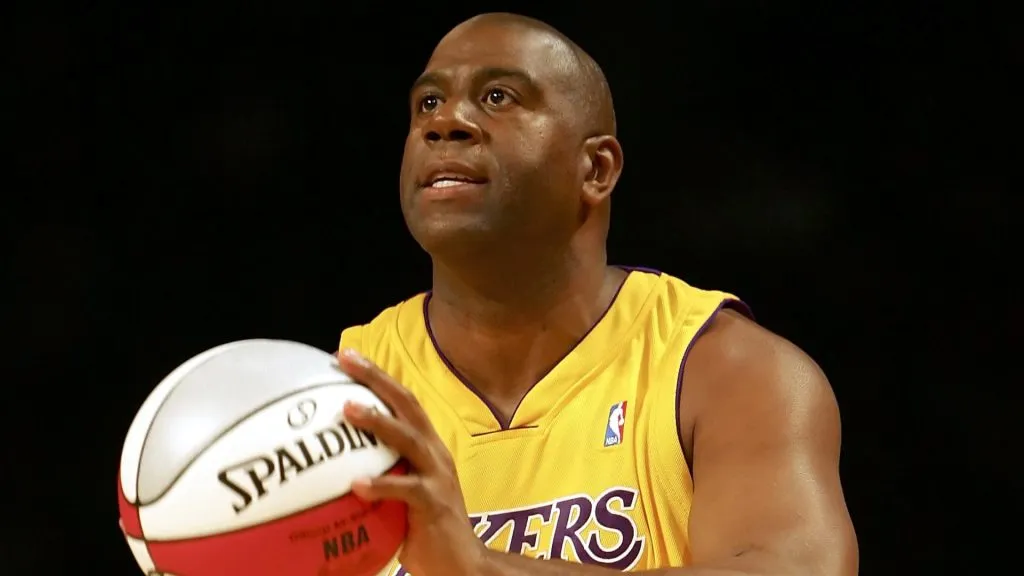
Magic Johnson of the Los Angeles team gets ready to shoot in the Radio Shack Shooting Stars competition during NBA All-Star Weekend at the Toyota Center on February 18, 2006. (Source: Lisa Blumenfeld/Getty Images)
Simultaneously, he acquired EquiTrust, a life insurance and annuities company that has grown under his leadership, reaching over $26 billion in assets. Despite all of this, sports have always remained a part of his life.
In 2012, he joined the group that purchased the Los Angeles Dodgers for $2 billion, the largest transaction in MLB history at the time. He is also a partial owner of the Los Angeles Sparks in the WNBA and Los Angeles Football Club in the MLS.
More recently, in 2023, he became one of the owners of the Washington Commanders, an NFL team, marking another milestone in his entrepreneurial career. His influence also extended to women’s soccer in 2024.
Magic Johnson’s endorsements
During his time with the Lakers, Magic’s charisma and success on the court attracted numerous sponsorship opportunities, contributing to his estimated earnings of $40 million from salaries and sponsorships solely from the NBA.
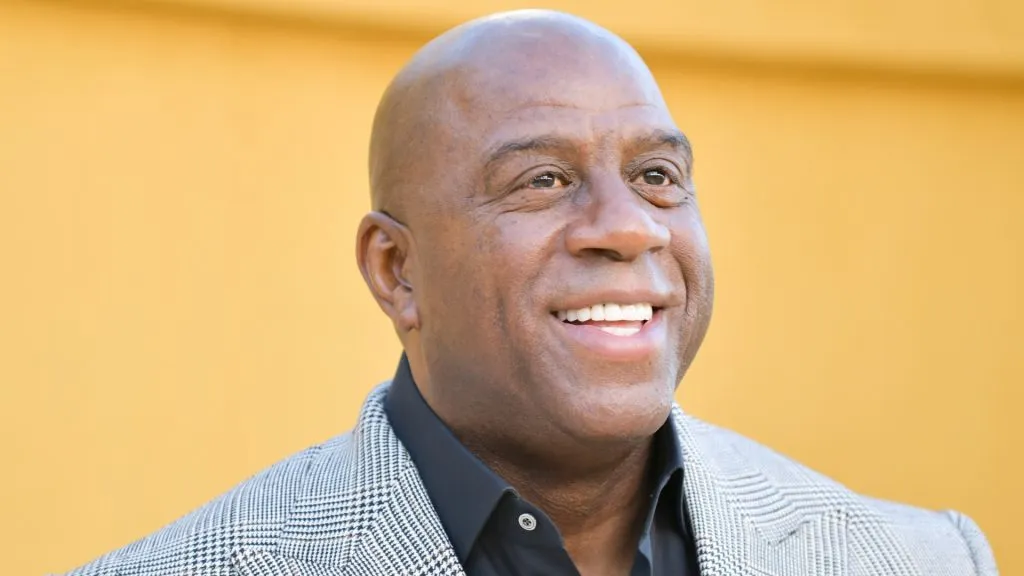
Magic Johnson attends the Los Angeles premiere of Apple’s “They Call Me Magic” at Regency Village Theatre on April 14, 2022. (Source: Rodin Eckenroth/Getty Images)
Although there is no public list of the deals he had at his peak as a player, he is credited with other contracts and financial moves that have been successful in this field, and as we mentioned earlier, one of them was with Starbucks.
Several decades ago, he collaborated with the coffee chain’s CEO, Howard Schultz, to open Starbucks stores in urban neighborhoods, demonstrating the purchasing power of minority communities.
This partnership resulted in the successful operation of 125 stores, which reported per capita sales above the average. Finally, in 2010, he ended up selling his stake and distancing himself from the project that helped grow his fortune.