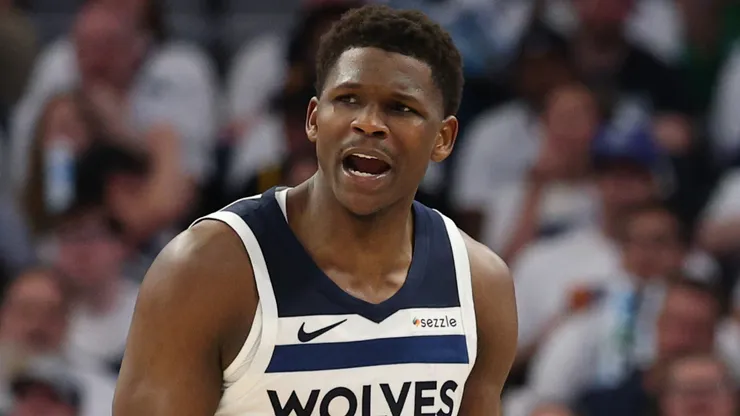
The Minnesota Timberwolves and Anthony Edwards stumbled out of the gate in their Western Conference Semifinals opener, falling 99-88 to the Golden State Warriors, who played without star guard Stephen Curry. Heading into Game 2, Timberwolves head coach Chris Finch delivered a clear challenge to his young star.
It was an uncharacteristically slow start for Edwards, who played the entire first quarter without registering a single point. By halftime, his stat line showed just one point, an unusual performance for the Timberwolves leader.
In the postgame press conference, Finch didn’t hold back, emphasizing Edwards’ role as the team’s leader. “You’re the leader of the team. You’ve got to come out and set the tone,” Finch said. “If your shot is not going, you still have to carry the energy. If I’ve got to talk to guys about having the right energy coming into an opening second-round game, then we’re not on the same page”.
Despite his slow start, Edwards finished the game with 23 points, 14 rebounds, two assists, three steals, and a block. Still, it wasn’t enough to overcome a dominant performance by the Warriors, who led by as many as 18 points in the third quarter.
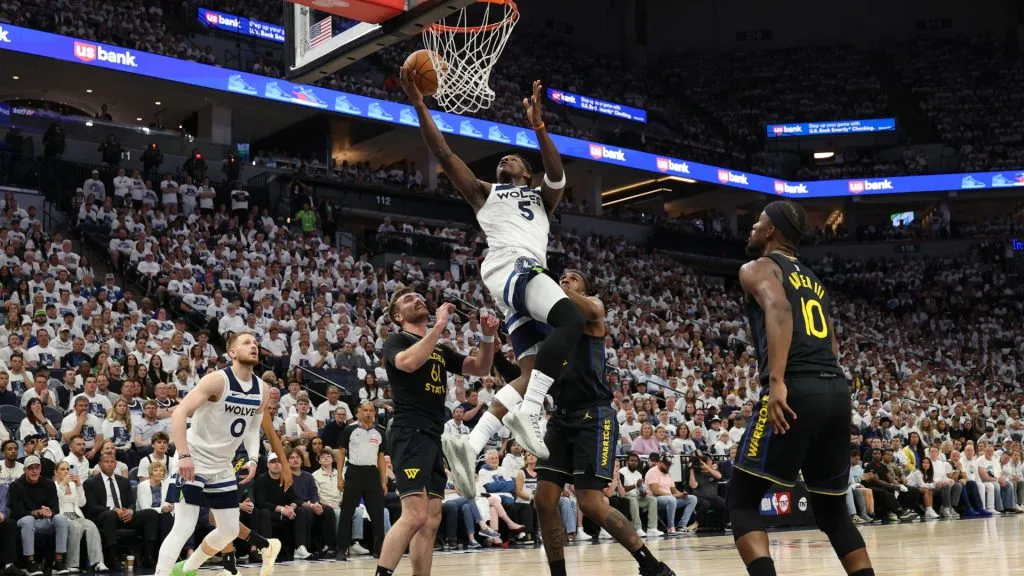
Anthony Edwards #5 of the Minnesota Timberwolves takes a shot against the Golden State Warriors during the Western Conference Second Round NBA Playoffs. (David Berding/Getty Images)
Edwards reflects on Game 1 performance
Edwards took responsibility for the loss but remained optimistic about bouncing back in Game 2. “People are going to try to blame whatever, blame whoever; they can blame me,” Edwards said. “We just didn’t play good enough. Tonight, we didn’t shoot the ball well, but tonight is over. So, next game we’ll shoot the ball really well”.
Charles Barkley on Finch’s message to Edwards
NBA Hall of Famer Charles Barkley praised Finch’s candid comments during his appearance on Inside the NBA. “I was really impressed with Coach Finch in that press conference,” Barkley said. “He called Anthony out… First of all, you brought all this smoke, you said you wanted the smoke, ‘I want the Warriors.’ And you got ’em. You had one point at halftime, and his energy level was down”.
Barkley went on to highlight the importance of accountability for star players. “That to me is what coaching is about,” Barkley said. “When you’re the man, you get all the credit, but you get all the blame. That’s the way it works, and I like what he did”.