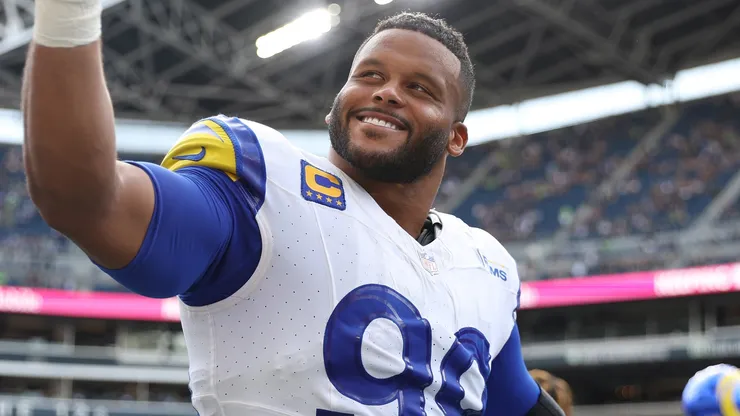
Los Angeles Rams boasts one of the most compelling and colorful histories in the NFL, spanning eras from the post-war glory of LA to the groundbreaking “Greatest Show on Turf” and the triumphant return to Hollywood.
From the patented “head slap” of a defensive legend to the high-flying artistry of Super Bowl-winning quarterbacks, the team’s archive is rich with brilliance. This ongoing heritage connects players across decades.
The careers of the players whose excellence and impact resonate the loudest represent the absolute peaks of football, and exploring their stories is to truly understand the relentless spirit and soul of a storied NFC powerhouse.
Aaron Donald
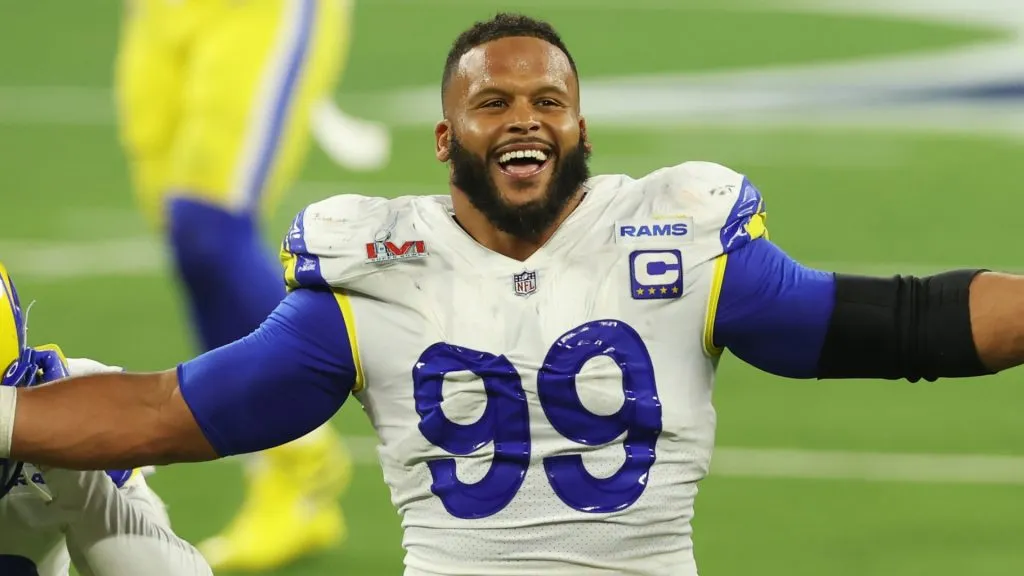
Aaron Donald (Source: Rob Carr/Getty Images)
The defender who didn’t just dominate a decade, but fundamentally changed the geometry of the game from the interior line. Aaron Donald broke the mold of the traditional defensive tackle, seamlessly blending destructive power with explosive speed and agility.
His impact was so profound that opposing coaches had to dedicate entire game plans to slowing him down—often with little to show for it. He isn’t just a pillar of the modern Los Angeles Rams era, where he culminated his career with a Super Bowl LVI championship and a game-sealing pressure, but one of the rare defensive forces to earn three Defensive Player of the Year awards, elevating the interior pass rush to an elite art form.
Merlin Olsen
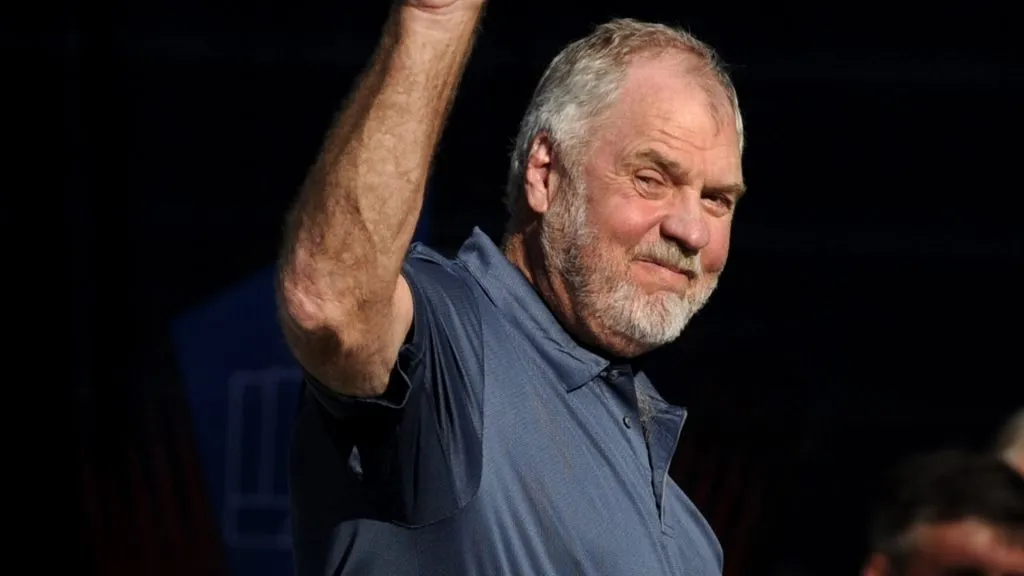
Merlin Olsen (Source: Al Messerschmidt/Getty Images)
Long before football became a Hollywood production filled with special effects, Merlin Olsen was the thinking man’s star anchoring the defensive front. This massive defensive tackle, who impressively held a master’s degree in economics, was the intellectual anchor of the legendary defensive line known as the “Fearsome Foursome”.
His durability and consistency are almost unmatched: he was selected to the Pro Bowl in 14 consecutive seasons, setting a remarkable league record at the time. He didn’t just accumulate statistics; he was the stabilizer, a perpetual threat that allowed his edge rushers, like Deacon Jones, to fly to the quarterback, turning defense into a glamourized spectacle in the original Los Angeles era.
Jackie Slater
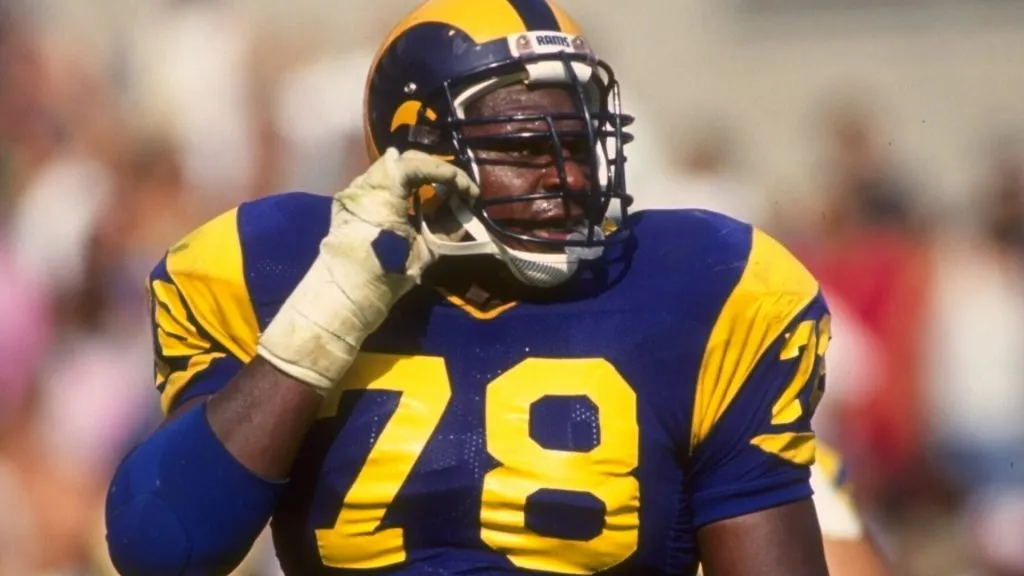
Jackie Slater (Source: Rick Stewart/Allsport)
The very embodiment of tenacity and longevity, Jackie Slater anchored the Rams’ offensive line across two decades, setting a record for the most seasons played for one franchise by an offensive lineman.
From the early days in Los Angeles to the brief stint in St. Louis, he served as the ultimate protector, shielding over twenty quarterbacks and carving paths for nearly forty running backs.
His unwavering dedication earned him seven Pro Bowl nods and four NFC Offensive Lineman of the Year honors from the NFLPA. His Hall of Fame induction celebrates not only his technical mastery as a tackle, but the enduring work ethic and leadership that defined the Rams’ trenches for a generation.
Eric Dickerson
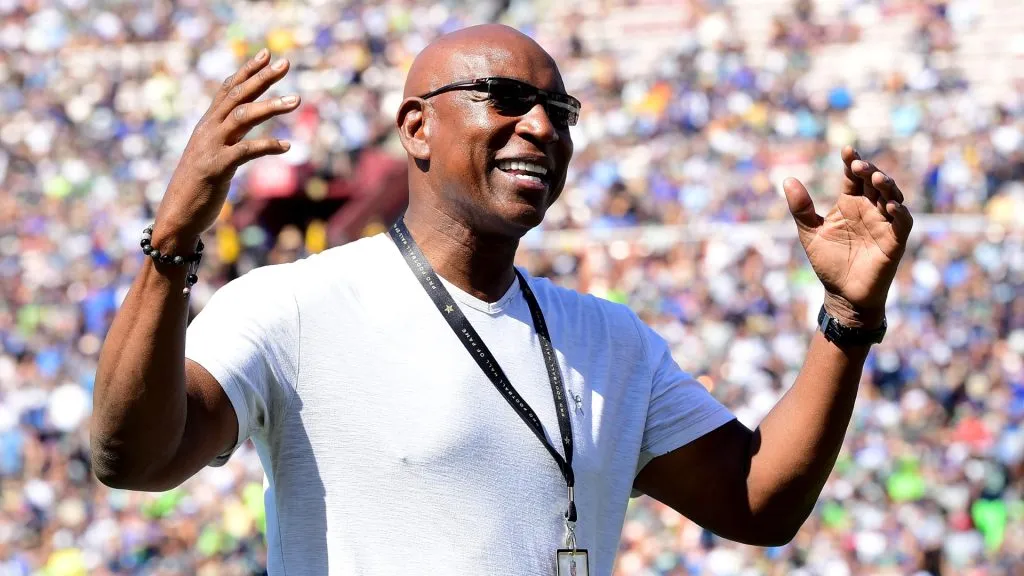
Eric Dickerson (Source: Harry How/Getty Images)
The iconic image of Eric Dickerson sprinting in his signature goggles and generating his massive, gliding strides became the very signature of the Rams’ 1980s offensive power. In just his second professional season (1984), this Hall of Fame running back established an NFL record that remains untouched: an astonishing 2,105 rushing yards in a single campaign.
From his rookie debut, where he shattered records for yardage and touchdowns, he was more than just a statistical force; he was a cultural phenomenon, a runner who seemed to glide through the defensive secondary, becoming the fastest player in league history to reach the 10,000 career rushing yard milestone.
Deacon Jones
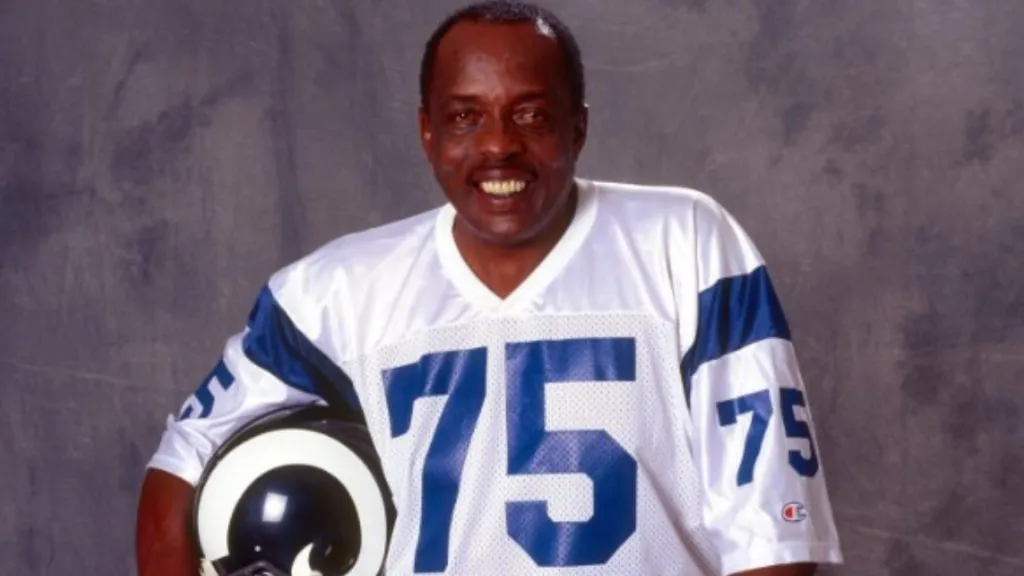
Deacon Jones (Source: NFL)
The man who literally named the art of tackling the quarterback: Deacon Jones coined the term “sack”. A raw talent selected in a late 14th round, this defensive end quickly morphed into one of the most feared pass rushers in history, becoming a vital cog in the “Fearsome Foursome”.
His signature move, the infamous “head slap”—a quick, jarring blow to the helmet to disorient a blocker—was so brutally effective and dominant that the league eventually outlawed it. His dominance showcases a player whose will and innovation forced a change in the rulebook, immortalizing him as a true pioneer of defensive havoc.
Marshall Faulk
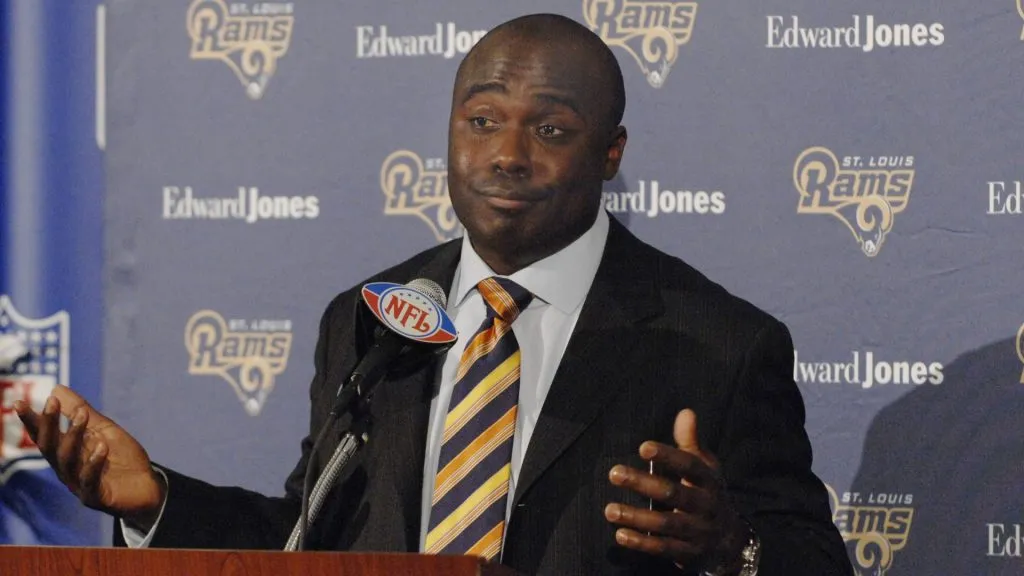
Marshall Faulk (Source: Al Messerschmidt/Getty Images)
The blueprint for the modern, multi-tool running back was largely drawn by Marshall Faulk. His arrival in St. Louis provided the final, electric component to the league’s most breathtaking offense.
He wasn’t content being a mere 1,000-yard rusher; he was an elite receiver who blurred positional boundaries, becoming the first player in NFL history to record 1,000 rushing yards and 1,000 receiving yards in the same season.
His unparalleled versatility made him the indispensable centerpiece of the attack that powered the Rams to a Super Bowl XXXIV victory and earned him the prestigious league MVP award.
Kurt Warner
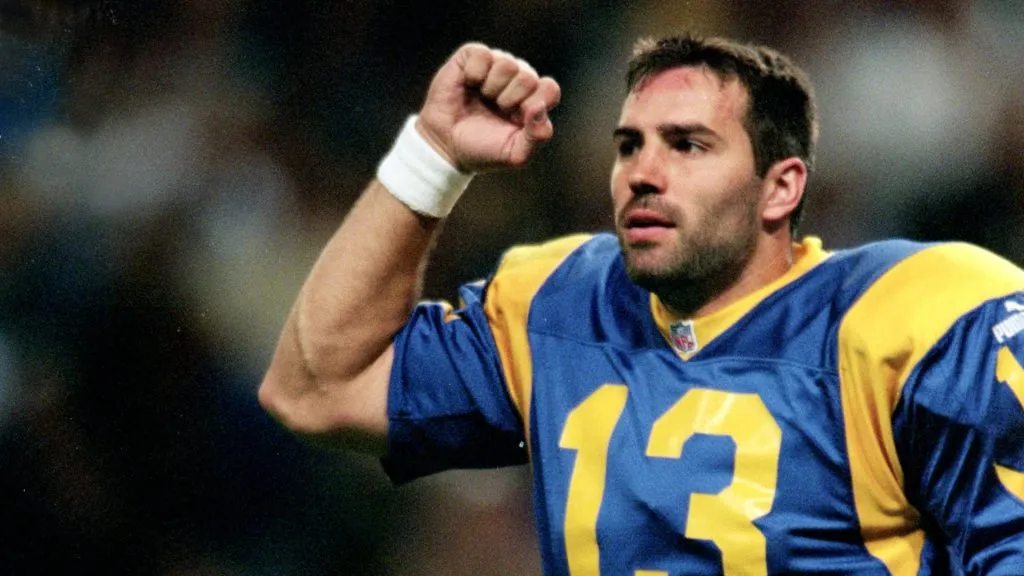
Kurt Warner (Source: Elsa Hasch /Allsport)
The story of Kurt Warner transcends mere football excellence; it is a legendary comeback of mythic proportions. The ultimate underdog, he went from stocking grocery store shelves to becoming an NFL icon.
After honing his craft in the Arena Football League and NFL Europe, he seized the Rams’ starting role in 1999 and instantly orchestrated the high-scoring engine known as the “Greatest Show on Turf”.
That debut season saw him earn both the league and Super Bowl XXXIV MVP awards, throwing for a Super Bowl record 414 yards in the title game—a high-water mark that stands as one of the game’s greatest passing performances.
Orlando Pace
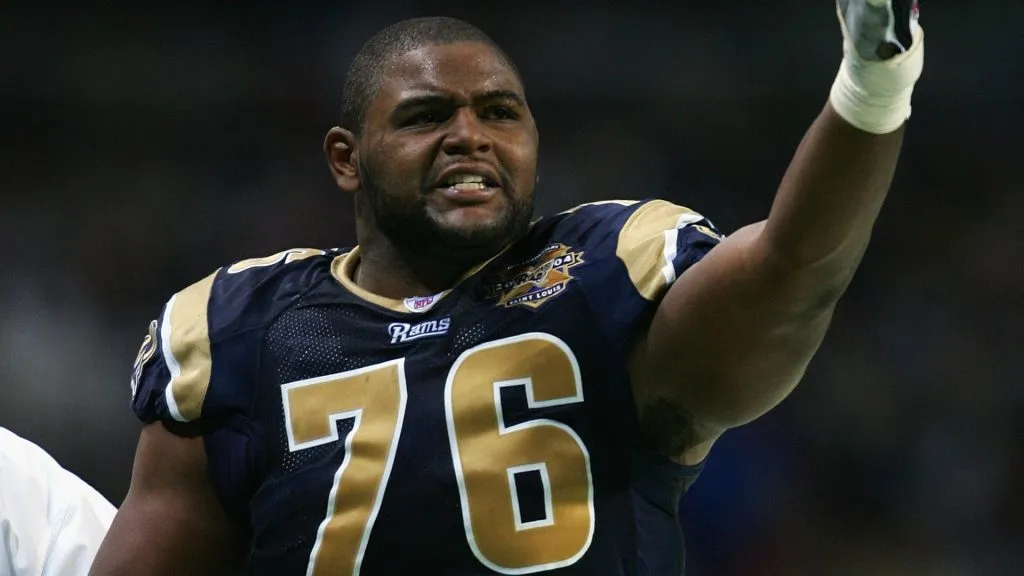
Orlando Pace (Source: Elsa/Getty Images)
If the “Greatest Show on Turf” was a finely tuned race car, Orlando Pace was the unbreakable chassis that kept it flying. Selected as the first overall pick in the 1997 Draft, he instantly established himself as the premier left tackle, a critical position tasked with protecting the quarterback’s “blind side”.
His impact was so significant that he is universally credited as the anchor of that historic offensive line, ensuring that both the record-setting passing attack and dynamic running game could operate at a blistering pace.
With seven Pro Bowl selections and multiple All-Pro honors, he solidified his status as one of the game’s best-ever offensive linemen, guaranteeing that the show could always go on.
Roman Gabriel
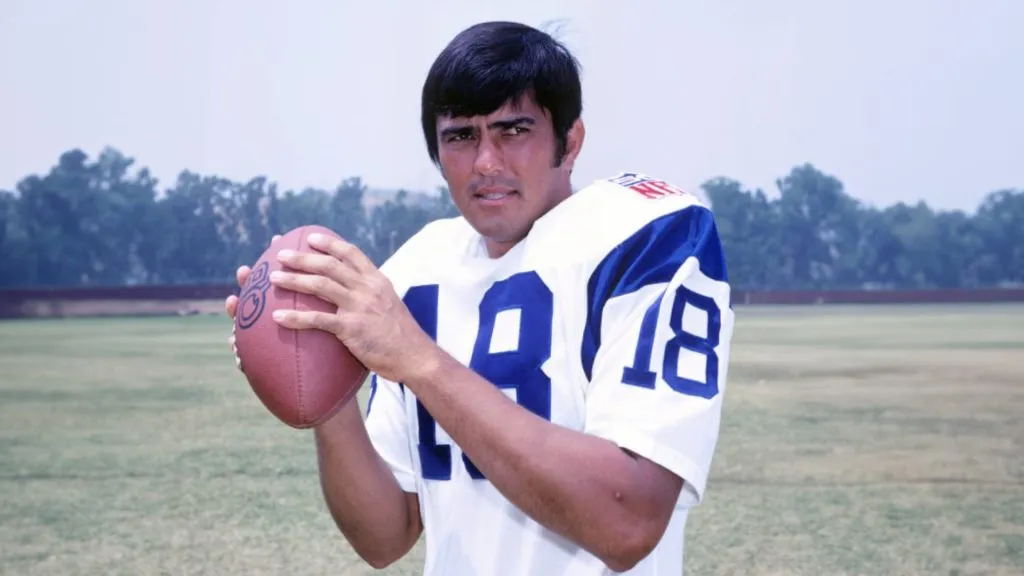
Roman Gabriel (Source: Los Angeles Rams)
A physical marvel with an arm to match, Roman Gabriel was the colossal quarterback who defined the Rams’ offense throughout the 1960s. At a time when quarterbacks were rarely over six-foot-four, he stood as a massive presence in the pocket, using his size to shrug off defenders and his strength to deliver passes downfield.
His crowning achievement came in 1969, a season that earned him the NFL MVP Award. He wasn’t just an efficient passer; he was a leader who guided the Rams through a particularly competitive era of the NFC West, becoming a four-time Pro Bowl selection and one of the most beloved figures of the Rams’ pre-Super Bowl history.
Kevin Greene
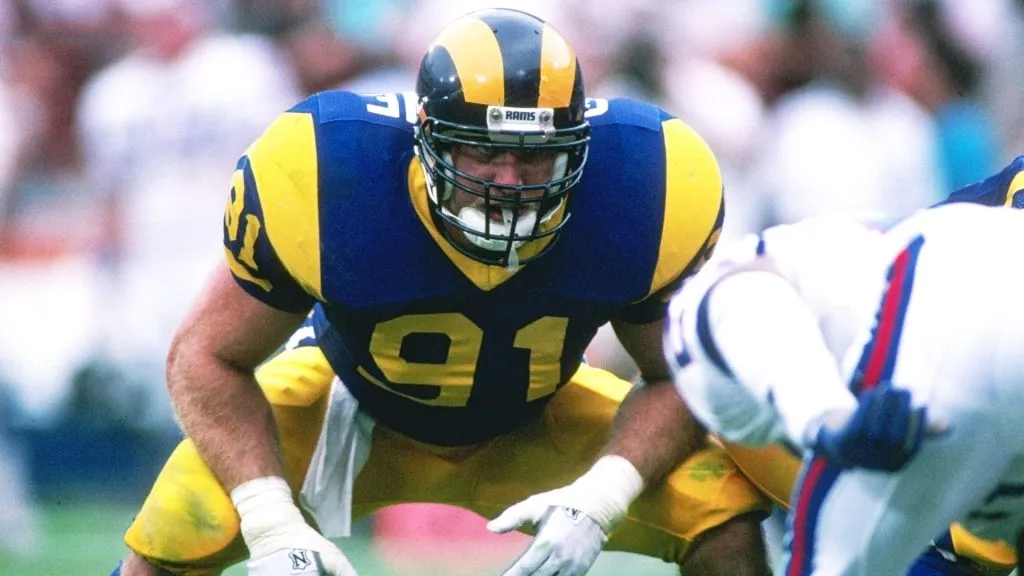
Kevin Greene (Source: Stephen Dunn /Allsport)
A relentless, high-motor edge rusher, Kevin Greene embodied the intensity of the Rams’ defense throughout the late 80s and early 90s. Though he would achieve greater sack totals later in his career with other teams, his foundation as a pass-rushing specialist was built in Los Angeles.
He brought a ferocious, non-stop effort to every snap, quickly becoming one of the league’s most prolific sack artists and earning multiple Pro Bowl berths while wearing the Rams horns. His presence signaled the arrival of a new breed of outside linebacker, a player whose sole mission was collapsing the pocket and disrupting the offense.
Isaac Bruce
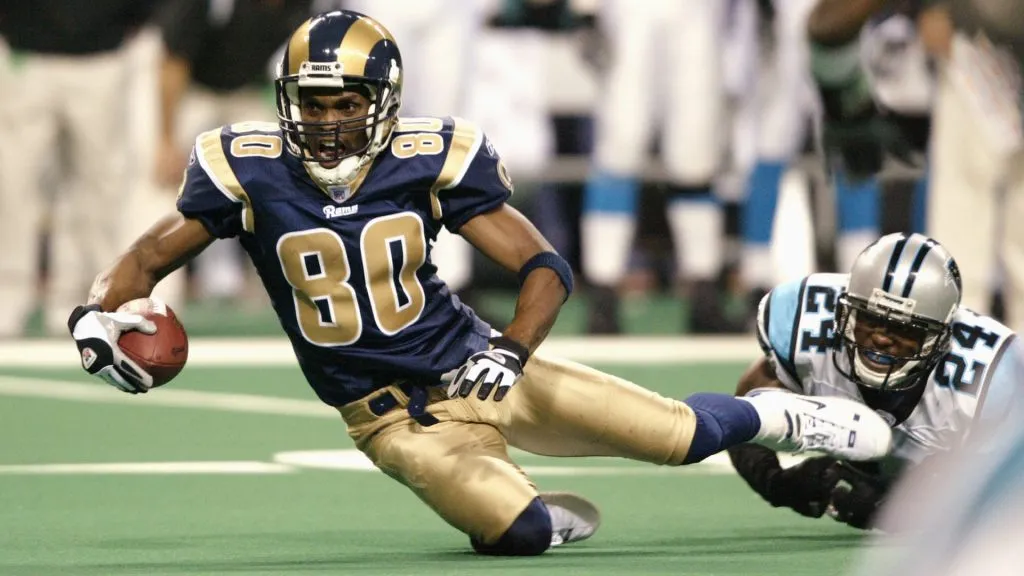
Isaac Bruce (Source: Doug Benc/Getty Images)
The wide receiver who helped ignite the original “Greatest Show on Turf” dynasty, Isaac Bruce combined smooth route-running with electric playmaking ability. He was the original cornerstone of the passing attack, the first legitimate deep threat who stayed with the franchise through its move from Los Angeles to St. Louis.
He holds the Rams’ career receiving records in yards and receptions, a testament to his longevity and reliability as a primary target. His unforgettable 73-yard, go-ahead touchdown catch in Super Bowl XXXIV remains the single most iconic moment that secured the franchise’s first Super Bowl title.
Jack Youngblood
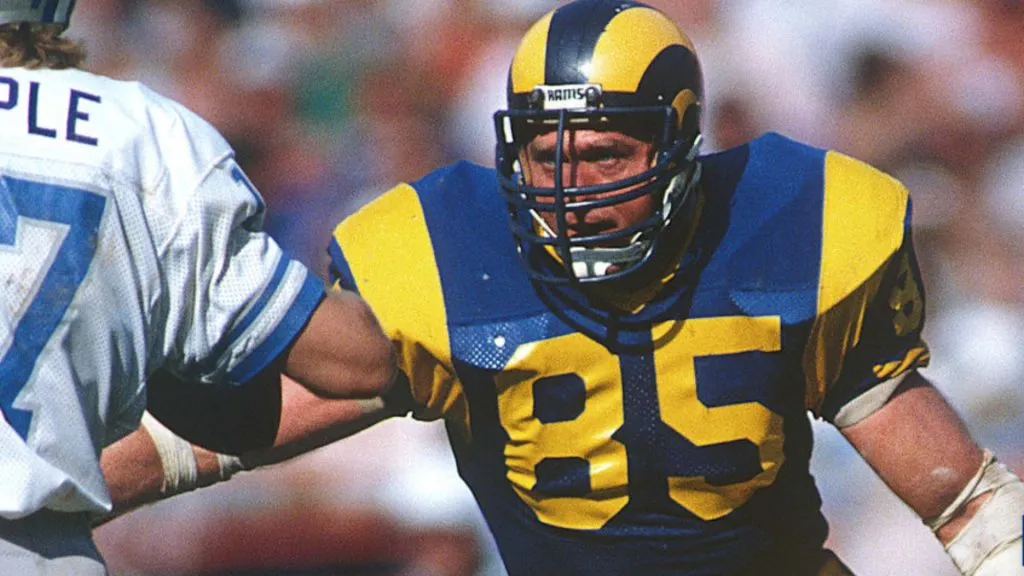
Jack Youngblood (Source: Los Angeles Rams)
A man whose toughness became the stuff of legend, Jack Youngblood was the successor to Deacon Jones and a pillar of the Rams’ defense for over a decade. The quintessential defensive end, he was defined by his tenacity and his iron will.
His most famous feat came in the 1979 playoffs when he played through the entire run to Super Bowl XIV—including the title game—with a fractured fibula. His eight Pro Bowl selections and seven All-Pro nods showcase his regular-season brilliance, but it is that indelible display of grit that immortalized his number 85 in Rams lore.
Torry Holt
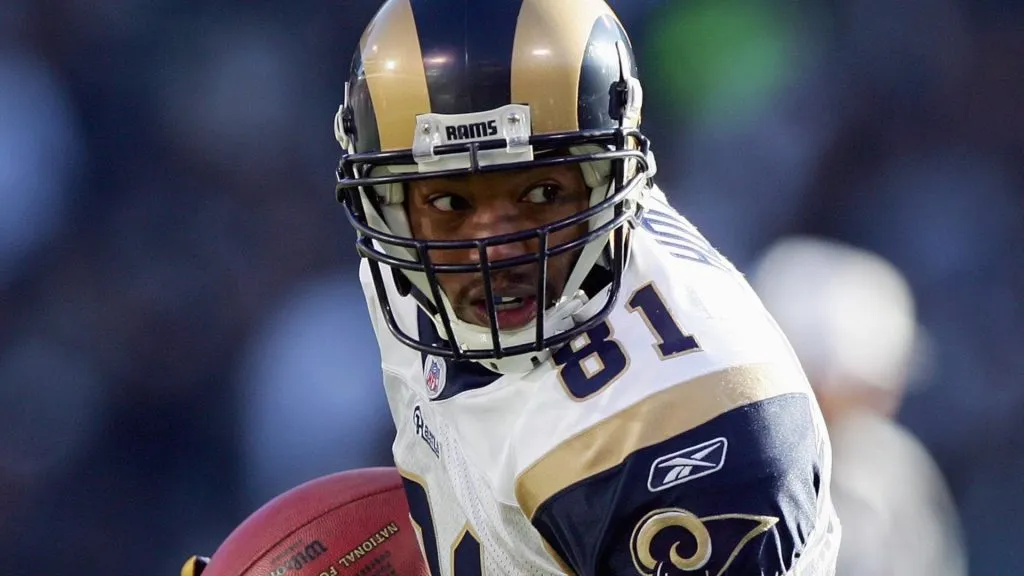
Torry Holt (Source: Jed Jacobsohn/Getty Images)
The picture of consistency and explosive deep speed, Torry Holt provided the necessary complementary brilliance to Marshall Faulk and Isaac Bruce in the “Greatest Show on Turf” era.
A quiet superstar, Holt was often overshadowed by his high-profile offensive teammates, yet he became one of the most dominant volume receivers of the 2000s.
He achieved an incredible six consecutive seasons with at least 1,300 receiving yards, a feat that underscores his elite production and reliability as a top target for Kurt Warner and beyond. His fluid, effortless play made him the nightmare matchup that opposing defensive coordinators consistently failed to solve.
Cooper Kupp
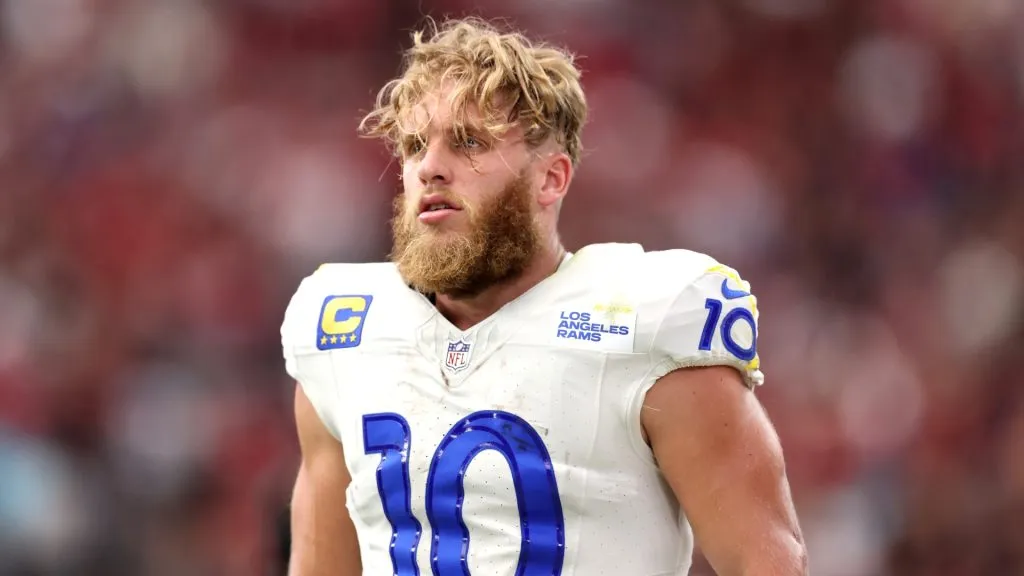
Cooper Kupp (Source: Christian Petersen/Getty Images)
A testament to elite route running and football intelligence, Cooper Kupp is the modern archetype of the hyper-productive slot receiver. While his career is ongoing, his unforgettable 2021 season stands as one of the most dominant individual campaigns in NFL history.
That year, he achieved the rare receiving “Triple Crown”—leading the league in receptions, receiving yards, and receiving touchdowns—before capping it with a Super Bowl LVI MVP performance.
His unique connection with Matthew Stafford and his knack for executing clutch plays in the biggest moments have already carved out a permanent, elite place in the Los Angeles football narrative.
Les Richter
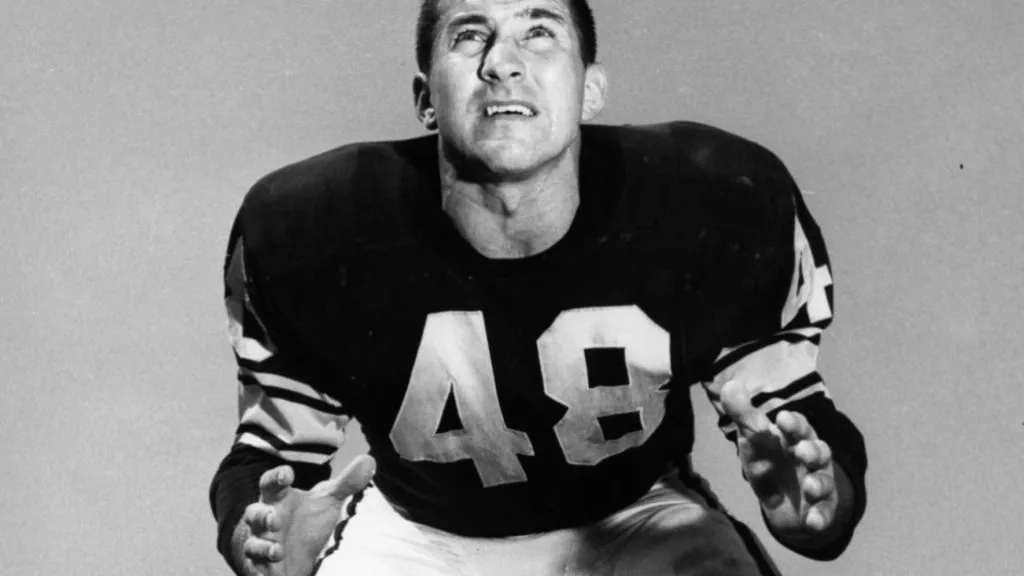
Les Richter (Source: Fresno Athletic Hall of Fame)
A foundational figure in the franchise’s history, Les Richter was a punishing linebacker who came to the Rams with an unprecedented price tag. After the Rams traded eleven players to the Dallas Texans for his rights, he became one of the game’s first true “franchise players” and arguably the greatest linebacker in early Rams history.
He spent his entire nine-year career as a defensive stalwart, being named to eight consecutive Pro Bowls. His aggressive, reliable play defined the defense of the late 1950s and early 60s, establishing a high standard for defensive excellence that would be carried forward by the Fearsome Foursome.
Johnny Hekker
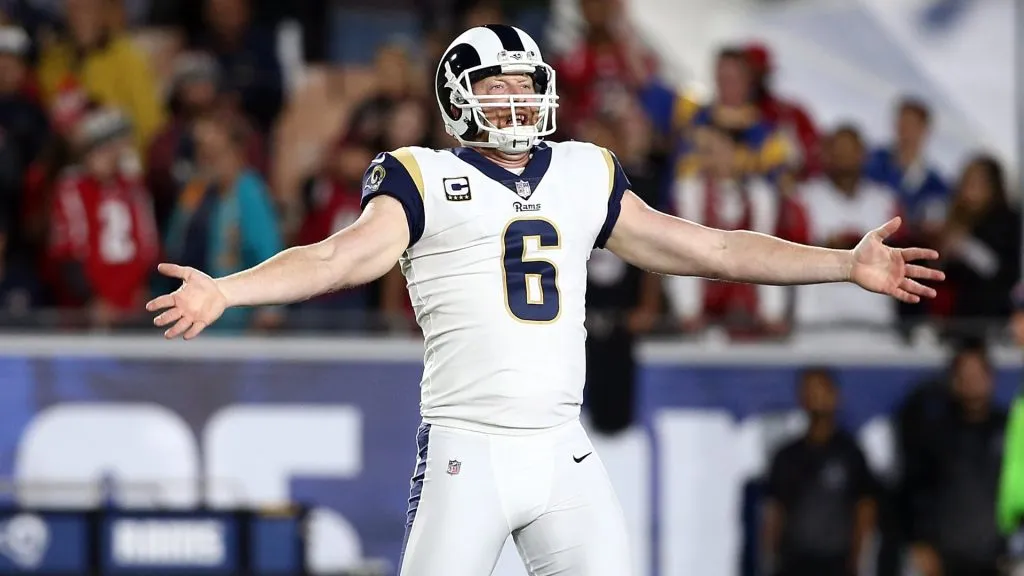
Johnny Hekker (Source: Sean M. Haffey/Getty Images)
Before the modern era celebrated field position as a high art, there was Johnny Hekker, a punter who became a legitimate, game-changing weapon for the Rams. Far from a mere specialist, he redefined the role with his booming kicks and unparalleled directional control, often pinning opponents deep within their own territory.
He holds the NFL record for most seasons leading the league in net punting average, a testament to his consistent mastery. His athletic ability and flair were also evident in his frequent and surprisingly successful fake punts, which made him an unexpected offensive threat and a fan favorite.
Jack Snow
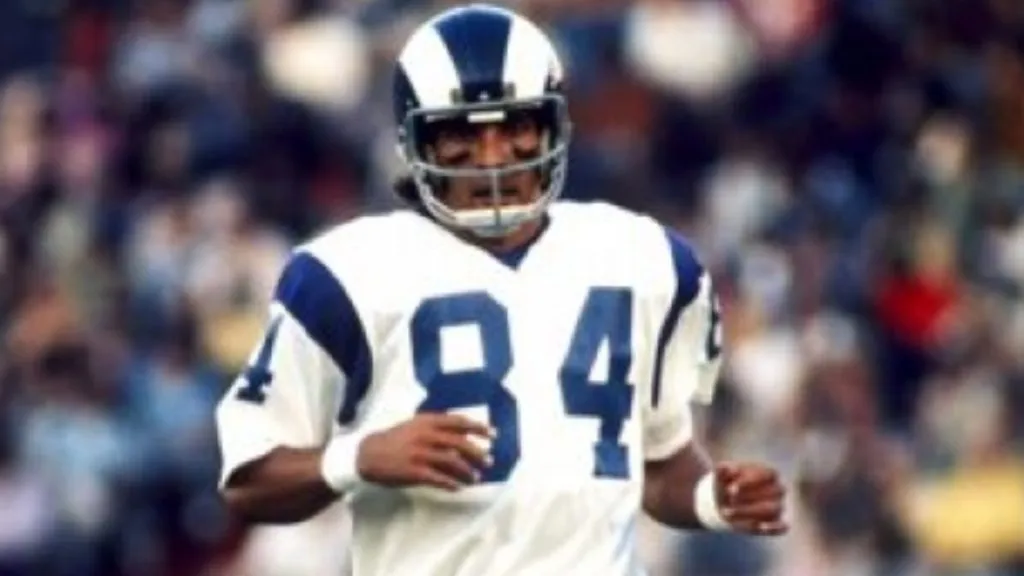
Jack Snow (Source: Not in Hall of Fame)
A key target throughout the 1960s, Jack Snow was the reliable wide receiver who often worked the middle of the field with precision and toughness. While the league featured plenty of outside speedsters, he made his mark with superb hands and an innate understanding of route timing, making him a perennial Pro Bowl selection and a critical asset for quarterbacks like Roman Gabriel. His decade-long presence ensured the Rams always had a dependable receiving threat, even when facing the league’s most aggressive pass rushes of the era.
Fred Dryer
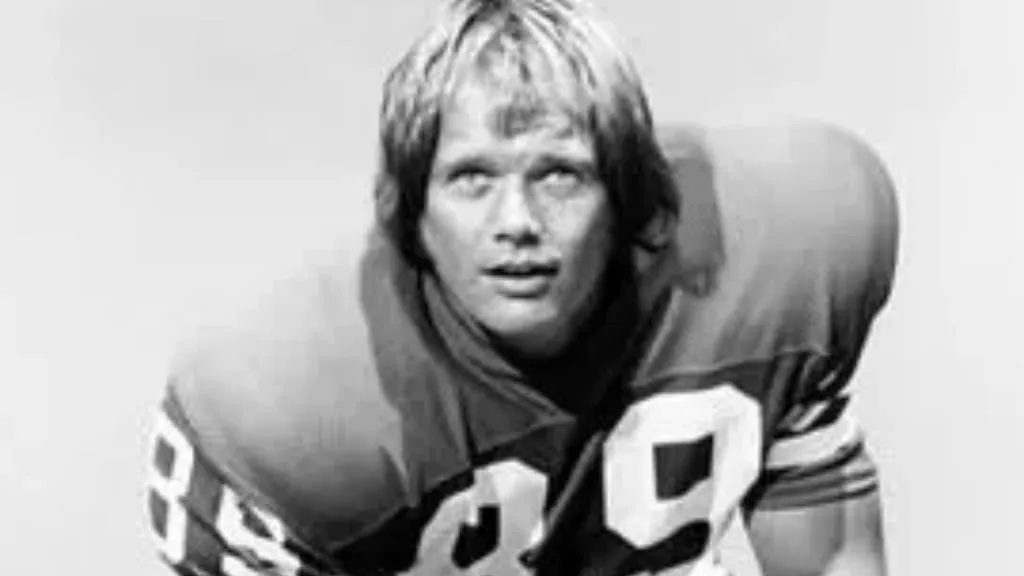
Fred Dryer (Source: National Football Foundation)
A fierce and intimidating force on the defensive line, Fred Dryer was a versatile defensive end whose impact was felt immediately after he arrived from the Giants.
He was one of the first players in league history to officially be credited with two safeties in a single game, highlighting his knack for explosive, drive-killing plays behind the line of scrimmage.
Playing alongside greats like Jack Youngblood, he brought relentless pressure and became a two-time Pro Bowl selection, defining the hard-nosed defensive style of the Rams throughout the 1970s.
Todd Gurley
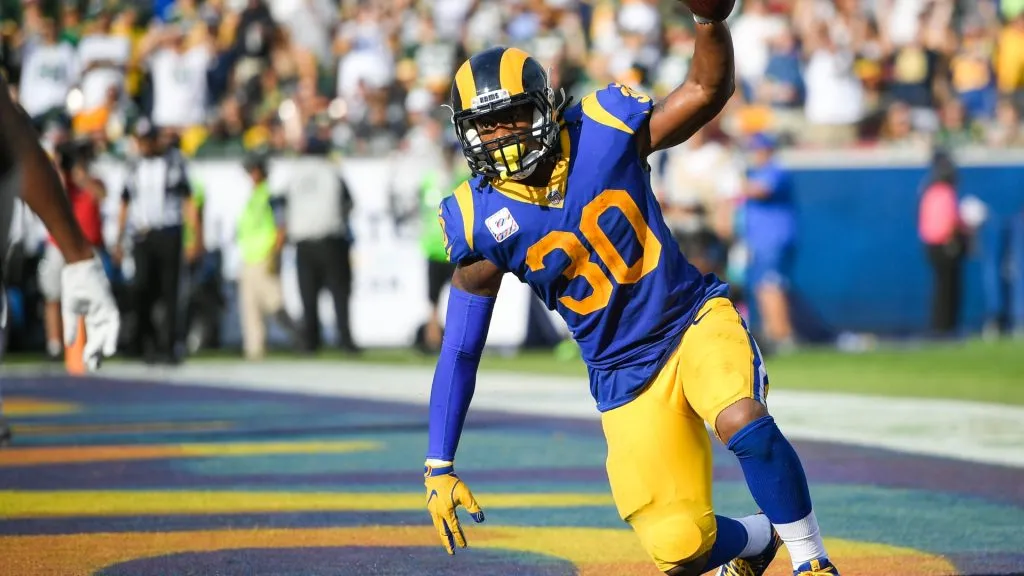
Todd Gurley (Source: John McCoy/Getty Images)
A true generational talent who brought electricity back to the running game, Todd Gurley was the offensive centerpiece of the Rams’ resurgence in their return to Los Angeles. His peak run from 2017 to 2018 was a display of sheer dual-threat dominance, seamlessly blending power running with elite receiving skills.
During this stretch, Gurley earned two consecutive First-team All-Pro selections and an Offensive Player of the Year Award. Though his time with the team was brief, his performance was so commanding that he served as the unstoppable engine for the Rams’ 2018 Super Bowl run, leaving an indelible mark on the franchise’s modern history.
Lawrence McCutcheon
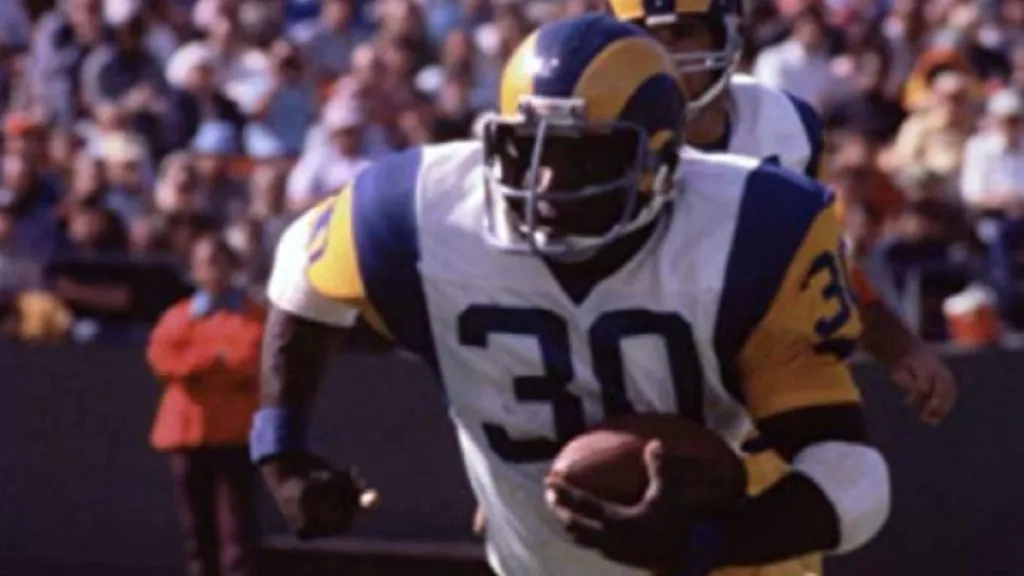
Lawrence McCutcheon (Source: Not in Hall of Fame)
The hard-charging, durable running back who defined the Rams’ ground attack of the 1970s, Lawrence McCutcheon was a model of consistency and grit. McCutcheon powered the offense during a period when the Rams secured seven straight division titles.
He strung together five consecutive seasons of rushing for over 1,000 yards, a mark that speaks to his relentless volume and dependability as the focal point of the offense. A five-time Pro Bowl selection, his consistent production served as the steady force that allowed the team’s stellar defense to dominate opposing matchups.
Jerome Bettis
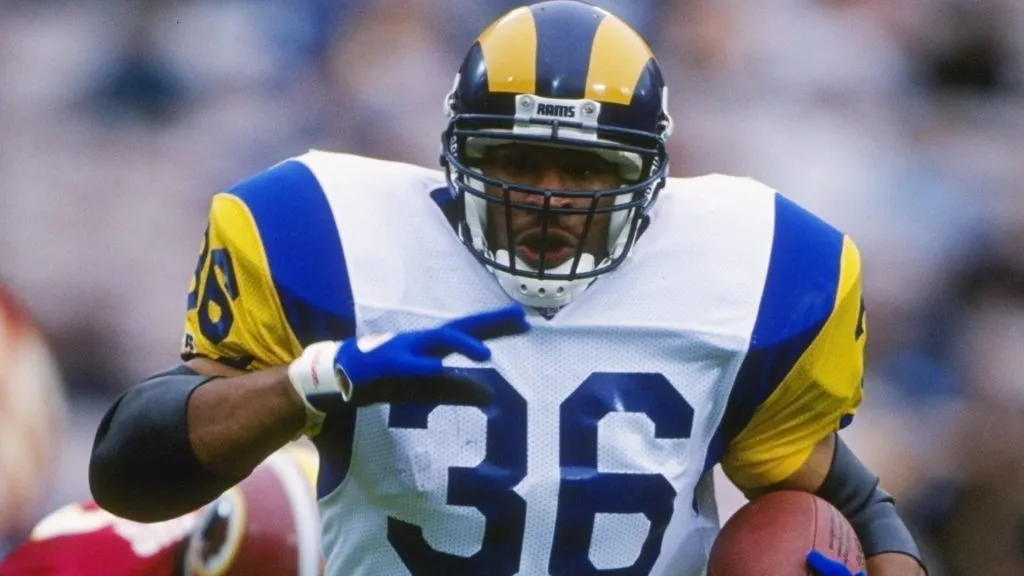
Jerome Bettis (Source: Al Bello /Allsport)
Though his greatest fame came after leaving the team, Jerome Bettis began his Hall of Fame career as a Rams running back, quickly establishing himself as the quintessential power runner known as “The Bus.”
Drafted in the first round, he immediately delivered with a spectacular rookie season that saw him rush for over 1,400 yards and earn both Pro Bowl and Offensive Rookie of the Year honors.
His punishing running style provided a strong, ground-oriented identity for the team in the early 90s, showcasing the raw, powerful talent that would eventually make him one of the league’s most iconic backs.
Aeneas Williams
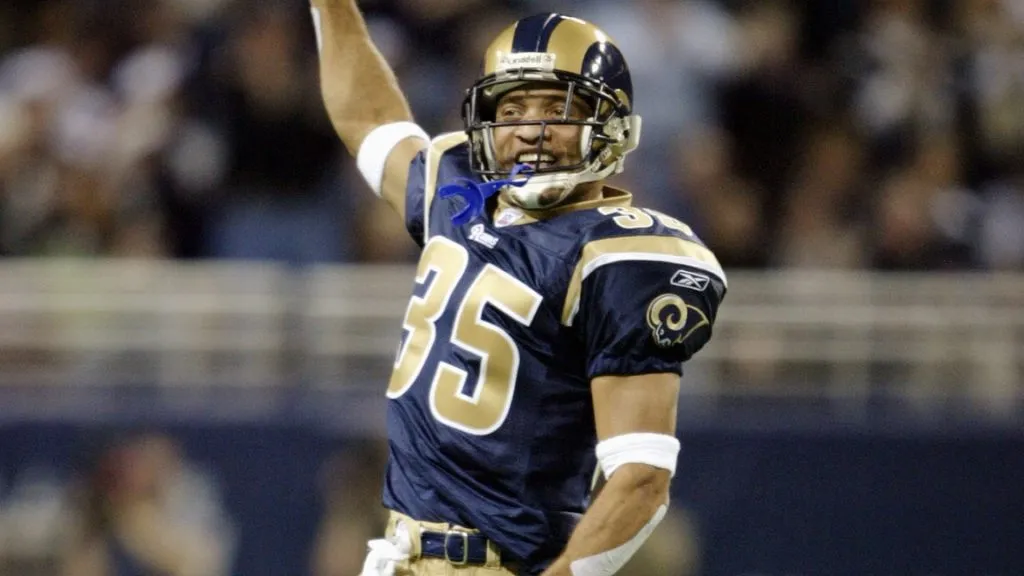
Aeneas Williams (Source: Elsa/Getty Images)
A Hall of Fame talent who proved his elite versatility on the back end, Aeneas Williams arrived at the Rams late in his career and immediately cemented the defense during the “Greatest Show on Turf” era.
Already established as one of the game’s premier cornerbacks, he transitioned seamlessly to the safety position in St. Louis, showcasing his exceptional instincts and ball-hawking ability.
His presence added the necessary veteran experience and championship-caliber secondary play that helped propel the Rams to another Super Bowl appearance. His defensive leadership was the steel rod that stabilized an otherwise flashy, high-scoring team.
Bob Brown
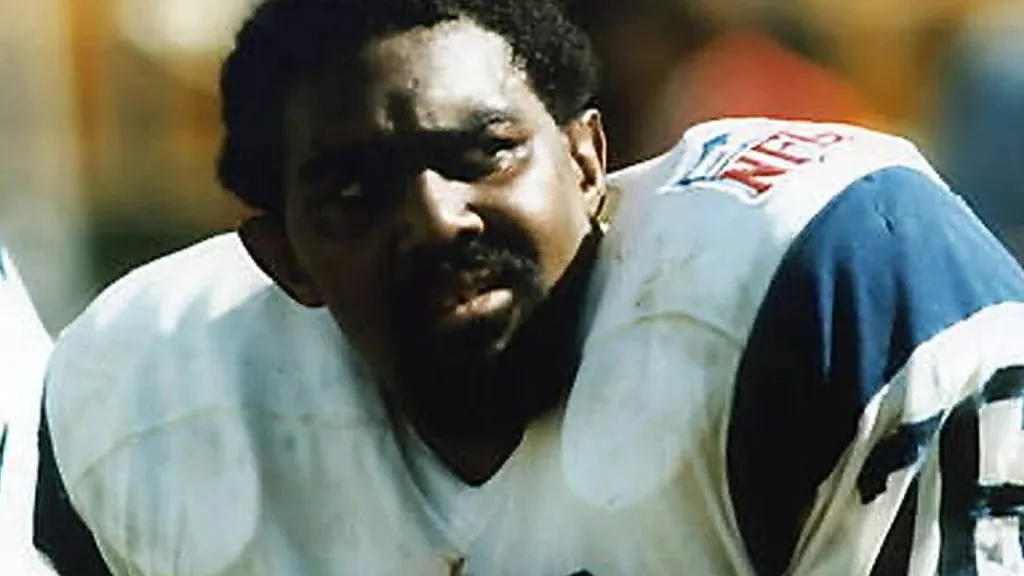
Bob Brown (Source: Los Angeles Rams)
An absolute mauler on the offensive line, Bob Brown may have only spent two seasons in Los Angeles, but his ferocious impact cemented his status as one of the most physically dominant tackles to ever wear the Rams uniform.
Known across the league as a punishing blocker, he was frequently referred to as “The Most Feared Man in Football,” a testament to his aggressive style and legendary strength.
Though his time was short, his presence anchored the line, lending a brutal, uncompromising edge to the Rams’ offense during his tenure, and he earned a Pro Bowl nod in both of his seasons with the team.
James Lofton
James Lofton (Source: Los Angeles Rams)
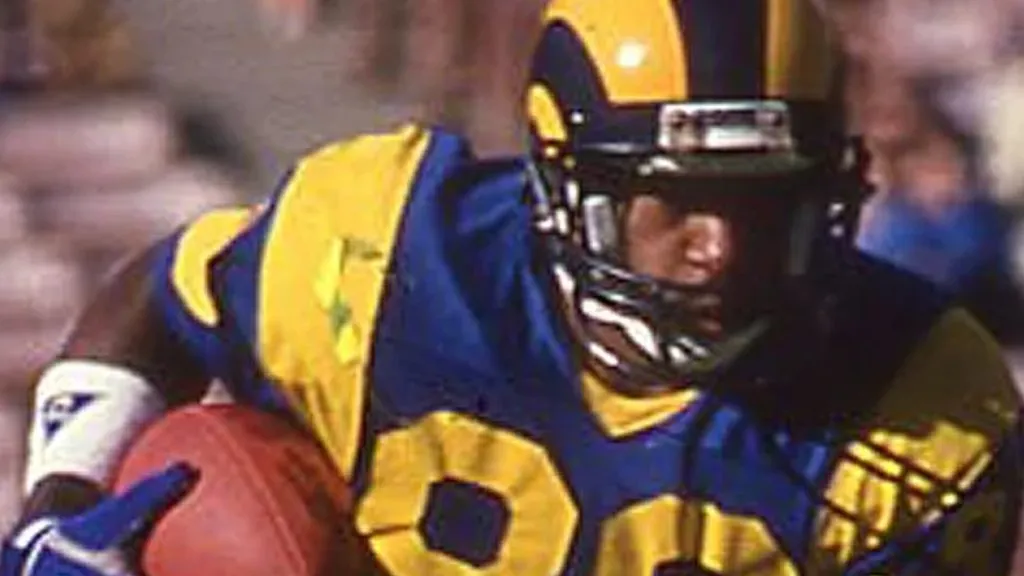
A graceful, explosive deep threat, James Lofton finished his storied Hall of Fame career with a brief but notable stint in Los Angeles. While he was past his peak, his mere presence lent institutional credibility and veteran professionalism to the young receiving corps.
He brought his reputation as one of the sport’s most elegant and consistent wide receivers to the Rams, demonstrating the poise and exceptional route running that had defined his career. His season, however short, serves as a powerful connection point between the team’s classic history and its eventual move to St. Louis.
Tom Mack
Tom Mack (Source: Los Angeles Rams)
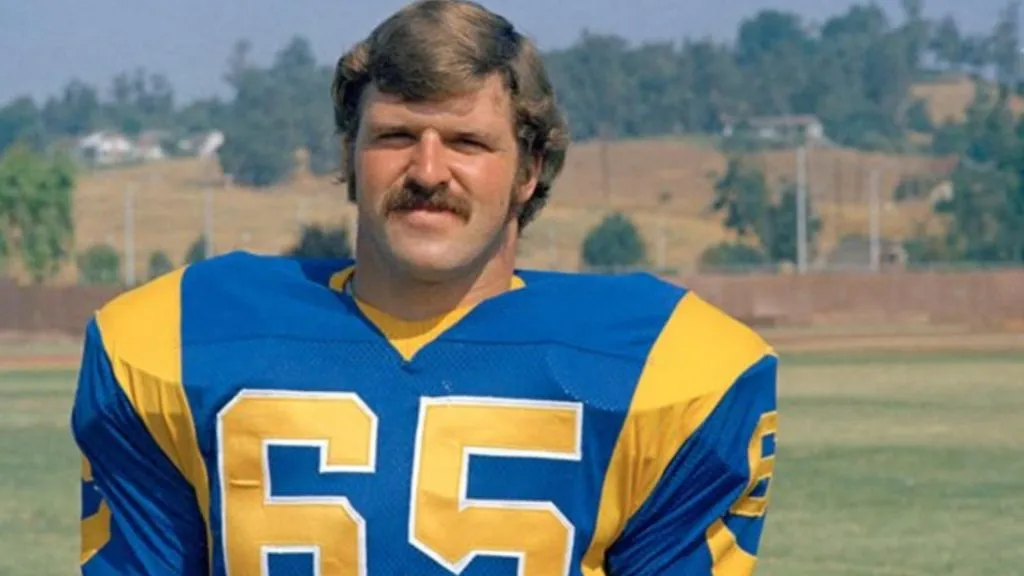
The epitome of consistency and quiet dominance on the interior line, Tom Mack spent thirteen seasons as the premier guard for the Los Angeles Rams. A durable and highly technical blocker, he was the steady, immovable force that provided protection and opened running lanes for the team’s potent rushing attacks throughout the late 60s and 70s.
An impressive eleven-time Pro Bowl selection, his excellence was recognized year after year, establishing him as one of the most decorated and dependable interior linemen in franchise history, a true foundation of sustained success.