The NFL’s postseason spotlight has long favored its giants, leaving several franchises to navigate obscurity and frustration. Some carry the weight of decades-old droughts; others are still carving out their story.
Their paths differ, yet each team shares a familiar tension: brief surges of hope followed by seasons that fade too soon. History has shaped them, but so have the missed chances that linger in the background.
From young franchises seeking footing to legacy teams burdened by lean eras, their journeys reveal how elusive January football can be. These stories trace the thin line between promise and endurance.
2010 New York Giants
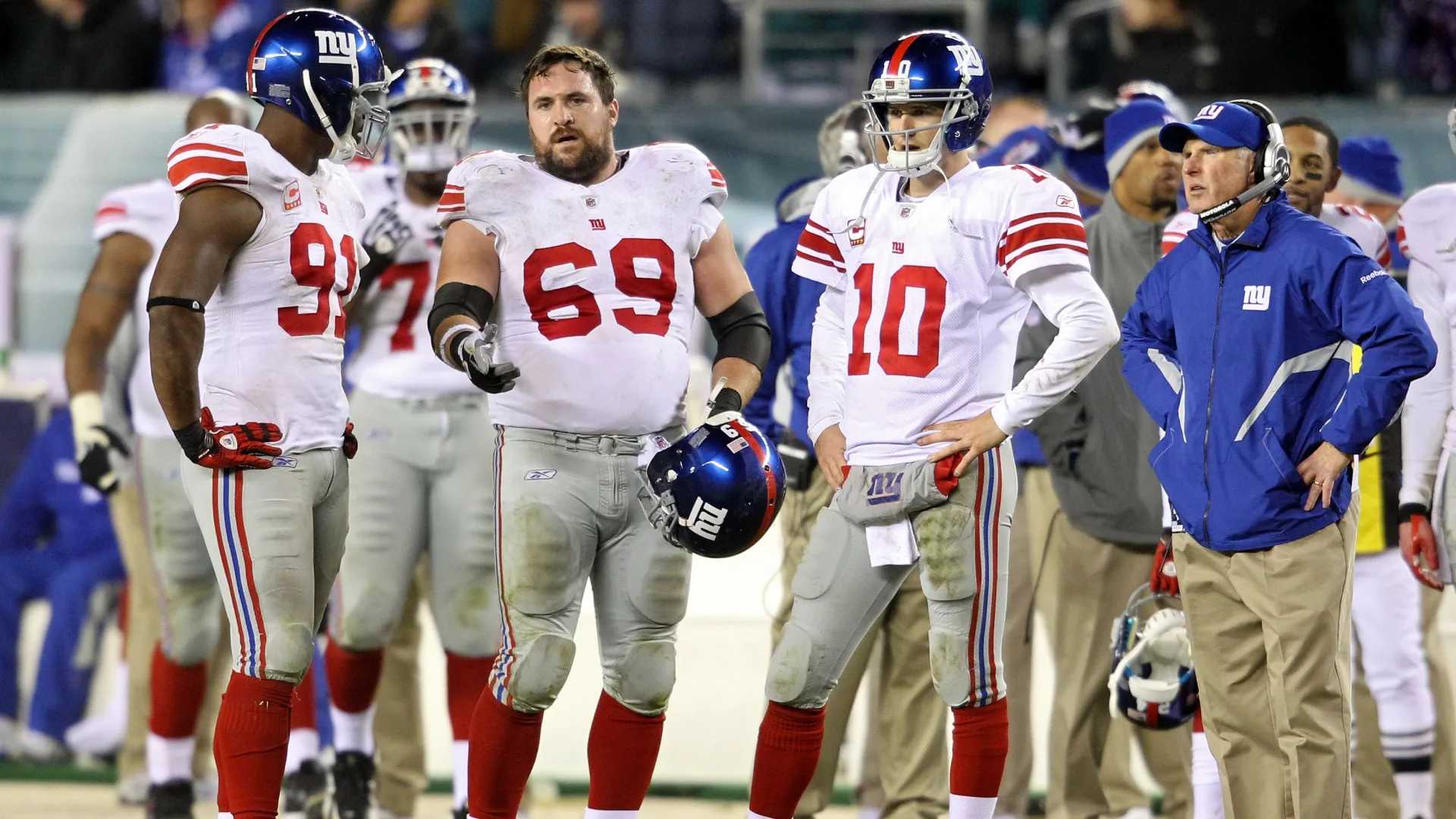
New York Giants (Source: Michael Heiman/Getty Images)
The 2010 Giants embodied a team that looked fully capable of returning to postseason form yet kept stumbling at the most delicate moments. New York finished 10–6, a record that usually earns a playoff berth, but a pair of costly December collapses — most infamously the late-game meltdown against Philadelphia — reshaped their fate.
It was also a transitional year, with the newly opened MetLife Stadium altering the backdrop of a franchise accustomed to ritual and routine. Team reports noted how Tom Coughlin’s squad combined productive offensive stretches with turnovers at critical junctures, making them appear simultaneously dangerous and fragile.
Their season ultimately became a reminder that even respectable win totals can crumble under tiebreakers and timing. In a decade defined by unpredictable swings, the 2010 Giants were a case study in how narrow the margin between success and exclusion can be.
2008 New England Patriots
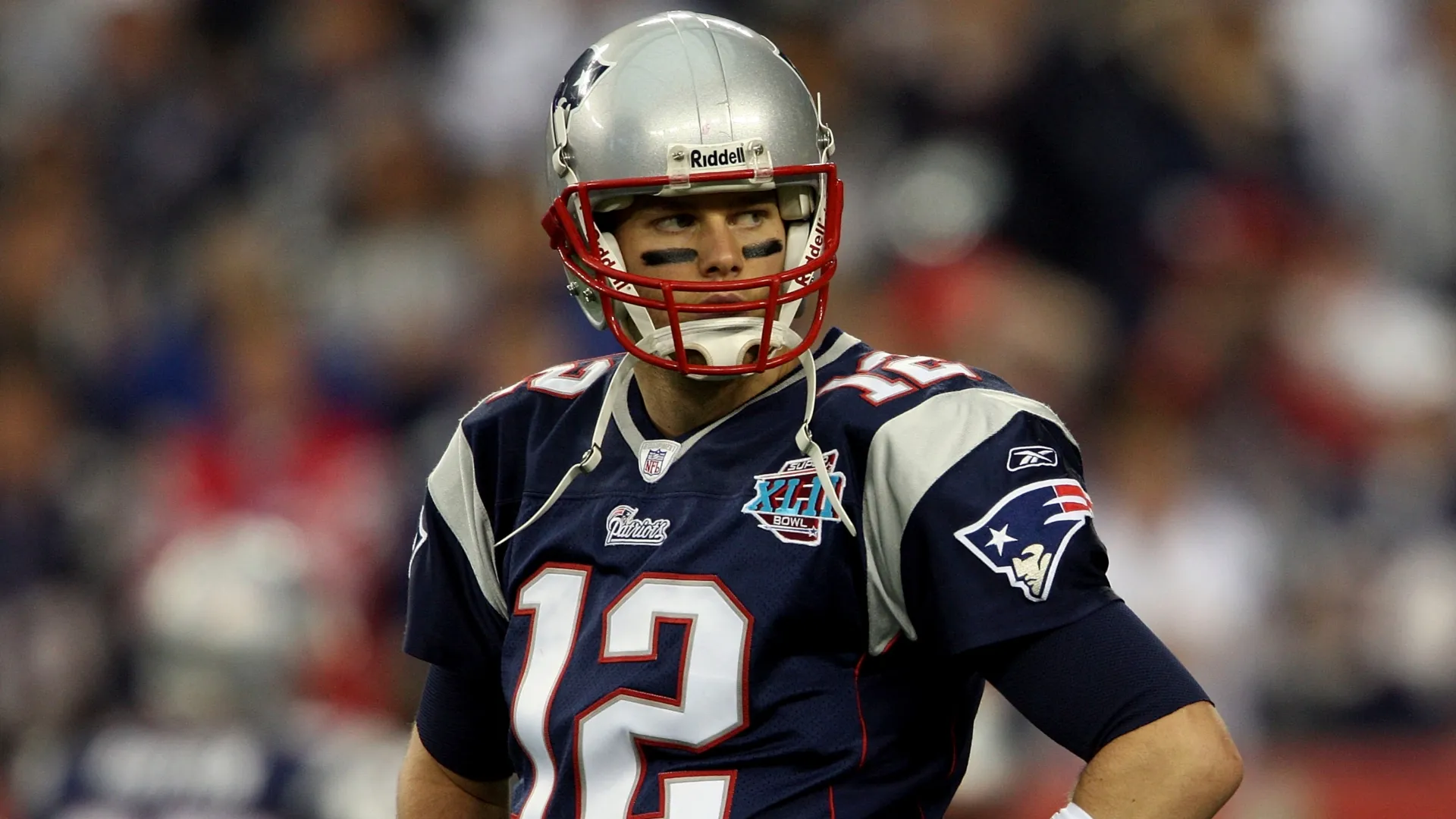
Quarterback Tom Brady #12 of the New England Patriots in 2008. (Source: Andy Lyons/Getty Images)
The 2008 Patriots entered the season with the shadow of a perfect regular-year campaign behind them, only to watch their entire structure shift within minutes of Week 1. Tom Brady’s season-ending knee injury forced the team to recalibrate its identity overnight, putting Matt Cassel at the helm of an offense built for a different quarterback.
Despite the setback, New England battled to an 11–5 record — the kind of total that, in most seasons, guarantees a playoff ticket. But that year’s AFC landscape was unusually crowded, and tiebreakers pushed them out of the bracket.
Analysts at the time described it as one of the strongest non-playoff teams the league had seen, a reflection of both their resilience and the merciless mathematics of postseason qualification.
Their season stands as a rare instance where a powerhouse operated well enough to contend, yet not quite well enough to overcome the unusual conditions around them. It remains one of the league’s more memorable “almost” seasons.
2002 Denver Broncos
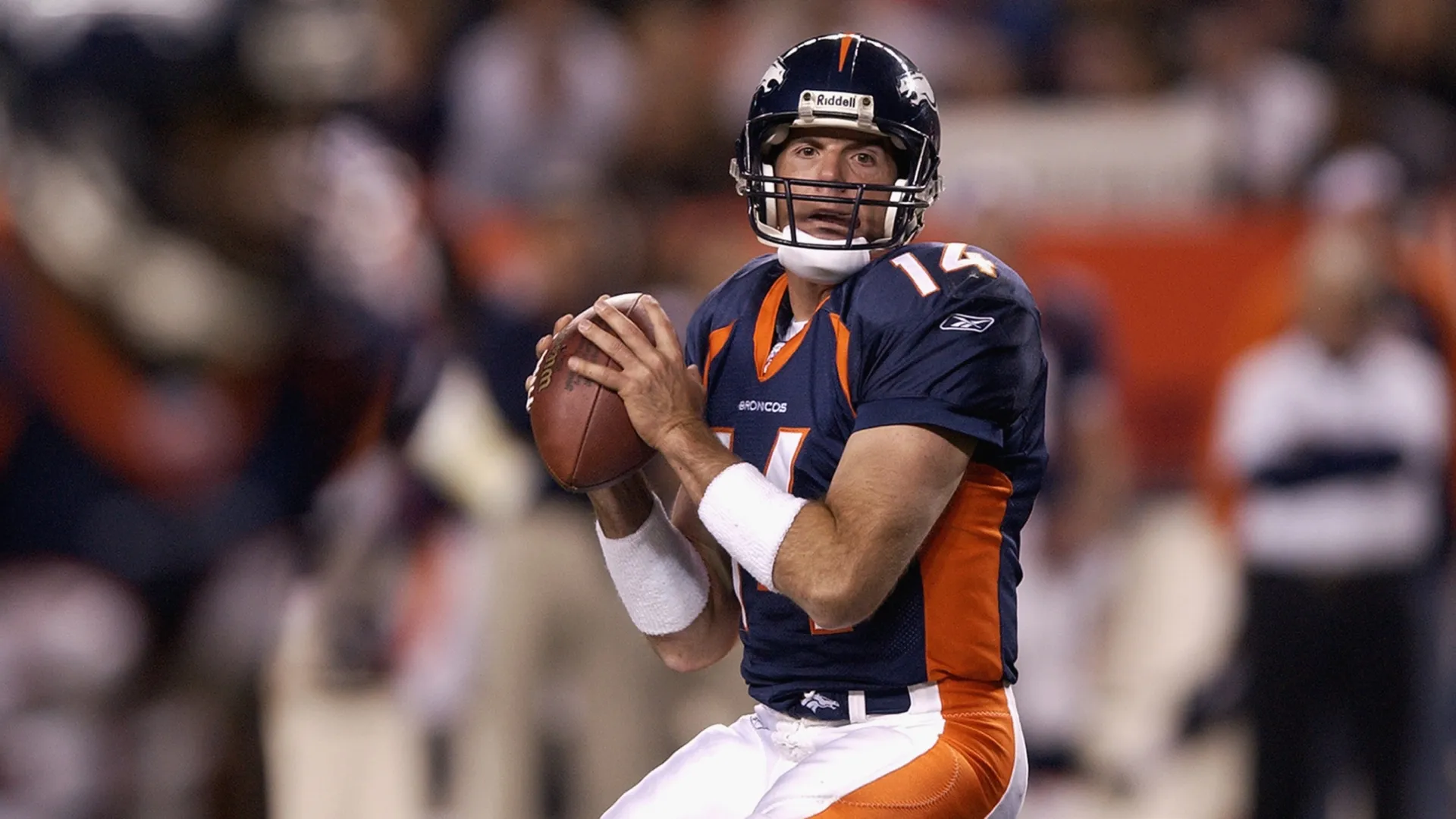
Brian Griese #14 of the Denver Broncos in 2002. (Source: Josh Merwin/Getty Images)
Denver’s 2002 campaign unfolded in a transitional period marked by roster turnover and shifting expectations. The Broncos finished 9–7, steady but inconsistent, as they entered the first full year without Terrell Davis — whose retirement closed a defining chapter in franchise history.
Into that void stepped rookie Clinton Portis, who delivered a breakout season that kept the offense competitive even as the team recalibrated its longer-term identity.
Game recaps highlighted a team capable of impressive midseason surges but prone to abrupt lapses, the kind that made their postseason hopes contingent on help that never arrived. Mike Shanahan’s group flashed physicality and big-play potential, yet struggled to stack wins when pressure mounted.
Their near-miss underscored Denver’s shift from a known contender to a team caught somewhere between eras — strong enough to threaten, but not quite strong enough to extend its season.
2010 San Diego Chargers
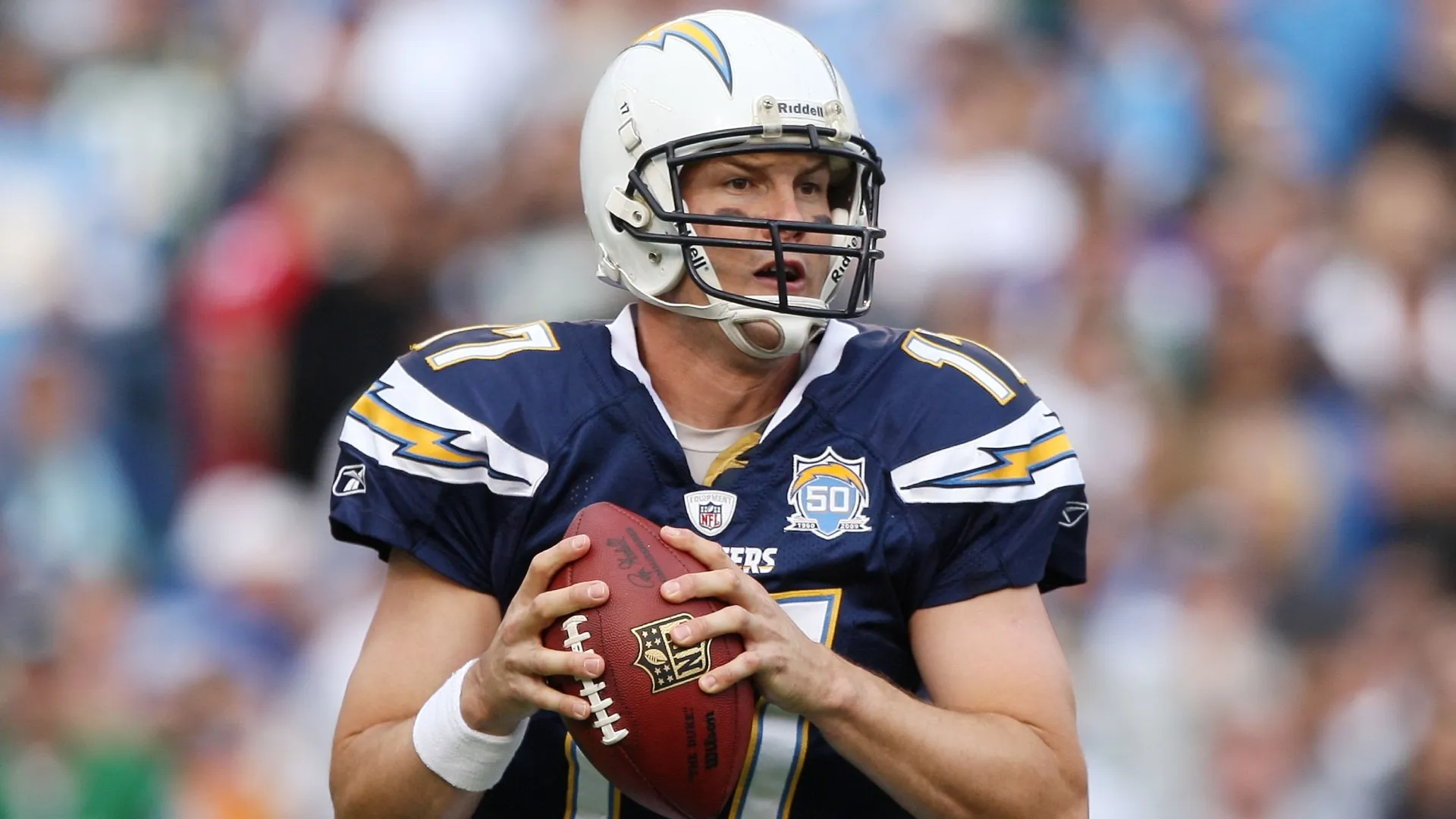
Philip Rivers #17 of the San Diego Chargers in 2010. (Source: Donald Miralle/Getty Images)
Few seasons in modern NFL memory are as contradictory as the 2010 Chargers. San Diego finishing first in the league in both total offense and total defense — a remarkable pairing that should, in theory, have positioned them as legitimate postseason threats. But special teams breakdowns repeatedly undercut their dominance, turning routine plays into decisive setbacks.
Analysts throughout the season, pointed to blocked punts, long returns allowed, and critical miscommunications as the hidden thread running through their 9–7 record. The Chargers were explosive and efficient in open-field situations but startlingly vulnerable in transition phases of the game.
The contrast made their season feel almost surreal: a roster that excelled in the most demanding aspects of football but faltered in the simplest. It remains one of the clearest examples of how invisible weaknesses can derail even the most statistically imposing teams.
1999 Kansas City Chiefs
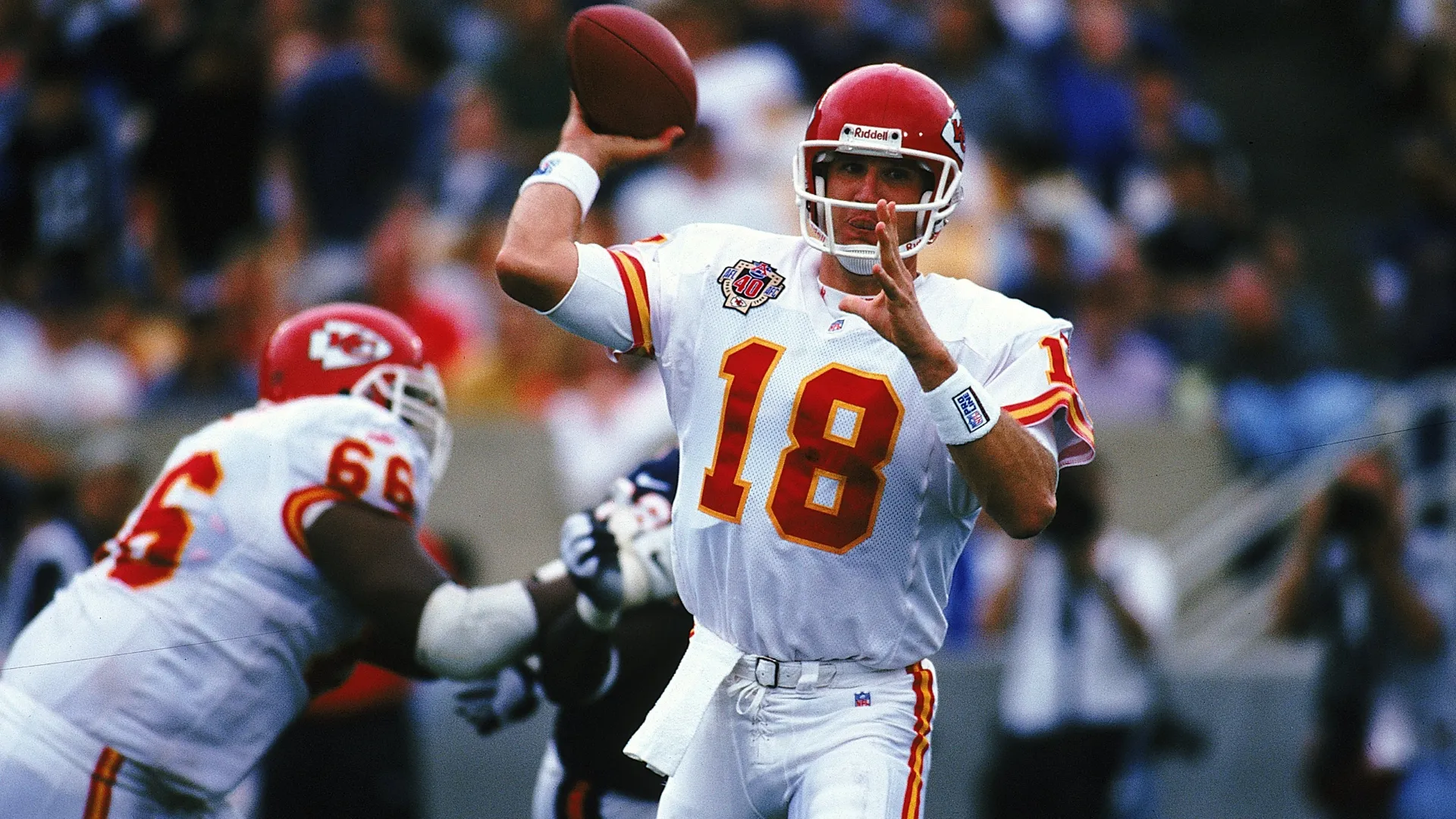
Elvis Grbac #18 of the Kansas City Chiefs in 1999. (Source: Jonathan Daniel /Allsport
The 1999 Chiefs entered the season carrying both veteran leadership and the expectation that experience would translate into January football. They finished 9–7, but the campaign is best remembered for its dramatic final chapter: a Week 17 overtime loss to the Raiders that erased their postseason path in a single kick.
Throughout the year, Kansas City alternated between efficient stretches and sudden inconsistency. It was a group capable of controlling tempo but vulnerable to late-game swings that turned manageable matchups into narrow defeats.
Their season serves as a portrait of a competitive but unsettled era — one where the Chiefs were neither rebuilding nor fully formed, hovering just outside the door of contention. The 1999 team showed that sometimes the most painful seasons are the ones where the margin is only a few inches wide.
2017 Baltimore Ravens
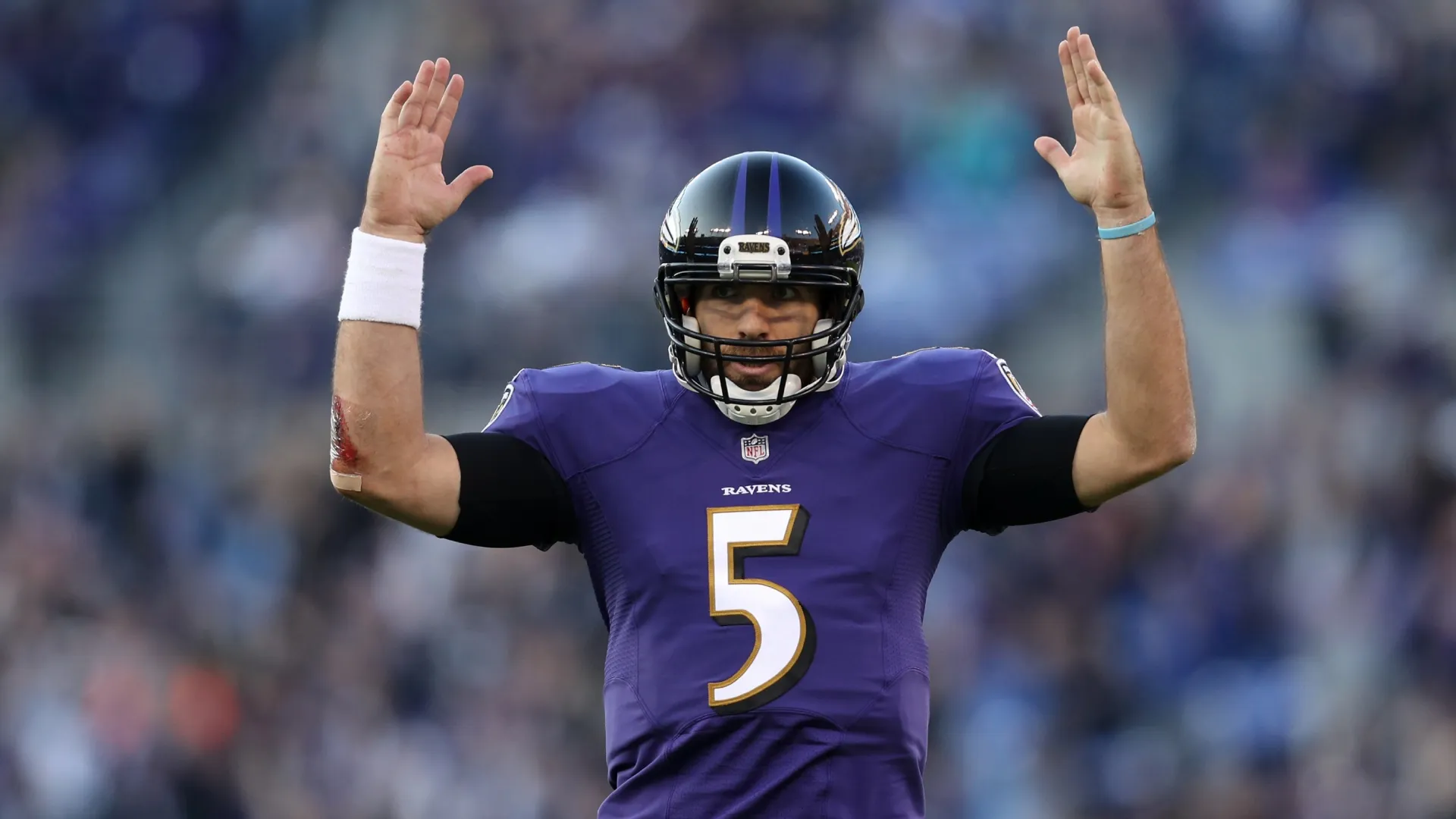
Joe Flacco #5 of the Baltimore Ravens in 2017. (Source: Patrick Smith/Getty Images)
The 2017 Ravens season serves as a painful case study in the cruel mathematics of the AFC Wild Card race. With their offense finally finding its rhythm late in the calendar and their defense reverting to its hallmark brand of physical intimidation, Baltimore positioned itself with a strong 9-6 record heading into Week 17.
The equation was simple: defeat the already-eliminated Cincinnati Bengals at home to secure a playoff berth. The game unfolded like a high-stakes drama, with the Ravens battling for the lead until the final quarter.
However, in a play etched into the memories of the fanbase, the defense surrendered a last-minute touchdown on an improbable fourth-and-twelve conversion.
That single score, combined with the Buffalo Bills’ simultaneous win over the Dolphins, meant the Ravens’ 9-7 record was insufficient. The desolation was immediate; the team that had won five of its last seven games was shut out by the slimmest of margins and the cruel hand of fate.
2012 Chicago Bears
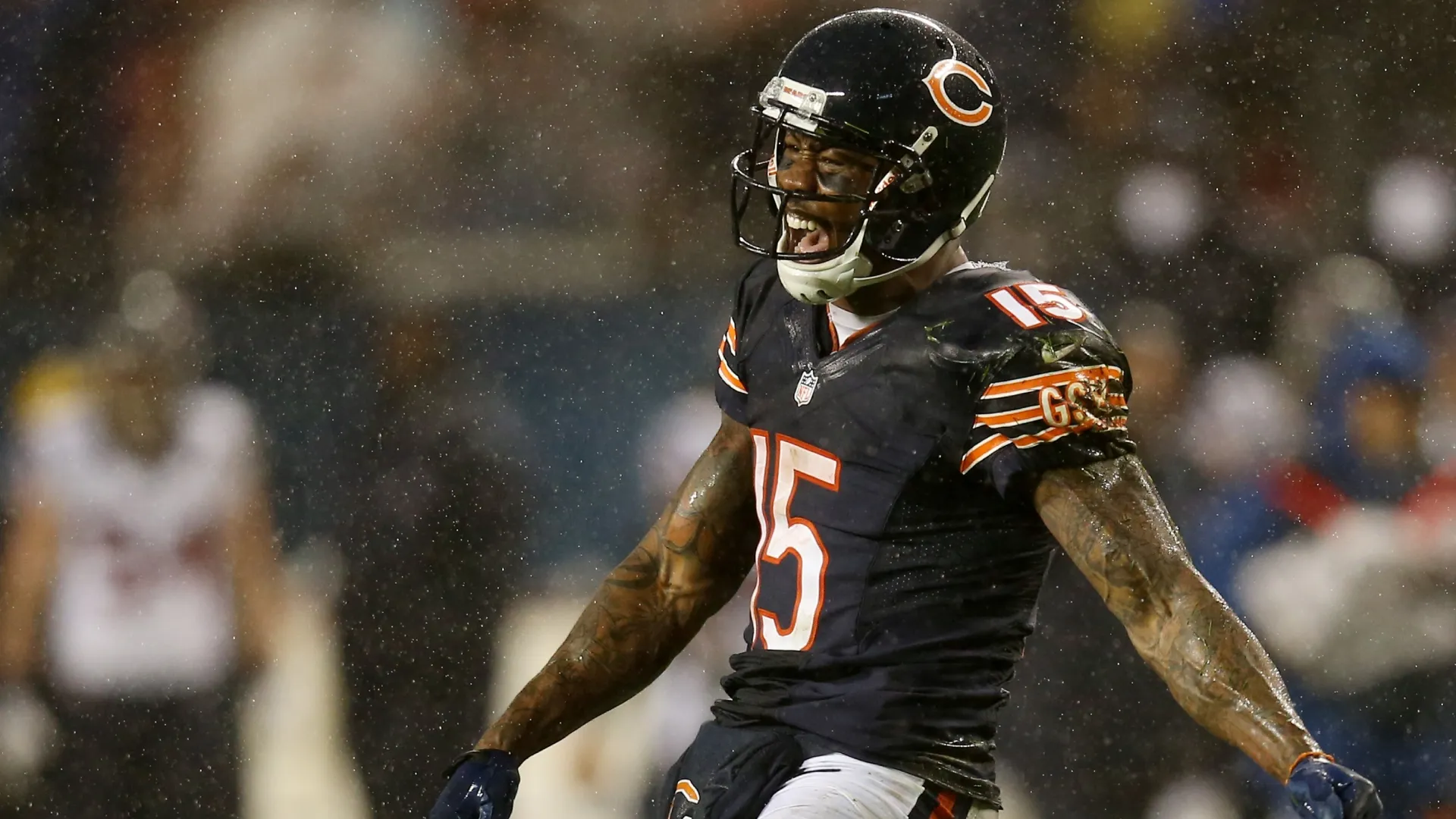
Brandon Marshall #15 of the Chicago Bears in 2012. (Source: Jonathan Daniel/Getty Images)
The beginning of the 2012 campaign in Chicago ignited genuine hope among the league’s most fervent fan base. The team, built around a suffocating defense that set records for defensive touchdowns, exploded out to a 7-1 start, displaying a dominant point differential that placed them among the NFC elite.
The chemistry between quarterback Jay Cutler and star receiver Brandon Marshall seemed unstoppable. But the momentum dissipated with a staggering series of late-season stumbles, resulting in a disappointing 3-5 finish to the year.
Despite concluding with an enviable 10-6 record, tiebreakers favored the Minnesota Vikings in the NFC, relegating the Bears to a third-place finish in their division.
This squad joined the infamous list of teams that start 7-1 yet fail to reach the postseason—a failure that culminated in the firing of head coach Lovie Smith the day after the season ended, sealing the narrative of an unpardonably wasted opportunity.
2000 Pittsburgh Steelers
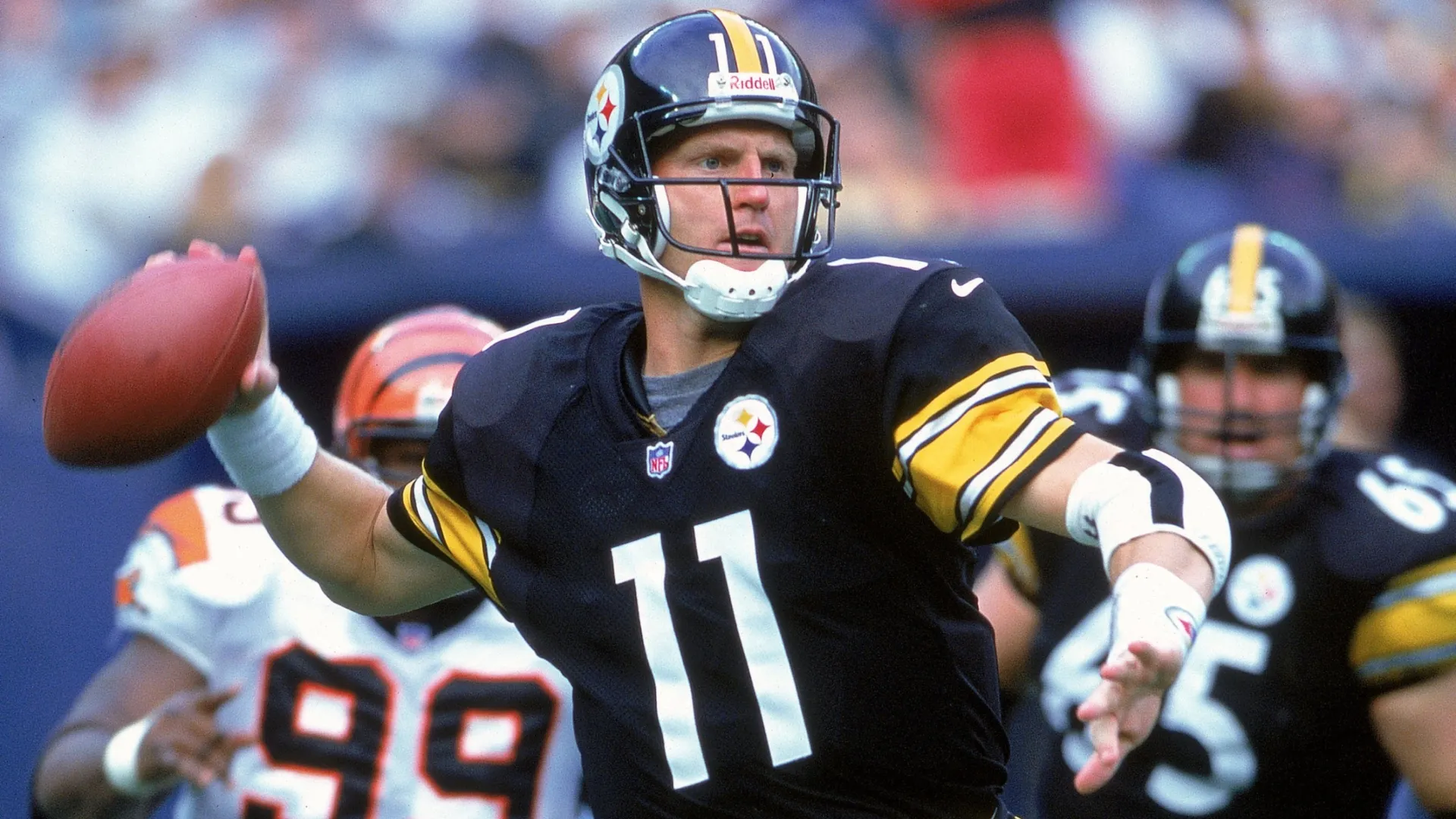
Kent Graham #11 of the Pittsburgh Steelers in 2000. (Source: Tom Pidgeon /Allsport)
The 2000 season in Pittsburgh was one of transition and deep nostalgia, as the team played its final year in the iconic Three Rivers Stadium. Bill Cowher‘s Steelers endured a terrible start, opening the campaign with a worrisome 0-3 skid that suggested yet another year of mediocrity.
However, they demonstrated their historical resilience and clawed their way back with a powerful surge, eventually finishing the year with a 9-7 positive record for the first time since 1997. With running back Jerome Bettis powering the offense, this roster proved competitive once more.
Yet, despite their valiant effort and the feeling of having salvaged a disastrous start, the fierce competition in the AFC Central—which included the eventual Super Bowl champion Ravens—meant their record was not enough for a Wild Card spot.
Though they managed a symbolic victory in the final game at Three Rivers, the quiet elimination meant the new era would begin in a new stadium, but without the immediate glory of the playoffs.
2005 Kansas City Chiefs
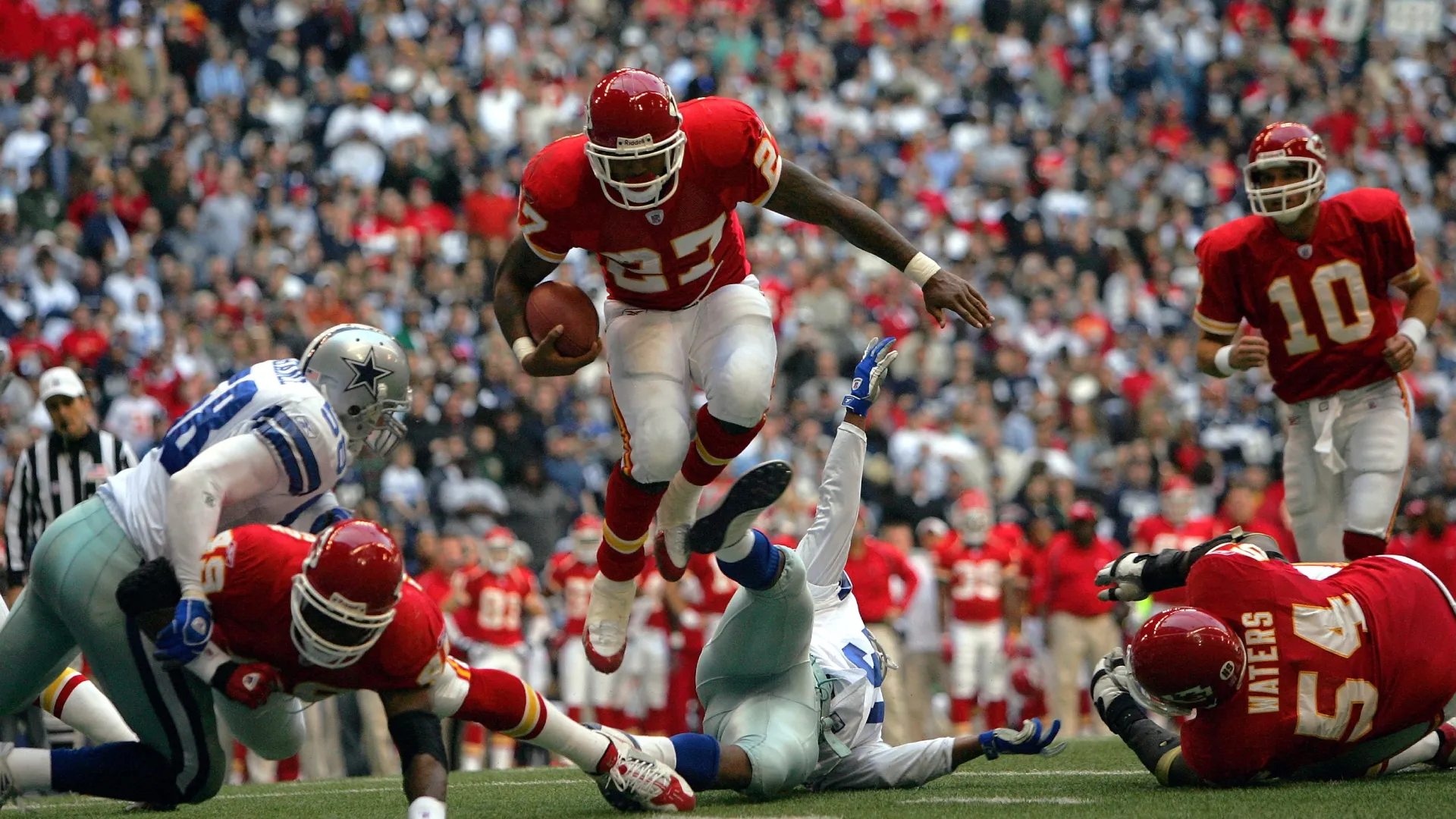
Larry Johnson #27 of the Kansas City Chiefs in 2005. (Source: Ronald Martinez/Getty Images)
The 2005 campaign in Kansas City is a textbook example of how a historically weak defense can completely nullify a championship-caliber offense. This team was an absolute offensive juggernaut, powered by a dominant offensive line and the explosive emergence of running back Larry Johnson, who rushed for over 1,700 yards.
Quarterback Trent Green directed a potent aerial attack. Under coach Dick Vermeil, the team secured an excellent 10-6 mark, a record that in almost any other year would have guaranteed a ticket to January football. Critically, however, the Chiefs finished with one of the league’s worst defenses.
In a relentless AFC, their stellar record was not enough to overcome the tiebreakers, making them one of the rare 10-win teams to be locked out of the postseason that decade. Vermeil’s retirement at the season’s end left a bitter taste for the fans, a mix of pride in the offense and frustration over the squandered opportunity.
1991 San Francisco 49ers
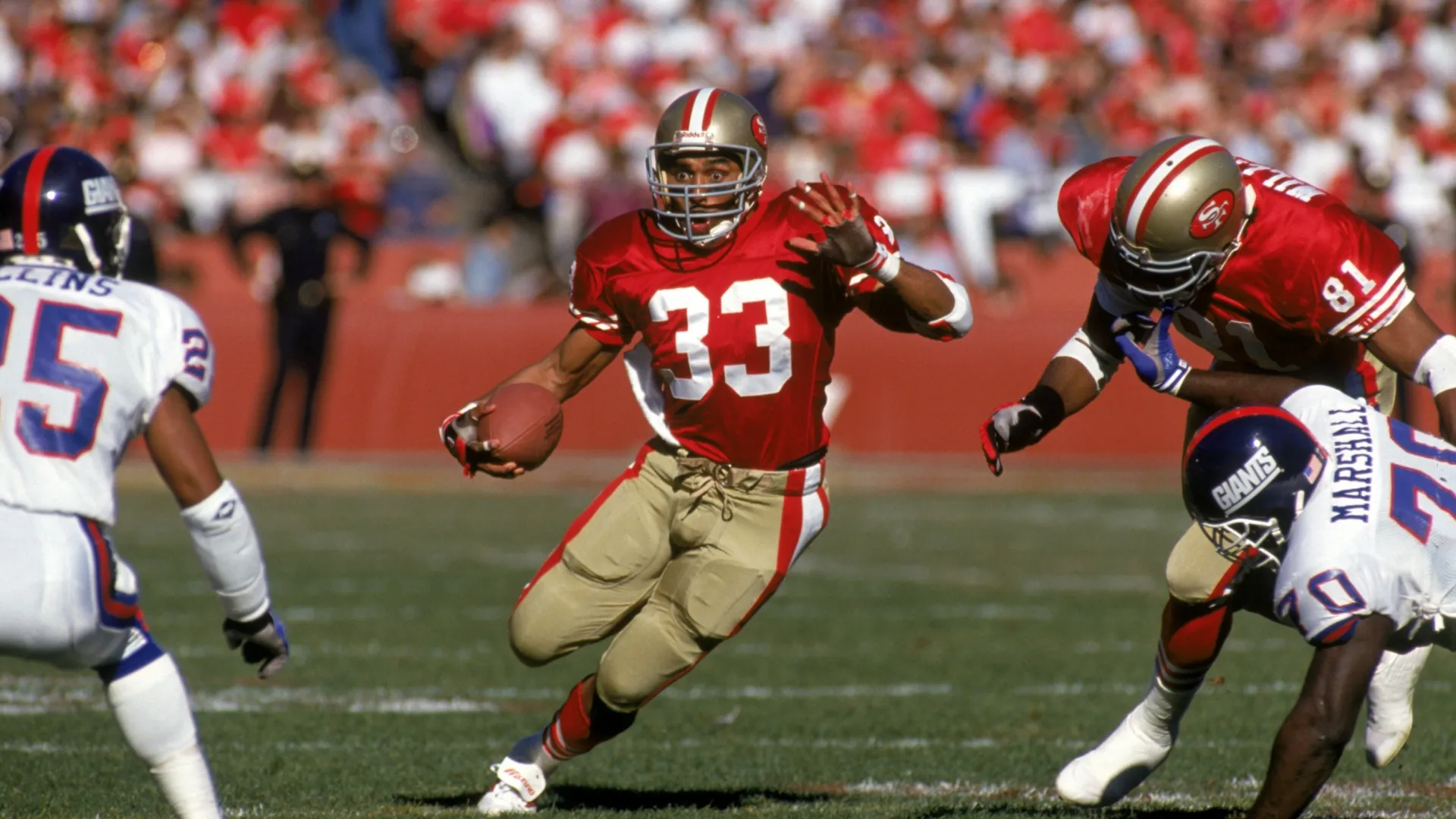
Roger Craig #33 of the San Francisco 49ers in 1991. (Source: George Rose/Getty Images)
The 1991 season in San Francisco marked a profound inflection point. Following a decade of sustained dominance and four Super Bowl titles, the 49ers faced the harsh reality of age and injury.
Legendary quarterback Joe Montana was sidelined for nearly the entire year with a severe elbow injury, ceding control to Steve Young, who stepped up with a stellar season, throwing for over 2,500 yards and displaying amazing efficiency.
Despite Young’s brilliant performance and the team finishing with a 10-6 record, this mark was not enough to carry them into the playoffs. They landed third in a brutally competitive NFC West, behind both the Saints and the Falcons. The 10-6 record, which was the same as the final Wild Card spot winner, saw them excluded due to complex tiebreaker rules.
This season not only broke a streak of four consecutive NFC Championship Game appearances but also served as the unofficial, painful closing chapter of the dynasty’s first great cycle.