While winning a Grand Slam is considered a top achievement in tennis, many players are able to only add one major trophy to their cabinets, becoming a “One Slam Wonder.” Some of them were surprising champions such as Brian Teacher, who won the 1980 Australian Open after almost pulling out of the tournament.
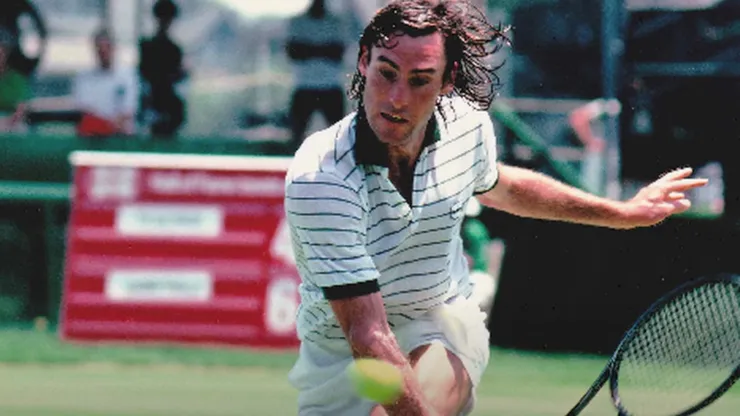
Teacher was born on December 23, 1954, in San Diego, California, and began playing tennis at a young age. He went on to play collegiate tennis at UCLA, where he earned All-American honors and helped the team win the NCAA Championship. After turning professional in 1973, Teacher steadily built his career on the ATP Tour.
“Pro tennis was just getting going then — the first U.S. Open as a professional event was in 1968, with players like Arthur Ashe and Tom Okker. It was exciting. I remember the first prize check was $14,000, and I thought, ‘Wow, this is exciting,” he told Talk Tennis podcast in 2022.
His first success came in doubles. Partnering with Bob Carmichael, they reached the semifinals of Wimbledon and the US Open. “That success gave me confidence to believe I might be able to make a living out of it and become a good singles player too,” he told Talk Tennis. Of course, he eventually had his biggest success at the Australian Open.
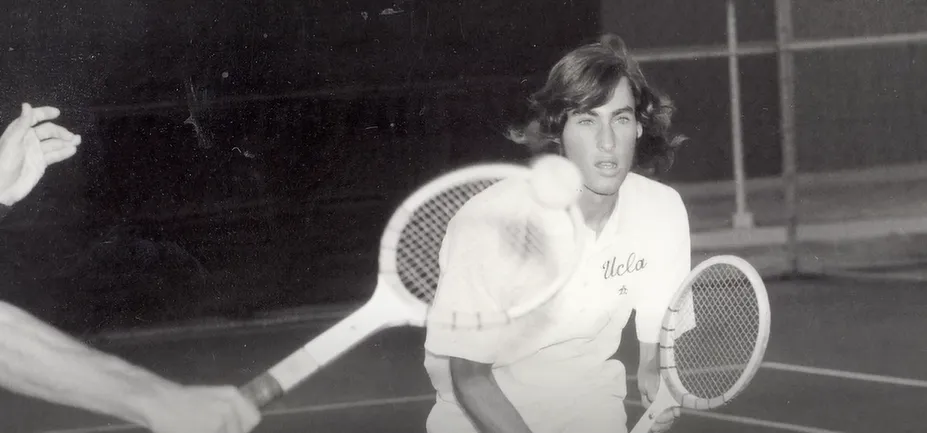
Brian Teacher playing for UCLA (Youtube: Arthritis Foundation)
The Australian Open success
Prior to the 1980 Australian Open, he finished runner-up in five consecutive tournaments and was ranked No. 17 in the world when the tournament began. At the time, the Open was played on grass at the Kooyong Stadium, in a wealthy suburb in Melbourne. Teacher almost pulled out of the tournament due to marital problems.
According to Tennis Majors, Teacher phoned his wife to talk about the missed match points at the Sydney final, only to hear her say she wanted a divorce. Planning to head home and try to repair his marriage, he called Australian Open tournament director Colin Stubbs to withdraw from the draw. “I told Colin I’d hurt my back from playing all those finals in a row,” he recalled, “and he just said, ‘Too bad,’” he told the outlet.
His father-in-law persuaded him to stay and compete. He re-entered the main draw after another player withdrew, with the tournament director quietly adding him back in. With several top players absent from the field, he advanced to the final, defeating Peter McNamara in four sets along the way.
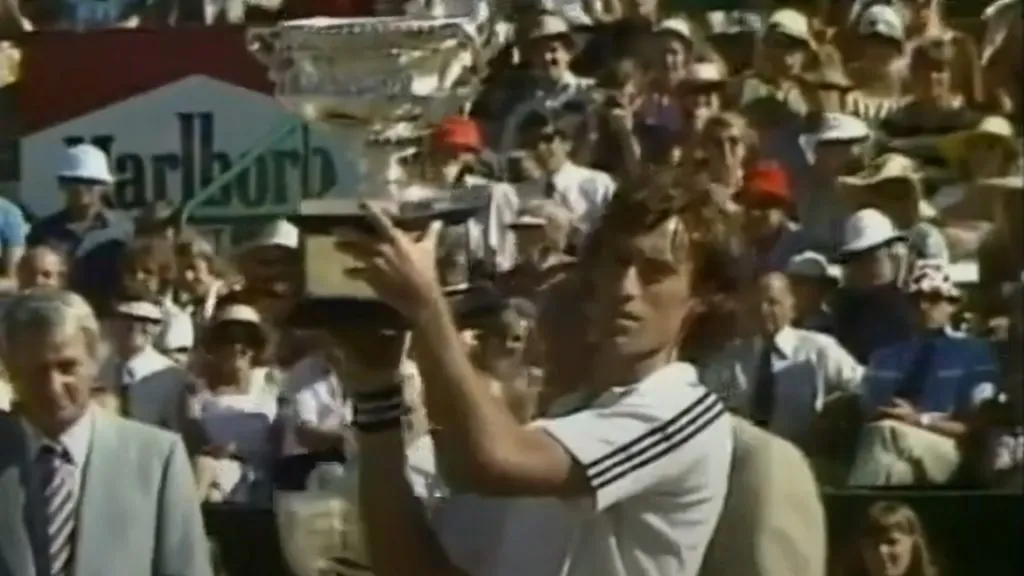
Brian Teacher won the 1980 Australian Open (Youtube)
Then he reached glory by defeating Kim Warwick, who had battled Guillermo Vilas in a grueling semifinal played over two days. Warwick arrived with a shoulder injury, and Teacher prevailed 7-6, 7-5, 6-2.
Teacher would reach his highest ranking, world No. 7, in May 1981. He boasts wins over some of the best players of his time, including Jimmy Connors, Arthur Ashe, Stan Smith, Mats Wilander, and Ivan Lendl. In total, he won eight ATP Tour Singles Titles and 16 ATP Tour Doubles Titles.
Ups and downs: Retirement
The teacher soon discovered, as many other players do, that glory only can last so long. “Sports can be strange. You have ups and downs in life, injuries to manage, and everything else going on outside the court. I had quite a few injuries, including torn ligaments in my ankles, but I made it through and did the best I could,” he told Talk Tennis.
“I played on the tour for about 10 years, and then I got sick and tired of traveling. I stepped away from the tour for five or six years. Eventually, I got back into coaching, traveling on tour, and working with players. I’ve continued coaching and working with developing juniors ever since,” he said.
Among the stars whom he worked with are Andre Agassi and Greg Rusedski. Under his guidance, Rusedski climbed from world No. 85 to the top ten and reached the U.S. Open final. He also coached world No. 1 doubles players Jim Grabb, Richey Reneberg, Daniel Nestor, and Max Mirnyi.
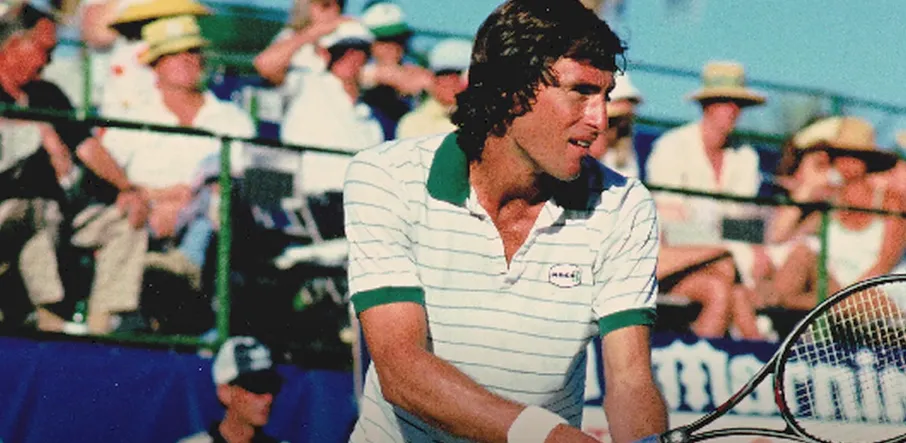
Brian Teacher (Youtube: Arthritis Foundation)
His life with arthritis
One of Teacher’s downs was his diagnosis of arthritis, which he has said started when he was 19 years old. “I was diagnosed with arthritis in my spine and neck. I learned to live with it and learned to do stretching and yoga,” he told the Arthritis Foundation Youtube Channel in 2012.
“I had a biking accident and fell off my bike. The doctor told me, ‘I have good news for you and I have bad news for you. The good news is you did not break your hip. The bad news is you have bad osteoarthritis,’” he said, before explaining how the pain was “getting worse.”
“You feel like you’re trapped. It’s just a lousy feeling,” he explained. However, through physical activity, he was able to reduce the pain and feel better. “Just a short time ago, I didn’t think I’d be able to do any of the activities I’m doing today. Now, I’m able to go out and hit some tennis balls, have some fun, do a little weightlifting, mountain biking, stretching, and Bikram yoga. My life feels like it’s back on track. I’m feeling 100% better, though I still have a long way to go,” he said.
He currently runs his Tennis Academy in Southern California and has created an innovative tennis instructional app and platform designed to help coaches guide players in improving their shots without having to be in the same room.