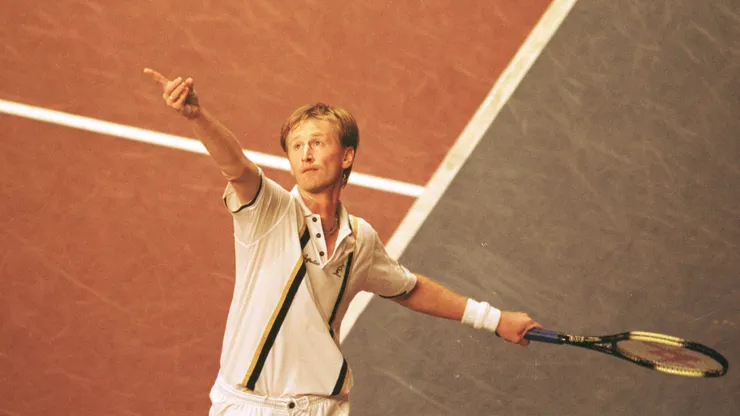
Recently, tennis has been shaken by two prominent doping cases, with Iga Swiatek and Jannik Sinner serving bans after testing positive for prohibited substances. While many players have called for more transparency in the handling of such cases, this is not a new stance. Australian Open champion Petr Korda was also involved in a high-profile doping case, with his peers even threatening to boycott the Grand Slam upon his return.
Korda was one of the most skilled and creative players of his generation, known for his elegant left-handed game and attacking style. Born in Czechoslovakia in 1968, he turned professional in 1987 and quickly established himself as a formidable competitor on the ATP Tour.
His biggest achievement was to win the Australian Open in 1998, defeating Marcelo Rios, one of the best players to never win a Grand Slam, in straight sets in the final. The victory propelled him to a career-high ranking of No. 2 in the world. In addition to his Grand Slam success, he was also a finalist at the 1992 French Open, where he lost to Jim Courier.
Throughout his career, Korda won 10 ATP singles titles. He also had success in doubles, winning the 1996 Australian Open men’s doubles title alongside Stefan Edberg, as well as being runner-up at the 1990 French Open, partnering with Goran Ivanesevic. However, his legacy was tarnished by his doping case just months after his Grand Slam win.
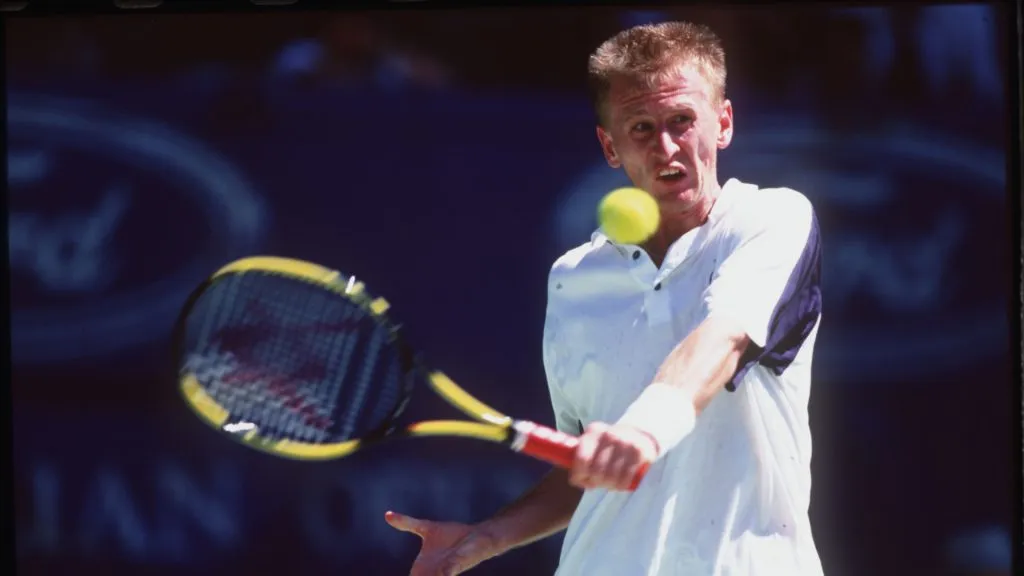
Petr Korda during the 1998 Australian Open (Gary M Prior/Allsport)
Doping controversy and retirement
In July 1998, Korda tested positive for nandrolone, an anabolic steroid, following a match at Wimbledon. Korda lost 199 rankings points and $94,529 prize money he earned at the Championships. However, an independent tribunal decided not to suspend him, accepting his explanation that he didn’t know how the drug found its way into his system.
“I have never cheated and I have never taken any steroids to increase my performance on the court,” he told The Times of London in January 1999, ahead of the Australian Open. “When I first heard the news, I thought it was a bad joke, and it became a very difficult time for me and my family,” he added.
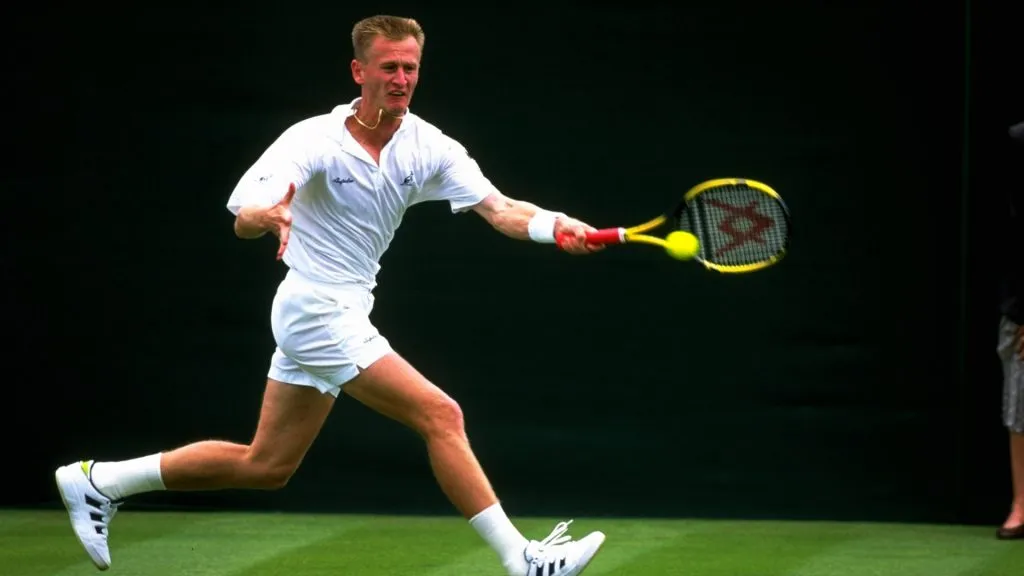
Korda during 1998 Wimbledon Championships (Alex Livesey /Allsport)
In that same interview, he insisted that he didn’t know why he tested positive, but admitted that he had some injections in his foot during Wimbledon. “When I have an injection, I always ask what is in it, but sometimes you just have to trust the person who administers it,” Korda explained.
Despite his claims, his peers, which include top players such as Andre Agassi, Jim Courier or Michael Chang threatened to boycott the 1999 Australian Open due to his participation. During an ATP players meeting, they confronted him, but the Czech didn’t say anything. He left the room flanked by three security guards, and chose to not speak to the press.
“I was assigned a black mark which obviously doesn’t belong to me and I’ll have to try and remove it, although I don’t know how yet,” Korda told Czech TV from Melbourne before the meeting (via CBS News). “I still can’t explain the mystery even to myself. I know very few people trust me now but I’ll do everything I can to solve it out,” he added.
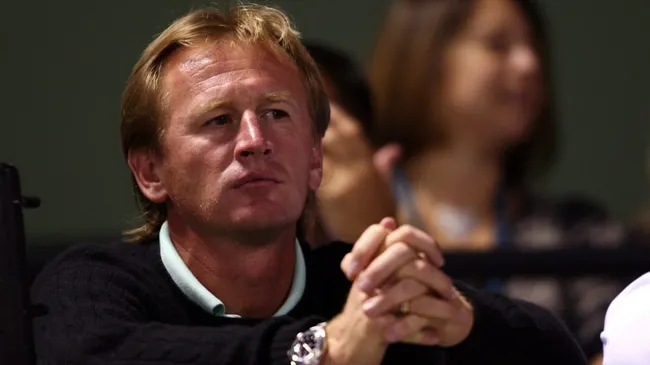
Korda during the Sony Ericsson Open in 2009 (Clive Brunskill/Getty Images)
At the end, the event followed through, but the pressure was there. Korda retired after failing to earn a wildcard to play Wimbledon in July of 1999, and in August of that year, the Court of Arbitration for Sport (CAS) ruled in favor of the ITF and ATP, suspending him for 12 months. Of course, he never served the suspension, having left the sport.
His legacy: Coaching his son
Despite the bitter end to his career, Korda returned to tennis, coaching his son, Sebastian, who reached a career-high ranking of World No. 15 in 2024, as well as Czech player Radek Stepanek.
While Sebastian followed his father into tennis, his two older sisters took a different path. Jessica and Nelly both became professional golfers. Jessica also earned a major victory of her own, winning the Australian Open in 2012 at Royal Melbourne Golf Club.