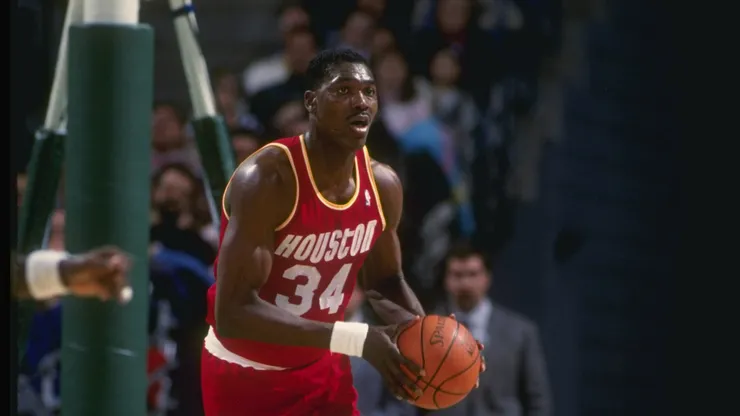
When discussing NBA legends and historic rivalries, one of the most intense battles comes to mind—the duel between Houston Rockets icon Hakeem Olajuwon and New York Knicks great Patrick Ewing. The two Hall of Fame centers went head-to-head in some of the most physically demanding matchups in league history, and even decades later, their competitive fire seems to linger. Olajuwon recently stirred the conversation with comments that appeared to reignite the rivalry.
“The Dream” confidently asserted that he aged better as a player compared to Ewing. “The difference between Patrick and me is that he’s had serious injuries, and I’ve never had those,” Olajuwon said after signing with the Toronto Raptors in the same summer the Orlando Magic acquired Ewing. “My problems have been cosmetic.”
Both stars were widely expected to finish their careers with the franchises that defined them, but in a surprising turn, each was traded late in their storied careers. In 2000, Ewing was dealt to the Seattle SuperSonics, and the following year, Olajuwon was shipped to the Raptors.
The Olajuwon-Ewing rivalry took shape in the 1980s and 1990s, with both players leading their respective franchises—the Houston Rockets and the New York Knicks—to consistent playoff success. Their battles were often seen as a clash of styles: Olajuwon’s fluid footwork and agility versus Ewing’s physicality and elite mid-range shooting. As two of the league’s premier big men, their matchups were must-watch television, particularly in high-stakes regular-season and playoff encounters.
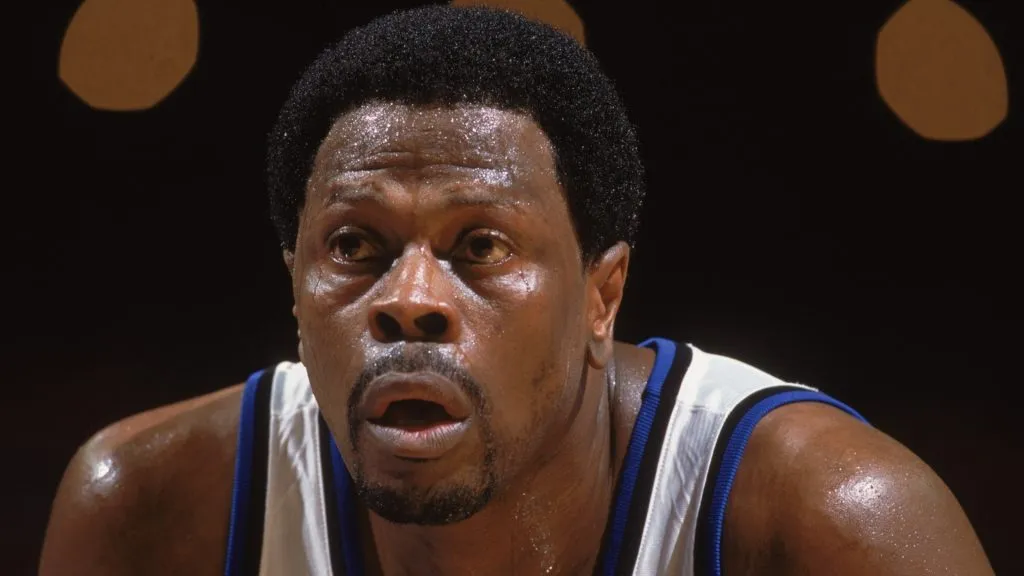
Center Patrick Ewing rests during the NBA game between the Orlando Magic and the Utah Jazz at the TD Waterhouse Centre on Dec. 19, 2001.
1994 NBA finals showdown
The pinnacle of their rivalry came in the 1994 NBA Finals, when Olajuwon’s Rockets met Ewing’s Knicks in a grueling seven-game series. Olajuwon delivered an iconic performance, averaging 26.9 points, 9.1 rebounds, 3.6 assists, and 3.9 blocks per game, while Ewing countered with 18.9 points, 12.4 rebounds, and 4.3 blocks per contest.
In Game 6, Olajuwon made one of the most memorable defensive plays in Finals history, blocking John Starks’ last-second three-pointer to force a decisive Game 7. The Rockets ultimately prevailed, securing Olajuwon’s first NBA championship and leaving Ewing just short of his elusive ring.
Regular-season and playoff duels
Throughout their careers, Olajuwon and Ewing clashed multiple times in both the regular season and postseason, with Olajuwon often holding the statistical advantage. Over their careers, Olajuwon averaged 21.8 points, 11.1 rebounds, 3.1 blocks, and 1.7 steals per game while shooting 51.2% from the field.
Ewing, on the other hand, posted career averages of 21.0 points, 9.8 rebounds, 2.4 blocks, and 1.0 steal per game with a 50.4% field goal percentage. While their numbers were close, Olajuwon had the edge defensively with superior shot-blocking, steals, and a more refined post game that made him nearly unguardable in the paint.
Legacy and impact
Both players left a lasting mark on the game, inspiring future generations of big men with their skill, leadership, and defensive dominance. While Olajuwon is widely regarded as the more complete player due to his two-way brilliance and postseason success, Ewing remains one of the greatest centers of all time, known for his resilience and ability to anchor the Knicks through one of the league’s most competitive eras. Their rivalry not only defined a generation of basketball but also showcased the importance of elite center play in the NBA’s golden age of big men.