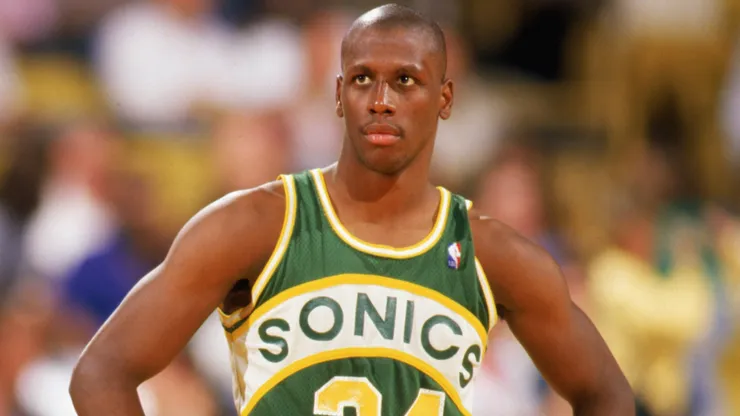
Before the NBA became the global empire it is today, its map looked very different. Teams like the Rochester Royals, Syracuse Nationals and Seattle SuperSonics once filled arenas, until relocations redrew the league’s landscape.
From Buffalo to Vancouver, entire franchises disappeared or reinvented themselves under new banners, chasing markets, money and survival. Each move told a story of ambition, heartbreak and reinvention.
What’s left are ghost teams that shaped the league’s early DNA — reminders that even in the National Basketball Association, not every story ends with a championship banner hanging from the rafters.
NBA teams that no longer exist
Seattle SuperSonics
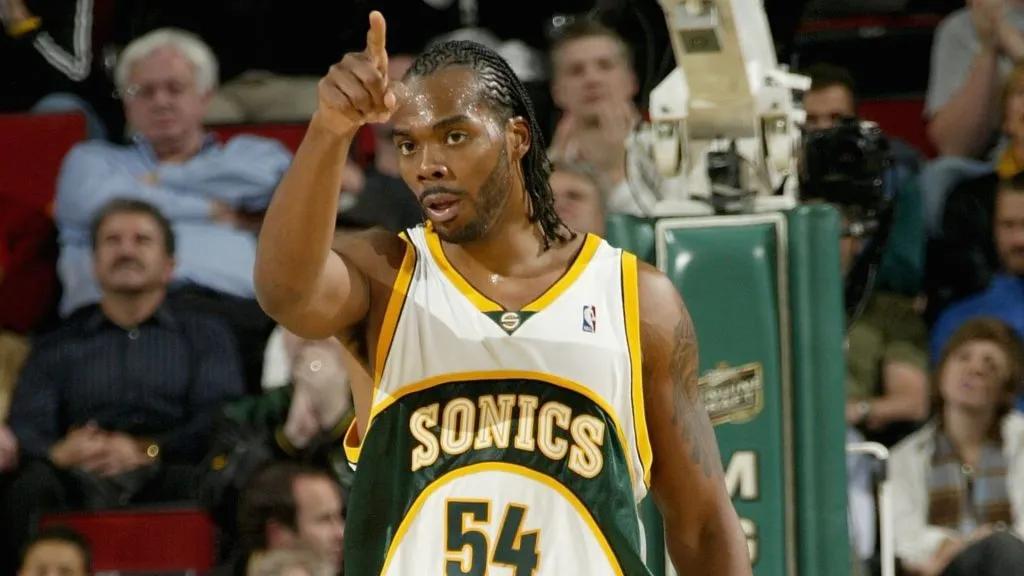
Chris Wilcox (Source: Otto Greule Jr/Getty Images)
No recent move left a deeper scar on a city’s psyche than the SuperSonics‘ departure from Seattle. Since their birth in 1967, the Sonics became the sporting heartbeat of the Pacific Northwest.
With a championship in 1979, the team proved to be a force, but it was the 1990s era, featuring the electrifying duo of Gary Payton and Shawn Kemp, that cemented their cult status, leading them to the 1996 Finals. However, the Sonics’ narrative turned into a tragic lesson on the precariousness of sports loyalties.
Despite featuring elite talents, including future superstar Kevin Durant in their final season, the team fell victim to a failure to secure public funding for a new arena and a subsequent sale.
In 2008, the franchise was relocated to Oklahoma City (becoming the Thunder). The league, nonetheless, retained the name, colors, and championship history in a conciliatory gesture, leaving Seattle in perpetual anticipation of the Sonics’ return.
Minneapolis Lakers
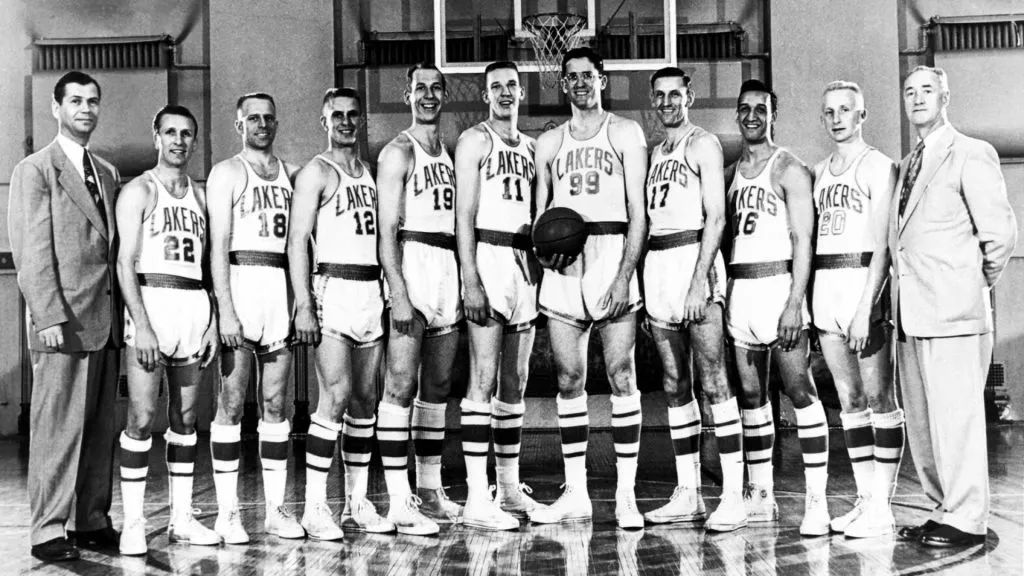
Minneapolis Lakers (Source: NBA)
Before the bright lights of Hollywood illuminated their name, the NBA’s most decorated franchise found its origin in the “Land of 10,000 Lakes”. Founded in 1947, the Minneapolis Lakers owe their name to the Minnesota landscape. They quickly established the league’s first great dynasty, powered by the dominant presence of pioneering center, George Mikan.
With Mikan as their center of gravity, the team claimed five NBA (then BAA) championships between 1949 and 1954. Yet, as Mikan’s popularity waned and the league’s geography shifted, the city of Minneapolis began to lose interest.
The harsh winter climate and financial difficulties led owner Bob Short to make a fateful decision: in 1960, the franchise moved to Los Angeles, seeking a larger, more lucrative market. Mikan’s legacy, however, remains the root of the current Lakers’ immense tree.
Philadelphia Warriors
Long before the three-pointers of Stephen Curry and Klay Thompson redefined basketball in the Bay Area, the Warriors were a league cornerstone in Philadelphia. Founding members of the BAA (the NBA’s predecessor) in 1946, the Philadelphia Warriors clinched the league’s first-ever championship in 1947.
Their second title arrived in 1956, but the team is perhaps best remembered as the home of the iconic Wilt Chamberlain, who, while playing for them, achieved his legendary 100-point feat in 1962. Despite the accomplishments and the caliber of their stars, attendance stalled.
The franchise was purchased and moved to San Francisco in 1962, seeking to capitalize on the sports boom on the West Coast, eventually rebranding as the Golden State Warriors. This relocation marked the end of an era in Philadelphia, though the warrior spirit of the name lives on.
Baltimore Bullets
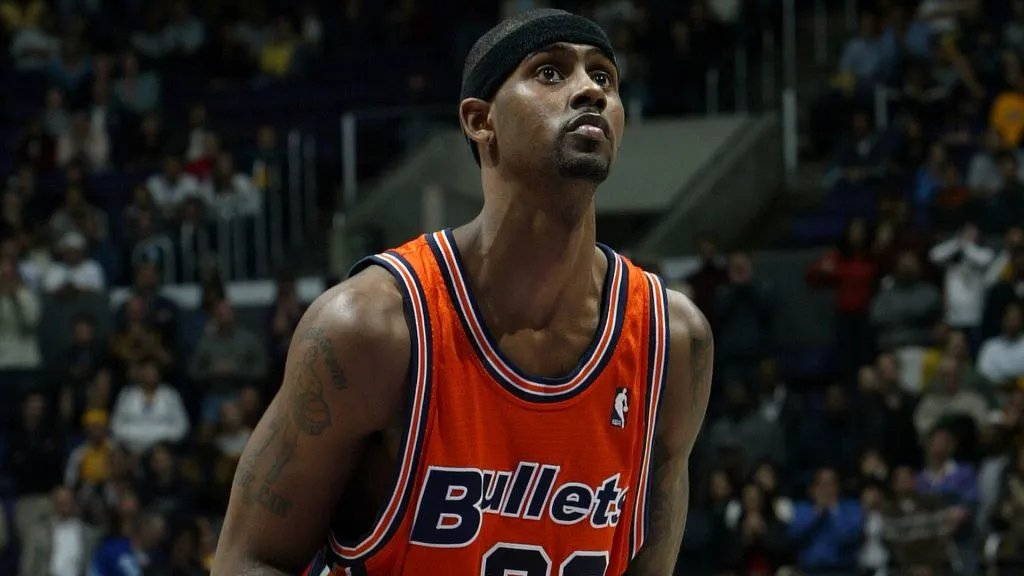
Larry Hughes (Source: Stephen Dunn/Getty Images)
The history of the original Baltimore Bullets is a curiosity of the nascent NBA. The Baltimore team not only joined the BAA in its second season (1947) but immediately stunned the league by winning the 1948 championship, exceeding expectations as arguably the most surprising champion in the league’s early history.
However, this triumph was a flash in the pan. The franchise constantly struggled with financial woes and erratic on-court performance following the BAA-NBL merger that formed the NBA in 1949.
Their existence was brief and turbulent, and in 1955, amidst insurmountable difficulties, the franchise folded mid-season, becoming the last team to entirely disappear from the NBA to date. They should not be confused with the 1963 Bullets, who also played in Baltimore and are the predecessors of the current Washington Wizards.
Syracuse Nationals
The Syracuse Nationals represent the resilience of smaller cities in professional basketball. Established in 1946 in the National Basketball League (NBL), they joined the NBA after the merger and quickly became a consistent contender.
They were known for their hard-nosed play, strong defense, and the passion of their dedicated fanbase. Their ultimate achievement was the 1955 championship, led by coach Red Auerbach and the star power of players like Dolph Schayes.
Despite their on-court success, the limitations of a small market and the limited capacity of their arena (Onondaga County War Memorial Arena) became unsustainable in the early 1960s. In 1963, the franchise was sold and moved to Philadelphia to fill the void left by the Warriors, transforming into the Philadelphia 76ers.
Rochester Royals
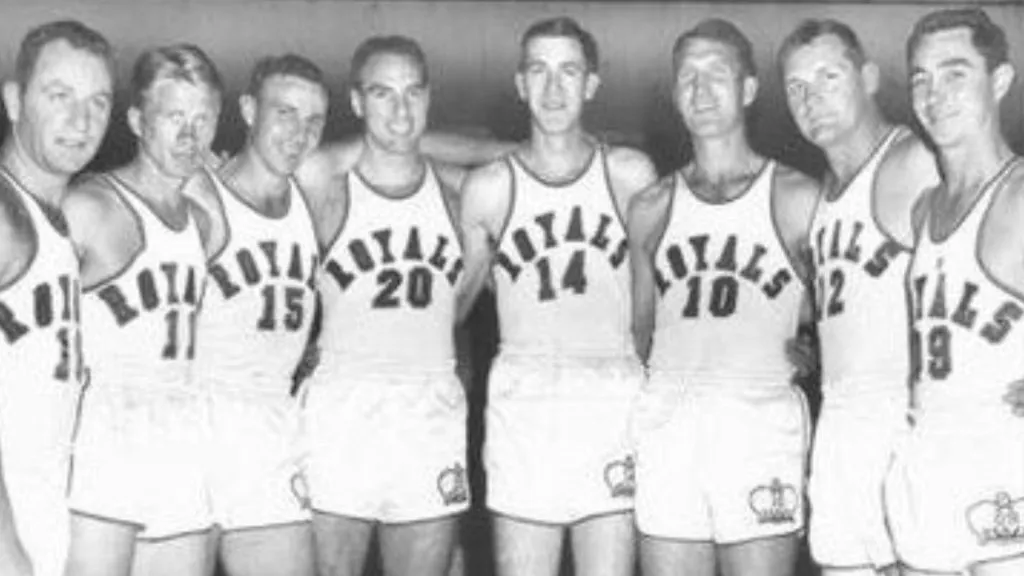
Rochester Royals (Source: Sports Team History)
The Rochester Royals were one of the original powerhouses of the NBA. Founded in 1946, this franchise was based in Rochester, New York. The pinnacle of their history in this city was the 1951 NBA championship, secured by defeating the New York Knicks.
Despite having notable talents, the league’s economics were changing. Like other small-city franchises at the time, profitability became difficult to sustain in Rochester.
In 1957, the team moved to Cincinnati, initiating a series of relocations that would take them to Kansas City, Omaha, and finally to Sacramento, where they are now known as the Kings. The Royals are, therefore, an example of how a franchise can maintain its historical continuity despite constant changes in city and identity.
St. Louis Hawks
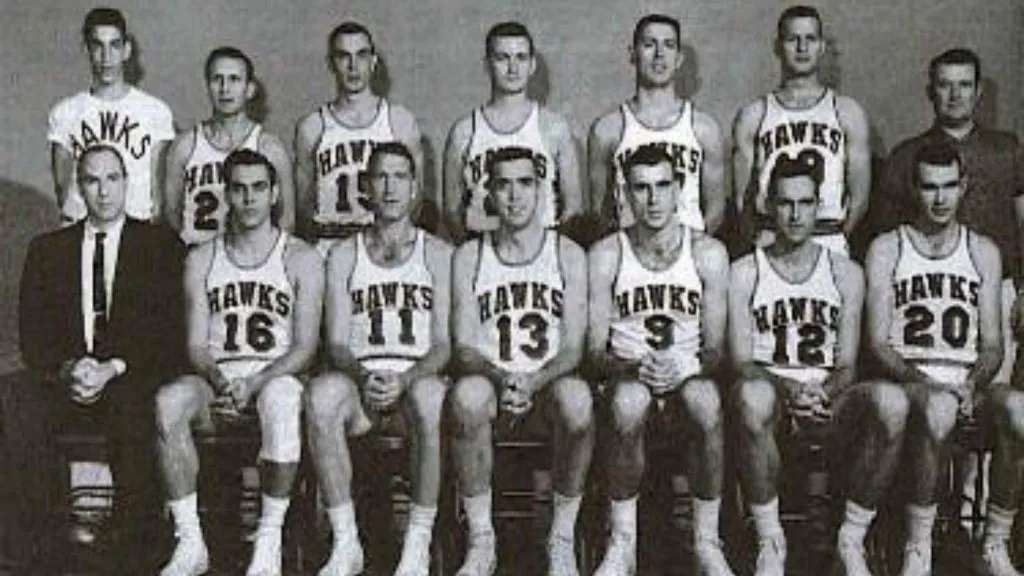
St. Louis Hawks (Source: Missouri Sports Hall of Fame)
The Hawks‘ history begins in the NBL in 1946 as the Tri-Cities Blackhawks, but their most memorable and successful period outside of Atlanta unfolded in St. Louis. After a brief stop in Milwaukee, the team settled in St. Louis in 1955.
There, led by the immense talent of Bob Pettit (the NBA’s first-ever MVP), the Hawks rose to become serious contenders, starring in a memorable rivalry with the Boston Celtics. Their peak was the 1958 championship, the only one the franchise has ever won, by defeating the Celtics in the Finals.
However, despite Pettit’s presence, public interest waned over time. In 1968, the franchise was relocated to Atlanta, where they remain today, leaving behind a history of greatness that is often overshadowed by the league’s more modern eras.
Cleveland Rebels
One of the briefest and least-known stories in the NBA is that of the Cleveland Rebels. They participated in the inaugural season of the BAA (1946-47), the NBA’s predecessor league. With management that failed to spark interest in the market, their on-court performance was merely mediocre, finishing with a 30-30 record.
Although they managed to sneak into the playoffs, they were quickly eliminated. The combination of regular performance and internal financial problems sealed their doom.
At the conclusion of their only season, the franchise disbanded, marking one of the league’s first failures to establish itself in the American Midwest. Their existence is a reminder of how volatile professional basketball was in its earliest stages.
New Orleans Jazz
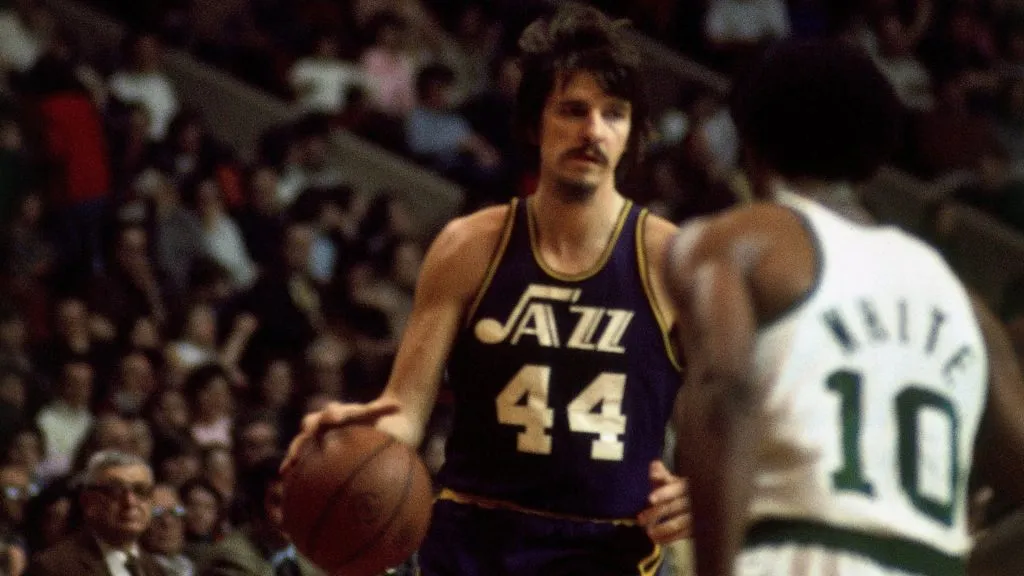
New Orleans Jazz (Source: NBA)
The name Utah Jazz has always seemed like a historical irony, as the music genre is intrinsic to New Orleans, not Salt Lake City. And it is precisely in Louisiana where this franchise had its fleeting and colorful origin in 1974. The New Orleans Jazz began their NBA journey with the legendary Pete Maravich as their main star, trying to capture the city’s musical spirit in their identity.
Despite the efforts of “Pistol Pete,” the team was never competitive, and financial problems quickly escalated. The city could not sustain a professional team, and in 1979, the franchise was relocated to Salt Lake City, Utah. Incredibly, they retained the name “Jazz,” which today, despite being incongruous, is a constant reminder of their brief and fascinating past in the vibrant heart of Louisiana.
Washington Capitols
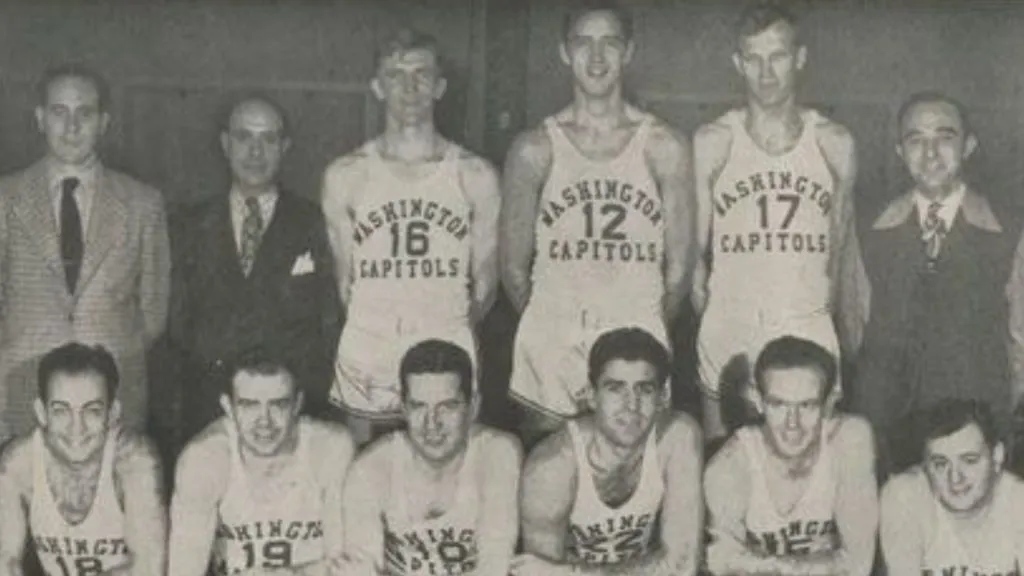
Washington Capitols (Source: Sports Team History)
The Washington Capitols had a short but remarkably successful history, mainly because they were the first team coached by the legendary Red Auerbach, who would later build the Boston Celtics dynasty.
Founding members of the BAA in 1946, the Capitols proved to be a strong team, even featuring Earl Lloyd, one of the first African Americans to play in the league. The team was a force in the early seasons, reaching the 1949 Finals.
However, in 1950, after the NBL-BAA merger, the team fell into financial difficulties and, despite efforts to keep the franchise afloat, they were forced to fold mid-season during the 1950-51 campaign. The Capitols are the epitome of a sports-potential franchise that succumbed to the economic instability of the league in its nascent years.
Vancouver Grizzlies
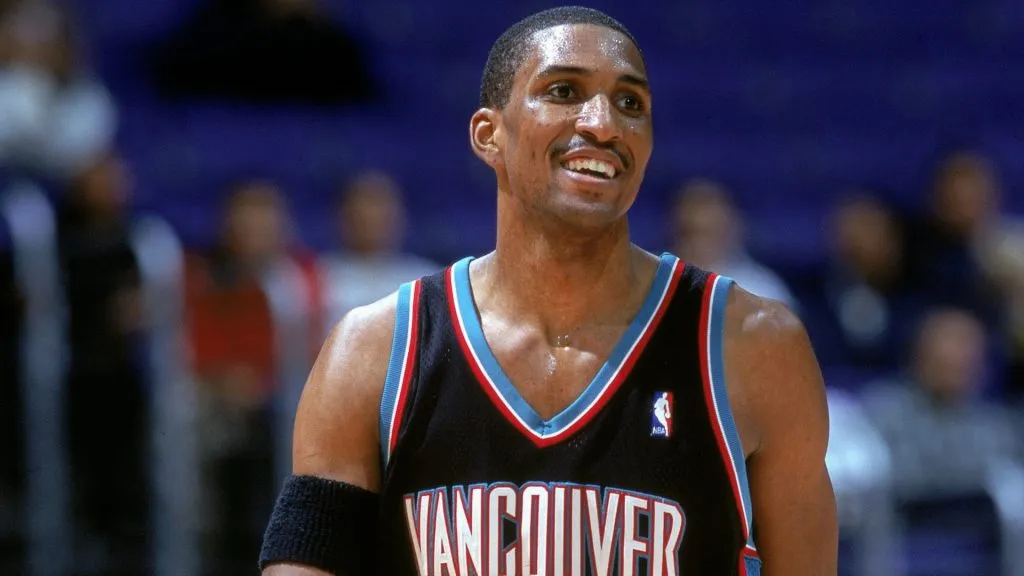
Shareef Abdur-Rahim (Source: Jeff Gross /Allsport)
Alongside the Toronto Raptors, the Vancouver Grizzlies joined the NBA in the 1995 Canadian expansion. Their six-year stay on the Canadian Pacific coast was an ordeal marked by a poor win-loss record, financial troubles, and, crucially, the difficulty of attracting and retaining elite talent.
Notable players refused to play in such a peripheral market with a history of losses, the most notorious case being the refusal of 1999’s No. 2 draft pick, Steve Francis, to play for the franchise, forcing a trade.
Despite having promising players like Shareef Abdur-Rahim and Mike Bibby, economic problems and poor performance made the situation unsustainable. In 2001, the franchise sought greener pastures and moved to Memphis, Tennessee, where they now thrive as the Memphis Grizzlies.
Chicago Stags
The Chicago Stags, who played in the BAA and NBA between 1946 and 1950, are an essential footnote in Chicago basketball history. They were one of the eleven founding franchises of the BAA and played in the 1947 Finals, demonstrating early success.
Although they only played for four seasons, their biggest legacy is a transfer that never materialized. After their dissolution in 1950, a dispersion draft of their players was held.
The Stags, before their demise, held the rights to rookie Bob Cousy, who was eventually taken by the Boston Celtics, forging the start of another of the league’s greatest dynasties. The Stags’ name is remembered today, in part, because the Chicago Bulls have occasionally worn replicas of their uniforms to honor the city’s NBA roots.