
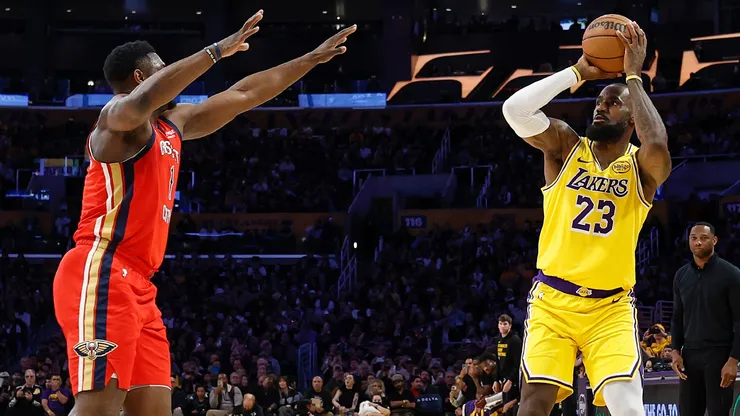
Every spring, the NBA turns into a battlefield where only the best survive. The road to the Larry O’Brien trophy is not easy, but for those who aspire to become great stars, lifting the cup is a necessity.
After months of intense competition in the regular season, where stars like LeBron James compete, the top teams enter the playoffs—a stage where strategy, endurance and passion are tested in every possession.
With seeding, best-of-seven series and a bracket that narrows round by round until a champion is crowned, the NBA playoffs blend excitement and tactics in a formula that has captivated fans for generations.
Play-in tournament: The battle for the last spots
The Play-In Tournament is the final filter before the playoffs, adding an extra dose of drama to the end of the regular season. Introduced in 2020, this mini-tournament gives teams finishing between seventh and tenth place in each conference a second chance to make it to the postseason.

Maxi Kleber #42 of the Dallas Mavericks shoots the ball against Al Horford #42 of the Boston Celtics in Game Four of the 2024 NBA Finals. (Source: Julio Cortez – Pool/Getty Images)
The format is simple but unforgiving: the seventh and eighth seeds face off in a single game, with the winner securing the seventh seed. Meanwhile, the ninth and tenth seeds play each other, with the loser eliminated.
The winner of that game then faces the loser of the seventh vs. eighth matchup, and whoever prevails claims the eighth and final playoff spot. This system has increased excitement in recent years, keeping the competition alive until the last moment and preventing mid-tier teams from “throwing in the towel” too soon.
2025 Play-In Tournament results
Eastern Conference:
- The Philadelphia 76ers claimed the 7th seed by narrowly defeating the Miami Heat (105-104).
- The Miami Heat bounced back to secure the 8th seed by beating the Chicago Bulls (112-91).
Western Conference:
- The New Orleans Pelicans clinched the 7th seed with a win over the Los Angeles Lakers (107-98).
- The Los Angeles Lakers earned the 8th seed after a hard-fought victory against the Sacramento Kings (110-106).
Seeding rules: The playoff hierarchy
Not all teams enter the playoffs on equal footing. The seeding system determines the order in which teams enter the postseason and has a direct impact on their chances of success.
The eight teams with the best records in each conference make the playoff bracket, including the two that advance through the Play-In. Seeding is based on the number of wins in the regular season, but in case of a tie, tiebreakers such as head-to-head record, conference record, and performance against playoff teams come into play.
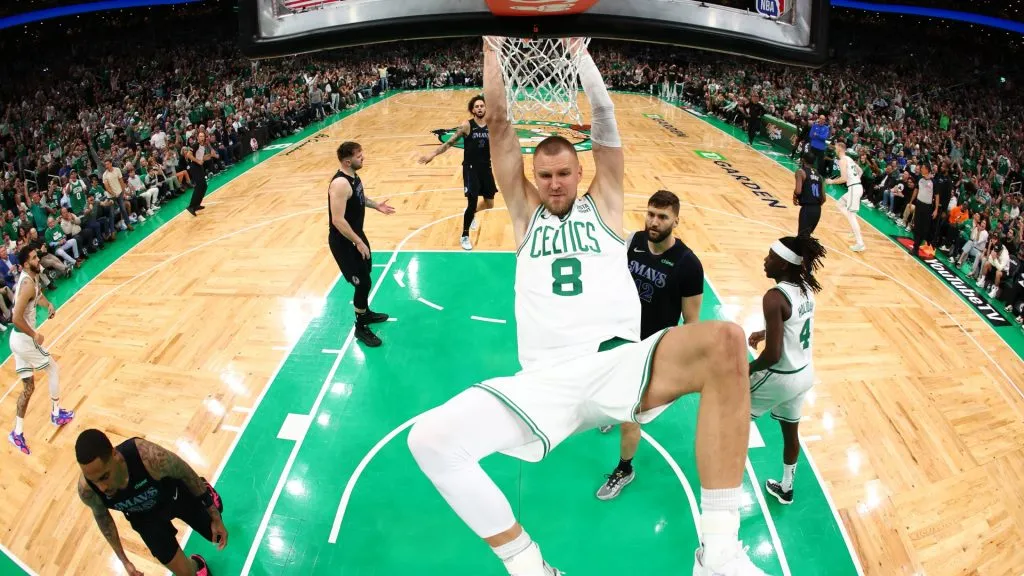
Kristaps Porzingis #8 of the Boston Celtics dunks the ball during the first quarter against the Dallas Mavericks in Game One of the 2024 NBA Finals. (Source: Maddie Meyer/Getty Images)
Why is seeding important? Because the highest-ranked team faces the lowest-ranked team in the first round, granting a crucial strategic advantage. Additionally, the team with the best overall record has home-court advantage in every series, which can be a game-changer in a tight matchup.
Bracket structure: The road to glory
The playoff bracket is a kind of treasure map leading to the Larry O’Brien Trophy. With 16 teams competing—eight from each conference—the system is single-elimination, with best-of-seven series in each round.
The format is fixed: the first seed faces the eighth, the second faces the seventh, the third faces the sixth, and the fourth faces the fifth. The winners advance to the conference semifinals, then to the conference finals, and finally, the champions of the East and West battle in the NBA Finals.
Unlike other sports that may re-seed teams based on performance, the NBA keeps a fixed bracket, meaning teams know from the start who they might face if they advance. This adds an extra layer of strategy, as some teams may even try to “avoid” certain opponents on their way to the title.
Teams that qualified for the 2025 playoffs
Eastern Conference
- Boston Celtics
- New York Knicks
- Milwaukee Bucks
- Cleveland Cavaliers
- Orlando Magic
- Indiana Pacers
- Philadelphia 76ers (via Play-In)
- Miami Heat (via Play-In)
Western Conference
- Oklahoma City Thunder
- Denver Nuggets
- Minnesota Timberwolves
- LA Clippers
- Dallas Mavericks
- Phoenix Suns
- New Orleans Pelicans (via Play-In)
- Los Angeles Lakers (via Play-In)
Series format: A test of endurance
Winning an NBA championship is no easy feat, and the series format proves it. Every playoff matchup is played in a best-of-seven format, meaning the first team to win four games advances to the next round.

Jaylen Brown #7 of the Boston Celtics dunks the ball over P.J. Washington #25 of the Dallas Mavericks during the second half in Game Two of the 2024 NBA Finals. (Source: Maddie Meyer/Getty Images)
The game order follows the 2-2-1-1-1 format, meaning the higher-seeded team plays the first two games at home, the next two on the road, and if necessary, the final three alternate (with a decisive Game 7 on the higher seed’s home court).
This format rewards consistency and team depth, as it’s not just about winning one game but maintaining a high level throughout an entire series. It also allows for tactical adjustments between games.
Throughout history, this format has produced legendary series that have shaped the course of the NBA. Because in this league, it’s not just about talent—it’s about endurance, strategy and stepping up when everything is on the line.