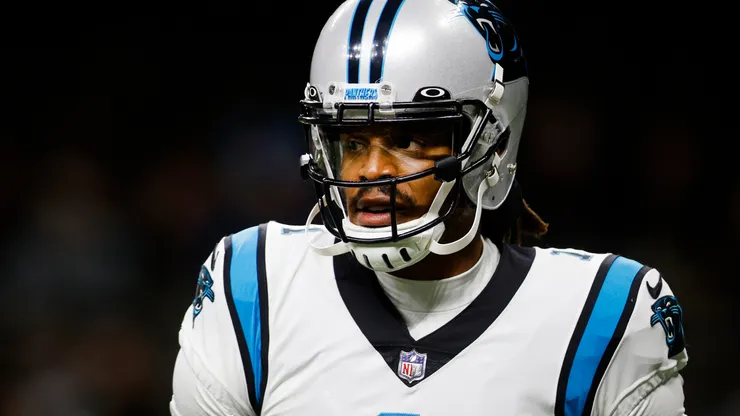
The Carolina Panthers have seen a mix of grit, talent, and unforgettable moments since their NFL debut in 1995. Behind every victory and highlight reel are players whose impact went far beyond the stat sheet.
From electrifying plays to leadership in the locker room, these athletes have defined eras of Panthers football. Some became icons almost overnight, while others earned their place through consistency and resilience season after season.
Across the franchise’s history, 25 players stand out for their ability to shape the team’s identity, leaving legacies of excellence, leadership and memorable contributions both on and off the field.
Cam Newton
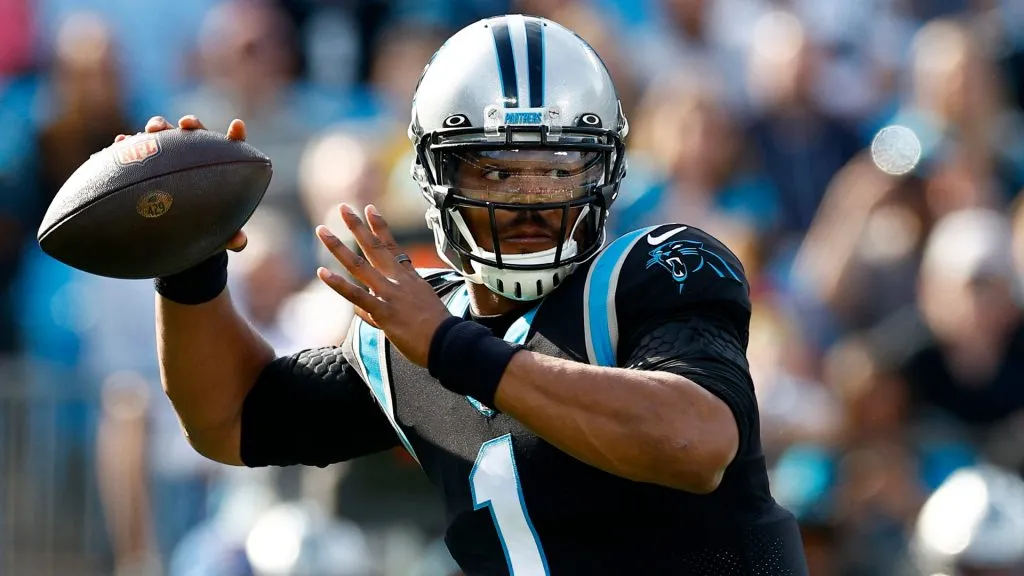
Cam Newton #1 of the Carolina Panthers looks to pass during the first half of the game against the Tampa Bay Buccaneers in 2021. (Source: Jared C. Tilton/Getty Images)
From the moment he arrived in Carolina as the No. 1 overall pick in 2011, Cam Newton brought a multisensory revolution: strength, speed, flair, and pure entertainment. He instantly became the face of the franchise, winning Offensive Rookie of the Year and, in 2015, the league MVP while leading the Panthers to a 15-1 record and a Super Bowl 50 appearance.
His statistical footprint is massive: he owns the all-time record for rushing touchdowns by a quarterback (75) and rewrote history as a rookie with over 4,000 passing yards and unprecedented dual-threat production. But he was never just a quarterback; he was a cultural icon. His charisma, celebrations, and visibility transcended the sport—even through media controversies.
Steve Smith Sr.
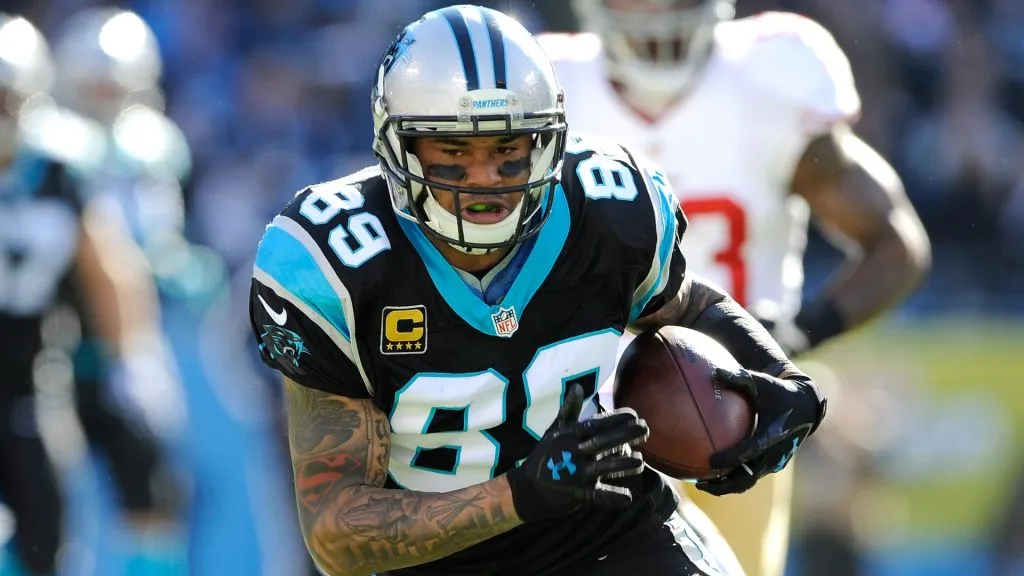
Steve Smith runs with the ball after a catch in the first quarter during the NFC Divisional Playoff Game in 2014. (Source: Grant Halverson/Getty Images)
“Dynamic,” “relentless,” “a small tank”: Steve Smith Sr. played as if every ball was his last chance. In 2003, he became the heartbeat of Carolina’s first great run, recording 1,110 receiving yards and delivering a legendary walk-off touchdown in double overtime against the Rams.
That same postseason, he left his mark on the biggest stage—scoring a touchdown in Super Bowl XXXVIII and tormenting defenders with his signature fire and fight. He wasn’t just a wideout; he was a spark plug who turned the Panthers’ offense into a battlefield, and his passion made him one of the most feared receivers of his era.
Julius Peppers
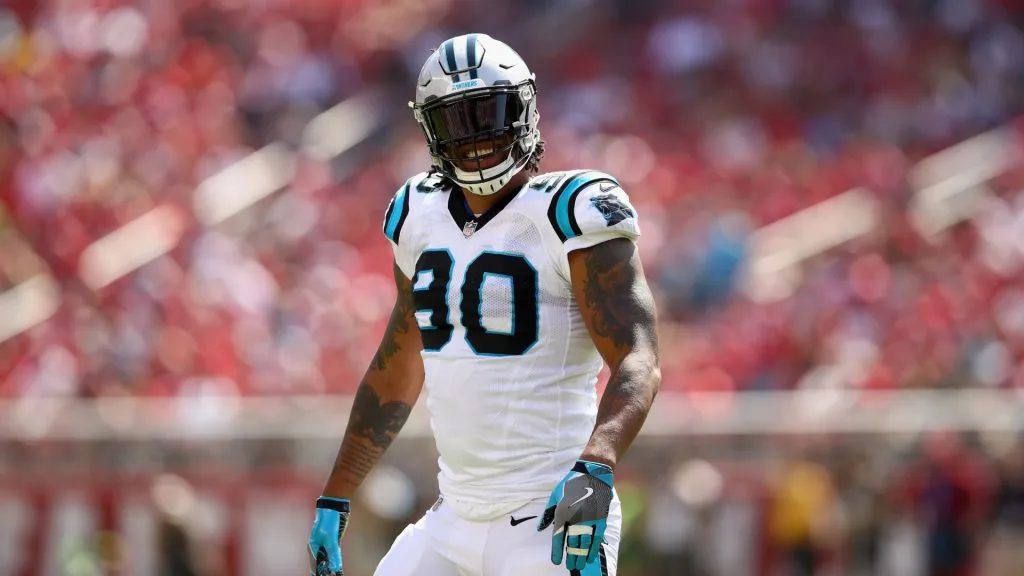
Julius Peppers #90 of the Carolina Panthers smiles during their game against the San Francisco 49ers in 2017. (Source: Ezra Shaw/Getty Images)
When Julius Peppers’ name is mentioned, it echoes like thunder. Drafted second overall in 2002, he became the defensive face of the Panthers almost immediately. He retired as Carolina’s all-time sacks leader (97) and one of the most disruptive defensive ends in NFL history.
His career totals—159.5 sacks (4th all-time), 52 forced fumbles (2nd), 11 interceptions, and the only player with 100 sacks and 10 picks—cemented his uniqueness. A Hall of Famer in 2024, he is immortalized both in Canton and in the Panthers’ Hall of Honor. With his size, speed, and instincts, he set the gold standard for generations of defenders to come.
Luke Kuechly
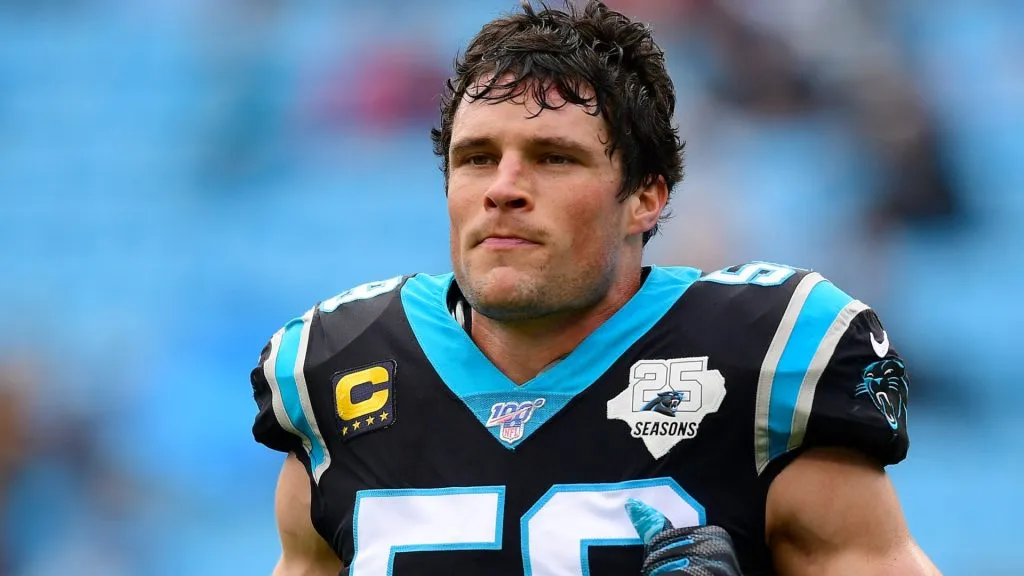
Luke Kuechly #59 of the Carolina Panthers before their game against the New Orleans Saints in 2019. (Source: Jacob Kupferman/Getty Images)
Luke Kuechly was the defensive mind of Carolina, a general in cleats. Drafted ninth overall in 2012, he exploded out of the gate—winning Defensive Rookie of the Year, then becoming the youngest player ever to earn Defensive Player of the Year the following season.
In just eight seasons, he piled up 1,092 tackles, 18 interceptions (most by a linebacker in that span), seven Pro Bowl nods, and five first-team All-Pro selections. A quiet leader but fierce competitor, he elevated everyone around him. His retirement in 2020 shocked the NFL, but his quick return to Carolina as a pro scout showed his devotion to shaping the franchise’s future.
Thomas Davis Sr.
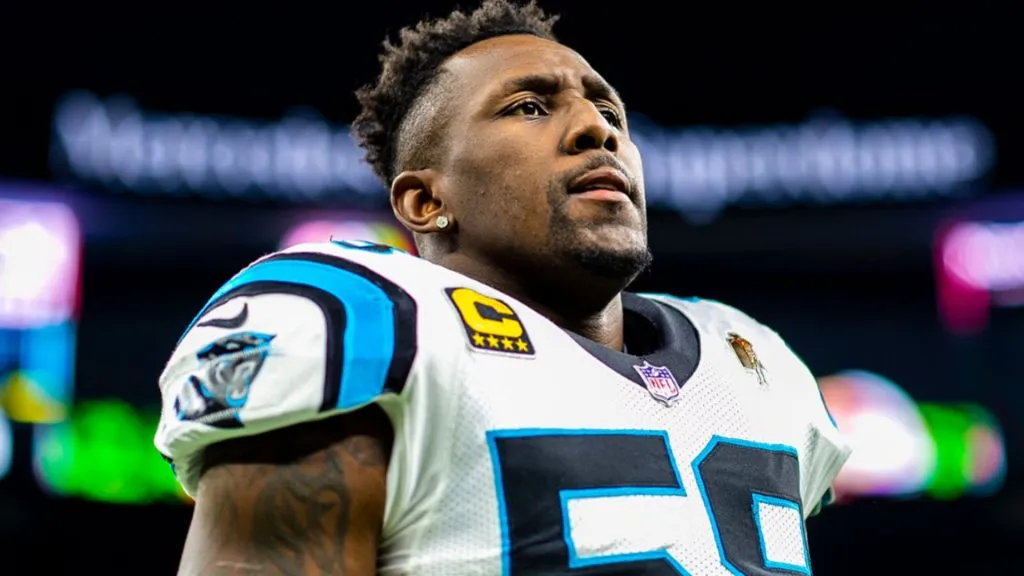
Thomas Davis Sr. (Source: Carolina Panthers)
Thomas Davis embodied resilience. His career was scarred by brutal injuries, yet he refused to let setbacks define him. Time after time, he came back stronger, ultimately becoming one of the franchise’s emotional anchors.
Beyond his tackles and leadership, he was a symbol of character. In 2014, he was honored as the NFL’s Walter Payton Man of the Year, a recognition that captured both his on-field impact and his community work. In every sense, he represented the toughness and heart of Panthers football.
Sam Mills
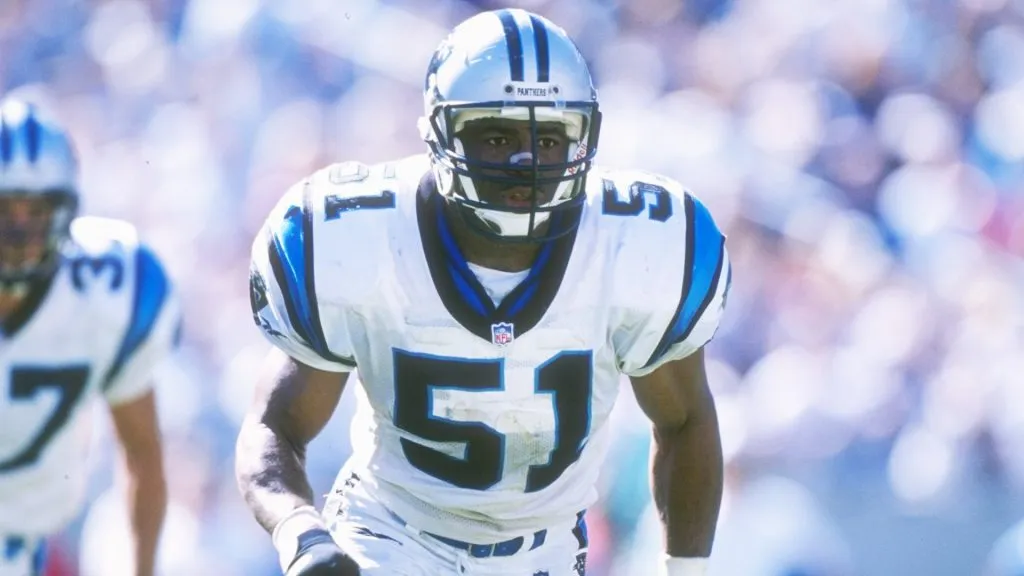
Sam Mills of the Carolina Panthers warms up before a game against the San Francisco 49ers in 1996. (Source: Doug Pensinger /Allsport)
Sam Mills is Carolina’s eternal compass. Standing just 5-9, he defied every doubt to become a giant of the game. A five-time Pro Bowler, three-time All-Pro, and posthumous Pro Football Hall of Famer (2022), his numbers—1,300 tackles, 20.5 sacks, 11 interceptions—tell only part of the story.
His true legacy is in two words: “Keep Pounding.” First spoken as he fought cancer while inspiring his team on their Super Bowl XXXVIII run, the phrase became Carolina’s heartbeat. His No. 51 is retired, his statue stands outside Bank of America Stadium, and his spirit remains stitched into the Panthers’ identity.
Jake Delhomme
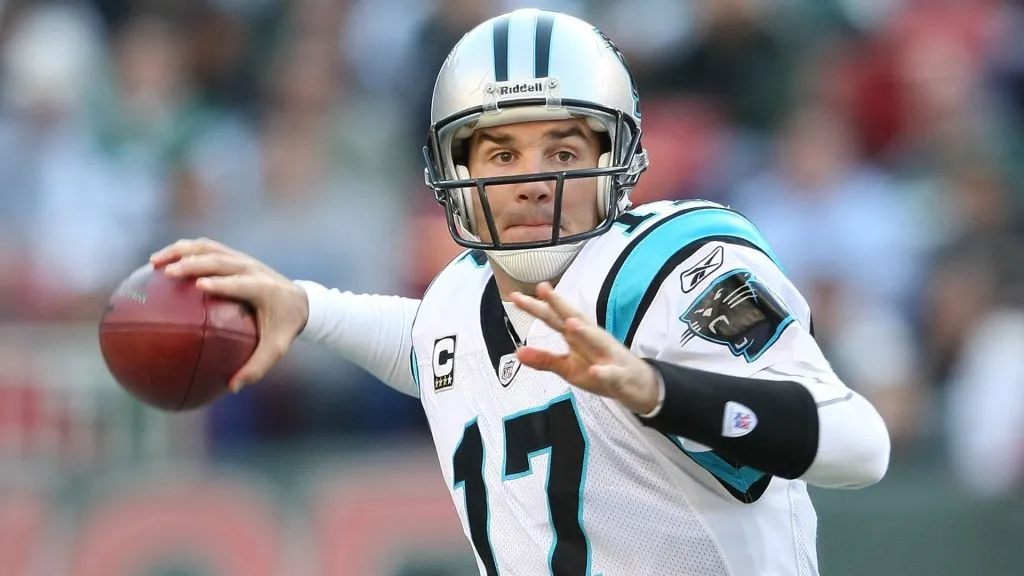
Jake Delhomme #17 of the Carolina Panthers passes against the New York Jets in 2009. (Source: Nick Laham/Getty Images)
Jake Delhomme was a classic underdog who blossomed into a franchise cornerstone. Signing with Carolina as a relative unknown, he took the helm for seven seasons and steered the Panthers into three playoff appearances—including a dramatic Super Bowl XXXVIII run.
With 19,258 passing yards and 120 touchdowns, he’s second only to Cam Newton in franchise passing production, and he owns the club record for game-winning drives at 21—highlighting his clutch DNA.
In 2004, he peaked with a career-high 3,886 passing yards and 29 touchdowns, ranking fifth in the NFL that season. Long before Newton’s swagger, Delhomme was the calm hand guiding postseason expectations.
Ryan Kalil
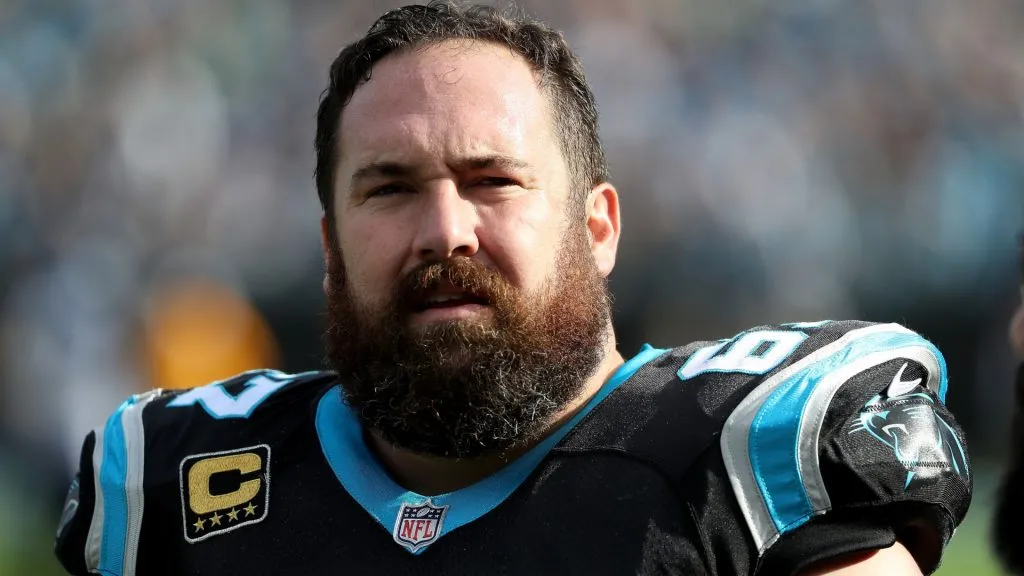
Ryan Kalil #67 of the Carolina Panthers looks on against the Seattle Seahawks in the second quarter during their game in 2018. (Source: Streeter Lecka/Getty Images)
In the trenches, Ryan Kalil was more than just a center—he was the quarterback of the line. Taken in the second round of the 2007 draft, he became a reliable anchor across 12 seasons in Carolina. He earned five Pro Bowl nods, helped raise the bar in leadership, and was even franchise-tagged in 2011—evidence of his value.
Over his career, he played in 155 games (152 starts), a testament to both his durability and consistency. A cerebral leader, he was part of the Packers front office for many high-pressure moments, including Super Bowl runs—making the line room feel covered under his watch.
Muhsin Muhammad
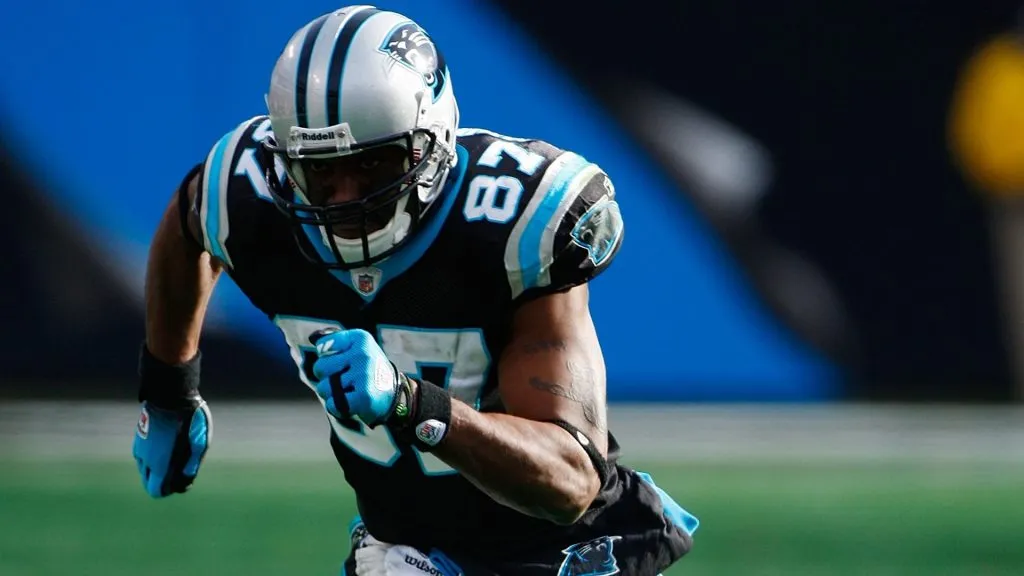
Muhsin Muhammad #87 of the Carolina Panthers runs upfield against the New Orleans Saints in 2010. (Source: Scott Halleran/Getty Images)
Muhsin “Moose” Muhammad was the arm-stretching wide receiver whose play soared through Carolina’s early years. Drafted in the second round in 1996, he quickly cemented himself as a go-to target. His career totals of 860 receptions for 11,438 yards and 62 touchdowns reflect both longevity and elite production.
In 2000, his 102 receptions tied the NFL lead. In Super Bowl XXXVIII, he caught a jaw-dropping 85-yard touchdown—the longest in that bowl’s history. His relentless reliability made him a constant in the Panthers’ passing attack.
Greg Olsen
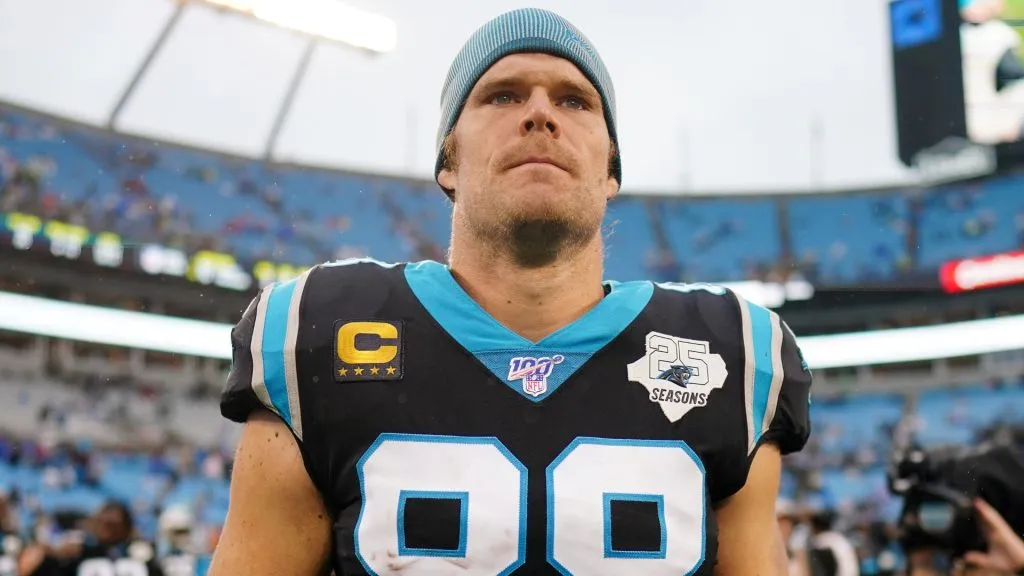
Greg Olsen #88 of the Carolina Panthers walks off the field after his game against the New Orleans Saints in 2019. (Source: Jacob Kupferman/Getty Images)
Greg Olsen redefined the tight end position—cleaning up the line, stretching defenses, and delivering when it mattered most. After joining Carolina in 2011 via trade, he posted three straight 1,000-yard seasons, becoming the first TE in NFL history to do so.
Over nine seasons with the Panthers, he became the franchise’s all-time leader among tight ends in receptions and receiving yards, and finished third overall in both categories.
After retirement, he continued his impact—entering the FOX broadcast booth and even coaching middle school football in Charlotte alongside former teammates. He remains a cornerstone in the evolution of the tight end role in the modern Panthers offense.
Wesley Walls
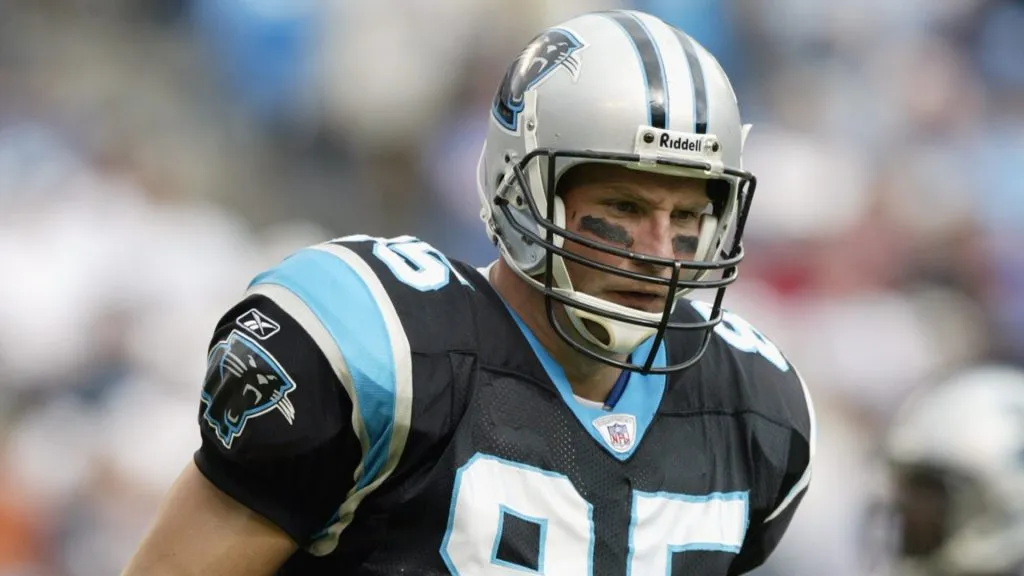
Wesley Walls #85 of the Carolina Panthers runs across the field during the NFL game against the New Orleans Saints in 2002. (Source: Craig Jones/Getty Images)
Before Olsen, there was Wesley Walls—the towering tight end who became one of Carolina’s original pass-catching threats. During his nine seasons with the team, he logged 324 receptions, 3,902 receiving yards, and 44 touchdowns.
He was a five-time Pro Bowler and four-time All-Pro, and his 54 career touchdown receptions rank among the top for tight ends in league history. He personified the gritty reliability of early Panthers offenses—big-bodied, sure-handed, and always ready.
Christian McCaffrey
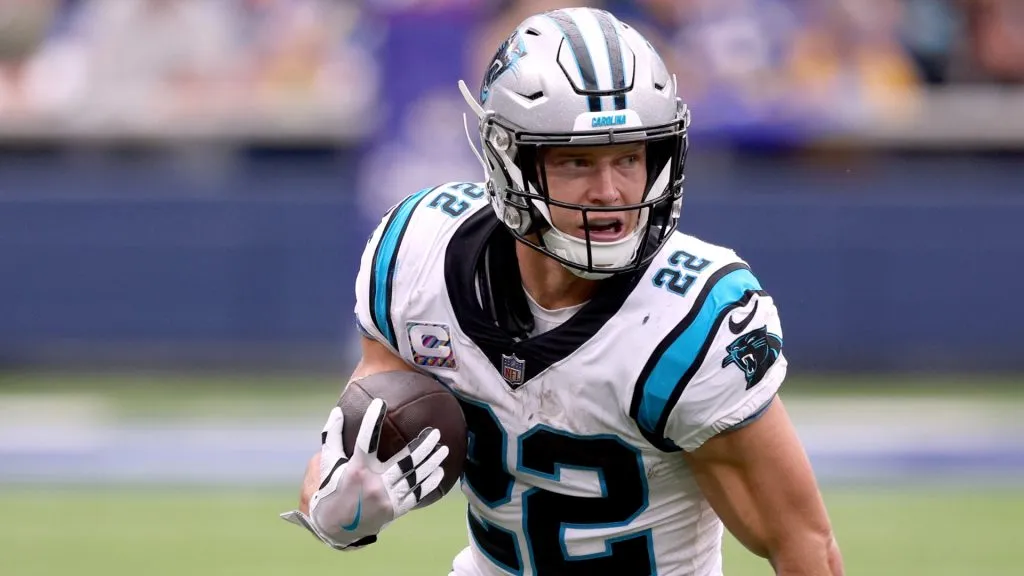
Christian McCaffrey #22 of the Carolina Panthers runs after his catch during a 24-10 loss to the Los Angeles Rams in 2022. (Source: Harry How/Getty Images)
Christian McCaffrey didn’t just carve history—he vaulted over it. In six seasons with Carolina, he amassed 7,272 scrimmage yards and an astonishing 50 touchdowns. He was the rare triple-threat: explosive as a runner, elusive receiving, and explosive returner.
He also achieved the nearly-impossible in 2019: joining Roger Craig and Marshall Faulk as the only players in NFL history with 1,000 rushing and 1,000 receiving yards in the same season. Though injuries have since slowed him, his legacy lives on as one of the most dynamic offensive weapons in Panthers lore.
Jordan Gross
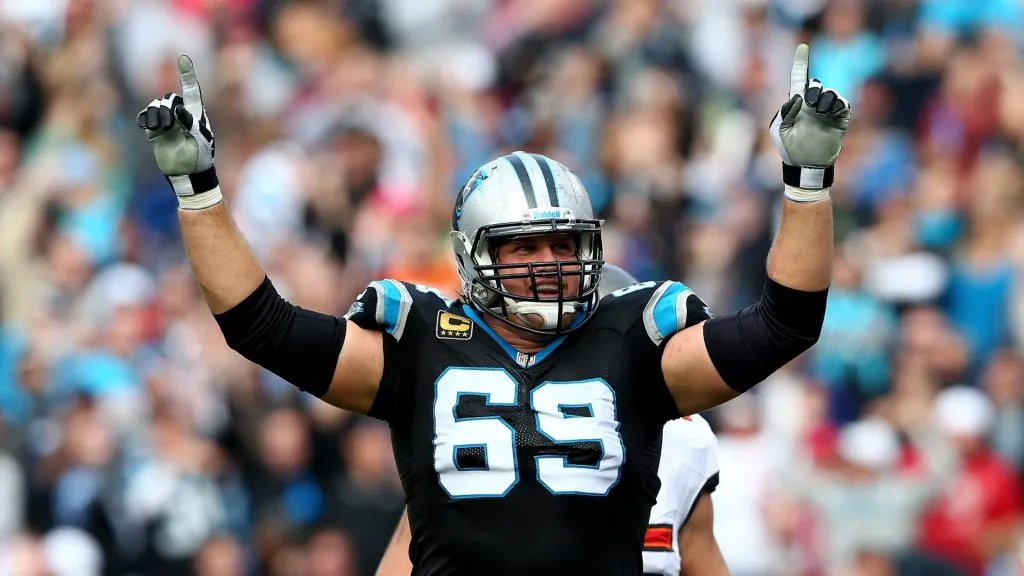
Jordan Gross #69 of the Carolina Panthers during their game in 2013. (Source: Streeter Lecka/Getty Images)
Jordan Gross was the stalwart on the edge who quietly held everything together. Selected 8th overall in the 2003 draft, he started all 167 games he played—making him the franchise’s career leader in starts and games as a lineman.
He made three Pro Bowls and earned first-team All-Pro honors in 2008. He protected the blindside when the Panthers made their Super Bowl run that first year—losing just three sacks all season. In the trenches, reliability is a virtue—and Gross was the gold standard.
John Kasay
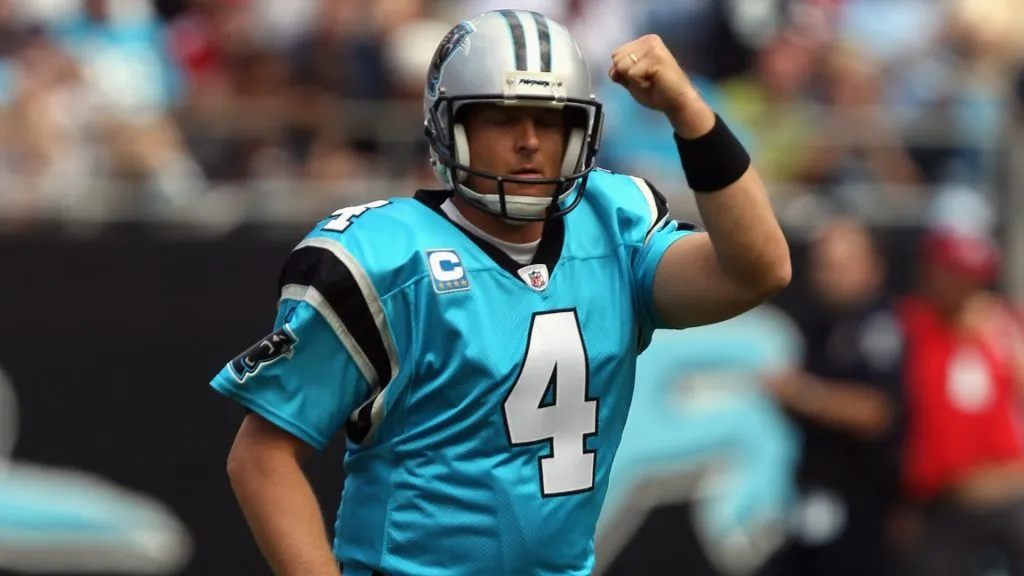
John Kasay celebrates after kicking a field goal against the San Francisco 49ers during their game in 2010. (Source: Streeter Lecka/Getty Images)
John Kasay wasn’t flashy, but he was relentless—and clutch. A part of Carolina from almost the very beginning, he became the franchise’s all-time leading scorer during his 16 seasons donning the Panthers uniform.
In 1996, he made his only Pro Bowl as second-team All-Pro. With an 81.9 field goal percentage, career-long kick of 56 yards, and 1,970 points, he was dependable under pressure. And when the Panthers held a symbolic one-day contract retirement for him and Thomas Davis, it spoke volumes about his impact in the franchise’s soul.
Kevin Greene
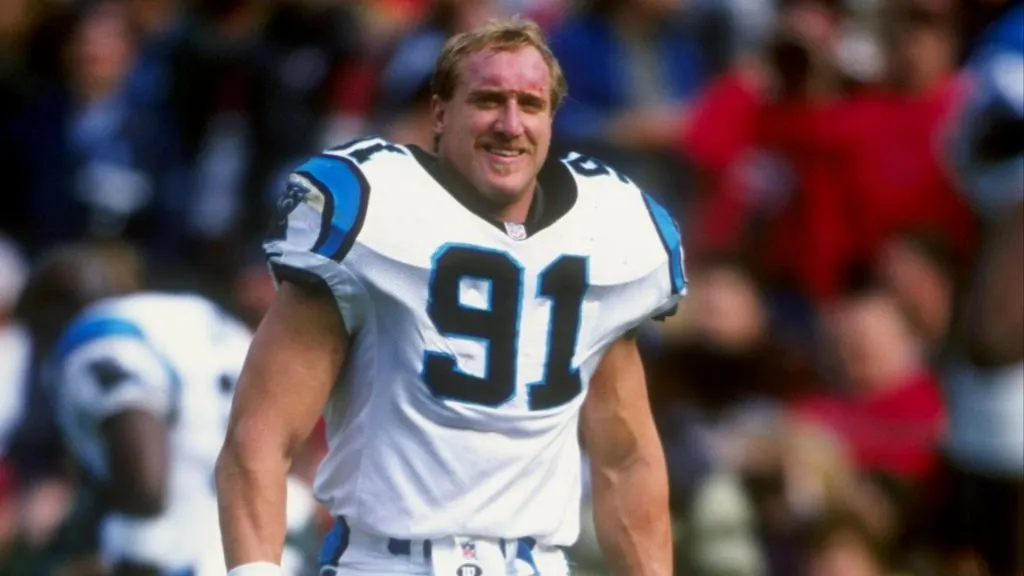
Kevin Greene #91 of the Carolina Panthers looks on during a game against the San Francisco 49ers in 1998. (Source: Jed Jacobsohn /Allsport)
Kevin Greene arrived in Carolina not merely as a veteran but as a statement. Signing in 1996, he instantly transformed the Panthers’ pass rush, leading the entire NFL in sacks (14) that year and earning NFC Linebacker of the Year honors from both NEA and the NFL Alumni.
Though his tenure in Carolina was brief, he left an indelible mark: his franchise-record 15 sacks in 1998 still stands. Across a 15-season Hall of Fame career, he tallied 160 sacks, ranking third on the NFL’s all-time list at his retirement.
Chris Gamble
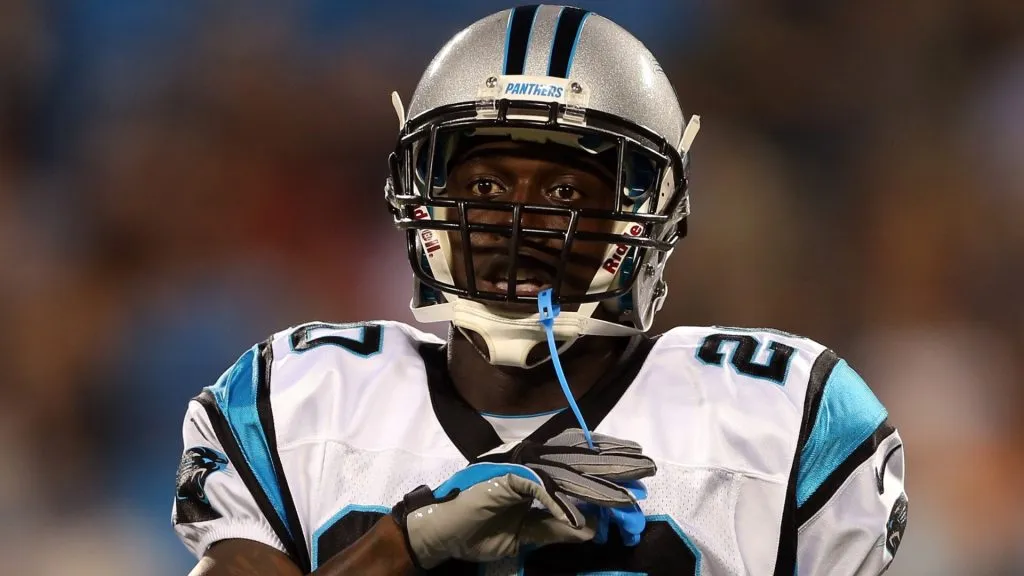
Chris Gamble #20 of the Carolina Panthers during their preseason game in 2012. (Source: Streeter Lecka/Getty Images)
Chris Gamble emerged quietly but with striking impact. Drafted in 2004, he became the Panthers’ first rookie defender to start every game, finishing with six interceptions and earning All-Rookie honors. He would go on to set the team’s franchise record with 27 career interceptions, retiring as the club’s premier ballhawk and a defensive cornerstone.
Mike Rucker
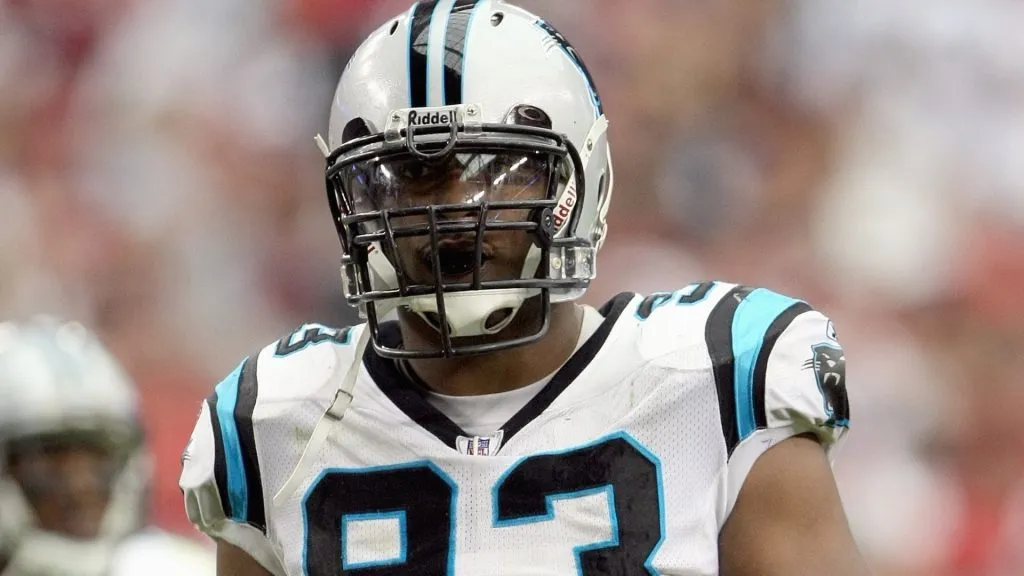
Mike Rucker #93 of the Carolina Panthers looks on before the game with the Arizona Cardinals in 2007. (Source: Stephen Dunn/Getty Images)
If toughness had a persona for the Panthers, it was Mike Rucker. Over nine dedicated seasons, he became a reliable force on the defensive front, amassing 55.5 sacks along with 279 solo tackles and seven fumble recoveries. A true hometown hero, he remains fondly recalled for his relentless pressure and grit in the trenches.
Kelvin Benjamin
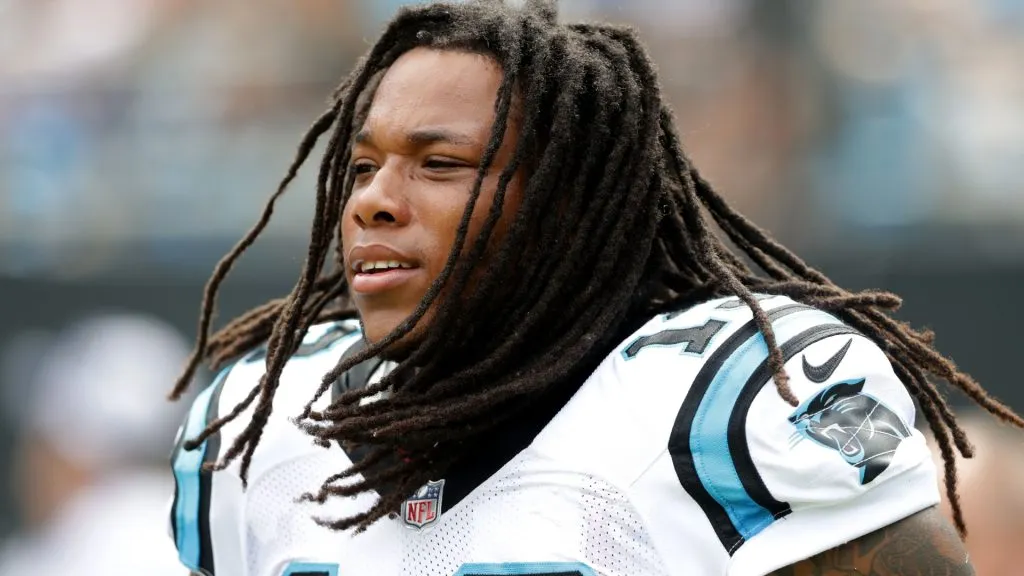
Kelvin Benjamin watches on from the sidelines against the New Orleans Saints during their game in 2017. (Source: Streeter Lecka/Getty Images)
At 6′5″ and fully built for the role, Kelvin Benjamin began his career in Carolina as a looming vertical threat. Drafted 28th overall in 2014, he tallied 209 catches, 3,021 yards, and 20 touchdowns—most of them voted as highlight moments in the Panthers’ aerial attack.
Though his career later took him elsewhere, his early dominance and connection with Cam Newton made him one of the most memorable wideouts in franchise history.
Reggie White
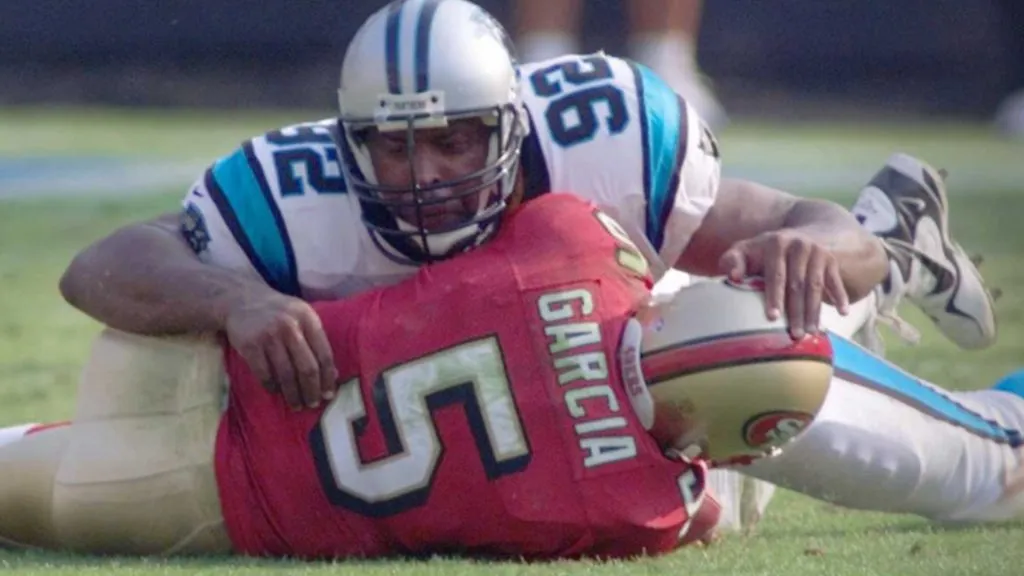
Reggie White (Source: The Philadeplhia Inquirer)
Even if it was only for a final year, Reggie White’s presence in Carolina was legendary. The Hall of Famer, known as the “Minister of Defense,” wore the Panthers uniform in 2000 for a storied farewell tour, capping a career that once ranked him at the top of the NFL sack charts (198). Even in that swan song, he brought gravitas and a legacy so exceptional it elevated the franchise’s history.
Ted Ginn Jr.
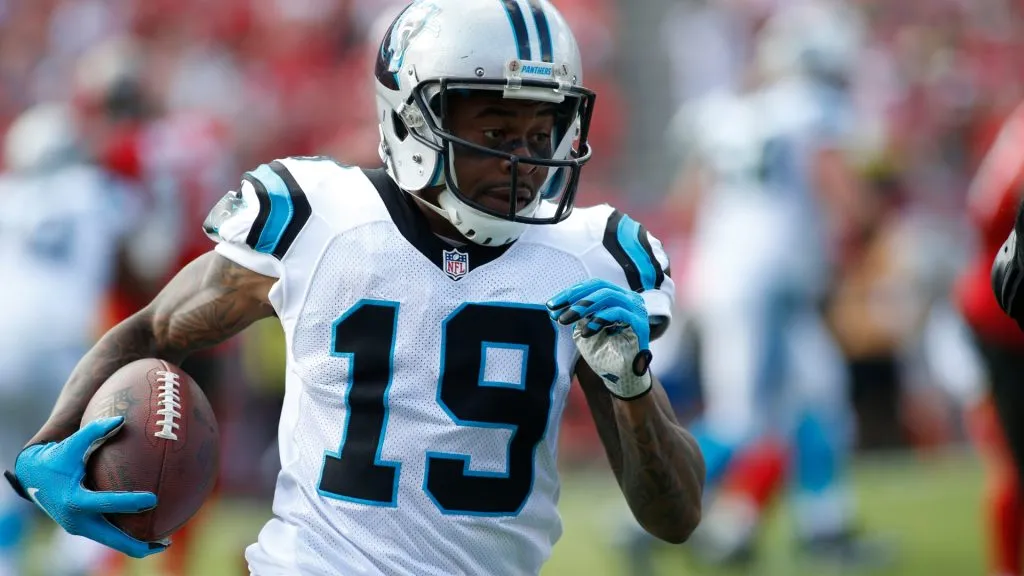
Ted Ginn runs the ball during the second quarter of an NFL game against the Tampa Bay Buccaneers in 2017. (Source: Brian Blanco/Getty Images)
Ted Ginn Jr. defined explosiveness in blue and black. In a career spanning 14 seasons across six teams—including a key tenure in Carolina—he compiled 412 receptions, 5,742 yards, and 42 touchdowns while terrorizing return units with 2,624 punt return yards and over 9,500 kick return yards. His dual-threat versatility played a noticeable role in Carolina’s offensive and special teams schemes, especially during critical postseason runs.
Mike Minter
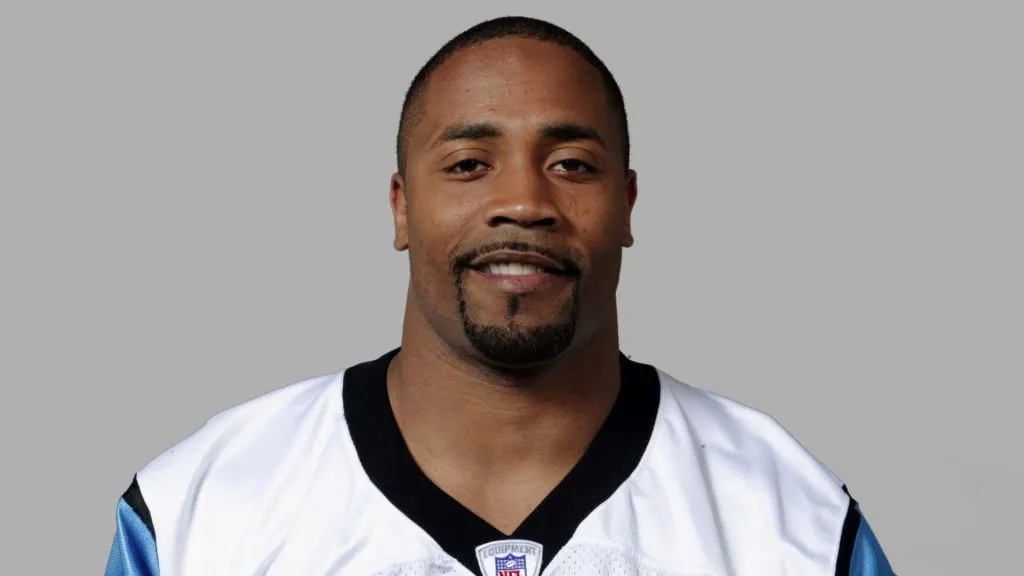
Mike Minter of the Carolina Panthers poses for his 2007 NFL headshot at photo day. (Source: Getty Images)
A defensive staple for Carolina throughout the late ’90s and early 2000s, Mike Minter symbolized toughness and durability. Spending his entire decade-long career with the Panthers, the safety was as reliable as they come, starting 141 of 148 games and anchoring the secondary during Carolina’s early playoff runs.
Known for his physical tackling and leadership, he was the heart of the defense during the Panthers’ first Super Bowl appearance in 2003. His presence on the field gave teammates confidence, while his loyalty to the franchise cemented him as one of the most respected figures in team history.
Dan Morgan
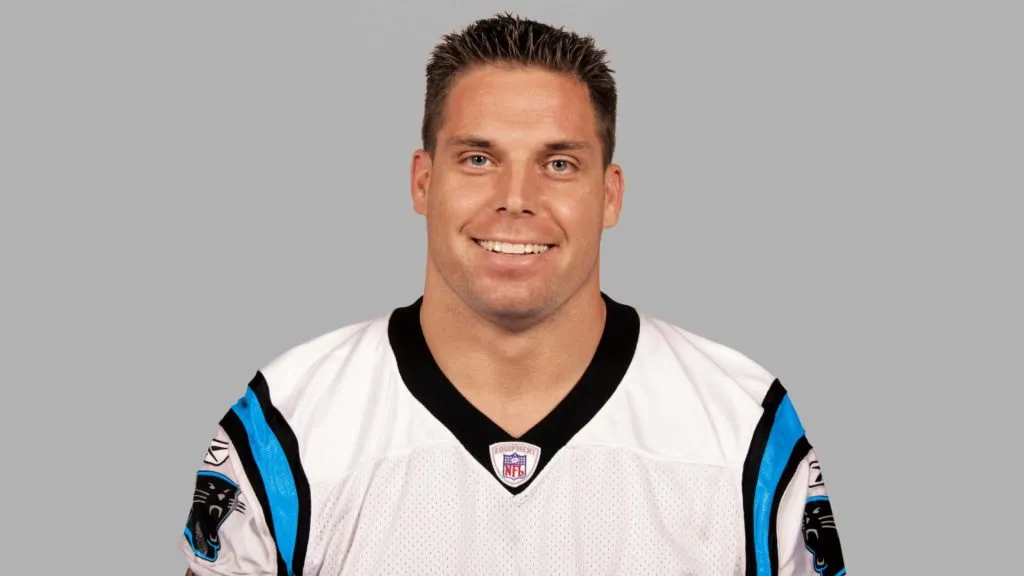
Dan Morgan of the Carolina Panthers poses for his 2007 NFL headshot at photo day. (Source: Getty Images)
Dan Morgan’s career might have been limited by injuries, but at his peak, he was one of the fiercest linebackers to ever wear a Panthers uniform. Drafted 11th overall in 2001, he brought intensity and instinct to the heart of Carolina’s defense, quickly becoming a fan favorite.
His crowning moment came in Super Bowl XXXVIII, where he recorded a then-record 18 tackles against the New England Patriots. Though injuries shortened his playing days, his fire, resilience, and unforgettable performances keep his name alive among Panthers legends.
Greg Hardy
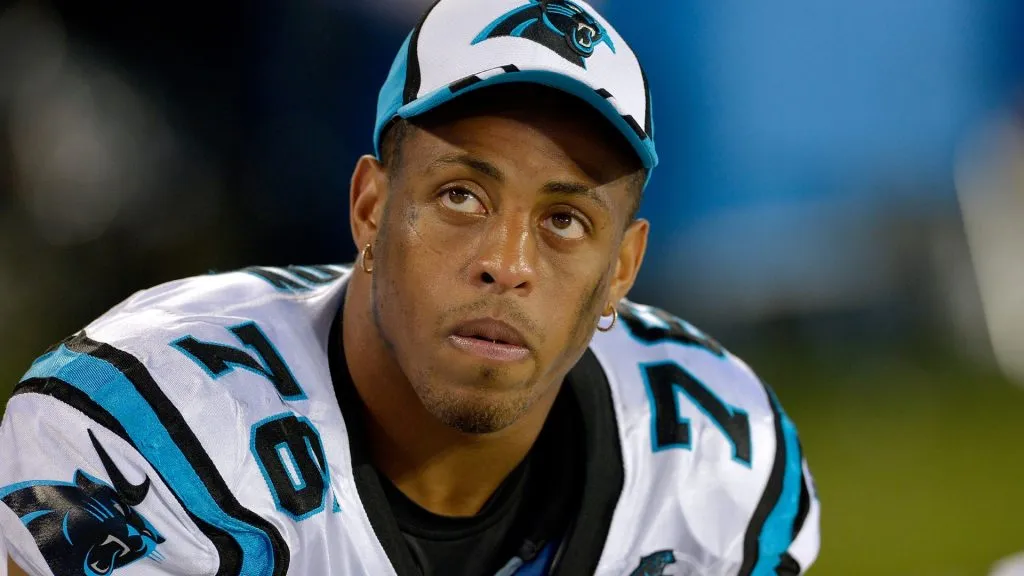
Greg Hardy #76 of the Carolina Panthers watches from the bench during the fourth quarter of a loss in 2014. (Source: Grant Halverson/Getty Images)
Few defensive ends played with the sheer explosiveness Greg Hardy displayed in his prime. Nicknamed the “Kraken,” he terrorized quarterbacks with his blend of speed and raw power, posting 15 sacks in 2013 and earning Pro Bowl honors.
While his tenure in Carolina ended in controversy, there’s no denying his impact on the field during his best years. At his peak, he was virtually unblockable, providing the Panthers with one of the most feared pass rushers in the NFL.
Michael Oher
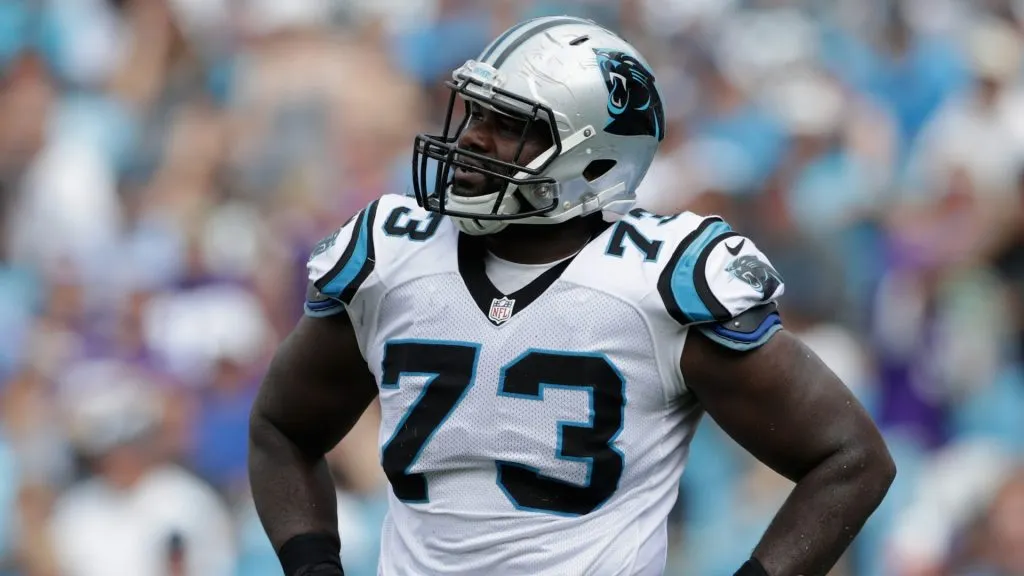
Michael Oher watches a replay against the Minnesota Vikings in the 3rd quarter during their game in 2016. (Source: Streeter Lecka/Getty Images)
Michael Oher’s story had already reached Hollywood before he arrived in Carolina, but his contributions to the Panthers were vital. Signed in 2015, the veteran left tackle provided stability on the offensive line during the team’s magical 15–1 season and run to Super Bowl 50.
Protecting Cam Newton’s blind side, he revitalized his career in Carolina and reminded the football world of his resilience. Though his time with the Panthers was brief, his role in one of the franchise’s greatest seasons guarantees him a place in team lore.
Kerry Collins
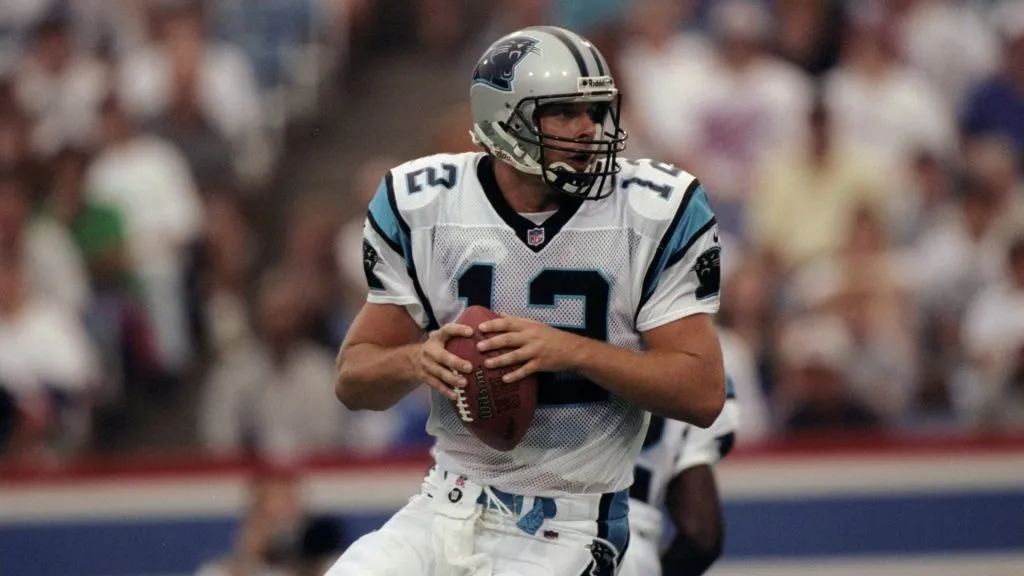
Kerry Collins #12 of the Carolina Panthers in action during a pre-season game against the Buffalo Bills in 1998. (Source: Rick Stewart /Allsports)
As the first-ever draft pick in franchise history, Kerry Collins holds a unique place in Panthers history. The quarterback helped lead the fledgling team to the NFC Championship Game in just its second season (1996), a remarkable accomplishment for such a young franchise.
His tenure was short and sometimes tumultuous, but his role in establishing Carolina as a competitive force in the NFL cannot be overlooked. He laid the groundwork for the organization’s future, making him an undeniable part of the Panthers’ legacy.