Long before the modern NFL became a billion-dollar spectacle, its landscape was scattered with teams that vanished into history. Cities like Canton, Pottsville and Duluth once fielded squads that helped shape the early game.
Some folded quietly, others were uprooted in search of greener pastures. Relocations, rebrands and financial turmoil redrew the league’s map, leaving behind empty fields and forgotten fan bases.
These are the lost chapters — stories of ambition and instability that remind us how fragile greatness once was before football found its permanent home. In their rise and fall lies the blueprint of the league we know today.
Defunct NFL franchises
Akron Pros/Indians
Few remember that the first champion of the NFL—or more accurately, the American Professional Football Association in 1920—was a team from Ohio. The Akron Pros, evolved from the semi-pro Akron Indians who had been playing since 1908 and earned championships in the Ohio League.
The 1920 triumph was historic: an undefeated season that crowned them champions based on the number of wins. However, their light faded quickly. Despite being a charter member of the league, the Akron team could not sustain itself financially.
The name briefly reverted to the Akron Indians in their final year, 1926, before the weight of the Great Depression and the league’s instability forced their extinction, closing one of the earliest and least-celebrated chapters of the NFL.
Canton Bulldogs

Canton Bulldogs (Source: American Football Database)
It is a cosmic irony that the city hosting the Pro Football Hall of Fame saw its own team disappear. The Canton Bulldogs, with Olympic legend Jim Thorpe as their brightest star, were the league’s first great powerhouse, capturing consecutive NFL titles in 1922 and 1923.
They demonstrated absolute dominance, maintaining a 25-game unbeaten streak, a record that stood for decades. But athletic success did not guarantee longevity. Financial woes forced a temporary relocation in 1924, when the assets and players moved to Cleveland.
Although an attempt to revive the team in Canton was made in 1925 and 1926, the franchise simply could not regain its original momentum and folded, leaving an indelible legacy in history, but no team to honor its name at home.
Frankford Yellow Jackets
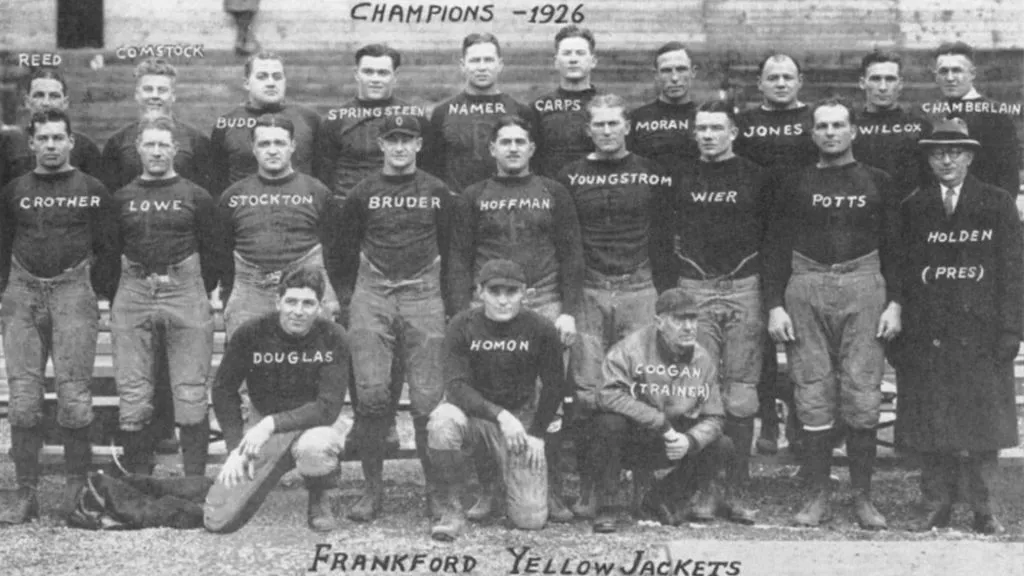
Frankford Yellow Jackets (Source: Hidden City Philadelphia)
Long before the Philadelphia Eagles became the football standard in the “City of Brotherly Love,” there were the Frankford Yellow Jackets. This squad, located in the Frankford section of Northeast Philadelphia, was not only the first professional NFL team in the city but achieved ultimate glory by winning the 1926 NFL Championship, setting league records for wins that would not be broken for sixty years.
They were a community institution, complete with their own band and cheerleaders. Tragically, the economic depression, combined with ownership troubles and the stadium’s bankruptcy, made the operation unsustainable. The franchise ceased operations in late 1931 and was returned to the league, paving the way for the NFL to grant an expansion franchise two years later, which became the Eagles.
St. Louis Gunners
If there is a truly anomalous story on this list, it belongs to the St. Louis Gunners. Emerging from the sponsorship of the 128th Field Artillery of the Missouri National Guard in 1931, the team was originally named “Battery A Gunners”.
Their brief stint in the NFL in 1934 was little more than a flash. After an impressive start as an independent team, they were invited to finish the remaining schedule for the 1934 NFL season, effectively replacing the short-lived Cincinnati Reds.
The team played only three league games, posting a 1-2 record, with the last game falling on Christmas Eve. Their stay was as brief as it was memorable. Unable to secure a spot for 1935, and amidst the league’s financial instability, they vanished, though their existence marked St. Louis’s first foray into major league football.
Dallas Texans
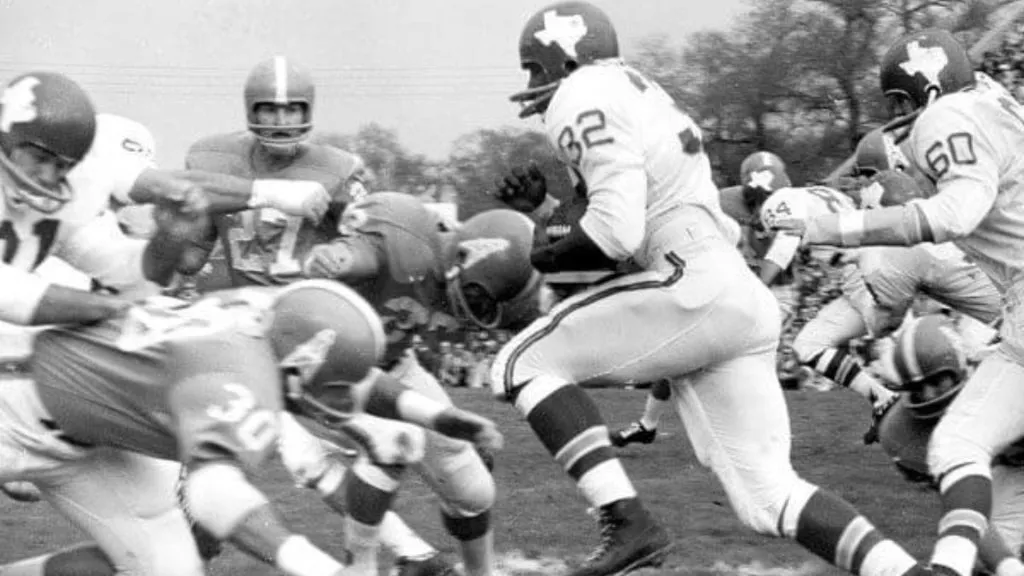
Dallas Texans (Source: Sports Team History)
The 1952 Dallas Texans are the definition of a football catastrophe, both on and off the field. This franchise was born from the ashes of the dissolved New York Yanks. Hoping to bring professional football to Texas, the experiment was an instant failure.
With a miserable 1-11 record, the team was so poor financially and had such low attendance that the NFL was forced to take over the team mid-season. The “Texans” became a traveling road show, playing their final “home” games in places like Hershey, Pennsylvania, and the Rubber Bowl in Akron, Ohio, where they achieved their single victory.
After the season, the franchise was formally canceled—the last time in NFL history a franchise completely folded—with its assets used to establish the 1953 Baltimore Colts.
New York Yanks
The New York Yanks is a testament to the post-war volatility of the NFL. The franchise was established in 1949 by buying and relocating the Boston Yanks. The team played in the famous Yankee Stadium but never managed to connect with the public.
Instability was the norm: after just three seasons, and failing to secure a solid fan base, owner Ted Collins sold the team back to the league. The league took its assets and, in a quick chess move, used them to create the aforementioned Dallas Texans of 1952. This short period underscores how difficult it was to maintain a franchise in the early 1950s, even in a market as large as New York.
Relocated NFL franchises
Decatur Staleys
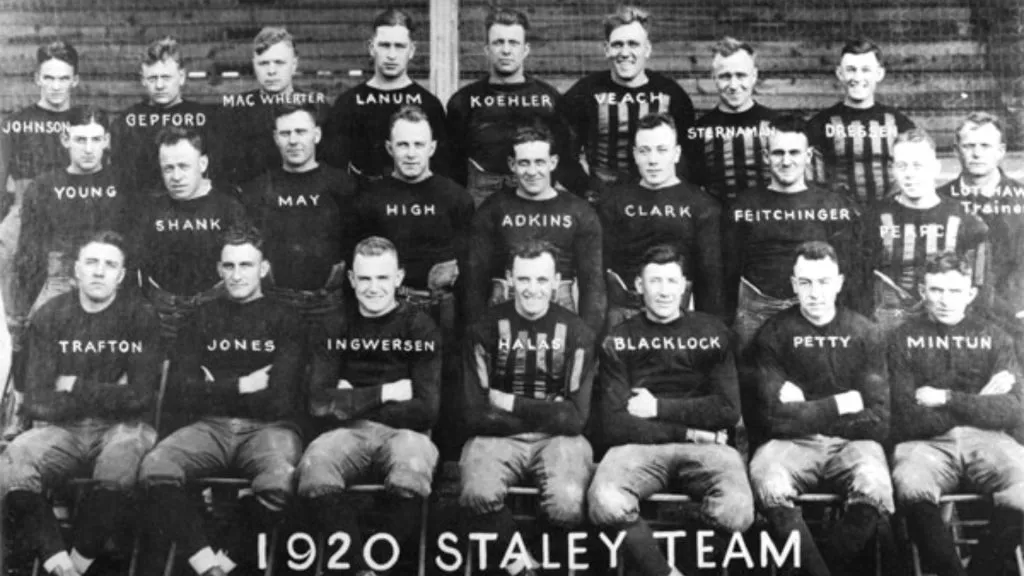
Decatur Staleys (Source: Staley Museum)
The name Decatur Staleys may not resonate, but it is the starting point for one of the NFL’s most iconic and oldest franchises: the Chicago Bears. The team was founded in 1919 by the A. E. Staley food starch company of Decatur, Illinois, as a company team—a common model then.
In 1920, the company hired future legend George Halas to run the team. Halas was instrumental in founding the APFA. In 1921, Staley gave Halas full control, and he quickly realized the Decatur market was too small.
The relocation to Chicago in 1921, with the name change to the Chicago Bears the following year, was not a failure but a masterful business move that ensured the franchise’s survival and longevity. They remain one of only two charter members of the NFL still operating today.
Portsmouth Spartans
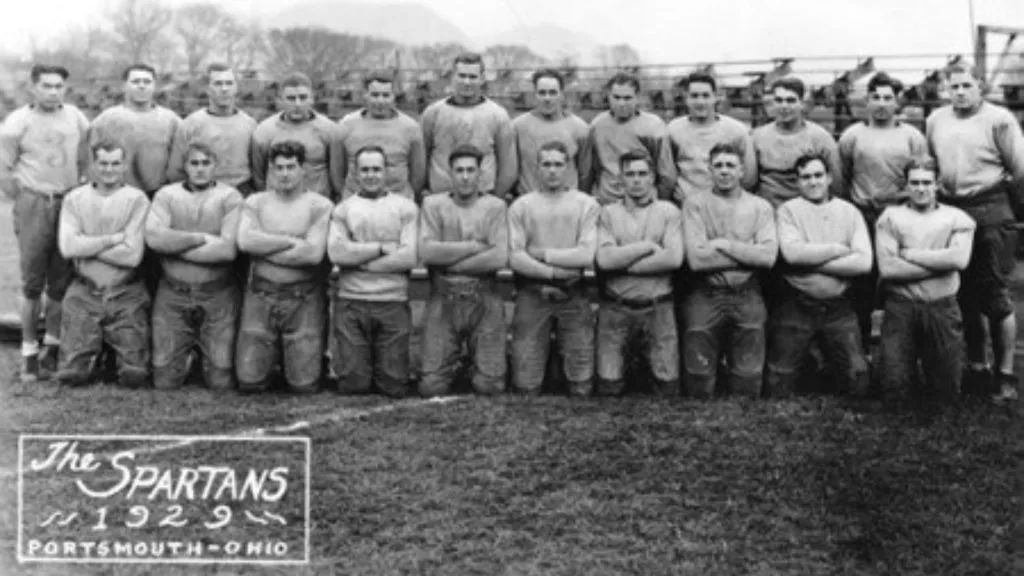
Portsmouth Spartans (Source: Sports Team History)
The Portsmouth Spartans were a professional American football team based in Portsmouth, Ohio, a city that, despite its small size, managed to host an NFL team from 1930 to 1933. Their most notable achievement was being the first NFL team to play a playoff game.
However, geography and economics worked against them. The Great Depression made it impossible to sustain a profitable franchise in such a limited market. In a pivotal move, a group of investors in Detroit bought the team and moved it in 1934, renaming it the Detroit Lions. This relocation demonstrated that the success of professional football was beginning to depend on attracting large audiences in bigger urban centers.
Boston Redskins
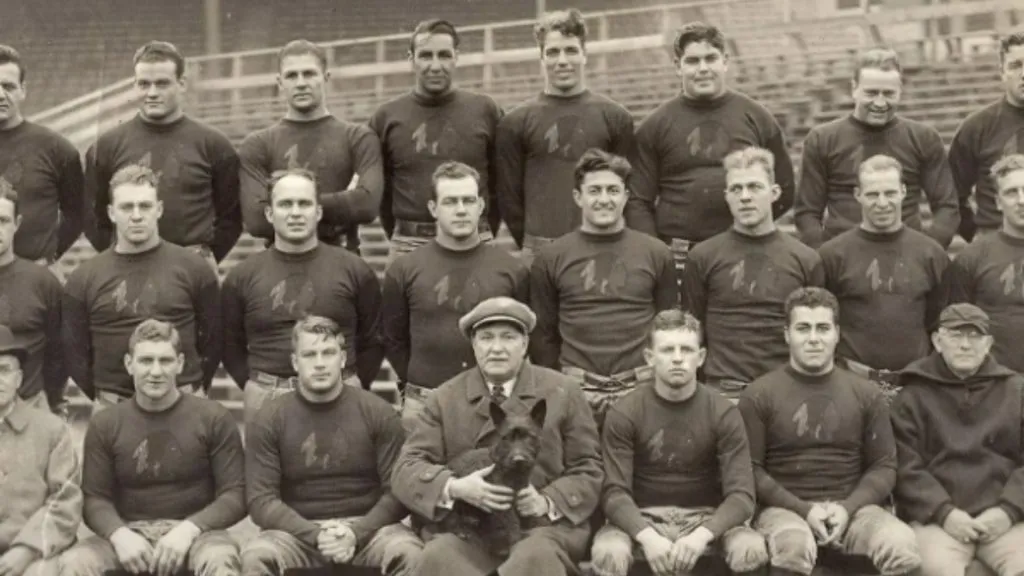
Boston Redskins (Source: Sports Team History)
The franchise now known as the Washington Commanders began its journey in Boston in 1932, initially as the Boston Braves, sharing a stadium with the baseball team. The following year, with the move to Fenway Park, the name was changed to the Boston Redskins.
Despite winning the Eastern Division in 1936, owner George Preston Marshall was chronically dissatisfied with fan support in Boston. As an act of protest, Marshall even moved the 1936 NFL Championship game to New York. Predictably, the franchise moved to Washington D.C. in 1937.
The move to the nation’s capital, featuring the debut of legendary quarterback Sammy Baugh, gave the franchise the fan base momentum and recognition Marshall craved.
Cleveland Rams
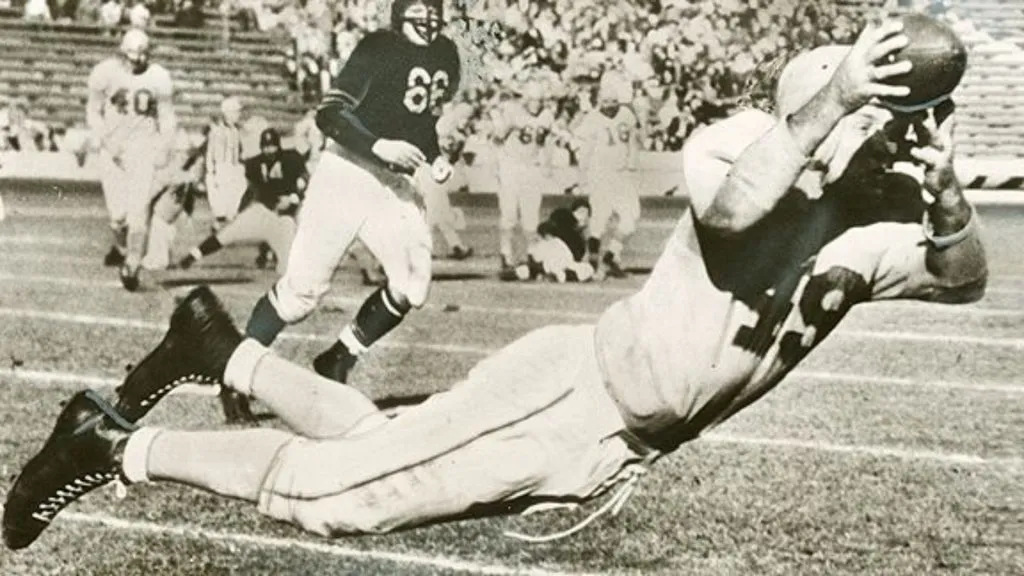
Cleveland Rams (Source: The Cleveland Rams)
The Cleveland Rams represent a fascinating chapter of audacity and boundary-breaking. Founded in 1937, they struggled early in Ohio. Their moment of glory came in 1945 when they improbably won the NFL Championship with a team led by rookie Bob Waterfield.
What makes their story unique is what happened immediately after: owner Dan Reeves moved the franchise to Los Angeles in 1946. This was not a relocation forced by failure but a strategic move to capitalize on L.A.’s growth, making them the first major league professional sports team on the West Coast. This bold step not only established the Rams as pioneers but laid the groundwork for the professional sports boom in California.
Houston Oilers
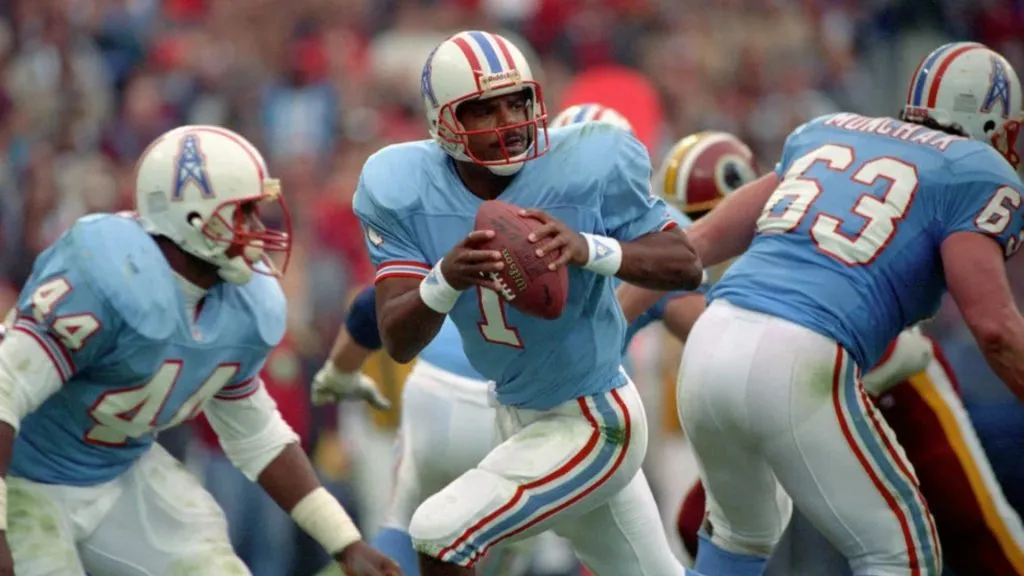
Houston Oilers (Source: Texas State Historical Association)
The history of the Houston Oilers is one of the most painful and controversial relocations in recent NFL history. Charter members of the American Football League (AFL) in 1960 and with deep roots in Texas, the Oilers were a Houston fixture for decades, with highlights including back-to-back playoff appearances in the late ’70s and early ’90s.
However, after years of disputes with the city over a new stadium, owner Bud Adams decided to cut ties with Houston. The team moved to Tennessee in 1997, playing two seasons as the Tennessee Oilers before finally adopting the name Tennessee Titans in 1999. The move left a bitter void in Houston that was only filled years later with the birth of the Texans.
St. Louis Rams
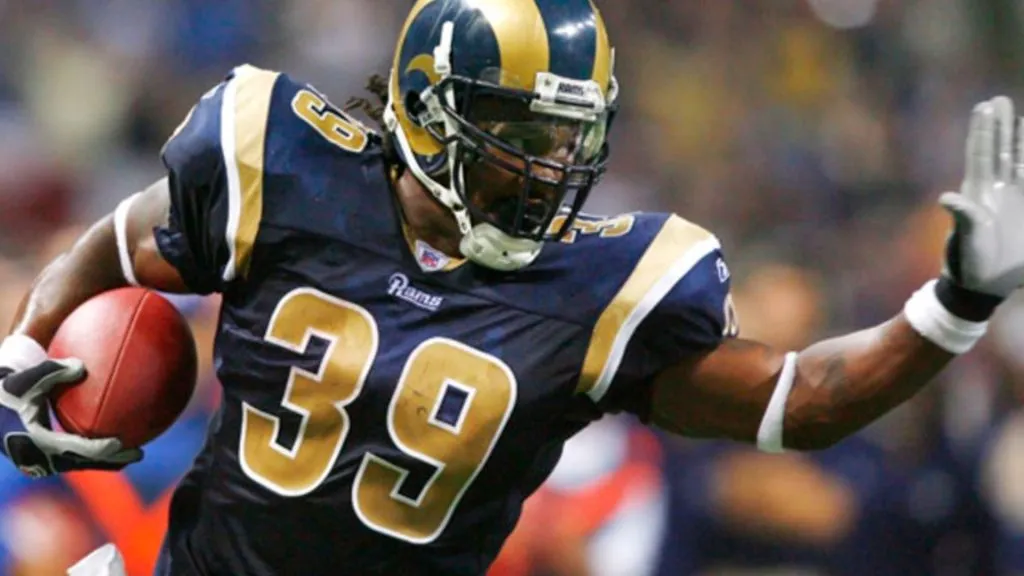
St. Louis Rams (Source: NFL)
The Rams franchise holds the most complex relocation history in the league. After leaving Cleveland for Los Angeles, they moved for a second time to St. Louis in 1995, attempting to secure a market that had lost the Cardinals.
In St. Louis, the team reached its historic peak, winning Super Bowl XXXIV in 1999 with the famous “Greatest Show on Turf”—one of the most explosive offenses ever seen. Despite the initial athletic success and a Super Bowl title, the relationship with the city soured over stadium issues.
In one of the NFL’s most recent and emotional relocations, owner Stan Kroenke secured approval to return the franchise to Los Angeles in 2016, leaving St. Louis without a team for the second time and closing the chapter on the Rams in the heart of Missouri.
Los Angeles Chargers

Los Angeles Chargers (Source: Sports Team History)
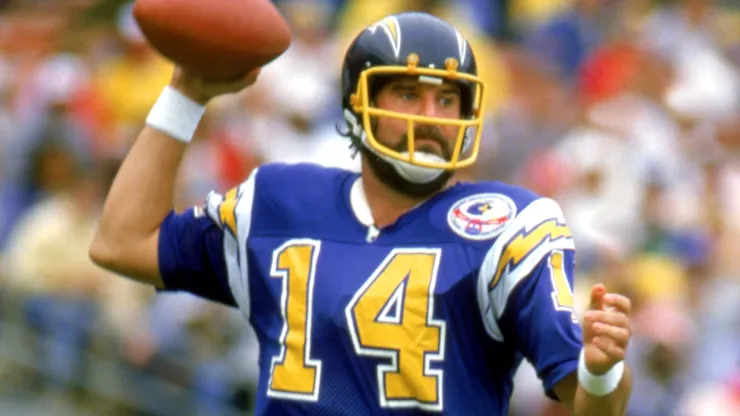
Founded in Los Angeles in 1960 as an original member of the AFL, the Chargers barely lasted a year in Southern California. The original owner, hotel heir Barron Hilton, couldn’t compete with the already established Rams and, facing low attendance at the Memorial Coliseum, quickly moved the franchise to San Diego in 1961.
There, they became the San Diego Chargers for 56 years, leaving an indelible mark on the city. The return to Los Angeles, a move heavily criticized by San Diego fans, occurred in 2017. The franchise returned to its birth market, driven by the promise of a new state-of-the-art stadium and belief in the economic potential of the vast L.A. market, completing an unusual round-trip cycle.
Oakland Raiders

Oakland Raiders (Source: Raiders.com)
The Raiders, born in Oakland in 1960 as part of the AFL, are perhaps the most nomadic and yet most iconic franchise in the league. Under the philosophy and leadership of Al Davis, the team forged a reputation for rebellion. Their history includes three dramatic relocations:
- Oakland to Los Angeles (1982): After years of legal battles over improving the stadium in Oakland, Davis moved the franchise to Los Angeles, where they won a Super Bowl.
- Los Angeles back to Oakland (1995): They returned to their hometown upon the promise of stadium improvements, a move greeted with jubilation.
- Oakland to Las Vegas (2020): The final decision to move to Las Vegas was due to a deadlock in negotiations for a new stadium in the Bay Area, sealing the team’s fate in Nevada. The team, now the Las Vegas Raiders, is an example of how franchise loyalty can be eclipsed by the search for modern infrastructure and better revenue opportunities, leaving Oakland without its team for the second time.