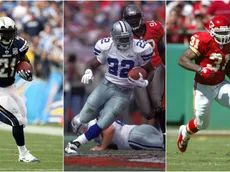
Cold afternoons, worn-down defenses and a simple plan that kept working: give the ball to the running back near the goal line. In certain NFL seasons, that formula became unstoppable and turned short-yardage into a weekly headline.
Week after week, the end zone kept calling the same names. Some teams built entire identities around pounding the ball, while others watched helplessly as one runner after another crossed the stripe at a historic pace.
Those scoring avalanches didn’t just decide games, they reshaped record books. A small group of rushing campaigns still hover above the rest, separated by eras but connected by one thing: an unmatched ability to finish drives on the ground.
LaDainian Tomlinson | 28 Rushing Touchdowns – 2006 Season
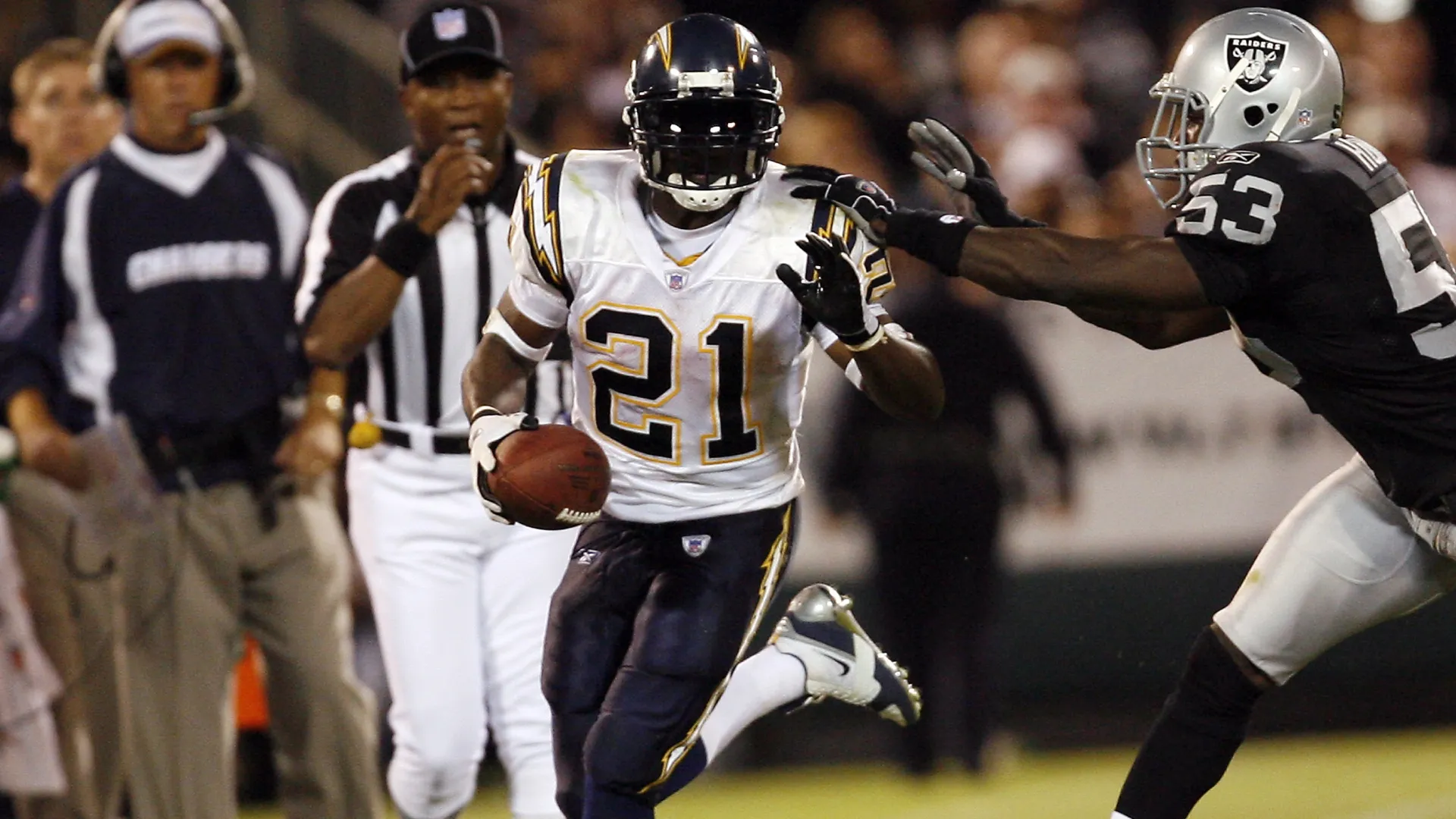
LaDainian Tomlinson (Source: Robert B. Stanton/NFLPhotoLibrary)
At the peak of an era defined by explosive talent, LaDainian Tomlinson didn’t just break the rushing touchdown record; he obliterated it with a season that seems like a fantasy in modern football.
2006 was the year of coronation for “LT” with the San Diego Chargers. Far from being a traditional power runner, he combined exceptional vision with an ability to elude defenders and a nose for the end zone that is unparalleled.
His campaign was not only about the 28 rushing touchdowns, a record that stands firm to this day, but about relentless efficiency. On his path to the league MVP award, “LT” became the only player in NFL history to score 186 points and 31 total touchdowns in a single season.
His impact was so profound that, during this historic run, coach Marty Schottenheimer and young quarterback Philip Rivers relied on their star back to carry the load of the offense, solidifying a run-heavy attack philosophy few teams could match. It was a benchmark that defined his legacy and raised the bar to a dizzying height.
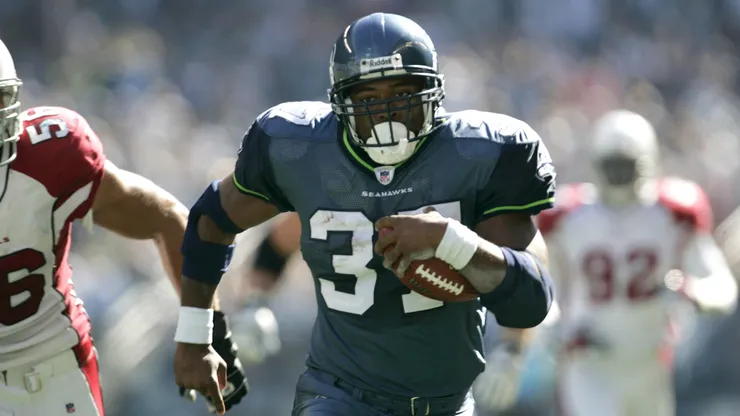
Shaun Alexander | 27 Rushing Touchdowns – 2005 Season
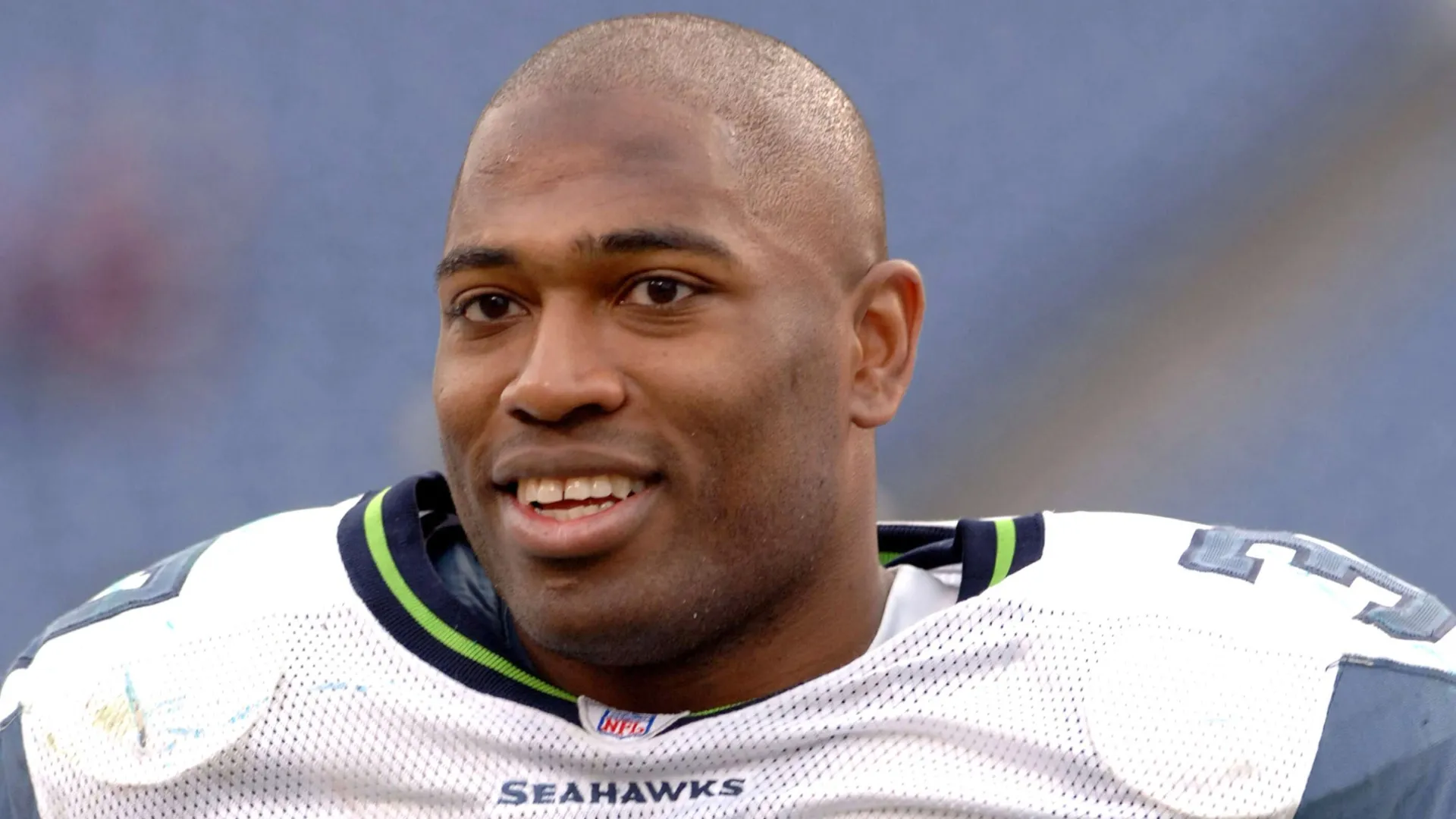
Shaun Alexander (Source: Joe Murphy/NFLPhotoLibrary)
Before “LT’s” legendary showcase, the throne belonged to a Northwest runner who personified power and patience: Shaun Alexander. 2005 was a symphony of perfection for the Seattle Seahawks’ running back. Powered by an elite offensive line, he exploded for a franchise-record 1,880 yards and, most crucially, 27 rushing scores, tying the record Priest Holmes had set two years prior.
This astronomical production earned him the NFL MVP award and catapulted the Seahawks to their first Super Bowl appearance. What was remarkable about his season was his ability to capitalize on every opportunity near the goal line; his capacity to slip through the openings created by Mike Holmgren’s line made him an inescapable threat. It was a demonstration of NFC dominance that paved the way for the next wave of scoring running backs.
Priest Holmes | 27 Rushing Touchdowns – 2003 Season
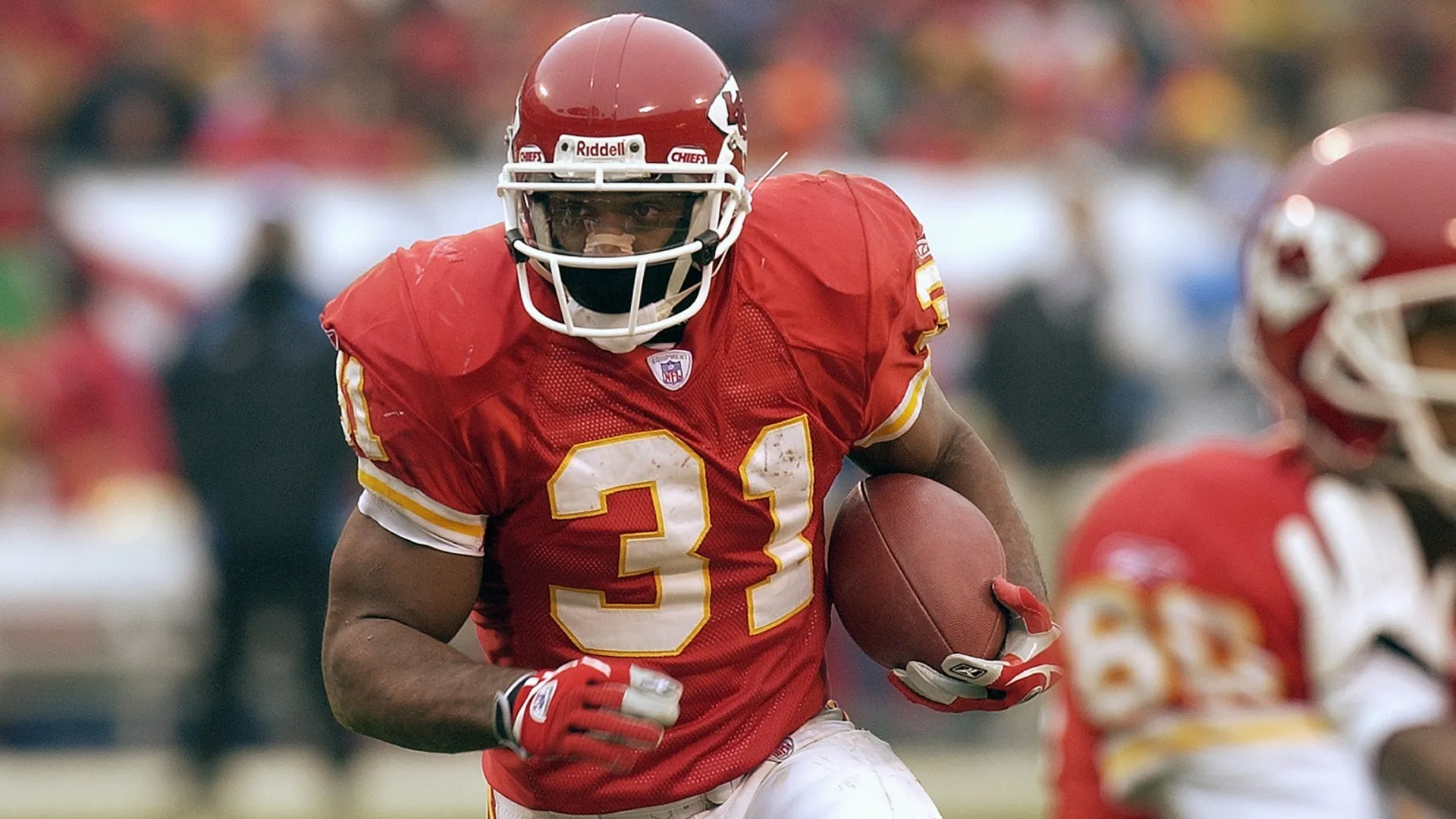
Priest Holmes (Source: Dave Kaup/Getty Images)
2003 was the peak of the resurrection of an undrafted runner who became the engine of the Kansas City Chiefs’ offense: Priest Holmes. After making a name for himself with the Ravens, he exploded in Kansas City under coordinator Dick Vermeil’s offensive system, reaching a mark that Emmitt Smith had held for nearly a decade.
In one of the most prolific seasons in history, he not only led the league with his 27 rushing touchdowns but also proved to be a lethal dual-threat weapon, adding 74 receptions for 690 yards.
What makes his achievement even more remarkable is the sheer volume of times he reached the end zone: he set an NFL record with 10 games in the season featuring two or more touchdowns. This feat underscores not only his vision and toughness but the Chiefs’ absolute reliance on his ability to finish drives. His season was a testament to perseverance and focus, shattering statistical barriers.
Emmitt Smith | 25 Rushing Touchdowns – 1995 Season
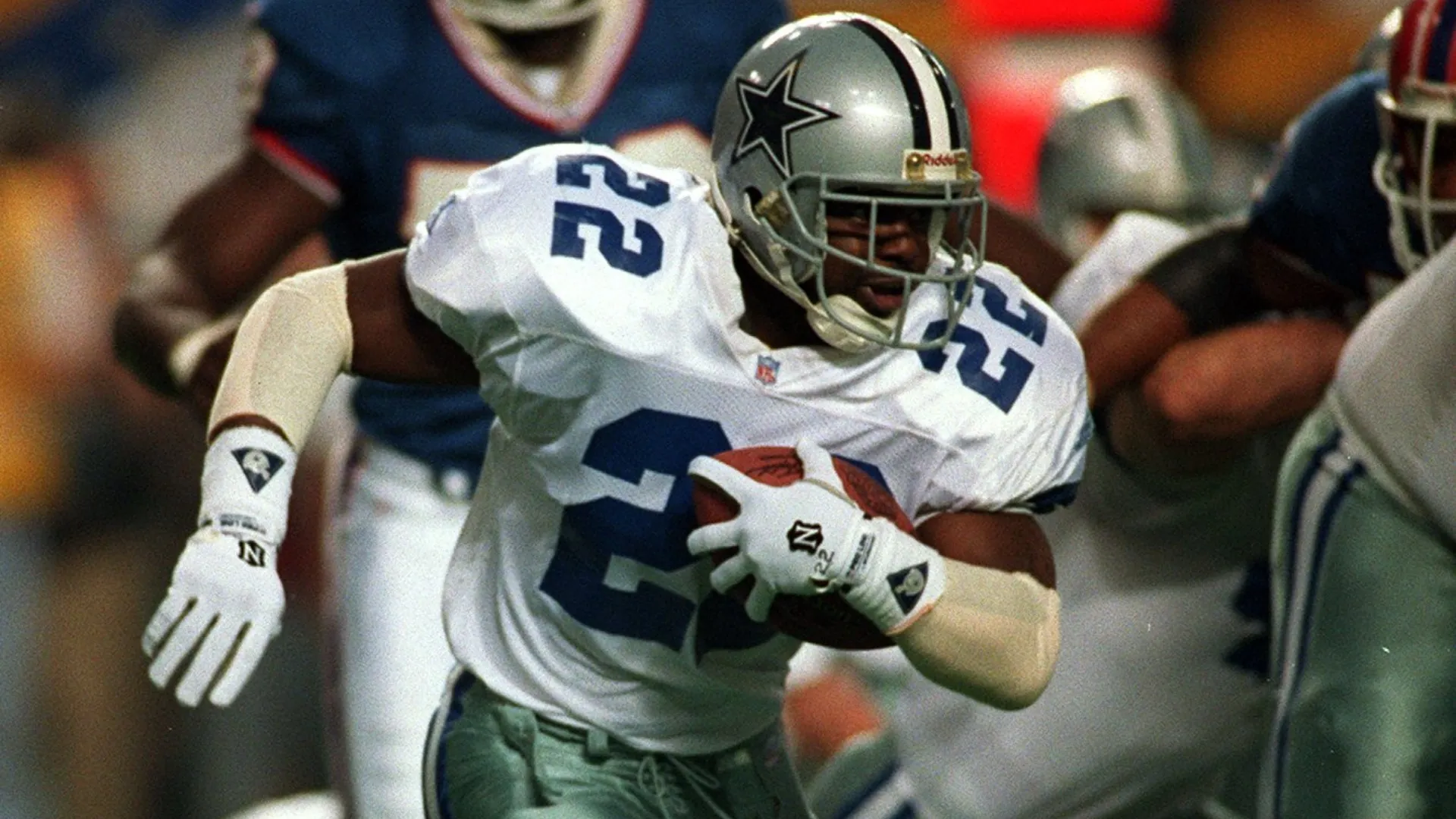
Emmith Smith (Source: Getty Images)
No conversation about running back greatness is complete without mentioning Emmitt Smith, and his 1995 season is the pinnacle of his legendary scoring dominance. He was already an established champion for the Dallas Cowboys, but in 1995 he took his game to a new level.
In a year where Dallas’s “Triplets” (Smith, Troy Aikman, Michael Irvin) were at their best, he carried the team in the red zone, setting a record of 25 rushing touchdowns that, at the time, seemed unattainable. The Hall of Famer amassed 1,773 rushing yards and culminated his campaign with another Super Bowl title.
This season was the embodiment of consistency and durability, proving that in the “Triplets Offense” scheme, he was the hammer that closed the deal. His record stood as the gold standard in the NFL for eight years, a reflection of his unmatched power in short-yardage situations.
John Riggins | 24 Rushing Touchdowns – 1983 Season
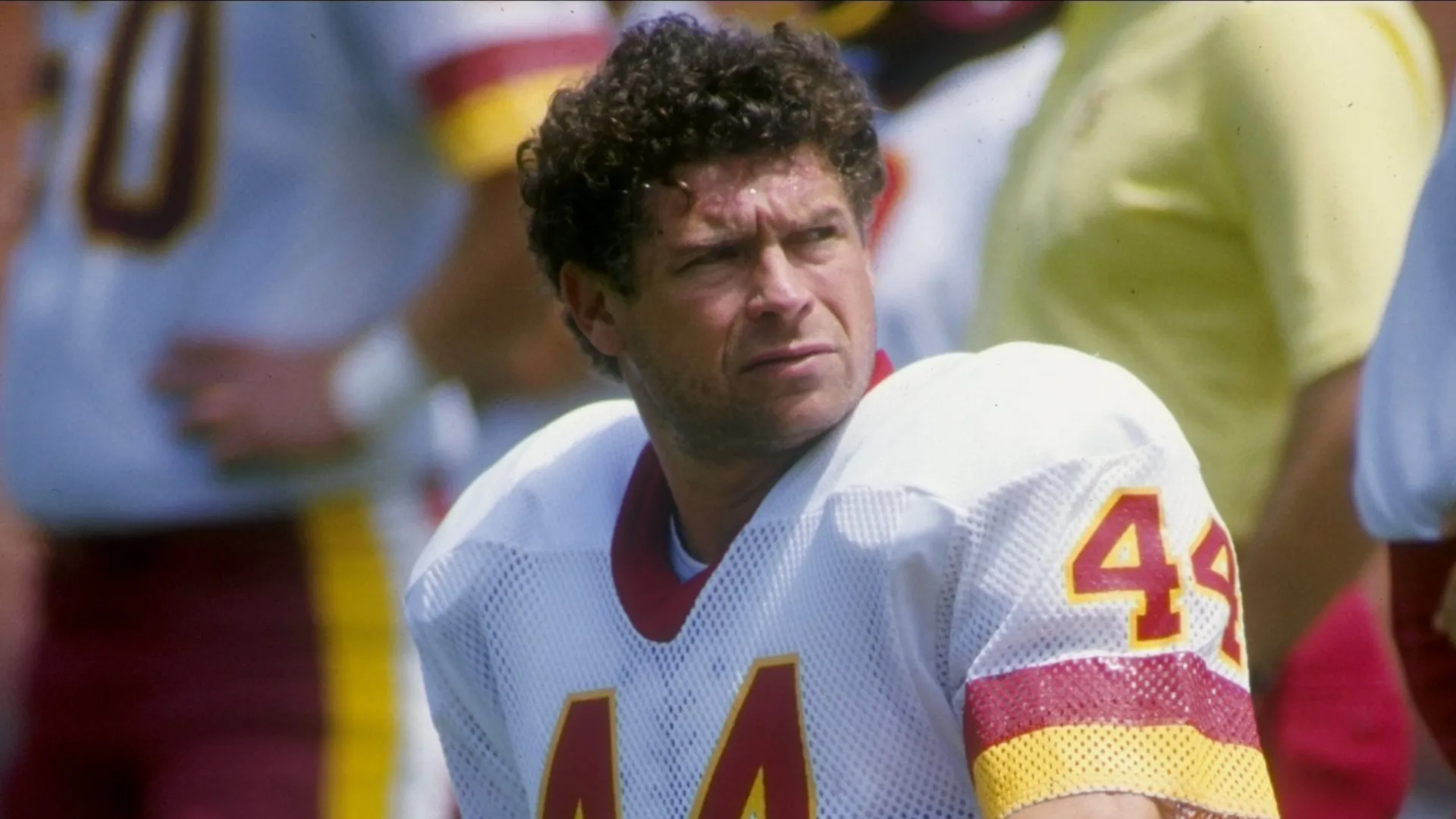
John Riggins (Source: Getty Images)
In an era where power was paramount, the veteran John Riggins had one of the most surprising and physically dominant seasons in league history. At the age of 34, “The Diesel” proved that experience and sheer strength could overcome youth.
Following his heroic performance in Super Bowl XVII, he returned in 1983 to crush the then-existing rushing touchdown record with 24 scores. On a Washington team that leaned on Joe Gibbs’ running system, Riggins was the focal point, carrying the ball 375 times and accumulating 1,347 yards.
What sets this season apart is the age of the achievement; a power back of his caliber maintaining such a high level of production late in his career defied all expectations and set a precedent for longevity and brutality at the position.
Priest Holmes | 21 Rushing Touchdowns – 2002 Season
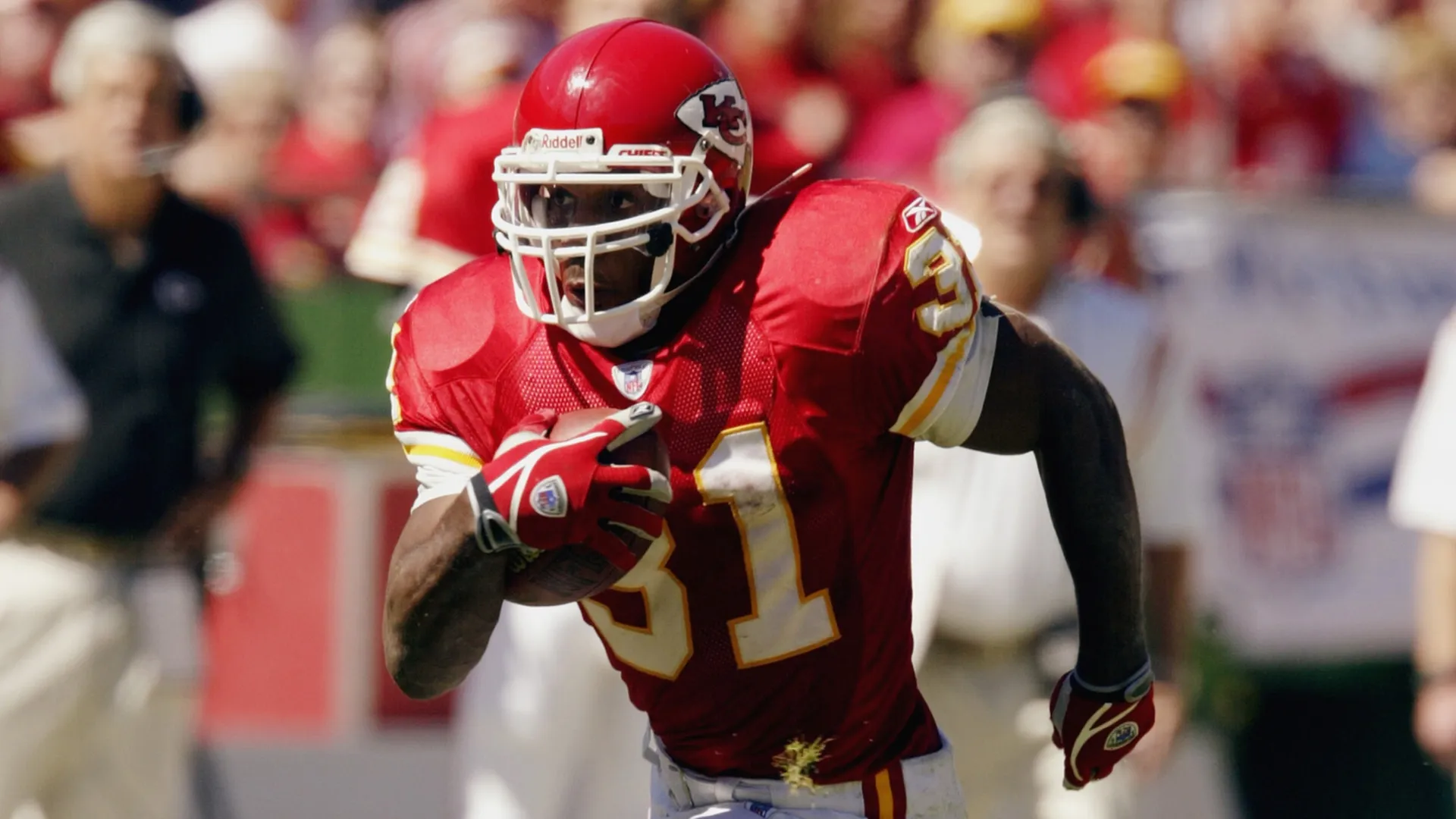
Priest Holmes (Source: Brian Bahr/Getty Images)
Before his record assault, Priest Holmes had already warned the league of his potential with an impressive run in 2002, demonstrating that his record-breaking season was no fluke. Despite missing two games due to injury, he managed to reach an astonishing 21 rushing scores, combined with 1,615 rushing yards.
This 14-game effort is an argument for efficiency in itself: had it not been for the hip injury that stalled his momentum, the Chiefs’ running back was on pace for a total that could have exceeded the 27 touchdowns of 2003, according to later analyses.
His ability to consistently generate big plays and convert every red zone opportunity made him a defensive nightmare and confirmed that his 2001 year was not an anomaly, but the start of an era of absolute dominance for Kansas City.
Terrell Davis | 21 Rushing Touchdowns – 1998 Season
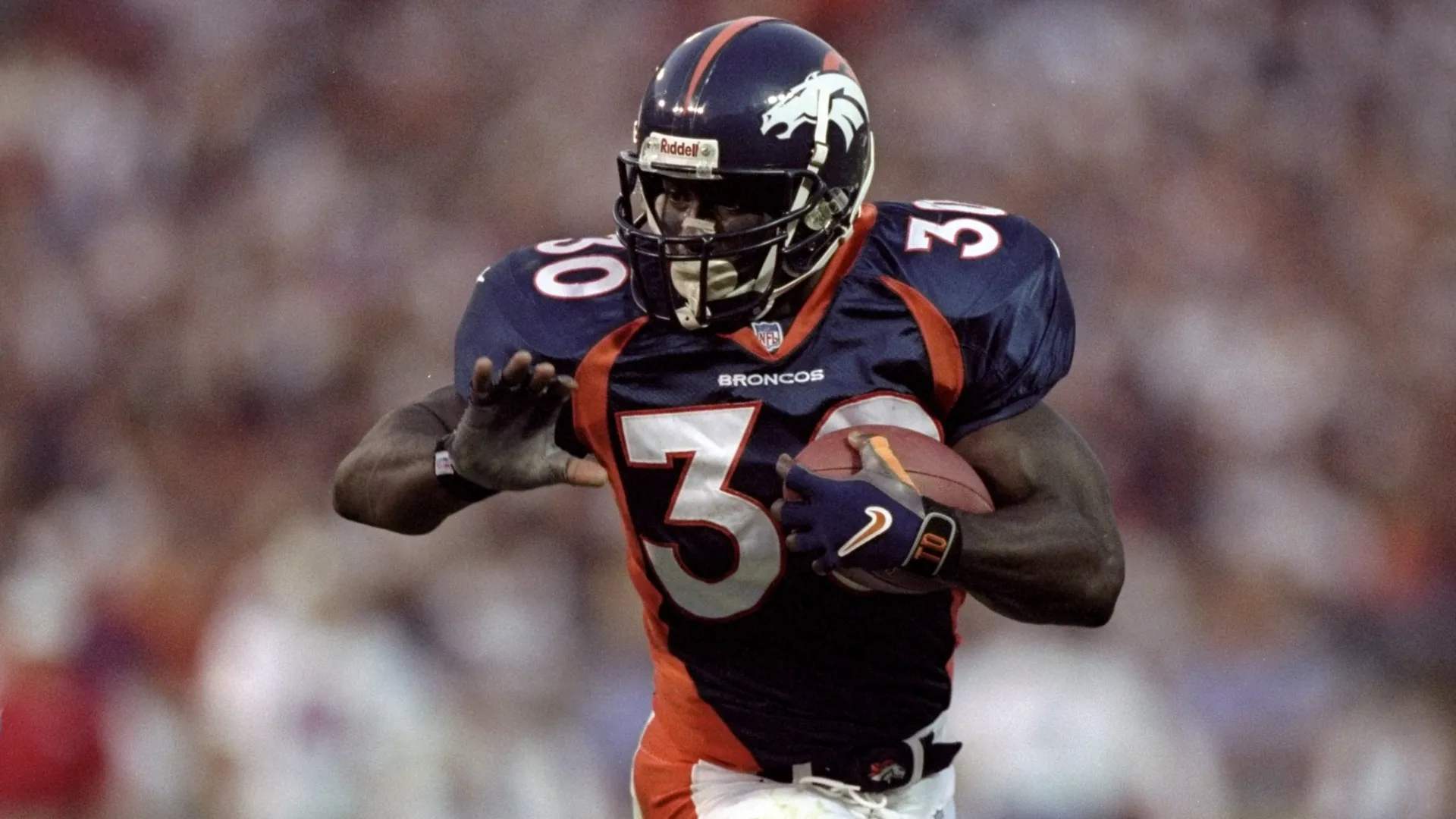
Terrell Davis (Source: Brian Bahr /Allsport)
Terrell Davis‘ 1998 season not only culminated in a second consecutive Super Bowl for the Denver Broncos, but it redefined what it meant to be an elite running back in the NFL. Known for his relentless style, “TD” reached the summit of statistical achievement that year, becoming only the fourth player in league history to surpass the 2,000-yard rushing mark.
However, his scoring impact was equally monumental. His 21 rushing touchdowns were a statement of dominance in an offense that relied on the ground game to control contests and open up the field for John Elway.
The 1998 campaign earned him the MVP award and the label of the league’s most destructive force. What was impressive about him was his ability to maintain such high production even at the altitude of Denver, demonstrating unmatched stamina and vision, culminating drives with brutal consistency in the red zone.
Terry Allen | 21 Rushing Touchdowns – 1996 Season
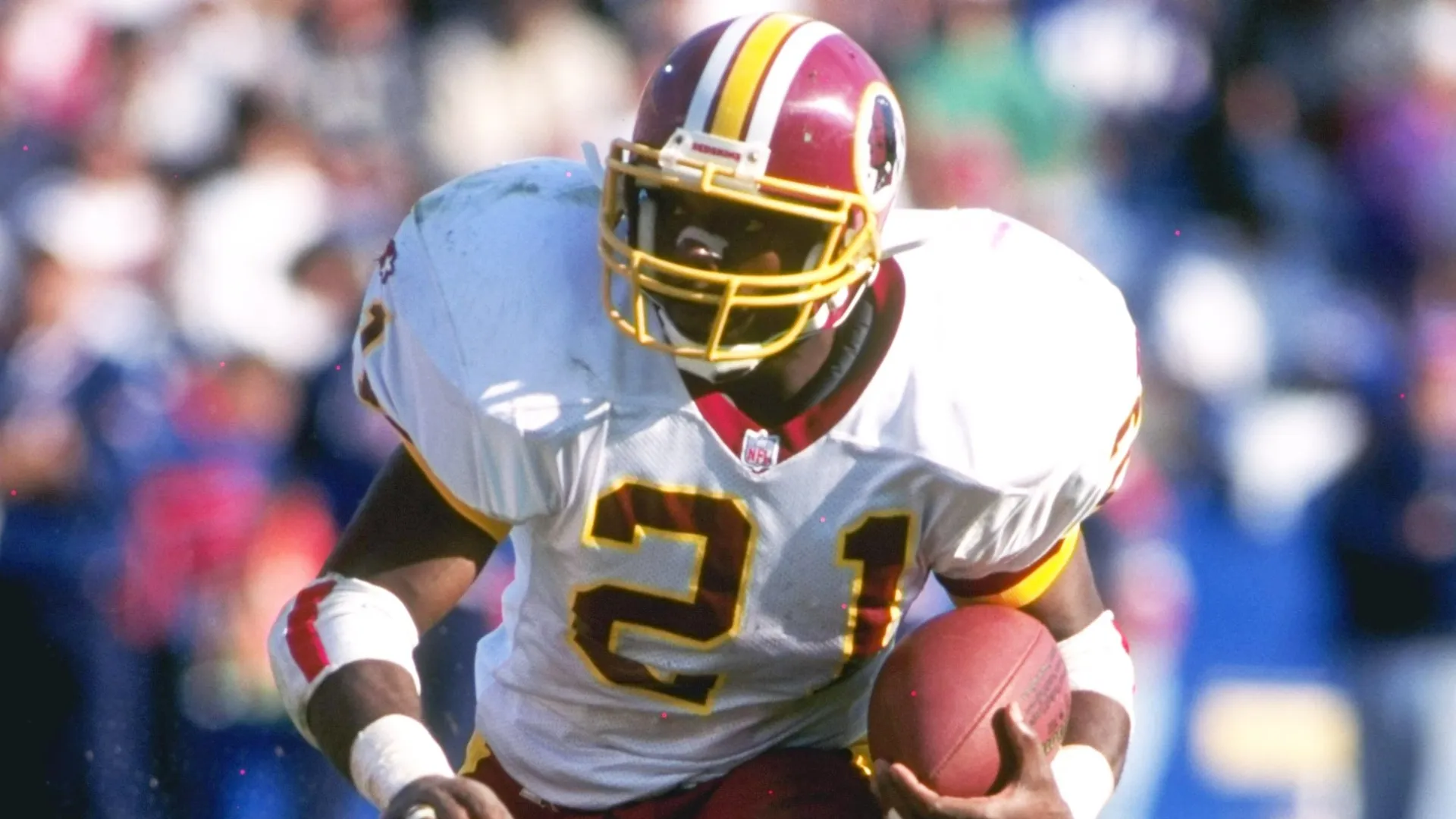
Terry Allen (Source: Simon Bruty /Allsport)
Terry Allen‘s 1996 season with the Washington team was one of the decade’s most inspiring comeback stories. Allen, a running back who had already overcome severe knee injuries that threatened his career, returned with a scoring fury few expected.
In a year where Washington heavily depended on its ground game, he carried the offense, accumulating 1,353 yards and, most surprisingly, 21 rushing scores. This total tied the franchise’s rushing touchdown record and placed him in the NFL elite.
His season was a testament to perseverance, proving that even after facing the toughest medical adversity, a back could return and become the league’s primary scoring machine.
Emmitt Smith | 21 Rushing Touchdowns – 1994 Season
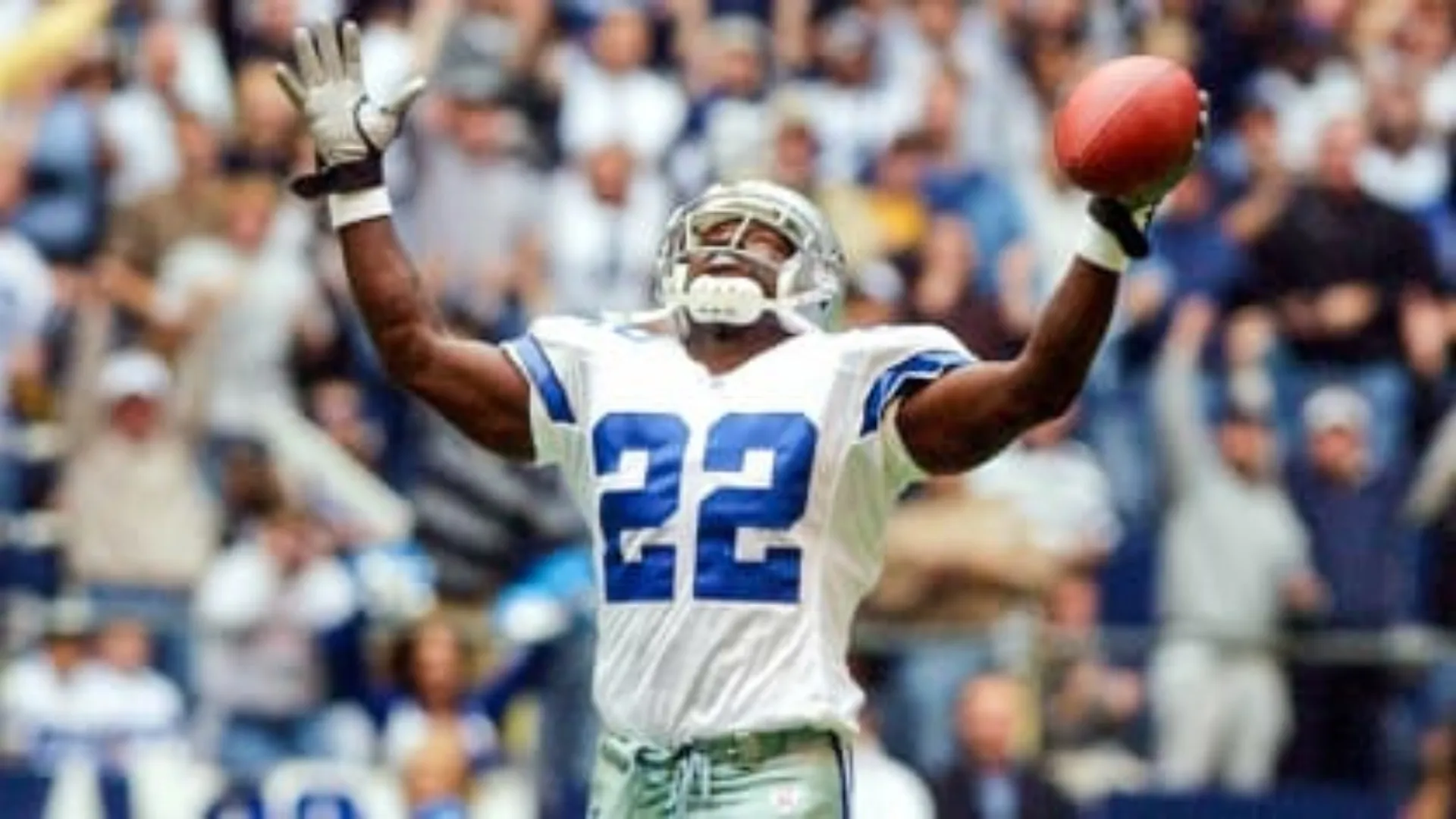
Emmitt Smith (Source: Dallas Cowboys)
Although often overshadowed by his record-breaking 1995 campaign (25 TDs), Emmitt Smith‘s 1994 season was the reaffirmation of his status as the most reliable touchdown finisher of his era.
The Dallas Cowboys were coming off two consecutive Super Bowl wins, and he was tasked with maintaining the momentum in 1994. While he finished with ‘only’ 1,484 yards, his scoring instinct in the red zone was unmistakable. His 21 rushing touchdowns tied the league total that year and solidified his reputation as the heart of the offense.
The crucial element of this year wasn’t just the numbers, but the context: He was playing at an MVP level, even without the fanfare of a record. His ability to be dominant and, crucially, to convert again and again inside the 10-yard line is what sets him apart; his 21 scores were the result of his relentless vision and the perfection of the Dallas offensive line.
Joe Morris | 21 Rushing Touchdowns – 1985 Season
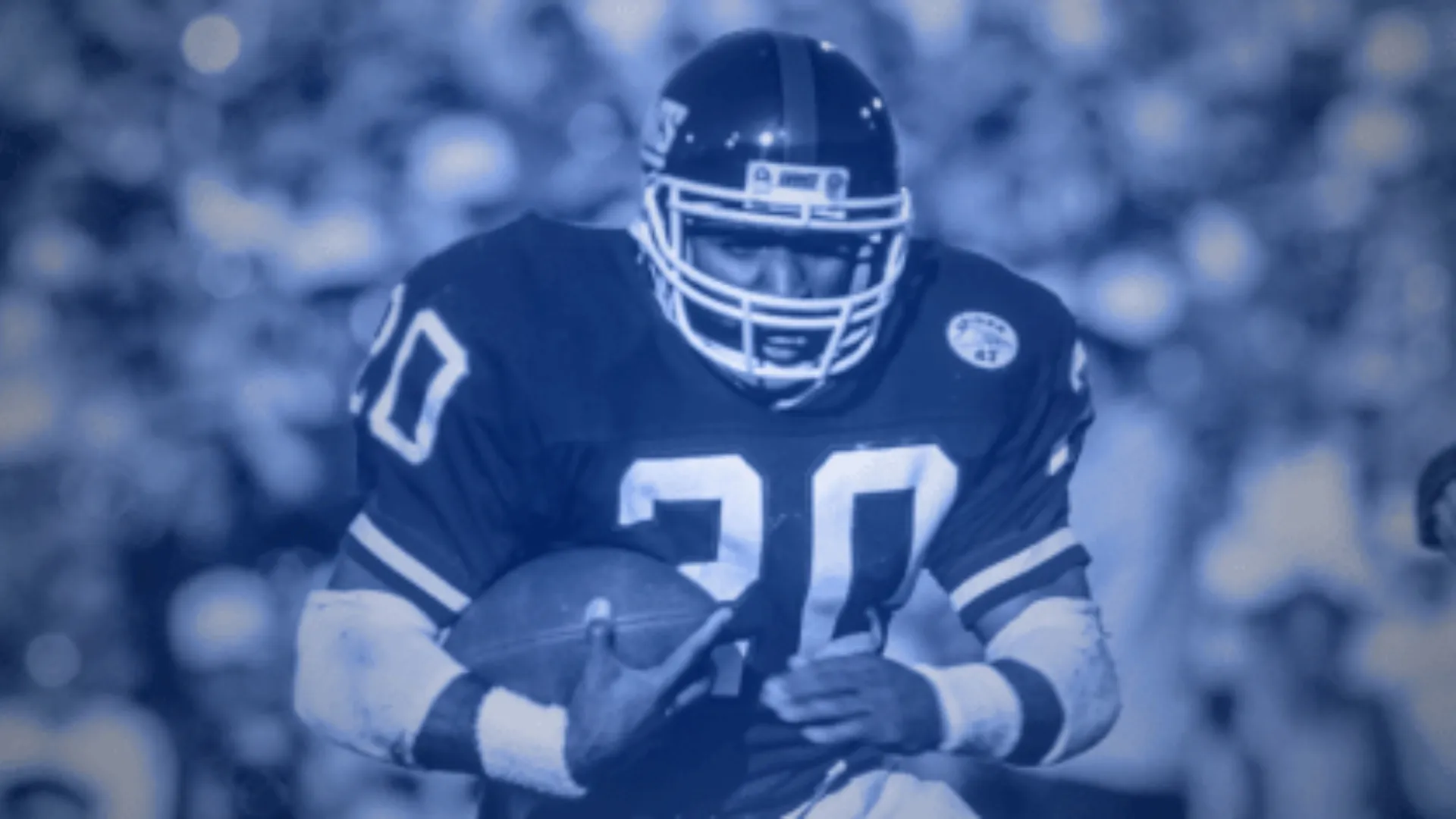
Joe Morris (Source: Giants)
Amidst a league that still valued the run over the pass in the red zone, the dynamic Joe Morris of the New York Giants had a pinnacle season that etched his name into the record books. 1985 was the breakout year for the small but powerful runner.
Under the guidance of coach Bill Parcells, he became the focal point of the ground attack, accumulating 1,338 yards and a remarkable 21 rushing touchdowns. At the time, his 21 TDs were the second-best single-season mark in NFL history, surpassed only by John Riggins’ 24.
His achievement is a reminder of the physical power required in the 80s; he was not only fast but had the toughness to finish plays against defenses focused on stopping him. His production was vital in laying the groundwork for the Giants’ future success, proving to be the offensive battering ram the team desperately needed.
Larry Johnson | 20 Rushing Touchdowns – 2005 Season
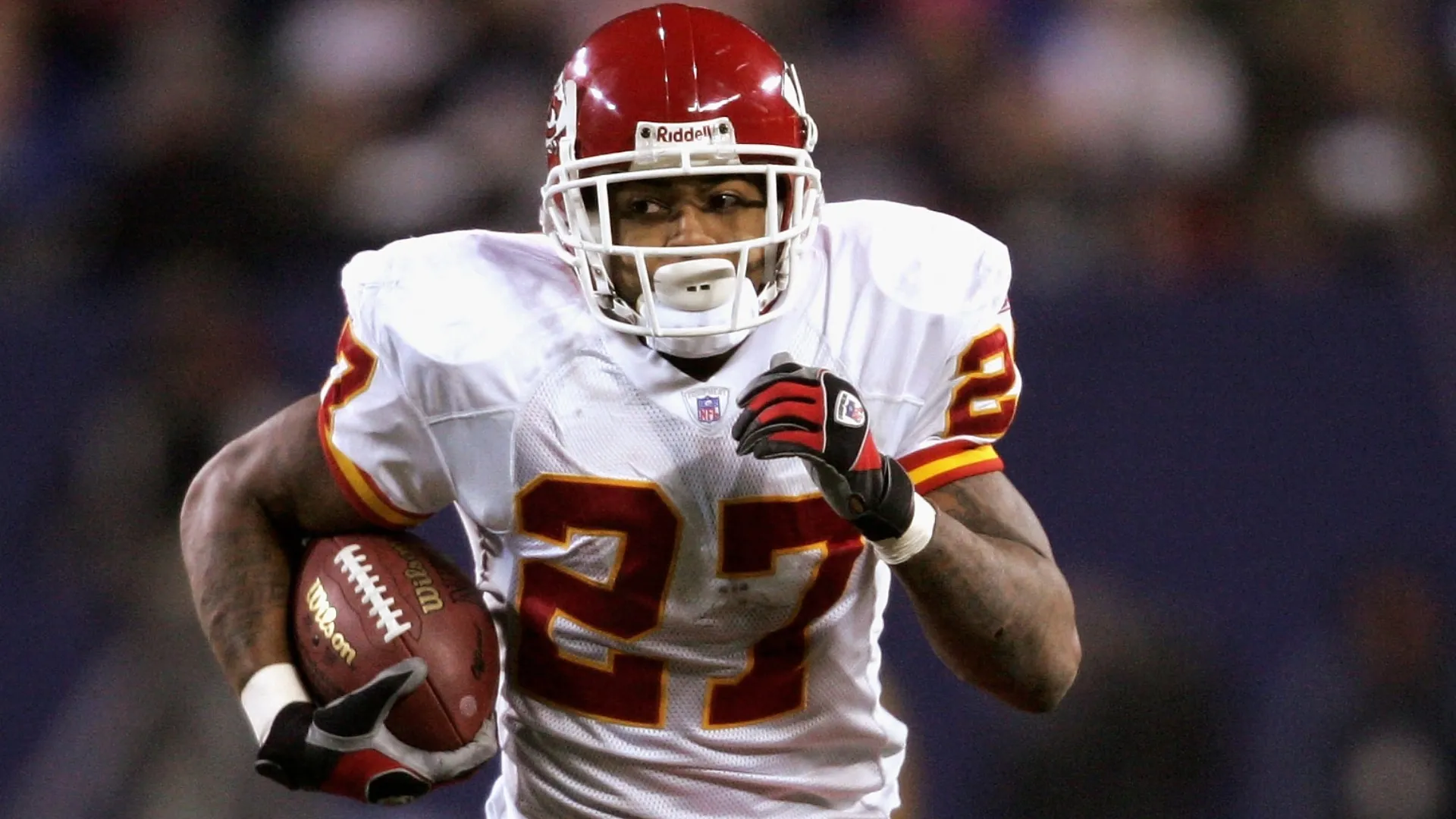
Larry Johnson (Source: Nick Laham/Getty Images)
As Priest Holmes dealt with career-ending injuries, it became Larry Johnson‘s turn to take over as the new touchdown engine for the Kansas City Chiefs. The 2005 campaign was the first complete display of his capacity as an NFL starting running back.
Assuming the lead role, he had a monstrous season that instantly established him as one of the most dominant backs of the moment. He finished the year with 1,750 rushing yards and 20 rushing scores, in addition to adding 31 receptions, proving to be a pillar of volume and effectiveness.
What makes his season notable is that he shared the backfield with the injured Holmes for part of the year, but his explosiveness and ability to pile up yards and touchdowns were so immense that he earned the nickname “LJ” in his own right, cementing an impressive era of running backs in Kansas City.
Chuck Muncie | 19 Rushing Touchdowns – 1981 Season
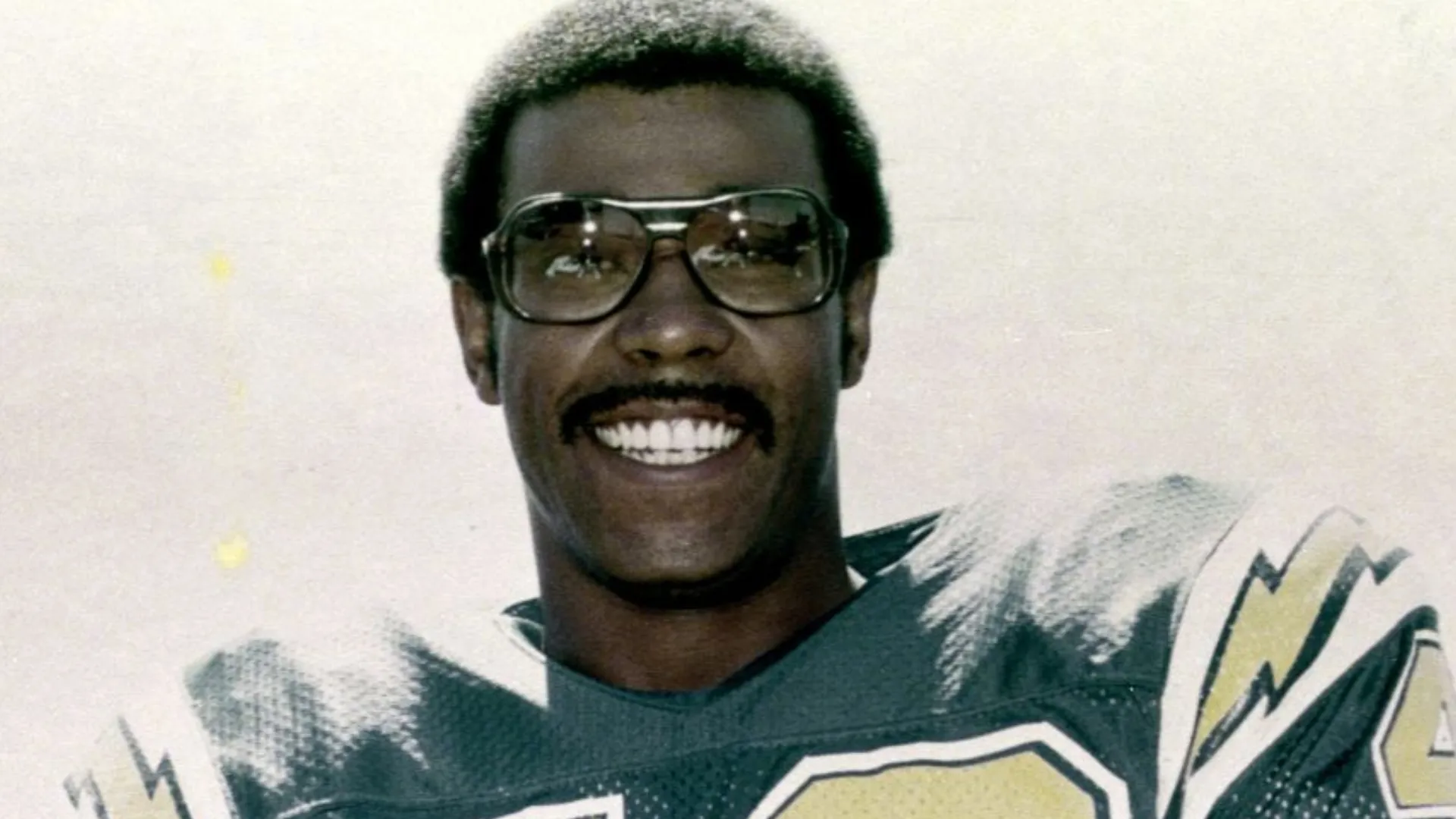
Chuck Muncie (Source: NFL)
For the San Diego Chargers of the early 1980s, the offense was an electrifying blend of Air Coryell passing and the powerful ground presence of Chuck Muncie. In 1981, he put together a season of imposing physical dominance.
While quarterback Dan Fouts and the passing game garnered most of the headlines, Muncie was the undisputed closer, bulldozing his way into the end zone 19 times to lead the league. This total, combined with 1,144 yards, was crucial for a team that reached the AFC Championship Game.
His power running was the perfect counterpoint to the high-flying offense, making the Chargers virtually impossible to defend fully. His achievement is a highlight of an era where running backs often complemented dominant passing games by ensuring goal-line success.
Earl Campbell | 19 Rushing Touchdowns – 1979 Season
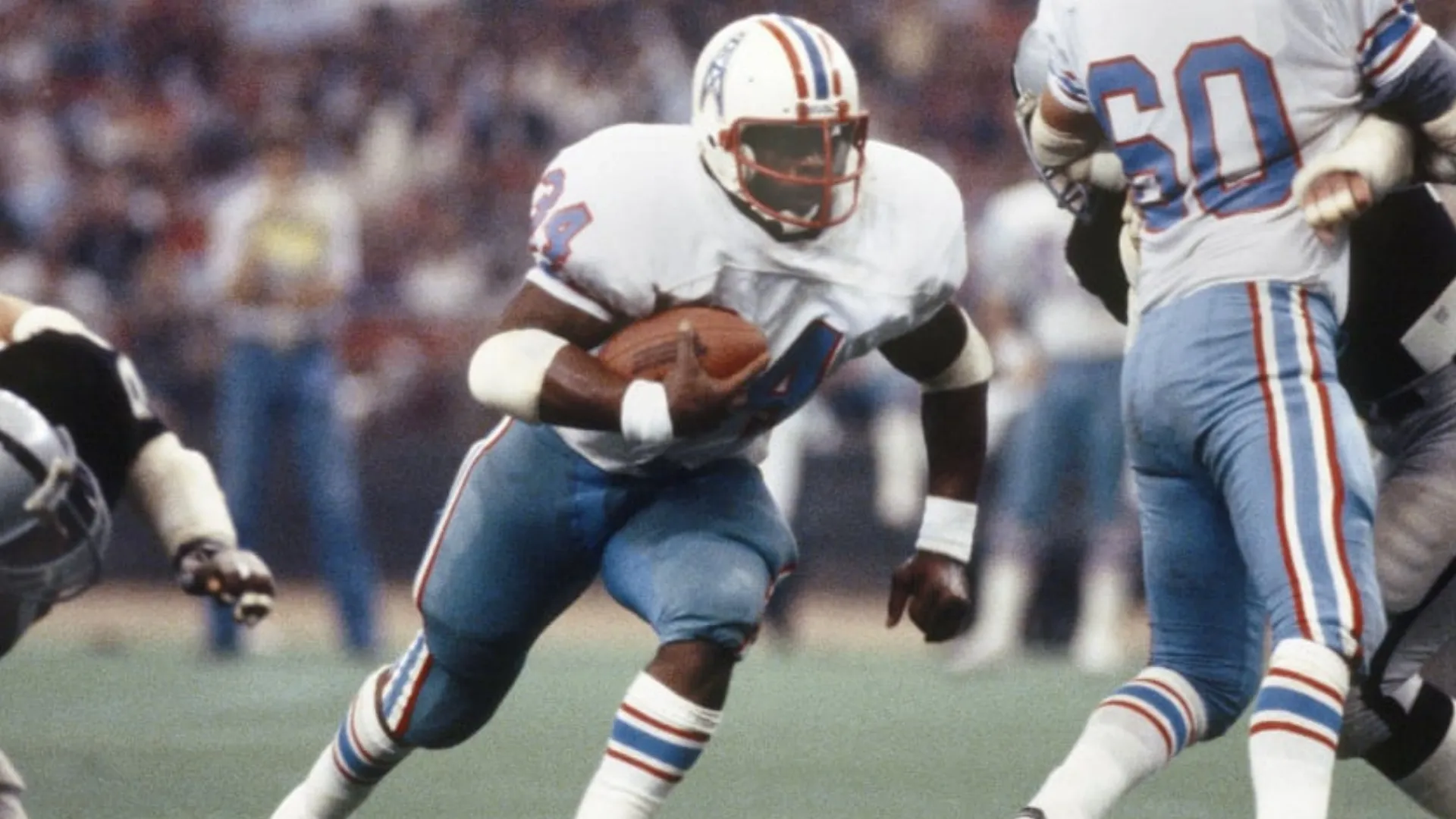
Earl Campbell (Source: NFL)
The 1979 season was the physical and statistical peak of “The Tyler Rose,” Earl Campbell, a running back whose powerful, punishing style remains legendary. Playing for the Houston Oilers, he didn’t just run the ball; he ran through the defense.
In a spectacular year, he totaled an incredible 1,697 rushing yards and was the premier scoring threat in the NFL with 19 rushing touchdowns. He was the definition of an offensive focal point, earning the league MVP award for his efforts.
His 19 touchdowns were not just scores; they were violent collisions that left opposing defenders battered. This season perfectly encapsulated the Oilers’ “Luv Ya Blue” era, where his sheer will and ability to convert short-yardage plays into touchdowns provided the offensive identity.
Jim Taylor | 19 Rushing Touchdowns – 1962 Season
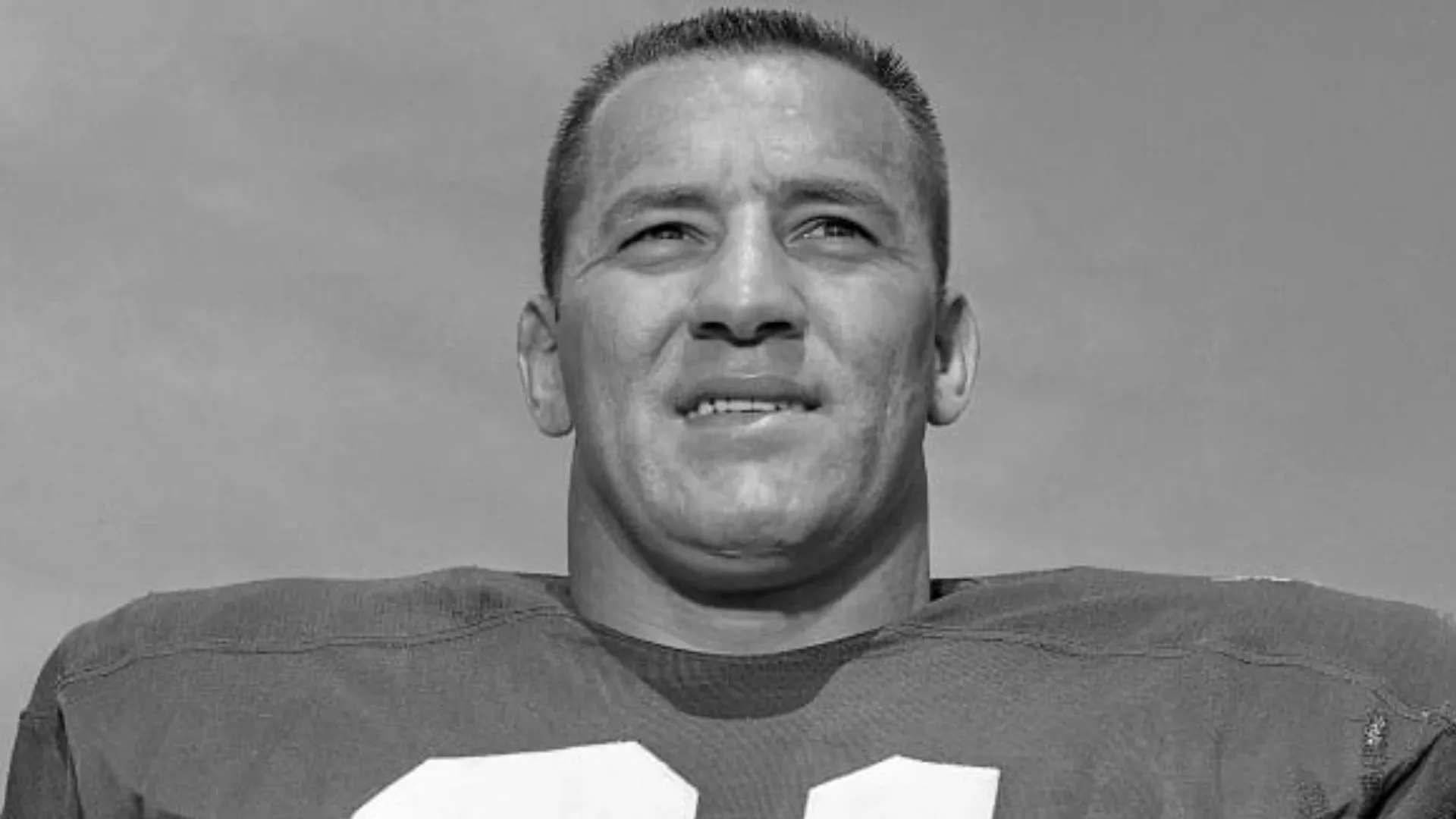
Jim Taylor (Source: Green Bay Packers)
To appreciate the true historical significance of rushing touchdowns, one must look back to the golden era of the Green Bay Packers under Vince Lombardi, and specifically to Jim Taylor’s stellar 1962 season.
In a league where 14 games made up the regular season, his 19 rushing touchdowns were an astounding feat of efficiency and goal-line tenacity. That season, which also saw him rush for 1,474 yards, earned him the NFL MVP award and helped secure the Packers their second consecutive NFL Championship.
His total set a new league record that stood for over two decades until John Riggins broke it in 1983. His achievement highlights the dominance of the Packers’ famed power sweep and his uncompromising, hard-nosed running style—a true benchmark of excellence in the pre-Super Bowl era.
Raheem Mostert | 18 Rushing Touchdowns – 2023 Season
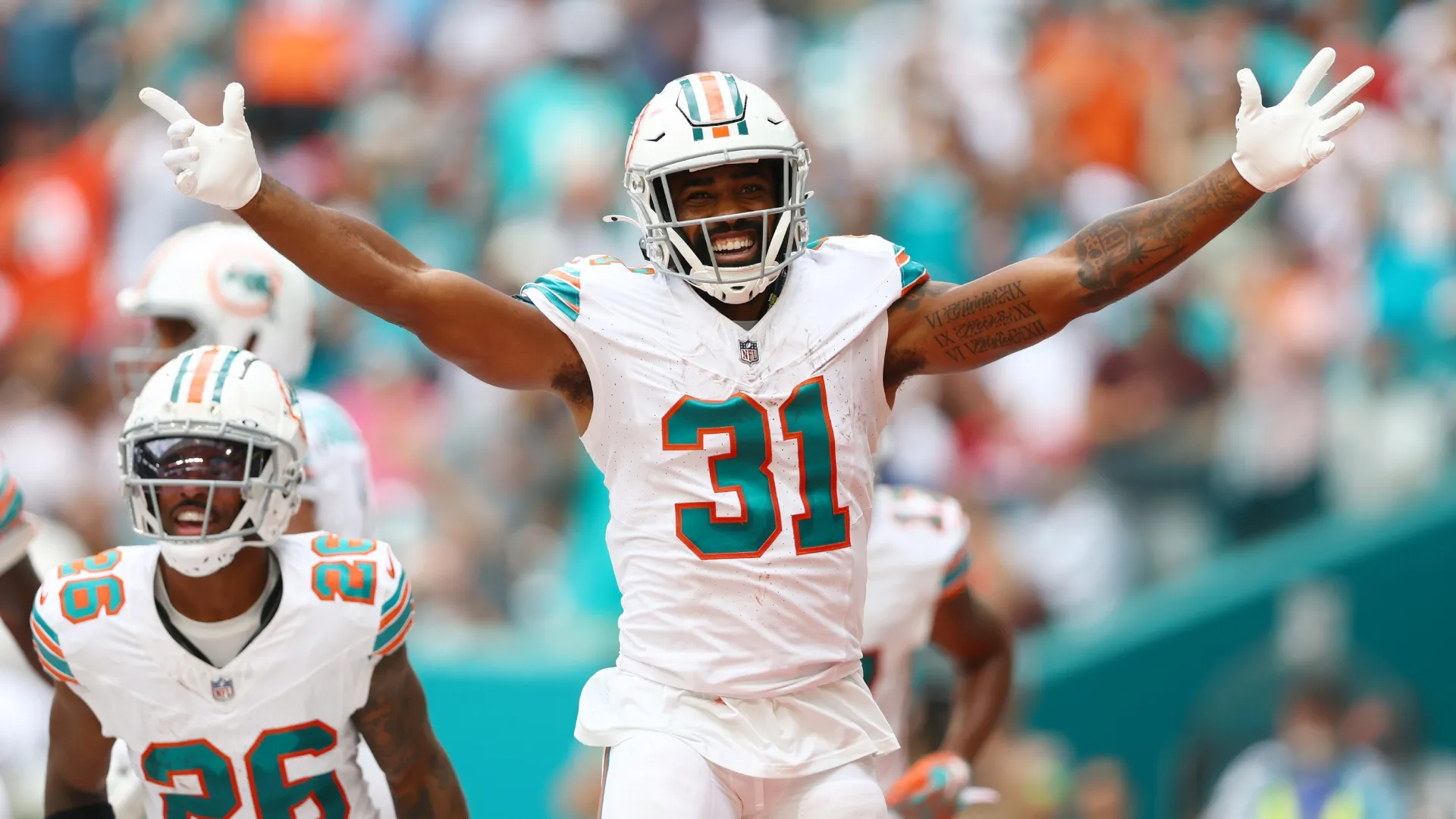
Raheem Mostert (Source: Megan Briggs/Getty Images)
Raheem Mostert’s 2023 campaign with the Miami Dolphins is the most recent entry into this elite group, offering a contemporary example of peak scoring efficiency in a dynamic, modern offense.
At 31 years old, an age often considered past a running back’s prime, he defied expectations, becoming the engine for Mike McDaniel’s speed-based offense. He led the league with 18 rushing touchdowns, shattering the Dolphins’ franchise record and showcasing both blistering speed and surprising effectiveness in the red zone.
His success was emblematic of a perfectly executed scheme; his touchdowns often came from exploiting mismatches and using his breakaway speed on the edges, making him a potent threat who proved that veteran backs can still be prolific scorers when paired with the right system.
| Player | Rush TD | Season | Team |
| LaDainian Tomlinson | 28 | 2006 | San Diego Chargers |
| Shaun Alexander | 27 | 2005 | Seattle Seahawks |
| Priest Holmes | 27 | 2003 | Kansas City Chiefs |
| Emmitt Smith | 25 | 1995 | Dallas Cowboys |
| John Riggins | 24 | 1983 | Washington Redskins |
| Priest Holmes | 21 | 2002 | Kansas City Chiefs |
| Terrell Davis | 21 | 1998 | Denver Broncos |
| Terry Allen | 21 | 1996 | Washington Redskins |
| Emmitt Smith | 21 | 1994 | Dallas Cowboys |
| Joe Morris | 21 | 1985 | New York Giants |
| Larry Johnson | 20 | 2005 | Kansas City Chiefs |
| Chuck Muncie | 19 | 1981 | San Diego Chargers |
| Earl Campbell | 19 | 1979 | Houston Oilers |
| Jim Taylor | 19 | 1962 | Green Bay Packers |
| Raheem Mostert | 18 | 2023 | Miami Dolphins |
| Jonathan Taylor | 18 | 2021 | Indianapolis Colts |
| LeGarrette Blount | 18 | 2016 | New England Patriots |
| Adrian Peterson | 18 | 2009 | Minnesota Vikings |
| DeAngelo Williams | 18 | 2008 | Carolina Panthers |
| LaDainian Tomlinson | 18 | 2005 | San Diego Chargers |
| Marshall Faulk | 18 | 2000 | St. Louis Rams |
| Emmitt Smith | 18 | 1992 | Dallas Cowboys |
| George Rogers | 18 | 1986 | Washington Redskins |
| Eric Dickerson | 18 | 1983 | Los Angeles Rams |
| Jamaal Williams | 17 | 2022 | Detroit Lions |