The New York Giants are one of the NFL’s oldest franchises, boasting a legacy that spans nearly a century. With multiple league championships and memorable playoff runs, their history is rich with moments that helped shape football.
Throughout the decades, the Giants have been home to players whose talents not only brought victories but also redefined their positions. From Hall of Famers to unsung heroes, these athletes have left an enduring impact on the game.
Their story is written by those who combined skill, leadership, and determination to build a franchise known for resilience and championship pedigree — names that continue to inspire both on and off the field.
25. Red Badgro – DE
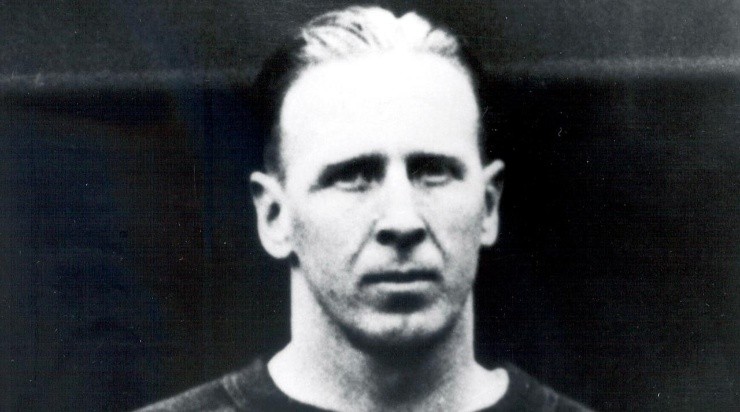
Red Badgro epitomized versatility in the early NFL era. Primarily a defensive end, his athleticism allowed him to impact various aspects of the game. Playing in the 1930s and 40s, a formative period for professional football, he was a foundational piece in building the Giants’ reputation as a tough, relentless defensive team.
His ability to adapt to multiple roles on the field made him invaluable during a time when players often played both offense and defense. His contributions helped shape the defensive identity of the franchise and set standards for future generations.
24. Charlie Conerly – QB
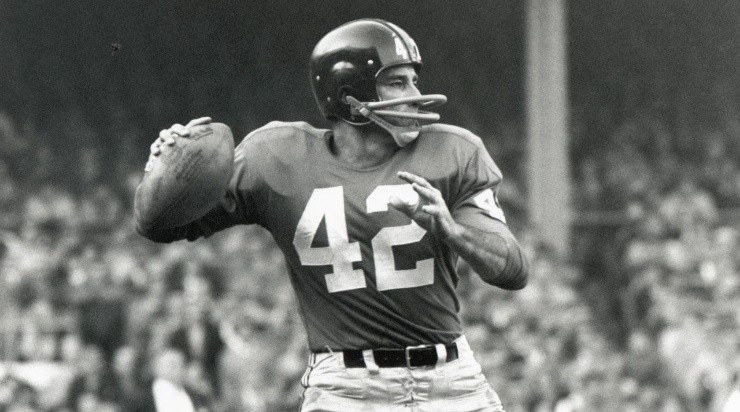
Charlie Conerly was the steady hand behind the Giants’ offense in the 1950s. Renowned for his calm under pressure and pinpoint accuracy, he led New York to multiple playoff appearances and was named NFL MVP in 1959, a testament to his elite quarterback play.
His style emphasized precision passing and smart decision-making at a time when the passing game was still evolving. Beyond his numbers, his leadership and resilience helped stabilize a franchise eager for success. He remains a respected figure for bridging the Giants’ early years with their more modern era.
23. Andy Robustelli – DE
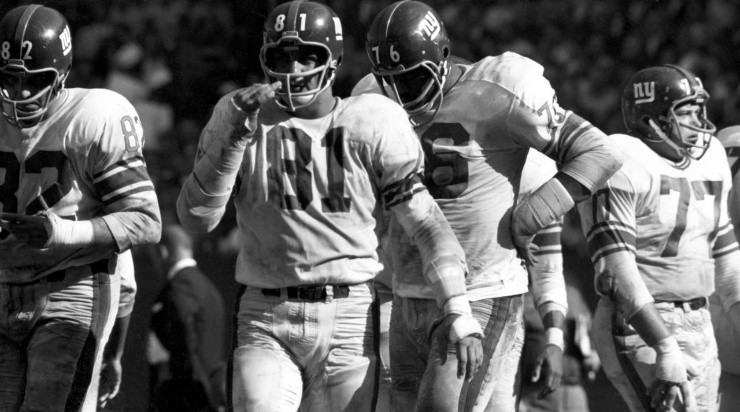
Considered one of the greatest defensive players in Giants history, Andy Robustelli’s impeccable technique and explosive power made him a nightmare for opposing quarterbacks in the 1950s and 60s.
His tenacity and relentless motor were crucial in building the Giants’ defense into a dominant force during that era. Beyond his playing days, he made a significant impact off the field as a pioneering NFL executive, helping shape league policies and player relations. This dual legacy—on and off the field—cements his place as a transformative figure in Giants history.
22. Y.A. Tittle – QB
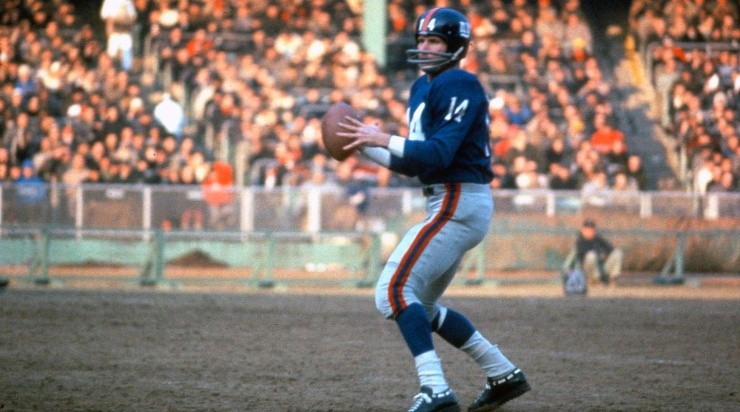
Y.A. Tittle revolutionized the quarterback position in the 1960s with his aggressive style and mastery of the passing game. His tenure with the Giants was marked by multiple franchise records and some of the most memorable plays in NFL lore.
Known for his fiery competitiveness and ability to perform in clutch moments, he led New York through a series of playoff campaigns that kept the team in the championship conversation. His legacy is one of resilience—returning from injuries and setbacks to deliver high-level performances that inspired teammates and fans alike.
21. Frank Gifford – HB/WR
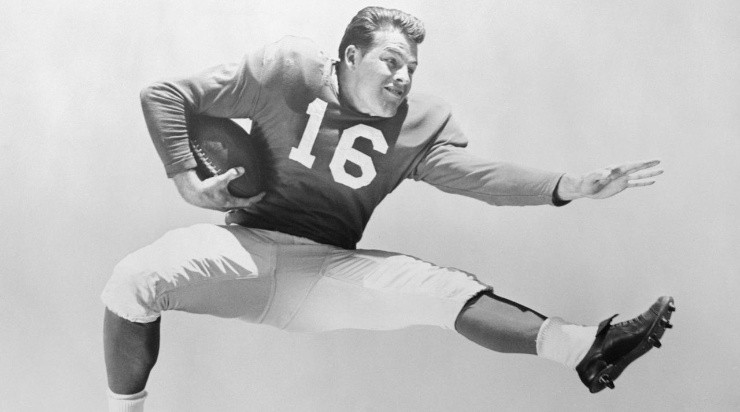
Frank Gifford was the embodiment of a complete player: versatile, athletic, and instinctive. Over his 12-year career, he transitioned seamlessly from running back to wide receiver, showcasing adaptability that few players possess.
His ability to make big plays in critical moments helped the Giants in both offensive creativity and scoring explosiveness. Off the field, his charismatic personality and subsequent broadcasting career made him one of the most beloved figures in football history, bridging generations of fans and elevating the sport’s profile nationally.
20. Mel Hein
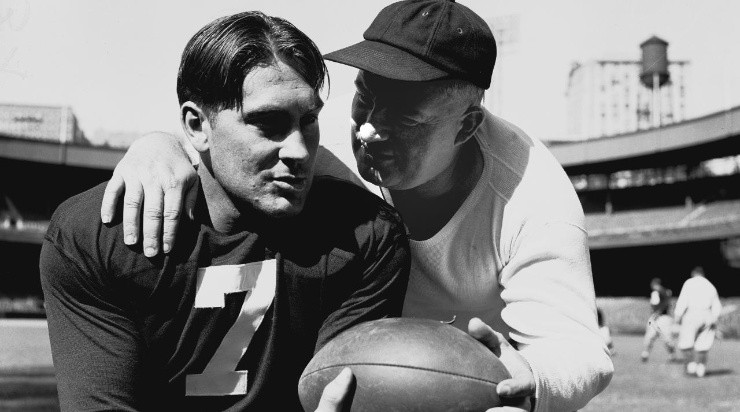
A true defensive titan, Mel Hein captained the Giants during the 1930s and 40s, mastering the art of reading offenses and dominating the line of scrimmage. He played center on offense and linebacker on defense, epitomizing the two-way player in an era before specialization.
His intelligence, toughness, and leadership made him the first lineman ever inducted into the Pro Football Hall of Fame, a milestone recognizing his immense influence on the game. His role in stabilizing the Giants through challenging seasons helped lay the groundwork for the franchise’s future successes.
19. Emlen Tunnell – S
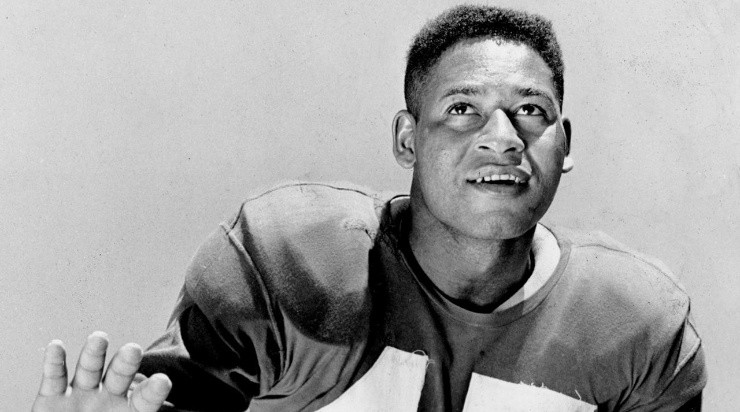
Emlen Tunnell was a trailblazer both on and off the field, becoming the NFL’s first African American Hall of Famer and breaking racial barriers in the process. Known for his blistering speed, exceptional instincts, and ball-hawking skills, Tunnell transformed the safety position into a dynamic defensive weapon.
Over his career, he set interception records and was integral to Giants defenses that prided themselves on opportunistic playmaking. Beyond statistics, his dignified presence and community involvement established him as a role model during a pivotal time in sports and society.
18. Sam Huff – LB
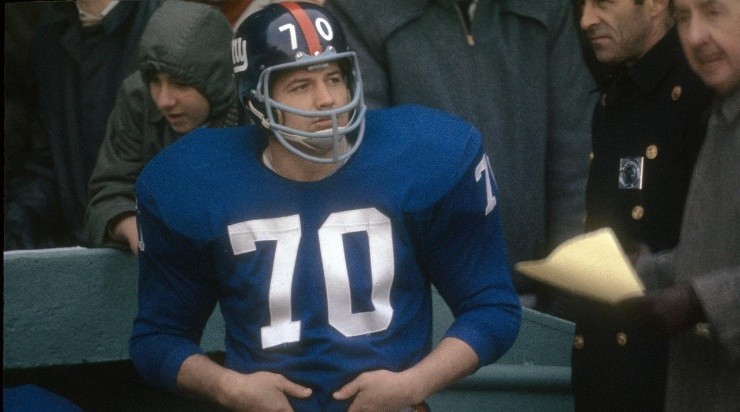
Sam Huff defined linebacker play with his fierce intensity, physicality, and leadership throughout the 1950s and 60s. As the emotional and strategic core of the Giants’ defense, he was known for his ability to diagnose plays and disrupt offenses, earning a reputation as one of the toughest and smartest defenders in the league.
He helped popularize the middle linebacker role, bringing national attention to the position’s importance through televised games and media appearances. Huff’s contributions extended beyond the field, as he became a prominent ambassador for the sport.
17. Mark Bavaro – TE
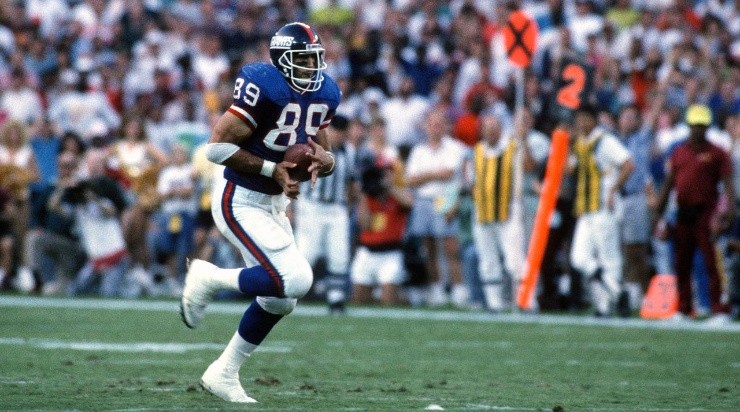
Mark Bavaro was the physical embodiment of grit and determination at the tight end position during the 1980s. His punishing blocks and sure hands made him a reliable target in critical moments, especially during the Giants’ Super Bowl runs in 1986 and 1990.
Known for playing through pain and injury, his toughness set the tone for the team’s blue-collar identity. His chemistry with quarterback Phil Simms was a key component of New York’s offensive success, and his work ethic remains a benchmark for future Giants tight ends.
16. Brad Van Pelt – LB
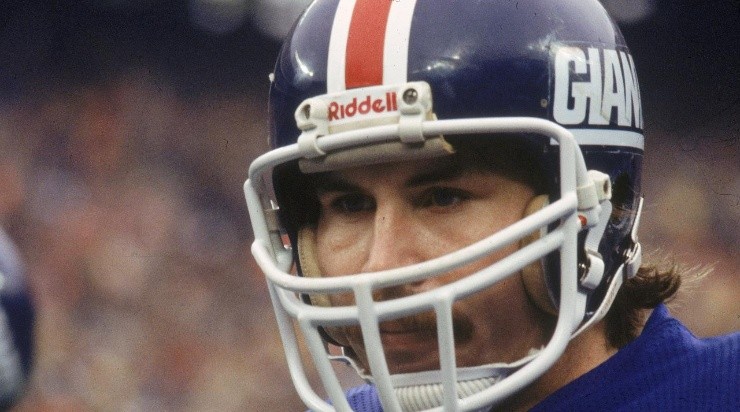
Brad Van Pelt was a cerebral and athletic linebacker who combined instinctual playmaking with physical toughness. During his tenure with the Giants, he was a consistent force against both the run and pass, earning multiple Pro Bowl selections.
His leadership and on-field awareness made him a reliable pillar in the defense, capable of adjusting schemes and rallying teammates. His professionalism and consistency embodied the defensive mindset the Giants prized in their personnel.
15. Amani Toomer – WR
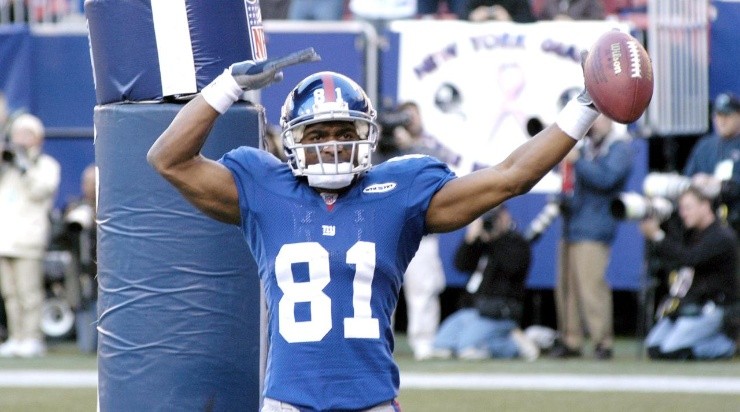
Amani Toomer was a paragon of consistency and professionalism in the Giants’ receiving corps throughout the late 1990s and 2000s. Known for crisp route-running, sure hands, and an ability to make clutch catches, he set several franchise receiving records.
His calm demeanor and reliability made him a quarterback’s trusted weapon for over a decade. His career longevity and steady production helped stabilize the Giants’ offense during years of transition.
14. Jesse Armstead – LB
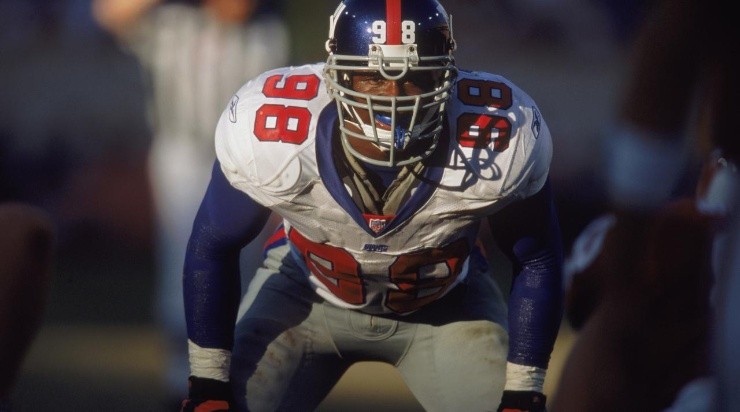
Jesse Armstead was a symbol of toughness and tenacity on the Giants’ defense in the 1990s. His quickness and strength allowed him to be effective against the run and as a pass rusher.
He played a pivotal role in the Giants’ defensive schemes that led to playoff appearances and a Super Bowl championship in the 1990s. Beyond statistics, his leadership qualities and willingness to make game-changing plays made him a fan favorite and respected teammate.
13. George Martin – DE
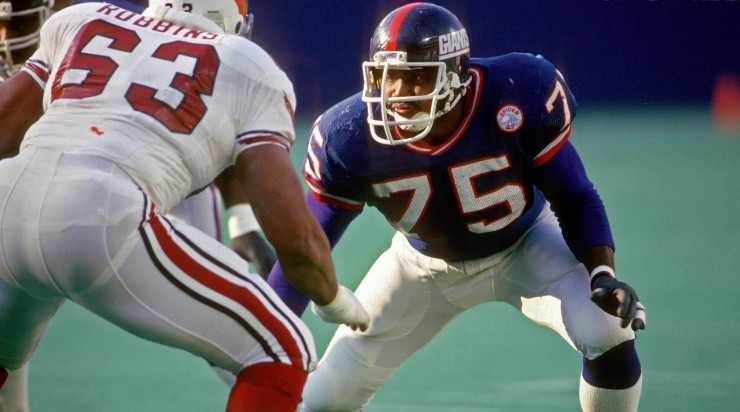
George Martin’s relentless pass rush throughout the 1970s and 80s made him a disruptive force for opposing offenses. His technical skill and fierce determination helped the Giants stay competitive in a challenging era.
His consistency and professionalism were hallmarks of his career, and he often set the tone for the defense with his intensity. His work ethic influenced younger players and contributed to the evolving culture of Giants football.
12. Rosey Brown – OT
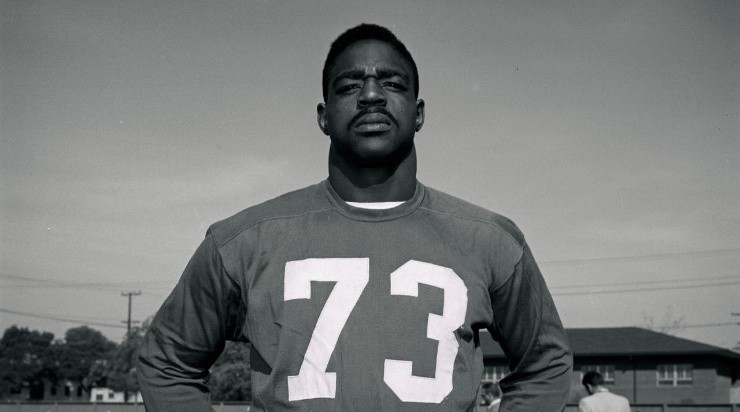
Rosey Brown was an immovable wall on the Giants’ offensive line during the 1950s and 60s, renowned for his strength, agility, and technique. Protecting the quarterback and opening lanes for the running game, he anchored one of the NFL’s most formidable lines.
His athleticism helped redefine what was expected from offensive tackles, and his success contributed to multiple Giants playoff runs. His legacy is that of a pioneer who set a standard for linemen in the league.
11. Leonard Marshall – DE
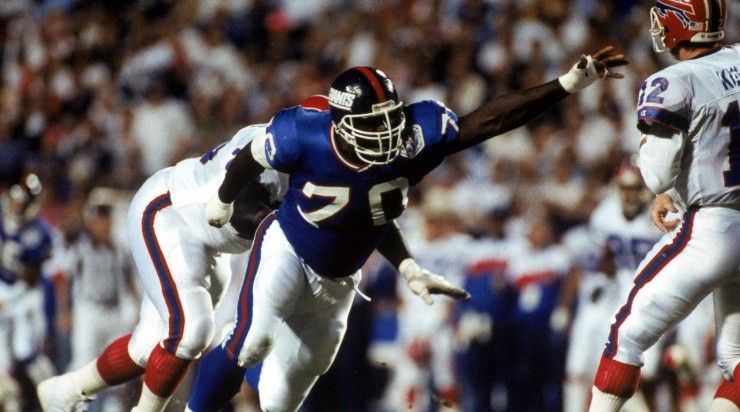
Leonard Marshall terrorized quarterbacks in the late 80s and early 90s, anchoring the Giants’ fierce defensive front that secured two Super Bowl titles. Known for his strength and relentless motor, he made game-changing plays, most famously his sack that knocked Joe Montana out of the 1990 NFC Championship game. His impact was as much psychological as physical, embodying the toughness and resolve that defined the Giants’ defense of that era.
10. Chris Snee – Scout
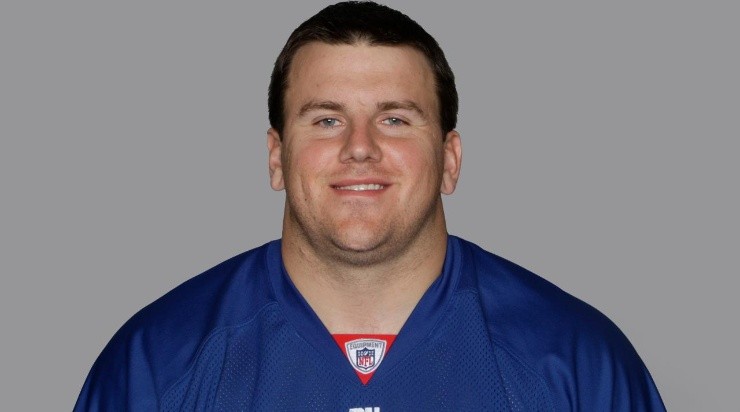
Chris Snee was the dependable cornerstone of the Giants’ offensive line in the 2000s, providing crucial protection for quarterbacks and creating running lanes. His technical skill, toughness, and leadership were vital during the team’s two Super Bowl championship runs. Known for his work ethic and consistency, he became one of the most respected linemen of his generation and a fan favorite in New York.
9. Osi Umenyiora – DE
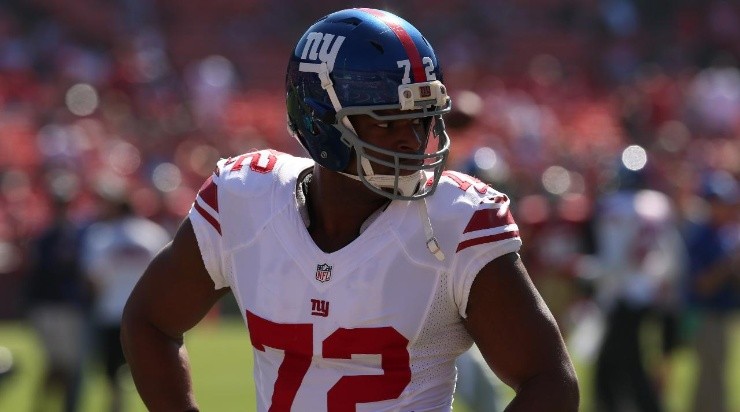
Osi Umenyiora brought explosive pass-rushing ability to the Giants during their Super Bowl-winning seasons in the late 2000s. His quickness, agility, and relentless pursuit disrupted offensive lines and pressured some of the league’s best quarterbacks. Beyond stats, his fiery passion and work ethic energized the defense and inspired teammates, playing a key role in New York’s defensive dominance.
8. Phil Simms – QB
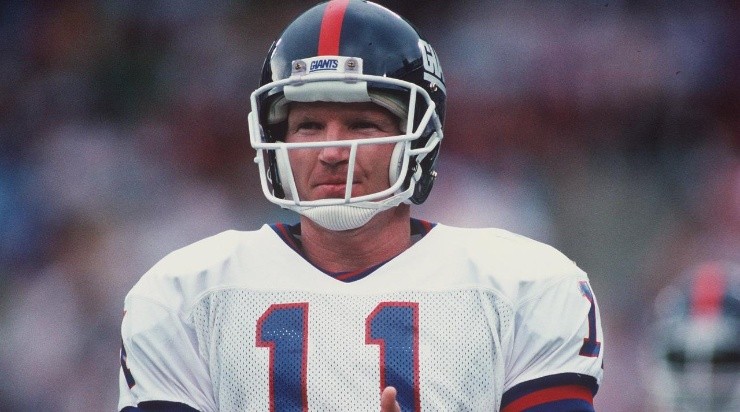
Phil Simms was the poised, accurate leader of the Giants’ offense in the 1980s, guiding the team to two Super Bowl championships. His performance in Super Bowl XXI, completing 22 of 25 passes, stands as one of the most efficient in NFL history. His calm demeanor and clutch play earned him respect as a franchise quarterback and a cornerstone of one of the Giants’ most successful eras.
7. Carl Banks – LB
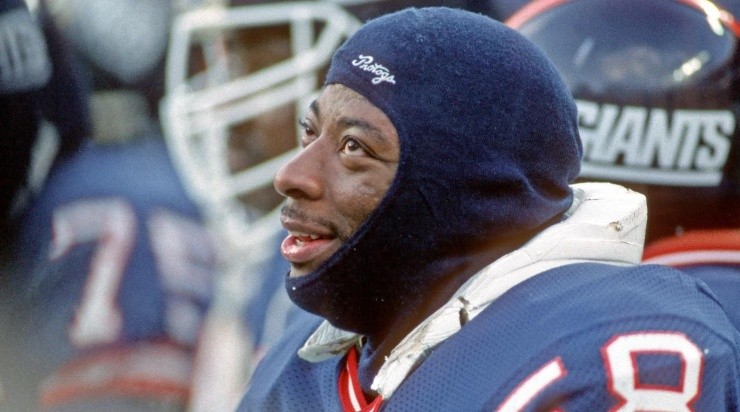
Carl Banks combined power, speed, and versatility, anchoring the Giants’ defense in the 1980s. As a key member of the “Big Blue Wrecking Crew”, he excelled in stopping the run and applying pressure on quarterbacks. His relentless motor and football intelligence made him an intimidating presence and a leader on a defense that consistently dominated opponents.
6. Tiki Barber – RB
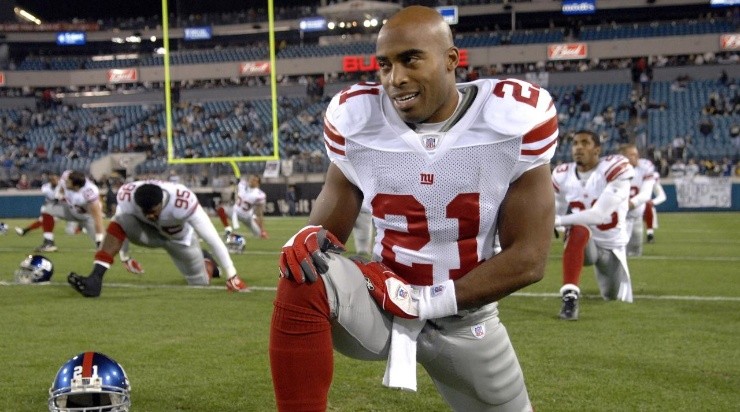
Tiki Barber electrified Giants fans throughout the 2000s with his exceptional vision, speed, and playmaking ability. His versatility as both a runner and receiver helped reshape the Giants’ offense, and he retired as the franchise’s all-time leading rusher. His knack for breaking long runs and producing highlight-reel plays made him one of the most exciting backs of his era.
5. Justin Tuck – DE
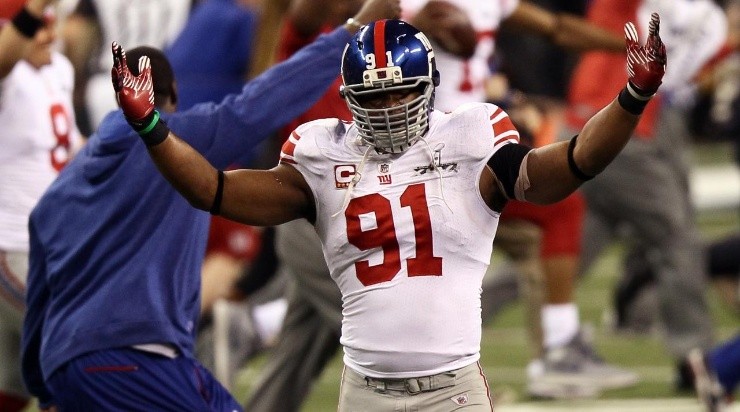
Justin Tuck was the fiery leader of the Giants’ defensive front during the team’s two Super Bowl victories in the late 2000s. His ability to collapse the pocket and make crucial plays in big moments helped define the team’s championship runs. Known for his intensity and resilience, his presence elevated the entire defense and earned him a place among Giants greats.
4. Harry Carson – LB
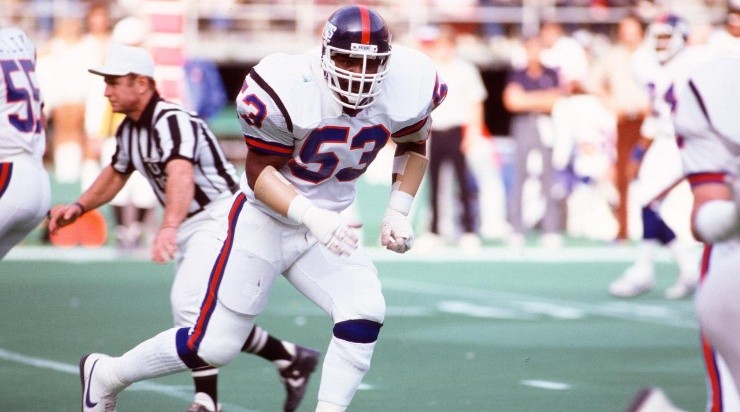
Harry Carson epitomized leadership and defensive mastery for the Giants throughout the 70s and 80s. His ability to read offenses, make tackles, and inspire teammates earned him a Pro Football Hall of Fame induction and a reputation as one of the NFL’s all-time great linebackers. His professionalism and toughness set the standard for Giants defenders for decades.
3. Michael Strahan – DE
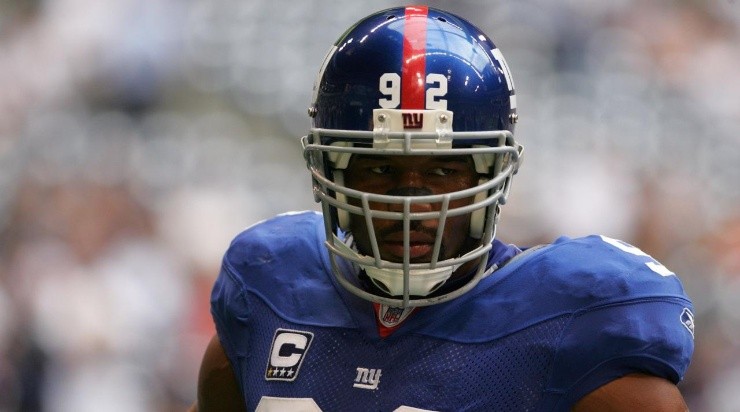
Michael Strahan combined elite athleticism with a magnetic personality, becoming one of the Giants’ most beloved figures. His single-season sack record and dominant role in the Super Bowl XLII victory solidified his legacy as one of the best defensive ends ever. Off the field, his successful transition to television broadened his influence well beyond football, making him a cultural icon.
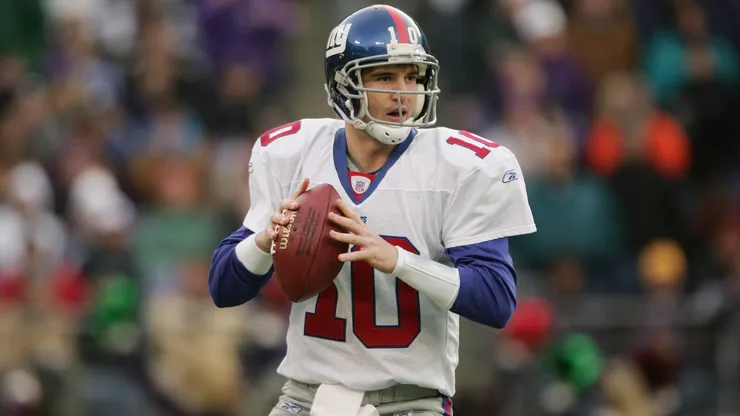
2. Eli Manning – QB
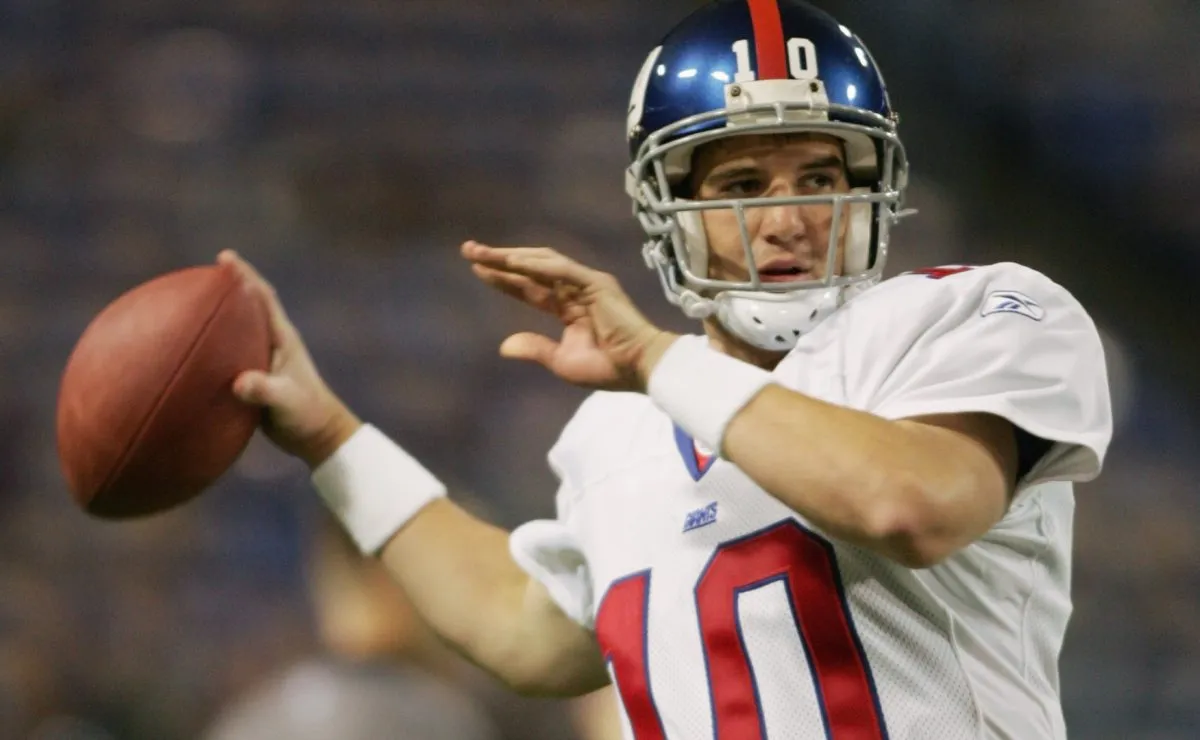
Eli Manning #10 of the New York Giants warms up prior to the game against the Minnesota Vikings on October 31, 2004. (Source: Jonathan Ferrey/Getty Images)
Eli Manning led the Giants into a new era of success with two memorable Super Bowl victories, famously defeating the New England Patriots both times. His calm under pressure, poise in clutch situations, and durability over a 16-year career made him a beloved figure in New York sports. His leadership and resilience helped restore the Giants’ status as a championship-caliber franchise.
1. Lawrence Taylor – LB
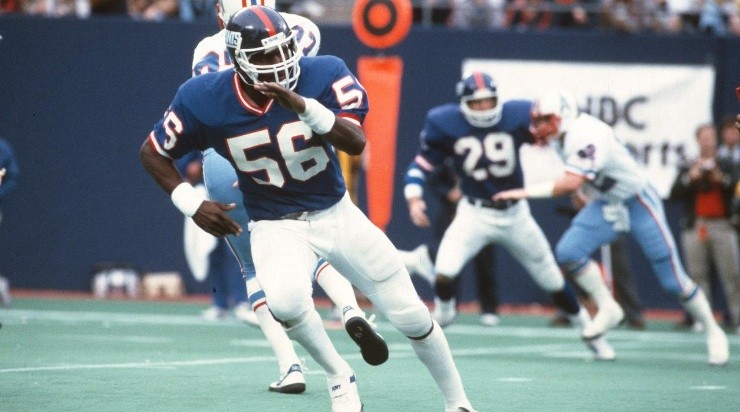
Lawrence Taylor revolucionized the linebacker position and arguably the entire defensive game in the NFL. Joining the Giants in 1981, his blend of unparalleled athleticism, relentless aggression, and game-changing instincts transformed New York’s defense into a feared unit overnight.
Known for his explosive pass rush and ability to disrupt offenses, he redefined what it meant to be a linebacker—no longer just a tackler but a true playmaker capable of altering the flow of the game. His tenacity and dominance led the Giants to two Super Bowl titles, earning him NFL MVP honors in 1986, a rare feat for a defensive player.
His impact transcended statistics; he inspired a new generation of defensive players and shifted the strategic approach of NFL offenses to contain him. Beyond his on-field prowess, his charisma and controversial personality made him one of the most captivating figures in football history, forever altering the Big Blue’s legacy.