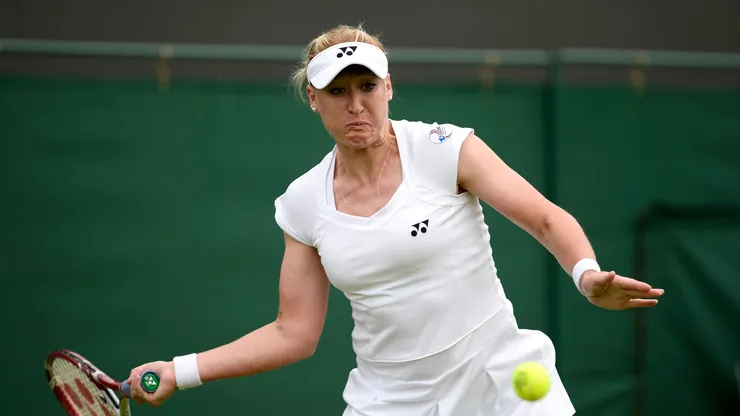
Elena Baltacha’s legacy in the world of tennis transcends trophies and rankings. The Ukrainian-born, British-raised player passed away at just 30 years old, but left behind a story defined not by titles, but by extraordinary resilience. Throughout her entire professional career, Baltacha battled a chronic liver condition while competing on the WTA Tour, a testament to her determination and strength.
Baltacha turned professional in 1997, beginning her journey on the ITF circuit. Her early years showcased glimpses of promise, highlighted by a breakthrough performance in 2001 when she reached the semifinals at the Wimbledon Junior Championships. The year before, she had claimed a silver medal at the 2000 Commonwealth Youth Games, signaling her potential on the international stage.
At just 19, Baltacha received a life-changing diagnosis: primary sclerosing cholangitis, a rare and incurable liver disease. Despite the setback, she refused to step away from the sport she loved. Over the course of her career, she captured 11 titles on the ITF circuit, earning respect for her grit and perseverance more than any Grand Slam stat sheet could reflect.
Though she never made a deep run in a major tournament, Baltacha earned multiple wild cards to Wimbledon and other WTA events. Despite early-round exits, her fighting spirit never wavered. In 2004, she underwent an invasive medical procedure that nearly ended her career. But true to form, she came back, battling not just opponents on the court, but the disease within.
Baltacha’s enduring legacy of resilience
Baltacha may never have lifted a Grand Slam trophy, but her career was marked by relentless determination and an unshakable passion for the sport. Although she never advanced beyond the third round of a Grand Slam or captured a WTA title, her spirit and perseverance left a lasting impression far beyond the scoreboard.
Year after year, Baltacha battled through the WTA circuit, chasing success with grit and grace. Her record may not reflect the full measure of her efforts, but those who followed her career knew she brought heart to every match she played. Her resilience in the face of repeated setbacks became one of her most defining qualities.
More than just a competitor, Baltacha earned widespread respect as a role model on and off the court. After retiring from professional tennis, she dedicated herself to causes greater than the game. Her courage in confronting illness and her advocacy work cemented her legacy in the tennis community.
In 2010, the same year she reached a career-high ranking of No. 49 in the world, Baltacha began working with the Children’s Liver Disease Foundation in the UK. Her commitment to raising awareness and supporting others battling serious illness highlighted the compassion that made her beloved among fans and peers alike.
A graceful exit from the game
In 2013, Baltacha made the difficult decision to retire from professional tennis to focus on her personal life and her marriage to longtime coach Nino Severino. The couple married that December, turning the page on a new chapter away from the tour.
But just one month later, Baltacha received a devastating diagnosis: liver cancer. The former British No. 1 faced her final challenge with the same bravery she showed on court. Over the next few months, she spent time with loved ones, embracing each moment as she quietly prepared for what was to come.
Baltacha passed away in May 2014 at the age of 30. Her death sent shockwaves through the tennis world. Players past and present expressed their sorrow and paid tribute to a woman whose strength and generosity had touched so many. In her memory, stars like Andy Murray, Jelena Jankovic, and Svetlana Kuznetsova gathered for a tribute match in Britain, honoring her life and legacy.
In 2015, the Nottingham Open renamed its women’s singles trophy in Baltacha’s honor. The Elena Baltacha Trophy serves as a lasting reminder of her courage, character, and contribution to the sport. Though she left us far too soon, her legacy lives on, not just in the record books, but in the hearts of those who admired her as one of the WTA’s most inspirational figures.