The Raiders’ legacy is carved in silver and black, a history marked by swagger, grit, and unforgettable talent. From the early days in Oakland to the bright lights of Las Vegas, certain NFL stars have become synonymous with the team’s identity and its rebellious spirit.
Tim Brown’s precise routes, Charles Woodson’s game-changing plays, and Marcus Allen’s relentless drive helped define eras of dominance. Each icon left a mark not just on the field, but on a franchise that thrives on larger-than-life personalities and legendary moments.
Through decades of highs and lows, their story has been shaped by those who embodied both skill and attitude. From early pioneers to modern stars like Derek Carr, some stand out as the pillars of a legacy that continues to captivate fans across generations.
Gene Upshaw
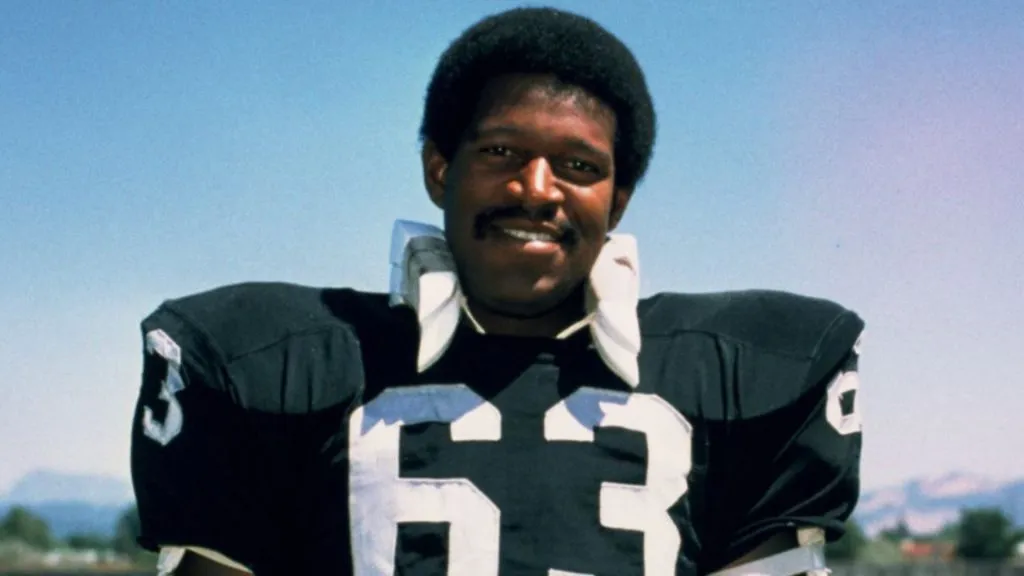
Gene Upshaw (Source: Raiders.com)
It is often said that offensive lines are the silent heart of a football team, but the Raiders’ heart beat with the thunderous rhythm of Gene Upshaw. Drafted in the first round in 1967, the left guard quickly became a constant, an immovable pillar embodying the franchise’s famed ruggedness and excellence.
He wasn’t merely a formidable in-game executor; he became the only player in NFL history to appear in the Super Bowl with the same franchise in three different decades—a staggering feat underscoring the success and longevity of the classic Raiders era.
Over his 15 seasons, he cemented a reputation as a total dominator, winning two Super Bowls, earning 5 First-Team All-Pro selections, and 6 Pro Bowls. Yet, his greatness transcended the gridiron: after retiring, he became the executive director of the NFL Players Association, a role he held until his passing in 2008.
He transitioned from a guardian in the trenches to a fierce protector of his peers’ rights across the entire league. A powerful, two-pronged legacy: one of relentless power on the field, and one of historic influence in the front office.
Derek Carr
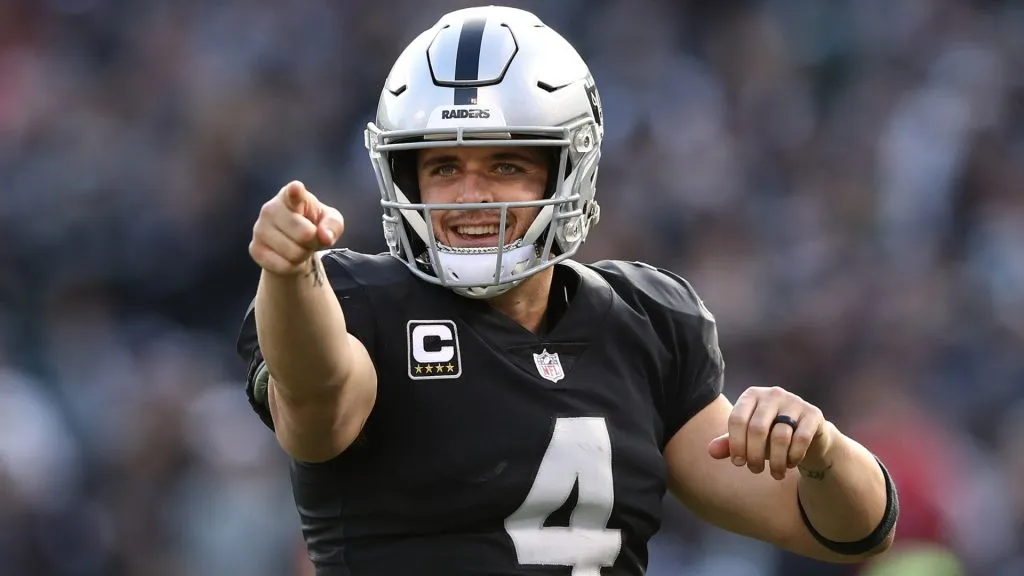
Derek Carr (Source: Ezra Shaw/Getty Images)
Few players in the tumultuous history of the Raiders have demonstrated the combination of loyalty, longevity, and statistical dominance that marked the nine seasons of Derek Carr. Drafted in the second round, he immediately earned the starting job, becoming the first rookie quarterback in franchise history to start a season opener, and eventually evolving into the unquestioned leader during a decade of immense organizational change and two moves across state lines.
His tenure fundamentally rewrote the Raiders’ passing record books. He holds nearly every major franchise record, including career passing yards, passing touchdowns, and completions. Yet, his legacy is defined by more than just numbers; it’s defined by the fight: he accumulated 33 game-winning drives and led the team to two playoff appearances.
The 2016 season, in particular, was his zenith, a near-MVP campaign that was tragically cut short by injury, derailing what many felt was a Super Bowl contender. A four-time Pro Bowl selection, he stands as the unflappable, record-breaking stalwart who provided a foundation of talent and fierce commitment during one of the most unpredictable chapters in the history of the Silver and Black.
Jim Otto
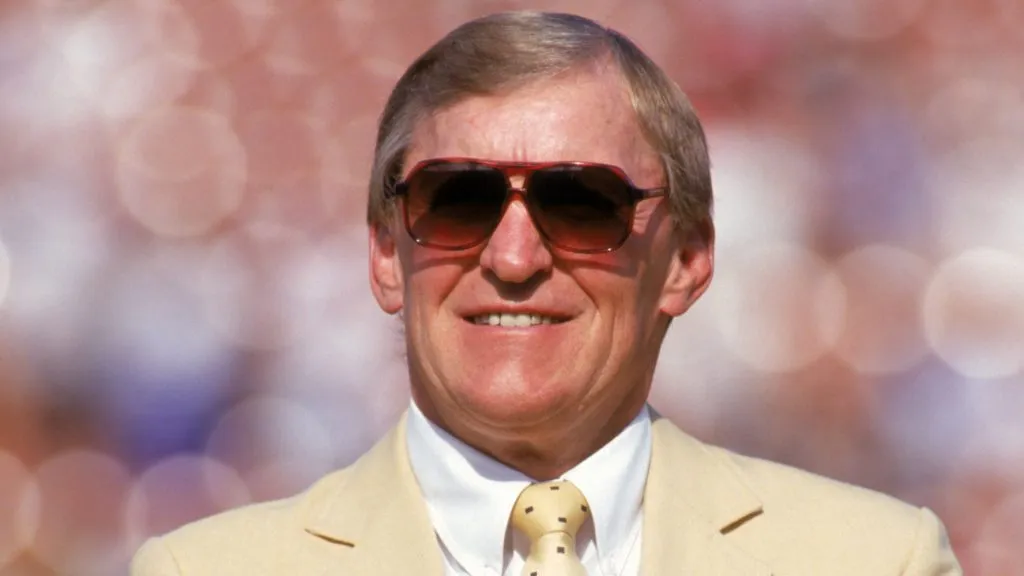
Jim Otto (Source: George Rose/Getty Images)
The nickname speaks volumes: “Iron Man”. Jim Otto was the absolute embodiment of the tenacity and indomitable spirit that Al Davis sought. As the center who anchored the Raiders’ offensive line for 15 straight seasons, he never missed a single game in his entire career, an unbelievable display of durability in such a physically brutal position.
He was, quite literally, The Original Raider, present at the franchise’s birth in the AFL. He was selected to 12 Pro Bowls/AFL All-Star games, including 10 times to the First-Team All-Pro, a record of sheer dominance matched only once in league history.
His legendary toughness came at an incredible personal cost, necessitating over 70 surgeries after he retired—clear proof of the toll exacted by his unwavering commitment. The unique wearer of the ’00’ jersey didn’t just snap the ball; he was the central gear in an offensive machine built on pure will. He was inducted into the Hall of Fame in his first year of eligibility, in 1980.
Art Shell
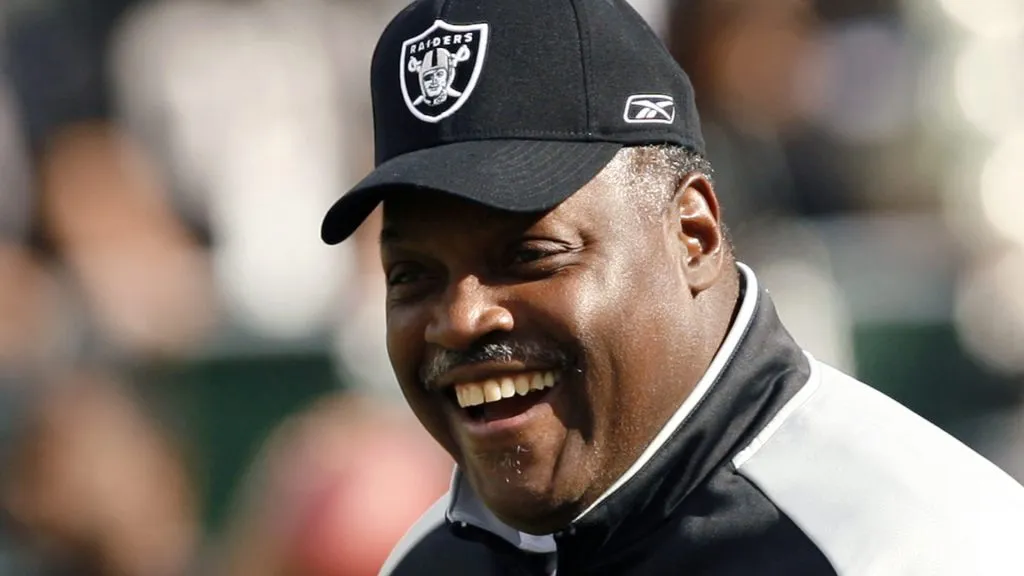
Art Shell (Source: Robert B. Stanton/NFLPhotoLibrary)
Not all offensive tackles receive the same spotlight as the skill players, but Art Shell earned it with a potent combination of imposing size (6’5″, 265 lbs) and polished technique. He was an impenetrable wall on the left side of the offensive line for 15 years with the Raiders, safeguarding quarterbacks and carving out clear avenues for the running game. He secured two Super Bowl titles and was selected to 8 Pro Bowls and 2 First-Team All-Pro squads.
But his mark on NFL history extends far beyond his Hall of Fame playing credentials. In 1989, he smashed a historic barrier by being named the NFL’s first modern-era African-American head coach when he took the reins of the Raiders. His ascent to such a visible leadership role is a testament to his character and football acumen, cementing his legacy as a true pioneer who opened doors both on the field and on the sideline.
Marcus Allen
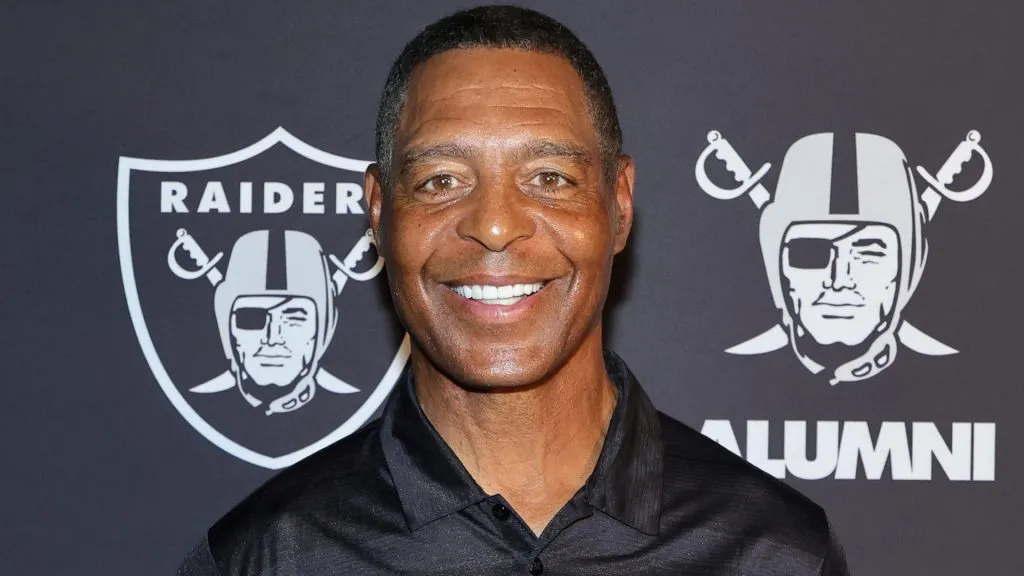
Marcus Allen (Source: Ethan Miller/Getty Images)
The Raiders’ No. 32 didn’t just run with the football; Marcus Allen danced with it. A Heisman Trophy winner at USC, he made an immediate impact upon arriving in Los Angeles in 1982, winning the Offensive Rookie of the Year award. He wasn’t simply a power back, but an artist of the clutch, famed for his ability to change direction with electrifying fluidity.
His undeniable masterpiece occurred in Super Bowl XVIII, where he set then-records with 191 rushing yards and scored one of the most iconic postseason touchdowns in history—a legendary 74-yard reverse-field scramble that culminated in a burst of speed.
He was rightfully named the Super Bowl MVP. In 1985, he secured the NFL MVP award, solidifying one of the most complete careers in running back history. Although his relationship with owner Al Davis deteriorated later on, the 11 seasons he spent with the franchise propelled him into the Hall of Fame in 2003, leaving him as the team’s historical rushing yards leader.
Howie Long

Howie Long (Source: Raiders.com)
With a physique that appeared sculpted for intimidation, Howie Long was the defensive terror for the Raiders from 1981 to 1993. Drafted in the second round, he swiftly established himself as a dominant defensive end and defensive tackle, renowned for his relentless work ethic and destructive ability to penetrate offensive lines.
He was a vital cog in the defense that led the Raiders to win Super Bowl XVIII. His impact was consistently recognized throughout his career, earning him 8 Pro Bowl selections and two First-Team All-Pro nods. He also clinched the Defensive Lineman of the Year award in 1985.
Following his Hall of Fame induction in 2000, he proved his charisma and knowledge transcended the field, transforming into a respected studio analyst on FOX NFL Sunday, where he has remained a central figure since 1994, transitioning his legacy from athlete to a versatile broadcaster and authoritative voice of the sport.
Tim Brown
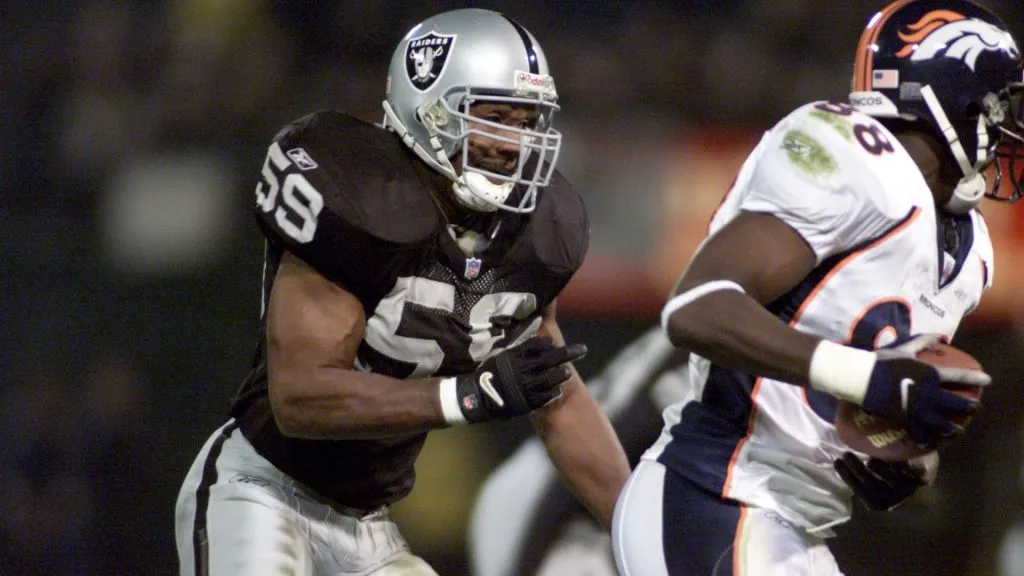
Tim Brown (Source: Jed Jacobsohn/Allsport)
If the Raiders’ ethos is built on flash and spectacle, then Tim Brown was the foundation of sheer, unrelenting consistency. Drafted sixth overall in 1988, the Heisman Trophy winner out of Notre Dame immediately announced himself not just as a wide receiver, but as a dynamic threat in the return game, leading the league in kickoff return yards as a rookie.
But his true legacy was forged over 16 seasons in the Silver and Black. He wasn’t defined by just one spectacular season, but by an entire decade where he posted nine consecutive 1,000-yard receiving seasons—a monument to his durability and unparalleled route running.
He retired as the franchise’s all-time leader in receptions, receiving yards, and receiving touchdowns. While he may have lacked the blazing top-end speed of some contemporaries, his precise movements, reliable hands, and clutch performances earned him nine Pro Bowl selections and the eternal title of “Mr. Raider”, a testament to his status as the defining offensive star of the post-Stabler era.
Ted Hendricks
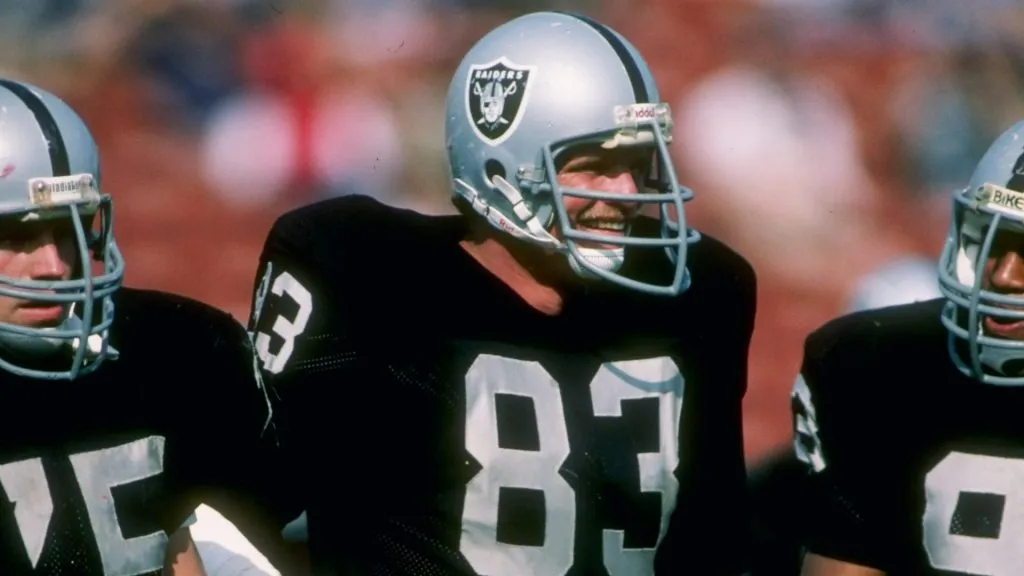
Ted Hendricks (Source: Getty Images)
There has never been, nor will there ever be, another player quite like Ted Hendricks. Known by the fantastic moniker “The Mad Stork”, the 6-foot-7 linebacker was a beautiful enigma: long, lanky, eccentrically unpredictable, yet functionally devastating. Acquired by the Raiders in 1975, he immediately became the centerpiece of an imposing defense, winning three Super Bowls with the franchise.
His game was all about disruption. He wasn’t just a tackler; he was a master of chaos, renowned for his ability to block kicks—amassing an astonishing 25 total blocked field goals and PATs during his career. This ability to instantly flip field position made him a defensive weapon unlike any other.
Whether riding a horse onto the practice field or wearing outlandish masks on the sideline, the Hall of Famer fully embraced the Raiders’ defiant spirit, ensuring opponents never knew what defensive wizardry “Kick ‘Em in the Head Ted” would unleash next.
Willie Brown
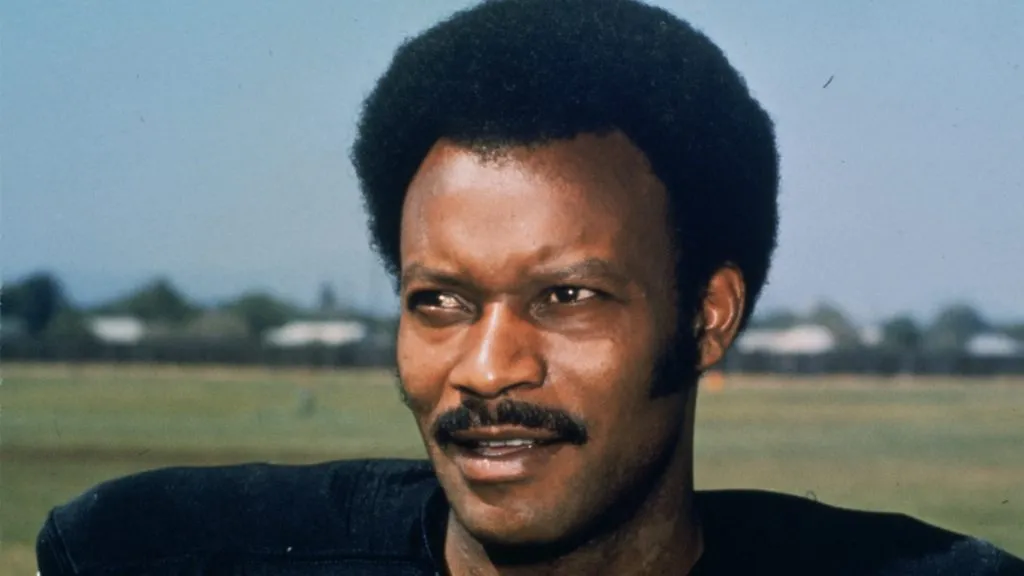
Willie Brown (Source: Raiders.com)
The Raiders have always been associated with an aggressive, unapologetic style, and no defensive player personified this more than Willie Brown. Traded to the Raiders in 1967, he became the physical prototype for the “bump-and-run” coverage style—getting right in a receiver’s face at the line of scrimmage, dictating the tempo, and daring them to win.
A 9-time Pro Bowler and 7-time All-Pro, he was a ball-hawk who rarely conceded space, leaving an indelible mark on the team’s record books as the franchise co-leader in career interceptions.
His single most iconic moment came late in Super Bowl XI; at 36 years old, the veteran intercepted a Fran Tarkenton pass and returned it a then-record 75 yards for the game-clinching touchdown. The radio call of “He’s going all the way! Old Man Willie!” immortalized both the player and the moment, securing his status as a defensive general and a first-ballot Hall of Famer.
Ken Stabler
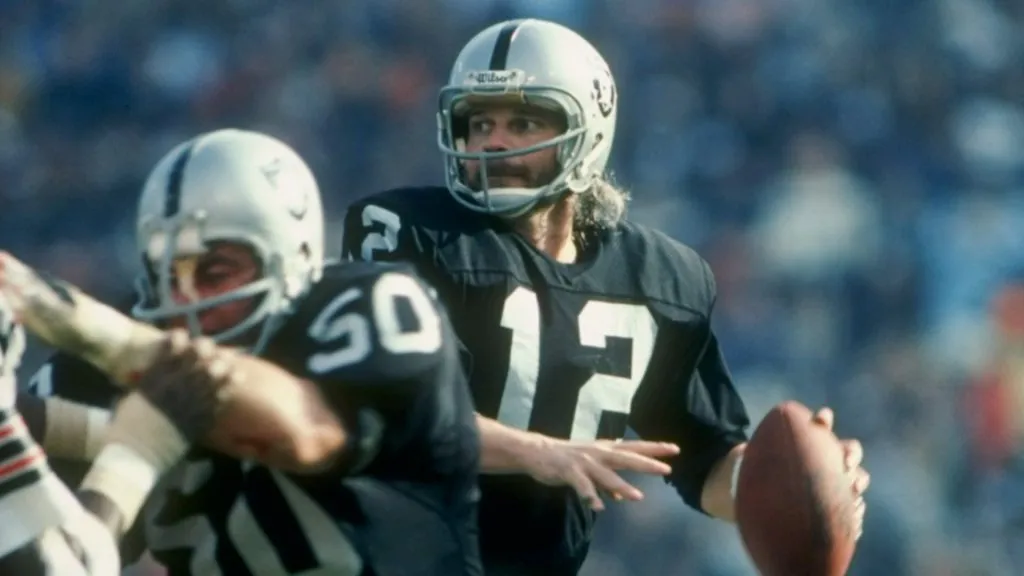
Ken Stabler (Source: Allsport / Getty Images)
Forget the pristine quarterback models; Ken “The Snake” Stabler was the ultimate anti-establishment hero of the Raiders. A long-haired lefty from Alabama, his legend was built on his ability to operate with ice-cold precision amidst the most chaotic pressure—a trait perfectly aligning with the team’s renegade mystique. He reportedly read game plans “by the light of the jukebox”, yet delivered on the field like few others.
He was the undisputed leader of the Raiders’ first Super Bowl champion team and remains associated with some of the most famous, improbable, and controversial plays in NFL history, including the “Sea of Hands” and the “Holy Roller”.
His MVP season in 1974 cemented his legacy as a field general, combining an accurate deep ball with a daring approach. The 1974 NFL MVP was the definition of “clutch,” perfectly capturing the heart and swagger of the 1970s Raiders, proving that sometimes, the coolest, most unconventional presence in the huddle is the one who delivers victory.
Charles Woodson
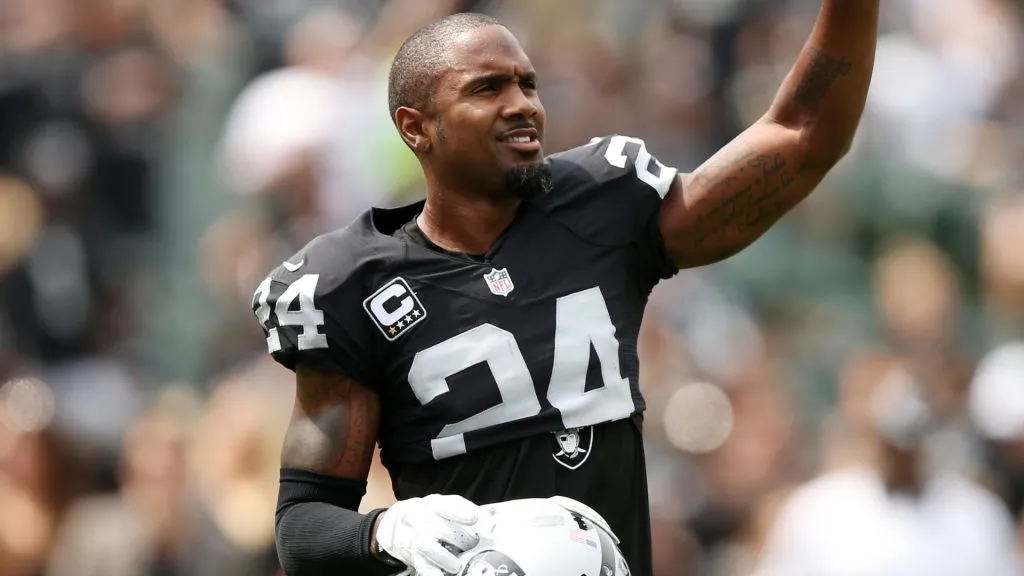
Charles Woodson (Source: Ezra Shaw/Getty Images)
Few players have ever achieved true legendary status with two separate acts, but Charles Woodson did just that with the Raiders. Arriving as the fourth overall pick and Heisman Trophy winner in 1998, he immediately became the AP Defensive Rookie of the Year. His early years were marked by an explosive, do-everything style at cornerback, blending elite coverage skills with a relentless ability to rush the passer and force turnovers.
After a successful middle chapter with Green Bay, he made a triumphant, storybook return to the Silver and Black in 2013, transitioning seamlessly to safety. This second act wasn’t a ceremonial farewell; it was a revival.
He became the first player in NFL history to record 50 interceptions and 20 sacks in a career, displaying exceptional longevity and football intelligence. His nine Pro Bowls span three different decades, an almost unbelievable testament to his enduring brilliance and his profound, dual-era connection to the Raiders franchise.
Fred Biletnikoff
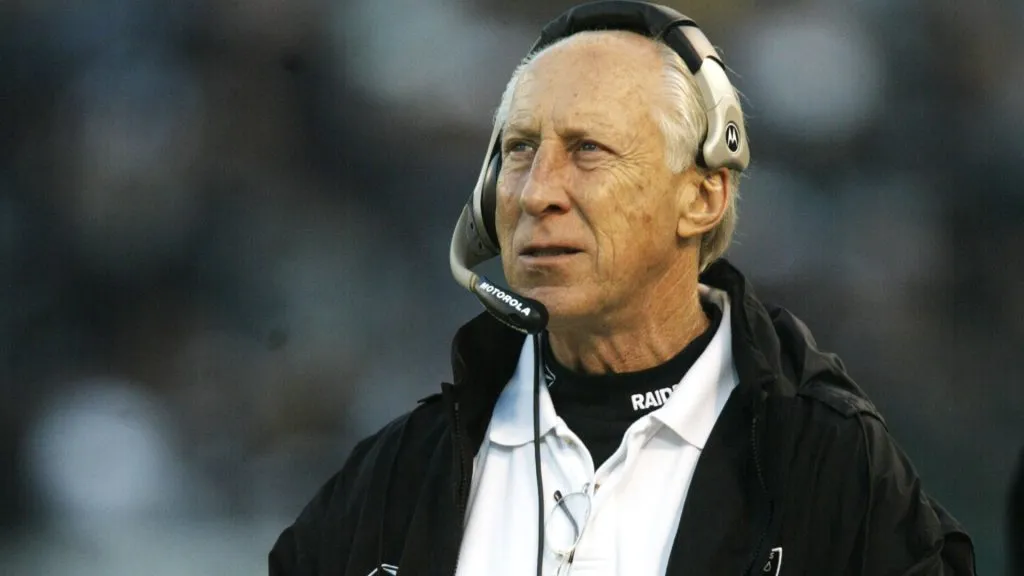
Fred Biletnikoff (Source: Stephen Dunn/Getty Images)
In an era dominated by the deep passing game, Fred Biletnikoff built his Hall of Fame career not on blistering speed, but on an unrivaled mastery of the route tree and the surest pair of hands in the game. Nicknamed “Dr. Zhivago” for his Russian heritage, he spent 14 seasons with the Raiders, compiling a list of receiving records for an era when the run game was paramount.
He was the artist of the short-to-intermediate game, utilizing a technique so unique it became legendary: his liberal, almost total, application of Stickum—an adhesive he used on his hands and even his socks—to ensure every pass stuck to him like glue.
This meticulousness paid off, culminating in him being named MVP of Super Bowl XI, securing the Raiders’ first championship. A 6-time All-Pro selection, he proved that precision, dedication to craft, and sticky preparation could conquer sheer athleticism, defining the receiver position for a generation.
Jack Tatum
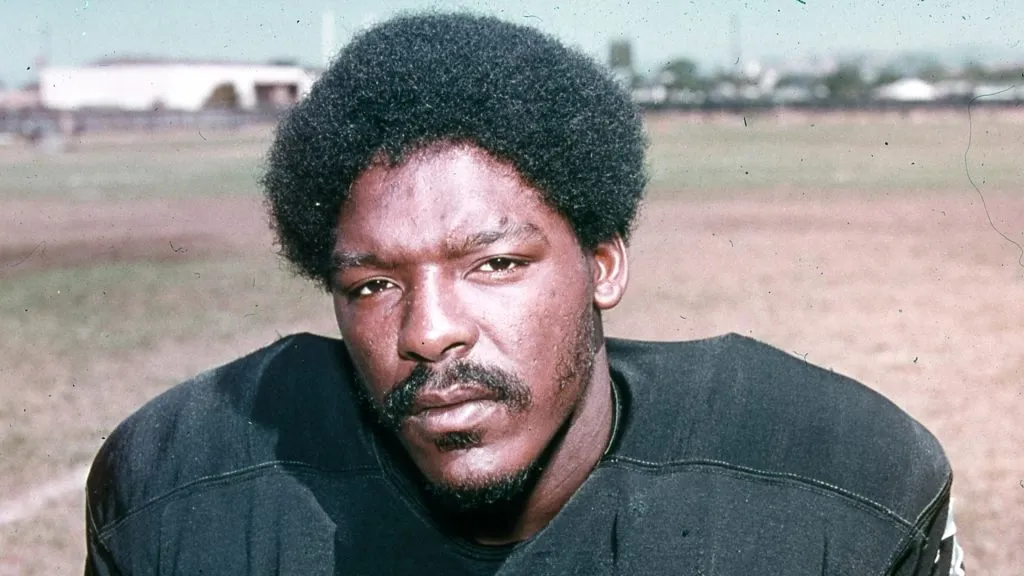
Jack Tatum (Source: Raiders.com)
In an era defined by hard hits, Jack Tatum was the hardest hitter of them all. Nicknamed “The Assassin”, the safety who patrolled the Raiders’ secondary from 1971 to 1979 wasn’t just physical; he was a force of nature who elevated the art of the defensive collision to a fearsome science.
He embodied the menacing, “win at all costs” attitude that Al Davis cultivated, striking fear into opposing wide receivers who dared cross the middle. His legacy is complex, marked both by his three Pro Bowl selections and the chilling reality of his impact.
His unforgettable hit on Vikings receiver Sammy White in Super Bowl XI is a highlight reel staple of defensive dominance, but his collision with Patriots receiver Darryl Stingley in 1978, which left Stingley paralyzed, is a tragic reminder of the game’s inherent violence. He was the uncompromising enforcer who defined the boundaries of the Raiders’ defensive aggression, leaving an undeniable, albeit controversial, mark on NFL history.
Cliff Branch
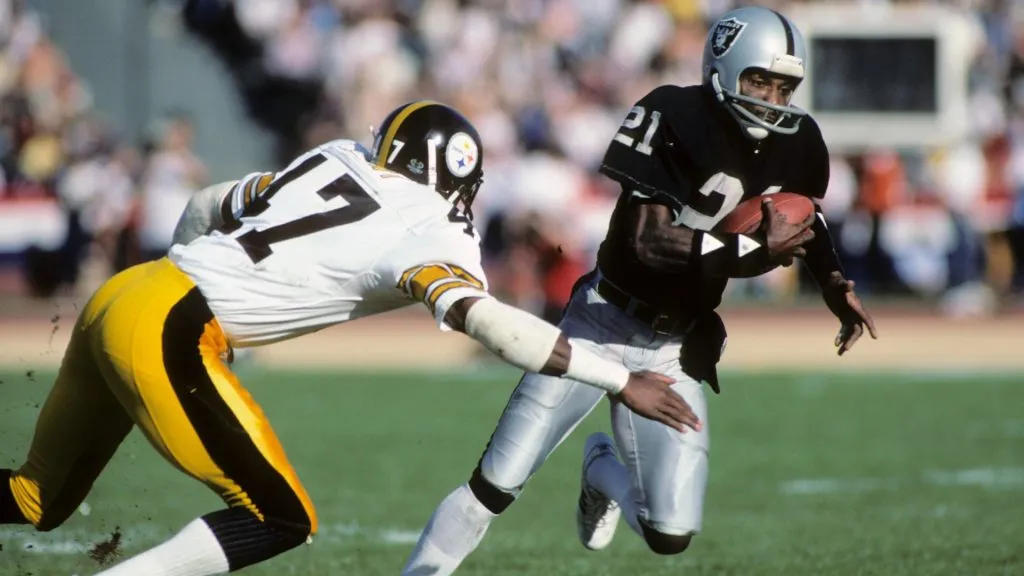
Cliff Branch (Source: George Rose/Getty Images)
While others relied on finesse, Cliff Branch simply relied on speed—blazing, game-breaking speed. The wide receiver, who played his entire 14-year career in Silver and Black, became the ultimate weapon in the Raiders’ deep-passing arsenal, often forcing safeties to play impossibly deep to prevent the home-run play.
A four-time Pro Bowl selection and three-time Super Bowl champion, he was the lightning strike to Ken Stabler’s cool delivery. His ability to turn a simple streak route into a decisive touchdown was unparalleled.
Despite compiling some of the most impressive statistics of his era, his long-overdue induction into the Pro Football Hall of Fame in 2022 was a moment of profound justice, finally acknowledging his role as the speed demon who helped the Raiders revolutionize downfield passing and defined their identity as an explosive, high-risk, high-reward offense.
Lester Hayes
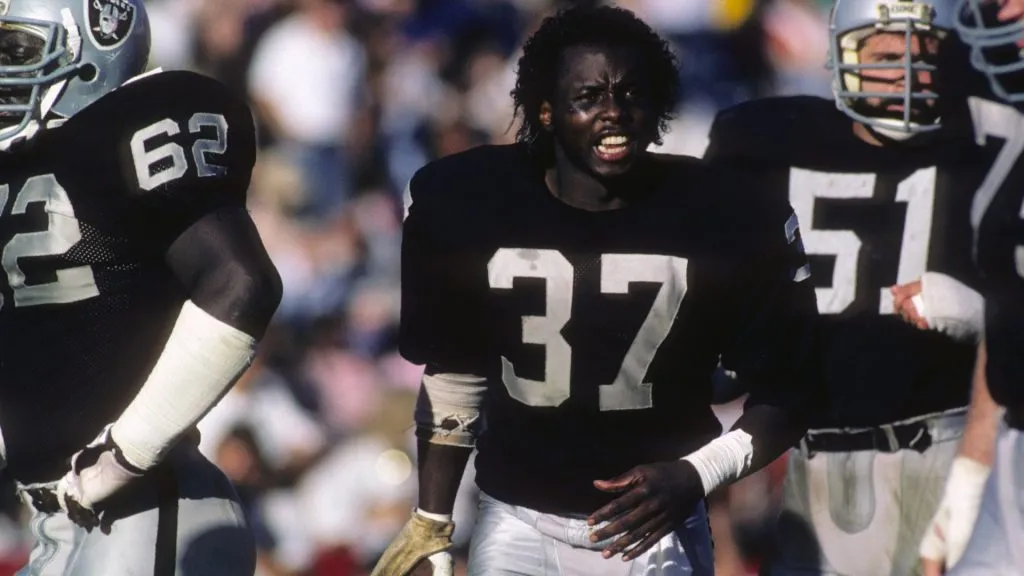
Lester Hayes (Source: George Rose/Getty Images)
If Willie Brown perfected the bump-and-run, Lester Hayes mastered the dark arts of the cornerback position with a swagger that was pure Raiders. Playing from 1977 to 1986, he became known not just for his shutdown coverage, but for his eccentric, pre-game ritual: dousing his forearms and socks in Stickum, the highly adhesive substance, turning himself into a walking, interception-magnet.
The practice was so effective that the NFL eventually banned the substance in 1981, largely due to his overwhelming success. That success peaked in 1980 when he intercepted a career-high 13 passes—a mark that earned him the AP Defensive Player of the Year award.
He was a six-time Pro Bowler and the physical embodiment of the Raiders’ rule-bending, audacious defensive style, proving that sometimes, being the most unconventional player on the field could also make you the most dominant.
Bo Jackson
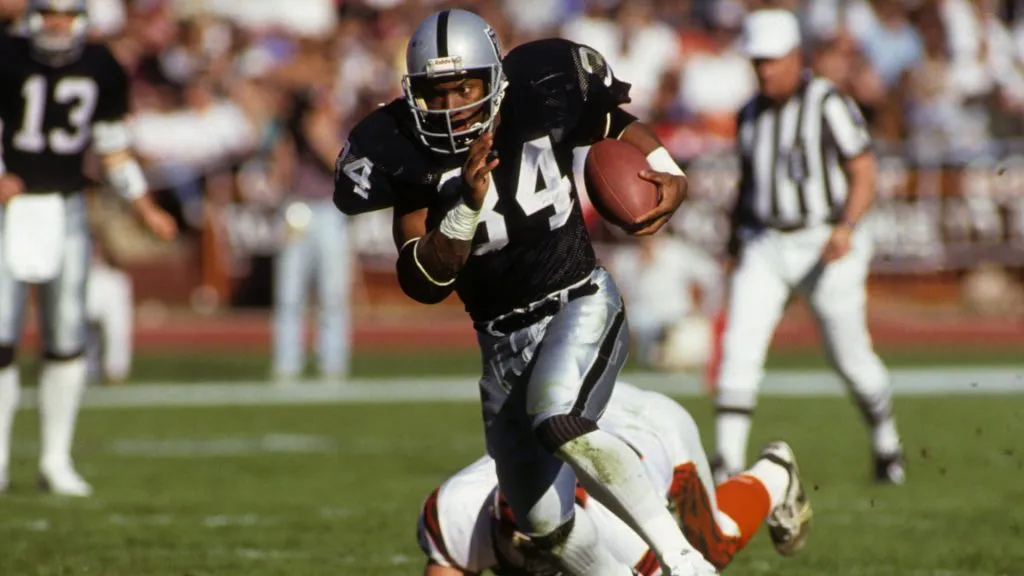
Bo Jackson (Source: George Rose/Getty Images)
The story of Bo Jackson in the NFL is arguably the greatest “what if” in sports history. The unique two-sport phenomenon—playing both professional baseball and football—spent only four years with the Raider, but those seasons were a dazzling display of unparalleled athletic majesty.
When he put on the Silver and Black, he was untouchable: a 230-pound running back with track-star speed, capable of running over or running away from any defender.
His performance against the Seattle Seahawks in 1987, where he ran for a team-record 221 yards and famously sprinted into the tunnel after a 91-yard touchdown, cemented his legend. Despite his career being tragically cut short by a hip injury, he was voted to the Pro Bowl in 1990.
He didn’t define a long legacy, but he defined a legendary chapter, reminding everyone that for a brief, glorious moment, the Raiders possessed the most physically gifted athlete the game had ever seen.
Jim Plunkett
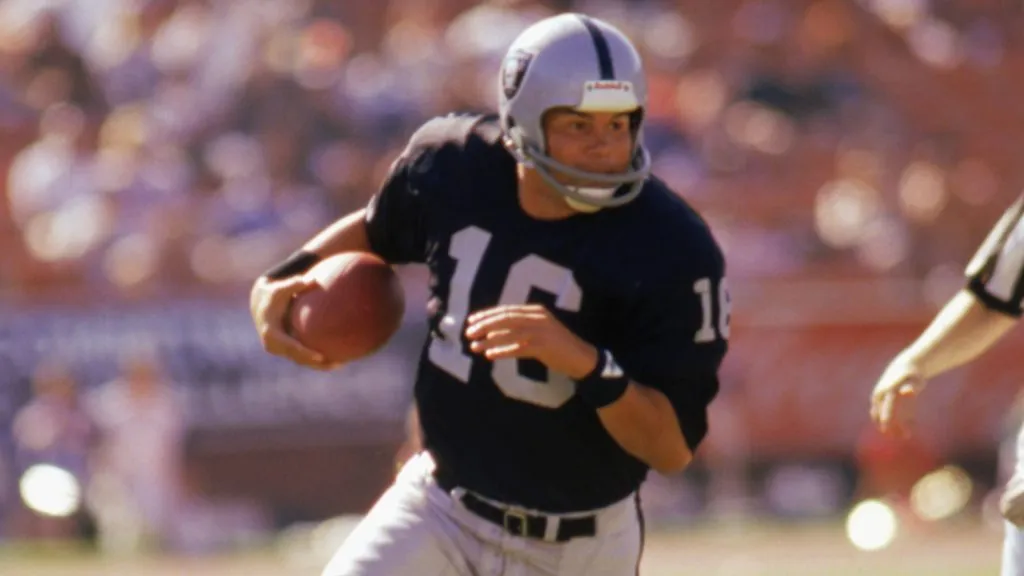
Jim Plunkett (Source: Mike Powell/Getty Images)
Jim Plunkett‘s career with the Raiders is a narrative of redemption, perseverance, and championship success that rivals any Hollywood script. Initially a Heisman Trophy winner and former No. 1 overall pick who struggled with two other franchises, he arrived in Oakland as a backup.
But when injury struck the starters, he seized the opportunity and authored one of the greatest career turnarounds in league history. In 1980, he led the Raiders on an improbable run as the first-ever Wild Card team to win the Super Bowl, earning MVP honors.
Three years later, he anchored the team to another championship in Super Bowl XVIII. His legacy is defined by his unyielding resolve and ability to perform his best when the pressure was highest. He stands as a testament to Al Davis’s belief in second chances and the power of resilience to rewrite a seemingly failed career into one marked by two rings.
Ray Guy
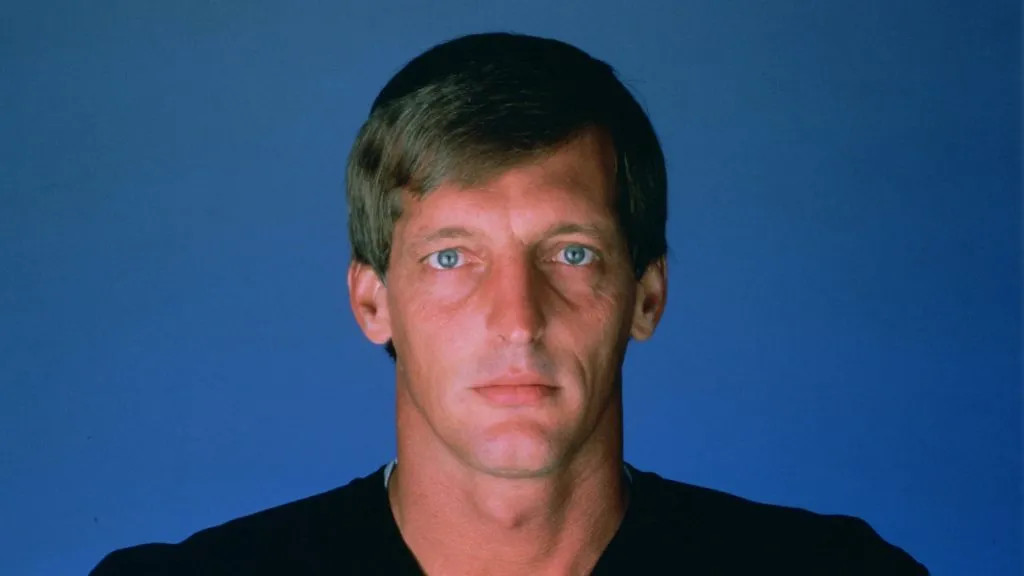
Ray Guy (Source: Raiders.com)
The fact that a punter could be considered a game-changing, franchise-defining player speaks volumes about the dominance and uniqueness of Ray Guy. Drafted in the first round in 1973—a highly controversial choice at the time—he immediately justified the faith, transforming the punting position from a necessary chore into an offensive weapon of field position.
His specialty was the “hang time”—his punts seemed to hang suspended in the stratosphere, giving the Raiders’ coverage teams ample time to run downfield and neutralize returns. He led the league in punting yards three times, was a 7-time Pro Bowler, and played on all three Raiders Super Bowl-winning teams.
More importantly, he broke the invisible barrier: He became the first dedicated punter to be inducted into the Pro Football Hall of Fame, forever solidifying his status not just as a Raider icon, but as the benchmark for punters in the modern NFL.
George Blanda
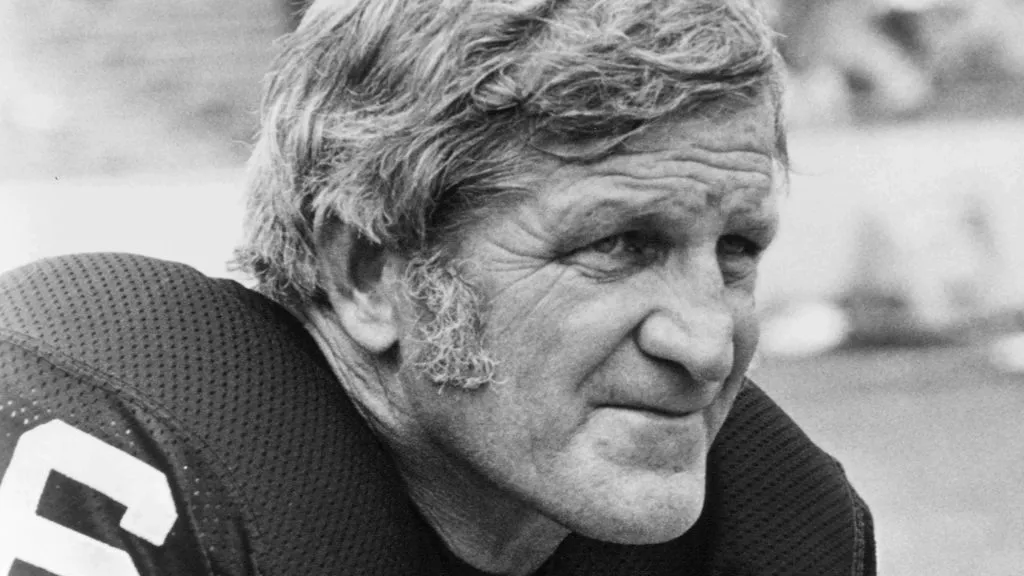
George Blanda (Source: Raiders.com)
No player in NFL history embodies the Raiders’ spirit of defying age and expectation quite like George Blanda. Signed by Al Davis at the seemingly impossible age of 40, he was not a curiosity; he was a catalyst. His eight seasons in the Silver and Black were defined by an improbable run of clutch performances that became known simply as the “Blanda Saga”.
In 1970, at 43 years old, he delivered a legendary five-week stretch where he led the Raiders to victory or a tie in five consecutive games, often serving as a relief quarterback, kicker, and ultimate closer.
His game-winning field goals and clutch touchdown passes made him the AP Athlete of the Year and cemented his status as a folk hero. His career spanned 26 professional seasons—a record that will likely never be broken—and his final retirement at age 48 solidified him as the Ageless Wonder and the original testament to the Raiders’ belief that talent and heart trump the calendar.
Shane Lechler
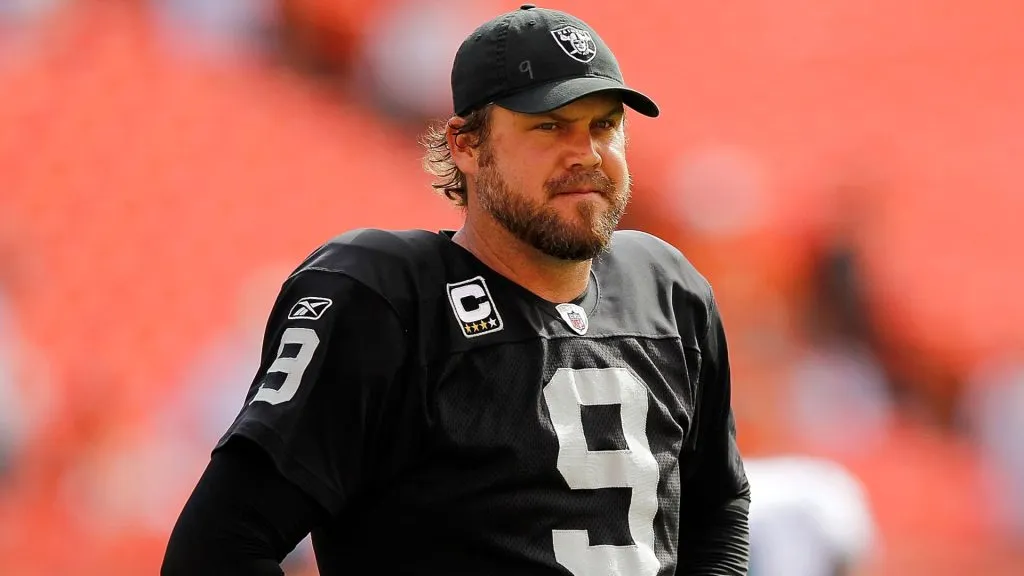
Shane Lechler (Source: Mike Ehrmann/Getty Images)
Before him, punters were utility players; after him, they were field generals. Shane Lechler was the embodiment of the weaponized special teamer, playing 13 seasons for the Raiders and becoming arguably the most powerful punter the NFL has ever seen. His leg wasn’t just strong; it was a cannon capable of flipping field position with frightening regularity
A seven-time Pro Bowler and six-time All-Pro, Lechler holds the NFL record for the highest career punting average, an astounding 47.6 yards per punt. He routinely turned third downs near midfield into drives starting deep inside the opponent’s territory, earning him the nickname “The Ballistic Missile”.
His impact transcended statistics; he changed defensive strategy and provided a massive hidden advantage, proving that in the unpredictable world of the Raiders, even the punter could be a marquee star and a Field-Flipping Force.
Sebastian Janikowski
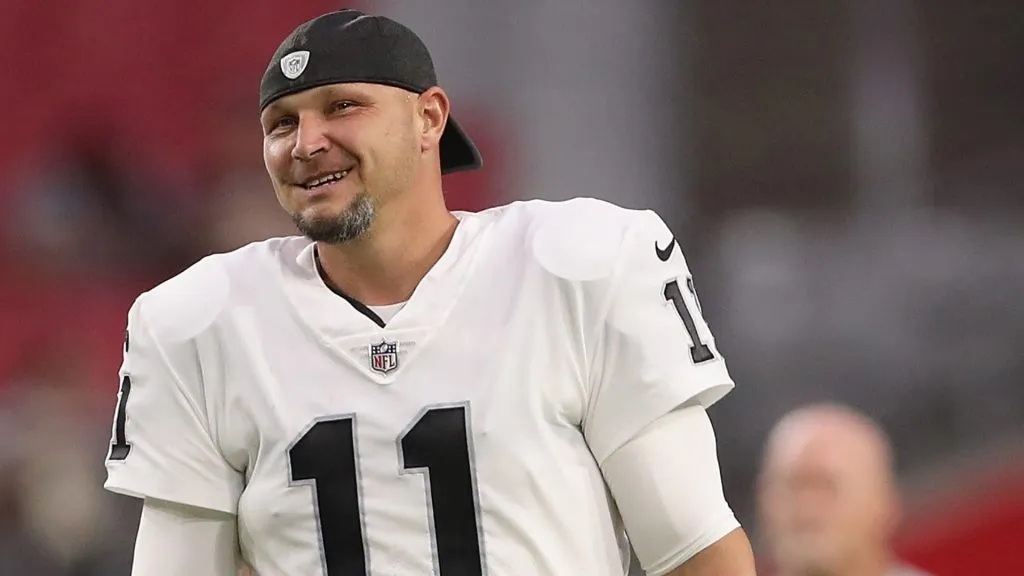
Sebastian Janikowski (Source: Christian Petersen/Getty Images)
The idea of drafting a kicker in the first round was, and remains, an act of sheer audacity—an act only the Raiders, under Al Davis, would commit. Sebastian Janikowski, the Polish powerhouse, justified the risk, kicking for the franchise for 18 seasons and becoming the longest-tenured player in team history. Known for his aggressive swagger and booming left leg, “Seabass” was the perfect specialist for the Raiders: loud, unconventional, and immensely talented.
He retired holding numerous franchise records, including career points and field goals made. Crucially, he was a long-distance legend, holding the NFL record for the longest field goal made for several years.
His presence guaranteed points from distances other teams wouldn’t even consider, making him a unique weapon. His consistent power and Atomic Toe redefined the boundaries of special teams scoring, forever linking his bold first-round selection with the team’s maverick history.
Darren McFadden
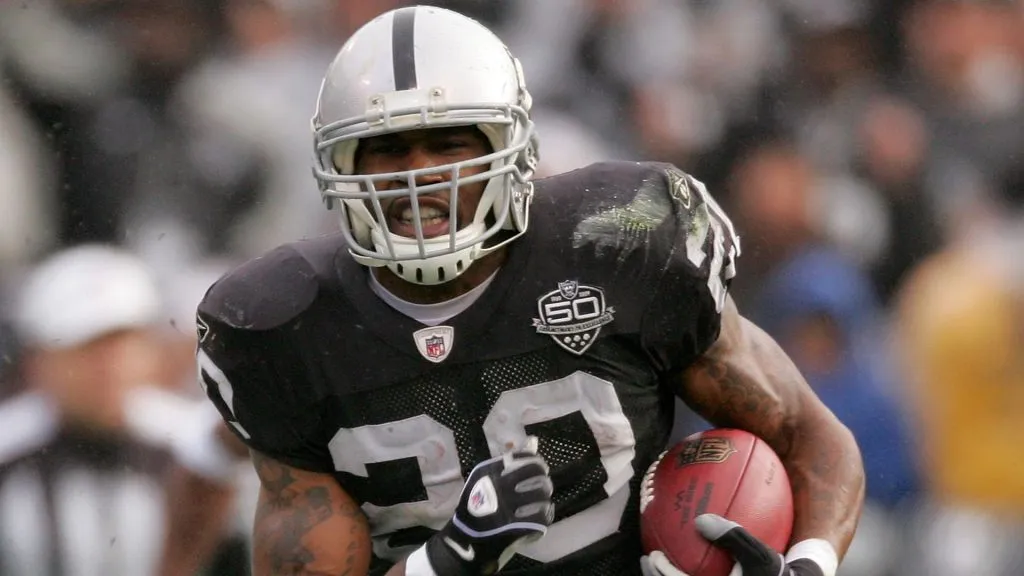
Darren McFadden (Source: Ezra Shaw/Getty Images)
Drafted fourth overall in 2008, Darren McFadden arrived in Oakland trailing a wake of college accolades and the expectation of becoming the next dominant force in the Raiders’ backfield tradition. Though his seven seasons with the Silver and Black were often punctuated by frustrating injuries, when healthy, he was a mesmerizing blend of size and blinding, open-field speed that captivated the fanbase.
He remains the franchise’s sixth-leading rusher, but his legacy is built on the tantalizing glimpses of greatness, particularly his breakout 2010 season where he ran for 1,157 yards and averaged an electric 5.2 yards per carry.
He was the ultimate lightning-in-a-bottle player; a running back who, at his peak, could change the geometry of the field on a single carry. His tenure highlights the “what if” narrative that often surrounds immense talent, but his highlights are definitive proof of the electric potential he brought to the Silver and Black.
Jerry Rice
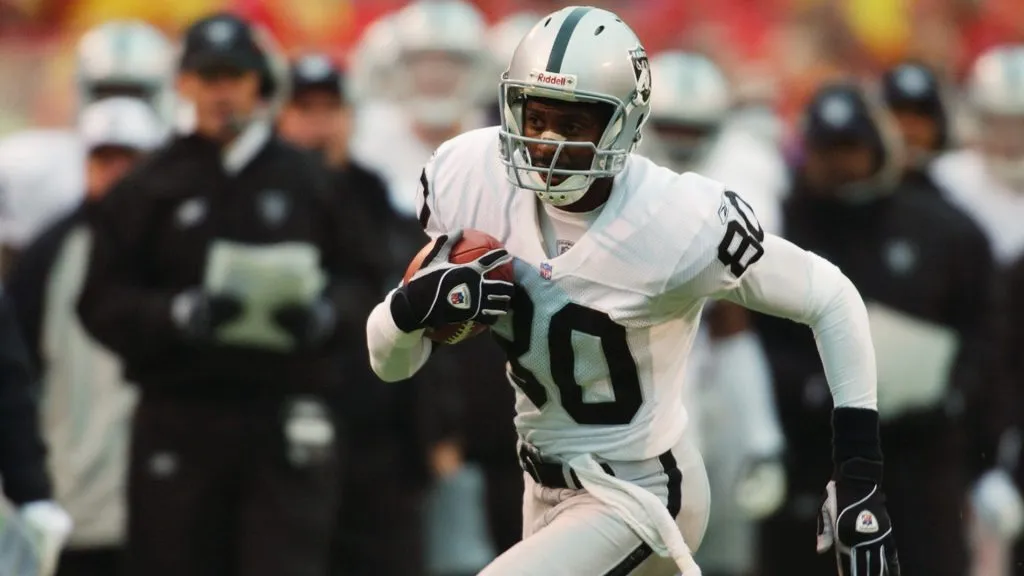
Jerry Rice (Source: Matthew Stockman/Getty Images)
The Raiders’ acquisition of Jerry Rice in 2001, already regarded as the greatest wide receiver in NFL history, was less about potential and more about adding proven, legendary production and leadership to a surging offense. Though his four seasons weren’t defined by the records he set in San Francisco, they were characterized by his unbelievable longevity and unyielding work ethic.
At an age when most receivers were long retired, he became a vital contributor to the Raiders’ two playoff runs, including the trip to Super Bowl XXXVII. He made the Pro Bowl in 2002 at the age of 40, posting an astonishing 92 receptions for 1,211 yards—a testament to his meticulous conditioning and dedication.
His time in Oakland proved he was the consummate professional, adding a final, extraordinary chapter to the Raiders’ story by showing younger players like Tim Brown and Jerry Porter what true, career-defining commitment looked like.
George Atkinson
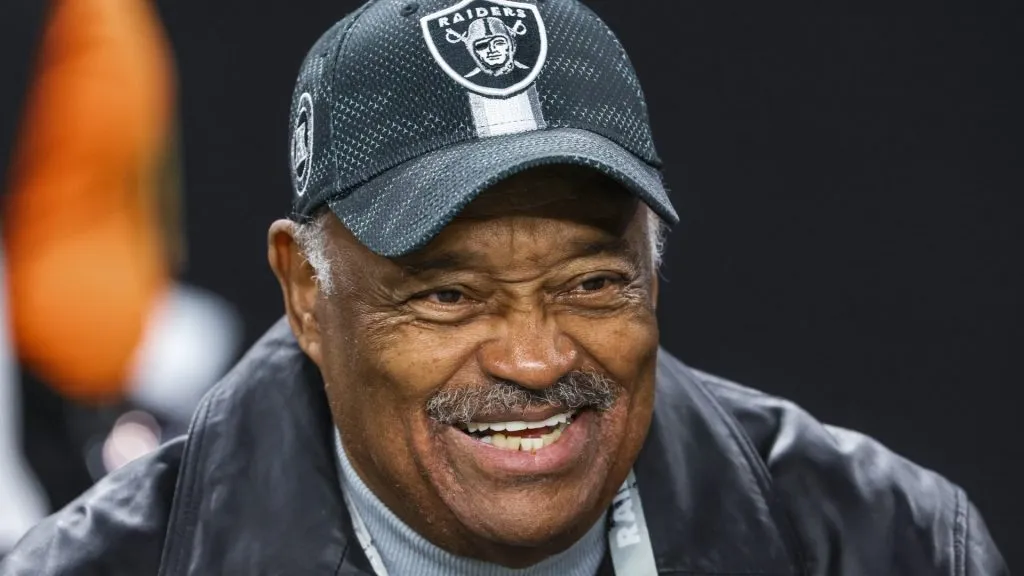
George Atkinson (Source: Ethan Miller/Getty Images)
A key component of the legendary “Soul Patrol” secondary of the 1970s, George Atkinson was the defensive heartbeat that helped cement the Raiders’ hard-hitting, feared reputation.
Drafted in 1968, he initially excelled as a dynamic kick returner, even setting an NFL record for punt return yards in a single game as a rookie, but his ultimate legacy was forged as a starting safety. Alongside Jack Tatum, he was part of the NFL’s most feared safety tandem, playing with a brutal, physical style that often skirted the edge of the rulebook.
He was a lifelong Raider who played a crucial role in the franchise’s sustained success, including the Super Bowl XI victory, and ranks high on the team’s all-time interception list. He embodied the uncompromising toughness that Al Davis demanded, forever defining an era of defensive football that was raw, relentless, and truly unforgiving.
Dave Casper
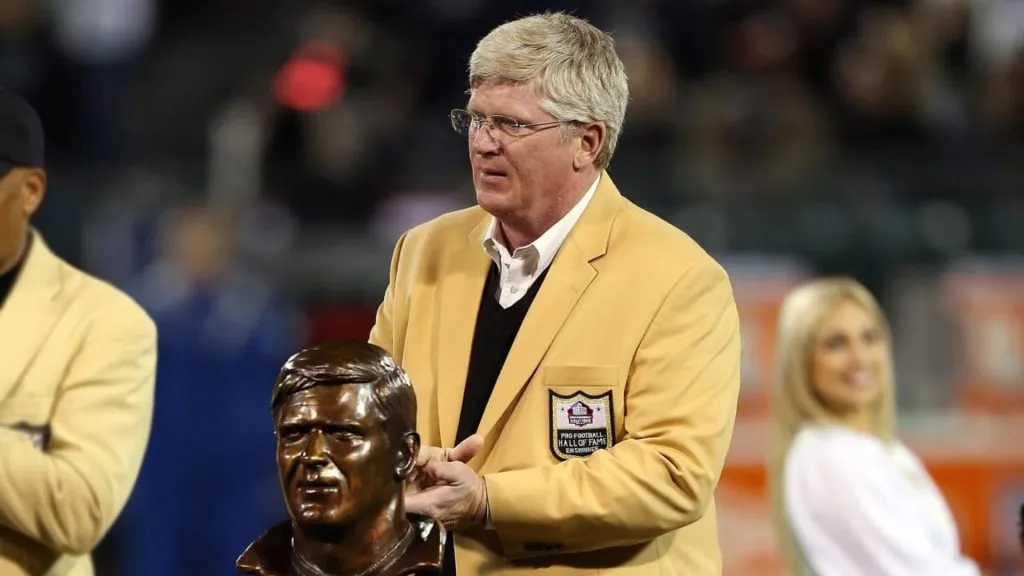
Dave Casper (Source: Raiders.com)
To speak of Dave Casper is to speak of the miraculous, the unconventional, and the improbable victory. Nicknamed “The Ghost” for his ability to seemingly materialize out of thin air, the tight end was not just a great blocker or an elite receiver—he was the focal point of the most iconic, game-defining, and rule-changing plays in Raiders history.
His career was defined by two legendary postseason moments. First, the 1977 Divisional Playoff game against the Colts gave birth to the “Ghost to the Post”, a 42-yard desperation heave from Ken Stabler that he somehow pulled down over his head, setting up the game-tying field goal in regulation.
He later scored the game-winning touchdown in double overtime, finishing with three scores and forever cementing his name in playoff lore. Second, he was the final, crucial actor in the notorious “Holy Roller” play of 1978, a sequence of deliberate fumbles that resulted in a game-winning touchdown and prompted an immediate change to the NFL rulebook.