
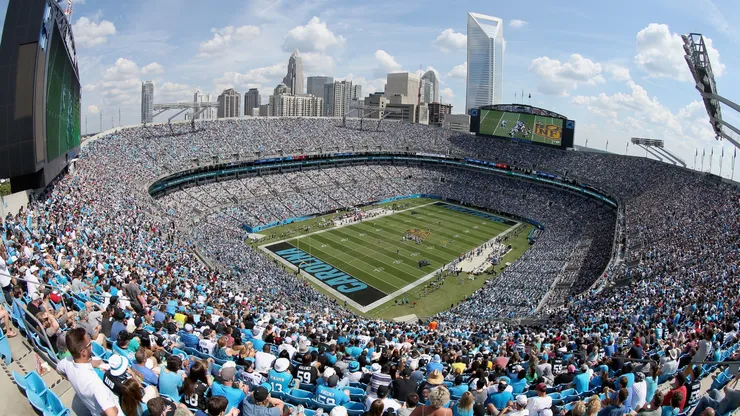
Major League Soccer has experienced remarkable growth, not only in the quality of play but also in the infrastructure that houses its teams, highlighting the importance of building and adapting stadiums as sporting venues.
Some teams share arenas with NFL franchises, allowing them to accommodate a larger number of spectators. However, there are also venues specifically designed for soccer, offering a more intimate and focused experience.
This diverse stadium landscape reflects the evolution and adaptation of MLS to the demands of a constantly growing fan base, as well as the commitment of cities to providing top-tier facilities that elevate the sport’s presence.
29. PayPal Park | 18,000 capacity
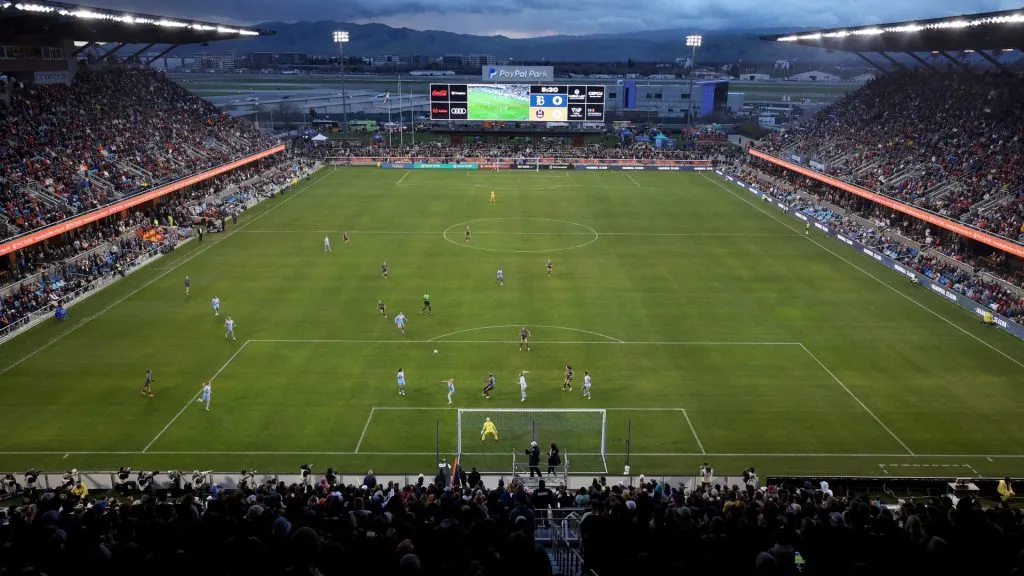
A general view of the Bay FC playing against the Houston Dash in the first half at PayPal Park on March 30, 2024. (Source: Ezra Shaw/Getty Images)
San Jose Earthquakes’ PayPal Park, inaugurated in 2015, is a testament to innovative stadium design. Its most notable feature is the largest outdoor bar in North America, situated behind the goal, offering fans a unique vantage point.
The steeply pitched seating ensures that every spectator is close to the action, fostering an intimate atmosphere. The “Ultras” supporters’ group brings relentless energy, making matchdays a vibrant celebration of soccer in Silicon Valley.
28. Dick’s Sporting Goods Park | 18,061 capacity
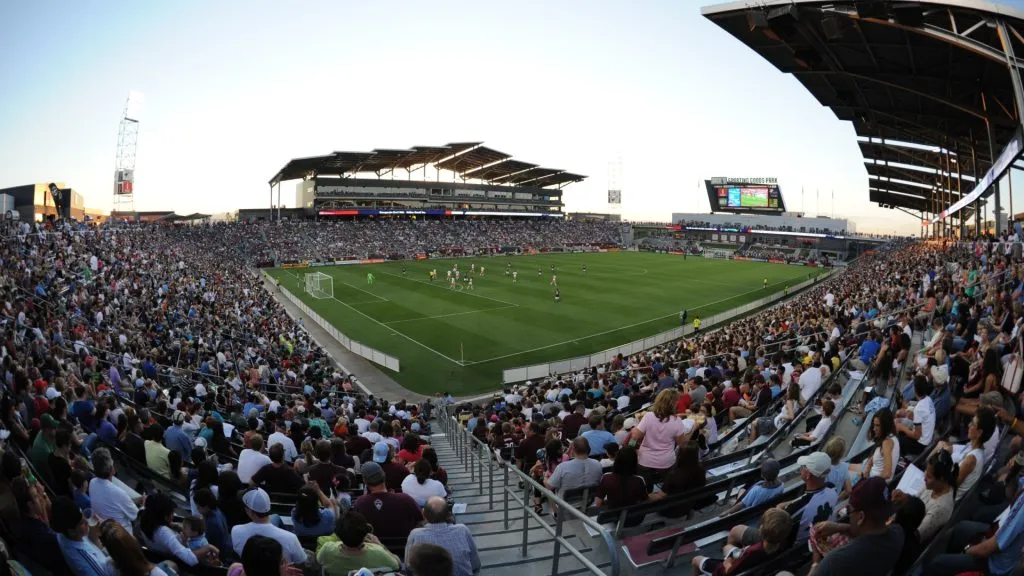
A general view of the stadium during the Colorado Rapids against the Houston Dynamo at Dicks Sporting Goods Park on July 3, 2011. (Source: Bart Young/Getty Images)
Set against Colorado’s majestic Rocky Mountains in Commerce City, Dick’s Sporting Goods Park has been the home of the Colorado Rapids since 2007. The expansive complex includes 24 practice fields, underscoring its role in community engagement and youth development.
The stadium’s open design allows for stunning mountain vistas, and the passionate “Centennial 38” supporters ensure a lively atmosphere. Its elevation and unpredictable weather add unique challenges, making it a distinctive venue in MLS.
27. Children’s Mercy Park | 18,467 capacity
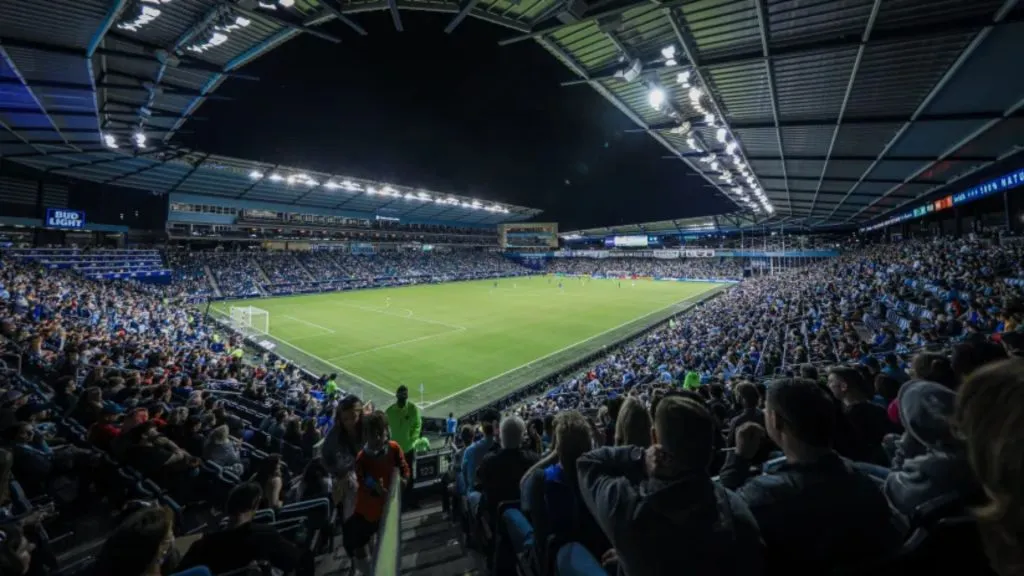
Children’s Mercy Park (Source: Sporting Kansas City)
In Kansas City, Kansas, Children’s Mercy Park stands as a model for fan-centric stadium design. Home to Sporting Kansas City since 2011, the venue boasts a European-inspired roof structure that amplifies crowd noise, creating an intimidating atmosphere for opponents.
The “Cauldron,” the main supporters’ section, is renowned for its vibrant displays and relentless support. The stadium’s commitment to technology is evident, with high-speed Wi-Fi and interactive fan experiences enhancing matchdays.
26. Subaru Park | 18,500 capacity
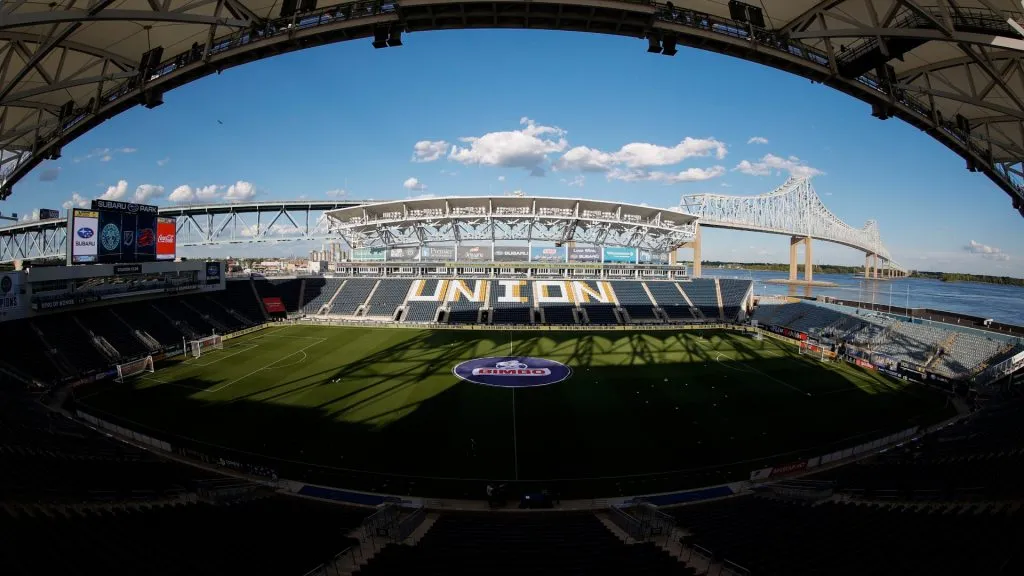
A general view before a game between the Philadelphia Union and the New England Revolution at Subaru Park on May 12, 2021. (Source: Tim Nwachukwu/Getty Images)
Perched along the banks of the Delaware River in Chester, Pennsylvania, Subaru Park offers scenic views alongside exhilarating soccer. Since 2010, it has been the home of the Philadelphia Union. The stadium’s design ensures that the majority of seats have a river view, enhancing the matchday experience.
The passionate “Sons of Ben” supporters’ group brings unyielding energy, with traditions deeply rooted in Philadelphia’s rich sports culture. The venue’s proximity to the river also allows for unique fan experiences, such as arriving by boat.
25. Allianz Field | 19,400 capacity
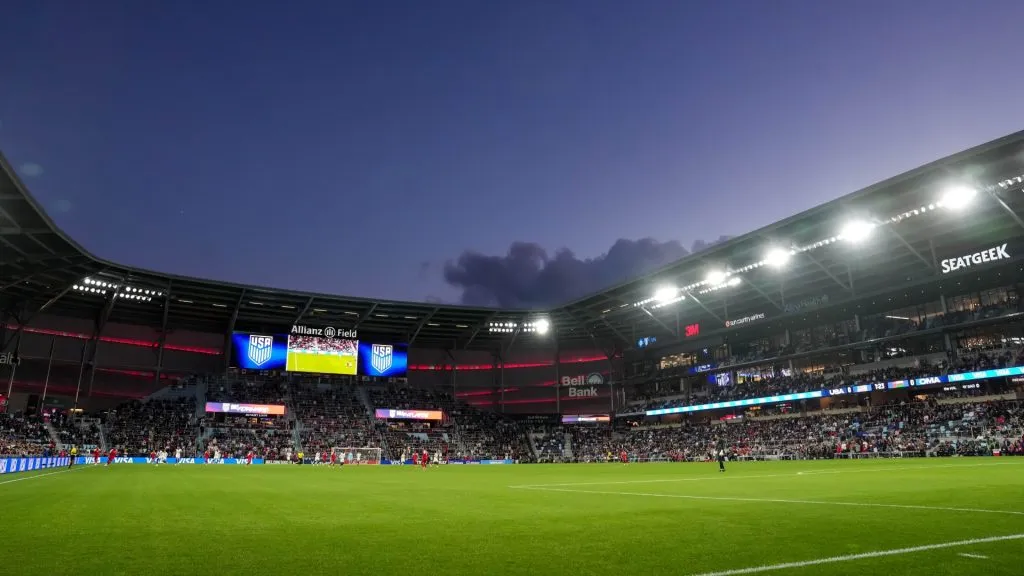
A general view during the first half between the United States and Oman at Allianz Field on September 12, 2023. (Source: Brace Hemmelgarn/Getty Images)
Minnesota United’s Allianz Field, located in St. Paul, is a testament to modern stadium architecture. Opened in 2019, its translucent exterior, which lights up in various colors, has become an iconic landmark.
The “Wonderwall,” a dedicated supporters’ section, is known for its synchronized chants and post-victory singing of Oasis’s “Wonderwall.” The stadium’s commitment to sustainability is evident through its rainwater recycling system and green spaces, aligning with Minnesota’s environmental values.
24. Saputo Stadium | 19,619 capacity
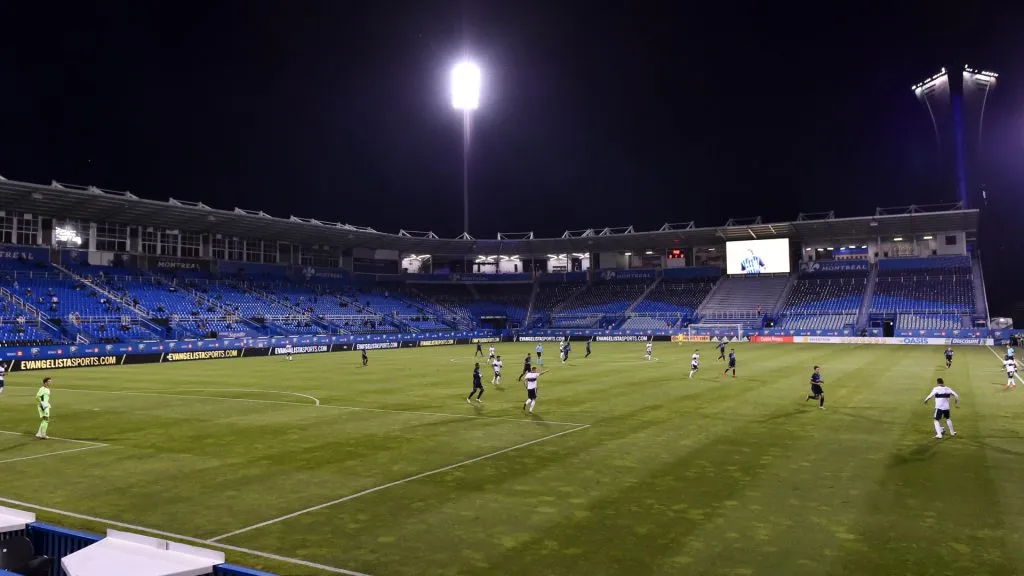
General view of the game between the Montreal Impact and the Vancouver Whitecaps during the first half at Saputo Stadium on August 25, 2020. (Source: Minas Panagiotakis/Getty Images)
Montreal’s Saputo Stadium, nestled in the Olympic Park, offers a European-style soccer experience. Home to CF Montréal, the venue’s intimate design ensures that fans are close to the pitch, creating an electric atmosphere.
The Francophone supporters bring a unique flair, with chants and songs in French, reflecting the city’s rich cultural tapestry. The stadium’s location allows fans to explore Montreal’s historic sites before and after matches, making it a favorite destination for soccer aficionados.
23. Audi Field | 20,000 capacity
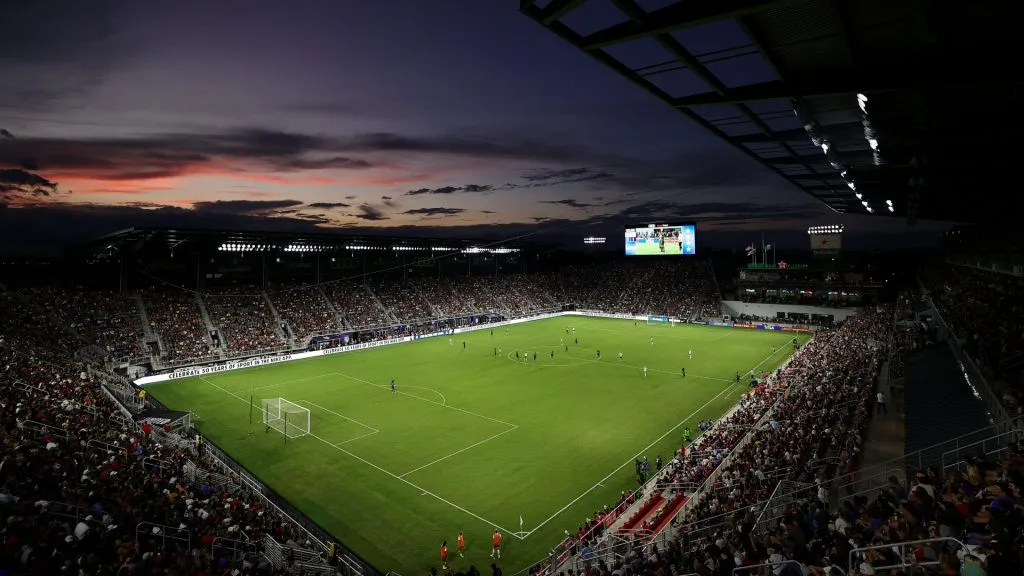
A general view during a game between the United States and Nigeria at Audi Field on September 06, 2022. (Source: Tim Nwachukwu/Getty Images)
In the bustling southwest waterfront of Washington, D.C., Audi Field serves as the modern home for D.C. United. Opened in 2018, the stadium’s sleek design includes luxury suites, safe-standing sections for supporters, and panoramic views of the Capitol skyline.
Its urban location makes it easily accessible, encouraging fans to engage in pre- and post-match festivities around the district. The “District Ultras” and “Barra Brava” supporters’ groups infuse the venue with relentless energy, honoring the club’s storied legacy.
22. America First Field | 20,213 capacity
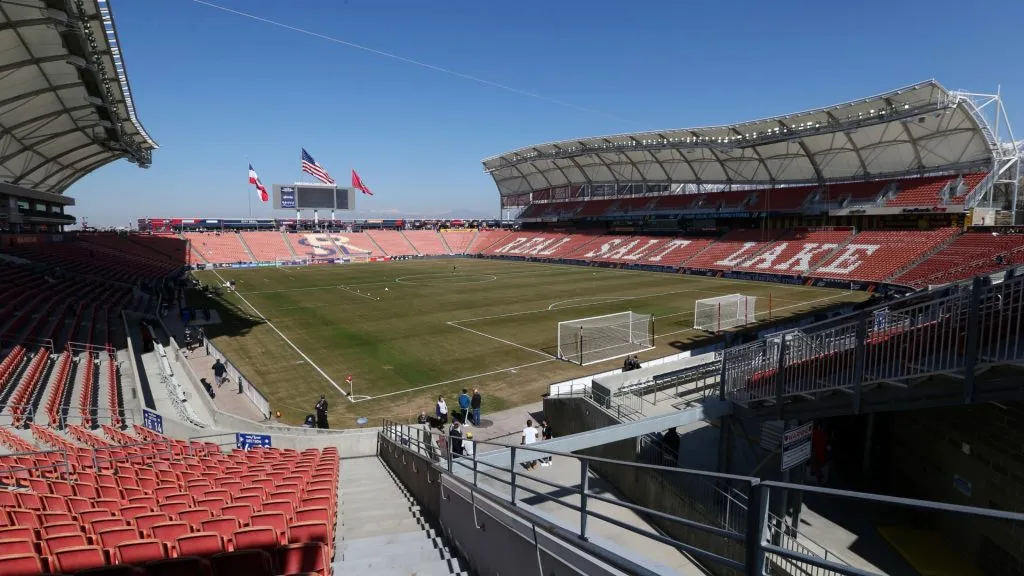
General view inside the stadium prior to the MLS match between Real Salt Lake and Seattle Sounders at America First Field on March 01, 2025. (Source: Chris Gardner/Getty Images)
Nestled against the backdrop of the Wasatch Mountains in Sandy, Utah, America First Field offers breathtaking views alongside thrilling soccer action. Home to Real Salt Lake since 2008, the stadium’s elevation adds a unique element to the game, with visiting teams often needing to adjust to the altitude.
The passionate “Riot Squad” supporters ensure a lively environment, and the venue’s design allows fans to be close to the action, fostering a deep connection between the team and its followers.
21. Lower.com Field | 20,371 capacity
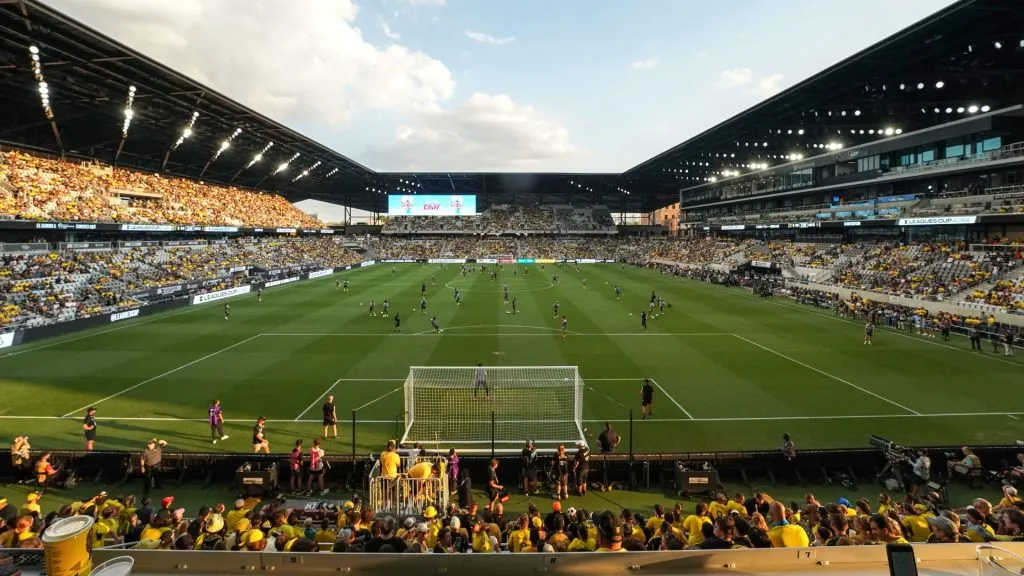
General view of Columbus Crew and Los Angeles FC players warming up before the Leagues Cup 2024 Final at Lower.com Field on August 25, 2024. (Source: Jason Mowry/Getty Images)
Columbus Crew’s Lower.com Field, inaugurated in 2021, represents a new era for one of MLS’s original clubs. Located in the Astor Park neighborhood, the stadium features a striking facade and a roof that covers every seat, amplifying crowd noise.
The Nordecke, the dedicated supporters’ section, is renowned for its tifo displays and unrelenting chants, creating a fortress-like atmosphere. The venue also emphasizes sustainability, with initiatives aimed at reducing its environmental footprint.
20. Toyota Stadium | 20,500 capacity
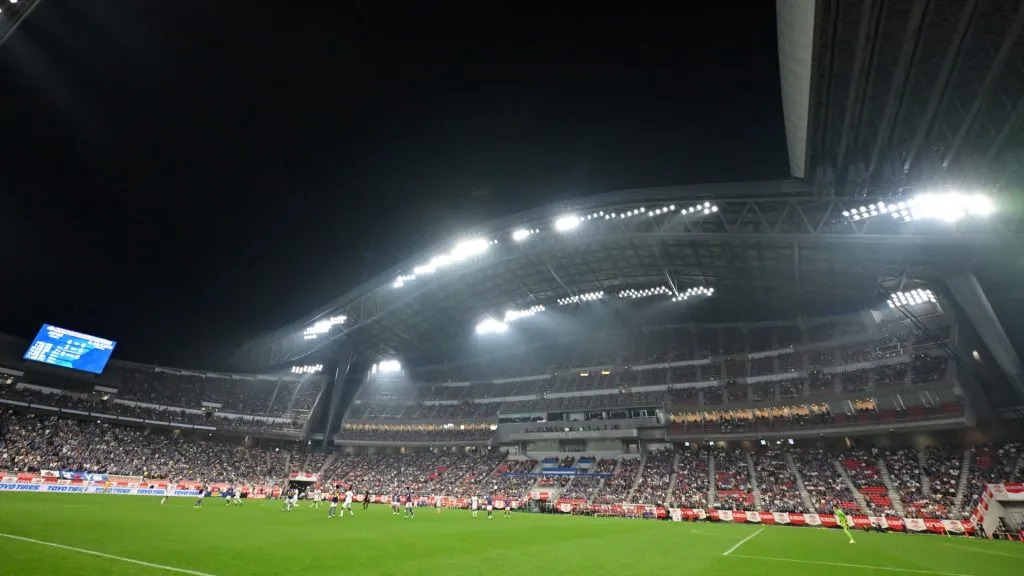
A general view during the international friendly match between Japan and El Salvador at Toyota Stadium on June 15, 2023. (Source: Kenta Harada/Getty Images)
Situated in Frisco, Texas, Toyota Stadium has been the home of FC Dallas since 2005. Beyond hosting MLS matches, this venue is notable for housing the National Soccer Hall of Fame, blending the sport’s rich history with its present.
The stadium’s design allows for intimate viewing experiences, and its surrounding complex includes 17 soccer fields, emphasizing its role in nurturing grassroots soccer. The annual “Texas Derby” against Houston Dynamo is a highlight, with fans flocking to witness the intense rivalry.
19. Q2 Stadium | 20,738 capacity
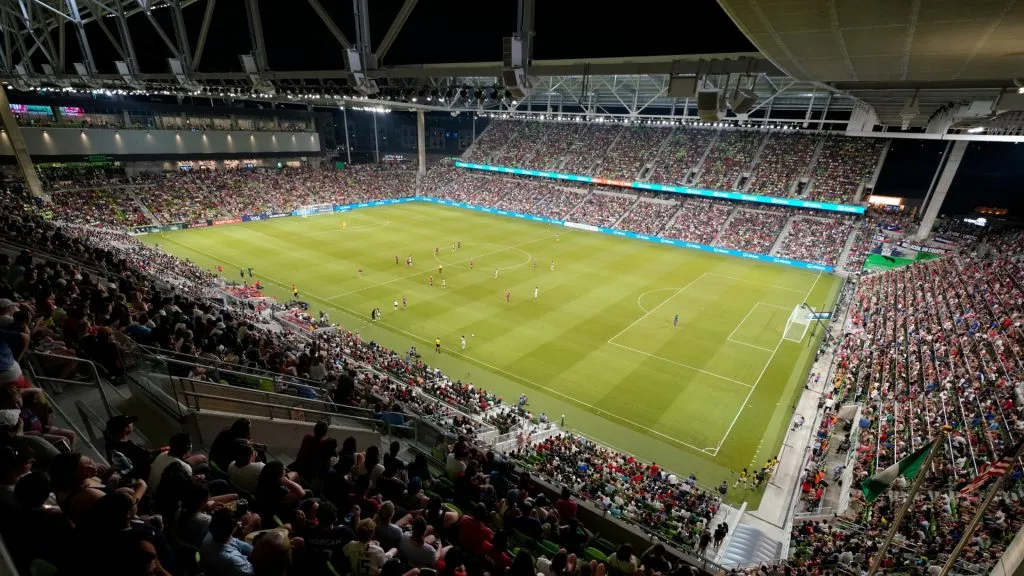
A general view during the second half of a WNT Summer Series game between the United States and Nigeria at Q2 Stadium on June 16, 2021. (Source: Chuck Burton/Getty Images)
In the heart of Texas, Austin FC’s Q2 Stadium stands as a beacon of soccer passion. Opened in 2021, this modern facility boasts a canopy that provides shade to most seats, a crucial feature in the Texan heat.
The vibrant “Verde Wall,” a standing-only supporters’ section, ensures that the energy remains high throughout the match. Local food vendors and live music performances before games encapsulate Austin’s rich cultural scene, making Q2 Stadium a true reflection of its community.
18. DRV PNK Stadium | 21,000 capacity
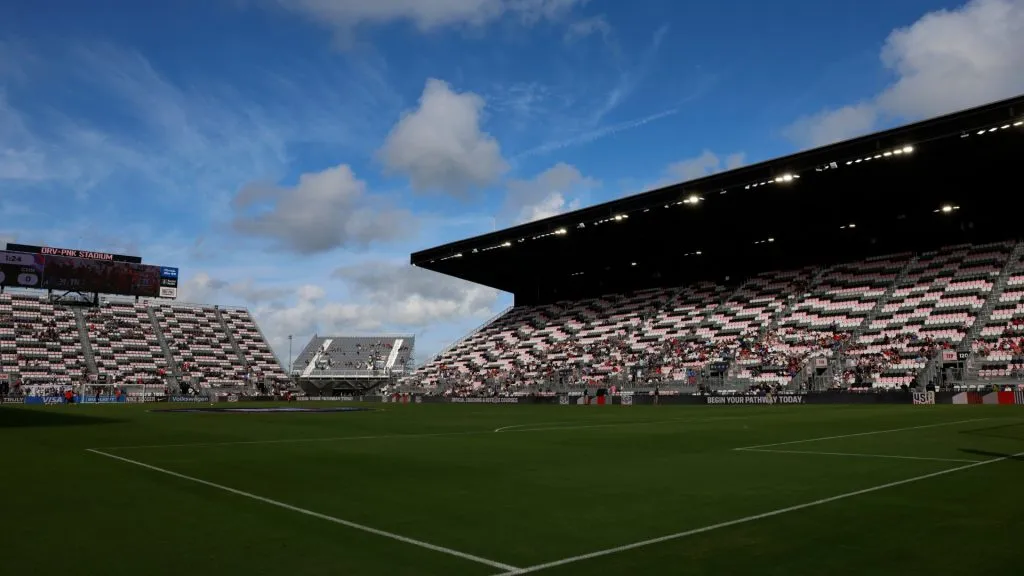
General view of the stadium prior to a match between China and United States at DRV PNK Stadium on December 02, 2023. (Source: Eva Marie Uzcategui/Getty Images)
Inter Miami’s temporary home has become a focal point for soccer in South Florida. Originally intended as a short-term solution while the club builds its permanent venue, DRV PNK Stadium has taken on a life of its own. The addition of global superstars, including Lionel Messi, has transformed the atmosphere into something truly special.
Though smaller than many MLS stadiums, the electric crowd energy, palm-tree-lined backdrops, and Miami’s international soccer culture make DRV PNK a unique experience. The future may hold a new stadium, but for now, this venue has captured the imagination of fans worldwide.
17. BMO Stadium | 22,000 capacity
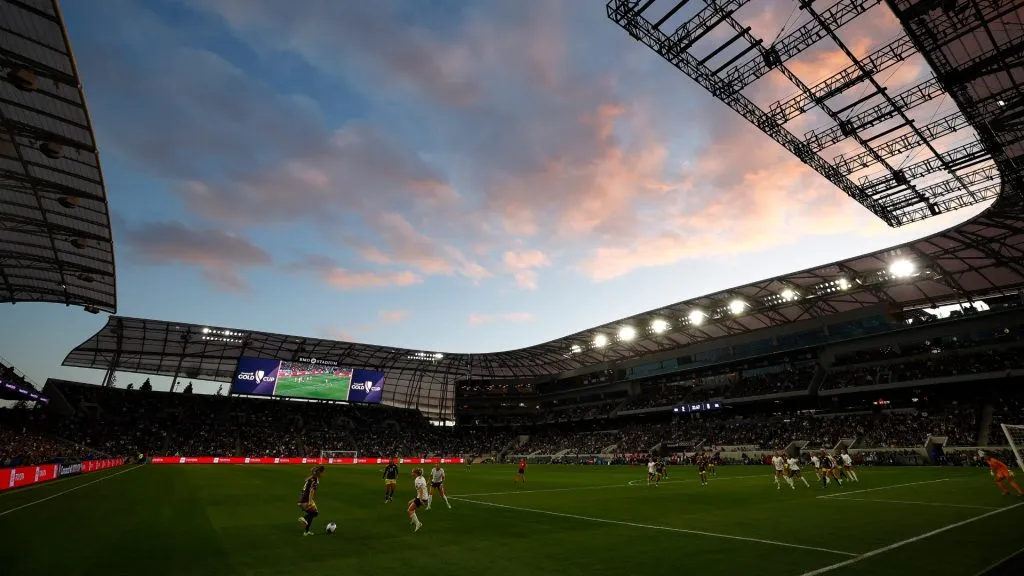
A general view of play between the United States and Columbia in the first half during the quarterfinals of 2024 Concacaf W Gold Cup at BMO Stadium on March 03, 2024. (Source: Ronald Martinez/Getty Images)
Los Angeles is a city known for glitz and glamour, and BMO Stadium fits right in. Home to LAFC, this venue has quickly gained a reputation as one of the best atmospheres in MLS since opening in 2018. The “3252,” the club’s supporter group, leads the charge with nonstop chants, drums, and tifo displays that rival the best fan cultures in the world.
Located in Exposition Park, the stadium offers breathtaking views of downtown LA and is a short walk from some of the city’s most iconic landmarks. With its modern design, passionate fan base, and prime location, BMO Stadium is a jewel of American soccer.
16. Shell Energy Stadium | 22,039 capacity
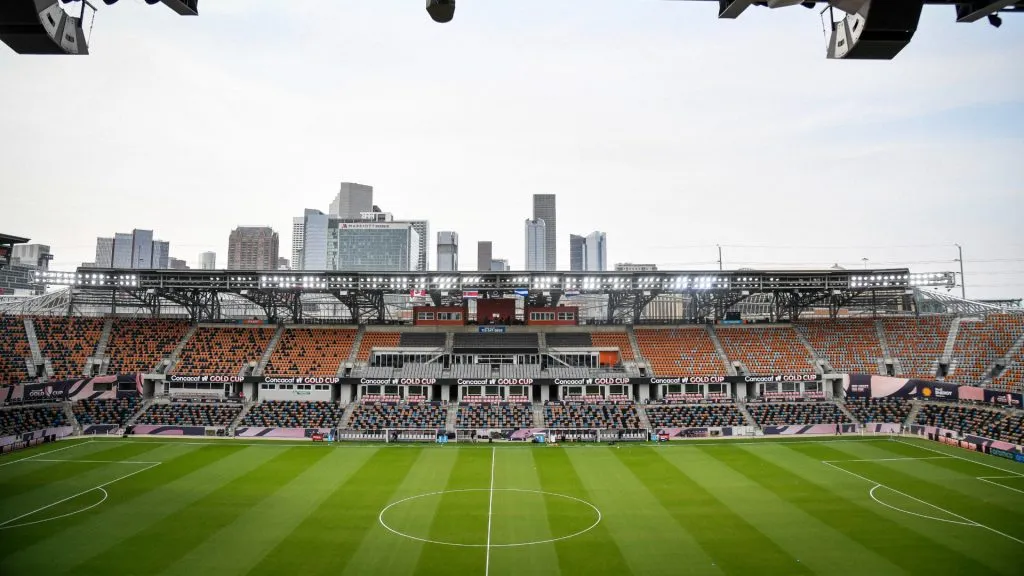
A general stadium overview is seen prior to the Group C match between Canada and Costa Rica during the 2024 Concacaf Women’s Gold Cup at Shell Energy Stadium on February 28, 2024. (Source: Logan Riely/Getty Images)
Houston’s home for soccer has undergone multiple transformations, and its latest iteration as Shell Energy Stadium brings a renewed focus on energy efficiency and fan comfort. Opened in 2012, this stadium is known for its distinctive orange facade and passionate Dynamo supporters.
With Houston’s sweltering climate, the venue was designed with airflow and cooling in mind, ensuring players and fans can enjoy the game even in the hottest months. The diverse and vibrant soccer culture of Houston is on full display here, making it a standout venue in MLS.
15. Energizer Park (City Park) | 22,500 capacity
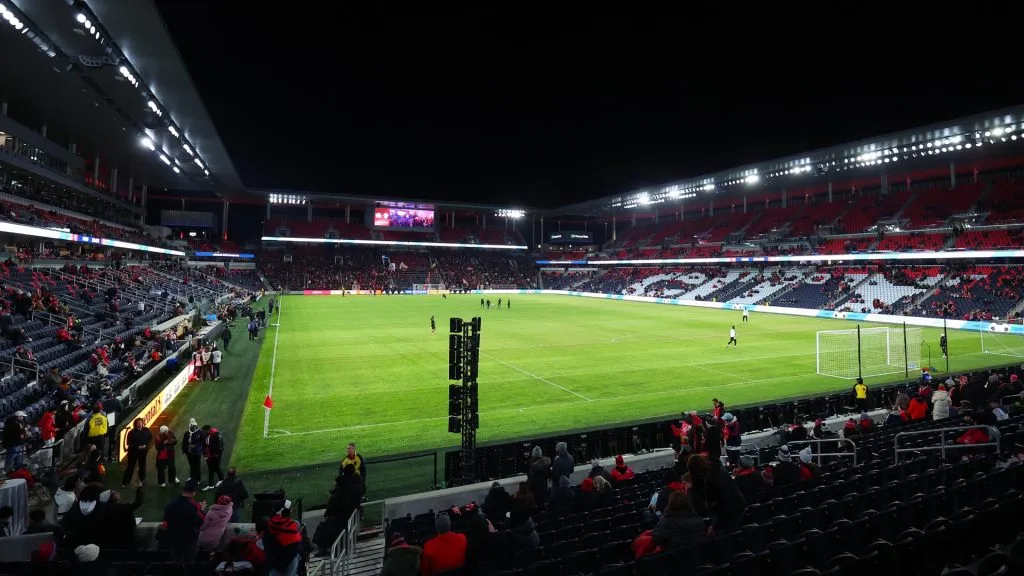
A general view inside the stadium during the MLS match between St. Louis City SC and Colorado Rapids at Energizer Park on February 22, 2025. (Source: Dilip Vishwanat/Getty Images)
The arrival of St. Louis City SC in MLS came with a purpose-built venue that immediately made an impact. CITYPARK, which opened in 2023, is a state-of-the-art stadium designed to amplify crowd noise, creating a daunting experience for opponents.
With an emphasis on sustainability and cutting-edge amenities, this stadium is a reflection of St. Louis’s deep soccer roots. The city has long been a hotbed for the sport, and now, with a world-class home, it has cemented its place as a major player in MLS.
14. Sports Illustrated Stadium (Red Bull Arena) | 25,000 capacity
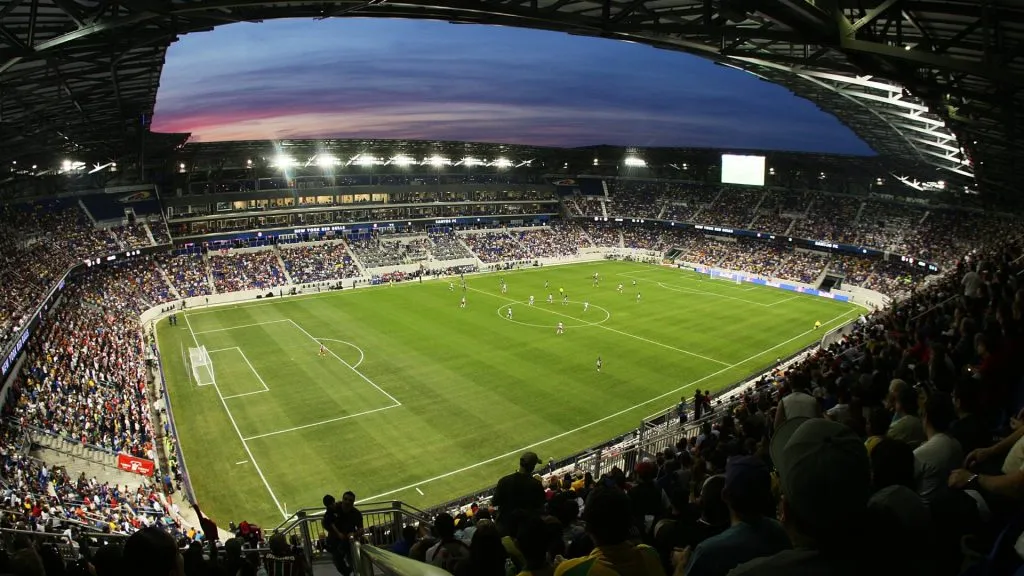
A general view of the field as the New York Red Bulls play the Santos FC on March 20, 2010 at Red Bull Arena. (Source: Mike Stobe/Getty Images for New York Red Bulls)
Red Bull Arena, now rebranded as Sports Illustrated Stadium, has been a fortress for the New York Red Bulls since its opening in 2010. Designed to bring fans as close to the action as possible, this 25,000-seat venue boasts one of the most immersive atmospheres in Major League Soccer.
Situated in Harrison, New Jersey, just minutes from Manhattan, the stadium reflects the region’s deep connection to the sport. Over the years, it has hosted international friendlies, high-stakes MLS playoffs, and even National Women’s Soccer League matches, proving its versatility.
With its recent name change and commitment to enhancing fan engagement, this stadium continues to evolve, solidifying its reputation as one of the premier soccer-specific venues in North America.
13. Providence Park | 25,218 capacity
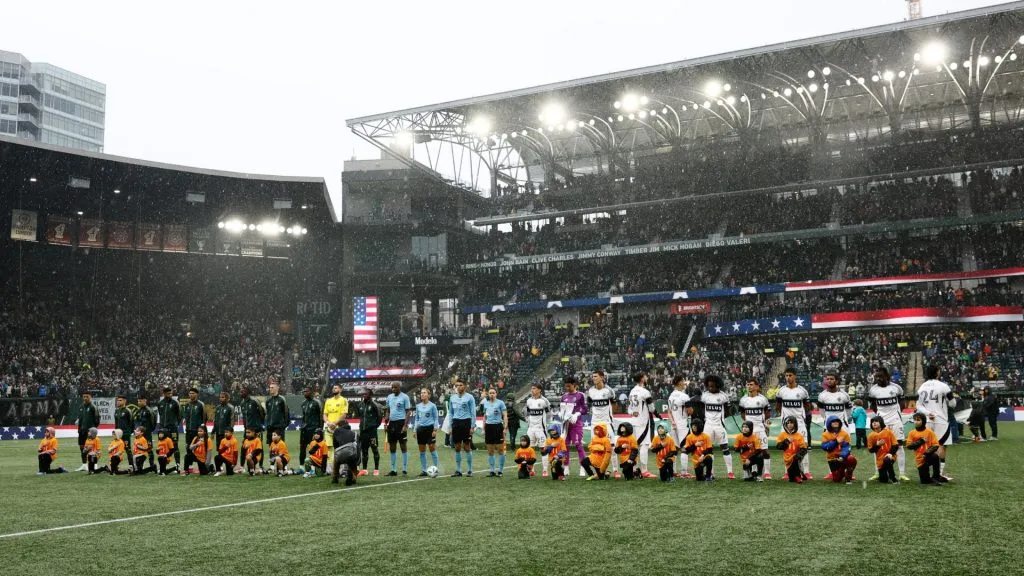
The Portland Timbers and the Vancouver Whitecaps stand on the pitch during the playing of the National Anthem before the game at Providence Park on February 23, 2025. (Source: Alika Jenner/Getty Images)
One of the most historic venues in MLS, Providence Park has been a soccer cathedral in Portland for over a century. Originally built in 1926, it has undergone several renovations to become the modern-day home of the Timbers and Thorns FC. Despite its compact footprint, the stadium generates an incredible atmosphere, fueled by the infamous Timbers Army.
What truly sets this venue apart is its integration into the city. Nestled within downtown Portland, the stadium feels like an organic extension of the community. Whether it’s the iconic chainsaw celebration after a goal or the sea of green scarves, Providence Park offers one of the most authentic soccer experiences in North America.
12. Exploria Stadium | 25,500 capacity
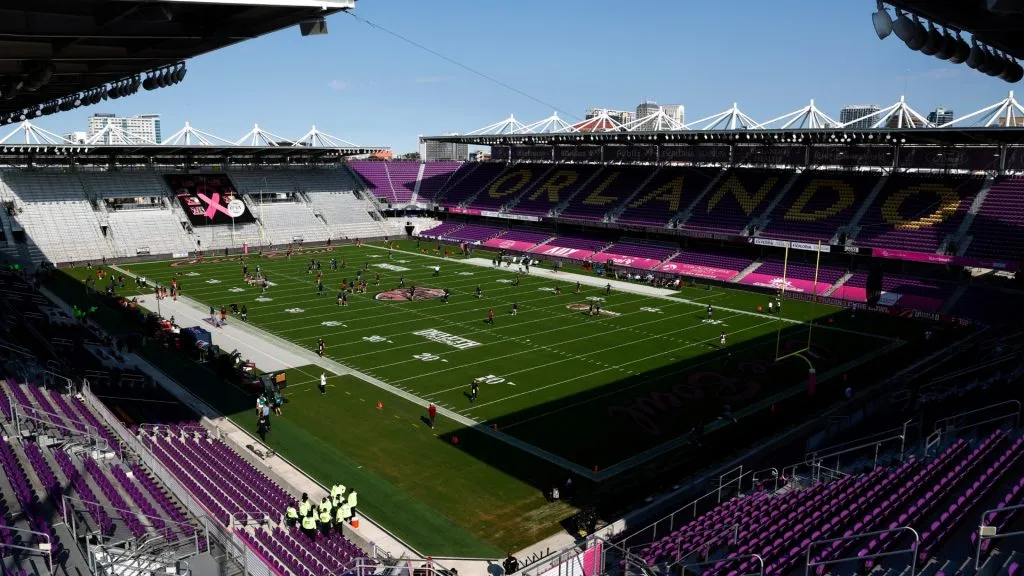
General view of the stadium prior to the game between the Troy Trojans and the UTSA Roadrunners during the Duluth Trading Cure Bowl at Exploria Stadium on December 16, 2022. (Source: Douglas P. DeFelice/Getty Images)
Orlando City SC’s fortress is one of the most atmospheric venues in MLS. Opened in 2017, Exploria Stadium was designed with fan engagement in mind, boasting a steep supporters’ section known as “The Wall,” one of the loudest and most visually imposing stands in the league.
This stadium has become a true soccer haven in Florida, hosting international tournaments, U.S. Open Cup finals, and Women’s National Team matches. Purple smoke billows through the air when Orlando scores, adding to the spectacle that makes Exploria one of the must-visit destinations for soccer lovers.
11. TQL Stadium | 26,000 capacity
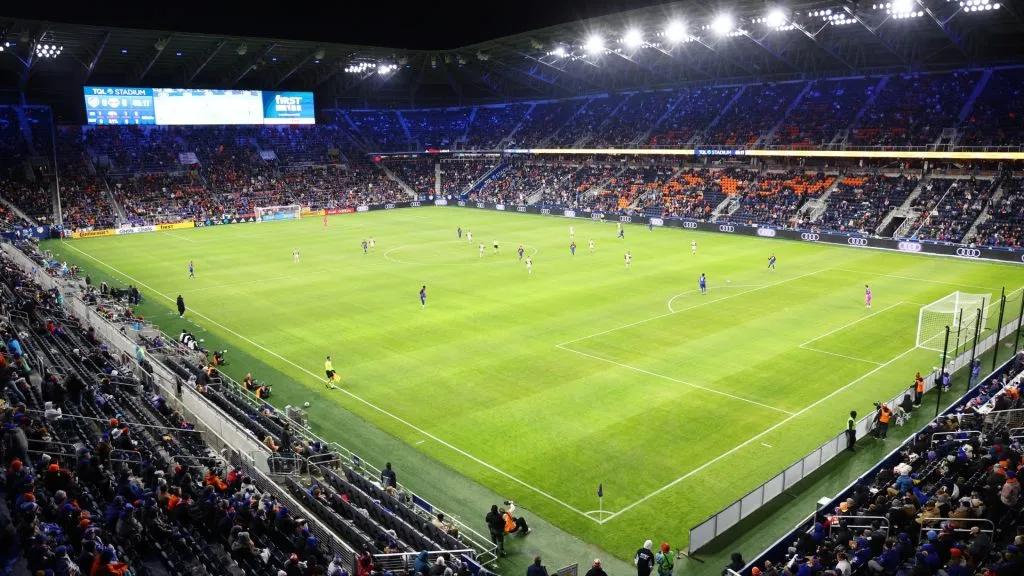
A general view of the inside of the stadium during the first half of the MLS match between FC Cincinnati and New York Red Bulls at TQL Stadium on February 22, 2025. (Source: Andy Lyons/Getty Images)
Cincinnati’s rise as a soccer powerhouse is embodied in TQL Stadium, one of the newest and most visually striking venues in the league. Opened in 2021, its signature LED-lit exterior makes it an unmistakable landmark in the city’s West End. The architecture is sleek and modern, yet inside, the stadium channels the raw energy of the sport with steep seating that keeps the noise levels high.
FC Cincinnati’s supporters, led by the raucous “Bailey” section, create an intimidating atmosphere, often making this one of the toughest road trips for visiting teams. With its commitment to both design and fan experience, TQL Stadium is a symbol of MLS’s continued growth.
10. Dignity Health Sports Park | 27,000 capacity
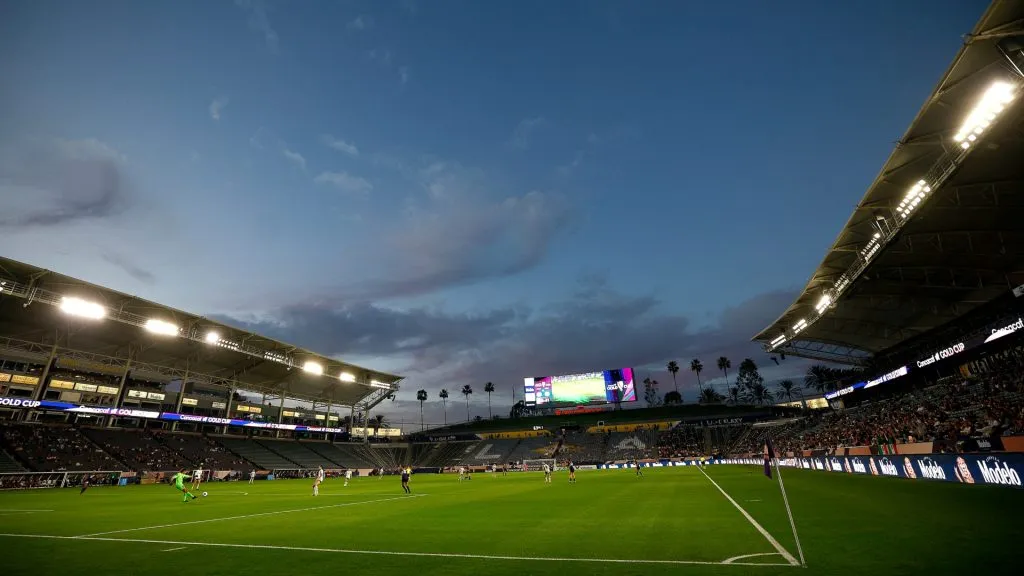
A general view of play between the Dominican Republic and Mexico during the second half in Group A – 2024 Concacaf W Gold Cup at Dignity Health Sports Park in 2024. (Source: Ronald Martinez/Getty Images)
Tucked away in Carson, California, this storied venue has been the home of the LA Galaxy since 2003. While it doesn’t have the colossal scale of some other stadiums, what it lacks in size, it makes up for in prestige. Legends like David Beckham, Landon Donovan, and Zlatan Ibrahimović have graced this pitch, making it one of the most iconic sites in American soccer.
Beyond MLS, the stadium has hosted numerous international matches, including games for the U.S. Men’s and Women’s National Teams. The intimate setting allows fans to be right on top of the action, creating an unmatched atmosphere where the echoes of “L-A, Ga-lax-y!” ring through the night.
9. BMO Field | 30,000 capacity
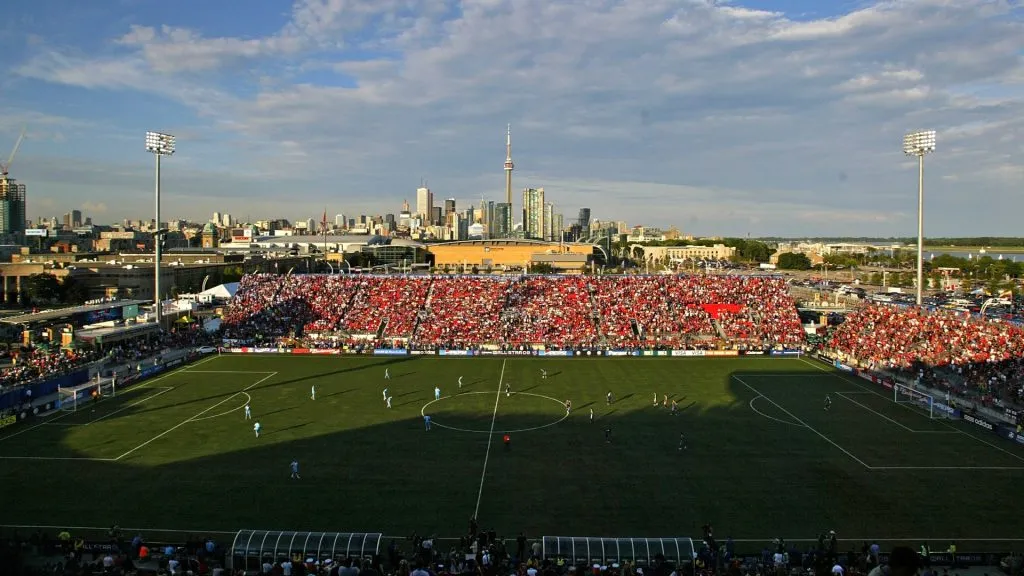
Fans attend the 2008 Pepsi MLS All-Star Game between the MLS All-Stars and West Ham United at BMO Field July 24, 2008. (Source: Mike Lawrie/Getty Images)
Sitting on the shores of Lake Ontario, BMO Field is the heartbeat of Canadian soccer. Home to Toronto FC since its inception in 2007, this venue has witnessed some of the most dramatic moments in MLS history, including TFC’s historic treble-winning season in 2017.
With a passionate fan base that thrives in all weather conditions, from frigid playoff nights to scorching summer afternoons, the stadium embodies the resilience of Toronto’s soccer culture.
Its location at Exhibition Place provides stunning waterfront views, while its recent expansions have transformed it into a premier venue for international matches and even Canadian football. The unmistakable sight of red-clad supporters chanting in unison makes BMO Field an intimidating venue for any visiting team.
8. Geodis Park | 30,000 capacity
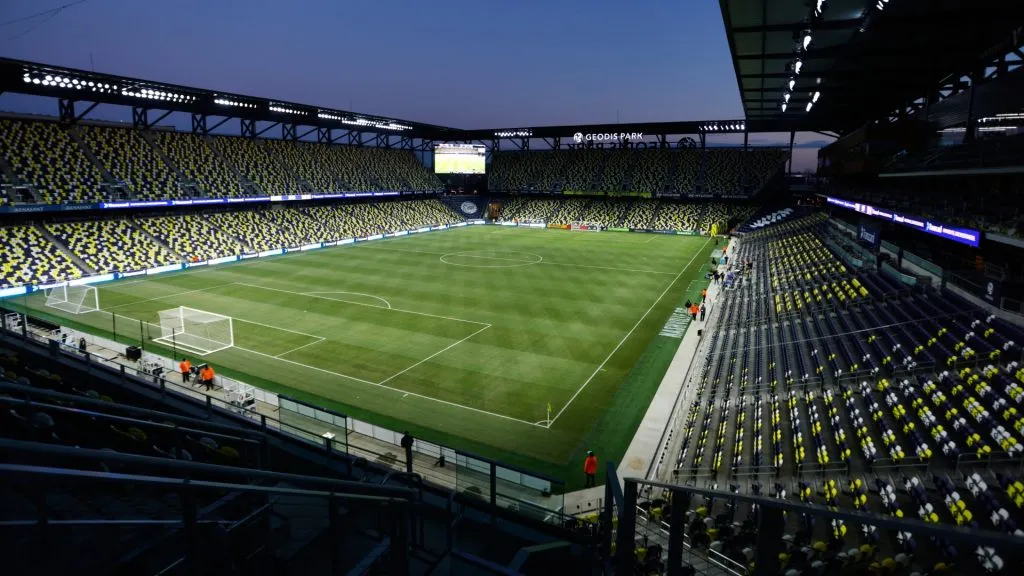
A general view of Geodis Park before the MLS match between Nashville SC and New England Revolution at GEODIS Park on February 22, 2025. (Source: Johnnie Izquierdo/Getty Images)
A testament to Nashville’s booming soccer culture, GEODIS Park is the largest soccer-specific stadium in the United States. Opened in 2022, this modern venue sits in the vibrant Wedgewood-Houston neighborhood and serves as the fortress for Nashville SC. With its sleek design and intimate sightlines, every seat offers a close-up view of the action, enhancing the connection between fans and players.
What sets this stadium apart is its emphasis on local culture. From food vendors featuring Nashville hot chicken to murals celebrating the city’s rich musical heritage, every detail is crafted to reflect the spirit of the community. The raucous energy of “The Backline,” the club’s dedicated supporters’ section, ensures that matchdays are nothing short of electrifying.
7. Yankee Stadium | 47,309 capacity
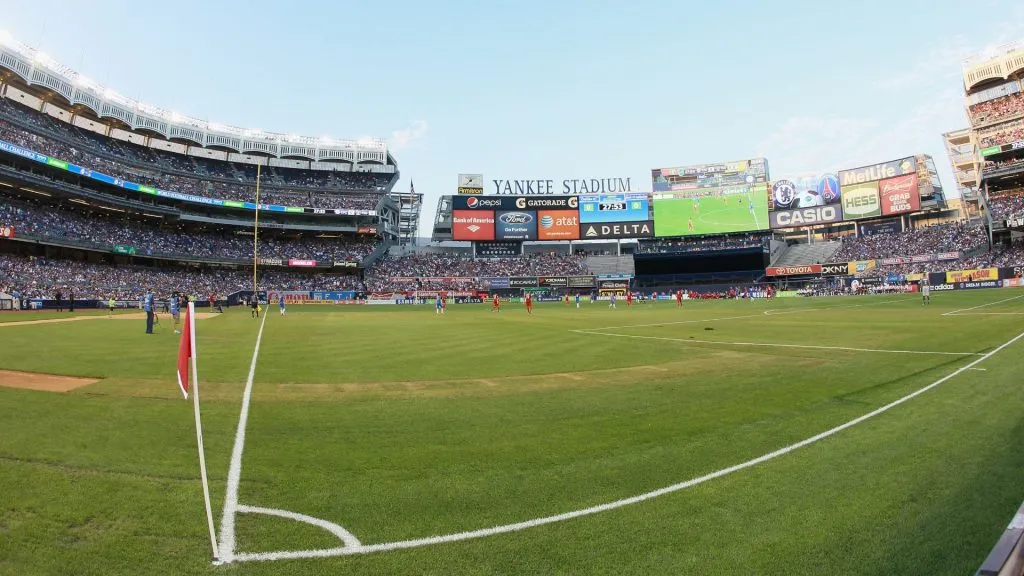
A general view of the match between Chelsea FC and Paris Saint-Germain at Yankee Stadium on July 22, 2011. (Source: Andy Marlin/Getty Images)
Yankee Stadium might be an unconventional home for soccer, but it has become synonymous with New York City FC. Since joining MLS in 2015, NYCFC has transformed the iconic baseball park into a soccer venue, adapting the field dimensions to fit the game.
While purists may criticize its non-traditional layout, there’s no denying the unique atmosphere it brings, with fans packed tightly in a venue that has seen legends of sport.
NYCFC’s fan culture has blossomed here, with chants echoing through the Bronx and a growing rivalry with the Red Bulls adding intensity to matchdays. While the club plans to build a soccer-specific stadium in the near future, Yankee Stadium remains an important chapter in NYCFC’s early years.
6. BC Place | 54,500 capacity
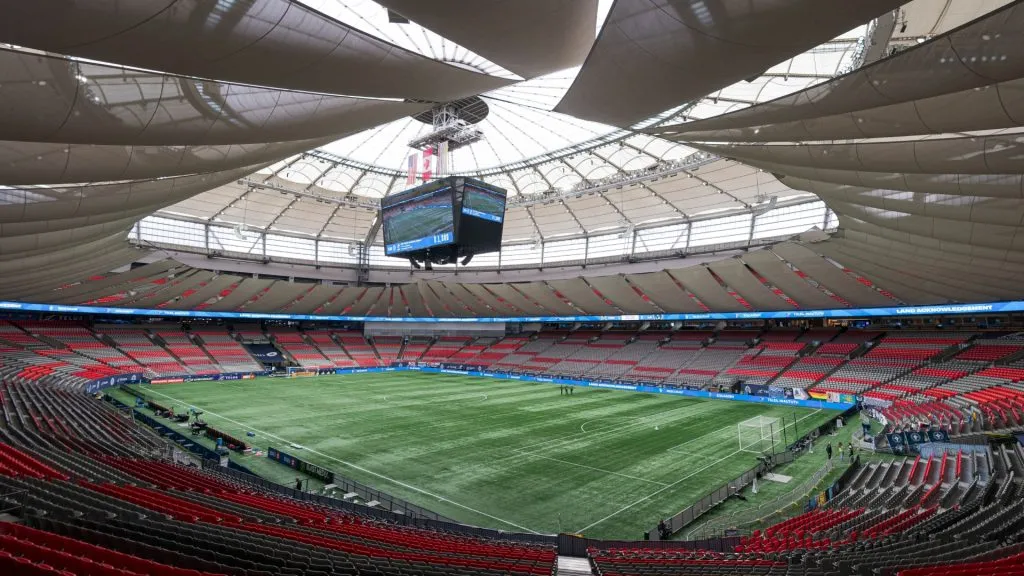
General view of the pitch at BC Place Stadium prior to the start of the MLS match between Vancouver Whitecaps FC and LA Galaxy on March, 2, 2025. (Source: Rich Lam/Getty Images)
BC Place is a jewel of Canadian soccer. Home to the Vancouver Whitecaps, this stadium has a rich legacy that dates back to 1983 and was renovated in 2011 to include a state-of-the-art retractable roof. This feature ensures that matches can be played under the open sky or in a controlled indoor environment, making it one of the most versatile stadiums in North America.
The Whitecaps may not always fill all 54,500 seats, but the stadium’s lower bowl is configured to create an electric atmosphere. The passionate Vancouver fans, the picturesque views of the surrounding city, and the stunning LED lighting system make BC Place an essential part of the MLS landscape.
5. Soldier Field | 61,500 capacity
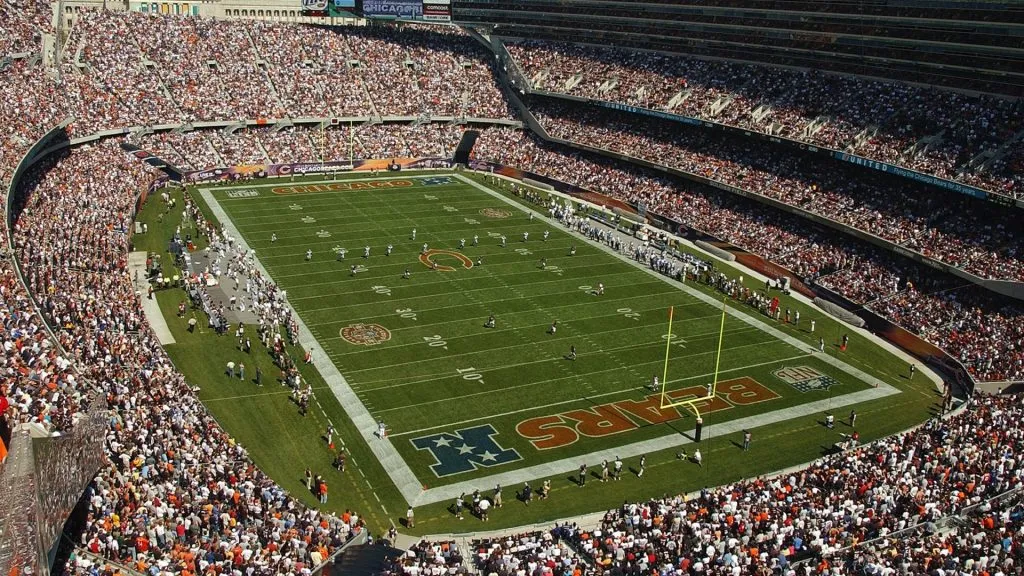
A general view of the stadium as the Detroit Lions kickoff to the Chicago Bears to start the game on September 12, 2004. (Source: Jonathan Daniel/Getty Images)
Soldier Field is not just a stadium—it’s a monument. Established in 1924, it is the oldest stadium in MLS and a national historic landmark. It serves as the current home of the Chicago Fire FC, returning in 2020 after a period at the soccer-specific SeatGeek Stadium. The stadium’s rich history includes hosting legendary matches, from World Cup games in 1994 to iconic concerts and large-scale events.
While its sheer size can sometimes feel overwhelming for soccer matches, the return of the Fire to Soldier Field brought renewed excitement to the club’s fanbase. With the breathtaking backdrop of Chicago’s skyline and its location near Lake Michigan, attending a game here feels like a quintessential Chicago experience.
4. Gillette Stadium | 65,878 capacity
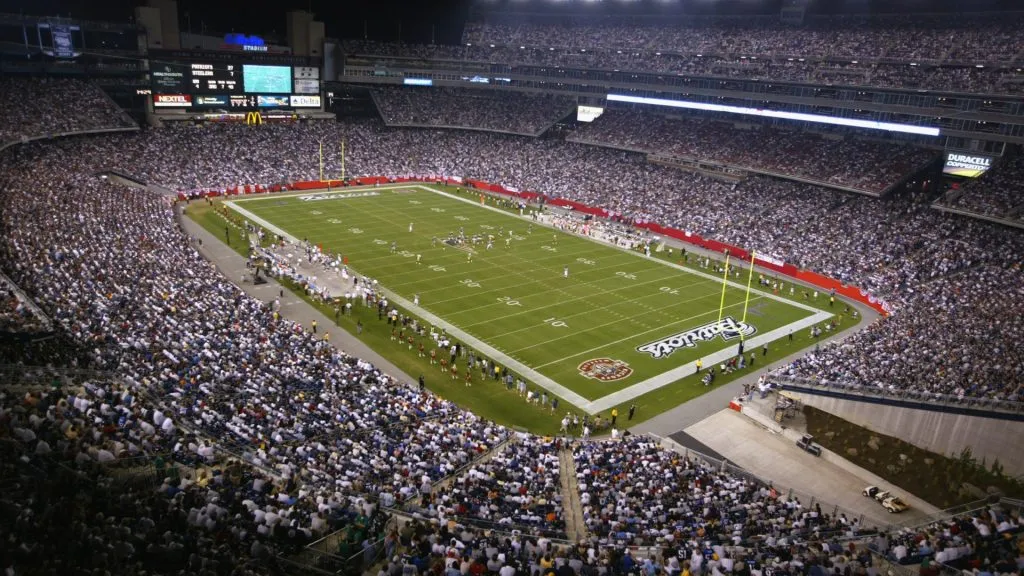
A General view of Gillette Stadium during the game between the Pittsburgh Steelers and the New England Patriots on September 9, 2002. (Source: Al Bello/Getty Images)
Located in the quiet town of Foxborough, Massachusetts, Gillette Stadium is a titan of American sports. While it may be best known as the home of the New England Patriots, it has also been the long-time fortress of the New England Revolution. Opened in 2002, the stadium is a massive venue that, while designed primarily for football, has adapted to accommodate soccer with a well-maintained pitch and designated supporters’ sections that bring life to MLS matchdays.
Despite not being a soccer-specific stadium, Gillette has played host to numerous international matches, including Copa América games and U.S. Men’s and Women’s National Team fixtures. Revolution fans, known as “The Fort,” bring a blue-collar, working-class energy that reflects the region’s deep sports culture.
3. Lumen Field | 69,000 capacity
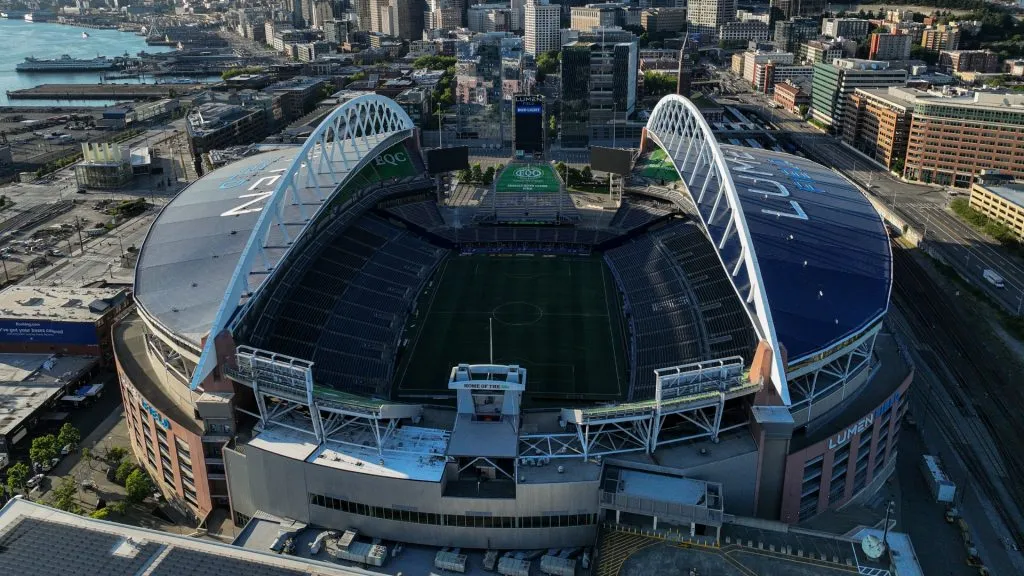
In an aerial general view, Lumen Field, a host of 2026 FIFA World Cup, is seen on June 28, 2023. (Source: Steph Chambers/Getty Images)
Nestled in the heart of the Pacific Northwest, Lumen Field is a fortress for the Seattle Sounders, renowned for having one of the most passionate and loyal fanbases in MLS. Opened in 2002, the stadium is shared with the Seattle Seahawks, but its design is particularly suited to enhance crowd noise—something that has helped the Sounders develop one of the strongest home-field advantages in the league. The “Emerald City Supporters” and the infamous “March to the Match” create an unforgettable game-day experience.
Beyond soccer, Lumen Field has hosted numerous high-profile events, from international friendlies to World Cup qualifiers. The stadium’s urban location in downtown Seattle means that fans can enjoy a vibrant pre-match experience in the surrounding Pioneer Square district before heading to a stadium where the energy is palpable.
2. Mercedes-Benz Stadium | 71,000 capacity
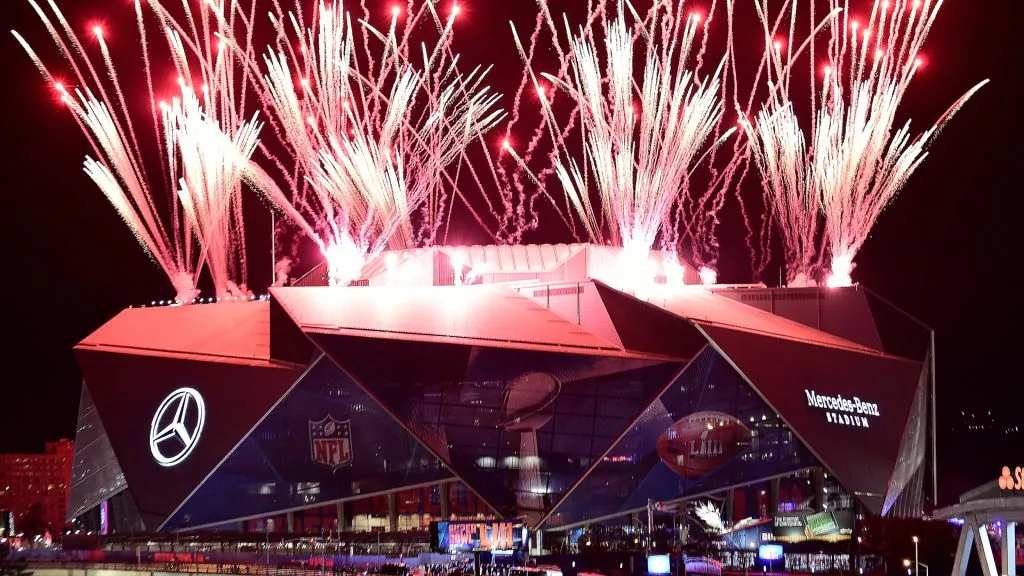
Fireworks shoot in the air above Mercedes-Benz stadium during halftime of Super Bowl LIII between the New England Patriots and Los Angeles Rams on February 03, 2019. (Source: Logan Riely/Getty Images)
A marvel of modern engineering, Mercedes-Benz Stadium is more than just a sports venue—it’s an architectural statement. Opened in 2017, it is home to both Atlanta United FC and the Atlanta Falcons, featuring a revolutionary retractable roof that resembles the aperture of a camera lens. The stadium’s design allows for a seamless transition between sporting events, and for MLS matches, it can accommodate up to 71,000 roaring fans, making it one of the most intimidating venues in the league.
Atlanta United’s supporters, particularly the “17s,” create an unparalleled atmosphere, with record-breaking attendance numbers that rival some of the top European leagues. The stadium is also notable for its sustainability efforts, incorporating a rainwater collection system, solar panels, and a zero-waste initiative.
Whether it’s the electrifying pre-game rituals, the iconic Golden Spike tradition, or the deafening noise of goal celebrations, Mercedes-Benz Stadium is a true soccer cathedral in North America.
1. Bank of America Stadium | 74,867 capacity
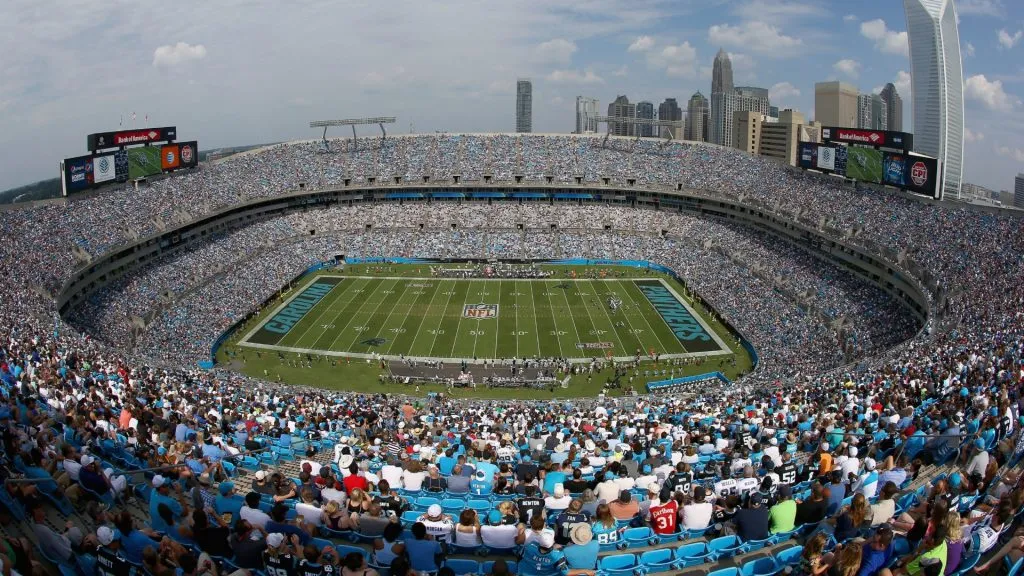
A general view of the Seattle Seahawks against the Carolina Panthers during their game at Bank of America Stadium on September 8, 2013. (Source: Streeter Lecka/Getty Images)
Bank of America Stadium stands as a colossus in the heart of Charlotte, serving as the home of Charlotte FC since the club’s entry into Major League Soccer in 2022. Originally built in 1996 for the Carolina Panthers, this stadium blends the rich history of American football with the rising culture of soccer in the region.
Although it boasts an immense capacity of nearly 75,000, for MLS matches, seating is adjusted to create a more intimate yet electrifying atmosphere, with around 38,000 fans filling the stands.
What makes this stadium unique is its dual-purpose functionality, allowing soccer and football to co-exist seamlessly. The venue has undergone multiple renovations to enhance fan experience, with upgraded premium seating, advanced LED lighting, and a superior turf system to accommodate the needs of a fast-paced soccer match.