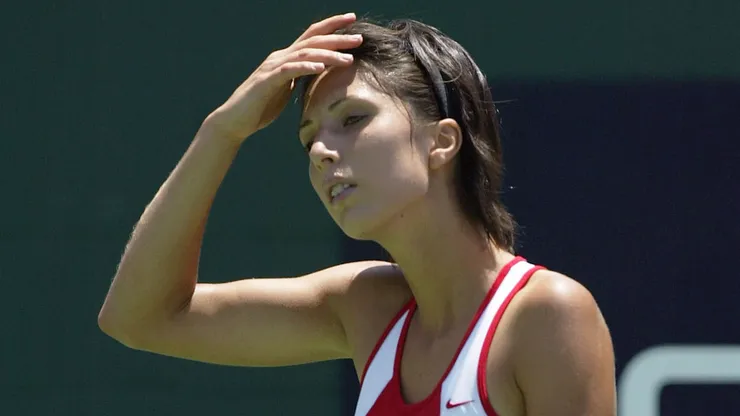
In the summer of 2004, Anastasia Myskina lifted the Coupe Suzanne Lenglen and made history. By winning Roland Garros, she became the first Russian woman to claim a Grand Slam singles title. This milestone would open the floodgates for a new generation of talent from her country, including players like Maria Sharapova. But while others went on to global stardom, Myskina’s time at the top was surprisingly brief.
Known for her quick footwork, aggressive baseline play, and feisty demeanor on court, Myskina started her pro career in 1999. By 2003, she cracked the top 10 and was seen as one of the leaders of a growing Russian movement in women’s tennis.
However, when she arrived in Paris for the French Open in 2004, she was far from being considered the favorite to win the title. In her previous 16 Grand Slam appearances, she hadn’t reached the last eight. However, in a formidable run, she defeated her compatriot Svetlana Kuznetsova in a tough match in the semifinals, before facing another Russian, Elena Dementieva, in the big final.
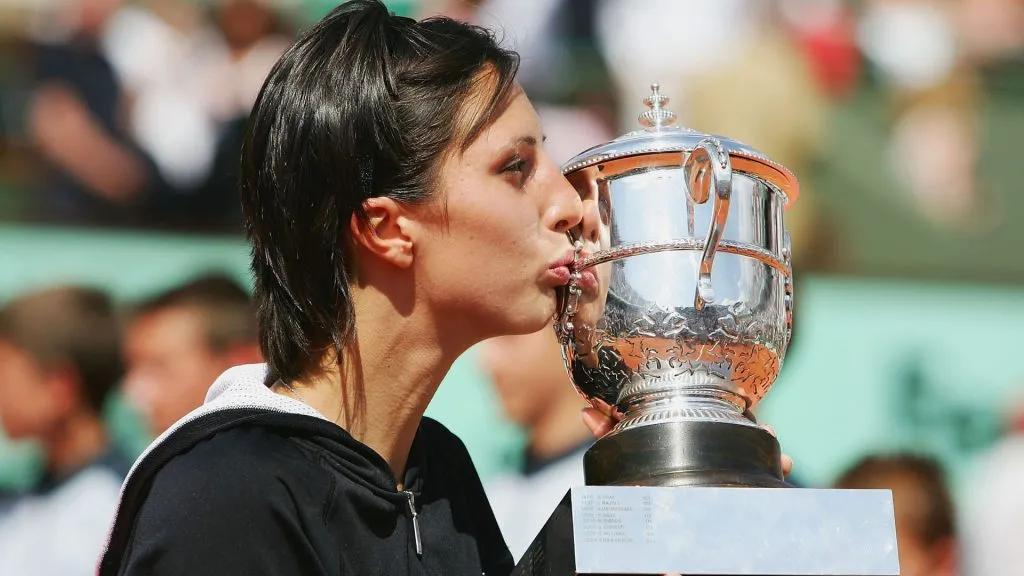
Anastasia Myskina won the 2004 French Open (Clive Mason/Getty Images)
“I can’t believe it!” she expressed after the final, after she made history. That year, she helped Russia secure its first Fed Cup title and reached the semifinals in the Olympic games. That season, she reached a career-high ranking of world No. 2. It was a successful season all around, and she was named, alongside Roger Federer, singles World champion by the ITF.
A sudden fade: Struggles with injuries
What followed her breakout year was a puzzling decline. In 2005, she suffered from a shoulder injury in Charleston, as well as off-court pressures, such as her mother being diagnosed with cancer, according to ESPN.
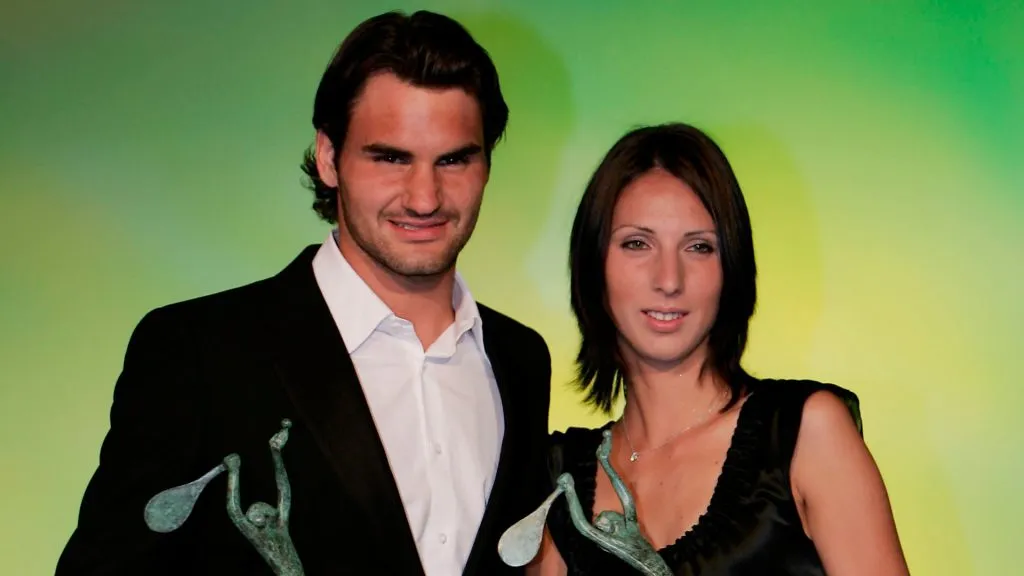
Federer and Myskina pose together with their ITF World Champions of 2004 awards (Clive Brunskill/Getty Images)
When it came to defending her French Open title, she became the first champion to lose in the opening round, after being defeated by Spain’s Maria Sanchez Lorenzo 6-4, 4-6, 6-0. It was just one of many disappointing results, and she ended the season outside of the Top 10 for the first time in three years.
She later acknowledged how deeply this affected her ability and motivation to compete at the highest level. “I just have no confidence. I hit the ball and it just goes off the court… I have no explanation, really… no. Right now when the ball comes to me I just don’t know what to do,” she told the press after being eliminated from the French Open, crying (via CNN).
The following year, she was attempting a comeback. “I give one more chance to myself this year to do well, and I have a goal,” she told the press in 2006, cited by ESPN. However, she suffered from a foot injury and couldn’t make an impact.
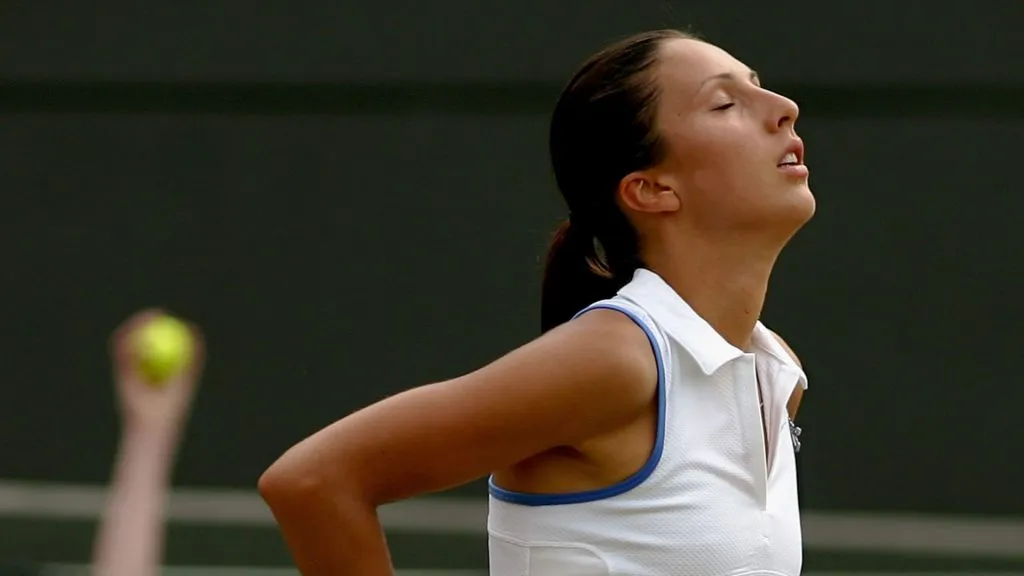
Myskina couldn’t make a strong comeback to the WTA Tour ( Daniel Berehulak/Getty Images)
By 2007, at just 25 years old, Myskina played her last match but never announced an official retirement. There was no farewell tour, no major announcement. One of the sport’s most significant champions simply faded from view. In total, she won 10 WTA titles and $5.6 million in prize money.
Life after tennis: Motherhood and TV commentary
Since retiring, Myskina has kept a low profile. She has worked occasionally in tennis commentary for Russian television and has been involved in some coaching, as well as Fed Cup captain, and ambassadorial roles. But mostly, she has focused on her personal life, including raising her three sons.
“It’s a very tough job, but you learn how to understand the needs and wants of a child. You know how to help them,” she said about motherhood to Indian Express in 2018. “You become patient and that always helps you deal with the problems a player goes through. The only thing is that you can help them only when they are off court.”
Still, her legacy remains. Myskina’s win at Roland Garros signaled the arrival of Russian women’s tennis on the global stage. Within a few years, Maria Sharapova, Svetlana Kuznetsova, and Dinara Safina would all reach Grand Slam finals — with several winning titles of their own.
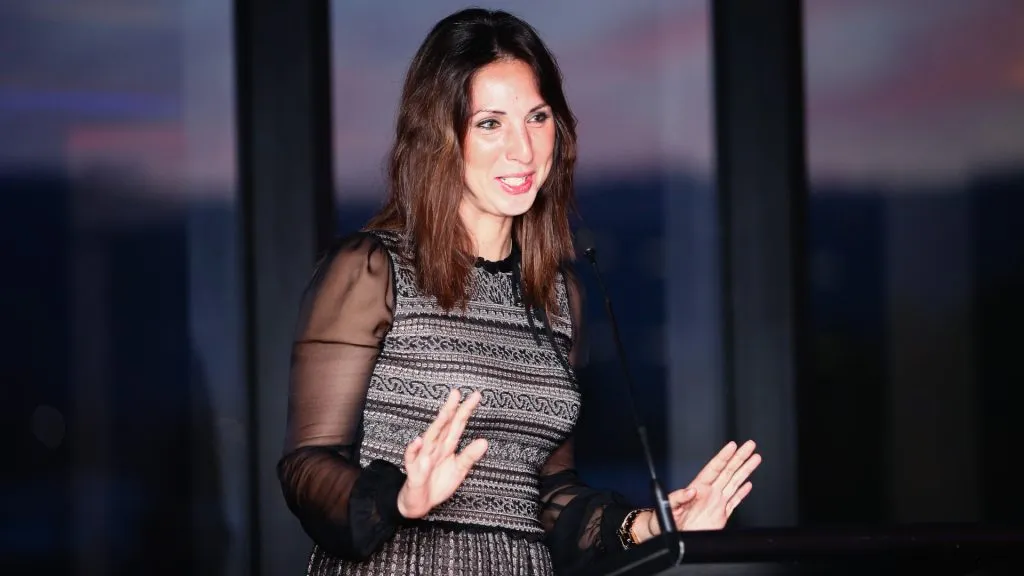
Myskina in 2014 while being Fed Cup captain (Mark Nolan/Getty Images)
“Sometimes I think seven years was not enough, but they were a good seven years,” Myskina told Indian Express. However, she also acknowledged that she wasn’t considering any comebacks.
In many ways, Anastasia Myskina’s story runs counter to what we expect from champions. She didn’t chase every record or extend her career for longevity’s sake. She won big, then walked away. But for those who remember 2004 and her place in Russia’s tennis tradition, Myskina’s place in history is secure.