One of the most controversial topics in recent NBA history is the Los Angeles Lakers‘ decision to draft Bronny James, the son of LeBron James. The move has sparked debate about what it means for the league and the influence LeBron wields within the business of basketball. Washington Wizards icon Gilbert Arenas recently shared his thoughts on the situation.
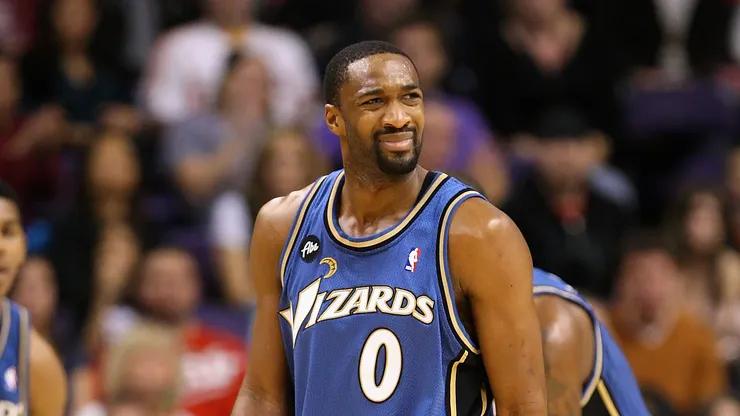
During an appearance on The Dan Patrick Show, defending LeBron’s decision. The former NBA point guard compared it to a father hiring his son in a family business before he’s fully prepared for the role. “Let’s just be honest, every parent would’ve [done] the same thing… What LeBron [James] did, every parent would have,” Arenas said.
So far this season, Bronny has played in 23 games for the Lakers, coming off the bench in limited minutes—an expected role for a second-round pick. In his rookie campaign, the 20-year-old guard is averaging 2.3 points, 0.6 rebounds, and 0.6 assists per game.
However, his performance in the G League has been much more promising. Through 11 games, Bronny is averaging 21.9 points, 5.2 rebounds, and 5.5 assists per game while shooting 44.3% from the field and 38.0% from three-point range. These numbers indicate that his development is progressing, even if his NBA impact remains minimal for now.
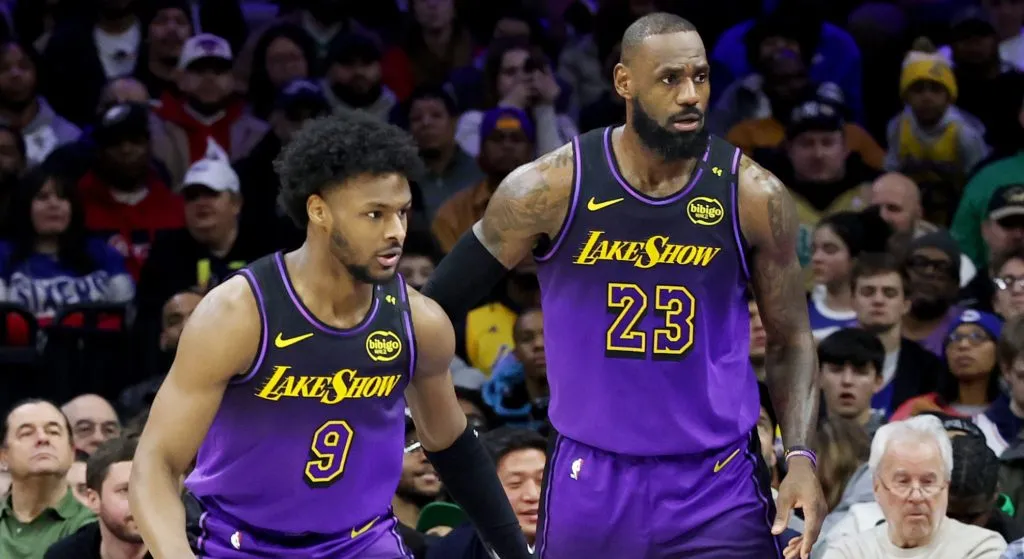
Bronny James #9 stands by LeBron James #23 of the Los Angeles Lakers during the second half against the Philadelphia 76ers at the Wells Fargo Center on January 28, 2025 in Philadelphia, Pennsylvania.
The Lakers’ investment in Bronny: Basketball decision or business move?
The Lakers‘ decision to draft Bronny was not just about basketball—it also carried significant business implications. LeBron’s well-documented desire to play alongside his son has drawn global attention, making their pairing one of the biggest storylines of the season.
Beyond the sentimental value, the move has proven to be a financial win for the Lakers. The father-son duo has driven merchandise sales, boosted ticket revenue, and increased TV ratings, further solidifying the Lakers’ brand. Additionally, keeping LeBron satisfied as he approaches the final stretch of his career could benefit the franchise in future negotiations.
What’s next for Bronny?
While the business benefits are undeniable, the real question remains: Do the Lakers see Bronny as a key piece of their future, or was this move more about LeBron’s influence? His continued development in the G League suggests he has the potential to carve out an NBA role, but his long-term fit with the Lakers is still uncertain.
If Bronny continues to improve, he could prove that his place in the league isn’t just about his last name but about his talent. Over time, the Lakers will have to decide whether he’s truly a part of their long-term plans—or if his selection was always more about the business side of basketball.