

In tennis, not every loss is final. The concept of a “lucky loser” adds an unexpected twist to the tournament, giving players a second chance when they least expect it. It’s a rule that blends luck, timing and opportunity in a unique way.
Emerging from the qualifying rounds, lucky losers didn’t initially make the cut but find themselves back in the main draw due to last-minute withdrawals. This chance can shift the momentum of a tournament…
While not common, they have made memorable runs, proving that in tennis, fortune can favor those who stumble but don’t fall completely. Their stories add a layer of unpredictability that keeps the sport fresh and exciting.
What exactly is a lucky loser in tennis?
A “lucky loser” is a player who loses in the final round of qualifying but still enters the main tournament draw due to a withdrawal, usually from injury or illness, of another player. This rule exists to fill spots that open unexpectedly and keeps the tournament schedule intact.
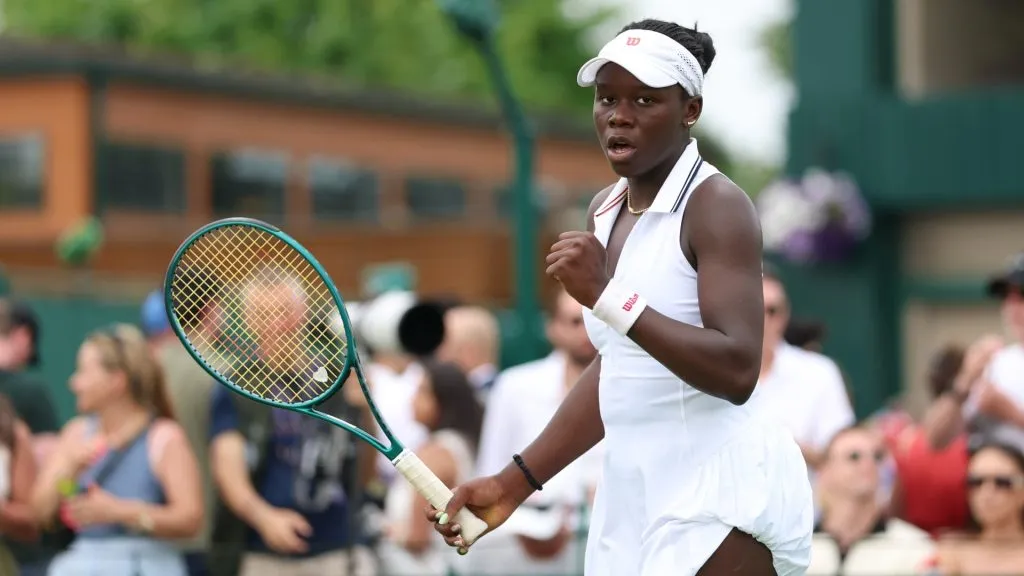
Victoria Mboko of Canada celebrates a point against Magdalena Frech of Poland during the Ladies’ Singles first round match on day two of The Championships Wimbledon 2025. (Source: Dan Istitene/Getty Images)
The selection of a lucky loser isn’t random — it’s based on rankings among those who lost in the final qualifying round. This ensures the highest-ranked players get priority if a slot opens. The system balances fairness with practicality, making sure tournaments continue smoothly.
While it may sound like a loophole, the lucky loser spot is an official and strategic part of professional tennis, acknowledged by the ATP, WTA and Grand Slam organizers alike.
How does the lucky loser process work in practice?
During qualifying, players compete for a limited number of main draw spots. Those who just miss out—losing in the final round—form a queue for lucky loser consideration. If a main-draw player withdraws before their first match, the highest-ranked eligible lucky loser steps in.
Timing is crucial. If a withdrawal happens after play has started, different rules may apply. This often means lucky losers are informed on short notice, requiring mental toughness and readiness to jump in immediately.

Sergiy Starkhovsky of Ukraine in action against Paul-Henri Mathieu of France during day three of the Kremlin Cup Tennis at the Olympic Stadium on October 8, 2008. (Source: Julian Finney/Getty Images)
The process injects unpredictability into tournaments. Fans may suddenly see a player they thought was out making a surprise appearance, sometimes with little preparation but plenty of motivation.
Notable lucky losers who seized their second chance
One of the freshest examples comes from Wimbledon 2025, where Canadian teenager Victoria Mboko entered the main draw as a lucky loser after Anastasia Potapova withdrew. She quickly made headlines by defeating the 25th seed Magdalena Fręch in straight sets, marking the most significant victory of her young career and signaling her arrival on tennis’s biggest stage.
While rare, lucky losers have repeatedly proven that one unexpected call can lead to extraordinary outcomes. In 2023, Germany’s Jan-Lennard Struff made headlines at the Madrid Masters by reaching the final after entering as a lucky loser—a feat unmatched at a Masters 1000 event since 1990.
Italian player Marco Cecchinato made a similarly bold statement in 2018 at the Budapest Open, where he not only entered the draw as a lucky loser but went on to lift the trophy. Just five years later, Soonwoo Kwon of South Korea followed suit in Adelaide, turning a second chance into a title run.
Eva Lys made history at the Australian Open 2024 by becoming the first lucky loser in the Open Era to reach the fourth round of a Grand Slam. Her resilience and poise under pressure lit up Melbourne, proving that even the least likely entrants can command the big stage.