The air in Gainesville often carries the scent of oranges and the weight of history. For decades, the Florida Gators have not just competed; they have dominated, etching their legacy deep into the soil of the SEC.
This is a program where greatness is simply the standard, not the distant aspiration of a rising team. Every championship banner, every electric Saturday under the lights, and every indelible victory has been authored by a select few.
These were the athletes who transcended the game, delivering performances that didn’t just win games but fundamentally altered the course of a storied tradition, turning mere potential into permanent college football glory.
Tim Tebow | QB
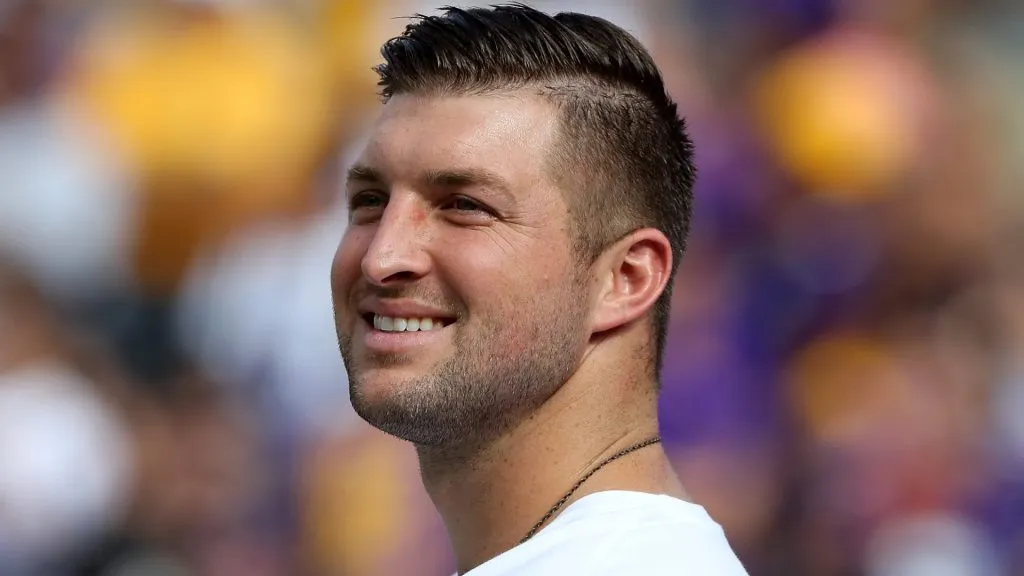
Tim Tebow (Source: Sam Greenwood/Getty Images)
The name Tim Tebow doesn’t just whisper in Gainesville; it echoes as a manifesto of sheer competitive intensity and devotion. His tenure at Florida, spanning 2006 to 2009, was less a college career and more a cultural revolution for the program, fundamentally redefining the role of the modern quarterback.
He burst onto the scene with a physical dominance unheard of for his position, capturing the Heisman Trophy in 2007 and accumulating major individual hardware, including two Maxwell Awards. Yet, his true legacy was forged in the crucible of championships.
A key figure in two BCS National Championship titles (2006 and 2008), he transcended mere statistics. He still holds 5 NCAA, 14 SEC, and 28 Florida records, most notably as the only player in NCAA history to log at least 20 rushing and 20 passing touchdowns in a single season. His aura of leadership and relentless style set, and maintain, the benchmark for all Florida quarterbacks.
Steve Spurrier | QB
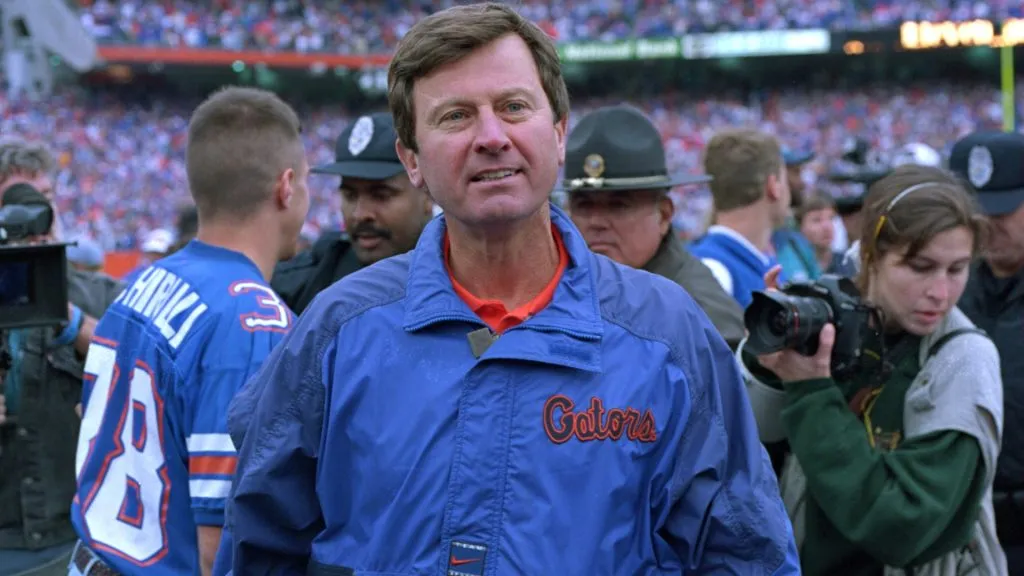
Steve Spurrier (Source: ANDY LYONS/ALLSPORT Andy Lyons / Allsport)
Before he was the “Head Ball Coach” who revolutionized Southern football, Steve Spurrier was the man who first put Florida on the map. In 1966, the original “Fun ‘n’ Gun” signal-caller proved himself a stellar passer, possessing a confidence and audacity rarely seen in the conservative SEC of the era.
He didn’t just bring home the first Heisman Trophy in Florida program history; he cemented his legend with iconic plays, such as waving off the kicker to boot a 40-yard field goal himself to defeat Auburn during his senior season.
Finishing his college tenure with 4,848 passing yards and 37 touchdowns, he shattered numerous school and conference records and was a two-time first-team All-American. His impact is foundational, as he not only excelled as a player but later laid the groundwork for the Gators’ modern championship dominance as a coach.
Danny Wuerffel | QB
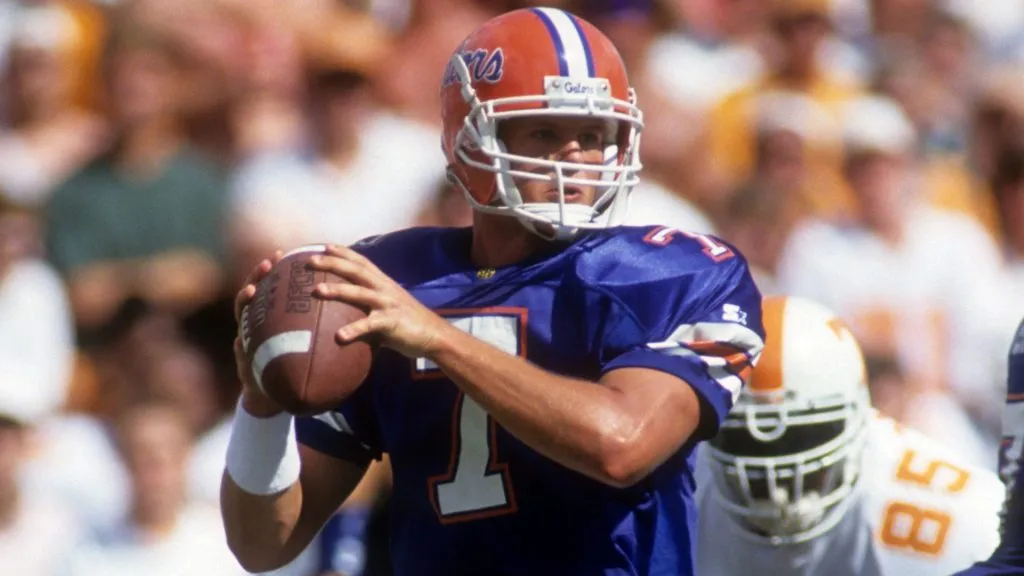
Danny Wuerffel (Source: Scott Halleran/Getty Images)
If Spurrier injected audacity into Florida, Danny Wuerffel perfected its execution within the Fun ‘n’ Gun system. This quarterback shone through a near-perfect blend of academic brilliance and on-field mastery.
He was the passing machine behind Florida’s first National Championship in 1996, an achievement he capped off by winning the Heisman Trophy that same year—exactly 30 years after his legendary coach had done so.
His efficiency was legendary; he ended his career with an SEC-record 114 touchdown passes and a pass efficiency rating that was the best in major college history at the time of his departure. His influence is measured by his four SEC Championships and the fact that his name is synonymous with excellence, both on the gridiron and in his ongoing commitment to community service.
Jack Youngblood | DE
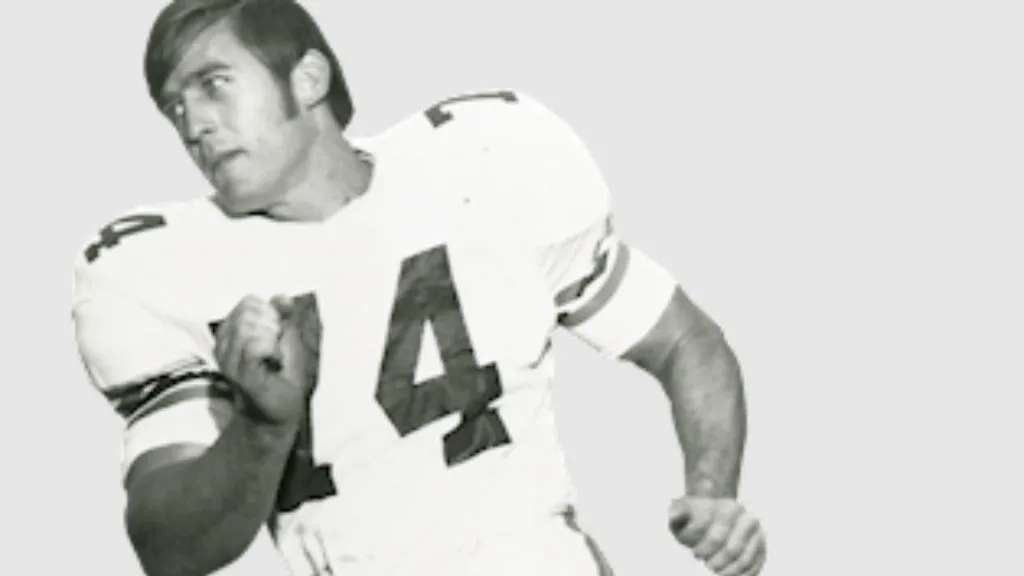
Jack Youngblood (Source: College Football Hall of Fame)
In an era where Florida’s defense was often overshadowed by its offense, Jack Youngblood became the epitome of pure tenacity and trench ferocity. As a defensive end in the late 60s and early 70s, he was a constant disruptive force, earning consensus first-team All-American status in 1970 and being named the SEC Lineman of the Year.
He is remembered not just for his 29 career quarterback sacks, but for embodying the unyielding spirit the Gators always aspired to possess. His inclusion in the Florida Ring of Honor speaks volumes, confirming that his power, character, and sheer determination elevate him to the status of a program legend—a true defensive behemoth.
Emmitt Smith | RB
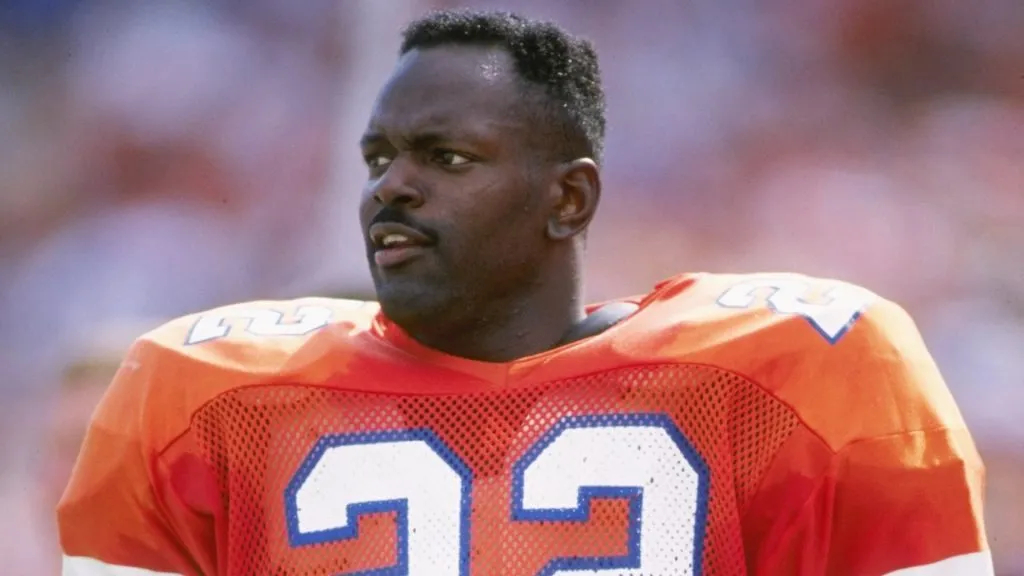
Emmitt Smith (Source: Dean Steele /Allsport)
Emmitt Smith’s explosive speed and unparalleled instinct allowed him to set the SEC ablaze in the late 80s, even while playing for a program still finding its championship footing.
Though his Florida career lasted just three seasons (1987-1989), his time was a blur of record-breaking dominance. He demolished 58 school records and earned three All-SEC selections, alongside the SEC Player of the Year award in 1989.
His impact was so immediate and profound that it earned him a respectable seventh-place finish in the Heisman voting, despite playing on a team that wasn’t a national title contender. His legacy in Gainesville isn’t only about the 38 touchdowns he scored, but about the promise of future greatness he embodied—a promise he famously fulfilled by becoming the NFL’s all-time leading rusher.
Wilbur Marshall | LB

Wilbur Marshall (Source: College Football Hall of Fame)
If Jack Youngblood represented tenacity, Wilbur Marshall was speed and versatility personified at the linebacker position. From 1980 to 1983, he was the fearsome core of the Gators’ defense, earning first-team All-SEC honors three times and becoming a consensus All-American twice.
His uncanny ability to make plays across the entire field—from rushing the quarterback to dropping into coverage—made him unstoppable, tallying 343 total tackles and 23 sacks.
He was a two-time Lombardi Award finalist and was named National Defensive Player of the Year by ABC Sports in 1983. He was not merely a defensive anchor; he was named the Gators’ Defensive Player of the Century by the Gainesville Sun in 1999, an irrefutable testament to his dominance.
Fred Taylor | RB
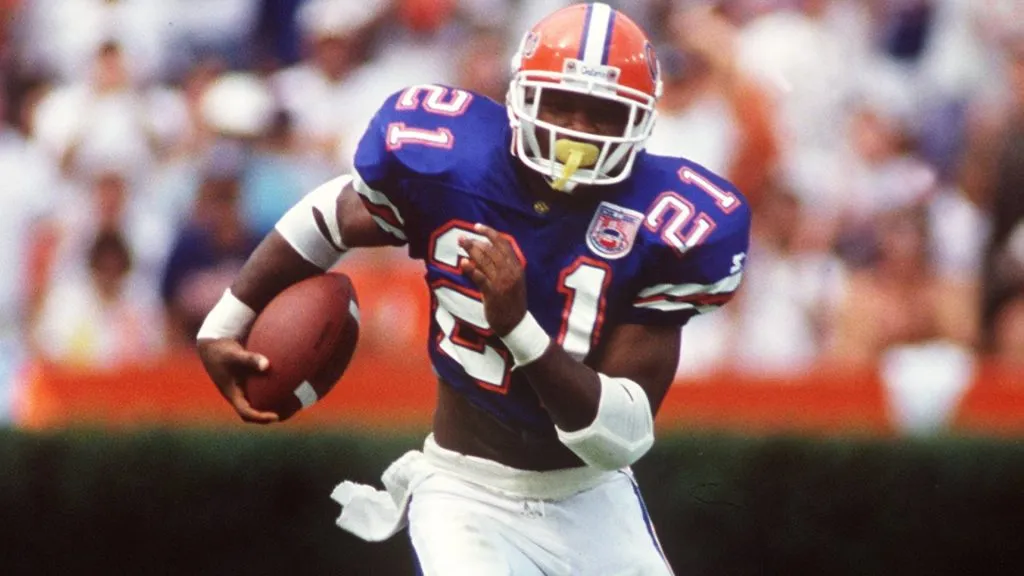
Fred Taylor (Source: Scott Halleran/ALLSPORT)
In the age of the Fun ‘n’ Gun, a running back like Fred Taylor might have been overlooked, yet his smooth power and elegance in carrying the ball made him impossible to ignore. He was the perfect ground force, balancing the Gators’ prolific passing offense in the mid-90s.
Combining track speed with bruising power, he finished his career ranked fourth in school history in both rushing yards and touchdowns. In his final season (1997), he was a third-team All-American and the MVP of the Citrus Bowl, leading the team with 1,292 yards.
He was not just prolific; his running style, often described as fluid yet difficult to bring down, cemented him as a legend who served as a crucial anchor during one of the university’s most successful periods.
Percy Harvin | WR/RB/RET
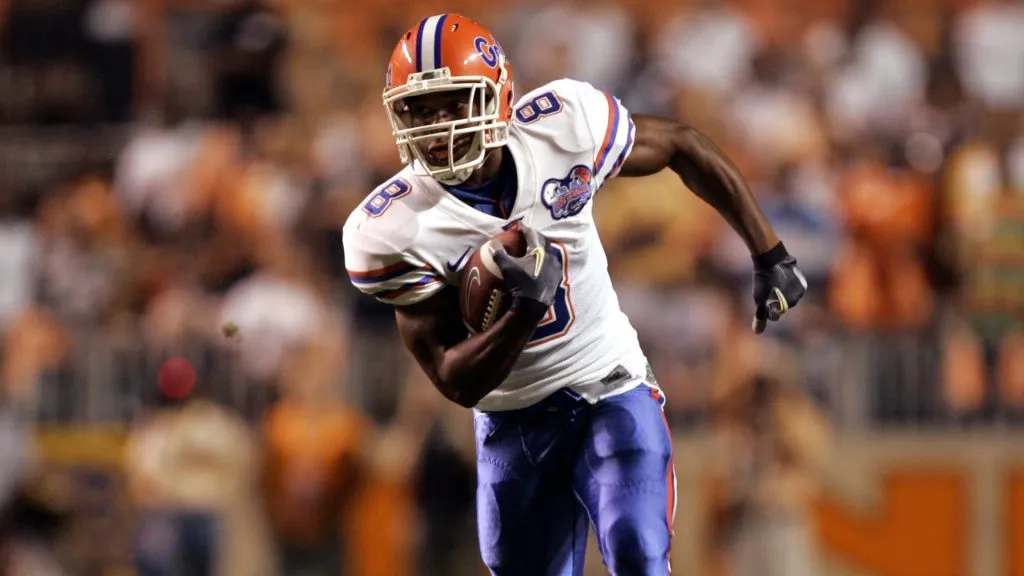
Percy Harvin (Source: Brian Bahr/Getty Images)
When discussing electrifying, multifaceted athletes, Percy Harvin is the gold standard. During the Urban Meyer BCS Championship era, he was the most dazzling offensive weapon the Gators ever deployed. His track speed combined with raw strength made him a scoring threat from any alignment—receiver, runner, or returner.
He was the first player in school history to tally over 1,000 career rushing yards and 1,000 career receiving yards. He secured two national championships (2006 and 2008), was a two-time first-team All-American, and the 2006 SEC Freshman of the Year. His mere presence on the field dictated opposing defensive schemes, solidifying a legacy built on groundbreaking versatility and game-breaking plays.
Alex Brown | DE
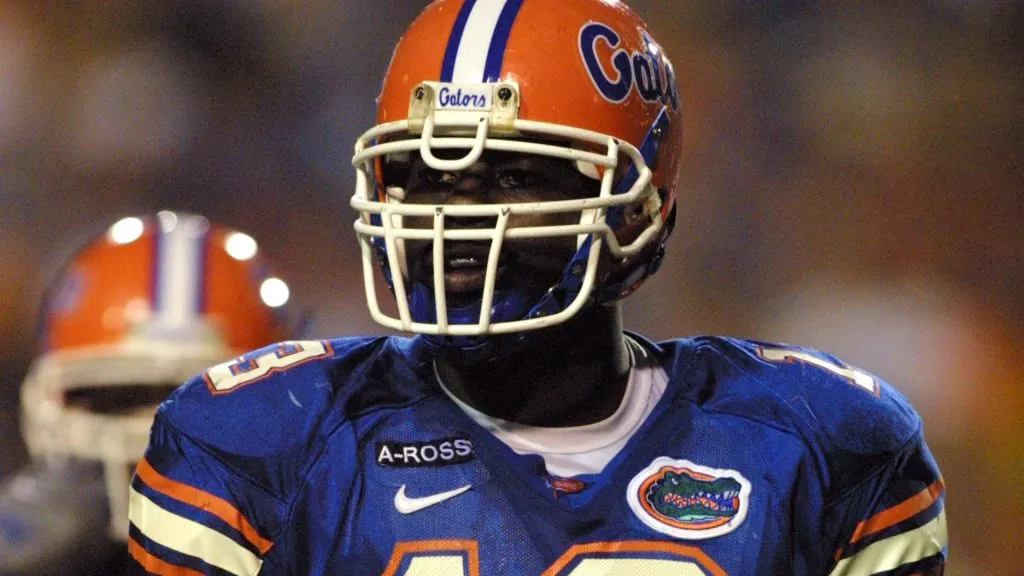
Alex Brown (Source: Scott Halleran/Getty Images)
If you seek a synonym for constant pressure and relentless pass-rushing dominance in Gators history, look no further than Alex Brown. The defensive end was the terror of opposing quarterbacks in the late 90s and early 2000s, setting the current all-time school record with 33 career sacks. Brown didn’t just compile impressive numbers; his performance peaked in critical moments.
A prime example is his unforgettable 5-sack game against Tennessee, a performance remembered as the blueprint for Gators defensive destruction. His place among Florida’s defensive elite is secure, not only for his sack record but for his ability to be a captain and a consistent generator of huge defensive momentum shifts.
Lito Sheppard | CB
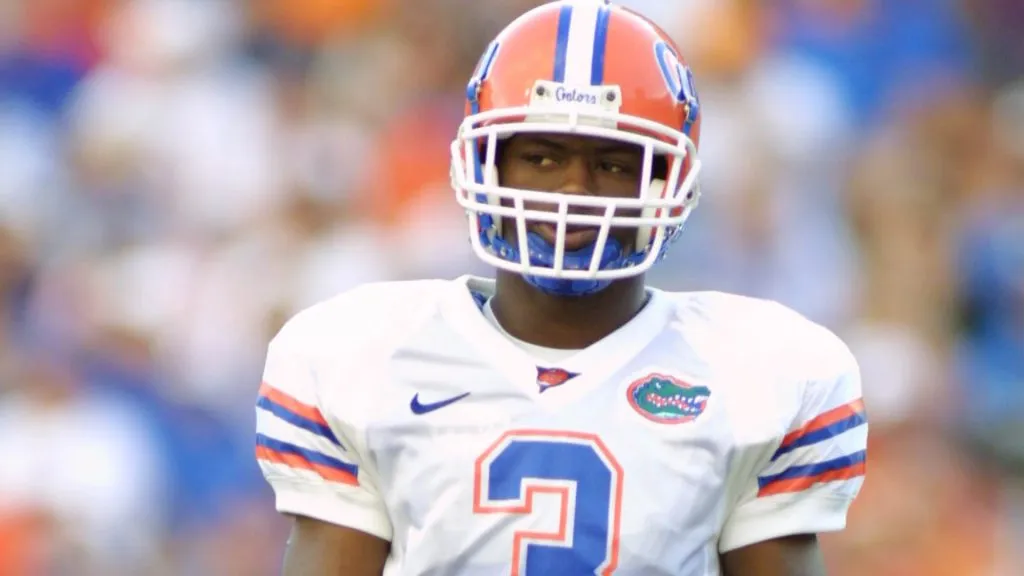
Lito Sheppard (Source: Scott Halleran/Allsport)
Few defensive backs in the history of The Swamp possessed the combination of raw, game-breaking speed and anticipation that defined Lito Sheppard‘s three seasons (1999–2001). Playing under Steve Spurrier, he was an essential defensive weapon who paired his coverage skills with special teams flair, averaging 22.5 yards per kickoff return.
He quickly established himself as an elite cover corner, earning first-team All-American honors as just a sophomore in 2000, followed by another All-SEC nod in 2001. While many defensive players are judged by tackles, his impact was in discouraging opponents from even attempting to throw his way.
His eight career interceptions were a testament to his ball skills, sealing his reputation as one of the Gators’ premier shutdown corners before being drafted in the first round of the 2002 NFL Draft.
Brandon Spikes | LB
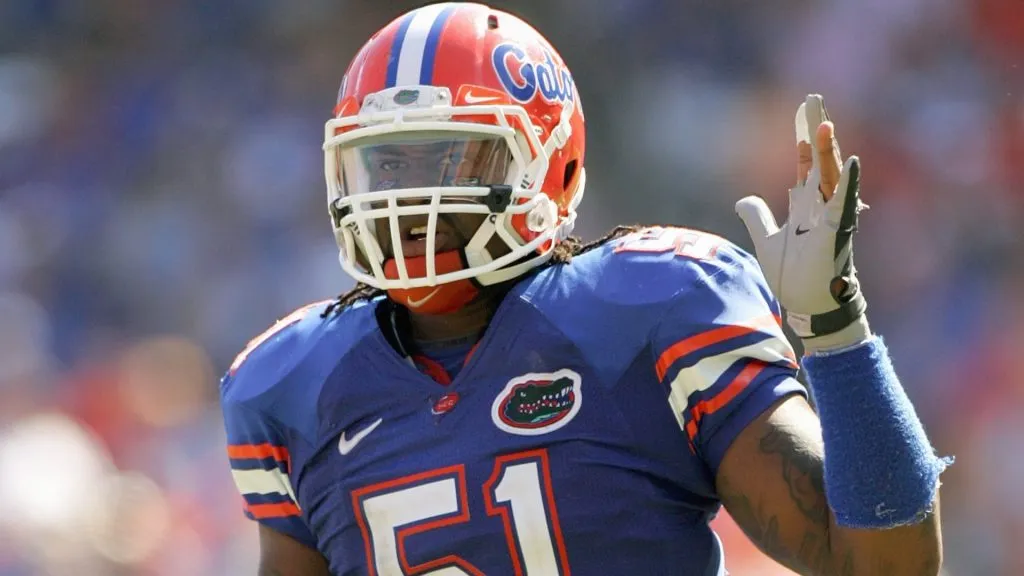
Brandon Spikes (Source: Sam Greenwood/Getty Images)
If the Urban Meyer era had a defensive personality, it was the hulking, hard-hitting menace known as Brandon Spikes. The middle linebacker wasn’t merely productive; he was a physical enforcer whose presence alone influenced opposing play calls, creating an atmosphere of palpable fear in the heart of the Gators defense.
He was the immovable object that helped anchor two BCS National Championship teams. His play transcended standard tackling, though he logged 307 career tackles; he specialized in creating chaos, recording 31.5 tackles for loss and setting a school record with four interception returns for touchdowns—a feat only two other linebackers nationally had achieved since 1996. A unanimous All-American in 2008, he embodied the “nasty” attitude necessary for SEC dominance, becoming a celebrated cult hero in Gainesville.
Carlos Alvarez | WR
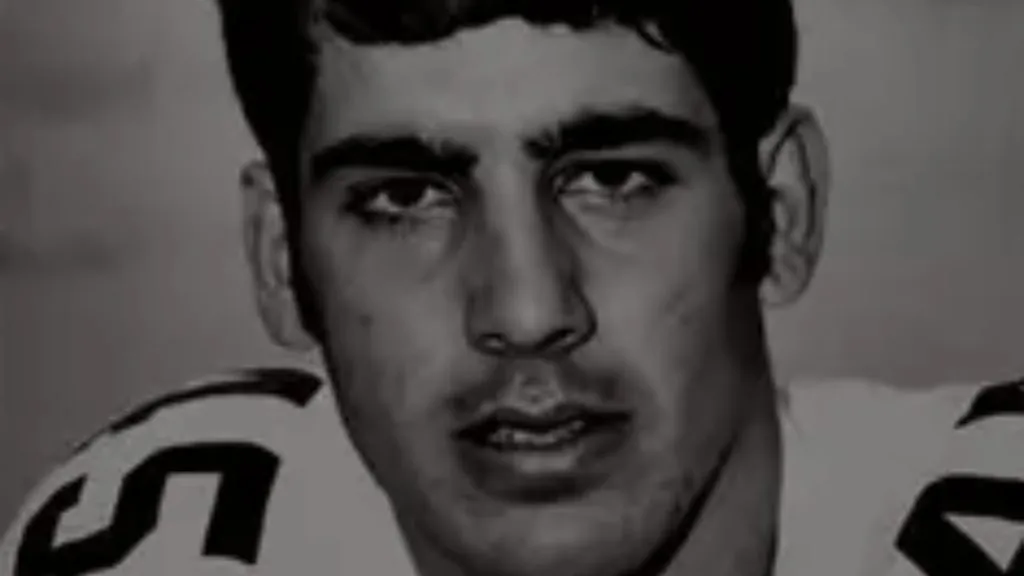
Carlos Alvarez (Source: Florida Gators)
The “Cuban Comet”, Carlos Alvarez, was a pioneer whose impact stretched far beyond the hash marks, defining what it meant to be an elite student-athlete in Gainesville. Having fled Castro’s regime with his family, he exploded onto the field in the late 60s, quickly establishing himself as a receiving yardage leader for three straight seasons.
Playing in a run-heavy era, hestill holds the Gator records for receptions in a single game and in a single season, with his 133 yards-per-game average in 1969 still standing as the best single-season mark in school history.
Beyond his Consensus All-American selection in 1969, he was a three-time Academic All-American, cementing a rare legacy of brilliance that led him to graduate with honors and pursue a career in law after his playing days ended due to injury.
Maurkice Pouncey | C
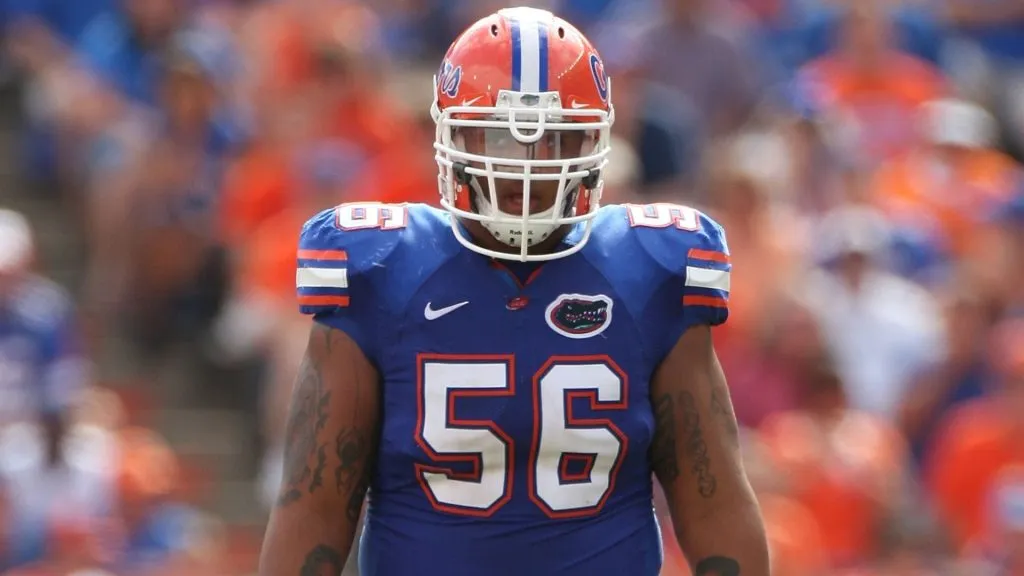
Maurkice Pouncey (Source: Sam Greenwood/Getty Images)
In the era of championship football, the Pouncey twins provided the silent, consistent power that propelled the Gators’ record-breaking offenses. Maurkice Pouncey, primarily operating at center, was the cerebral anchor of the offensive line that blocked for Tim Tebow and a relentless running game.
His reliability was nearly flawless; he posted six games with a grade of 90% or better during the 2008 National Championship season, earning an SEC Offensive Lineman of the Week award.
By 2009, he was recognized as the nation’s best, taking home the Rimington Trophy—the first Gator in history to win the award—and being named a Consensus All-American. His dominance defined the interior line play during one of the program’s most physically imposing eras.
Lomas Brown | OT
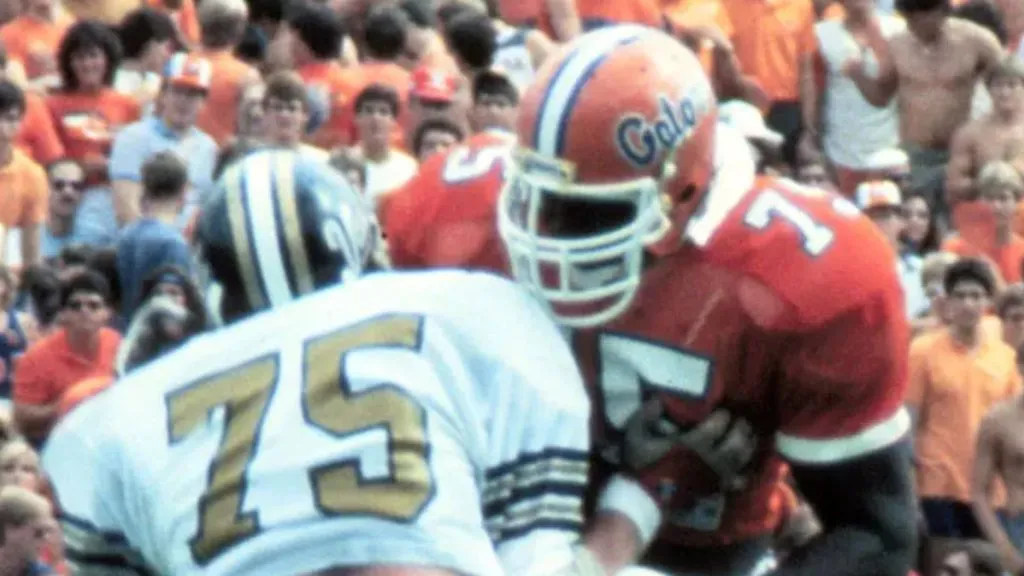
Lomas Brown (Source: Florida Gators)
Lomas Brown stands as the definitive measure of excellence for Florida offensive tackles, serving as the powerful blindside protector in the early to mid-80s. A Consensus All-American in 1984, he was the key component of an offensive front that was famously nicknamed “The Great Wall of Florida”.
His combination of size, footwork, and consistency earned him the prestigious Jacobs Blocking Trophy as the SEC’s best blocker during his senior year. His collegiate success was merely the prelude to an incredibly long and celebrated NFL career, but his four seasons in Gainesville established the benchmark for offensive line professionalism and dominance, a legacy cemented by his later induction into the College Football Hall of Fame.
Wes Chandler | WR
Wes Chandler (Source: Florida Gators)
To appreciate Wes Chandler’s greatness, one must consider his remarkable output despite the constraints of the offense he ran. Playing in the mid-70s, he was a world-class receiver operating within the confines of Florida’s run-oriented Wishbone offense.
Yet, his explosive average of 21.3 yards per catch remains a career record for the Gators, demonstrating an unparalleled ability to turn short passes into massive gains. He finished his time in Gainesville with a school record of 28 total touchdowns and led the Gators in receiving for three consecutive seasons.
His versatility and playmaking ability earned him All-American status in 1977 and a top-five NFL Draft selection, cementing his place as one of Florida’s finest all-around talents.
Rex Grossman | QB
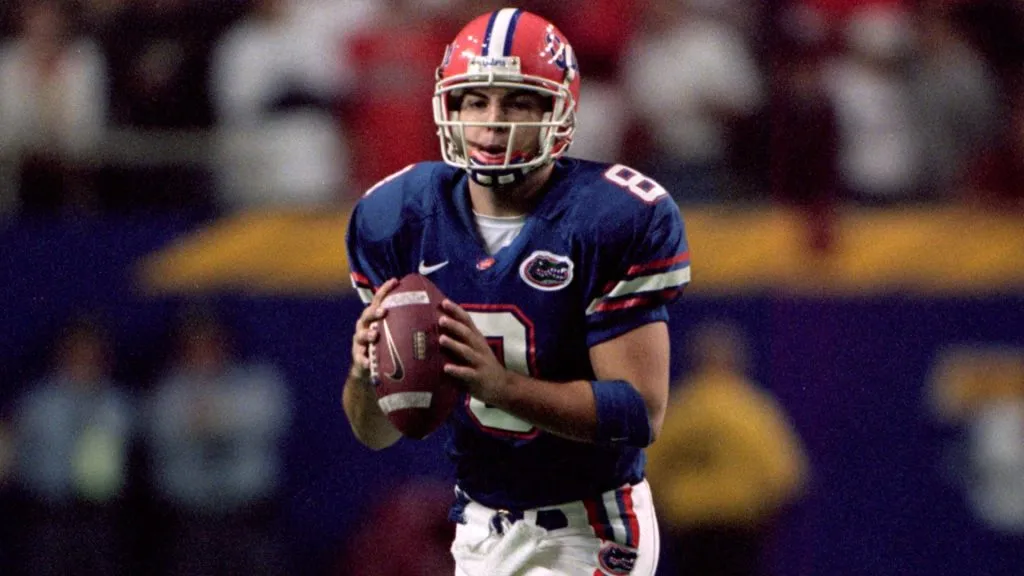
Rex Grossman (Source: Jamie Squire /Allsport)
The moment Rex Grossman stepped under center at Florida, he became the archetype of the modern gunslinger. He played with a spectacular blend of high risk and high reward, leading the Gators’ high-octane attack under Steve Spurrier at the turn of the millennium. In 2001, he had a truly phenomenal season, throwing for over 3,800 yards and 34 touchdowns, leading him to finish a close second in the Heisman Trophy voting.
His aggressive, sometimes reckless, style epitomized the “throw it up and let the playmakers make the play” mentality of the Fun ‘n’ Gun. Though his career was marked by injury, his explosive impact on the field made him one of the most exciting and dominant passing quarterbacks in program history, a true lightning rod for the offense.
Joe Haden | CB
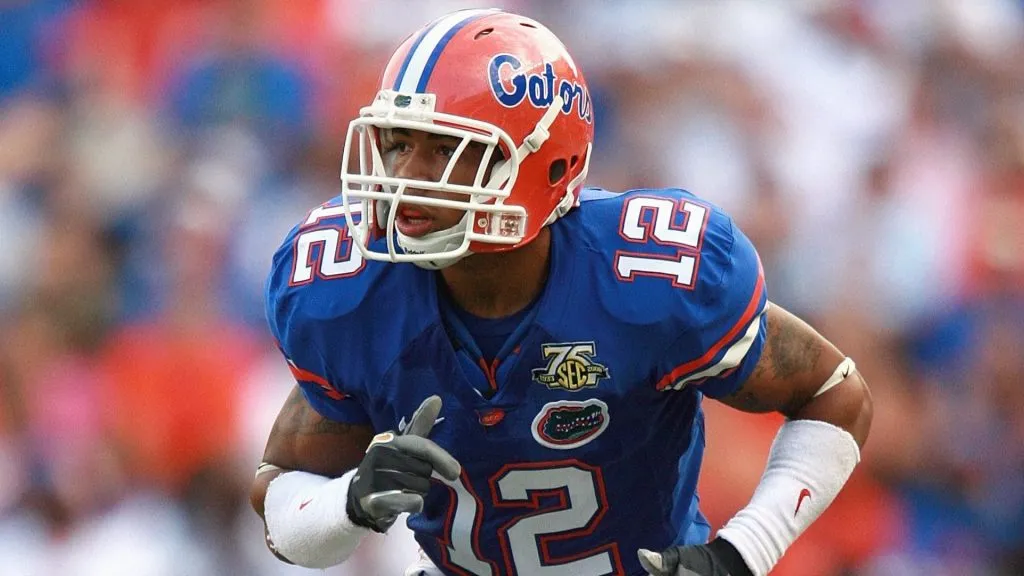
Joe Haden (Source: Doug Benc/Getty Images)
Joe Haden’s greatness is defined not just by his production, but by a seamless, career-defining transition. Originally recruited to Florida to play offense (as a receiver), he made the uncommon switch to cornerback as a freshman in 2007—a decision that instantly paid dividends.
He became the first true freshman in school history to start at cornerback on opening day, eventually anchoring the defense during the 2008 National Championship run. By his junior year in 2009, he was a unanimous All-American and a Thorpe Award finalist, recognized as one of the best cover corners in the country.
His ability to quickly master the defensive side of the ball, demonstrating elite instinct and athleticism, is a testament to the supreme football talent that made him a top-10 pick in the 2010 NFL Draft.
Reggie Nelson | S
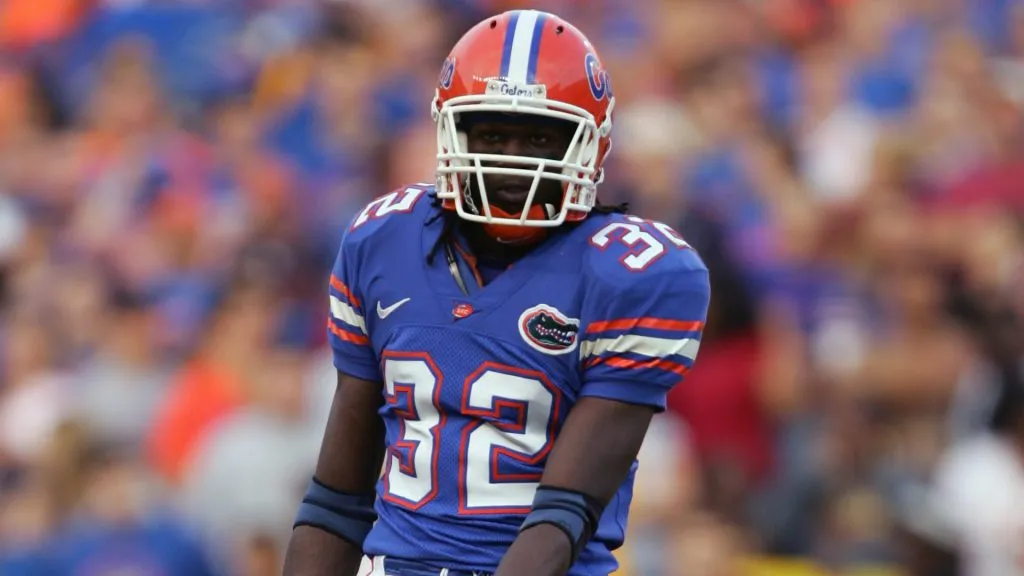
Reggie Nelson (Source: Streeter Lecka / Getty Images)
In the ferocious defenses of the mid-2000s, Reggie Nelson was the human eraser, a free safety whose instincts and punishing physicality earned him the nickname “The Eraser.” Joining Urban Meyer’s Gators for the 2005-2006 seasons, he was a vital engine behind the 2006 National Championship victory.
His signature moment came via a 70-yard interception return for a touchdown against Alabama—a play so iconic it is often cited as the definitive end of the opposing coach’s era in Tuscaloosa.
His blend of coverage skill and tackling power earned him the prestigious Jack Tatum Trophy in 2006, recognizing the nation’s best defensive back, solidifying his status as a Consensus All-American and one of the hardest hitters to ever roam the Gainesville secondary.
Ike Hilliard | WR

Ike Hilliard (Source: Getty Images)
During the high-flying Fun ‘n’ Gun era, Ike Hilliard and his counterpart, Reidel Anthony, formed one of college football’s most lethal receiving tandems. He possessed the reliable hands and precise route running that made him Danny Wuerffel’s favorite target, proving indispensable in the Gators’ 1996 National Championship run.
He still holds Florida’s all-time record for receiving touchdowns in a single game with four and finished his collegiate career ranked second in program history with 29 receiving touchdowns.
He declared for the NFL Draft after his junior year, a testament to his dominance. His exceptional run through three SEC Championships (1994-1996) makes him a true cornerstone of the most prolific offensive period in Gators history.
Jevon Kearse | DE/LB
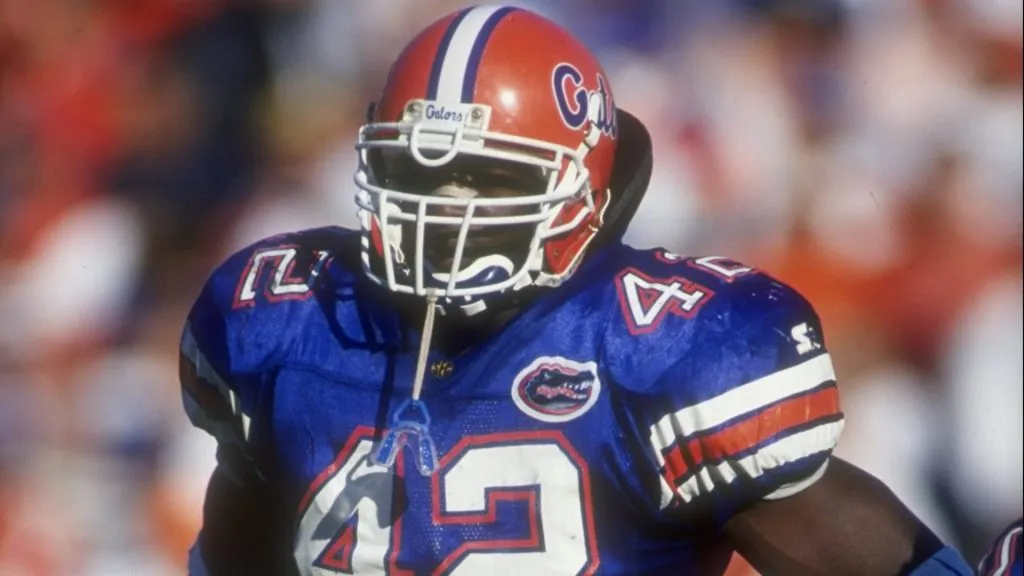
Jevon Kearse (Source: Scott Halleran /Allsport)
They called him “The Freak”, and the nickname perfectly encapsulated the physical marvel that was Jevon Kearse. Standing 6-foot-5 but possessing the agility of a defensive back, Kearse terrorized offenses from 1995 to 1998, seamlessly switching between outside linebacker and defensive end.
His game was less about filling up the stat sheet and more about pure intimidation and influence, forcing quarterbacks to constantly account for his chaotic presence—a phenomenon former Tennessee coach Phil Fulmer once described by saying, “When you saw No. 42 on the field… they just looked scarier and different“.
He was named SEC Defensive Player of the Year and a first-team All-American in 1998, leaving Florida as a dominant figure whose rare combination of size and speed ushered in a new standard for defensive playmakers.
Chris Doering | WR
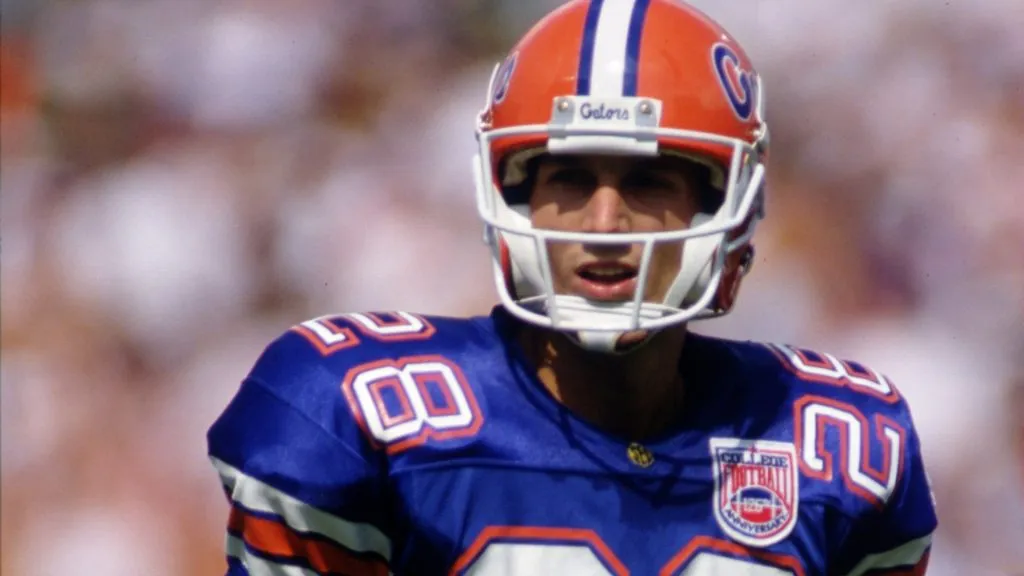
Chris Doering (Source: Scott Halleran/ALLSPORT)
The story of Chris Doering is one of perseverance elevated to legend. Starting as a walk-on, he earned his scholarship and, in the process, rewrote the Gators’ receiving record book alongside Danny Wuerffel. His legacy rests entirely on his ability to find the end zone, finishing his career with 31 receiving touchdowns, a mark that remains the best in Florida history.
His most iconic moment is etched in rivalry lore: the game-winning touchdown catch from Wuerffel to defeat Kentucky in 1993, a play that cemented his reputation as the ultimate red-zone threat. A captain and second-team All-American in 1995, his journey from an unheralded walk-on to an SEC record-holder personifies dedication to greatness.
Errict Rhett | RB

Errict Rhett (Source: Scott Halleran /Allsport)
Errict Rhett was a model of durability and consistent production, grinding his way past a Gators legend to claim his own place in history. From 1990 to 1993, Rhett was the unquestioned leader of the Florida rushing attack, famously leading the team in rushing yards all four seasons of his college career.
He ultimately broke Emmitt Smith’s former Gators career rushing record, finishing with 4,163 yards and 34 touchdowns, a remarkable achievement given the focus on Steve Spurrier’s passing offense. His tough, north-south running style was instrumental in securing SEC Championships in 1991 and 1993, capping his career with an MVP performance in the 1994 Sugar Bowl.
Kyle Pitts | TE
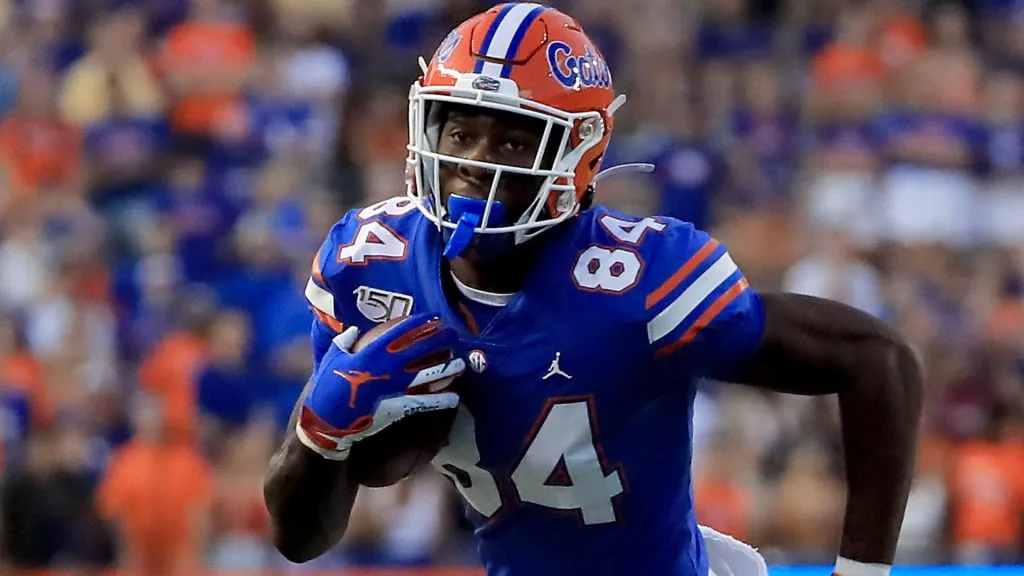
Kyle Pitts (Source: Sam Greenwood/Getty Images)
Kyle Pitts represented a statistical anomaly, a generational talent who redefined the tight end position during his brief but brilliant career (2018–2020). His combination of 6-foot-6 height and wide receiver speed made him an unguardable mismatch, forcing defenses to treat him like an elite wideout.
In the shortened 2020 season, he became the first tight end in 43 years to finish in the top 10 of the Heisman Trophy voting, ultimately winning the John Mackey Award as the nation’s best tight end.
He finished his career as Florida’s all-time leader for receiving yards by a tight end, highlighted by tying the school record with four receiving touchdowns in a single game against Ole Miss. He left Gainesville as a unanimous All-American and a true unicorn of the modern game.
Reidel Anthony | WR
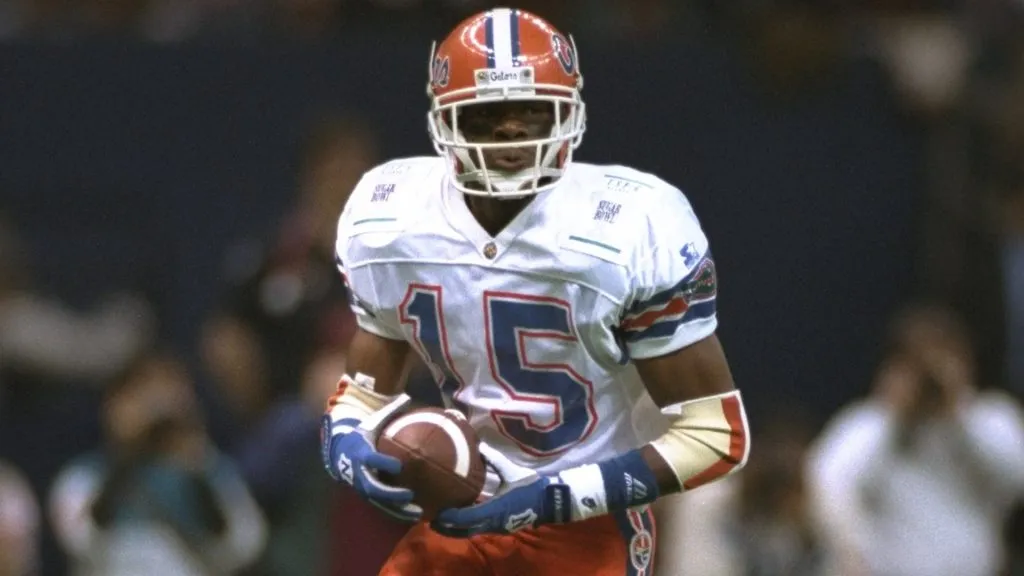
Reidel Anthony (Source: Jonathan Daniel / Allsport)
A picture of pure separation speed and explosive yardage, Reidel Anthony was the deep-threat counterpart to Ike Hilliard, ensuring the Fun ‘n’ Gun always had a lightning strike option. He played a critical role in the 1996 National Championship team, dominating the SEC with 1,293 receiving yards, averaging 18.0 yards per catch.
His true specialty was scoring; his 18 receiving touchdowns in 1996 set the SEC regular-season record at the time and remains the Gators’ team record for a single season. A consensus All-American in 1996 and a first-round draft pick, his breathtaking ability to outrun defenders made every snap a potential house call.