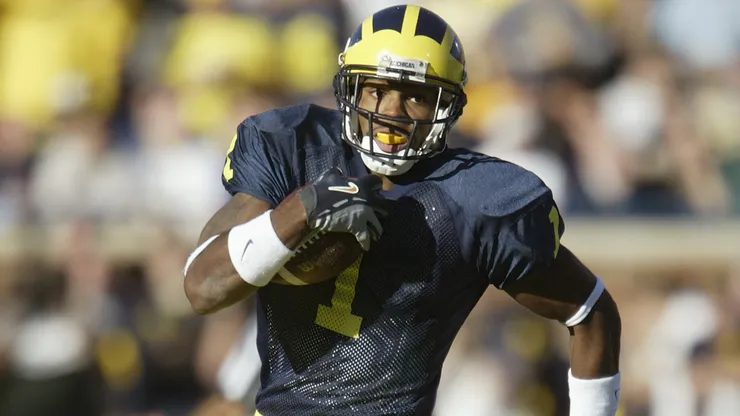
The University of Michigan has long been a cradle of football greatness, producing athletes whose talent and grit reshaped the program’s legacy. Through decades of historic clashes, certain names rose above, leaving a mark that still echoes across the Big House.
From the gridiron heroes of the early 20th century to modern icons, their history is defined by players who combined skill with relentless determination. Each era brought stars who not only excelled individually but elevated the team’s status in college football’s elite circles.
Records fell, trophies were lifted and moments etched into memory. Behind every celebrated victory, these athletes embodied a blend of innovation, power and leadership, forging a dynasty that continues to influence the Wolverines’ identity today.
Charles Woodson
Charles Woodson (Source: Michigan Sports Hall of Fame)
In 1997, Charles Woodson became the first primarily defensive player to win the Heisman Trophy, a testament to his unparalleled versatility and impact on the field. That season, he led Michigan to an undefeated record and a share of the national championship, earning unanimous All-American honors and the Bronko Nagurski Trophy as the nation’s top defensive player.
His ability to change the course of a game—whether through a timely interception, a pivotal return, or a lockdown performance against top-tier receivers—solidified his legacy as one of college football’s most electrifying talents.
Denard Robinson
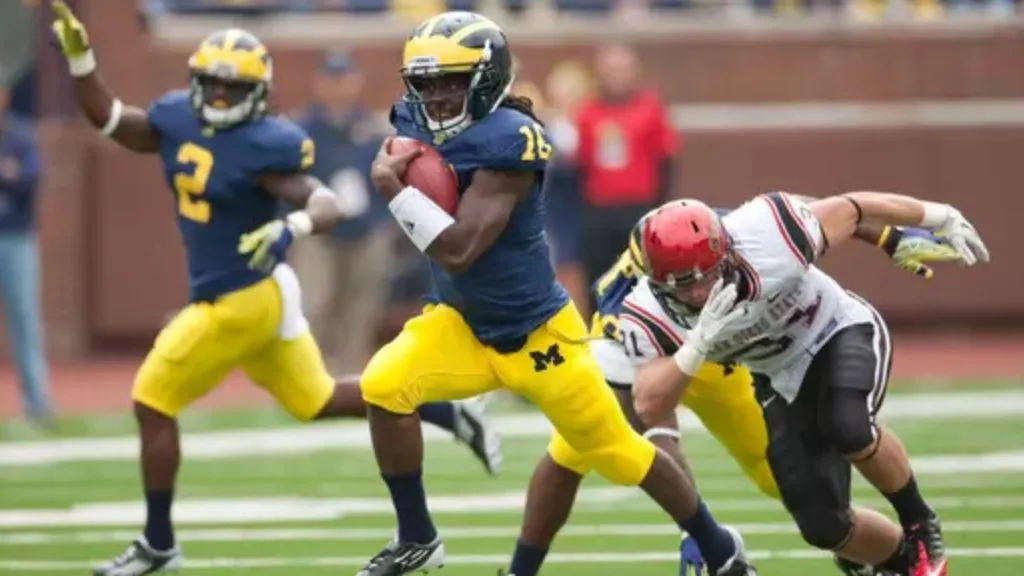
Denard Robinson (Source: Michigan Athletics)
Nicknamed “Shoelace” for his untamed running style, Denard Robinson redefined the quarterback position at Michigan. From 2009 to 2012, he amassed a record-breaking 4,495 rushing yards—the most by any quarterback in NCAA history—while also setting the single-season rushing record for a quarterback with 1,702 yards. His dynamic playmaking ability kept defenses on edge and brought a new level of excitement to the Wolverines’ offense.
Anthony Carter
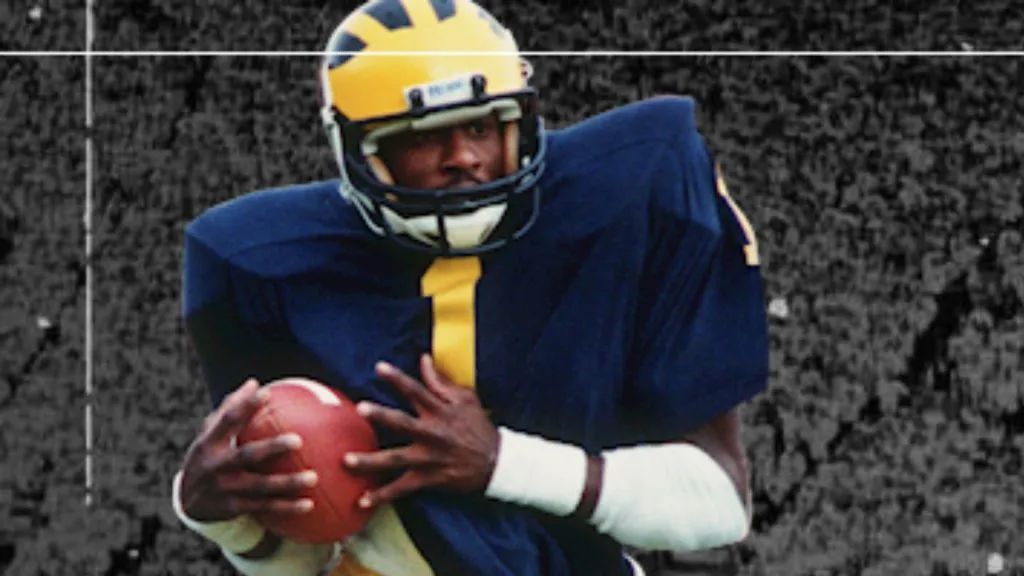
Anthony Carter (Source: College Football Hall of Fame)
Anthony Carter was a game-changer for Michigan in the late 1970s and early 1980s. Despite playing in an era dominated by the running game, he emerged as one of the most prolific receivers in college football history. His 45-yard touchdown reception against Indiana in 1979, which secured a last-minute victory, remains one of the most iconic plays in Wolverines lore.
Tom Harmon
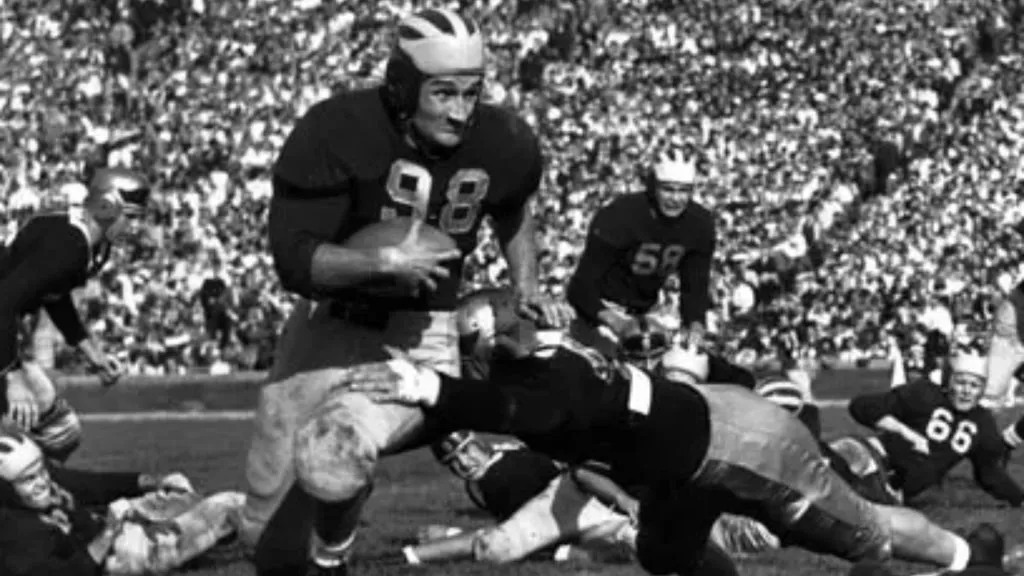
Tom Harmon (Source: Michigan Athletics)
Tom Harmon was the epitome of a two-way player. In 1940, he led the nation in scoring with 117 points, a feat that remains unmatched. His performance that season earned him the Heisman Trophy, making him Michigan’s first recipient of the prestigious award. His all-around excellence on both offense and defense set a standard for future Wolverines to aspire to.
Desmond Howard
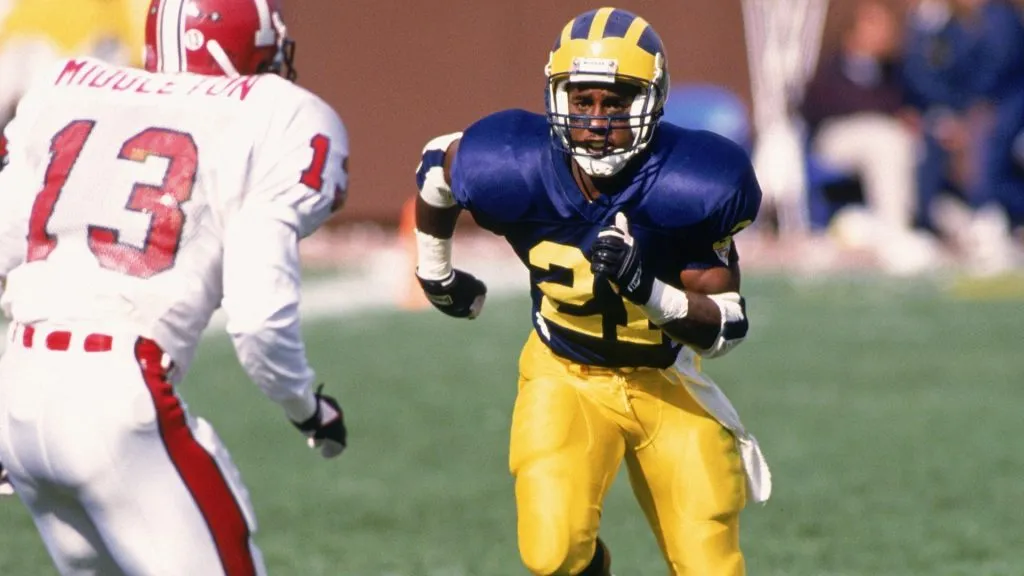
Desmond Howard #21 of the Michigan Wolverines runs for position during a game against the Indiana Hoosiers in 1991. (Source: Jonathan Daniel/Getty Images)
Desmond Howard‘s 1991 season was nothing short of spectacular. He set or tied five NCAA records and 12 Michigan records, including 19 receiving touchdowns in a single season. His electrifying playmaking ability earned him the Heisman Trophy, making him the first receiver in Big Ten history to win the award. His legacy is cemented not only by his on-field achievements but also by his enduring impact on the program’s tradition of excellence.
Braylon Edwards
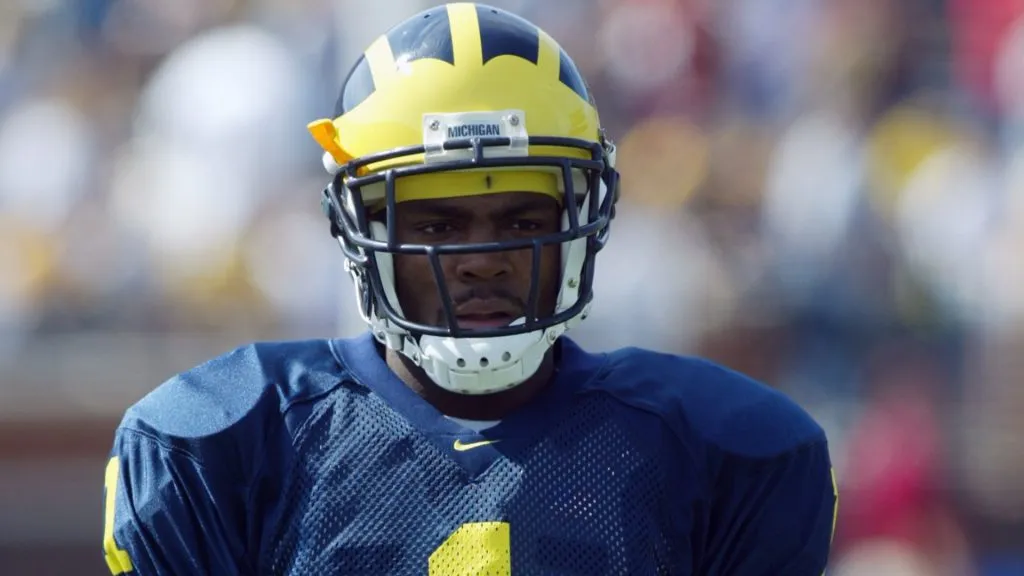
Braylon Edwards #1 of the University of Michigan Wolverines stands on the field during the game against the Central Michigan Chippewas in 2003. (Source: Danny Moloshok/Getty Images)
Braylon Edwards was a dominant force in Michigan’s receiving corps during the early 2000s. In his senior season, he set Michigan’s single-season and career records for receptions and receiving yards, and established a Big Ten record with 39 career touchdown catches. His ability to make spectacular catches and his physical presence on the field made him a nightmare for opposing defenses.
Rick Leach
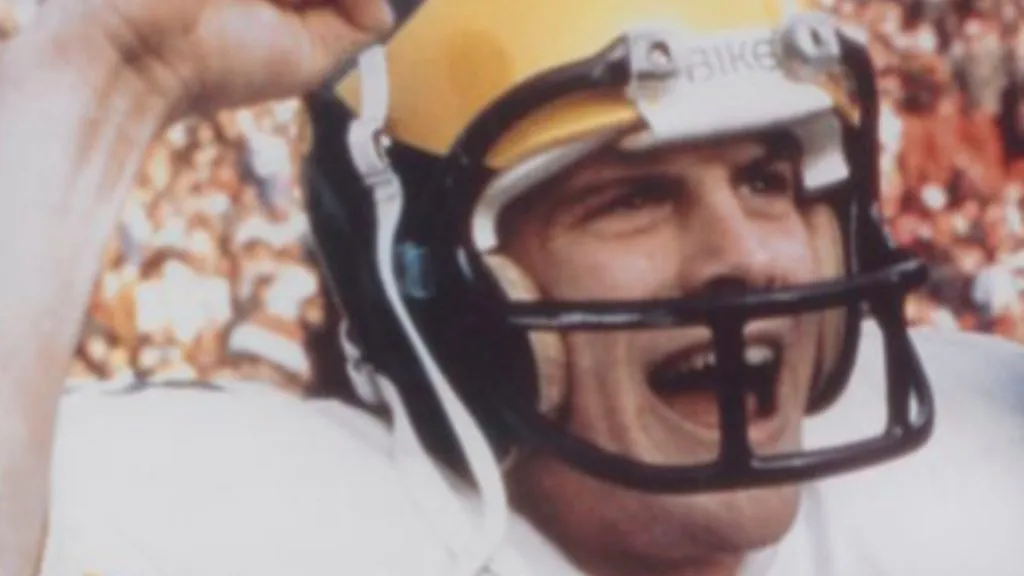
Rick Leach (Source: Michigan Sports Hall of Fame)
Rick Leach was a dual-threat quarterback who led Michigan through one of its most successful eras. Starting for four years, he showcased his versatility by also playing baseball for the Wolverines. His leadership and ability to perform under pressure helped solidify Michigan’s reputation as a powerhouse in college football during the late 1970s.
Bennie Oosterbaan
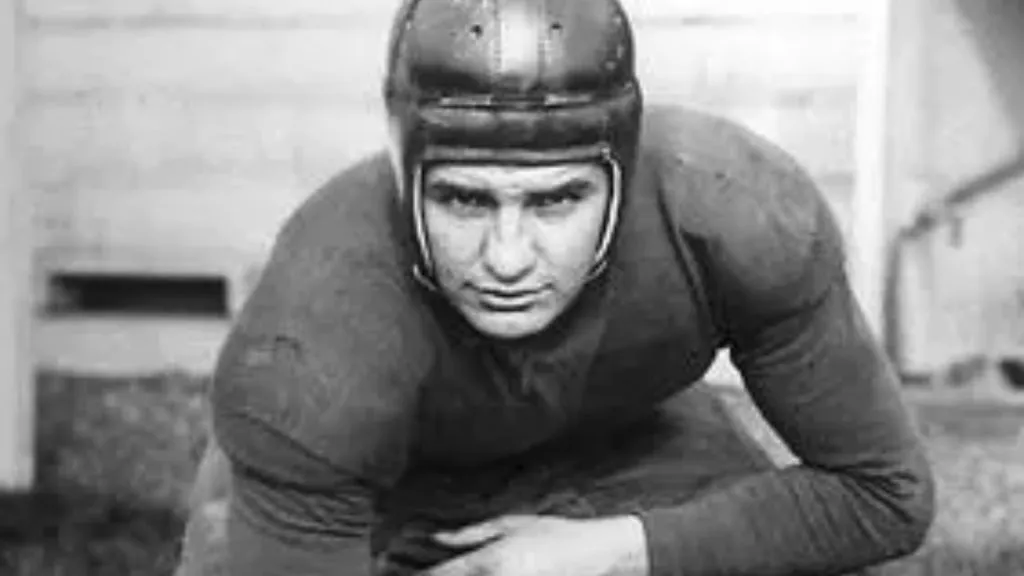
Bennie Oosterbaan (Source: MVictors)
Bennie Oosterbaan was a true Renaissance man in Michigan athletics. Earning nine varsity letters across football, basketball, and baseball, he was a consensus All-American in football three times (1925–1927). His contributions were instrumental in Michigan’s dominance during the 1920s, and his legacy continues to inspire student-athletes today.
Ron Kramer
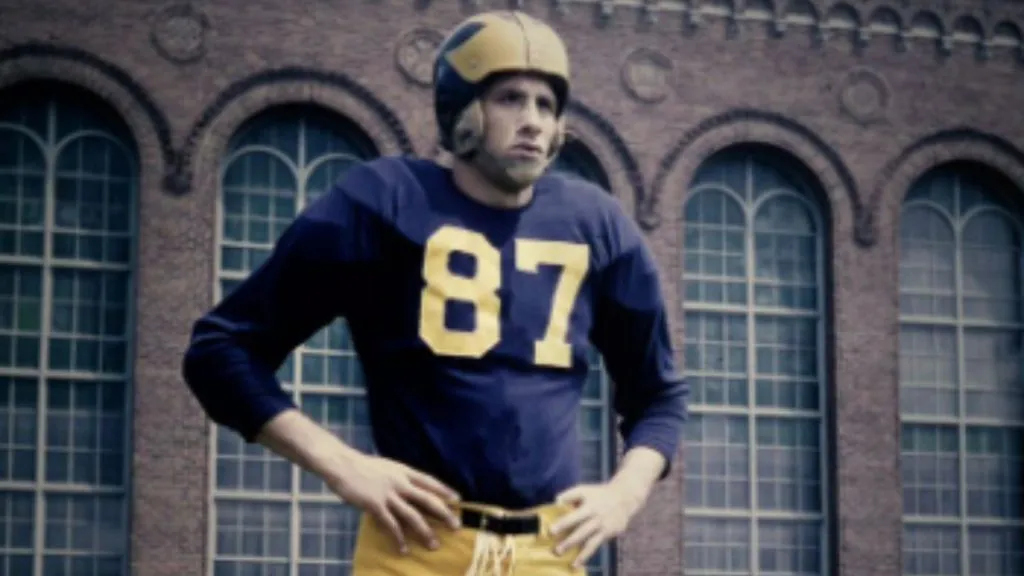
Ron Kramer (Source: MVictors)
Ron Kramer was a versatile athlete who excelled in both football and basketball at Michigan. His physical prowess and athleticism allowed him to dominate on the field, earning All-American honors in both sports. His contributions were pivotal in Michigan’s success during the 1950s, and his legacy as a multi-sport star remains a benchmark for future Wolverines.
Steve Hutchinson
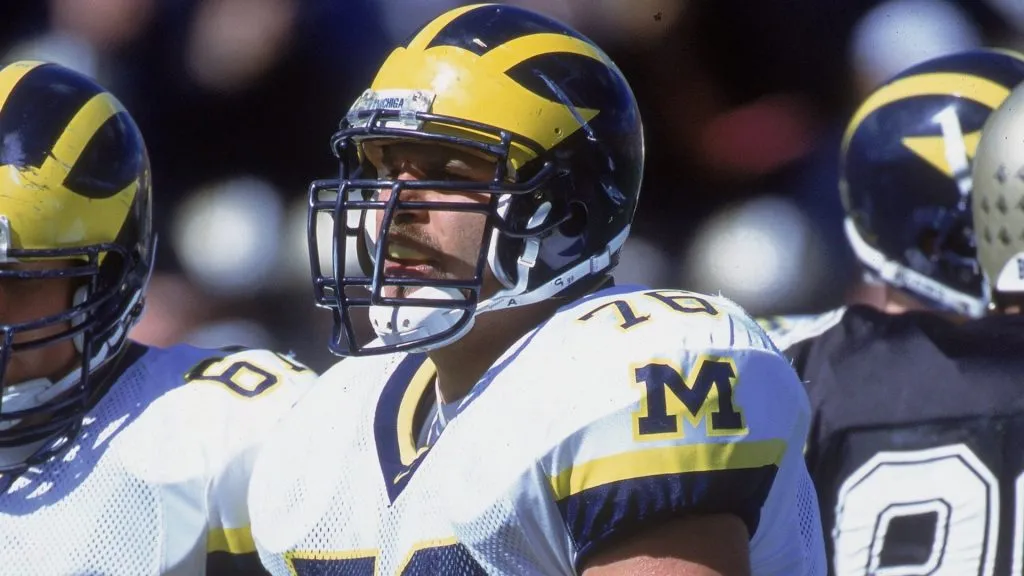
Steve Hutchinson #76 of the Michigan Wolverines walks on the field during the game against the Purdue Boilermakers in 2000. (Source: Jonathan Daniel /Allsport)
In the realm of offensive linemen, few have matched the dominance of Steve Hutchinson. A towering presence at 6’5″ and 313 pounds, Hutchinson’s prowess on the field was undeniable. During his tenure at Michigan from 1996 to 2000, he was a cornerstone of the offensive line, earning unanimous All-American honors in 2000.
His exceptional skills paved the way for numerous victories, including a national championship in 1997. Drafted 17th overall in the 2001 NFL Draft by the Seattle Seahawks, he went on to have a stellar 12-season NFL career, earning seven Pro Bowl selections and five First-team All-Pro honors. His legacy was cemented with his induction into the Pro Football Hall of Fame in 2020.
Bob Chappuis
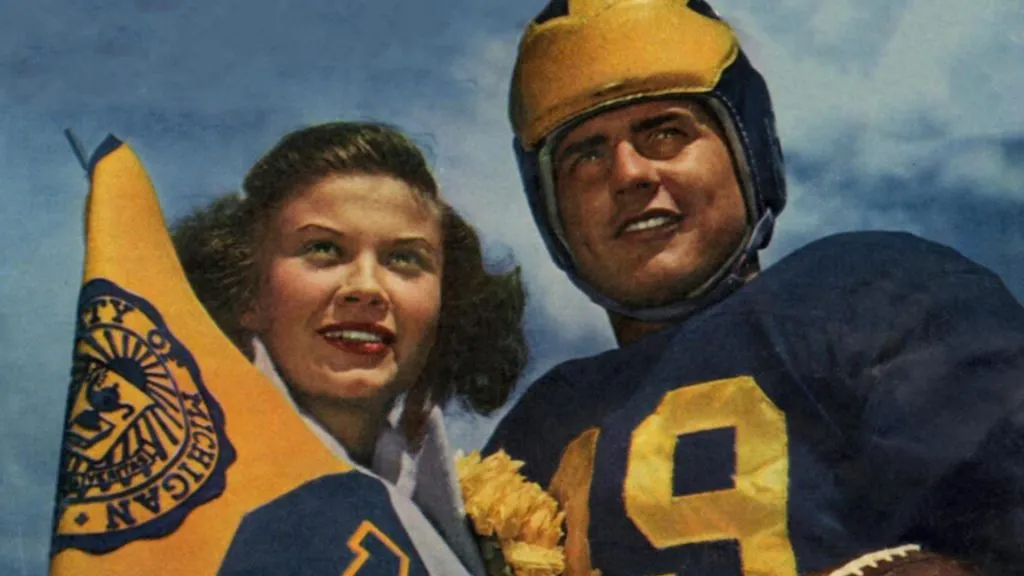
Bob Chappuis (Source: University of Michigan)
Bob Chappuis‘ name is synonymous with resilience and excellence. After serving as a gunner in World War II, where he was shot down and later escaped captivity, Chappuis returned to Michigan and led the Wolverines to an undefeated season in 1947.
That year, he set multiple records, including the Big Nine Conference record for total offense. His leadership on the field earned him unanimous All-American honors and a spot on the cover of Time magazine. His legacy is not just in his athletic achievements but also in his embodiment of perseverance and dedication.
Erick Anderson
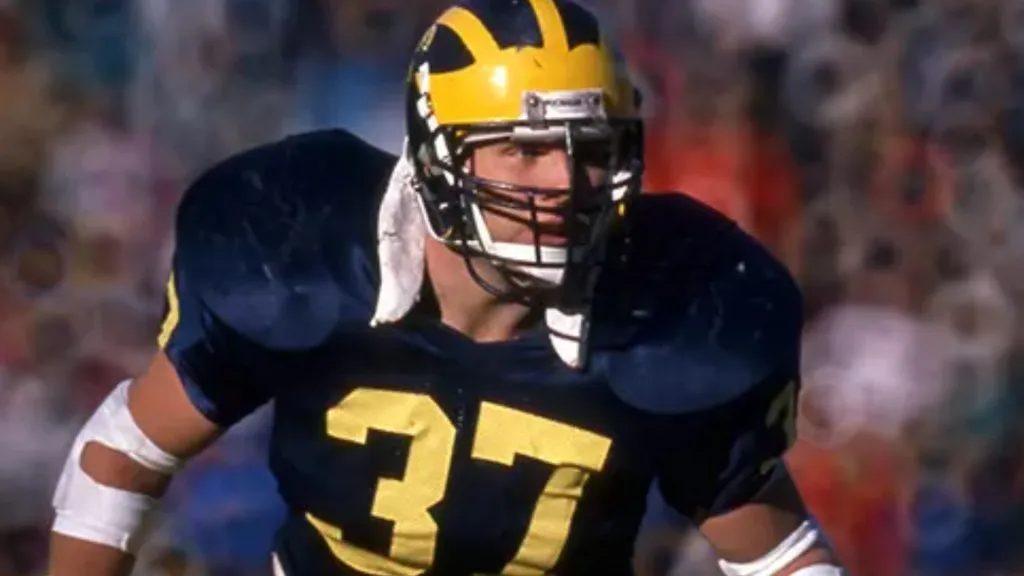
Erick Anderson (Source: Michigan Athletics)
Erick Anderson‘s name is etched in Michigan football history as a symbol of consistency and leadership. From 1988 to 1991, he led the Wolverines in tackles each season, a feat unmatched in the program’s history.
In 1991, he was honored with the Butkus Award as the nation’s top linebacker, solidifying his status as one of the premier defensive players in college football. His relentless pursuit and dedication on the field made him a cornerstone of Michigan’s defense during his tenure.
Jim Harbaugh
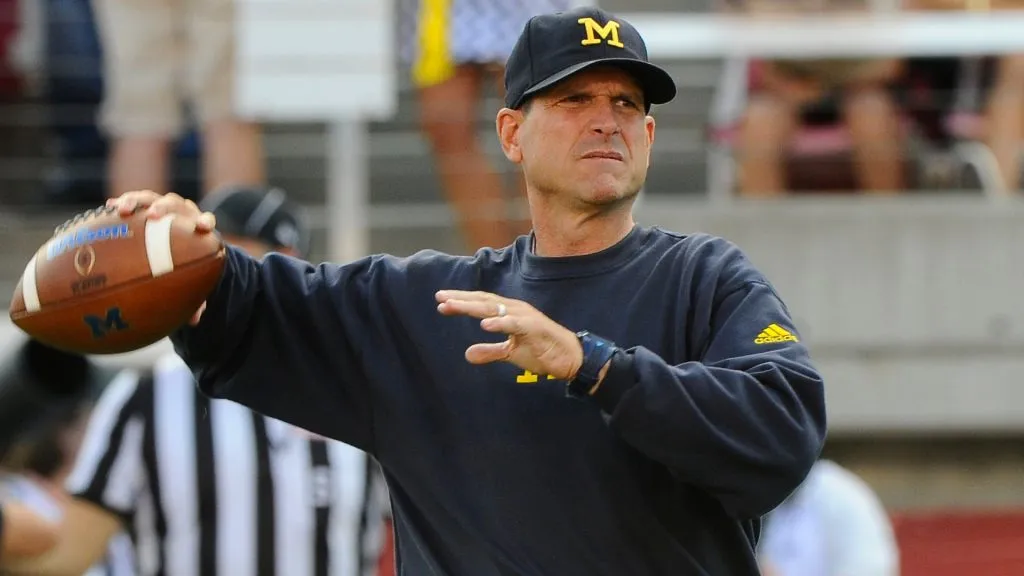
Jim Harbaugh of the Michigan Wolverines warms up his quarterbacks before their game against the Utah Utes in 2015. (Source: Gene Sweeney Jr/Getty Images)
Jim Harbaugh‘s journey with Michigan football is a tale of passion, perseverance, and success. As a quarterback in the mid-1980s, he led the Wolverines to a share of the national championship in 1985. After a successful NFL career, he returned to Michigan as head coach in 2015.
Under his leadership, the Wolverines achieved significant milestones, including multiple Big Ten titles and a national championship in 2024. His commitment to excellence and his deep-rooted connection to Michigan football have left an indelible mark on the program.
Jake Long
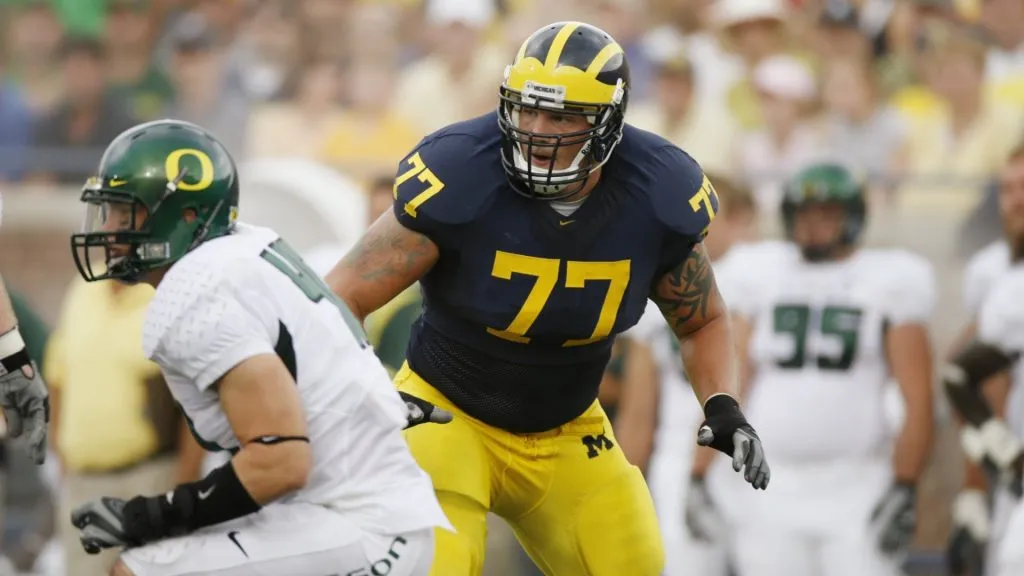
Jake Long #77 of the Michigan Wolverines blocks against the Oregon Ducks during their game in 2007. (Source: Gregory Shamus/Getty Images)
Jake Long‘s imposing presence on the offensive line was a defining feature of Michigan’s football teams in the mid-2000s. Standing at 6’7″ and weighing 315 pounds, Long was a force to be reckoned with. He earned unanimous All-American honors in 2007 and was a key figure in Michigan’s offensive success during his tenure.
Drafted first overall in the 2008 NFL Draft by the Miami Dolphins, he went on to have a successful NFL career, earning multiple Pro Bowl selections. His legacy at Michigan is marked by his dominance on the field and his contributions to the program’s storied history.
Mike Hart
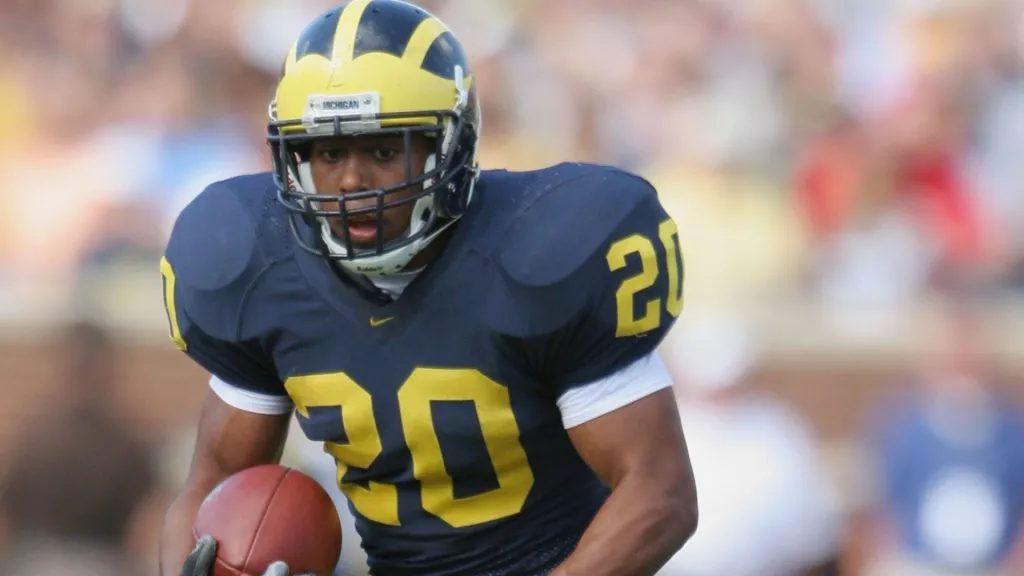
Mike Hart #20 of the Michigan Wolverines runs the ball against the Northern Illinois Huskies during a game in 2005. (Source: Tom Pidgeon/Getty Images)
Mike Hart‘s name is etched in Michigan football history as the program’s all-time leading rusher. From 2004 to 2007, he amassed over 5,000 rushing yards, setting a standard for future Wolverines. His vision, agility, and determination made him a standout player and a fan favorite.
Beyond his rushing prowess, his leadership and work ethic were instrumental in Michigan’s success during his tenure. After his playing days, he transitioned into coaching, continuing to influence the game and inspire the next generation of players.
Jon Jansen
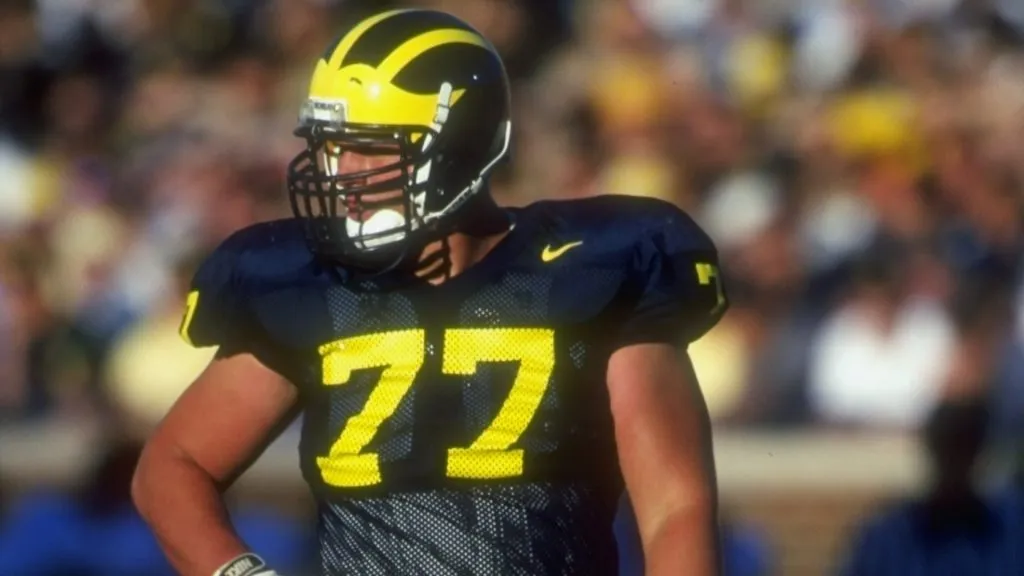
Jon Jansen #77 of the Michigan Wolverines looks on during a game against the Notre Dame Fighting Irish in 1997. (Source: Jonathan Daniel /Allsports)
Jon Jansen‘s legacy at Michigan is defined by his unparalleled durability and leadership on the offensive line. From 1995 to 1998, he started every game of his college career, setting a school record with 50 consecutive starts at right tackle. His consistent performance earned him First-Team All-Big Ten honors twice and played a pivotal role in Michigan’s national championship run in 1997.
Known for his tenacity and work ethic, his contributions were instrumental in shaping the Wolverines’ offensive success during his tenure. After college, he was drafted by the Washington Redskins in the second round of the 1999 NFL Draft, where he continued to showcase his skills for over a decade.
Mark Messner
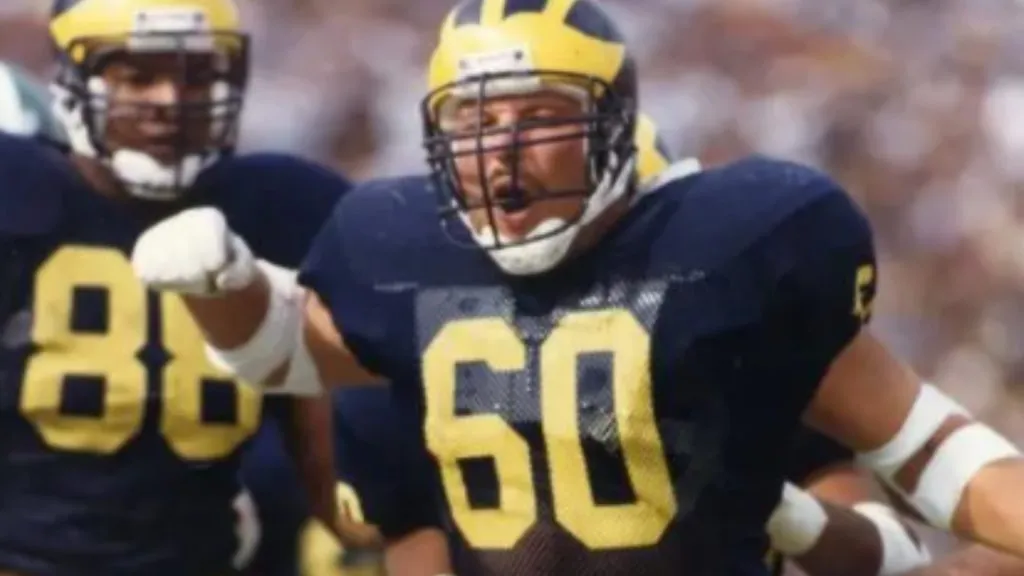
Mark Messner (Source: MVictors)
Mark Messner‘s impact on Michigan football is immeasurable. From 1985 to 1988, he started every game of his college career, becoming the Wolverines’ all-time leader in sacks and tackles for loss. His relentless pursuit of quarterbacks earned him the nickname “a quarterback’s worst enemy.”
Despite being undersized for a defensive tackle, his speed, intelligence, and determination made him a formidable force on the field. He was a unanimous First-Team All-American in 1988 and was inducted into the College Football Hall of Fame in 2022.
Marlin Jackson
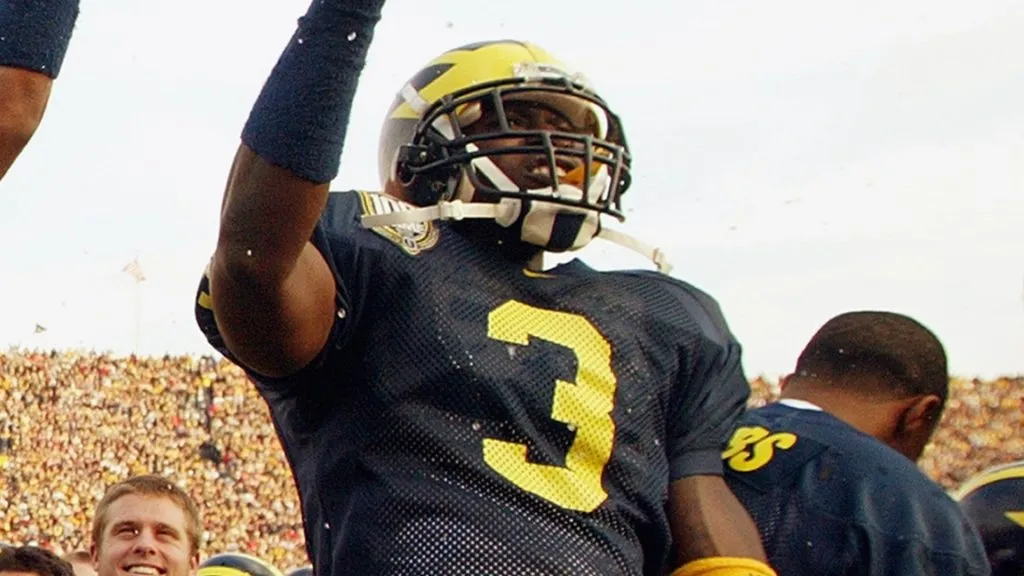
Marlin Jackson celebrates on the sideline during the game against the Ohio State Buckeyes in 2003. (Source: Danny Moloshok/Getty Images)
Marlin Jackson‘s versatility and playmaking ability were cornerstones of Michigan’s defense in the early 2000s. As a cornerback, he accumulated 98 tackles, six tackles for loss, one sack, six interceptions, and one fumble recovery in 24 career games at Michigan.
His 25 career pass break-ups place him fifth on Michigan’s all-time list. He earned first-team All-America honors from College Football News as a sophomore and was named to the Associated Press All-America second team during the same season.
Greg Skrepenak
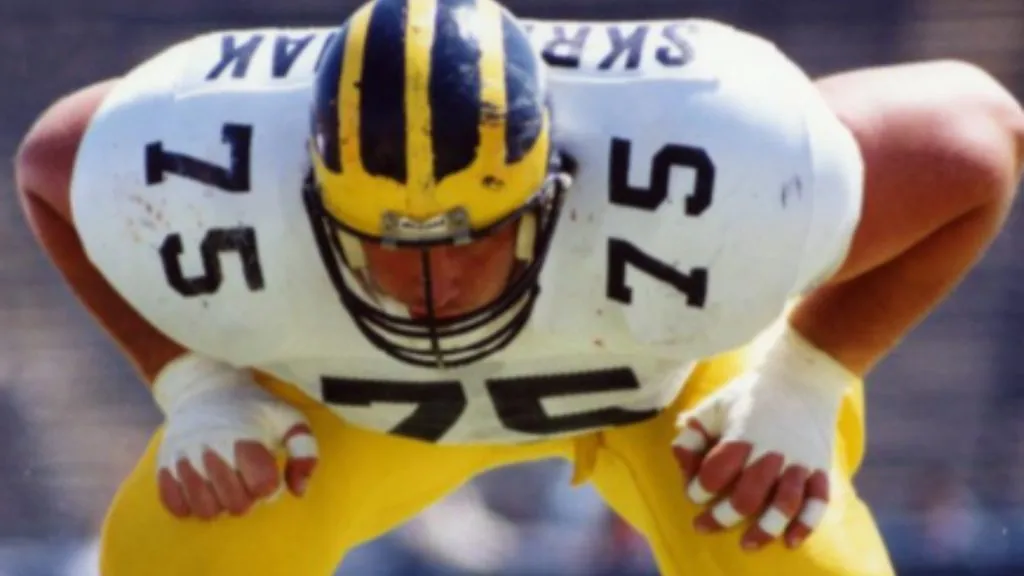
Greg Skrepenak (Source: University of Michigan)
Greg Skrepenak‘s imposing presence on the offensive line was a defining feature of Michigan’s football teams in the late 1980s and early 1990s. Standing at 6’8″ and weighing 322 pounds, he was the largest player ever to wear the Maize and Blue.
He was a four-year starter for the Wolverines, setting an offensive line record with 48 consecutive starts. He was a two-time All-American and a two-time Big Ten Lineman of the Year. His leadership and dominance in the trenches helped Michigan win four consecutive Big Ten championships and appear in three Rose Bowls.
David Baas
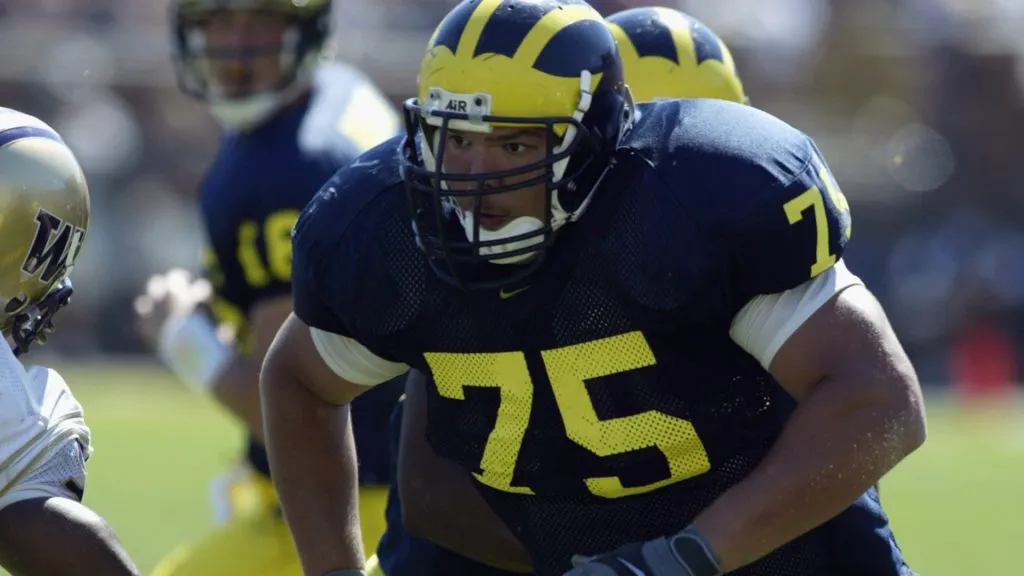
David Baas #75 of Michigan runs after the snap during the NCAA football game in 2002. (Source: Tom Pidgeon /Getty Images)
David Baas‘ exceptional skills on the offensive line were instrumental in Michigan’s success in the early 2000s. As a senior in 2004, he was awarded the Rimington Trophy, given to the nation’s top center, and was a consensus All-American. He was also a finalist for the Outland Trophy and the Lombardi Award.
He was a three-time First-Team All-Big Ten selection and played a crucial role in Michigan’s offensive line during his tenure. After college, he was drafted by the San Francisco 49ers in the second round of the 2005 NFL Draft, where he continued to excel at the professional level.
Tripp Welborne
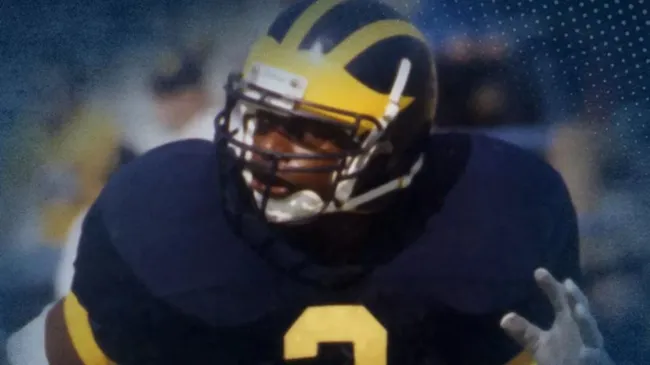
Tripp Welborne (Source: Michigan Athletics)
Tripp Welborne became a symbol of speed and anticipation in Michigan’s secondary during the late 1980s and early 1990s. Excelling as a safety, he had a knack for reading offenses and making game-changing interceptions. His electrifying returns on special teams often swung momentum, making him one of the most versatile defensive stars in Wolverines history.
Tyrone Wheatley
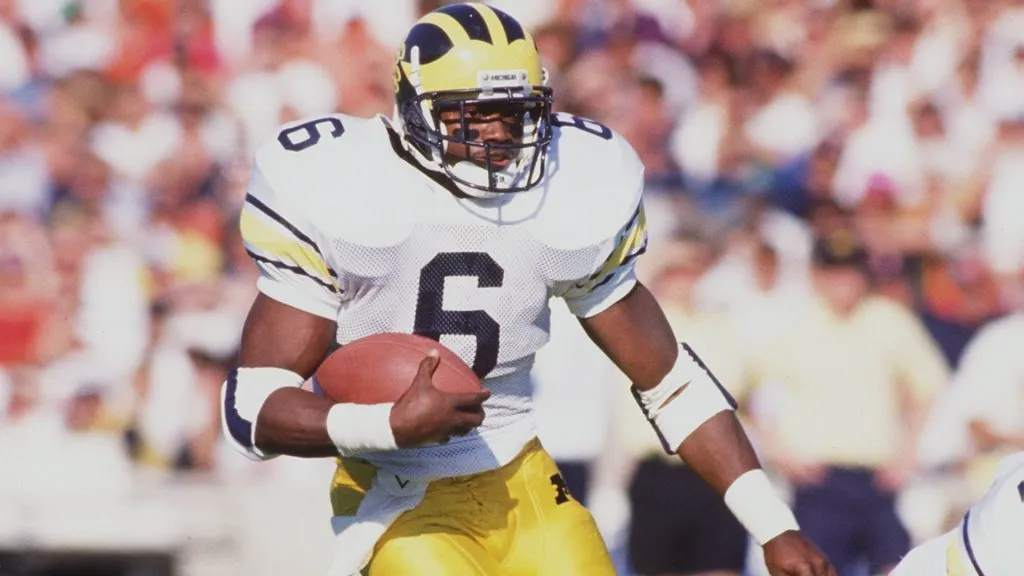
Tyrone Wheatley carries the football during the Wolverines 19-14 victory over the Illinois Fighting Illini in 1994. (Source: Getty Images)
Tyrone Wheatley blended power and agility like few running backs in Michigan history. Between 1991 and 1994, his explosive runs and ability to break tackles terrorized defenses. Accumulating over 3,200 rushing yards in his career, he left an indelible mark, remembered as one of the most dynamic offensive threats the Wolverines have ever produced.
Chad Henne
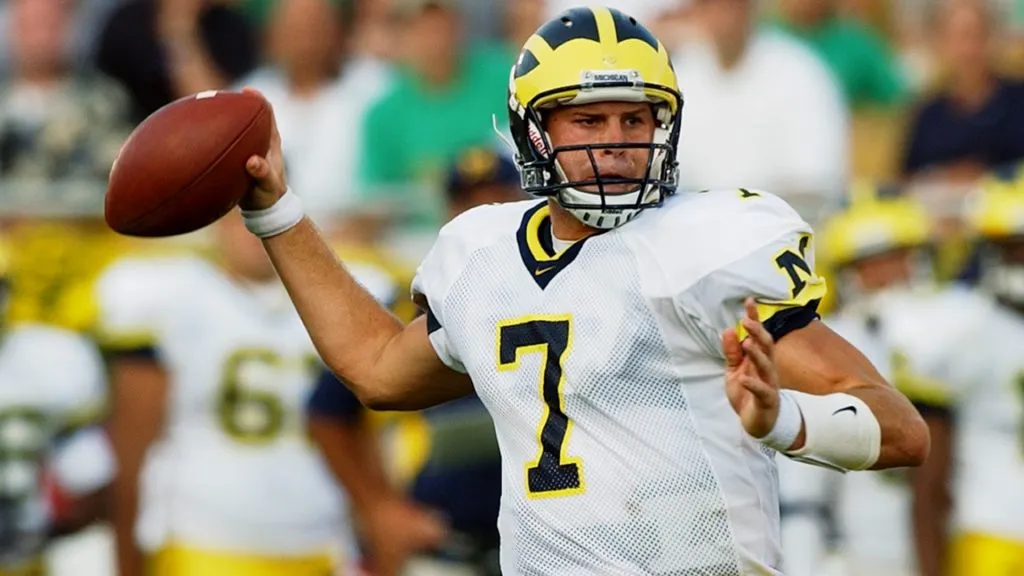
Chad Henne #7 of the Michigan Wolverines drops back to pass during the game with the Notre Dame Fighting Irish in 2004. (Source: Jonathan Daniel/Getty Images)
Chad Henne, quarterback for Michigan in the mid-2000s, was known for precision passing and calm leadership. His poise under pressure turned tight games into victories, and he finished his career with over 10,000 passing yards, establishing himself as one of the most productive quarterbacks in program history.
John Maulbetsch
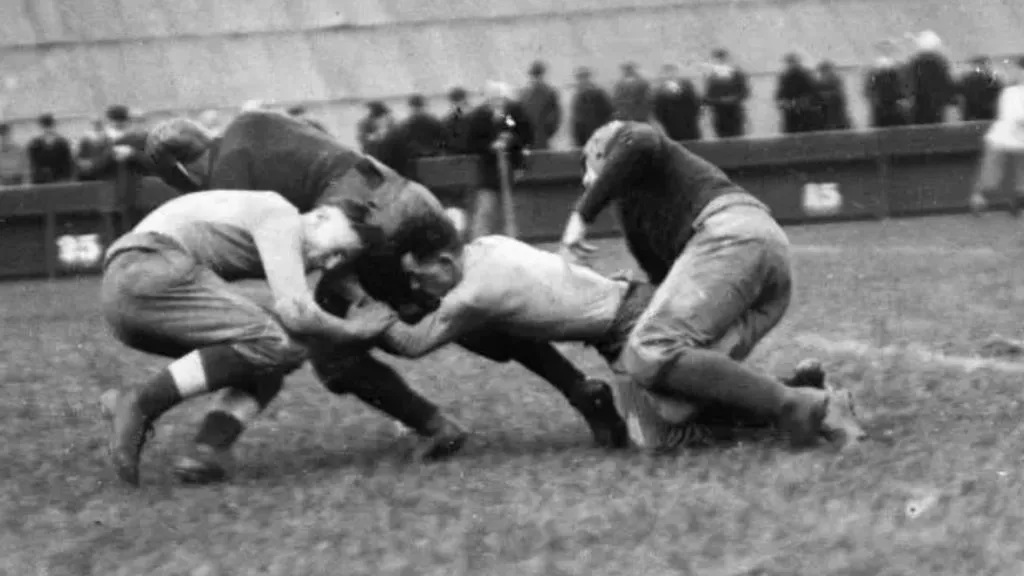
John Maulbetsch (Source: MVictors)
Nicknamed “The Human Bullet”, John Maulbetsch left a lasting impression in the 1910s. At just 5’8” and 160 pounds, his speed and ferocity allowed him to slice through defensive lines with ease. His determination and skill made him an early icon of Michigan football, proving that size isn’t everything when paired with talent and heart.
Mark Donahue
Mark Donahue (Source: University of Michigan)
Mark Donahue stood out as a cornerstone of Michigan’s offensive line in the 1970s. His strength and technique provided crucial protection for quarterbacks and opened lanes for running backs. A two-time All-American, he exemplified the quiet yet essential impact of linemen, leaving a legacy of consistency and professionalism that defined his era.