College football has always celebrated bold quarterbacks, but risk often comes with a cost. Some seasons are remembered not for touchdowns, but for how often the ball changed hands in the air.
Interception-heavy years usually reflect aggressive schemes, thin margins or teams chasing points. They tell quieter stories about pressure, confidence and the fine line between fearless and reckless play.
The single-season interception records sit at that crossroads of ambition and consequence, capturing moments when quarterbacks pushed limits and sometimes paid the price for it.
Billy Stevens | Int: 29
If there is a “patient zero” for the high-volume passing era, it is undoubtedly Billy Stevens. In 1965, playing under the radical offensive mind of Bobby Dobbs at UTEP (then Texas Western), he didn’t just break the mold—he shattered it. He threw a staggering 29 interceptions in a single campaign, a mark that remains the gold standard for aerial recklessness.
Yet, to view him as a failure is to misunderstand the era. He led the nation in passing yards that same year, operating as a prototype for the modern air-raid quarterback decades before the term existed. He played with a “bomb-at-all-costs” mentality; he was a pioneer who proved that if you throw the ball enough, you can lead the country in yards and turnovers simultaneously.
Ty Detmer | Int: 28
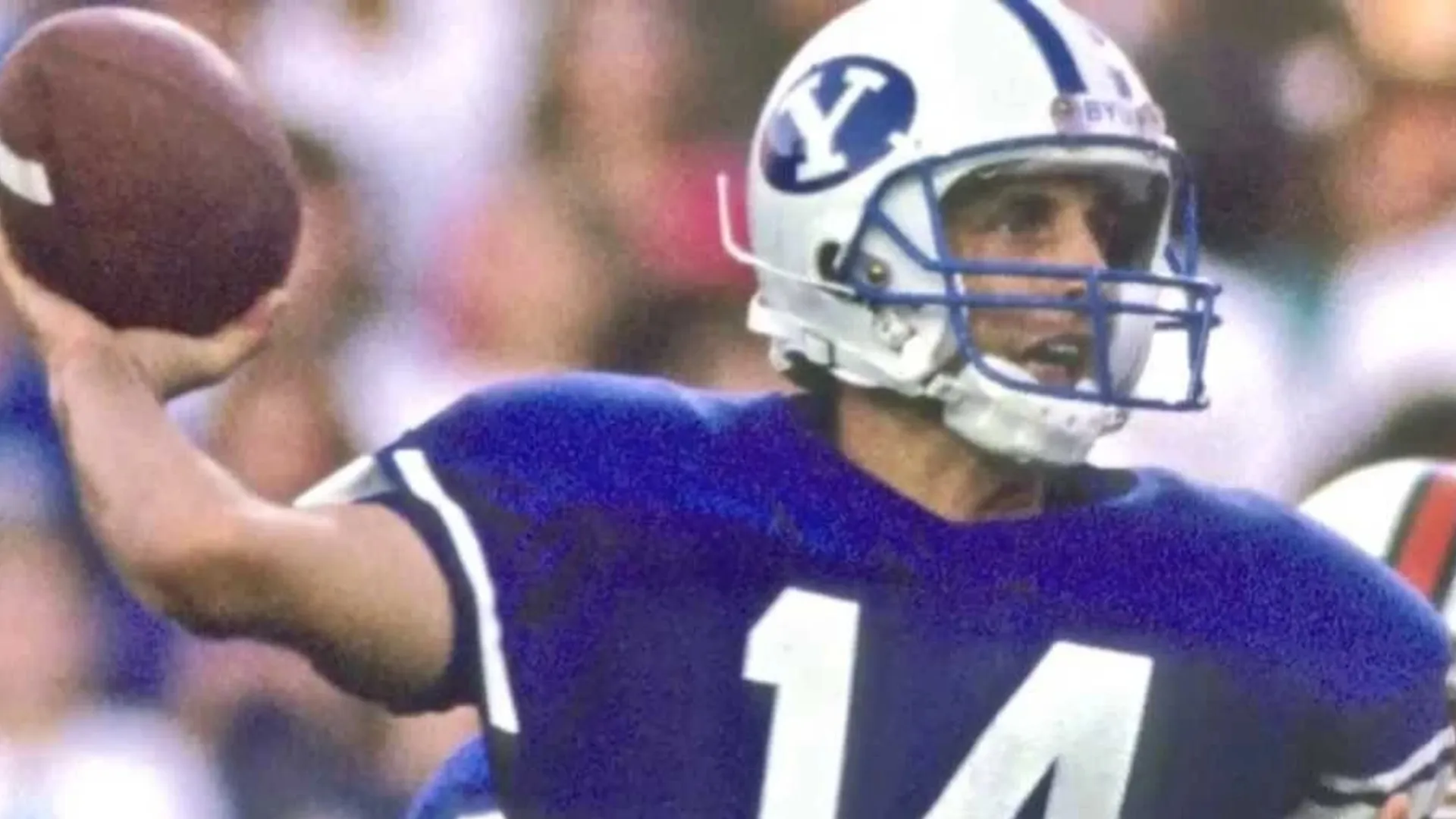
Ty Detmer (Source: BYU Athletics)
It is perhaps the greatest statistical anomaly in the history of the sport: winning the Heisman Trophy while leading the nation in interceptions. In 1990, BYU’s Ty Detmer lived on a razor’s edge, tossing 28 interceptions. However, his arm was so prolific that those giveaways were merely the “tax” fans paid to witness his greatness.
He threw for 5,188 yards and 41 touchdowns that season, operating LaVell Edwards’ offense with a mix of genius and gambling. He believed he could fit a football through a keyhole, and while he was often right, the 28 times he was wrong provided some of the most heart-stopping moments in Western Athletic Conference history. His 1990 season remains the ultimate proof that greatness and risk are two sides of the same coin.
Ed Rubbert | Int: 28
Before Louisville became a modern powerhouse, Ed Rubbert was the man tasked with surviving in the pocket during a turbulent 1984 season. He finished the year with 28 interceptions, a figure that reflects a quarterback trying to do far too much with far too little.
Under an aggressive system that demanded vertical shots, he often found himself under siege. His interceptions weren’t just the result of poor decisions; they were the byproduct of a relentless offensive philosophy that refused to check down. He played every Saturday like a man in a shootout with a jammed pistol—he kept firing because it was the only chance his team had to stay in the fight.
Mark Herrmann | Int: 27
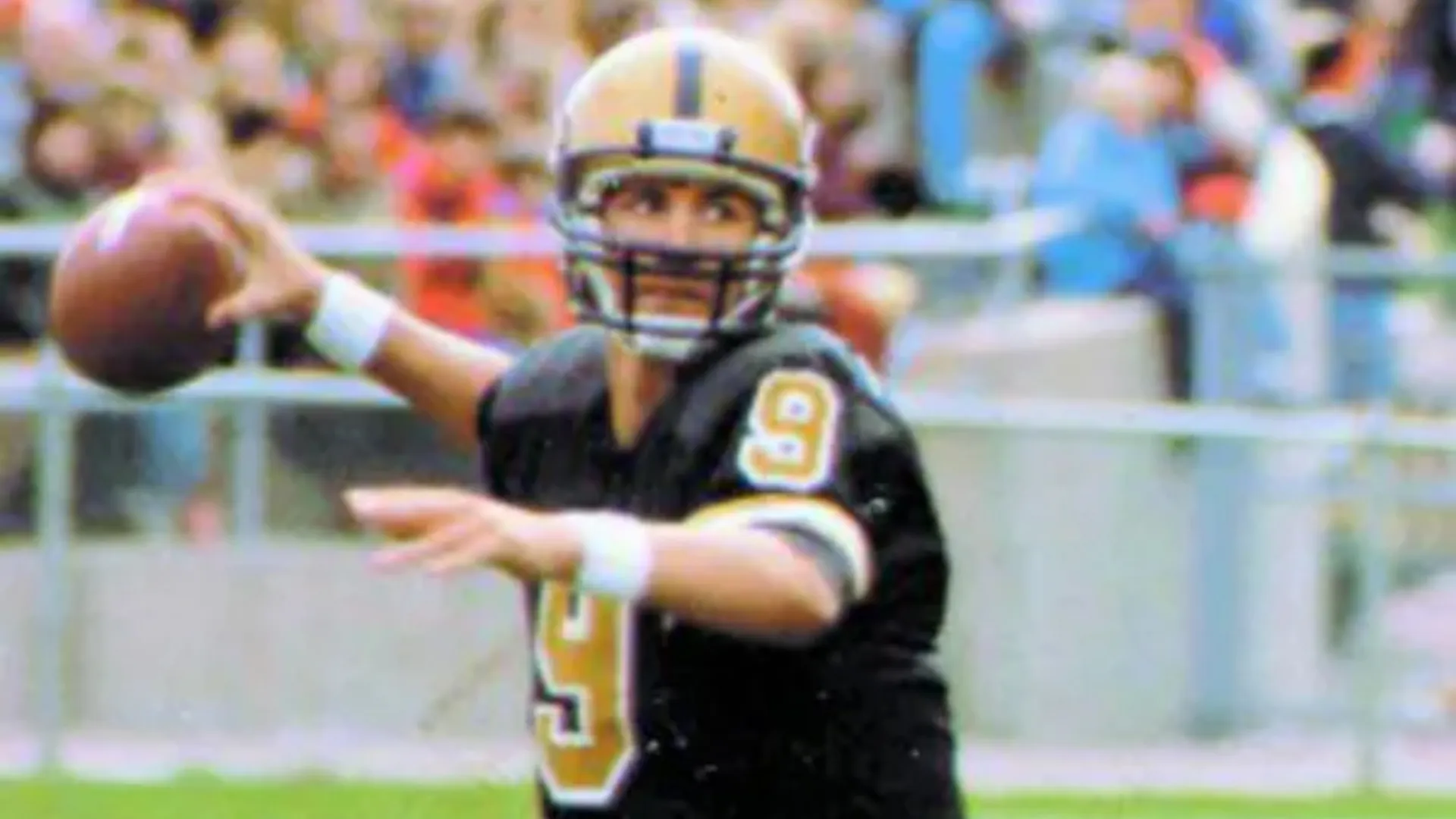
Mark Herrmann (Source: Purdue Athletics)
Mark Herrmann is remembered as a Big Ten legend and an NFL veteran, but his collegiate debut was a brutal baptism by fire. In 1977, as a freshman with a live arm but an unrefined internal clock, he surrendered the ball 27 times to opposing defenses.
What separates him from others on this list is what happened next. Rather than shrinking under the weight of his mistakes, he used that chaotic freshman year as a roadmap for what not to do.
He evolved from a reckless freshman into one of the most surgical passers in Purdue history. His 1977 season serves as a reminder that even the most polished legends often start their journey by throwing the ball to the wrong jersey.
Brad Tayles | Int: 25
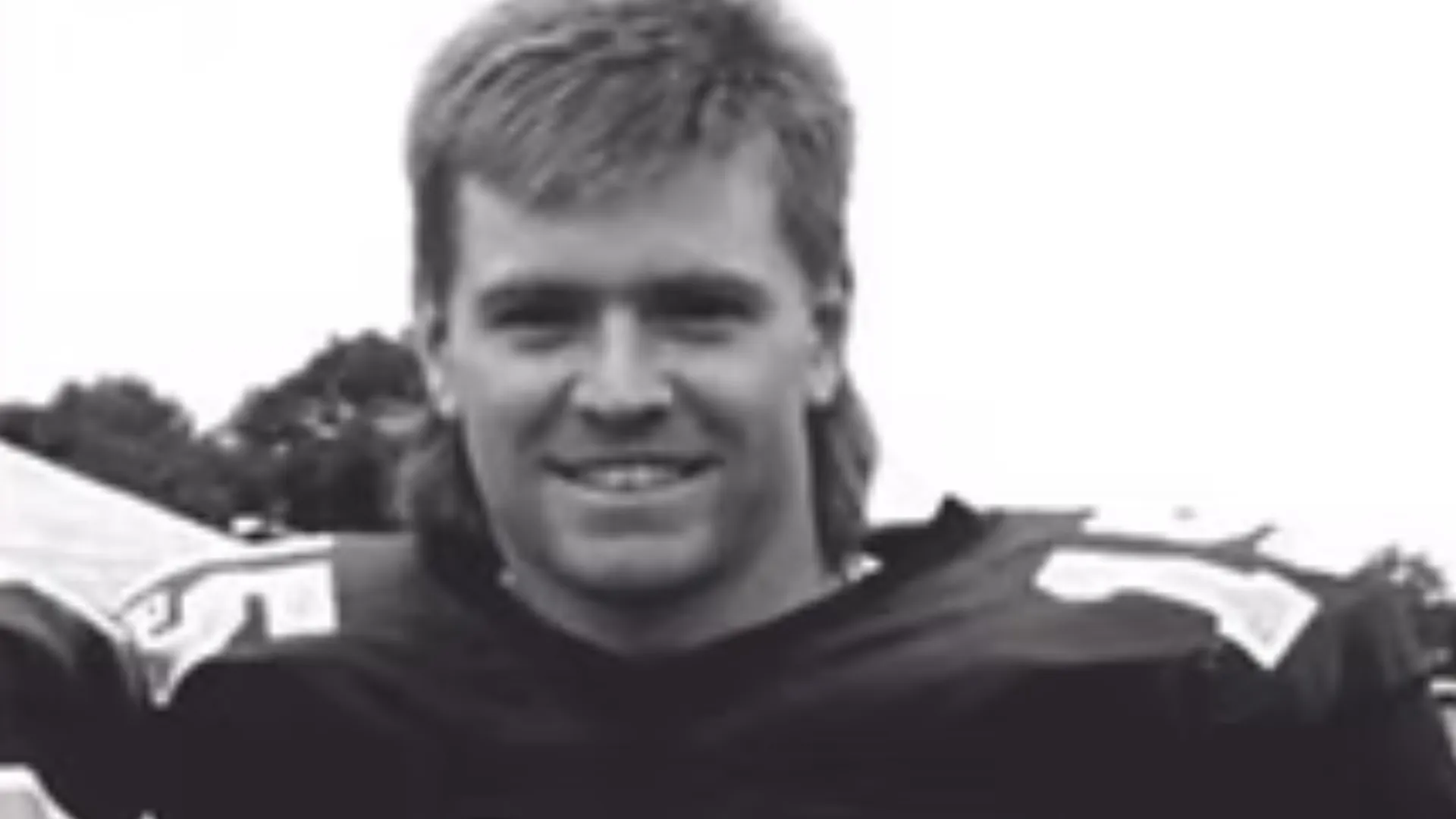
Brad Tayles (Source: wecshof)
Long before the Mid-American Conference (MAC) was known for “MACtion” and high-scoring shootouts, Brad Tayles was setting the stage at Western Michigan. In 1970, he threw 25 interceptions, a record born from a mismatch between ambition and execution.
He was a victim of his own workload. In an era where most teams were content to grind out yards on the ground, the Broncos put the game in Tayles’ hands. The result was a high-stakes gambling act; he possessed the arm strength to stretch the field, but in 1970, defenses were still legally allowed to be much more physical with receivers. Every pass was a 50/50 proposition, and for one long season, the house seemed to win more often than he did.
Ben Bennett | Int: 25
When Ben Bennett stepped onto the field in 1980, he wasn’t just playing quarterback; he was conducting an experiment in endurance. Throwing 25 interceptions as a freshman would break most players, but he was a different breed. Under the high-flying philosophy of the Duke offense, Bennett was given the ultimate green light—and he used it.
His 1980 season was a masterclass in “failing forward.” He played with a short memory, a trait that allowed him to eventually leave Durham as the conference’s all-time leading passer. He didn’t just survive the interceptions; he learned how to win in spite of them.
Todd Ellis | Int: 22
Todd Ellis was the face of Gamecock football in the late 80s, a hometown hero with a gunslinger’s soul. In 1987, he pushed that persona to the limit by tossing 22 interceptions. He operated with a level of confidence that bordered on the supernatural; he truly believed there wasn’t a window tight enough to keep his ball out.
The 1987 season was a microcosm of the Ellis experience: breathtaking touchdowns followed by head-scratching turnovers. In Columbia, fans knew that with him behind center, the game was never over—mostly because he was always one throw away from changing the scoreboard, regardless of which team caught the ball. He remains a beloved figure because he played with his heart on his sleeve and a disregard for safety.
Glenn Foley | Int: 21
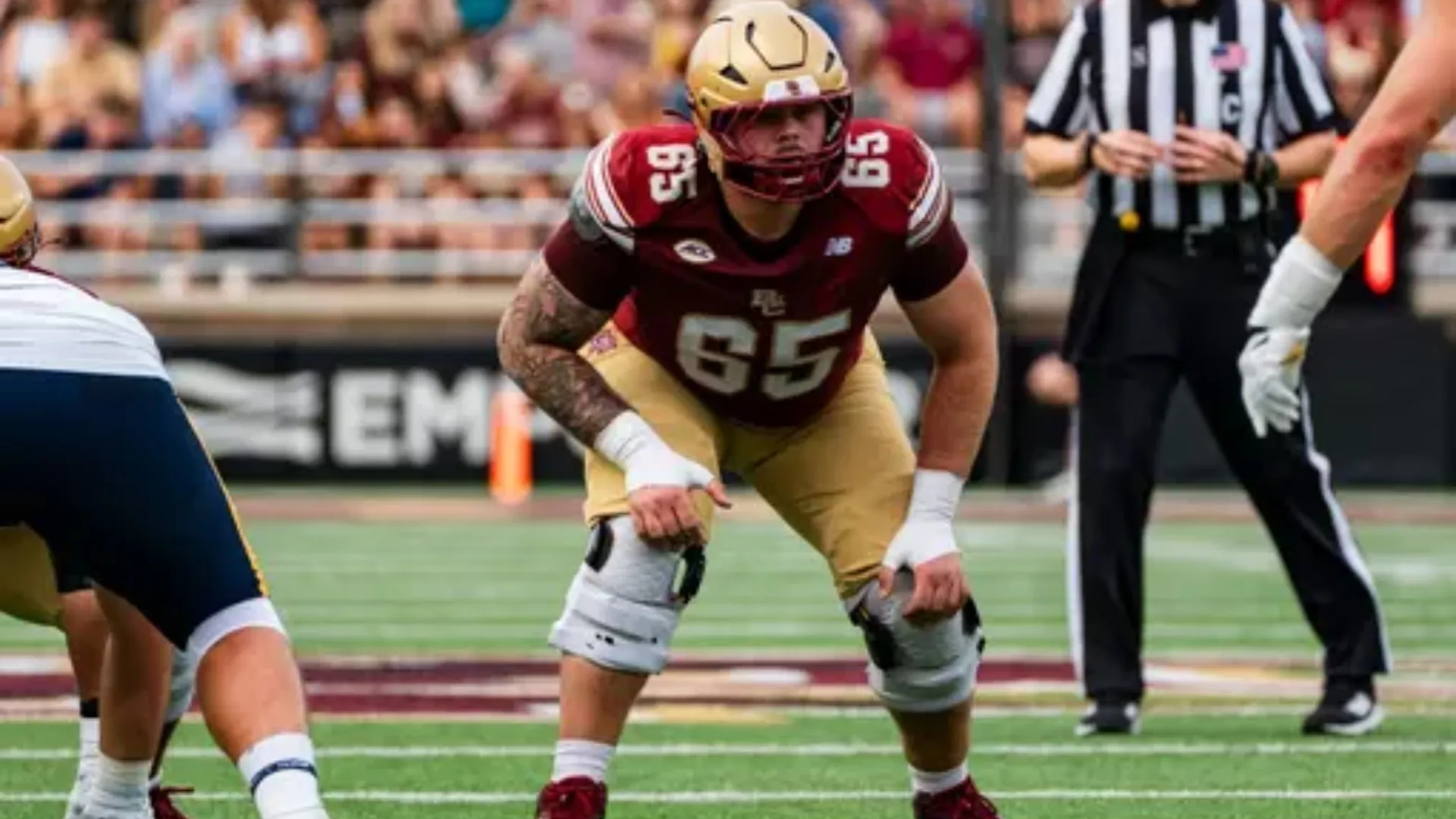
Glenn Foley (Source: Boston College Athletics)
Before he was a steady hand in the NFL, Glenn Foley was a human fireball at Boston College. His 1991 season saw him record 21 interceptions, a stat that reflected a young quarterback struggling to find the balance between aggression and discretion. His BC teams were often in “shootout” mode, necessitating a style of play where throwing into double coverage was a tactical requirement rather than a mistake.
What made his 1991 campaign so journalistic was the sheer volume of “big plays” he generated on both sides of the ledger. He was the ultimate high-risk, high-reward investment. Each interception was a gamble that didn’t pay off, but it was his willingness to keep betting that eventually turned him into one of the most feared passers in the Big East.
Art Schlichter | Int: 20
Art Schlichter arrived in Columbus with the weight of the world on his shoulders, tasked with modernizing Woody Hayes’ “three yards and a cloud of dust” offense. The transition was anything but smooth. In 1978, he threw 20 interceptions, a figure that sent shockwaves through a fan base used to seeing the ball safely tucked under a running back’s arm.
His rookie year was a cultural clash. He was a dynamic athlete playing for a coach who famously said, “Three things can happen when you throw the ball, and two of them are bad.” By throwing 20 picks, he proved Woody right—but he also opened the door for the modern Ohio State offense we see today. He was the necessary chaos that forced the Buckeyes into the passing era.
Mike Ford | Int: 20
Before the “Pony Express” backfield took over Dallas, Mike Ford was the man trying to make the Mustangs fly. In 1978, Ford led a pass-heavy attack that resulted in 20 interceptions. In the context of Southwest Conference football—which was dominated by the Option and the Wishbone—he was an outlier, a man throwing 40 times a game when everyone else was lucky to throw 10.
His interceptions were often the result of sheer exhaustion; defenses knew exactly what was coming and sat on his routes. However, his willingness to endure those 20 picks laid the groundwork for the offensive explosion that SMU would enjoy in the early 80s. He was the sacrificial lamb of the passing game, proving that you had to be willing to lose the ball to eventually find the end zone.
Artur Sitkowski | Int: 18
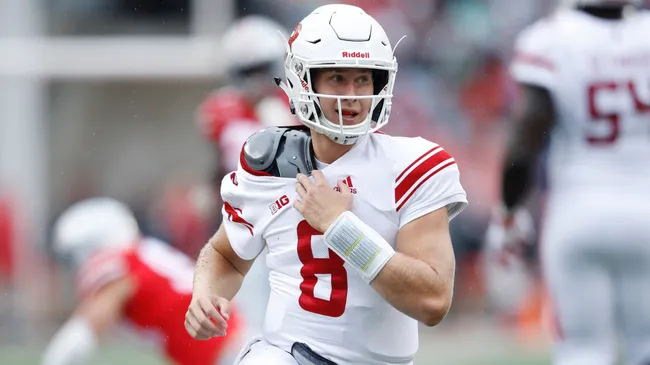
Artur Sitkowski (Source: Joe Robbins/Getty Images)
In 2018, Artur Sitkowski didn’t just have a difficult freshman year; he endured a season-long gauntlet that would have broken a lesser player. Tasked with leading a struggling Rutgers offense in the punishing Big Ten, he threw 18 interceptions against just 4 touchdowns. There was no hiding on the field; one game against Maryland saw him throw four picks on just 16 attempts.
What he lacked in statistical polish, he made up for in sheer durability and grit. He was a teenager playing a grown man’s game, often forced to throw into windows that didn’t exist just to give his team a spark.
Matt Linehan | Int: 18
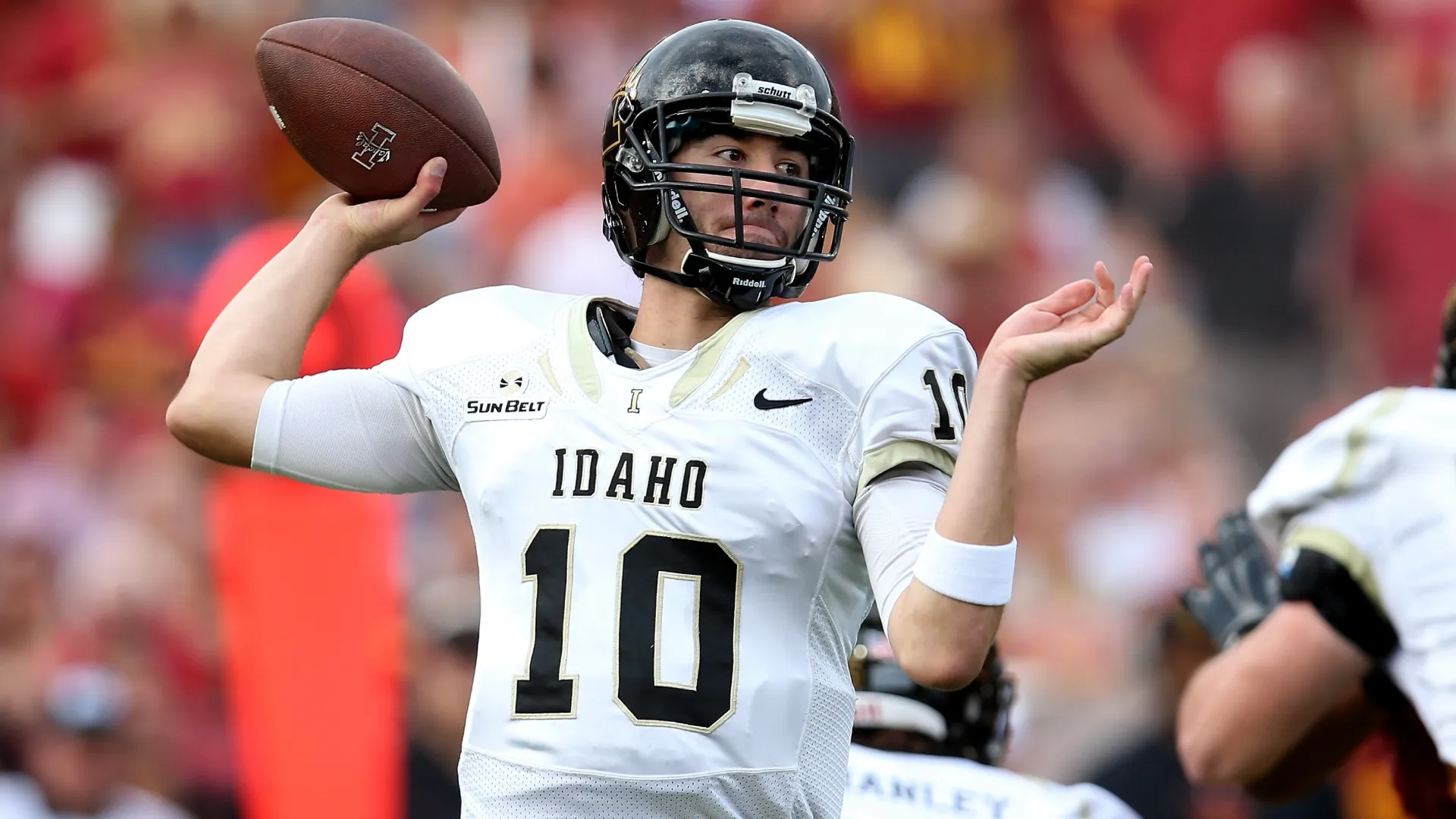
Matt Linehan (Source: Stephen Dunn/Getty Images)
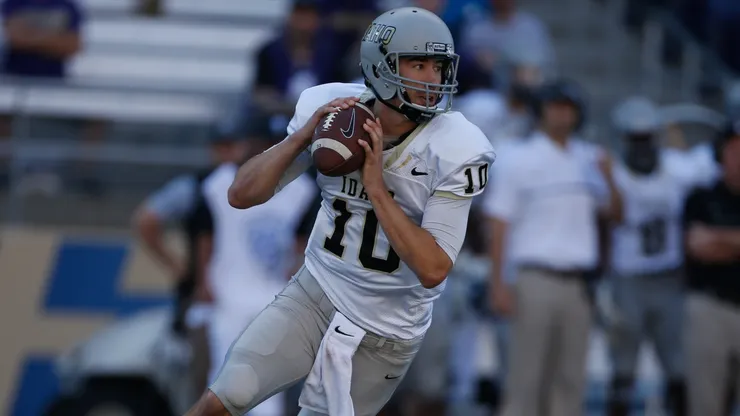
The lineage of Matt Linehan is football royalty—his father, Scott, was a long-time NFL coach—but that didn’t make his 2014 debut any easier. As a freshman at Idaho, he was the engine of a team that finished 1-10, a record reflected in his 18 interceptions. In the Vandals’ air-it-out system, he was asked to carry the world on his shoulders before he had even adjusted to the speed of the FBS game.
His story, however, is one of redemption. Those 18 interceptions in 2014 were the fertilizer for future success. By the time he was a senior, he was a bowl game MVP and one of the most efficient passers in program history. He is a prime example of a quarterback who had to throw the “bad” passes out of his system before he could start throwing the legendary ones.
Shea Morenz | Int: 18
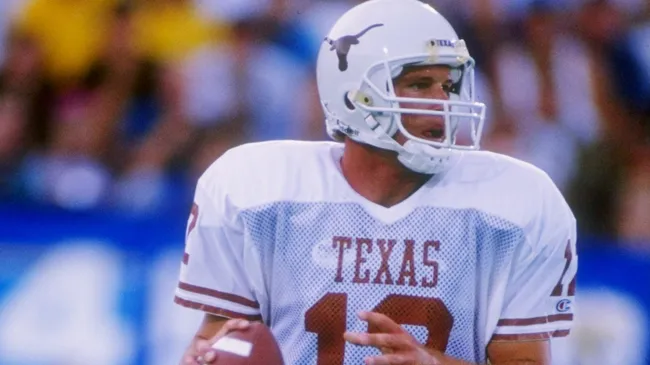
Shea Morenz (Source: Tim de Frisco /Allsport)
Shea Morenz arrived at Austin as a phenom—a blue-chip quarterback who also patrolled the outfield for the Longhorns’ baseball team. In 1993, he threw 18 interceptions, a stat that caused plenty of grumbling among the burnt-orange faithful.
He was a victim of the “gunslinger” archetype; he had a massive arm and the athletic arrogance to believe he could beat any defensive back in a footrace or a jump ball. Playing in the high-pressure environment of the Southwest Conference, his 18 picks were the result of a young star trying to make a “SportsCenter” highlight on every snap.
While he eventually split time and faced injuries, his 1993 season remains a fascinating look at a high-ceiling athlete learning that in college football, your arm strength can’t always bail out your decision-making.
Mike Romo | Int: 18
Mike Romo didn’t just play quarterback; he was one of the architects of a resurrection. In 1989, SMU returned to the field after the “Death Penalty” had wiped out the program for two years. Romo, a freshman, was thrown into the fire and responded by throwing 18 interceptions. But context is everything: he also set school records for attempts (503) and completions (282) that same year.
He was the definition of a high-volume gambler. With a roster composed mostly of walk-ons and freshmen, the Mustangs had to throw to survive. He took every hit and every interception as the price of admission for SMU’s return to relevance. He wasn’t just throwing picks; he was rebuilding a culture, one risky pass at a time.
John Paye | Int: 17
Replacing a legend is never easy, but following John Elway is nearly impossible. John Paye stepped into that void in 1983 as a true freshman, and the results were a rollercoaster of 17 interceptions.
He was an incredible athlete—he was the last Division I player to start in both football and basketball as a freshman—but the football field in the Pac-10 was an unforgiving classroom.
His 17 interceptions were the product of a transition period for Stanford. He had to learn the nuances of the “West Coast” passing game under the brightest spotlight in college football.
Much like the others on this list, those early mistakes paved the way for a stellar career that eventually landed him in the NFL, proving that even a 17-interception season can be the foundation of a professional future.
| Player | Season | Team | Interceptions |
| Billy Stevens | 1965 | UTEP Miners | 29 |
| Ty Detmer | 1990 | BYU Cougars | 28 |
| Ed Rubbert | 1984 | Colorado Buffaloes | 28 |
| Mark Herrmann | 1977 | Purdue Boilermakers | 27 |
| Brad Tayles | 1989 | Western Michigan Broncos | 25 |
| Ben Bennett | 1980 | Duke Blue Devils | 25 |
| Todd Ellis | 1986 | South Carolina Gamecocks | 22 |
| Glenn Foley | 1990 | Boston College Eagles | 21 |
| Art Schlichter | 1978 | Ohio State Buckeyes | 20 |
| Mike Ford | 1977 | SMU Mustangs | 20 |
| Artur Sitkowski | 2018 | Rutgers Scarlet Knights | 18 |
| Matt Linehan | 2014 | Idaho Vandals | 18 |
| Shea Morenz | 1993 | Texas Longhorns | 18 |
| Mike Romo | 1989 | SMU Mustangs | 18 |
| John Paye | 1983 | Stanford Cardinal | 17 |
| Brayden Fowler-Nicolosi | 2023 | Colorado State Rams | 16 |
| Will Furrer | 1988 | Virginia Tech Hokies | 16 |
| Ben Hicks | 2016 | SMU Mustangs | 15 |
| James Morgan | 2016 | Bowling Green Falcons | 15 |
| Cooper Rush | 2013 | Central Michigan Chippewas | 15 |
| Kyle Boller | 1999 | California Golden Bears | 15 |
| Jeff George | 1986 | Purdue Boilermakers | 15 |
| Randy Jenkins | 1980 | Kentucky Wildcats | 15 |
| Tanner Lee | 2014 | Tulane Green Wave | 14 |
| John Wolford | 2014 | Wake Forest Demon Deacons | 14 |
| Nick Mullens | 2013 | Southern Miss Golden Eagles | 14 |
| John Fitzgerald | 1994 | Tulsa Golden Hurricane | 14 |
| Stan White | 1990 | Auburn Tigers | 14 |