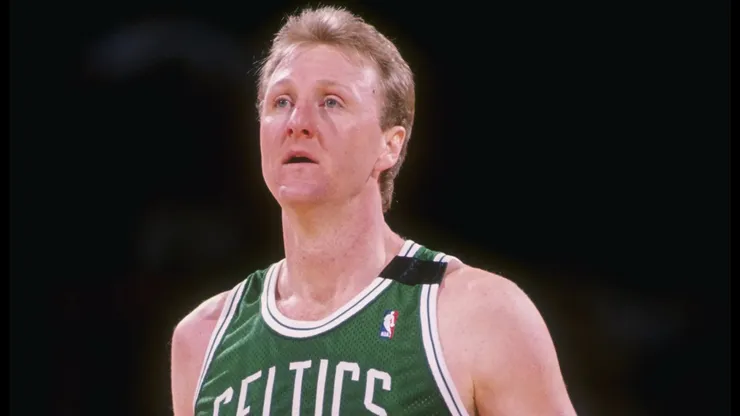
Larry Bird, a Boston Celtics legend and one of the most complete players in NBA history, defined an era with his basketball IQ, lethal shooting, and fierce competitiveness. Toward the end of his career, he admitted that his body was no longer responding the way it once had, acknowledging the physical toll that led him to make the difficult decision to walk away from the game.
Bird announced his retirement in the summer of 1992, but for a man who had once lived and breathed basketball, the decision was anything but easy. That final season became a grueling stretch, where even the simplest movements felt draining.
He continued to show up for practices, laced up his sneakers, and put on the Celtics uniform just as he had since 1979—but none of it felt the same anymore.
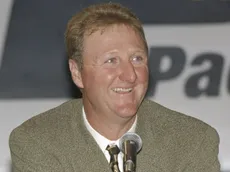
“Maybe that’s why when I walked up to the podium at my press conference in the Boards and Blades Club at the Boston Garden and finally said out loud it was over, I felt like the weight of the world had been lifted off my shoulders,” Bird wrote in his 1999 book Bird Watching. “I can’t tell you what a relief it was not to have to push myself through all that pain anymore. I can honestly say I hated basketball at that point,” he added.
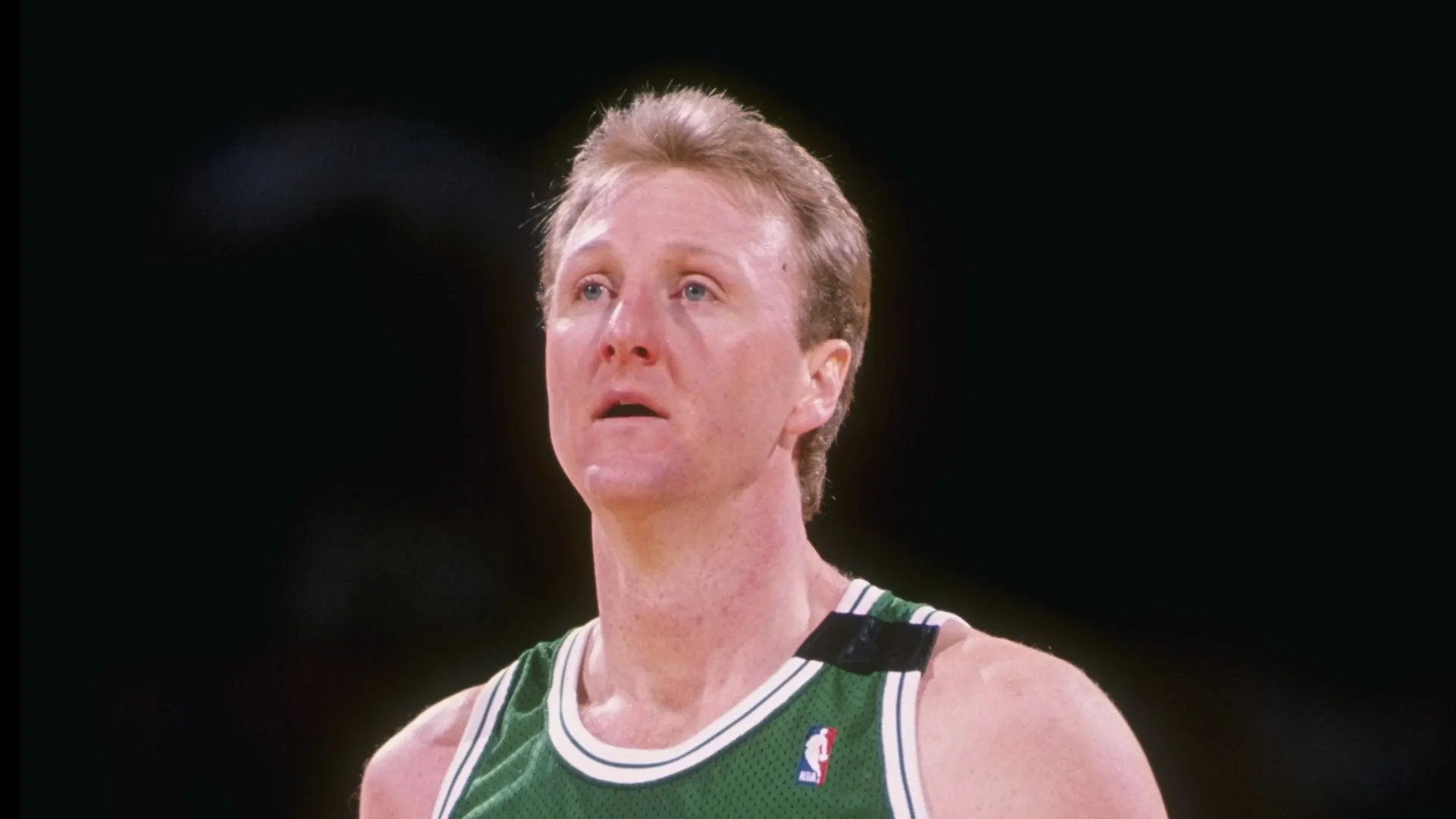
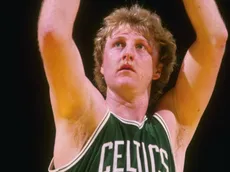
Forward Larry Bird of the Boston Celtics stands on the court during a game.
Bird’s final seasons in the NBA
Bird’s final seasons in the NBA were marked by a mix of competitive brilliance and undeniable physical decline. After dominating the league throughout the 1980s and earning three MVP awards, Bird began to feel the wear and tear of years at the highest level. Still, he remained a key contributor for the Celtics—leading with sharp shooting, unmatched court vision, and a relentless winning mentality, even as his body started to betray him.
From 1989 to 1992, Bird battled chronic back problems that required extensive treatment before and after games. At times, he would lie flat on the locker room floor during halftime just to manage the pain. Despite those issues, he still averaged over 19 points per game during his final seasons—proof that his touch as a shooter and playmaker never disappeared. His presence on the floor continued to command respect, from both teammates and opponents alike.
In the 1991–92 season, Bird earned one final selection to the All-Star Game, though his physical limitations were increasingly evident. That same summer, he joined the iconic “Dream Team” at the Barcelona Olympics, capturing a gold medal alongside the greatest collection of talent in basketball history. While his on-court production was modest, his leadership and experience were vital in the locker room. It served as a symbolic farewell to the international stage and a tribute to his legendary career.
Bird officially announced his retirement on August 18, 1992. His departure left a massive void not only for the Celtics, who had built a dynasty around his brilliance, but also for the NBA, which lost one of its most cerebral and technically gifted players. He acknowledged that the constant pain and physical limitations made it impossible to maintain the standard he set for himself. Even with the bittersweet ending, Bird’s final seasons solidified his legacy as an unrelenting competitor—one who, even in decline, never stopped giving everything he had on the court.