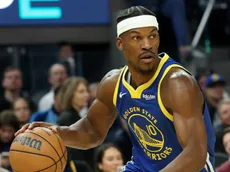

The Golden State Warriors are remembered for having one of the greatest dynasties in NBA history, and for many, the best team ever assembled. One of the central pieces of that run was Kevin Durant, who won championships with the franchise and was named Finals MVP.
Charles Barkley has taken plenty of shots at LeBron James and Kevin Durant over the years, and he was at it again recently. Barkley blamed James and Durant for the much-criticized apron rules being instituted, claiming that commissioner Adam Silver had to act to slow down the superteam trend they helped spark.
Barkley’s comments quickly caught Durant’s attention, and the Houston Rockets star shifted the blame to former Golden State Warriors general manager Bob Myers in a post on X. “Ooh since we’re playing the blame game, I select Bob Myers as the fall guy,” Durant wrote.
Myers, of course, was the Warriors’ GM when they signed Durant in free agency in 2016, and he was the one who pushed for the move. Adding a player of Durant’s caliber to a team that already had Stephen Curry, Klay Thompson, and Draymond Green — and had just gone 73-9 — meant no one else in the league stood much of a chance.
Why the blame on LeBron James?
The answer is fairly straightforward. Before Durant’s move to the Warriors, there was James’ decision to join the Miami Heat. He teamed up with Dwyane Wade and Chris Bosh to form a Big 3, and together they won back-to-back titles in 2012 and 2013.
Why were the apron rules introduced?
The apron rules were created in part with teams like the Warriors and Los Angeles Clippers in mind. Both franchises had owners willing to spend enormous sums in luxury tax to maximize their chances of winning.
The Warriors had the highest payroll in the NBA in three different seasons between 2020-21 and 2023-24. The only year they weren’t at the top was 2022-23, when the Clippers narrowly surpassed them.
Owners of teams in smaller markets simply couldn’t compete with that level of spending. With the apron rules in place, the NBA has tried to restore some competitive balance. Teams can still spend heavily, but crossing into the second apron now comes with significant challenges for roster construction.