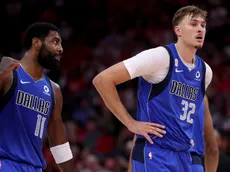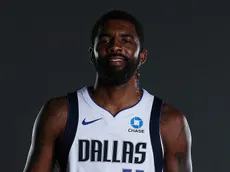
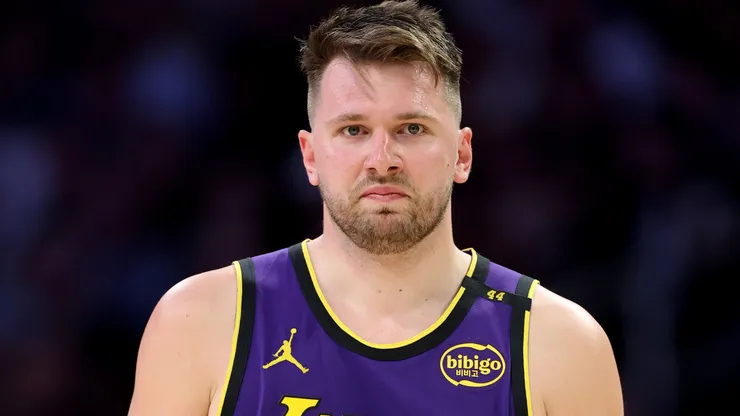
One of the most heavily scrutinized storylines of the NBA year revolves around the Dallas Mavericks‘ front office—specifically, the decisions made by general manager Nico Harrison in the wake of the blockbuster trade that sent Luka Doncic to the Los Angeles Lakers. The team’s performance has declined noticeably since the move, and the basketball world has taken notice. Among those weighing in is former Golden State Warriors GM Bob Myers.
Myers, who served as the Warriors’ general manager from 2012 to 2023 and as team president from 2016, offered his candid thoughts during an appearance on ESPN’s SportsCenter with Scott Van Pelt. According to Myers, the limited “pathways” Harrison left himself post-trade are a major reason for the criticism surrounding the deal. “I think where you get stuck and where people have been critical,” Myers said,
“is not the fact that you traded Luka Doncic. By the way, people are critical of that by itself, but if you look at the return, that’s where people really get upset. A lot of the Mavs fans have a hard time with it, because if I’m going to trade away a player that good and in his prime—which, again, is very, very rare—I’m going to give myself an avenue to win now. I do think they have that with Kyrie Irving and Anthony Davis—there is an avenue. But what they didn’t do is give themselves an avenue via multiple first-round picks, things like that, for the future.”
Myers‘ point is a valid one. The Mavericks didn’t send Doncic away for a fringe player—Anthony Davis is a bona fide superstar with accolades, playoff pedigree, and a championship ring. He’s still in his prime. The real concern isn’t the player acquired, but the lack of long-term assets in return. The absence of additional first-round picks has been the biggest sticking point among critics, and it’s what could ultimately define this as a poorly constructed trade.
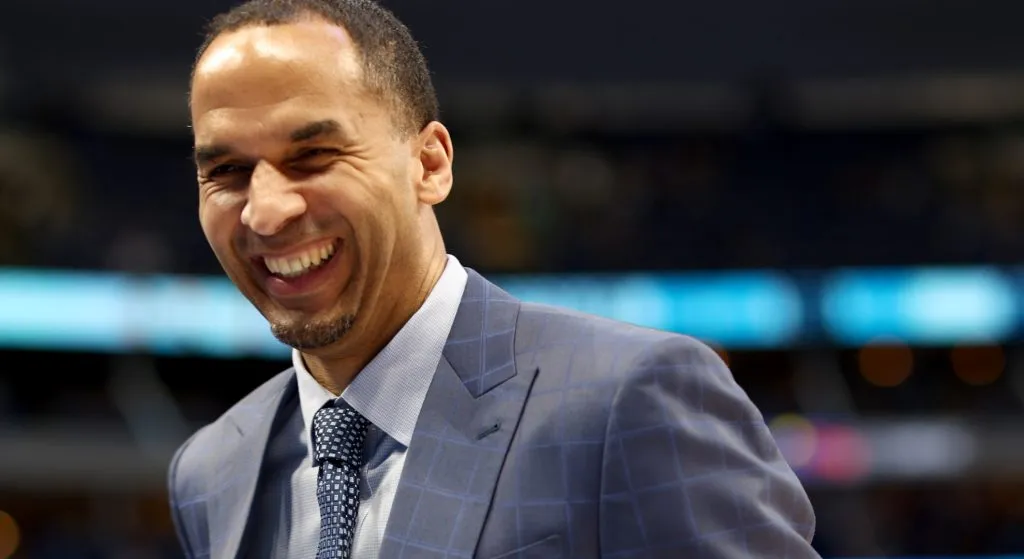
General Manager Nico Harrison of the Dallas Mavericks walks off the court after warmups before the Dallas Mavericks take on the Utah Jazz in Game Five of the Western Conference First Round NBA Playoffs at American Airlines Center on April 25, 2022 in Dallas, Texas.
The full deal saw Dallas ship Doncic, Maxi Kleber, and Markieff Morris to the Lakers in exchange for Davis, young guard Max Christie, the Lakers’ 2029 first-round pick, and $55,000 in cash.
Anthony Davis: high value, higher risk
Anthony Davis isn’t just a name—he’s a résumé. A champion, an eight-time All-Star, and one of the league’s elite two-way players when healthy. On paper, pairing Davis with Kyrie Irving gives the Mavericks a viable path to compete in the Western Conference. But Davis’ health has always been the asterisk, and the track record speaks for itself.
Since arriving in Los Angeles in 2019, Davis has only played more than 60 games in a season once. From foot injuries to back spasms and knee strains, availability has consistently been his Achilles’ heel. For Dallas, tying their post-Doncic hopes to Davis means balancing on a razor’s edge.
When Davis is healthy, he’s arguably a top-10 player in the NBA. When he’s not, the Mavericks’ margin for error disappears—especially with limited depth and a volatile secondary star in Irving. It’s the kind of high-risk move that only pays off if everything clicks—health, chemistry, and system. And that’s a big “if.”
No draft capital, no safety net
Myers’ most pointed criticism is about what Dallas didn’t get. In today’s NBA, trading a franchise cornerstone typically returns a haul of first-round picks to set up a rebuild or build out long-term flexibility. But the Mavericks walked away with just one future first—an unprotected 2029 pick—and a bit of cap filler.
Dallas traded a generational player in his prime—and didn’t set itself up for the future. That lack of foresight could haunt the franchise if Davis continues to struggle with injuries or if Irving exits in free agency down the line. Without draft capital, the Mavericks have no safety net.