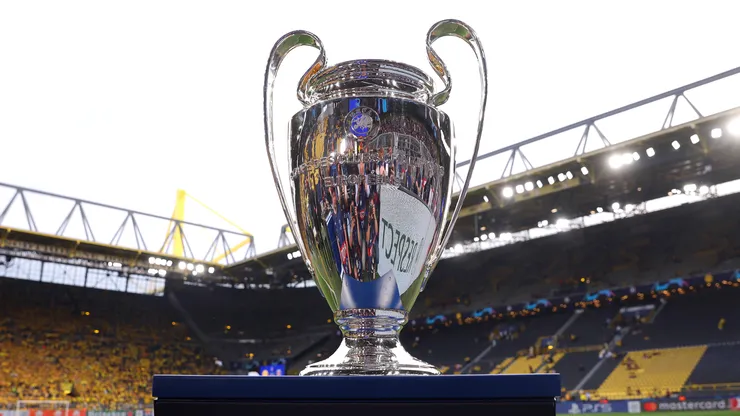
The UEFA Champions League is without any doubt the most prestigious club competition in Europe, and many even consider it the best tournament in the world as it features many of the world’s best teams and players.
The competition has come a long way from the European Cup days, when only a handful of sides challenged for the continental glory. The Champions League era has changed the tournament forever, and it’s safe to say it was for the better.
While every team aspires to participate in the Champions League because of the reputation that comes with it and the possibility of lifting the most coveted trophy in Europe, the financial aspect also makes it extremely attractive.
How is the Champions League prize money distributed?
The UEFA Champions League stands as the pinnacle of club football, not only for its sporting prestige but also for the substantial financial rewards it offers. In the 2024/25 season, UEFA allocated a total of €2.467 billion to participating clubs, with €2.032 billion earmarked for the Champions League alone.
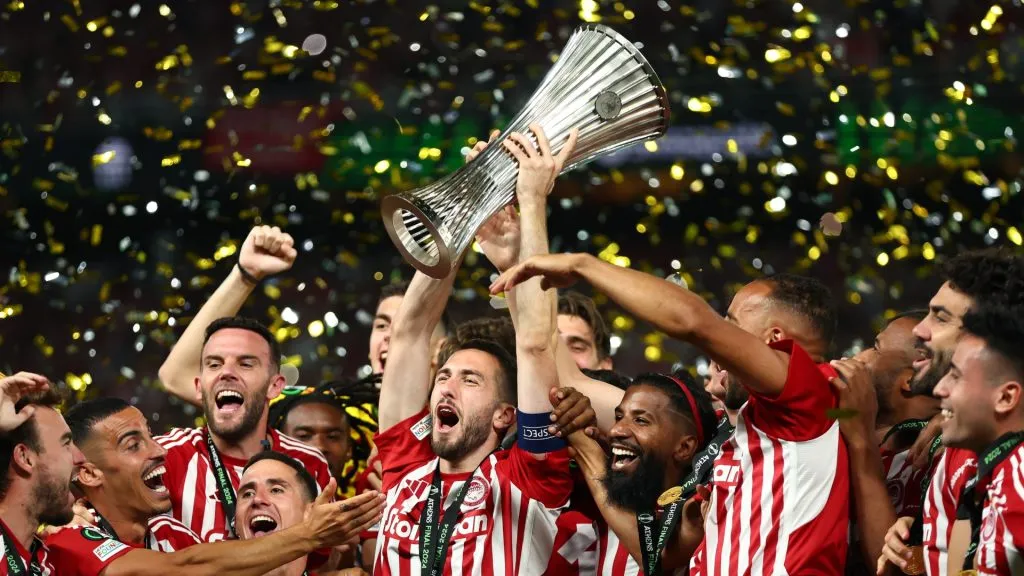
Kostas Fortounis of Olympiacos lifts the UEFA Europa Conference League Trophy after his team’s victory in the UEFA Europa Conference League 2023/24 final match between Olympiacos FC and ACF Fiorentina at AEK Arena on May 29, 2024 in Athens, Greece.
Prize money is distributed across several components:
- Participation fee: All 36 clubs in the League Phase received €18.62 million each.
- Performance bonuses: Clubs earned €2.1 million per win and €700,000 per draw in the group stage.
- Knockout stage earnings: Advancement through the knockout rounds brought escalating rewards: €9.3 million for the Round of 16, €10.6 million for the quarter-finals, €12.7 million for the semi-finals, €21.1 million for the winner, and €15.6 million for the runner-up.
Additionally, clubs benefit from the “Value Pillar”, a system that allocates 35% of revenue based on market pool and historical performance and a 27.5% equal share among all clubs, according to The Guardian.
How much does the winner of the Champions League earn?
Securing the Champions League title is not only a monumental achievement but also a significant financial windfall. In the 2024/25 season, the winner stands to earn approximately €160 million, factoring in participation fees, performance bonuses, and market pool distributions.
For instance, Arsenal, having reached the semi-finals, had already accumulated £12.7 million (€14.7 million) in prize money. Should they advance to the final, they would secure either the €21.1 million winner’s prize or the €15.6 million runner-up prize.
Prize money for each stage of the Champions League
UEFA hands €18.62 million to every team that makes the group stage, with clubs making more money as they progress in the competition. The paycheck increases every round, with a €21.1 million prize for the side that emerges triumphant in the final.
- League Phase Participation: €18.62 million
- Group Stage Win: €2.1 million per win
- Group Stage Draw: €700,000 per draw
- Round of 16: €9.3 million
- Quarter-finals: €10.6 million
- Semi-finals: €12.7 million
- Finalist (Runner-up): €15.6 million
- Winner: €21.1 million
Additional earnings: TV rights and market pool
15% of the total Champions League purse, which is roughly $326 million, comes from broadcast revenues. UEFA distributes a share of this money to the national federations with clubs participating in the Champions League, based on the proportional value of each TV market.
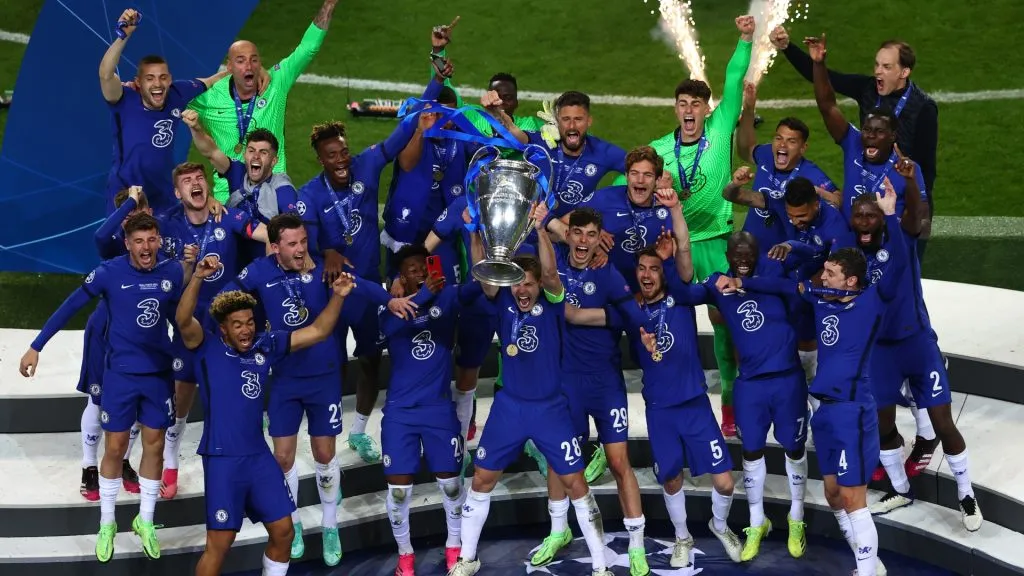
Cesar Azpilicueta the captain of Chelsea lifts the Champions League Trophy following their team’s victory during the UEFA Champions League Final between Manchester City and Chelsea FC at Estadio do Dragao on May 29, 2021 in Porto, Portugal.
In the 2024-25, 50% of the money given to a national federation will be split among its representatives in the competition based on fixed percentages determined by UEFA, while the other 50% is handed in proportion to the number of games played by each side.
Comparison with other major tournaments
UEFA Europa League prize money (2024-25)
- League stage qualification: £3.6 million
- Knock-out play-offs round: £252,000
- Round of 16 qualification: £1.5 million
- Quarter-finals qualification: £2.1 million
- Semi-finals qualification: £3.5 million
- Reaching the Europa League final: £5.9 million
- Winning the Europa League: £5 million
UEFA Conference League prize money (2024-25)
- Group Stage Participation: €3.17 million per club
- Group Stage Performance: €400,000 per win / €133,000 per draw
- Round of 16: €800,000
- Quarter-finals: €1.3 million
- Semi-finals: €2.5 million
- Runners-up: €4 million
- Winners: €7 million
CONMEBOL Libertadores (2025)
- Group Stage Participation: $3 million per team
- Group Stage Victory Bonus: $330,000 per win
- Round of 16 Qualification: $1.25 million
- Quarter-finals: $1.7 million
- Semi-finals: $2.3 million
- Runner-up: $7 million
- Champion: $24 million
CONCACAF Champions Cup (2024)
- Winners: $5 million
Impact of prize money on clubs’ finances
The substantial prize money from the Champions League has a significant impact on clubs’ financial health. For many clubs, especially those outside the traditional “big five” European leagues, earnings can constitute a substantial portion of their annual revenue. For instance, clubs like Ajax and Porto rely heavily on Champions League revenue to remain competitive both domestically and internationally.
Changes in prize money over the years
Since its inception, the Champions League has seen a remarkable increase in prize money. In the 2010/11 season, a total of €754.1 million was distributed to clubs participating in the competition.
By the 2024/25 season, this amount had risen to €2.467 billion, reflecting the growing commercial success and global appeal of the tournament, as the UEFA official site reported.
Future of Champions League prize money
Looking ahead, UEFA plans to expand the Champions League and introduce formats like the “Swiss model“, which could alter how prize money is distributed among participants.
Additionally, new broadcasting deals and growing international markets, especially in Asia and the Americas, promise fresh revenue streams. However, the challenge will be maintaining the delicate balance between financial incentives and sporting competitiveness.