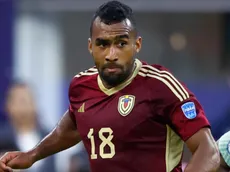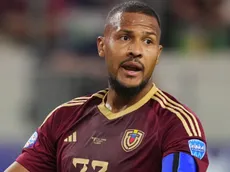
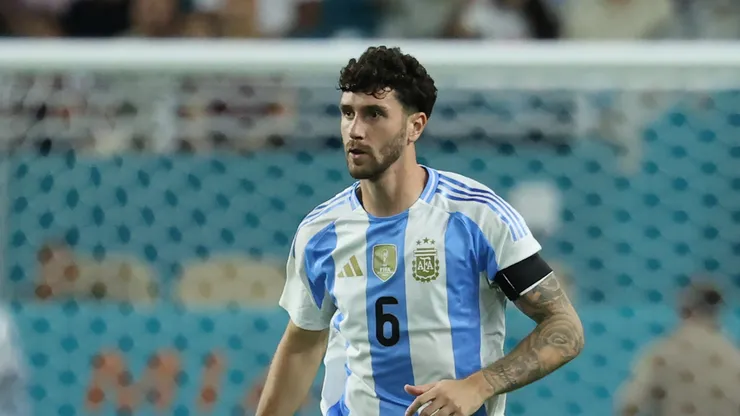
Argentina faces Venezuela in their first friendly ahead of the 2026 World Cup, a match expected to serve as a test for the squad and an opportunity to evaluate certain players. However, a question has arisen: why are the Albiceleste wearing a black armband?
The Argentine national team is wearing the black armband in honor of Miguel Ángel Russo, the former head coach of the iconic club Boca Juniors, who passed away on October 8, 2025. Russo left an undeniable mark on the hearts of Argentinians and the soccer world at large.
After the national anthems of both countries were performed, with Lionel Messi watching from the stands, a minute of silence began before the match. Players from both teams gathered at the center circle, with Miguel Ángel Russo’s image displayed on the Hard Rock Stadium screen, accompanied by the silence of the crowd.
Who was Miguel Ángel Russo? And his career
Miguel Ángel Russo was an iconic and highly respected figure in Argentine soccer, whose long and varied career came to a close with his passing on October 8, 2025. As a player, he was a solid central midfielder and a key presence for clubs like Estudiantes de La Plata.

Miguel Angel Russo former Boca Juniors head coach.
As a coach, Russo earned continental respect for his pragmatic approach and success across multiple leagues. He managed numerous Argentine clubs, including Vélez Sarsfield, San Lorenzo, and Rosario Central. His ability to build competitive squads and maintain composure under pressure cemented his reputation as a reliable and respected manager. He was especially valued for thriving at clubs with high historical expectations.
The pinnacle of his coaching career came in 2007 with Boca Juniors, when Russo led the team to win the Copa Libertadores, South America’s most prestigious club trophy. This achievement immortalized him in the club’s history, with his calm approach and strong locker room management key factors in securing the continental title.
Over the past decades, Russo’s career took him to coach in countries such as Colombia, Peru, Chile, and Mexico, along with multiple returns to Argentine clubs. His longevity on the sidelines and adaptability to different soccer cultures demonstrated his relevance until his final years. Russo’s legacy stands as a symbol of experience, resilience, and the traditional school of Argentine soccer.