

A controversy brewed in Olympic curling, complete with cheating accusations, heated denials, and an international governing body forced to explain why the sport often relies on the honor system.
Canada claimed an 8–6 victory in a thrilling matchup, but the drama extended far beyond the ice. During Friday’s round-robin game, Oskar Eriksson suggested that Marc Kennedy violated the rules by touching the stone after releasing it. Kennedy fired back, Eriksson pushed again, several profanities followed, and Kennedy ultimately received a warning for inappropriate behavior from World Curling.
Footage that circulated online appeared to show Kennedy brushing the granite with his finger after the release. Asked about the clip, Kennedy said, “Yes, I’m not even going there. I’ve never even known that to be a concern before. It’s never ever come up in conversation.”
“And if somebody said to you, ‘Hey, do you double-touch all the time?’ I honestly, in that split second of a moment, I couldn’t even tell you if I do or not,” he said. He added that he had his own theory, suggesting the episode might have been “premeditated planning to try to catch us. They’ve come up with a plan to catch teams in the act,” Kennedy said.
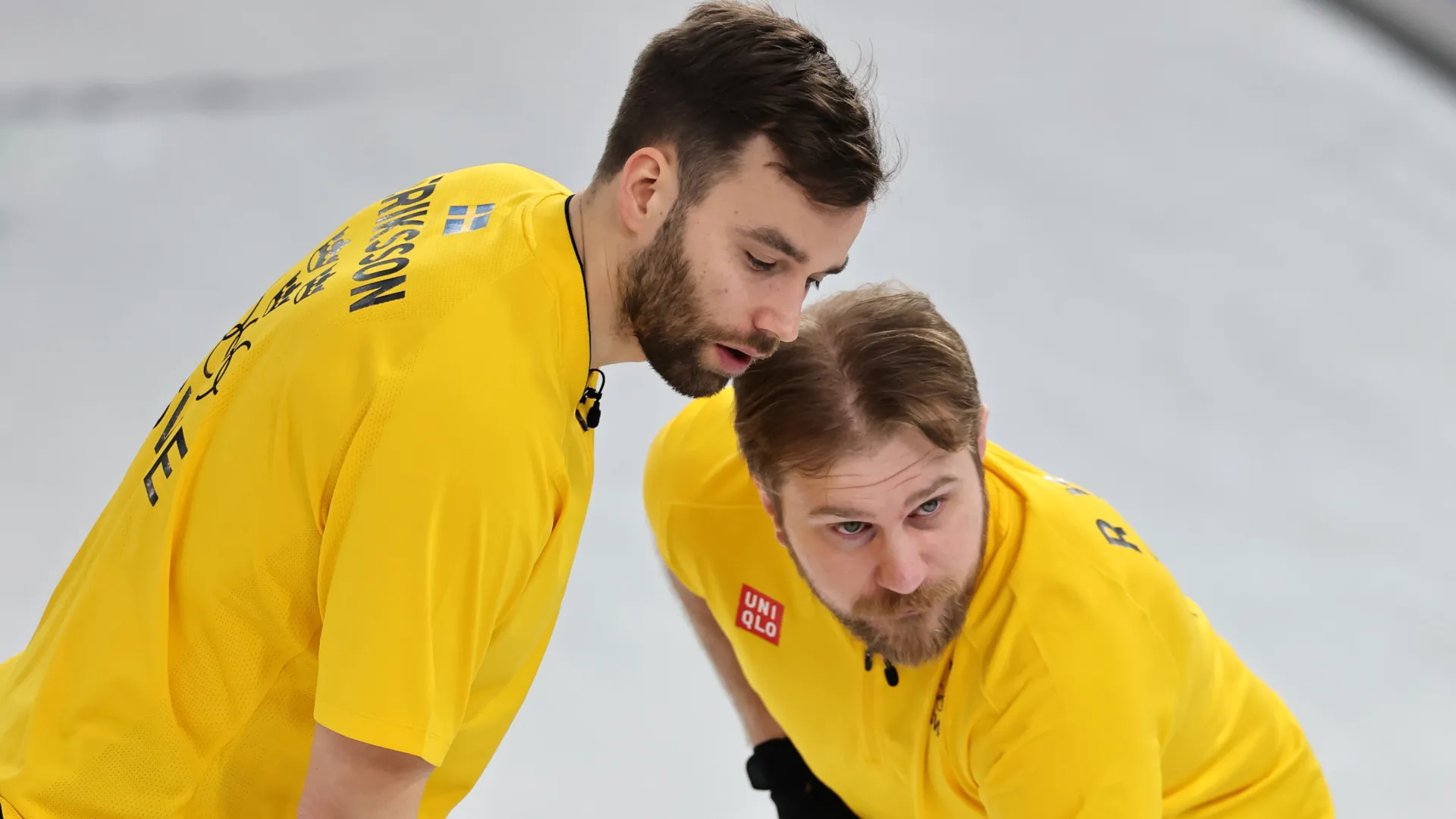
Oskar Eriksson and Rasmus Wranaa of Team Sweden.
No side leaves satisfied
Kennedy received a verbal warning from World Curling a day after the fiery exchange with Sweden, when fingers were pointed and the Canadian repeatedly swore. He was not formally charged with cheating, and the federation does not use video replay to review gameplay.

The organization instead deployed two officials to observe how stones were released during Saturday afternoon’s men’s session. In that draw, Canada fell 9–5 to Switzerland, while Sweden defeated China by a 6–4 score.
Afterward, Eriksson said he “slept well, I’m not sure about him,” referring to Kennedy, and explained he chose that moment because he believed he had seen similar incidents before. “We want to play a fair and square game, like you follow the rules,” Eriksson said. “And if we see something that’s not following the rules, we tell the opponents or the official. This time we did both.”
Did anything come of it
In a lengthy explanation released Saturday, World Curling wrote, “Game umpires are positioned at the end of the sheet and cannot physically see every delivery infraction.”
“It is not possible for World Curling to have game umpires in place to observe all hog lines at every release. Currently, World Curling does not use video replay to re-officiate decisions. Decisions made during a game are final.” Still, the federation added that beginning with the Saturday afternoon session, two roaming officials would monitor deliveries across the sheets.