
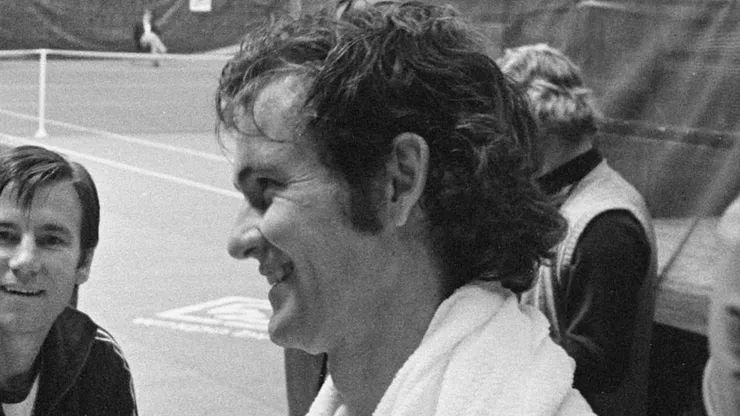
Mental health has become a more prominent topic in elite sports in recent years, including in tennis, with vocal advocates such as Naomi Osaka and Mardy Fish. However, one of the pioneers in the sport to speak openly about mental health was Cliff Richey, a former World No. 6, U.S. No. 1, and Davis Cup champion.
Born on December 31, 1946, in San Angelo, Texas, Richey made his mark early in the sport. He won the U.S. Junior National Championships in both 1962 and 1963 before capturing the boys’ singles title at the French Championships in 1964. His transition to the professional circuit was equally impressive.
Richey’s breakthrough year came in 1970 when he won the inaugural Grand Prix circuit, finishing ahead of legends like Arthur Ashe and Ken Rosewall. That same year, he reached the semifinals of both the French Open, losing to Željko Franulović, and the US Open, where he was defeated by Tony Roche, cementing his place among the world’s best players.
In addition to his strong individual performances, Richey was a key player on the U.S. Davis Cup team. After being part of the squad that won the 1969 title, he played a pivotal role in the 1970 final against West Germany, winning both of his singles matches to secure victory for the Americans.
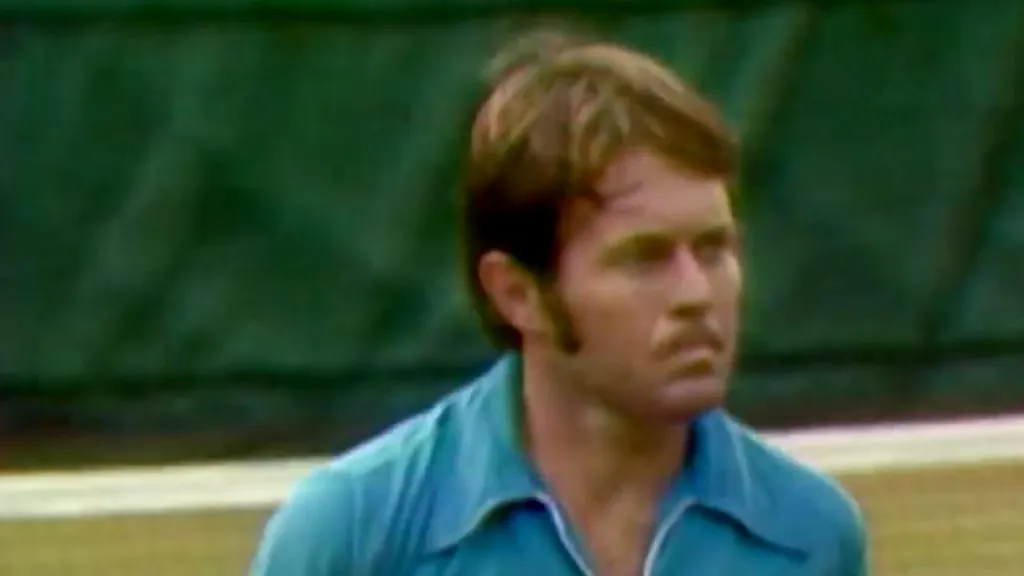
Richey during the 1972 US Open semifinal (Capture: YouTube)
Challenges with mental health
Richey was nicknamed “The Bull” for his relentless playing style and toughness on tour. However, despite reaching major milestones, such as the 1972 US Open semifinal (where he fell to Arthur Ashe), he became increasingly anxious and began relying on alcohol and Valium to cope.
“I didn’t know what was wrong,” Richey told Tennis.com in 2022. “My brain was in a storm for five or six years. I was self-medicating with alcohol and was basically a functional depressive, but I didn’t have that term.”
“I always had bad anxiety, even in the juniors, but I wrote it off,” he added. “I didn’t know it wasn’t normal. In my family, it was nothing but tennis, and I always worried about how good I was compared to others.”
While he used tennis as a safe space, his struggles deepened when he failed to achieve the results he wanted, exacerbating his depression. After retiring from professional tennis in 1979, he took up golf and found some success in celebrity tournaments.
However, between 1994 and 1997, he described himself as “non-functional.” A conversation with his dermatologist ultimately led him to seek treatment, beginning with antidepressants and later therapy.
Writing about depression
In 2010, he released his book, Acing Depression: A Tennis Champion’s Toughest Match, co-written with his daughter, Hilaire Kallendorf. The book detailed his personal struggles and became a widely recognized resource in the fight against the stigma surrounding mental illness in sports.
SurveyIs mental health discussed enough in tennis?
Is mental health discussed enough in tennis?
ALREADY VOTED 0 PEOPLE
Beyond his advocacy work, Richey remained active in sports, participating in celebrity golf tournaments and organizing charity events. His legacy extends far beyond his accomplishments on the court, as he has used his platform to raise awareness about an issue affecting millions.