
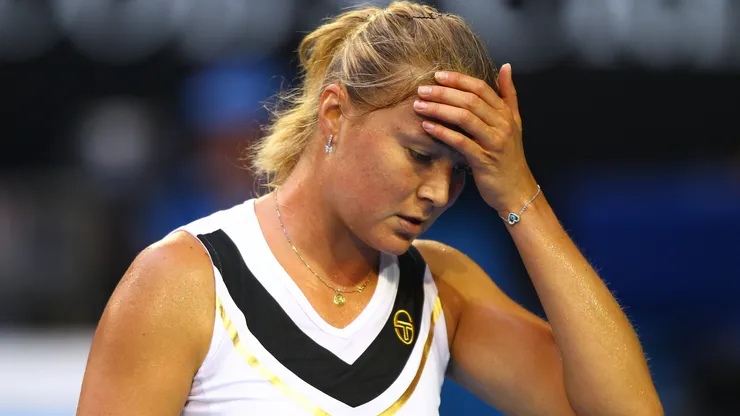
Several siblings have found success in tennis, with well-known examples including the Williams sisters, the Maleeva sisters from Bulgaria, and the McEnroe brothers, John and Patrick. However, Marat Safin and Dinara Safina remain the only brother and sister to both reach World No. 1 in the ATP and WTA rankings. Beyond that remarkable achievement, Dinara Safina’s career was also marked by struggles, including a back injury that ultimately forced her to retire at just 25 years old.
While she was often recognized as the younger sister of Safin, a two-time Grand Slam champion who also had his own struggles, Safina was able to become successful in her own right. However, it wasn’t easy to grow up in a tennis family, as her father was director of a tennis club and her mother was her coach.
“Being the little sister in such a big tennis family is not an easy situation. Maybe that’s why it took me longer to develop,” she told Tennis Confidential in 2008. “I wanted to be something by myself, like being a big player by myself. So at the beginning I was putting too much pressure on myself. But then gradually I found myself, and I learned how to do better with that situation.”
Her most successful years on tour came between 2007 and 2010. During that time, she reached three Grand Slam finals — the 2008 French Open, the 2009 Australian Open, and the 2009 French Open. In doubles, she claimed the 2007 US Open title alongside Nathalie Dechy and captured a silver medal in singles at the 2008 Beijing Olympics.
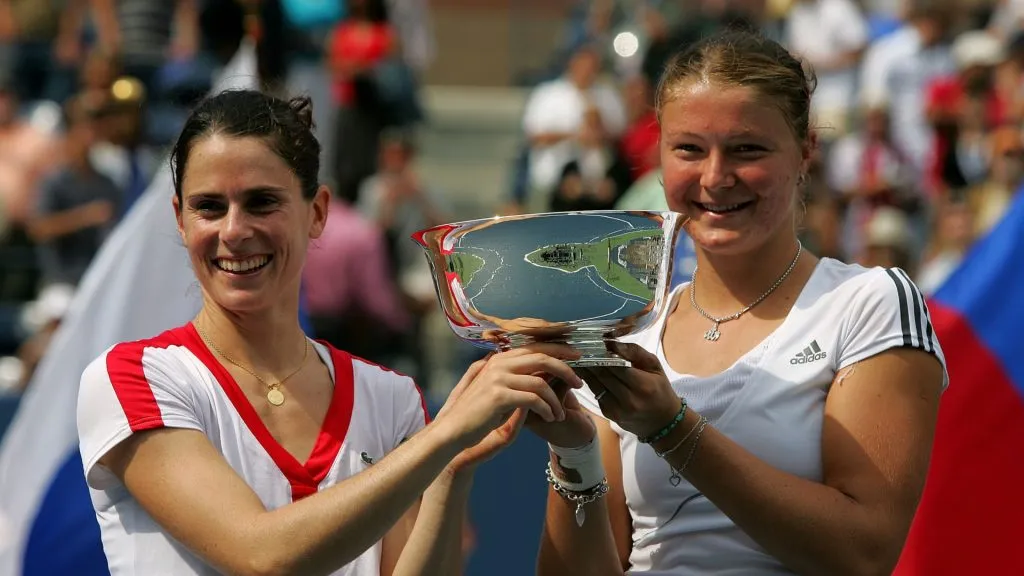
Dinara Safina and Nathalie Dechy won the US Open doubles title (Matthew Stockman/Getty Images)
World No. 1 and the pressure of being the best
In 2009, she followed in the footsteps of Maria Sharapova by becoming the second Russian woman to attain the No. 1 ranking. “It’s difficult to practice and prepare for what it feels like to be number one, with all that attention,” she told journalist Eric Han in an interview in 2020. “How can you practice handling that pressure? I think you just have to change your perspective. You need to see it as part of your job.”
She continued, “Being number one doesn’t mean you have to be perfect all the time. It’s normal to have ups and downs, I’m not a robot. I had to learn not to take it too personally and to understand that losing a match isn’t the end of the world. It’s just part of the job, one day among many.”
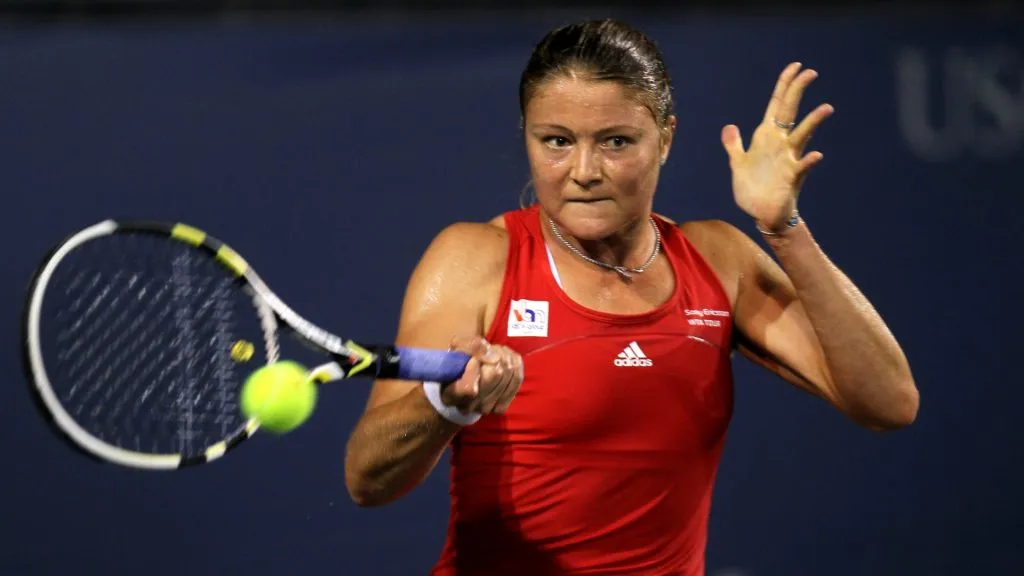
Dinara Safina reached World No. 1 in 2009 (Stephen Dunn/Getty Images)
However, while in 2009 she reached the top of the rankings, it was also the beginning of the end. “Slowly, I started to have problems with my back in 2009. It began at Wimbledon, or maybe even earlier at the French Open, where I started feeling some tension in my back,” she told Han.
“I thought, “What is this?” but it just kept getting worse. Before the US Open, after playing in Toronto or maybe Montreal, it became really bad.” she said. “Cincinnati was horrible, and the whole US Open series was terrible for me. After the US Open, it only continued to get worse.”
Her retirement: Back injury and disordering eating
Throughout her career, Safina collected 12 WTA singles titles and nine doubles trophies. Unfortunately, a persistent back injury forced her to step away from the game, with her final appearance coming at the 2011 Madrid Open at just 25 years old. However, she officially retired in 2014.
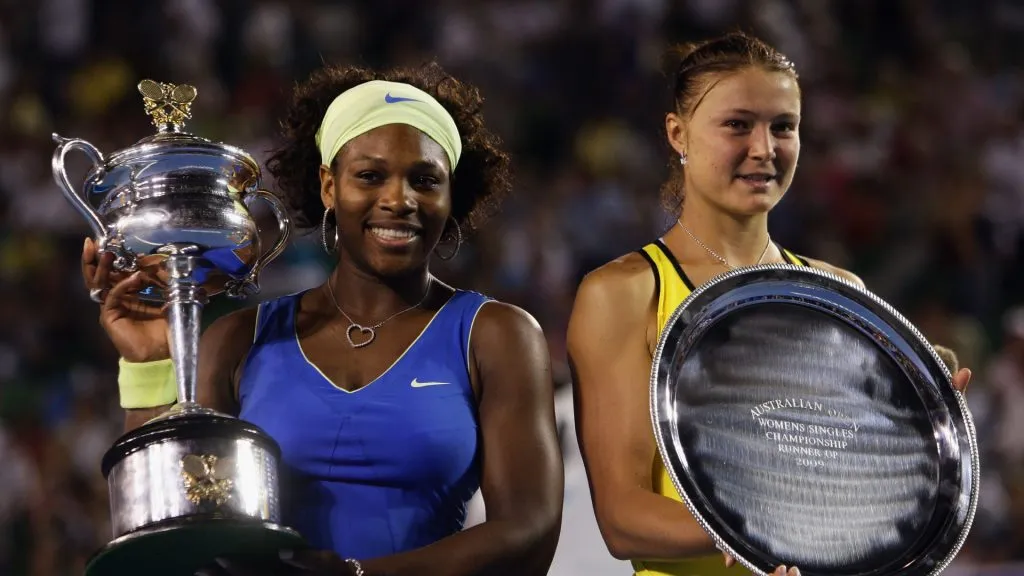
Safina was runner-up at the 2009 Australian Open (Mark Dadswell/Getty Images)
“After that, I took a three-year break to see if I would still feel eager to come back, to see how I would feel. But actually, I didn’t have any desire to return. My back still wasn’t in the best shape. I told myself, after three years, if I don’t feel those emotions or that motivation to come back, I’d better stop,” she told Han in 2020.
However, in 2024, she revealed she also struggled with disordered eating and anxiety. “What ultimately kept me from coming back was that physically, I struggled with body weight. I was fighting anxiety and a binge eating disorder. I was consistently overweight, and I couldn’t lose it even though I fought so much to do so,” Safina told tennis.com.
“I would try different diets and nothing worked and to play with an extra 30 kilos, it’s not easy,” she said. Safina explained that it was one of the reasons she never tried to come back, especially after dealing with comments from press and fans.
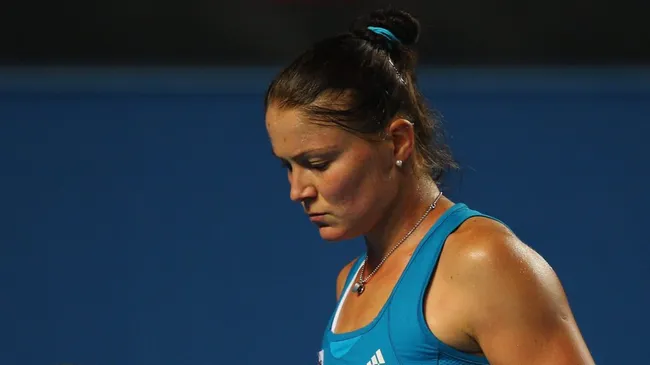
Safina left tennis at only 25 years old (Cameron Spencer/Getty Images)
“I want people to understand that this can happen to anyone,” she told the outlet. “Everyone has their own problems, their own fears, and it’s normal, when facing them, to feel like you are alone in this world and no one else understands. Many people have gone through the same things. There is always light at the end, and it’s important to remember that you’re not alone.”
Life after tennis
After her retirement, Safina has remained connected to tennis. “Everything around me has always been about tennis. In the Russian Federation, I stayed involved in tennis, but not through coaching, it was more on the organizational side,” she told Han in 2020.
She also has started helping some players part-time. “Do I still play often? Only if I need to, for an exhibition or when I’m coaching someone. Then I’ll play. But for myself, I don’t really enjoy playing anymore,” she confessed.