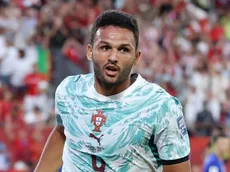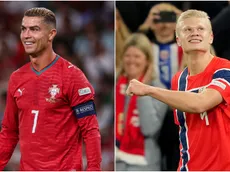

England are contenders, but their influence at the 2026 World Cup extends far beyond the Three Lions. Thanks to family ties and dual nationality rules, numerous players born in England are representing other countries.
In total, 24 English-born players are playing for nations other than England at the World Cup, highlighting the increasingly global nature of the sport. It’s a remarkable number.
From Erling Haaland with Norway to Scott McTominay with Scotland, English-born talent can be found across several continents. The list is really impressive for the tournament.
Which countries are represented by English-born players?
A total of 10 national teams at the 2026 World Cup feature players born in England. DR Congo has Aaron Wan-Bissaka and Aaron Tshibola. Iraq is represented by Zidane Iqbal.
Ghana’s squad includes Antoine Semenyo, Jerome Opoku, and Brandon Thomas-Asante. New Zealand features Tommy Smith, Joe Bell, and Matthew Garbett.
Scotland has perhaps the largest contingent, with Scott McTominay, Tyler Fletcher, Angus Gunn, Che Adams, and George Hirst. Canada is represented by Owen Goodman, Luc de Fougerolles, and Alfie Jones.
The United States includes Antonee Robinson, Gio Reyna, and Sebastian Berhalter. France has Michael Olise, Switzerland features Marvin Keller, and Norway is represented by Erling Haaland and Thelo Aasgaard.
Which team has the most English-born players?
Scotland lead the way with five English-born players in its World Cup squad. The close ties between England and Scotland have long produced players eligible for both national teams, with several choosing to represent their family heritage. Ghana, Canada, and New Zealand each have three English-born players, while DR Congo, the United States, and Norway have two apiece.