
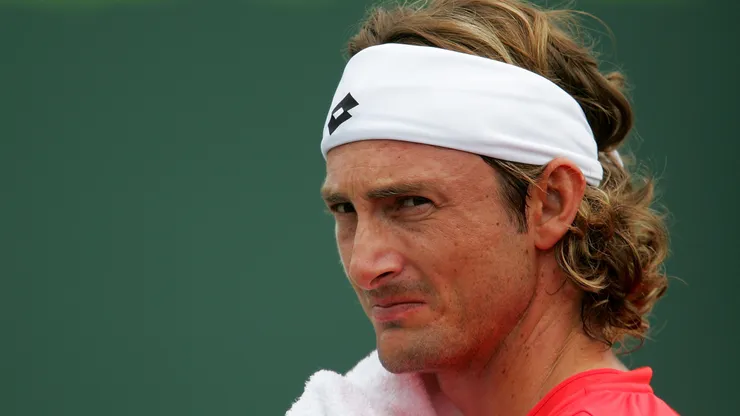
Since the Open Era began, Spain has been home to extraordinary tennis talent. In the 1960s and 70s, players like Andres Gimeno, Manuel Santana, and Manuel Orantes stood out. After a slight decline in the 1980s, the 1990s saw a resurgence with stars like Sergi Bruguera, Carlos Moya, and Alex Corretja.
The 2000s ushered in a golden age with numerous players excelling on the global stage, including Feliciano Lopez, David Ferrer, Juan Carlos Ferrero, and, of course, the emergence of Rafael Nadal. Today, Carlos Alcaraz, at just 22 years old, continues the legacy with four Grand Slam titles to his name.
Juan Carlos Ferrero holds a special place in Spanish tennis history. He reached World No. 1 in the ATP rankings, captured a Grand Slam title, was a finalist in another, and played a pivotal role in Spain’s Davis Cup victories in 2000, 2004, and 2009. Beyond his playing career, Ferrero has become a key figure in the rise of Carlos Alcaraz.
Ferrero’s early professional years
Ferrero was born in February 1980 and developed a passion for tennis early on. He trained with Antonio Martinez Cascales and Samuel Lopez, making his professional debut in 1999. Known for his prowess on clay, Ferrero adapted to other surfaces over time, achieving success across all.
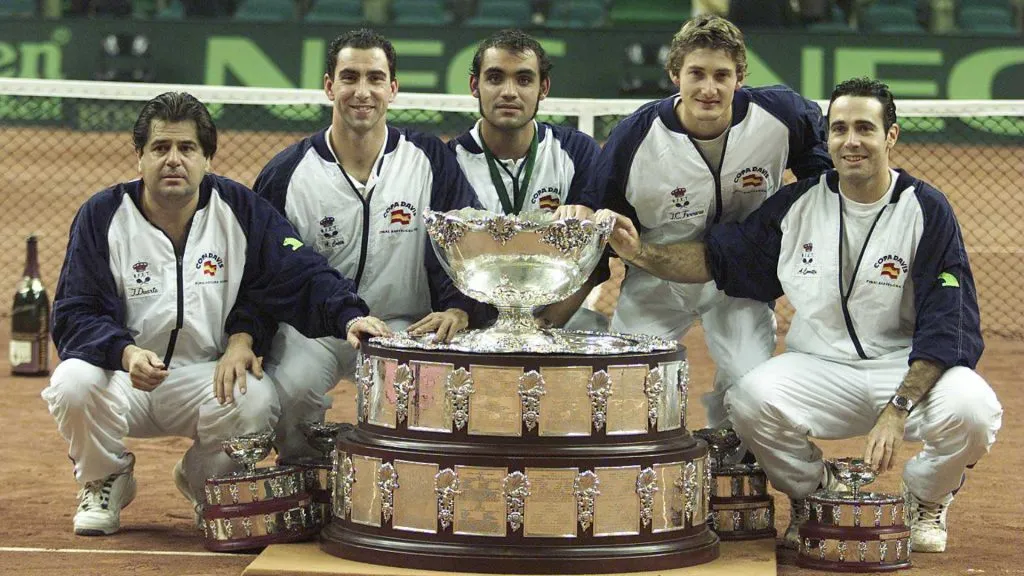
Spain team with the Davis Cup trophy after the fourth rubber between Juan Carlos Ferrero of Spain and Lleyton Hewitt of Australia in the final of the Davis Cup. (Gary M/ Getty Images)
In his rookie year, Ferrero claimed the ATP 500 title in Mallorca. By 2000, he was a key member of Spain’s Davis Cup-winning team, securing two singles victories in the final.

Breakthrough and Roland Garros final
By 2001, Ferrero proved himself as a player destined for greatness, capturing four ATP 250 titles and the Masters 1000 in Rome. He established himself as part of the strong cohort of Spanish clay court specialists.
Ferrero’s true breakthrough came in 2002. He built on his previous success by winning the Masters 1000 in Monte Carlo and reaching the Roland Garros final, where he lost to fellow Spaniard Albert Costa in four sets.
Roland Garros triumph
The defeat in the 2002 Roland Garros final did not deter Ferrero. In 2003, he defended his Monte Carlo Masters title, triumphed in Valencia, and arrived at Roland Garros poised to win.
He captured the title by defeating Dutchman Martin Verkerk 6-1, 6-3, 6-2, lifting the trophy on Court Philippe Chatrier. This victory marked the pinnacle of his career before Rafael Nadal began his unprecedented Roland Garros dominance with 14 titles.
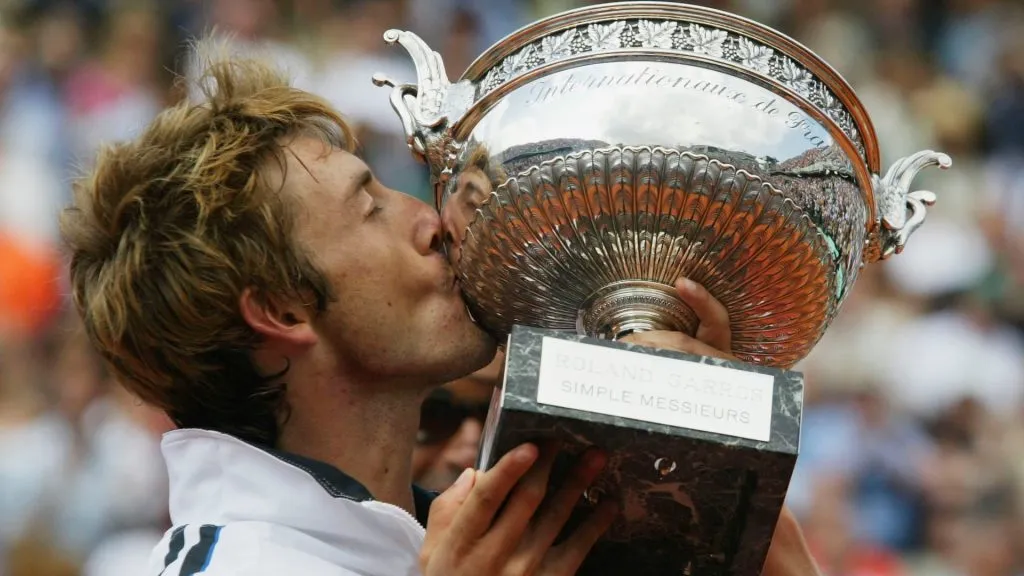
Juan Carlos Ferrero of Spain celebrates with Roland Garros trophy after winning his mens final match against Martin Verkerk. (Clive Mason/Getty Images)
US Open final and World No.1 ranking
The 2003 Roland Garros final was not Ferrero’s last Grand Slam final appearance. That same year, he reached the US Open final, losing to local favorite Andy Roddick. Despite the setback, Ferrero climbed to World No. 1 in September 2003, holding the position for eight weeks.
Setbacks, comebacks, and career’s end
In 2004, when Ferrero was 24, injuries plagued his season, hindering his ability to defend important ranking points. The years from 2004 to 2009 were marked by injuries and sporadic success, far from the dominance many expected. In 2009, he broke a six-year title drought by winning in Casablanca.
In 2010, at age 30, Ferrero enjoyed a resurgence, winning three titles—Costa do Sauipe, Buenos Aires, and Umag. However, a knee injury later that year prevented him from maintaining peak performance in subsequent seasons. In 2012, at 32, he retired with 16 ATP titles and three Davis Cup victories with Spain.
Building the future
Following his retirement, Ferrero partnered with Antonio Martínez Cascales to create the Ferrero Tennis Academy in Alicante. The facility spans over 120,000 square meters and features 25 courts of various surfaces, catering to aspiring professionals and recreational players alike.
Notable players like Maria Sharapova, Dinara Safina, and Alexander Zverev have trained at the academy. Ferrero also briefly pursued a professional padel career before focusing entirely on tennis coaching.
Guiding Alcaraz’s ascent
Ferrero first spotted Carlos Alcaraz’s potential when the prodigy was just 12 years old, competing at a tournament hosted by the academy. They began working together when Alcaraz turned professional in 2018, forming a close bond both professionally and personally.
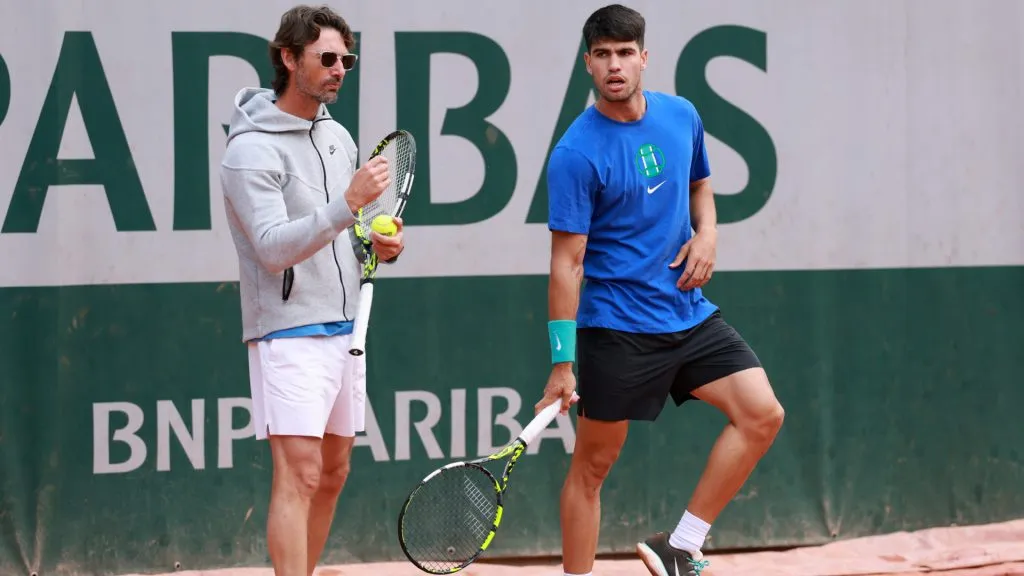
Carlos Alcaraz of Spain looks on during a practice session alongside his coach Juan Carlos Ferrero. (Clive Brunskill/Getty Images)
Under Ferrero’s guidance, Alcaraz has won four Grand Slam titles, became the youngest World No. 1 in ATP history, and continues to develop as one of the sport’s brightest stars. Ferrero’s impact on Alcaraz’s career is a testament to his enduring influence on the game.