Madison Square Garden is not just a venue; it is the ultimate cathedral of basketball. The New York Knicks‘ history is interwoven with this legendary hardwood, defined by championship grit and a dramatic, star-driven legacy.
The franchise’s soul was forged by players who were defined by a certain brand of NY toughness. Their greatness is measured in unforgettable playoff moves and the sheer audacity of commanding the biggest stage in the NBA.
The journey through the greatest stars is not just about stats or titles. It’s about the moments that defined them, the rivalries that sharpened them and the legends who shaped the identity of the team’s basketball.
Patrick Ewing
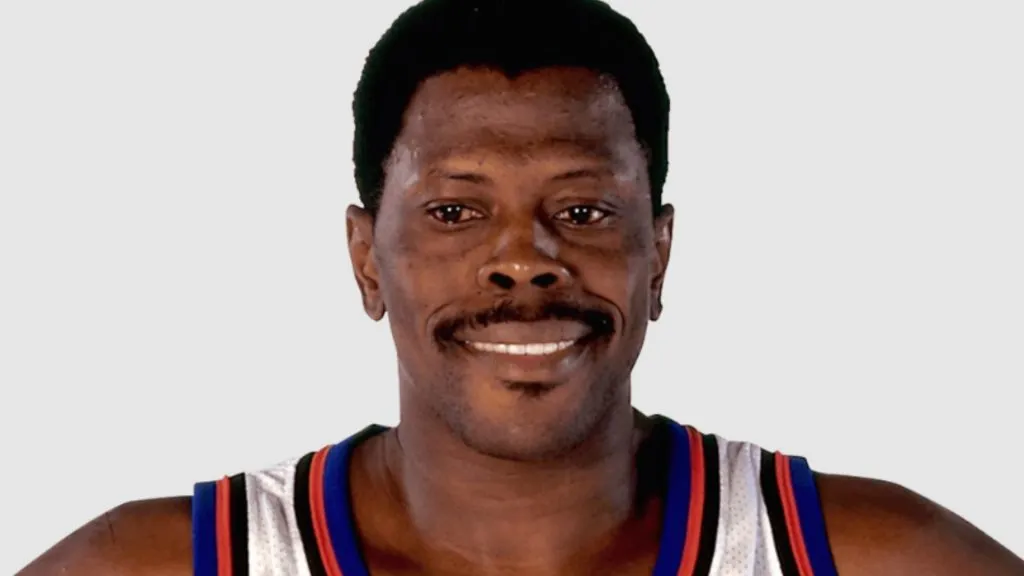
Patrick Ewing (Source: NBA)
More than just a franchise player, Patrick Ewing was the unyielding anchor who defined the Knicks’ identity for a decade and a half. Arriving at the Garden as the first overall pick in the legendary 1985 Draft, he became the beacon of an era marked by defensive force and sheer tenacity.
While the Larry O’Brien Trophy famously eluded him, the Jamaican-American center led the team to two NBA Finals (1994 and 1999) and was a perennial All-Star, cementing his status as the greatest center in team history and holding franchise records in points, rebounds and blocks.
Bernard King
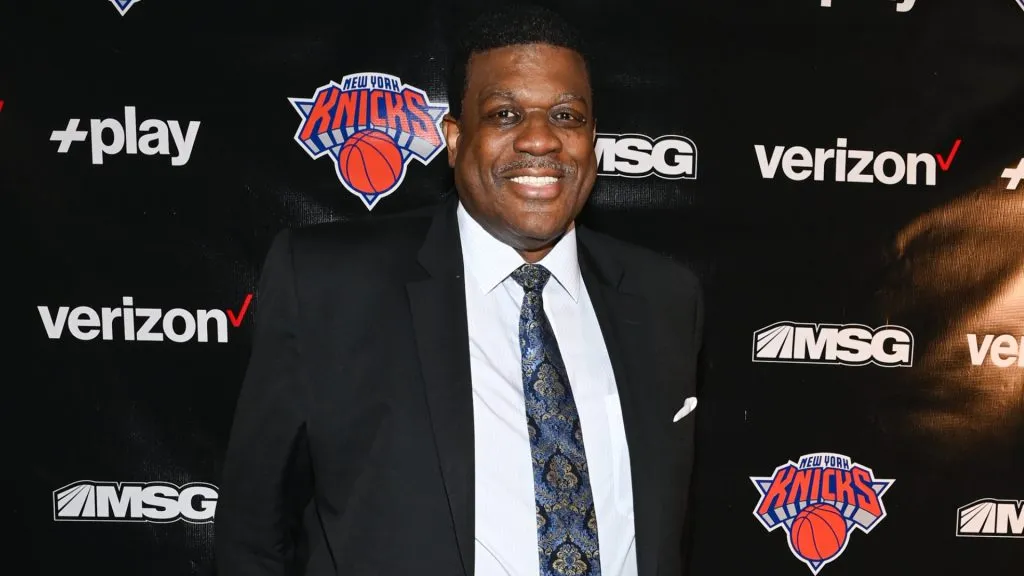
Bernard King (Source: Dave Kotinsky/Getty Images for Verizon)
The career of Bernard King in New York was a brilliant offensive outburst, intense yet tragically brief, with his lasting impact measured by the astonishing scoring efficiency he brought to the floor.
He was an offensive artist, crowning himself the 1985 NBA Scoring Champion with an average of 32.9 points per game, a statistical peak that ranks among the highest offensive outputs ever seen at the Garden.
What makes his story truly legendary is his epic return to the NBA’s elite after suffering a devastating knee injury, a blow that would have ended most careers. His time with the Knicks is summarized as a showcase of individual skill and moving resilience, earning him the respect of the entire league.
Carmelo Anthony
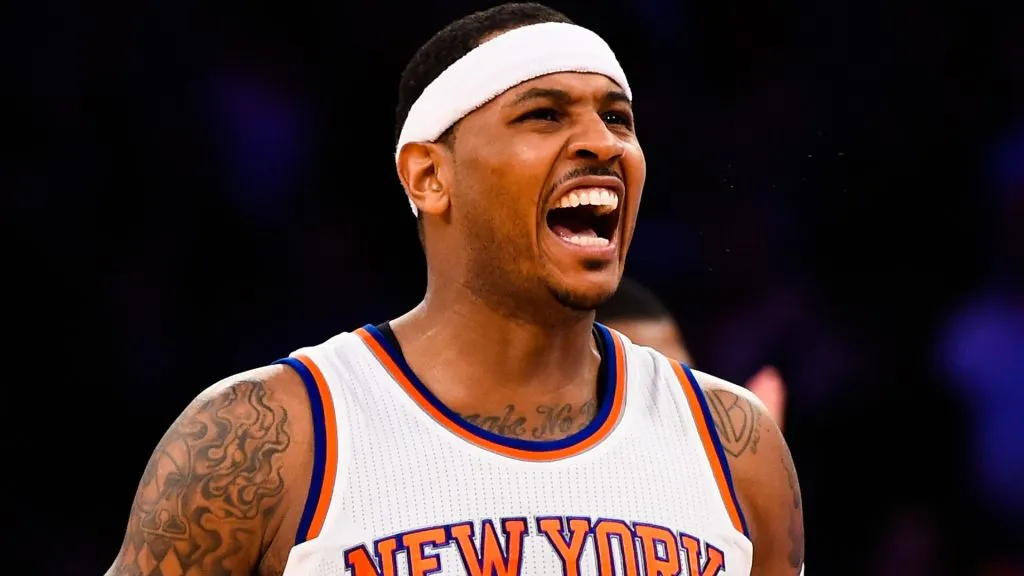
Carmelo Anthony (Source: Alex Goodlett/Getty Images)
Carmelo Anthony‘s arrival at Madison Square Garden in 2011 was a seismic event promising a return to glory for New York. “Melo” delivered on the individual front, establishing himself as an elite scorer with a virtually unlimited offensive arsenal, averaging 24.7 points per game during his Knickerbocker tenure.
His playing style, centered on the dominant mid-range game and deadly jab-step, was a delight for fans. He led the Knicks to their first division title in 19 years (2013) and provided the fanbase with moments of intense euphoria, solidifying his status as the offensive icon of the franchise in the 21st century.
Willis Reed
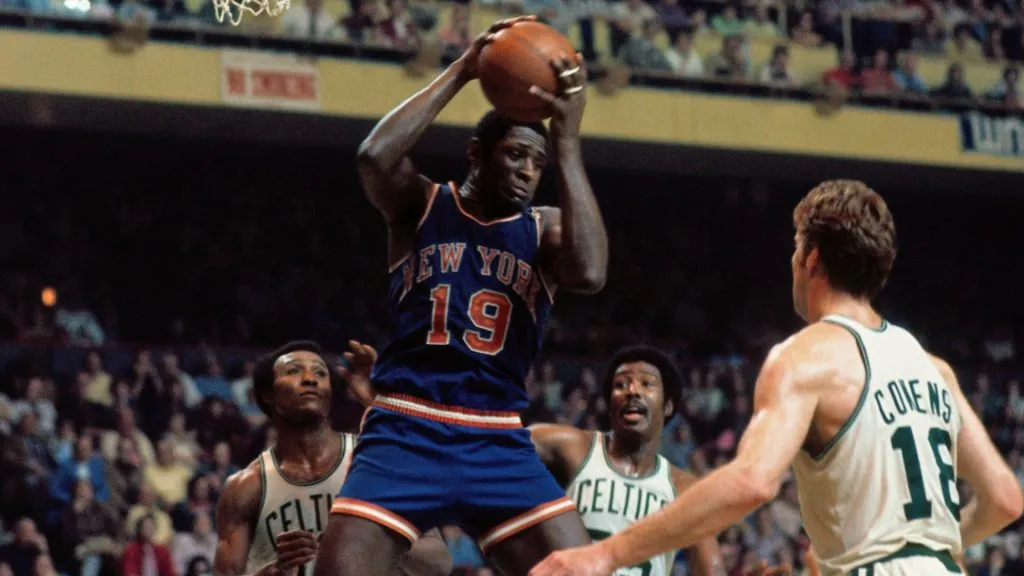
Willis Reed (Source: NBA)
If there is one moment that encapsulates the Knicks’ mystique, it is the image of Willis Reed limping onto the court for Game 7 of the 1970 Finals. This center, who had already been named MVP of the season, the Finals, and the All-Star Game that year, was the emotional and inspirational leader who guided the Knicks to their only two NBA championships (1970 and 1973).
He wasn’t just a great rebounder and scorer; he was the team’s heart. His near-miraculous entrance to the Garden in 1970, despite scoring only two baskets, unleashed a deafening ovation and galvanized his team to victory, immortalizing his legacy as New York’s bravest captain.
Earl Monroe
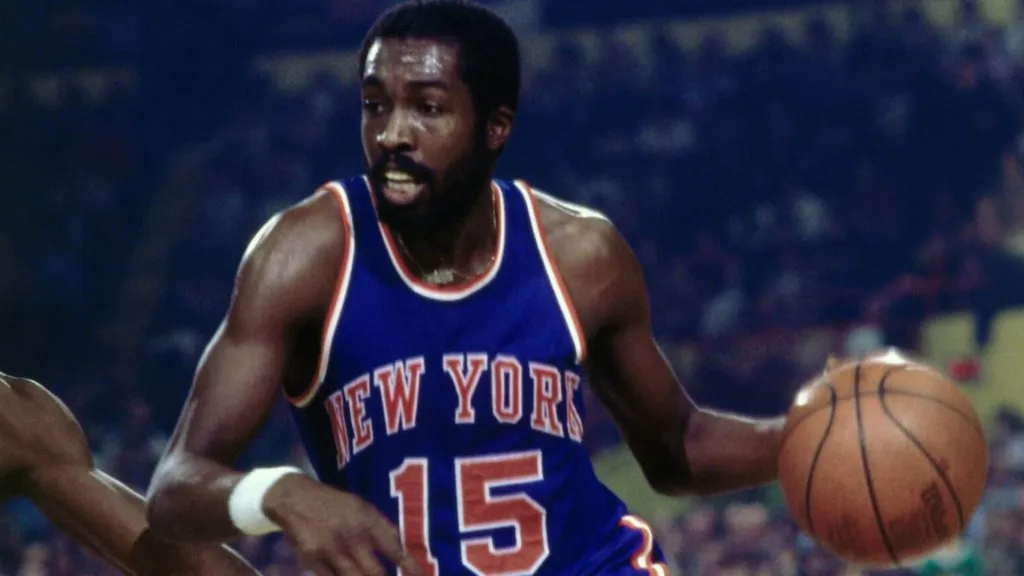
Earl Monroe (Source: NBA)
Known as “The Pearl”, Earl Monroe was the pure showmanship and elegance personified on the court. Acquired in 1971, the player, with his signature shake-and-bake moves, spins, double-pumps, and off-balance shots, brought a touch of playground basketball flair to the bright lights of the Garden.
What initially seemed an unlikely pairing with the methodical Walt “Clyde” Frazier turned into one of the most celebrated backcourts in history, crucial to the 1973 championship. He was the creative spark, an artist who proved the “little man” could be the biggest spectacle in an era dominated by giant centers.
John Starks
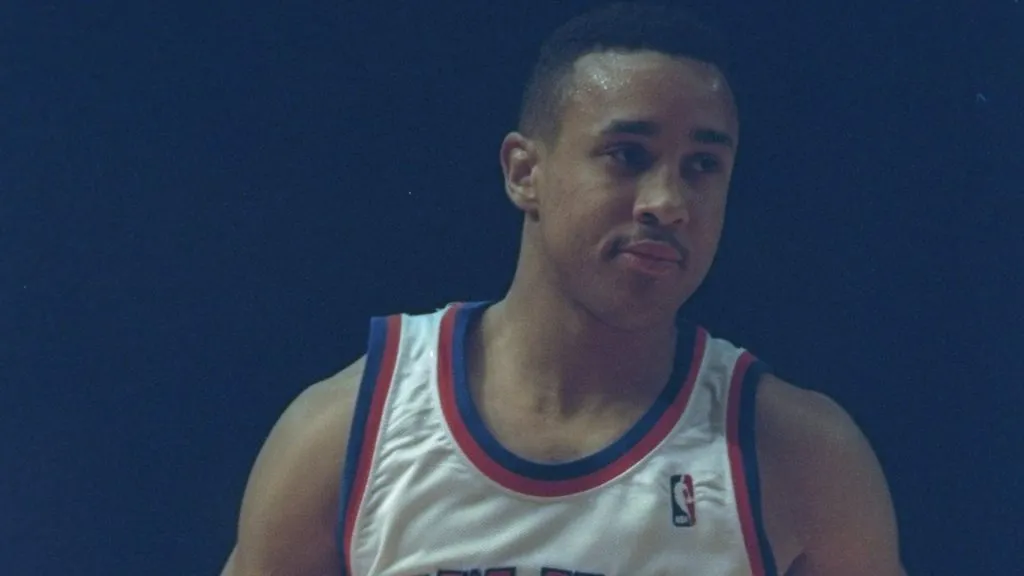
John Starks (Source: Simon Bruty /Allsport)
John Starks‘ journey is an NBA fairy tale, rising from an undrafted player to an All-Star and the epitome of the indomitable passion of the 90s Knicks. He was a volatile scorer and fierce defender who channeled the energy of the crowd like no other.
His most iconic moment wasn’t a shot, but “The Dunk”: a savage baseline drive, finished left-handed over both Michael Jordan and Horace Grant in the 1993 Eastern Conference Finals, an act of physical defiance that remains one of the most replayed highlights in NBA history. Starks, the franchise’s all-time leader in three-pointers, was the impulsive heart of an era defined by playoff drama.
Charles Oakley
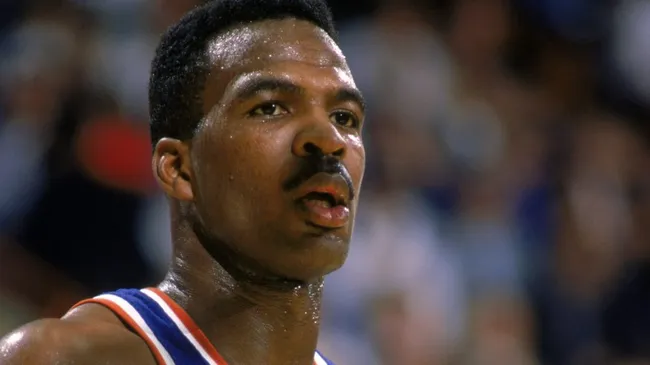
Charles Oakley (Source: Tim Defrisco/Getty Images)
Charles Oakley didn’t just play basketball; he made the court an uncomfortable place for opponents. This power forward earned the nickname “Oak Tree” for his rugged physique and no-nonsense attitude, becoming the premier defender, rebounder, and enforcer for the 1990s Knicks.
His job wasn’t just to snag rebounds; his primary task was to protect Patrick Ewing and ensure no opponent took liberties in the Garden. His toughness and commitment to physical play made him an instant favorite of the New York faithful, who valued the dedication and trench warfare mentality he brought to every single game.
Walt Frazier
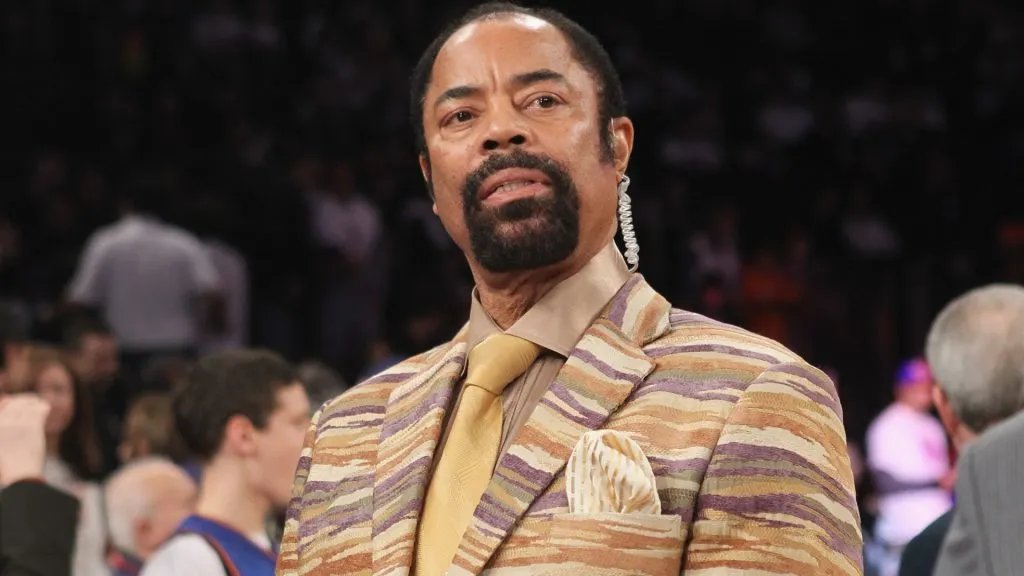
Walt Frazier (Source: Bruce Bennett/Getty Images)
If the Knicks’ two championships have a distinct cultural face, it is Walt “Clyde” Frazier, the point guard who elevated basketball to an art form both on and off the court. He was the very definition of “cool” in New York, famed for his flamboyant suits, Rolls-Royce, and signature fedoras, earning the nickname “Clyde” after the infamous dapper outlaw.
On the court, he was the floor general of the championship teams (1970, 1973), using his lightning-quick hands and anticipation to anchor the defense, earning seven consecutive All-Defensive First Team selections.
His masterpiece remains Game 7 of the 1970 Finals, where he delivered one of the greatest individual performances in NBA history with 36 points, 19 assists, and 7 rebounds, even while Willis Reed provided the emotional lift.
Dave DeBusschere
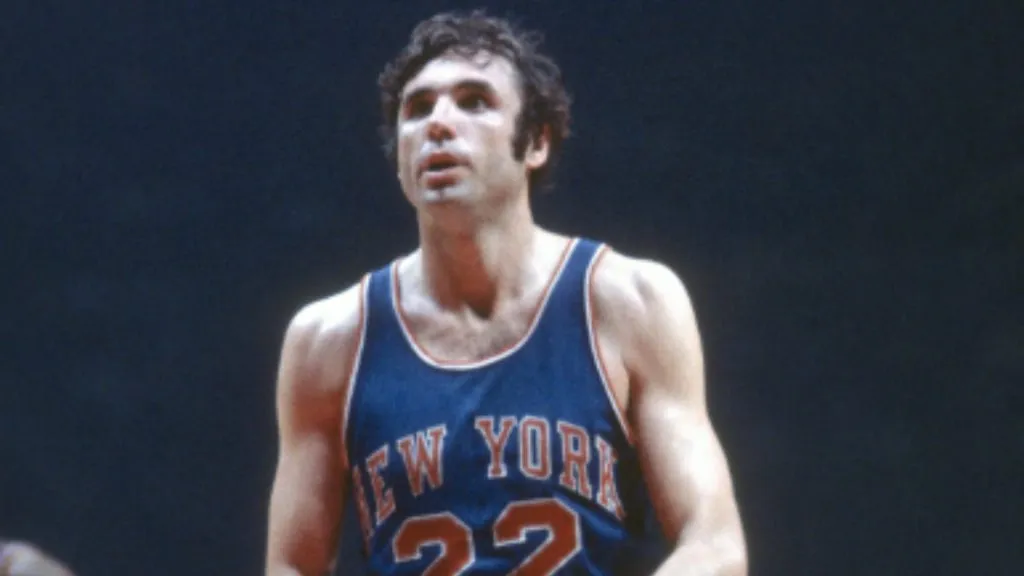
Dave DeBusschere (Source: NBA)
Dave DeBusschere was the glue, the muscle, and the sheer toughness that turned the Knicks’ talented group into a championship powerhouse, providing the defensive tenacity that defined the early 1970s teams.
Known as “Big D,” he was a rugged forward who averaged a double-double for his career, yet his primary value was as a defensive stopper and dominant rebounder who could physically match up with any opponent.
His arrival via trade in 1968 immediately completed the championship puzzle, providing the necessary grit and two-way consistency to win both the 1970 and 1973 titles. A fascinating piece of trivia about him: he also pitched for the Chicago White Sox for four seasons, making him a rare two-sport professional star.
Allan Houston
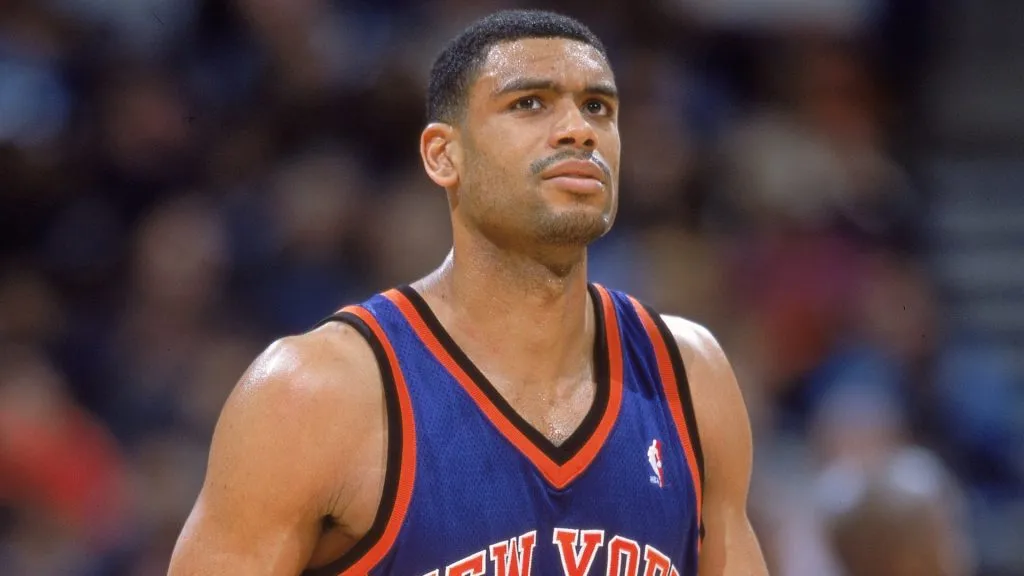
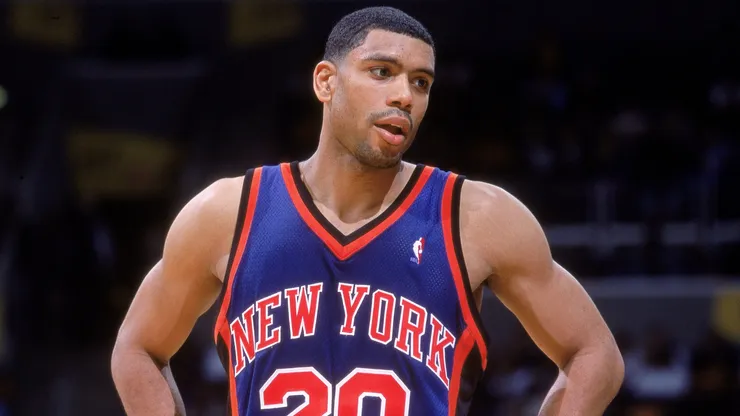
Allan Houston (Source: Doug Pensinger /Allsport)
Allan Houston personified the smooth, quiet scoring efficiency of the 1990s and early 2000s Knicks, possessing one of the most aesthetically pleasing jump shots in league history. Nicknamed “H-2-0” for the way his shots consistently dropped like water, he was a two-time All-Star and a foundational piece of the team that reached the 1999 NBA Finals.
His most legendary contribution, however, remains his game-winning runner in Game 5 of the 1999 Eastern Conference Quarterfinals against the Miami Heat, a shot that bounced off the rim and through the net with 0.8 seconds left, becoming one of the most clutch and memorable series-winners in franchise history.
Bill Bradley
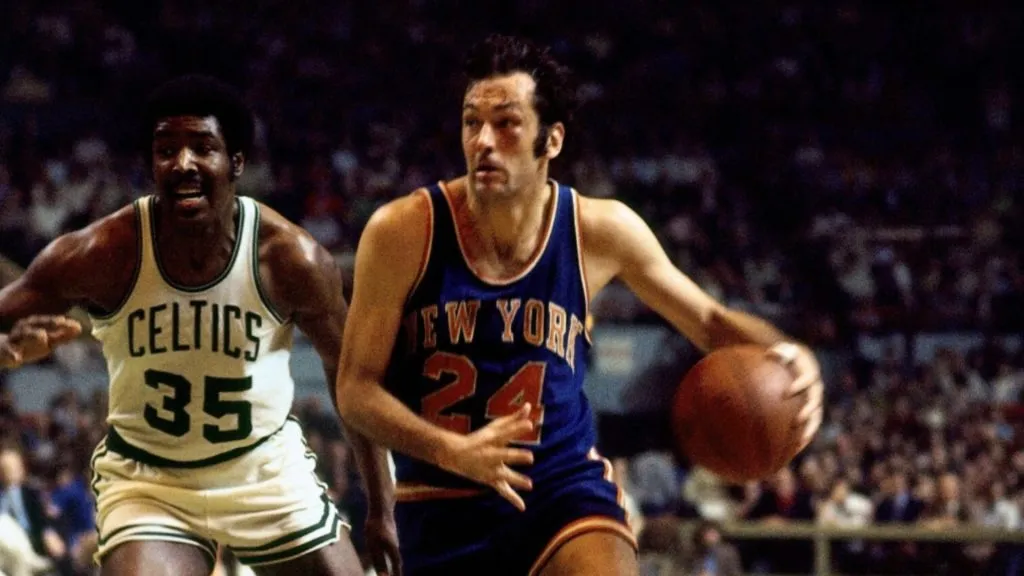
Bill Bradley (Source: NBA)
Bill Bradley‘s legacy is arguably the most unique in NBA history, defined not just by his two NBA championships with the Knicks but by his unparalleled career trajectory as a Rhodes Scholar and a U.S. Senator.
On the court, he was an intelligent, fundamentally sound forward who prioritized teamwork and smart passing over flash, earning him the moniker of a “thinking man’s player”.
While his political career later defined his public life, his decade with the Knicks (1967–1977) was critical, providing the unselfish chemistry and steady reliability that allowed the more flamboyant stars like Frazier and Monroe to flourish and capture the 1970 and 1973 titles.
Julius Randle
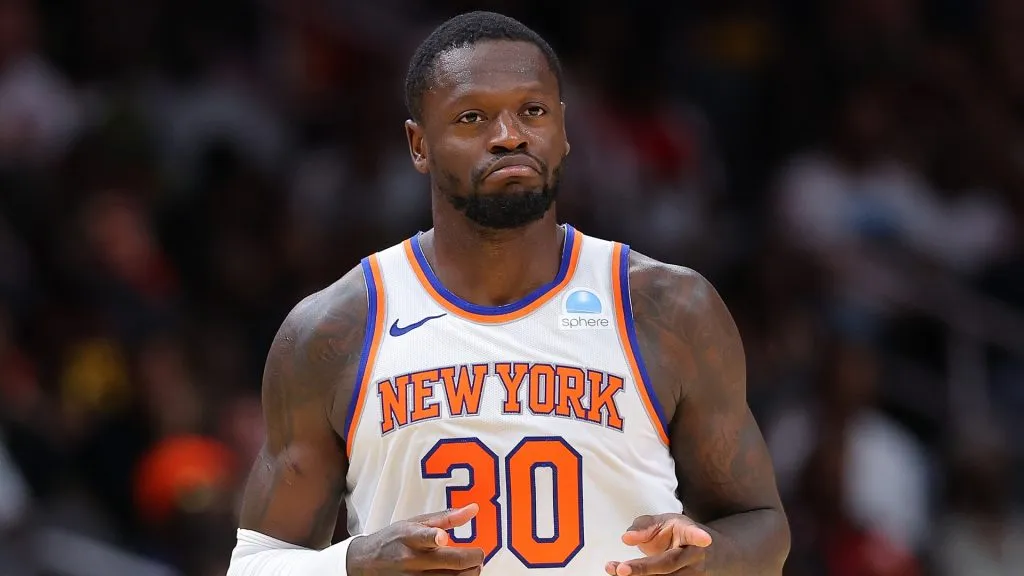
Julius Randle (Source: Kevin C. Cox/Getty Images)
Julius Randle represents the tempestuous and triumphant start of the Knicks’ modern-day resurgence, joining the franchise in 2019 and evolving into a three-time All-Star and All-NBA talent who centered the team’s offense for nearly five years.
He earned the Most Improved Player award in 2021 and became the face of the team that ended an eight-year playoff drought, a monumental achievement in New York sports.
His time was defined by a massive workload and an intense emotional connection with the passionate New York crowd, making him the definitive figure of the Knicks’ return to relevance in the 2020s, despite the immense microscope of the New York media that ultimately led to his difficult departure.
Jalen Brunson
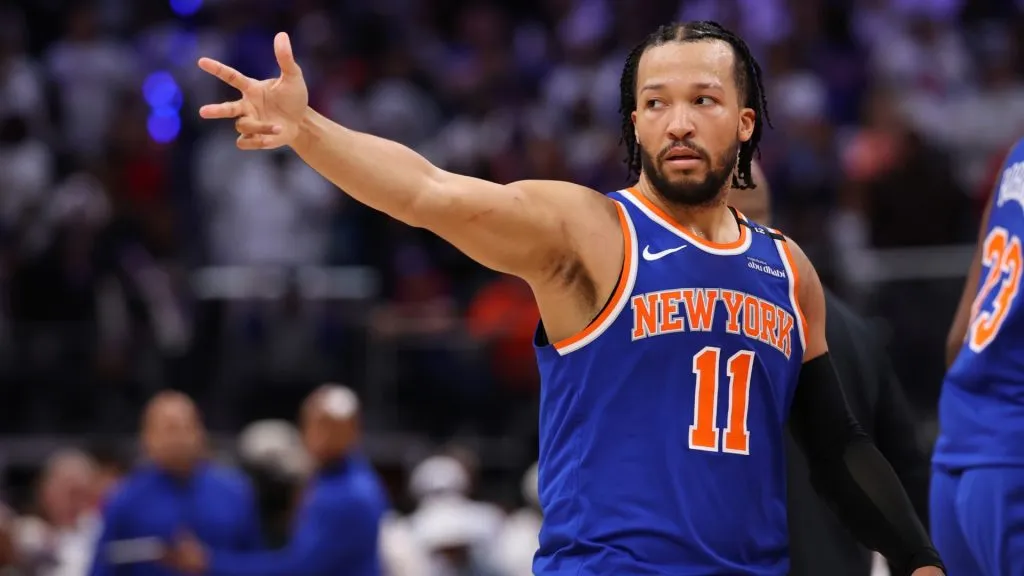
Jalen Brunson (Source: Gregory Shamus/Getty Images)
Jalen Brunson is perhaps the most beloved and impactful free-agent signing in recent Knicks history, instantly transforming the franchise into a perennial playoff contender through pure grit, leadership, and undeniable skill.
He is not just a high-volume scorer; he is the cerebral engine of the offense, known for his relentless drive, clutch shot-making, and deep mastery of the pick-and-roll.
Since arriving in 2022, the compact point guard has quickly ascended to All-NBA status and led the Knicks to their first Eastern Conference Finals appearance in 25 years, proving that his stature—both physical and metaphorical—is far greater than the size of his contract.
Anthony Mason
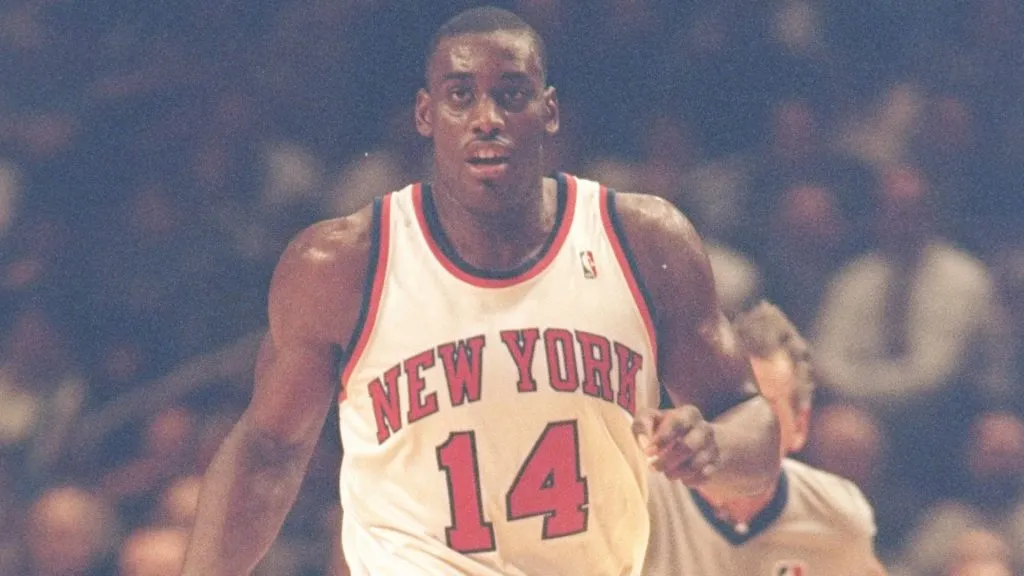
Anthony Mason (Source: Simon Bruty /Allsport)
The late Anthony Mason was the heart and soul of the 1990s “Sledgehammer Knicks,” the physical embodiment of the city’s blue-collar, no-nonsense mentality. Rising from an undrafted journeyman to an All-Star, “Mase” was a power forward with the skills of a guard, known for his versatility, defensive intensity, and the intricate designs often carved into his hair.
He earned the 1995 NBA Sixth Man of the Year award by providing relentless energy and toughness off the bench, becoming an ultimate irritant to opponents and a perfect complement to Patrick Ewing and Charles Oakley. His physical approach, once described by Hakeem Olajuwon as leaving him “gingerly” after a hard-fought Finals game, defines the intensity of that era.
Bill Cartwright
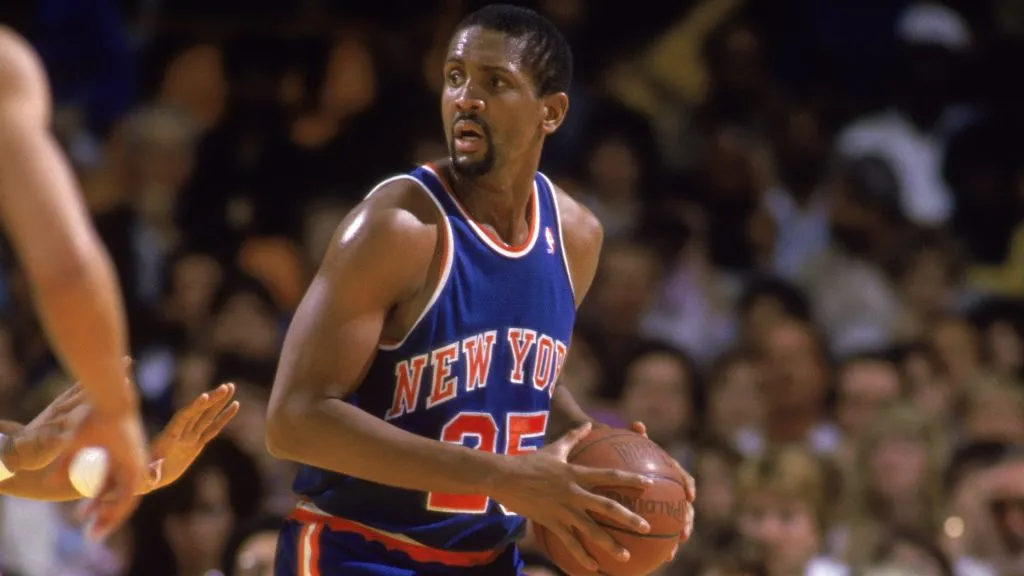
Bill Cartwright (Source: Rick Stewart/Getty Images)
Before the arrival of Patrick Ewing, Bill Cartwright was the man anchoring the center position for the New York Knicks for eight seasons. Drafted third overall in 1979, the towering seven-footer was a steady, dependable scorer and rebounder, earning an All-Star nod in his rookie season.
He was known for his effective turnaround jumper and high field-goal percentage, forming the offensive centerpiece for the Knicks in the early 1980s. While his time in New York is often overshadowed by the fact that he was eventually traded to Chicago for Charles Oakley, his consistent, reliable presence at center laid the groundwork for the ensuing decade.
Stephon Marbury
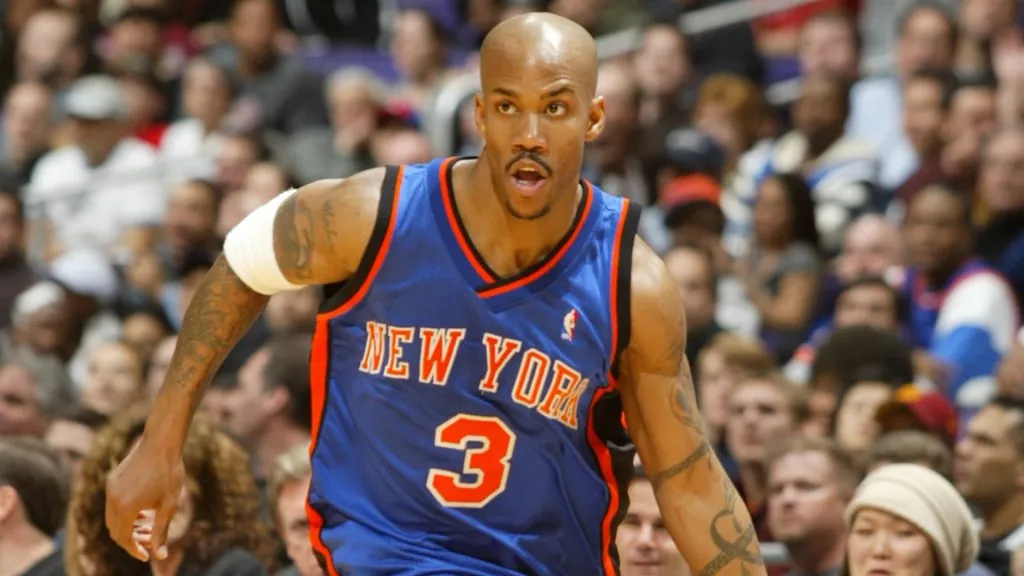
Stephon Marbury (Source: Lisa Blumenfeld/Getty Images)
Stephon Marbury‘s career with the Knicks is a story of immense talent, high expectations, and controversy, a fascinatingly complex chapter in the franchise’s history. A Coney Island native and the “Prodigal Son” returning to New York, he was a dynamic point guard known for his spectacular ball-handling and scoring ability.
However, his tenure was plagued by personal struggles and team turmoil, preventing the Knicks from reaching the competitive heights his talent promised. Despite the turbulence, his ultimate story is one of global redemption, as he later reinvented himself as a champion and icon in the Chinese Basketball Association, a rare second act in international sports.
Amar’e Stoudemire
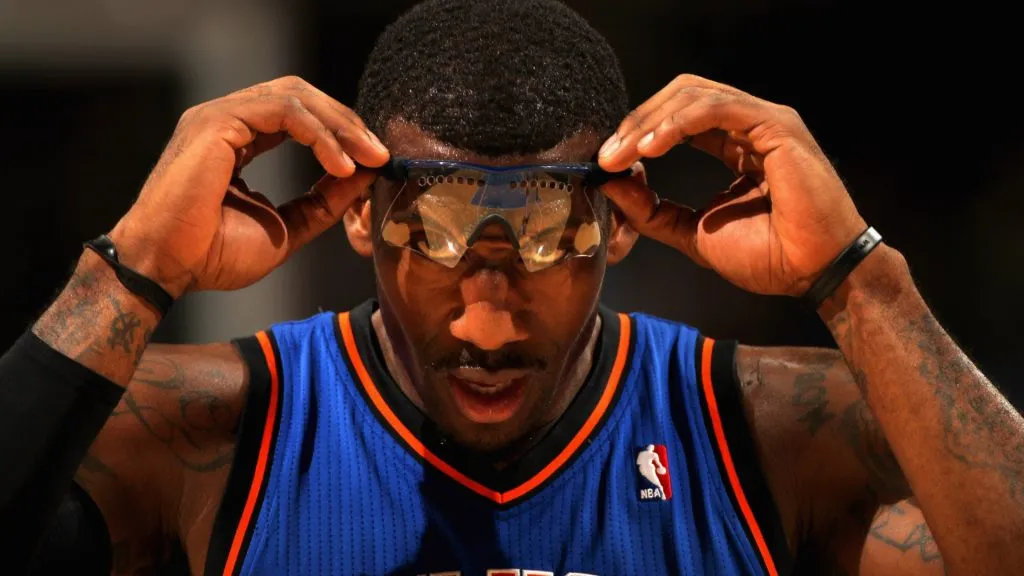
Amar’e Stoudemire (Source: Doug Pensinger/Getty Images)
Amar’e Stoudemire was the first star to choose the Knicks in the modern free-agency era, igniting a wave of genuine hope and becoming the initial spark of the team’s reawakening.
Known for his explosive athleticism and devastating pick-and-roll game, he had an immediate and MVP-level impact, carrying the offense before the arrival of Carmelo Anthony.
His initial run in the Mike D’Antoni system saw him drop 30 points in nine consecutive games, showcasing a blend of brute strength and a smooth mid-range jumper that few power forwards could match. Though injuries curtailed his peak, his signing in 2010 was a watershed moment that re-established the Knicks as a viable destination for superstars.
Harry Gallatin
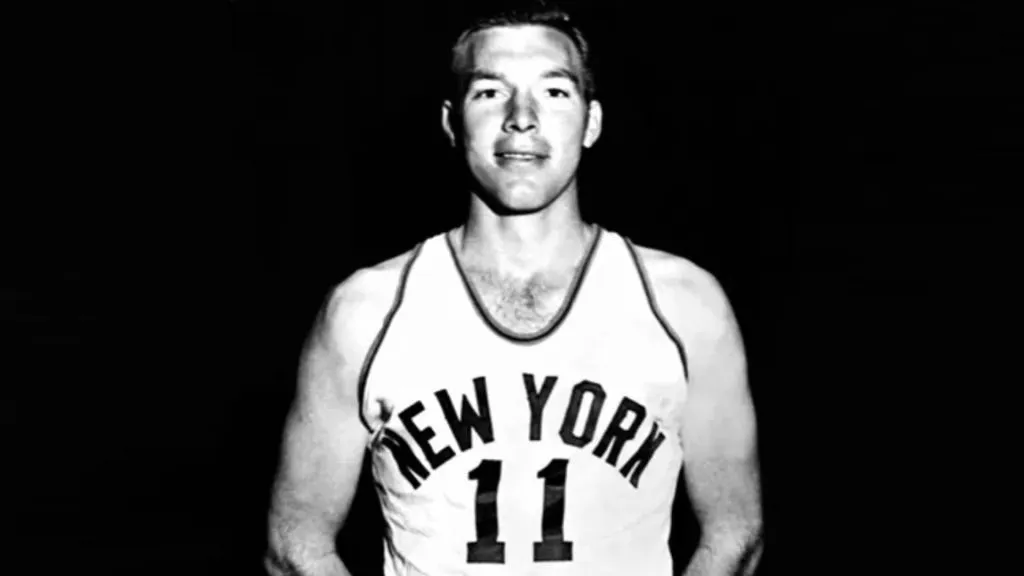
Harry Gallatin (Source: NBA)
Hailing from the NBA’s earliest days, Harry “The Horse” Gallatin was the league’s original ironman, a Hall of Fame power forward who defined durability and rebounding excellence for the Knicks from 1948 to 1957.
He was known for his relentless hustle and physical strength, playing through injuries to set a then-NBA record of 682 consecutive games played. He was a seven-time All-Star and led the league in rebounding in 1954, serving as the foundational big man who powered the Knicks to three consecutive Eastern Division Championships in the early 1950s.
David Lee
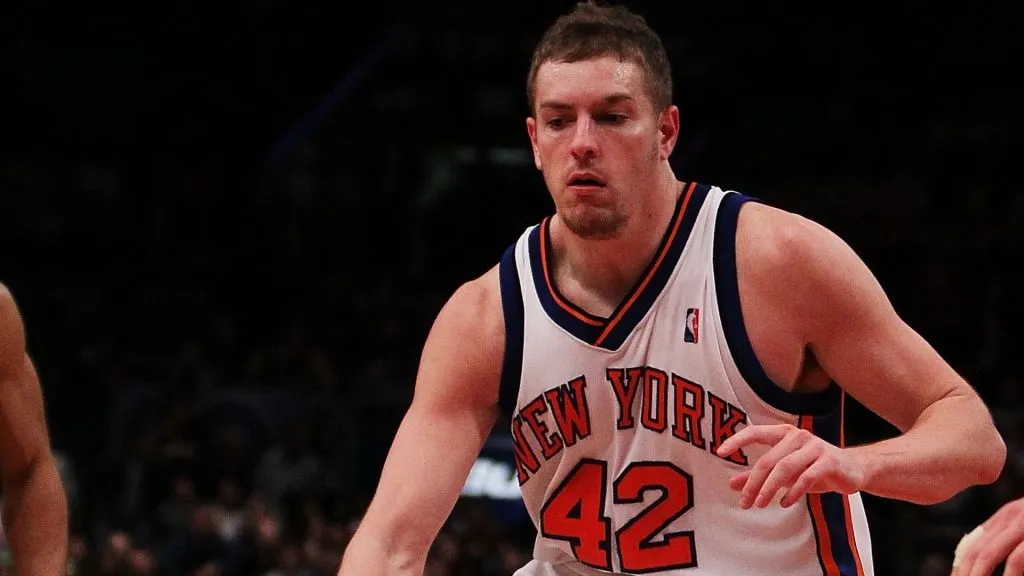
David Lee (Source: Al Bello/Getty Images)
David Lee emerged as a true fan favorite during a challenging era for the Knicks, earning his popularity through pure hustle, rebounding tenacity, and a relentless offensive motor. Drafted in 2005, the power forward became known for his consistent double-double production, especially during the 2009–10 season where he averaged over 20 points and 11 rebounds.
He was a high-efficiency scorer who excelled near the basket, proving that a relentless work ethic could compensate for star power. He earned his lone All-Star selection while wearing a Knicks uniform, symbolizing the hard-working ethos that fans clung to during the franchise’s rebuild.
Dick McGuire
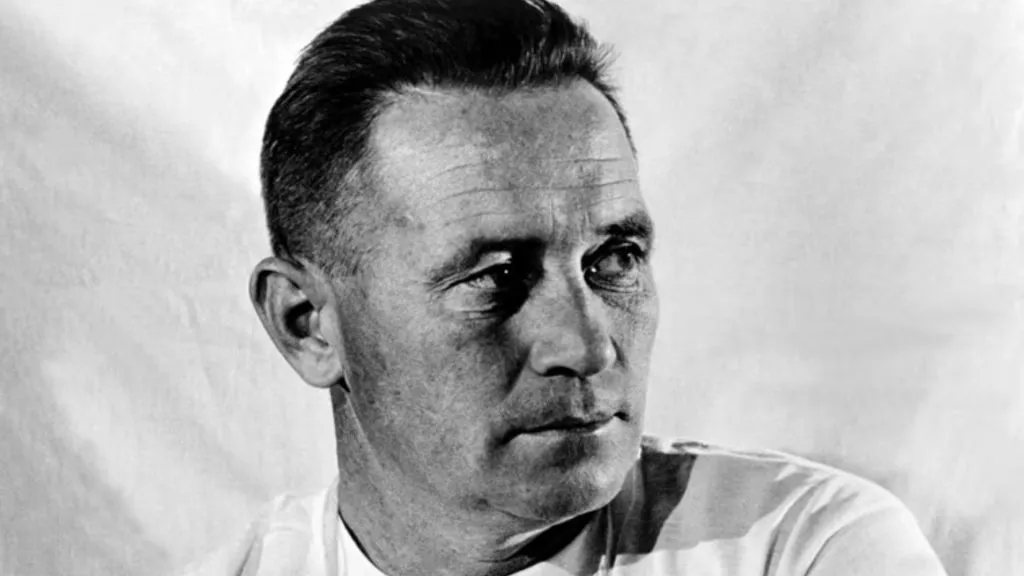
Dick McGuire (Source: NBA)
Hailing from the Bronx, Dick “Tricky Dick” McGuire was the quintessential playmaker of the New York Knicks in the 1950s, a pass-first point guard who orchestrated the team’s offense with uncanny court vision.
He earned his nickname for his clever dribbling and ability to slip pinpoint passes through the tightest defensive lanes, often looking like he had “eyes in the back of his head”. He played eight seasons for the Knicks, was a seven-time All-Star, and led the NBA in total assists in his inaugural 1949–50 season.
More profoundly, his longevity and service to the organization were remarkable; he remained a Knick as a player, coach, consultant, or scout for 53 of the franchise’s first 64 years, a staggering testament to his dedication.
Larry Johnson
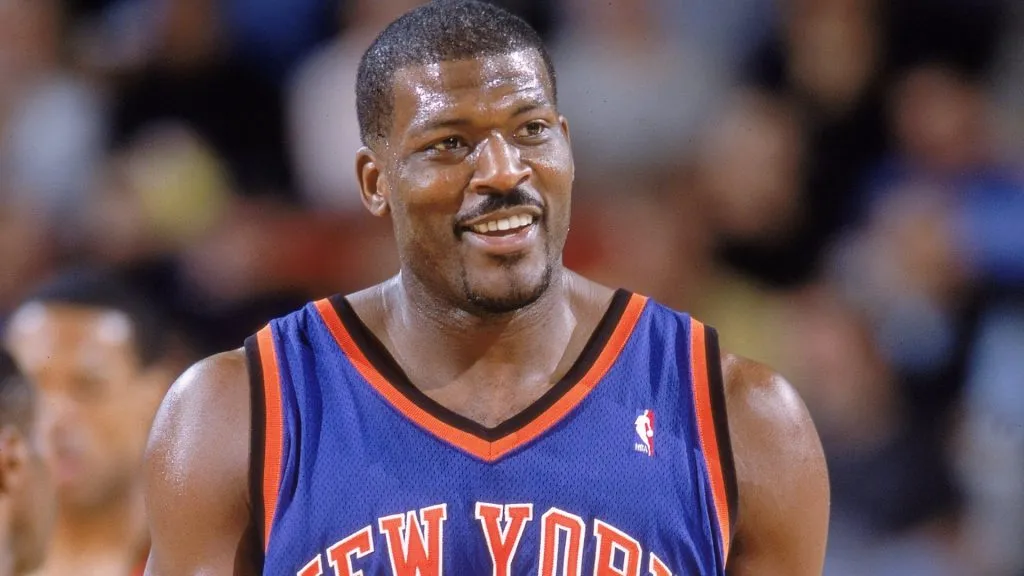
Larry Johnson (Source: Otto Greule Jr. /Allsport)
Larry “Grandmama” Johnson was a key power forward for the late 90s Knicks, but his entire legacy in New York is dominated by a single, chaotic, and iconic moment of sheer will. The player, an already accomplished two-time All-Star, joined the Knicks in 1996 and fully embraced the team’s tough identity.
His legend was forged in the 1999 Eastern Conference Finals against the Indiana Pacers, when, down by three points with 11.9 seconds left, he launched an off-balance three-point attempt while leaning into defender Antonio Davis.
The shot went in, the foul was called, and Johnson completed the four-point play for a dramatic 92-91 victory. He later admitted the shot and the subsequent game-winning free throw were the “worst I ever shot in my life,” perfectly encapsulating the glorious, anarchic nature of that clutch moment.
J.R. Smith
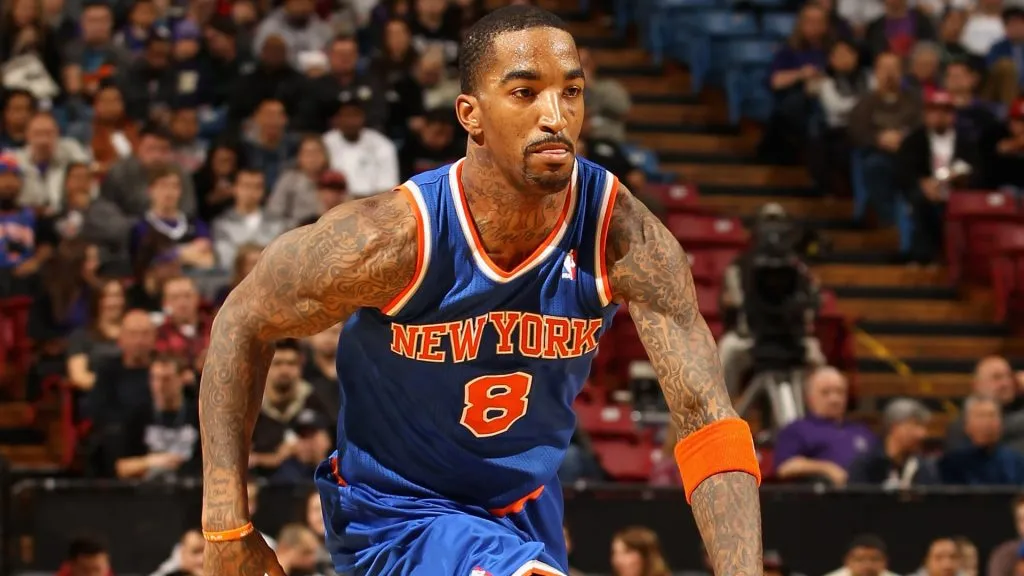
J.R. Smith (Source: Ezra Shaw/Getty Images)
No player better embodied the “unpredictable fireworks” nature of the early 2010s Knicks than J.R. Smith, a shooting guard whose ability to heat up instantly made him the most exciting, and often frustrating, player on the court.
Joining the Knicks in 2012, he hit his professional peak in New York, winning the 2013 NBA Sixth Man of the Year award by providing an electrifying scoring spark off the bench.
He was a volume three-point specialist who frequently chased franchise records for threes made and attempted, setting a team record with 10 three-pointers in a 2014 game. His tenure was a volatile but high-scoring thrill ride, showcasing a talent that was pure, unfiltered adrenaline.
Mark Jackson
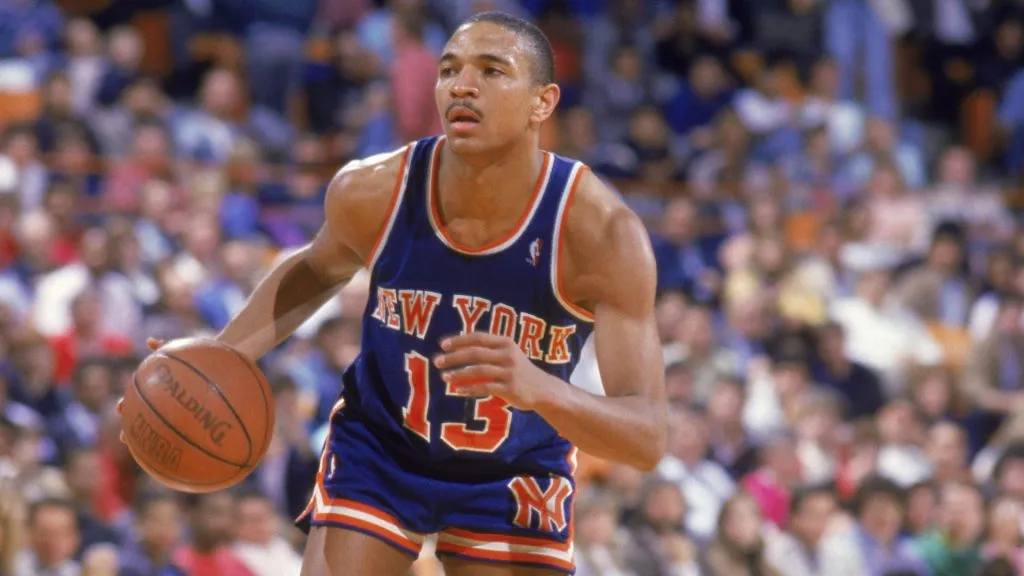
Mark Jackson (Source: Stephen Dunn/Getty Images)
A hometown hero from Brooklyn, Mark Jackson was the traditional, pass-first point guard who perfectly fit the Knicks’ grind-it-out style, serving as the floor leader for their powerful late 80s and early 90s teams.
Drafted by the Knicks in 1987, he immediately won the NBA Rookie of the Year award, a rarity for a player picked outside the top 15. His legacy is built on his exceptional passing ability; he currently ranks as one of the top three all-time assist leaders in NBA history.
He embodied the city’s basketball IQ, utilizing a methodical pace and pinpoint passing to organize the offense around Patrick Ewing and set the stage for the team’s resurgence.
Bob McAdoo
Bob McAdoo (Source: NBA)
Bob McAdoo remains one of the most statistically dominant, yet often overlooked, players to wear the Knicks uniform, bringing MVP-level scoring talent to the Garden in the mid-1970s.
Already an NBA MVP and three-time scoring champion with the Buffalo Braves, he continued his offensive explosion in New York, averaging a remarkable 26.7 points and 12.0 rebounds over his 171 games with the club. He was a 6’9″ center/forward with a lethal outside jump shot and post moves that allowed him to dominate big men and guards alike.
While his tenure in New York was ultimately short-lived and plagued by injuries that slowed the team’s success, his sheer offensive production during that era is among the most efficient in franchise history.
Tyson Chandler
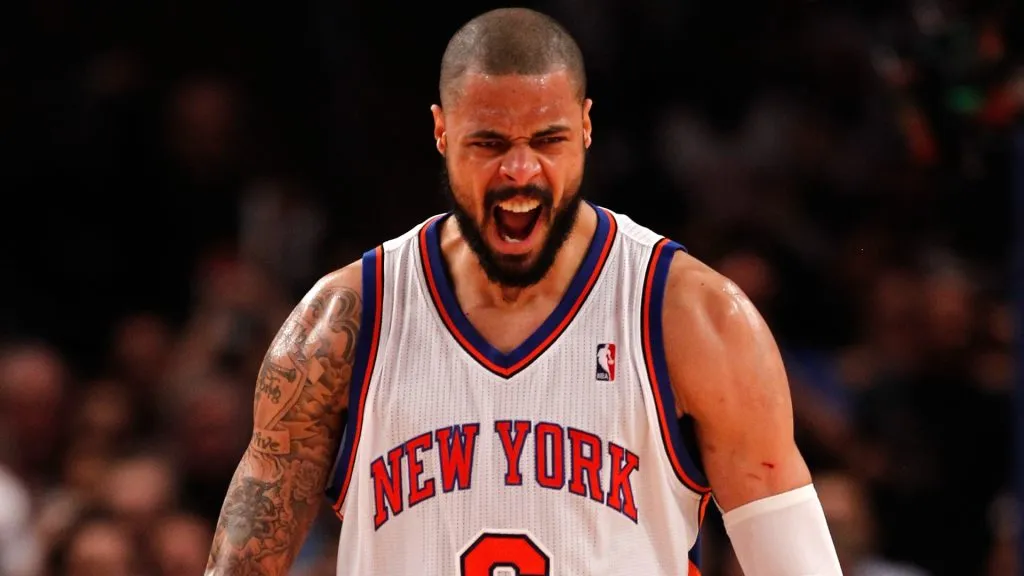
Tyson Chandler (Source: Jeff Zelevansky/Getty Images)
The arrival of Tyson Chandler in 2011 was a seminal moment that instantaneously changed the defensive DNA of the New York Knicks, transforming the team from one of the league’s worst defensive units into a Top 5 juggernaut in just one season.
The seven-foot center and former champion became the defensive anchor and vocal leader that the franchise had desperately sought, patrolling the paint with relentless energy.
His massive impact was officially recognized in 2012 when he was named the NBA Defensive Player of the Year, becoming the first Knicks player ever to win the prestigious award. His individual commitment and his ability to make his teammates accountable redefined the team’s culture and provided the foundation for their 2013 playoff success.